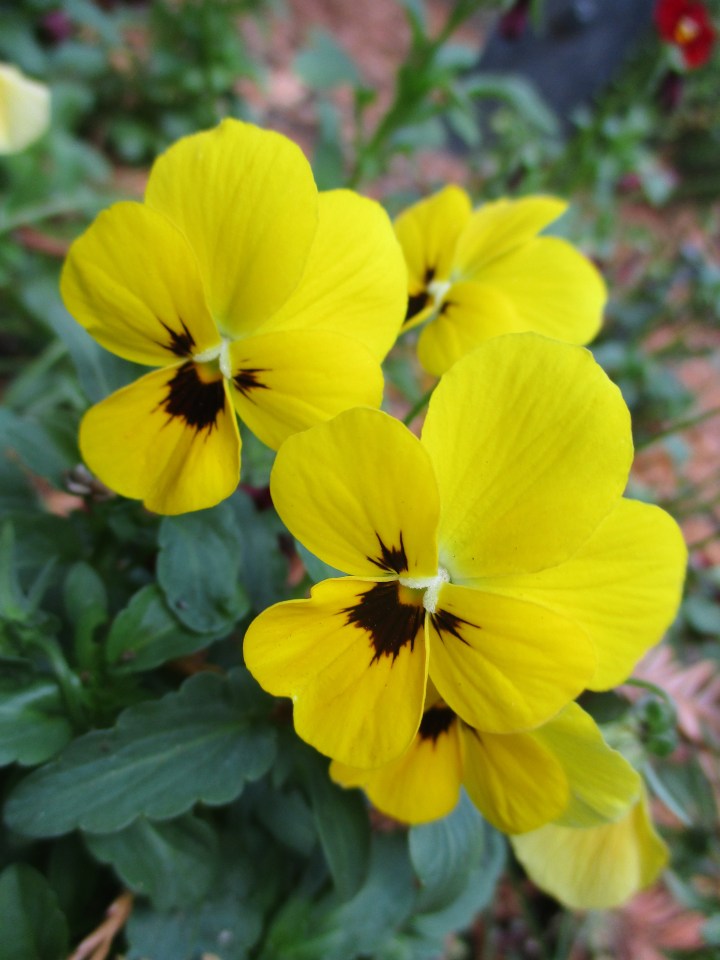
 All that unpleasant annual business of removing warm season vegetable plants to relinquish space for cool season vegetables applies to annual bedding plants too. Those of us who do not grow vegetables were spared the agony of pulling up tomato plants that might have still been producing a few tomatoes, just to make room for broccoli. Now, it is time to replace petunias with pansies.
There is a reason why annuals get removed this time of year. It is the same reason why those that get planted now to replace them will be removed later. Annuals are annual. They are expected to perform for only part of one year. True annuals naturally complete their entire life cycles in about a year. Those that have potential to be perennial are too unappealing to salvage through dormancy.
Removal of aging warm season annual bedding plants should be less distressing if they are already deteriorating. By now, most of them are. They tend to wear out faster than some of the warm season vegetable plants. Impatiens can be potted for next year, or, for mixed beds, cut down and overplanted. Most cool season annual bedding plants are already blooming when newly planted.
Because the weather gradually gets cooler through autumn, cool season annual bedding plants appreciate an early start. It is easier to disperse roots before the soil gets cool. Only those that are sensitive to warmth, such as cyclamen, get planted later. Ornamental cabbage and kale might bolt and bloom early at the end of their season if they get too warm at the beginning of their season.
Marigold and chrysanthemum are short term autumn annuals that work very nicely until it is time to plant cyclamen or ornamental cabbage and kale.
Pansy, viola (including Johnny-jump-up), stock, sweet William, Iceland poppy and various primroses are now in season. Some could have been started from seed earlier. Otherwise, it is most practical to plant these cool season annual bedding plants from cell packs. Cyclamen and ornamental cabbage and kale that get planted later are best as more expensive four inch potted plants.
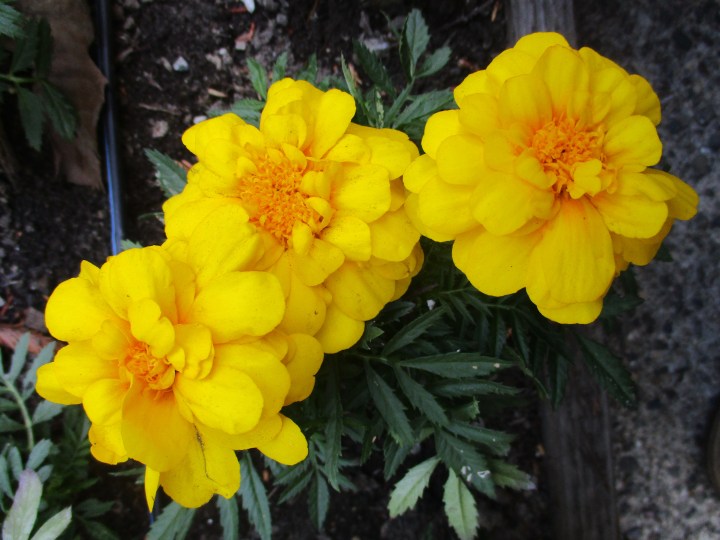 Actually, French marigold, Tagetes patula, is no more French than African marigold is African. All are from Mexico and Guatemala. They were merely popularized and bred respectively in France and Africa. There are now hundreds of varieties. Yet, their color range is surprisingly limited to hues and shades of yellow, orange and ruddy brown. White marigolds are really just very pale yellow.
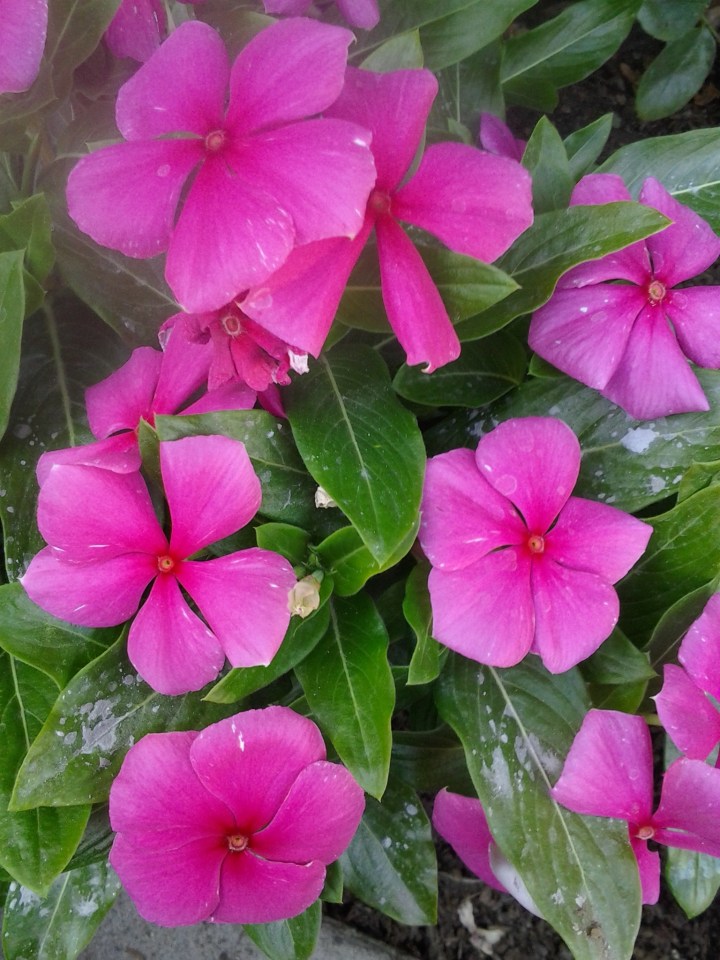 Like gardenia, dogwood and snapdragon, the potentially finicky Madagascar periwinkle, Catharanthus roseus, is often challenging to grow. It enjoys, but seems to prefer more humidity than it gets here. The happiest plants can get nearly two feet tall and wide in sheltered and humid spots. (They can get even larger in exposed spots in humid climates.) Yet, most of us are satisfied with relatively scrawny plants less than half a foot tall.
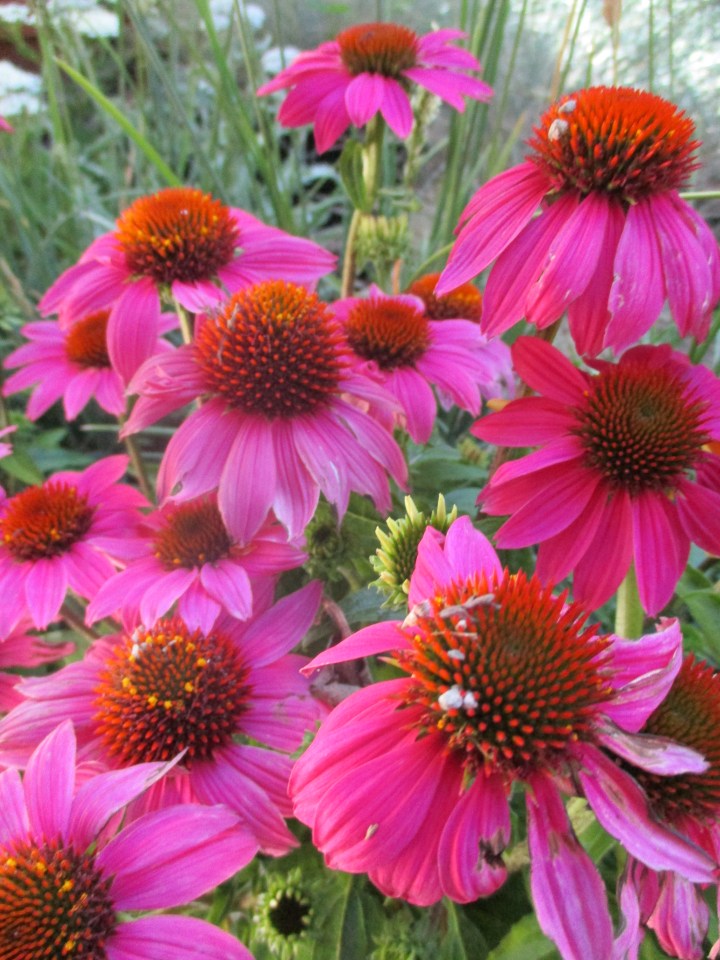 Annuals are plants that complete their entire life cycle from germination to death within a single year. Biennials complete their entire life cycle in two years, mostly by developing vegetative growth during their first year, and then blooming, producing seed and then dying after their second year. Perennials are the many herbaceous plants that survive longer than just a few years or indefinitely.
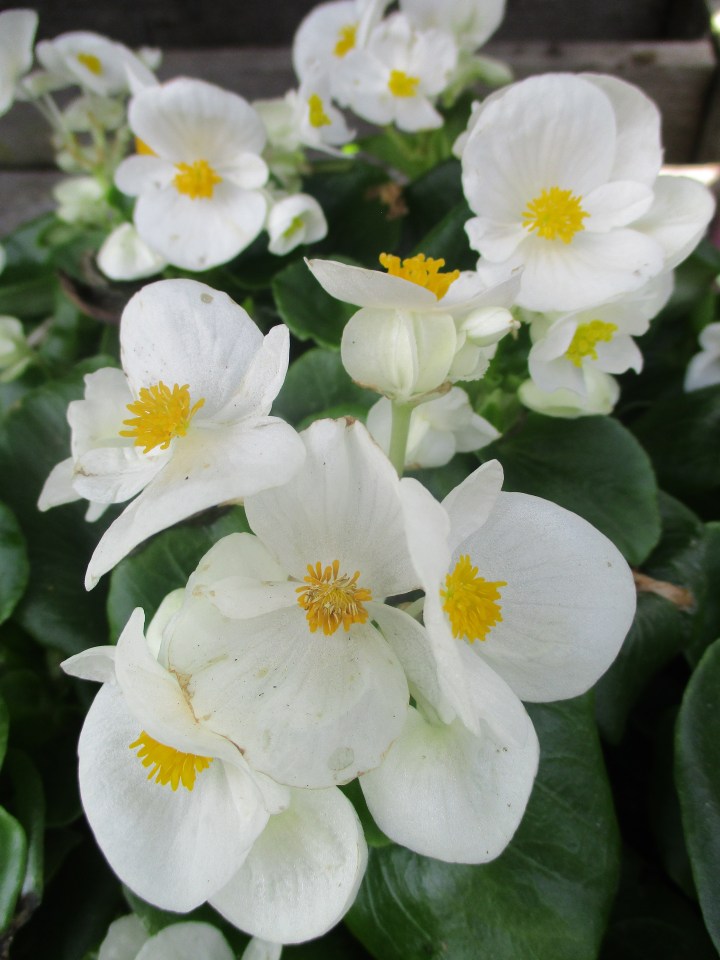 Oh, how breeding complicates things. Many years ago, there were only six basic types of wax begonia, Begonia semperflorens-cultorum, with three choices for floral color, and two choices for foliar color. Bloom was white, pink or red. Foliage was either green or dark bronze. Although these choices have not changed, some modern hybrids are difficult to distinguish from other species.
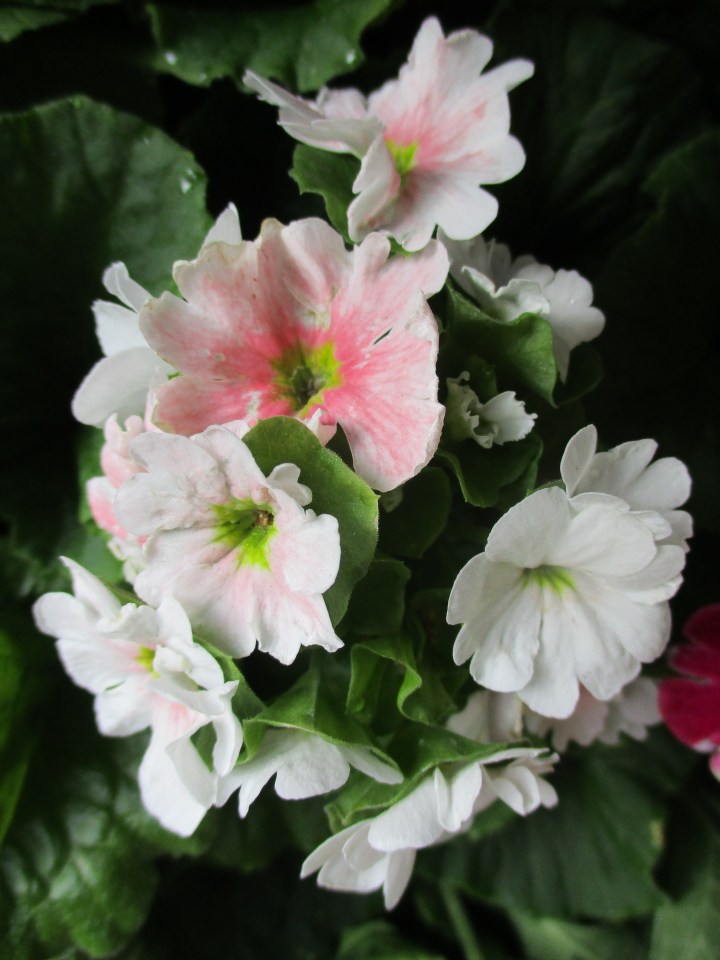 Just like African marigold that was featured earlier is actually Mexican, German primrose, Primula obconica, is actually Chinese. As odd as it is, the common name is an improvement from the former name of ‘poison primrose’, which was derived from the potentially irritating sap of the unimproved species before it was bred to be less toxic, as well as more colorful and prolific in bloom.
 French Marigold might have been a more appropriate choice. It is the official flower of Dia de los Muertos on November 2. Some might say that the bigger and bolder African marigold, Tagetes erecta, is just as official. Both are Mexican, but as the names imply, most varieties of French marigold were developed in France, and most varieties of African marigold were developed in Africa.
 The three most popular specie of Dianthus are sweet William, garden pink and carnation. Sweet William and garden pink are light duty perennial bedding plants that are often grown as annuals. Carnation blooms are more familiar as fragrant cut flowers than as home garden flowers. Then there is dwarf carnation, Dianthus caryophyllus, that combines the best characteristics of all three.
 Gardening is not always fun. After diligently tending to warm season vegetables through spring and summer, it eventually becomes necessary to pull them up to relinquish space for cool season vegetables that grow through autumn and winter. It likely would be less unpleasant to wait for them to succumb to frost, but by that time, it would be getting late for the incoming vegetable plants.
 The common name sounds funny, but it is easier to pronounce then than the Latin name. Mulla mulla, Ptilotus exaltus, is an Australian species that has been locally available longer than its limited popularity suggests. It may seem to be more peculiar than it is because it is grown primarily by specialty growers, who happen to grow many cool plants that should be more popular than they are.
