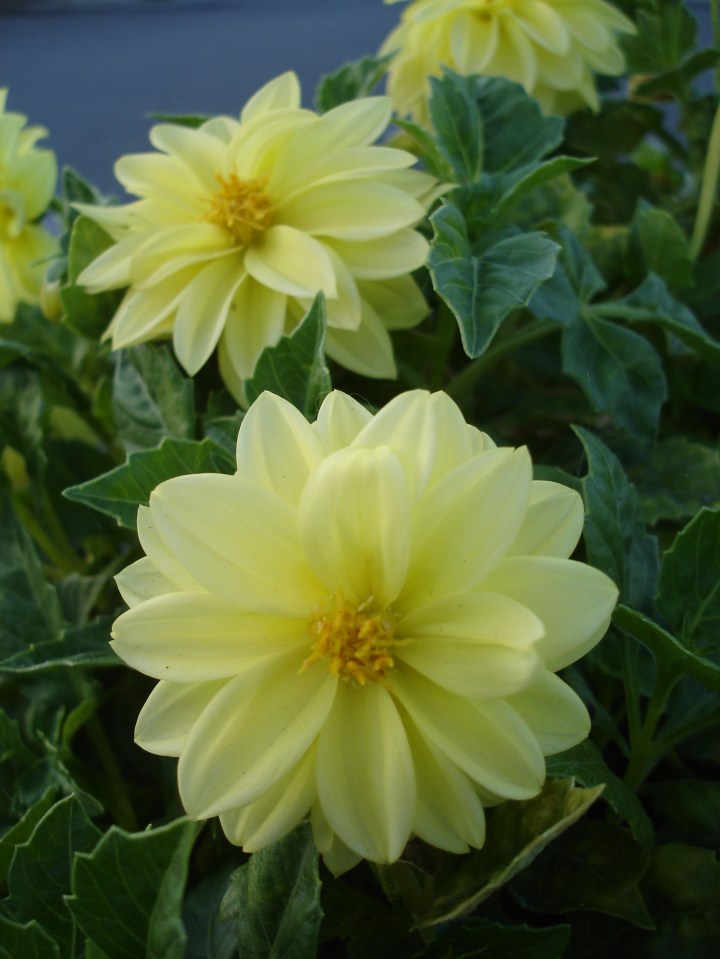
 They are really just smaller versions of the larger perennial dahlias that are grown for their big bold flowers and flashy colors. Technically, annual dahlias produce smaller versions of the same perennial roots that can survive through winter to regenerate the following spring. Yet to most of us, it is easier to purchase new plants in spring than to grow new plants from stored roots.
Relative to larger dahlias, everything about annual dahlias is subdued. The flowers are neither as big, nor as variable. They can bloom any color except blue or green, but are usually simple shades of red, orange, yellow, pink or white. Their main advantage is that they do not get much more than a foot tall, so they fit into more situations and do not need to be staked.
Bloom starts rather late in spring and continues until about now. Some varieties have bronzed foliage. Fertilizer promotes bloom and healthy foliar color; but too much nitrogen can inhibit bloom. Dahlias can be happy in pots, but only with good drainage and regular watering.
 Twice a year, it becomes necessary to discuss the unpleasantries of pulling up the flowering annuals (as well as vegetable plants) of one season, to relinquish space for those of the next season. Just a few months ago, cool season annuals got replaced with warm season annuals. Now, those same warm season annuals will get replaced with cool season annuals for the next few months.
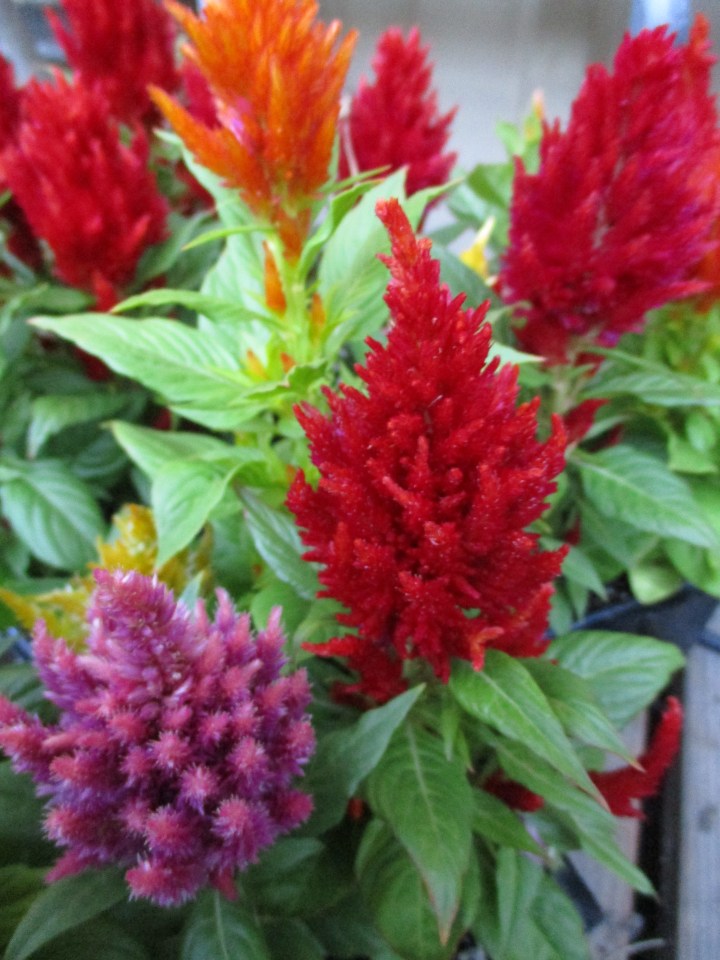 Not all annuals last as long as petunias do through summer, or pansies do through winter. Some fill in for the in between seasons, or if longer term annuals do not last quite as long as they should. Cockscomb, Celosia plumosa, blooms best now that it is about halfway through summer, and then finishes as weather gets too cool for it in late autumn, not so much more than two months later.
 Good old fashioned busy Lizzie is hard to find nowadays, if it can be found at all. The nasty mildew that kills it so quickly might not be prevalent everywhere, but happens to be a serious problem where most of the bedding plant farms are located. Now, the formerly uncommon New Guinea impatiens, Impatiens X hawkeri, which is somehow resistant to the mildew, is becoming popular.
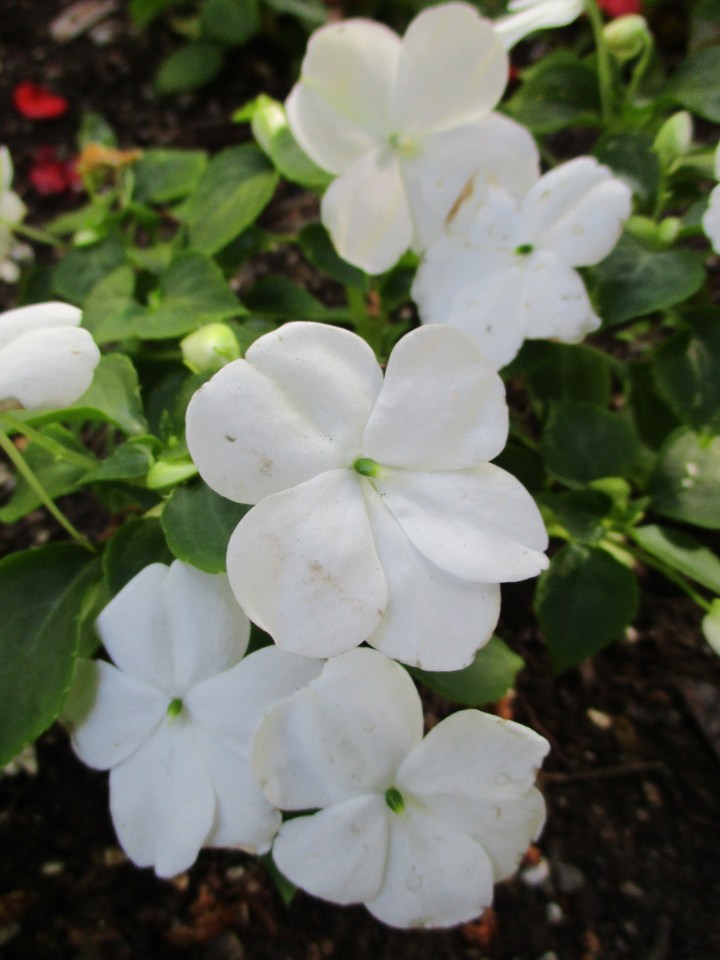 In only a few years, busy Lizzie, Impatiens walleriana, went from being one of the most popular warm season annuals to being unavailable in nurseries. It is now making a slight comeback. Most of those planted during their planting season last spring are now so profuse with bloom that their rich foliage is mostly obscured. Although they can be perennial, almost all get replaced in autumn.
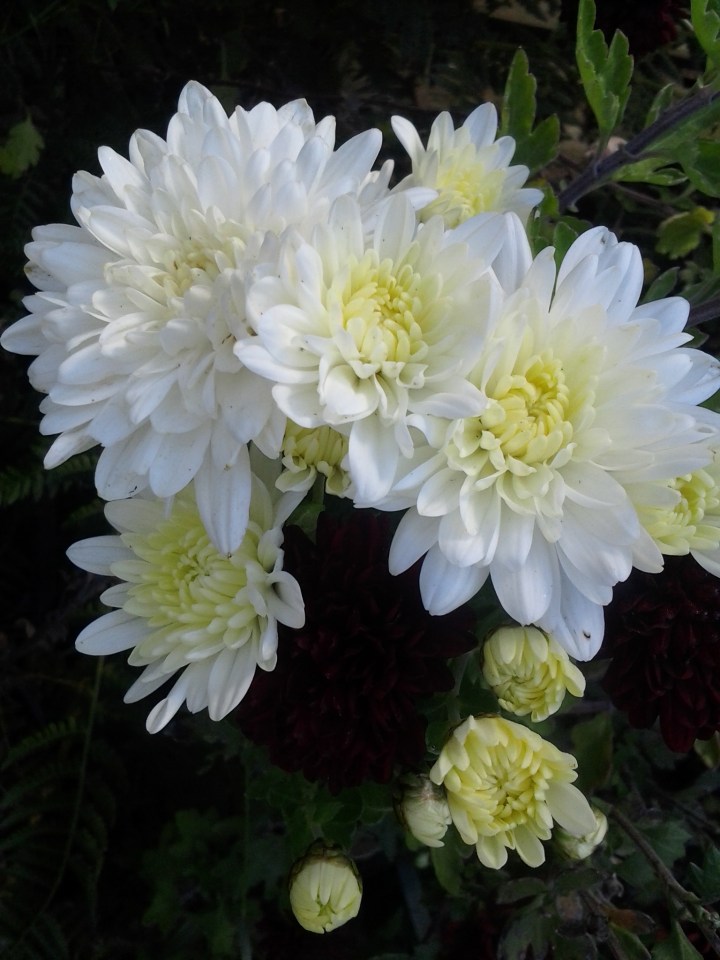 Just like warm season vegetable plants in the vegetable garden, flowering warm season annuals get replaced this time of year. Although the weather is still warm, cool season annuals should be planted now so they can disperse roots before the weather gets too much cooler. Except for a few short term annuals and perennials, most should perform until the weather gets warm next spring.
