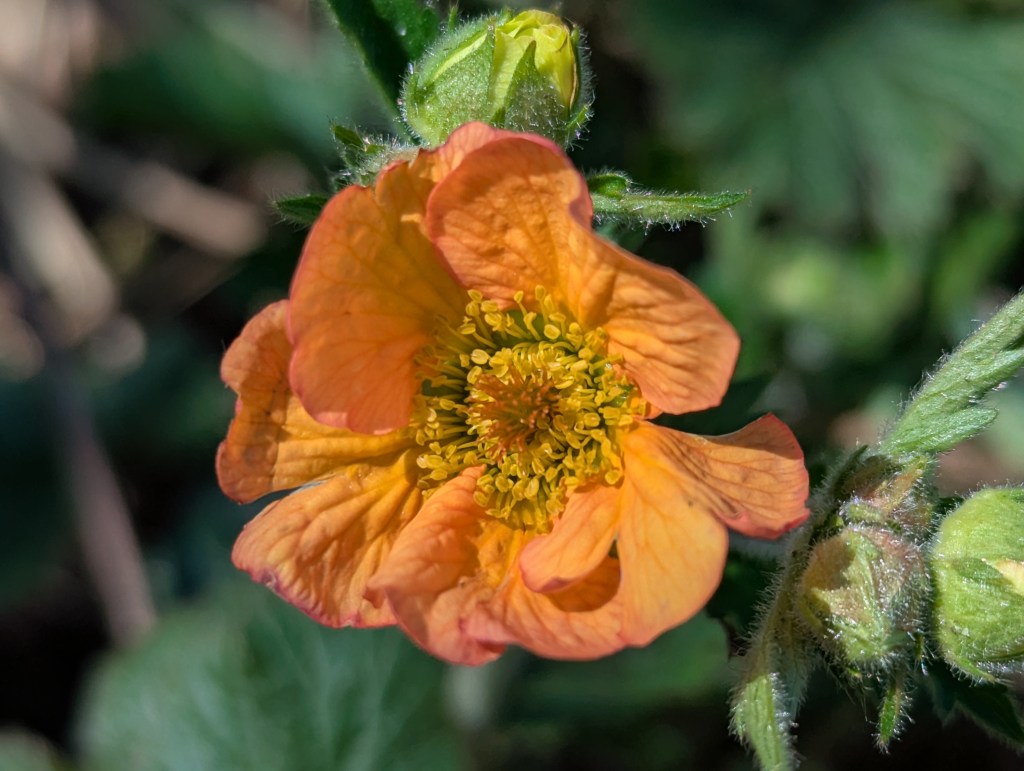
Sunday Best – Geum
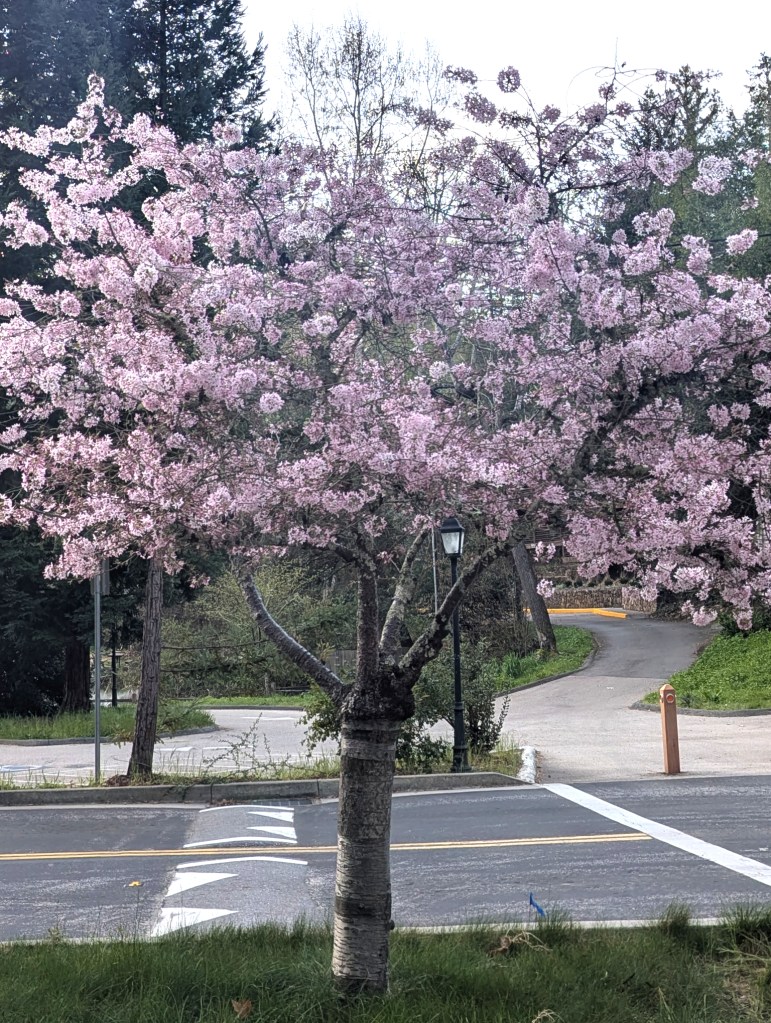
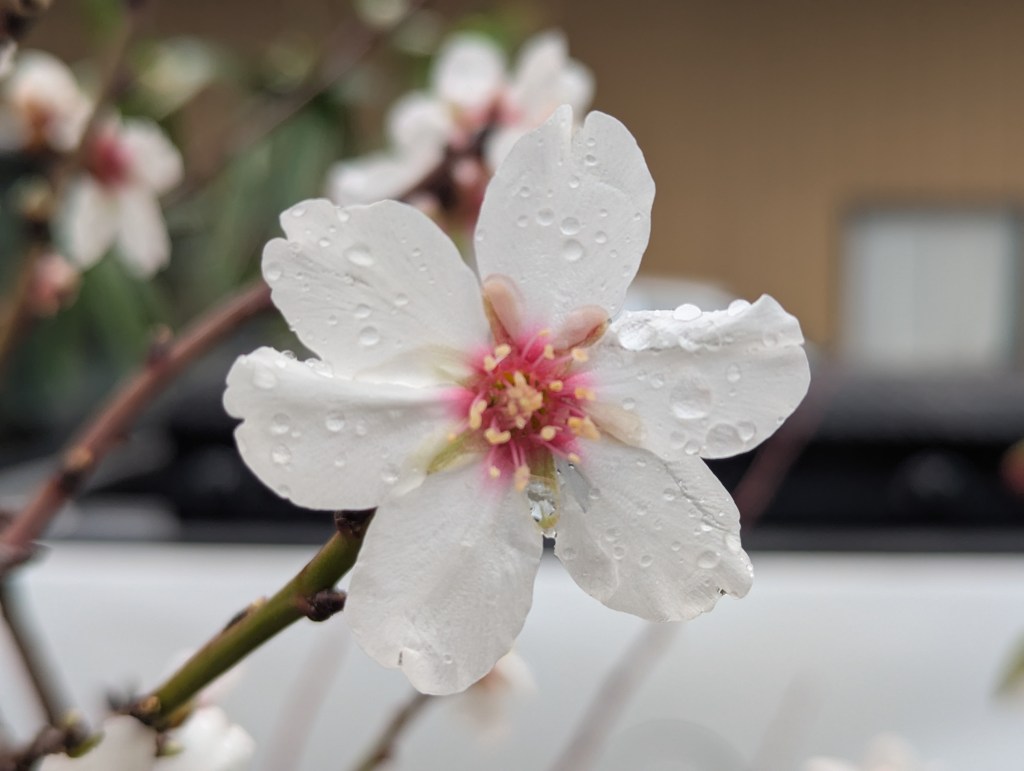
Fruit trees such as apricot, cherry, peach and plum, bloom about now. Some are already finished, while a few are just beginning. Apple and pear trees will bloom somewhat later. More colorfully, flowering or fruitless counterparts of such trees are on similar schedules. Flowering apricot has already finished bloom. Flowering crabapple will likely bloom last.
The difference between fruit trees and their flowering counterparts is not their bloom. It is their fruit or lack thereof. “Flowering” has become a euphemism for “fruitless”. Trees with such designation produce either no fruit or fruit of relatively inferior quality. Wildlife might enjoy some of any inferior fruit. Although, even inferior crabapples might make good jelly.
Purple leaf plums are probably the most popular of this type of flowering or fruitless tree. Flowering cherry is less common. Flowering peach is somewhat rare. Fruitless pear is a popular street tree, but may not bloom as profusely as the others. Also, it does not bloom quite as early. Flowering quince grows as shrubbery rather than trees with upright trunks.
While very closely related, fruiting trees and their fruitless counterparts are very different. Fruiting trees should obviously produce fruit. That is their primary purpose. Their fruitless counterparts are merely ornamental. The truly fruitless types grow and bloom where fruit would be a messy nuisance. For example, some perform well as small scale street trees.
Because they are fruitless, such trees do not require specialized dormant pruning. There is no need to prune to concentrate resources into developing fruit. Nor is there any need to prune to accommodate the weight of fruit. Fruitless trees can assume their natural form and scale instead. Although none are large trees, they can grow taller than fruiting trees.
Also because they are fruitless, their bloom is their priority. They bloom more abundantly than fruiting trees, and some bloom with double flowers. Floral color is more diverse too, ranging from bright white to rich rosy pink. Some flowering crabapple trees bloom nearly red. Since dormant pruning is unnecessary, blooming stems are splendid as cut flowers.
Between leaving on my trip and arriving, I neglected to get many pictures to select from for these Six. Actually, only two pictures are from the trip. I should take more pictures.
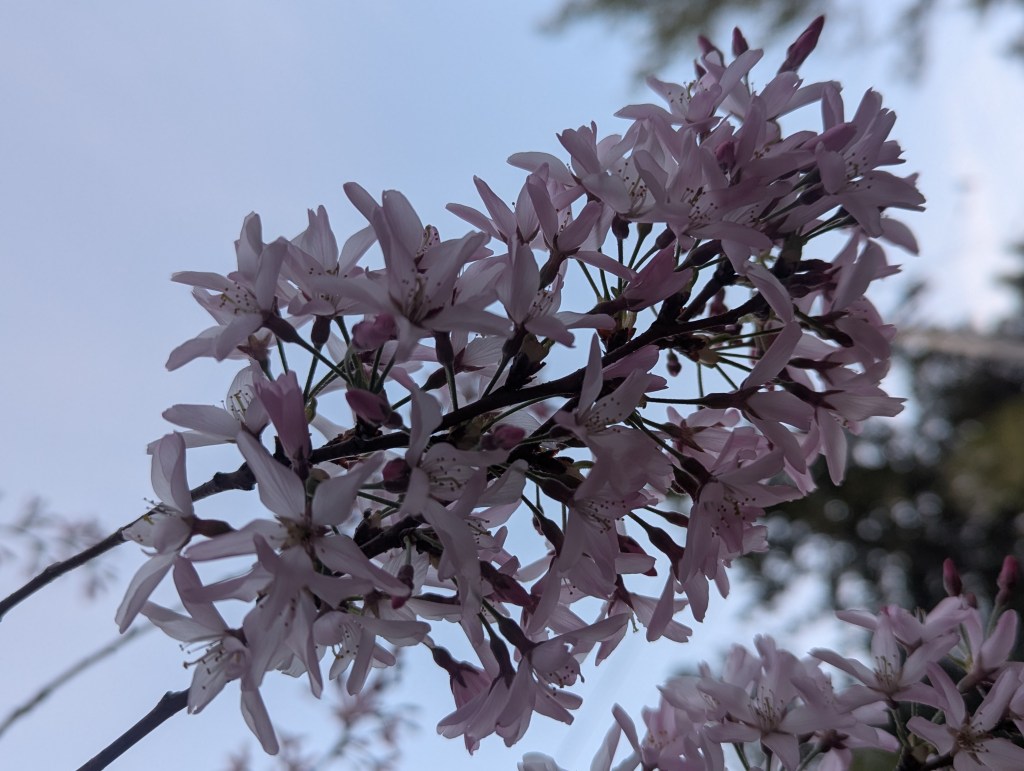
1. Prunus serrulata, flowering cherry of unidentified cultivar was featured in the garden column. It was the first to bloom. This picture was a bit too dark to use as an illustration.
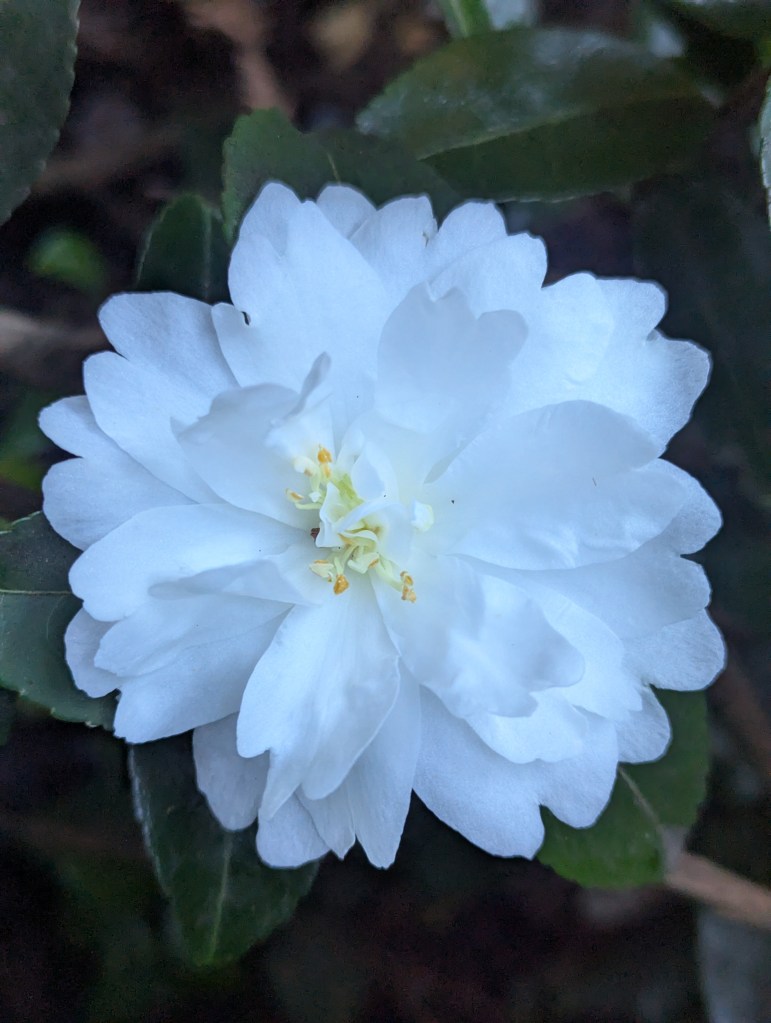
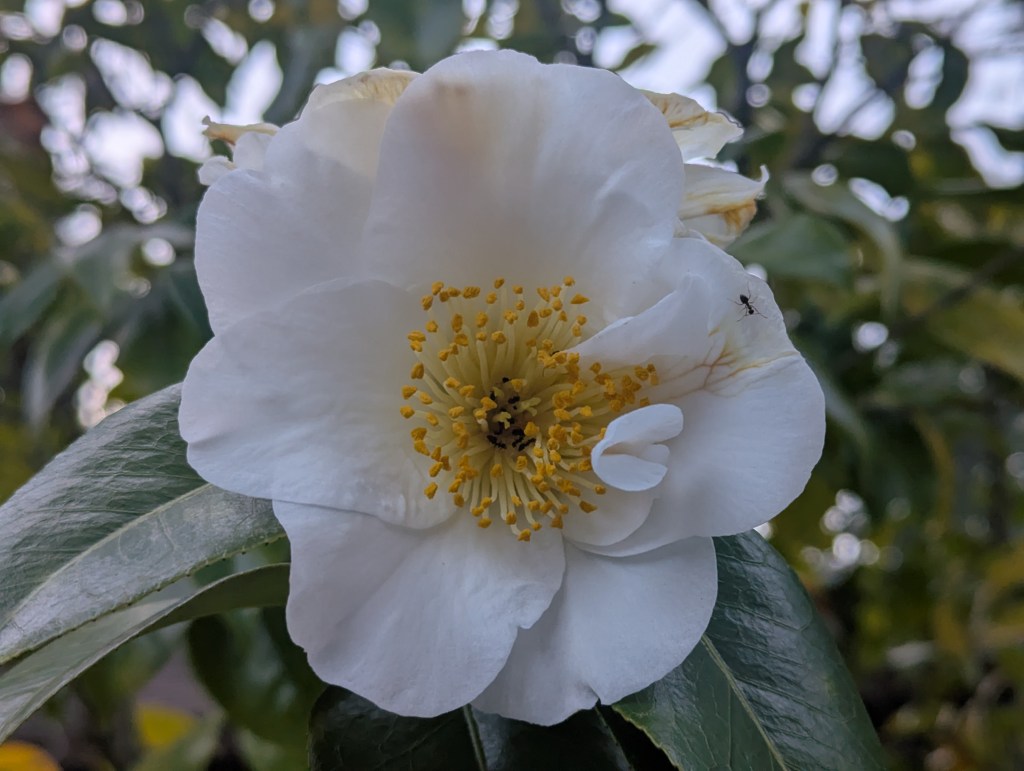
2. Camellia japonica, camellia looks like a fried egg with such a prominent yellow center surrounded by a white corolla. White camellia are prettier with less prominent stamens.
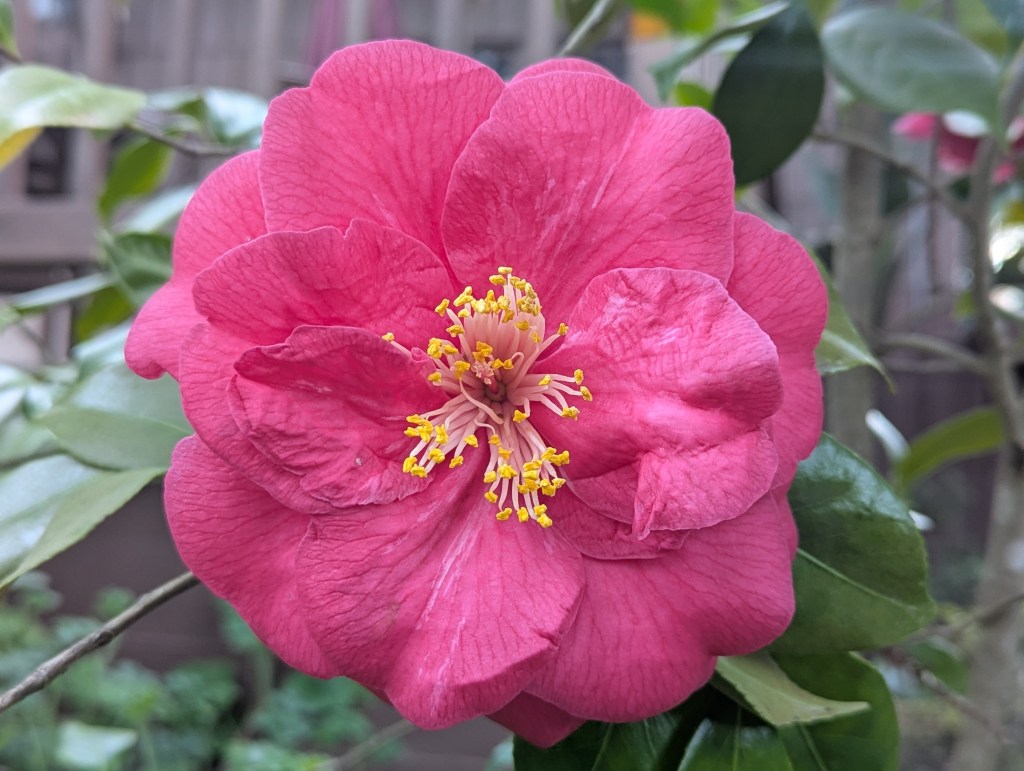
3. Camellia japonica, camellia seemed more red than this when I took its picture. It was still blooming adjacent to the white camellia above. It is as pretty in pink as it was in red.
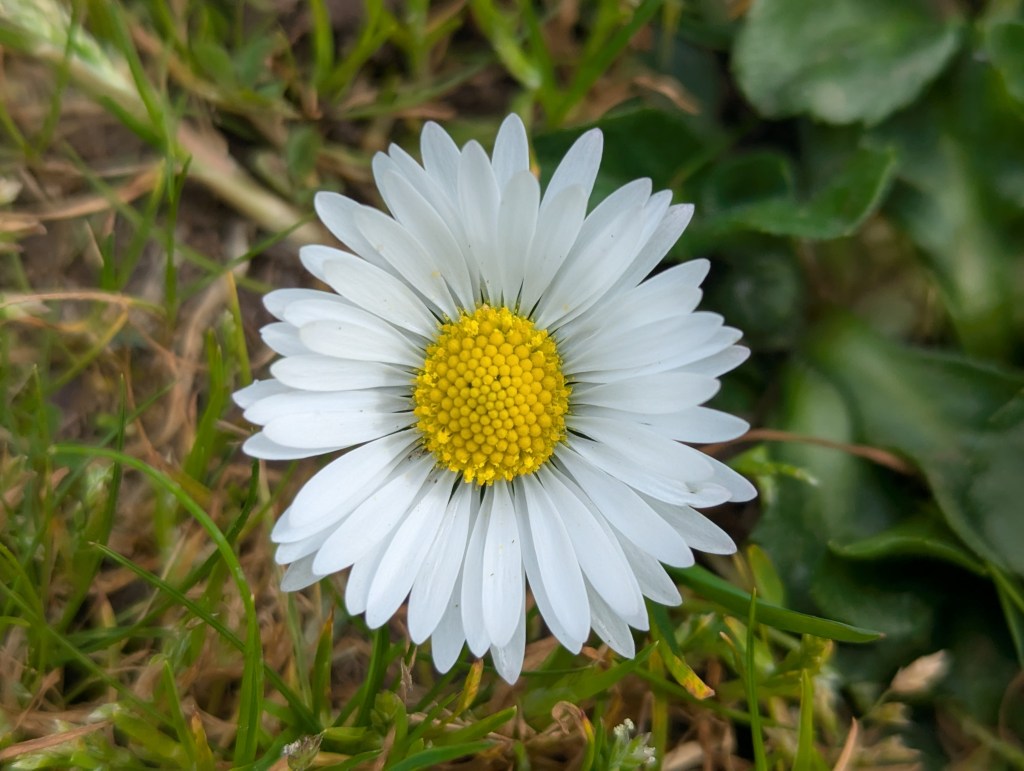
4. Bellis perennis, English daisy is the only picture that I took in Oregon. I must be more diligent about taking pictures on the way back, even if I do not stop in Oregon too much.
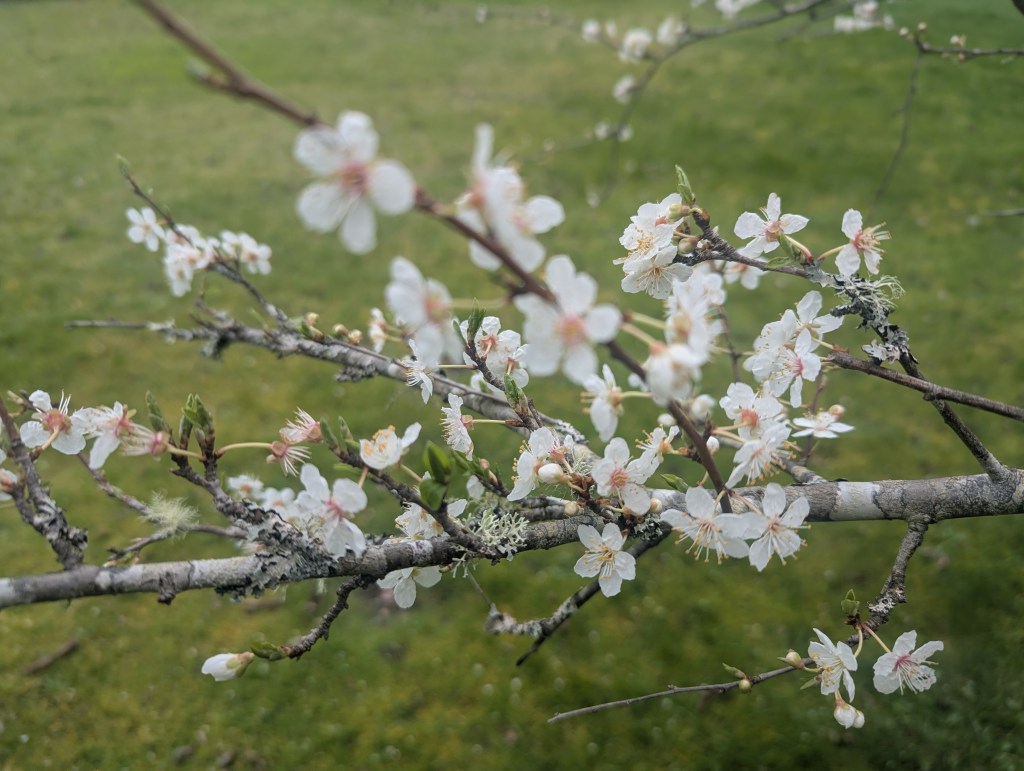
5. Prunus spp., cherry understock is growing from the base of what was formerly a stone fruit tree of some sort on my Pa’s farm. It is cool and rainy here, but is obviously spring.
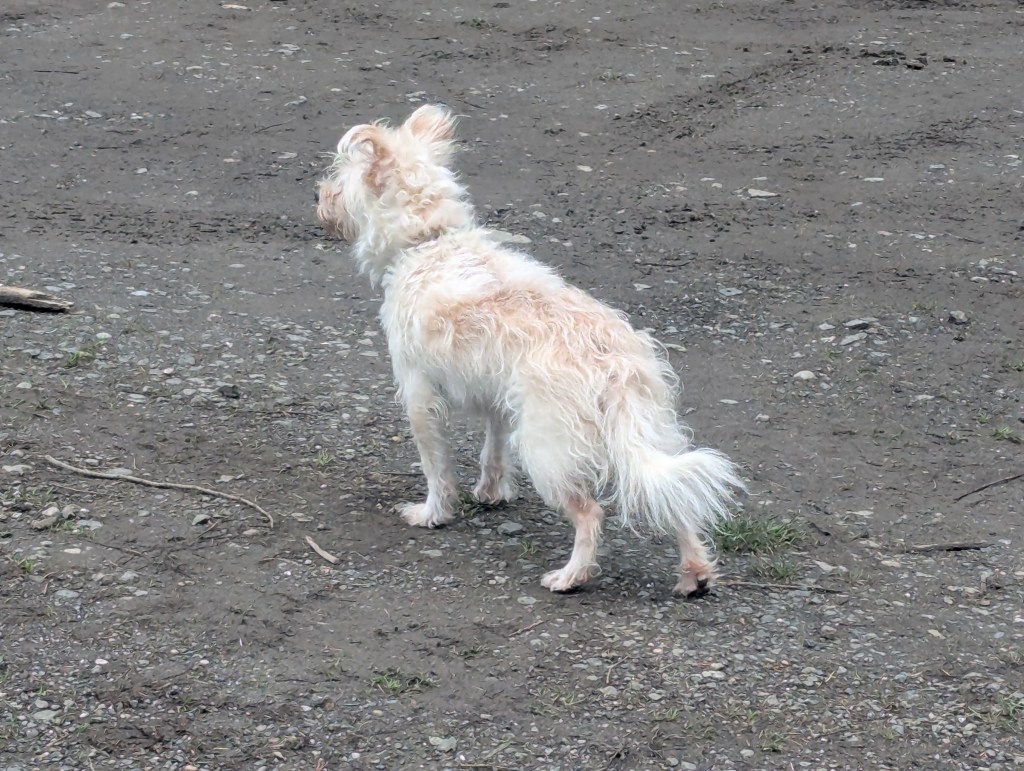
6. Rhody is a good sport on our trip. We left at midnight and, because of a few stops, we arrived after six in the evening. That is an eighteen hours drive, or a 126 dog hours drive.
This is the link for Six on Saturday, for anyone else who would like to participate: https://thepropagatorblog.wordpress.com/2017/09/18/six-on-saturday-a-participant-guide/
More flowers seem to be in order. The six that I posted pictures of last week got so much extra attention.
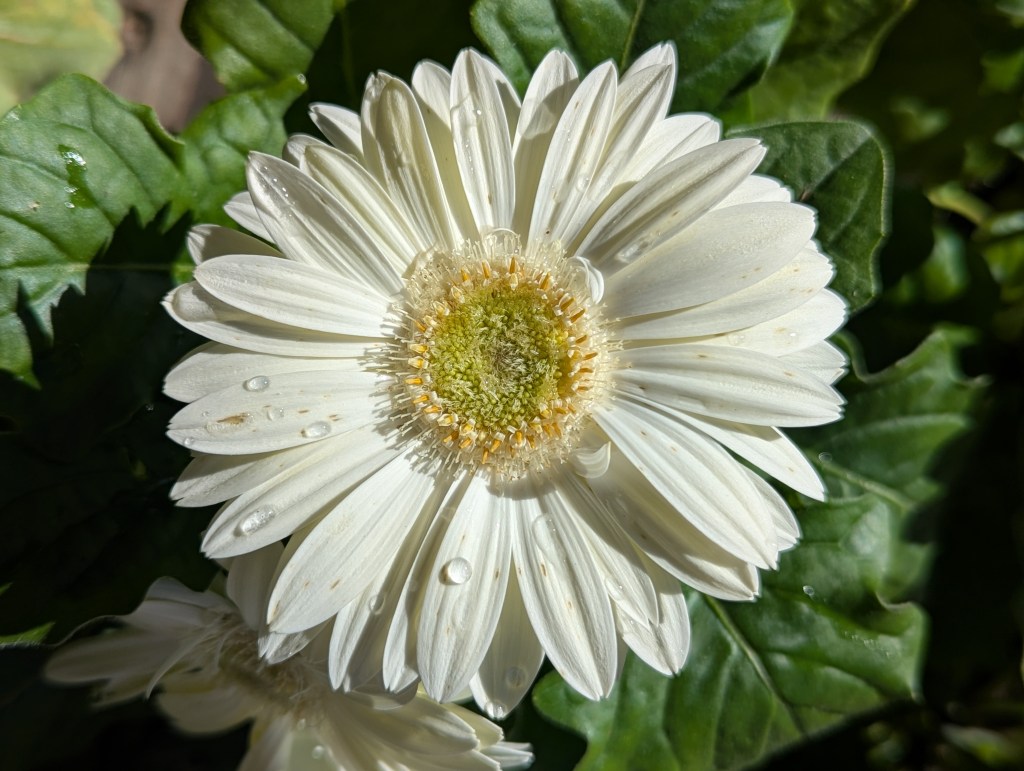
1. Gerbera jamesonii, Transvaal daisy, along with the columbine below, was observed in a nursery. It is a long story. To be brief, neither was within the landscapes or my garden.
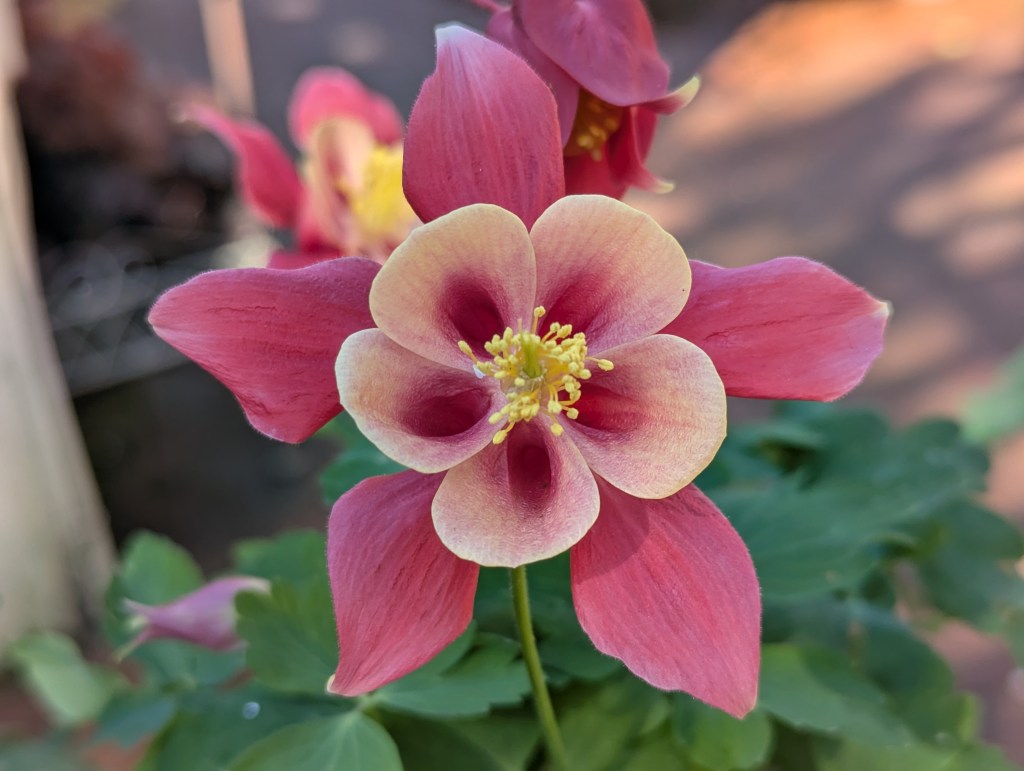
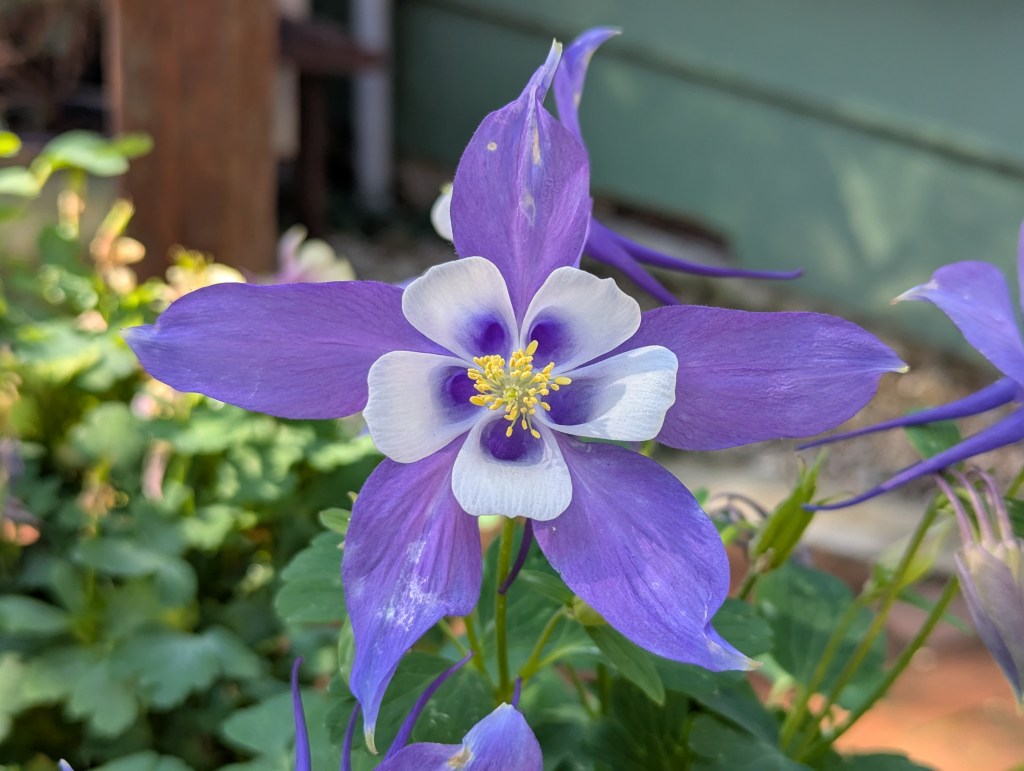
2. Aquilegia X hybrida, columbine is the State Flower of Colorado, but also is the colors of the Flag of Greece. Perhaps that is too much trivia. It is elegant and pretty regardless.
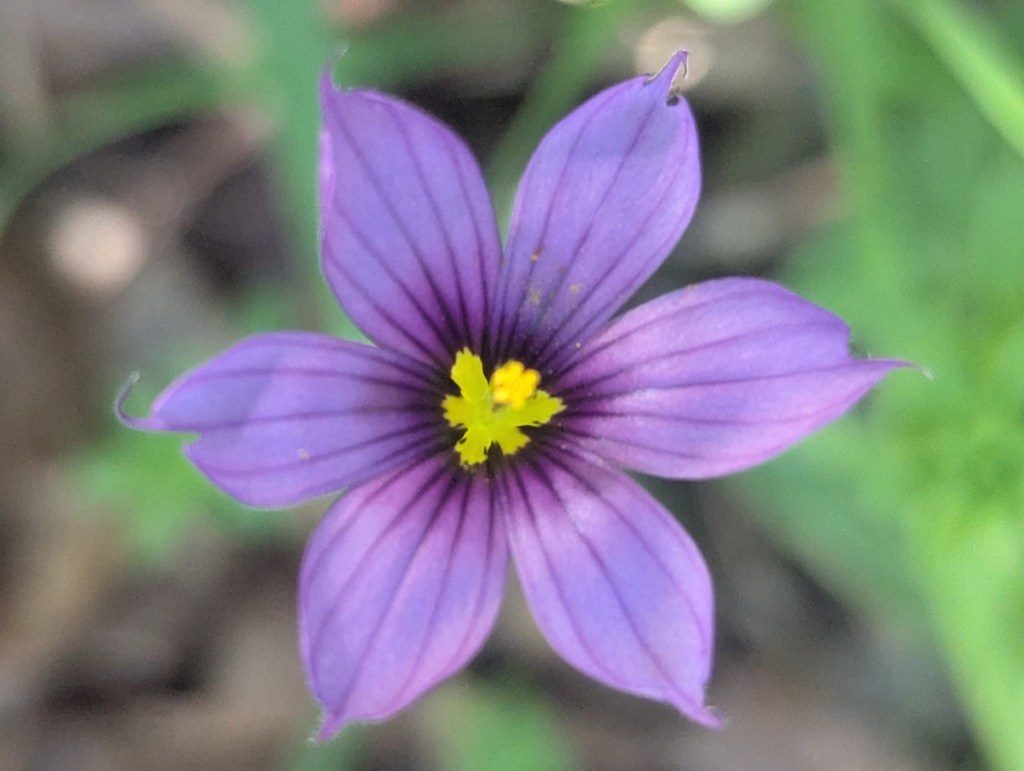
3. Sisyrinchium angustifolium, blue eyed grass grows wild here. This one happens to be in my driveway. Its proliferation exceeds its intellect. It might otherwise soon be extinct.
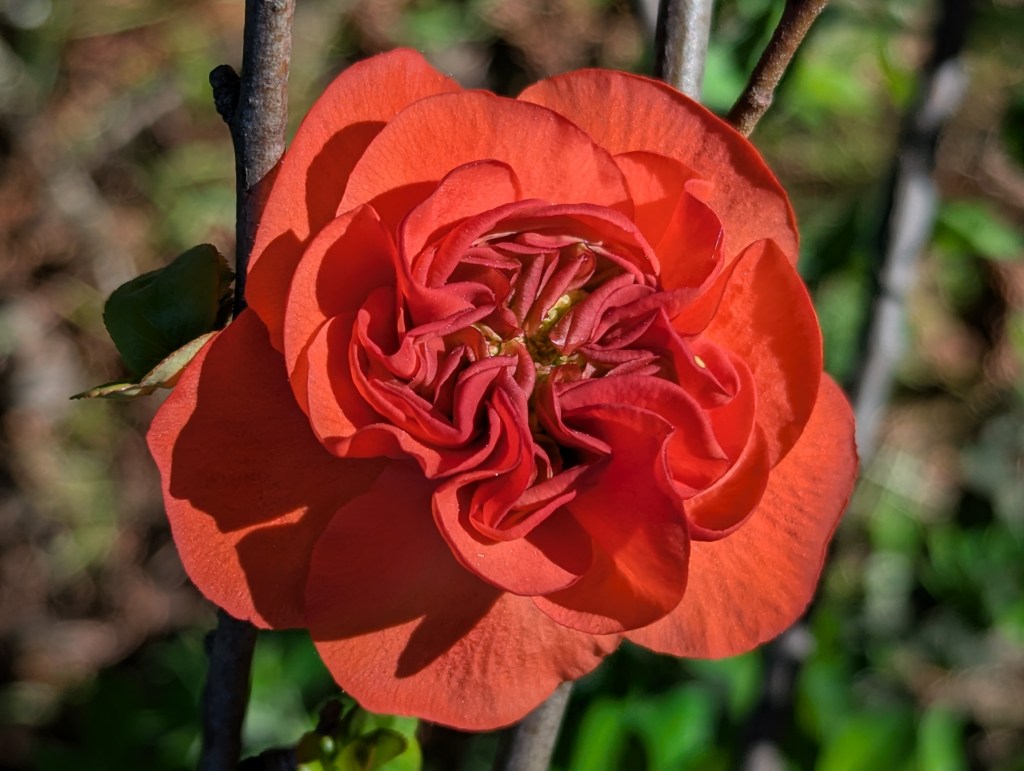
4. Chaenomeles speciosa ‘Orange Storm’ flowering quince is appealing only because it is a flowering quince. I am unimpressed by its fancy breeding and orangish red garishness.
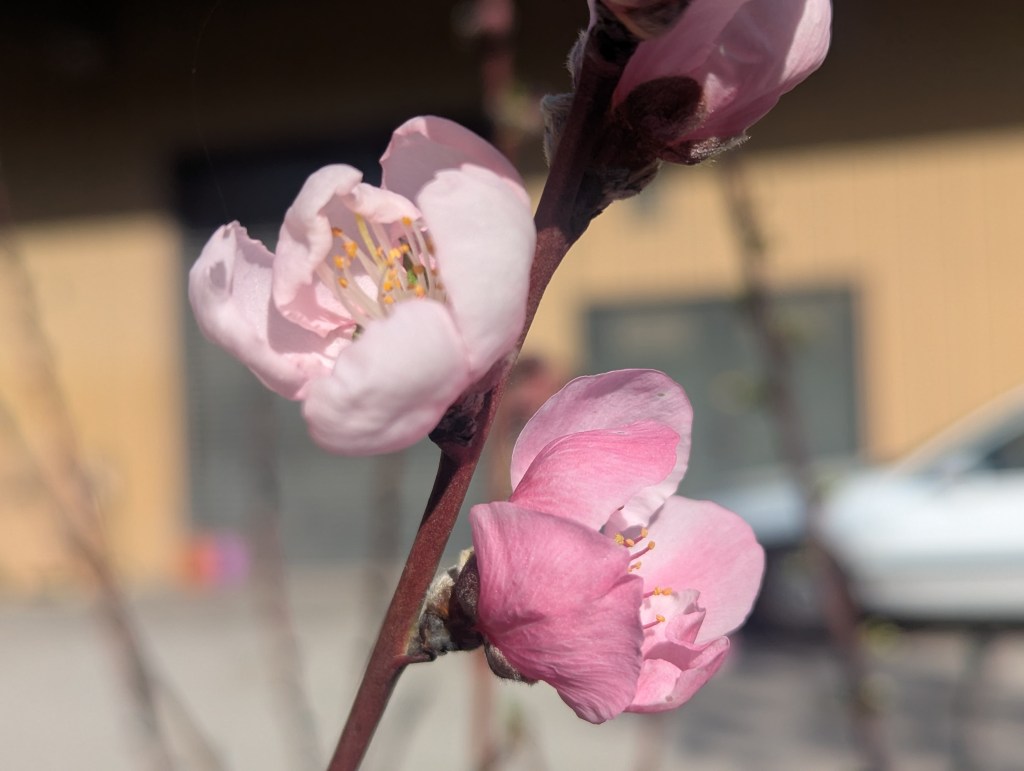
5. Prunus persica var. nucipersica ‘Fantasia’ nectarine is more respectable since it is not fruitless, and also since it is among the most popular cultivars of the Santa Clara Valley.
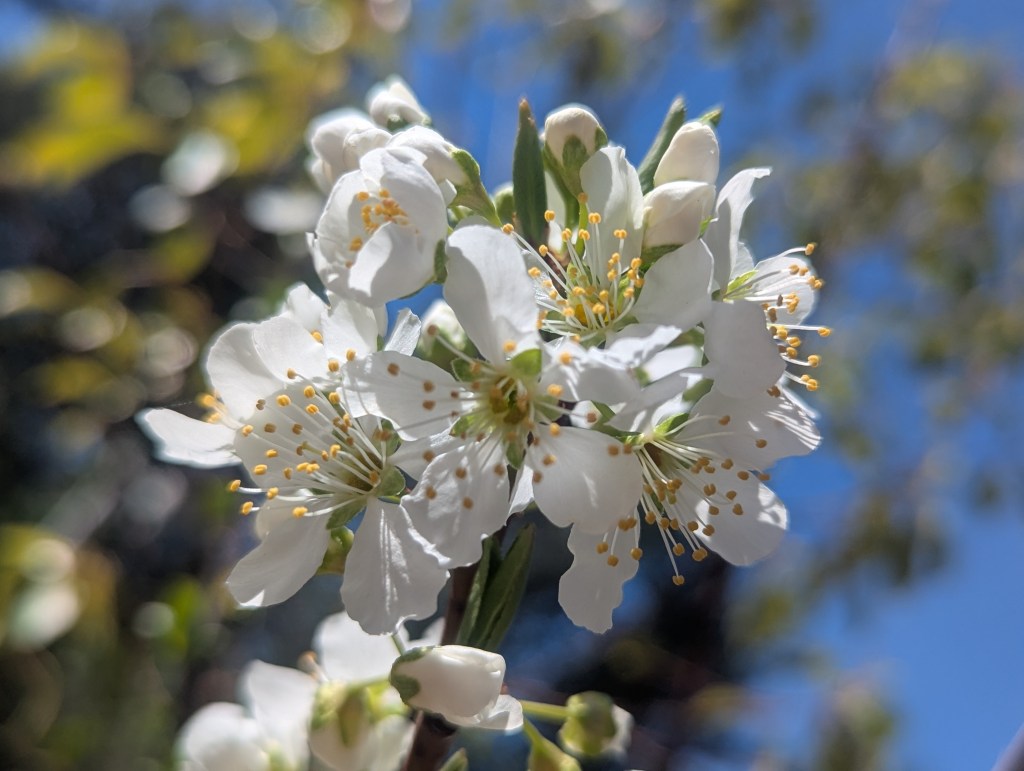
6. Prunus salicina ‘Satsuma’ plum is not as popular as ‘Santa Rosa’ plum is, but it is very traditional among those who are familiar with it. It is not quite as tart as ‘Santa Rosa’ is.
This is the link for Six on Saturday, for anyone else who would like to participate: https://thepropagatorblog.wordpress.com/2017/09/18/six-on-saturday-a-participant-guide/
The first is Spanish. The second is Chinese. The rest, including Oregon grape, are native. Only the iris and poppy were actually found growing in the wild, though. It is beginning to look like spring.
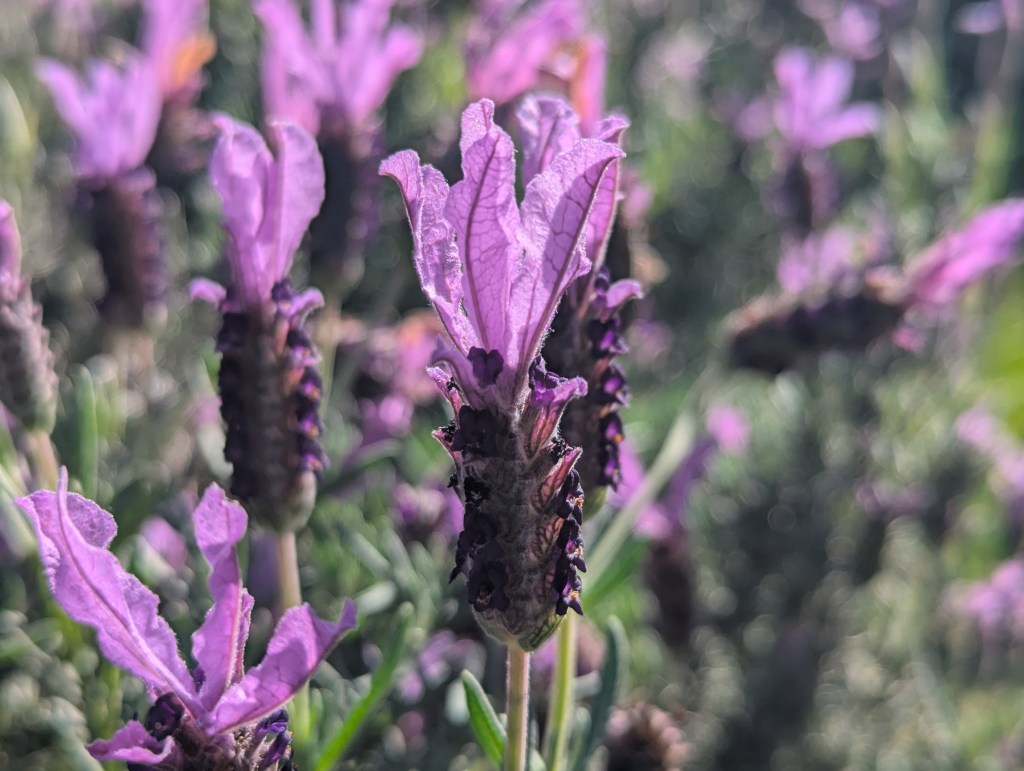
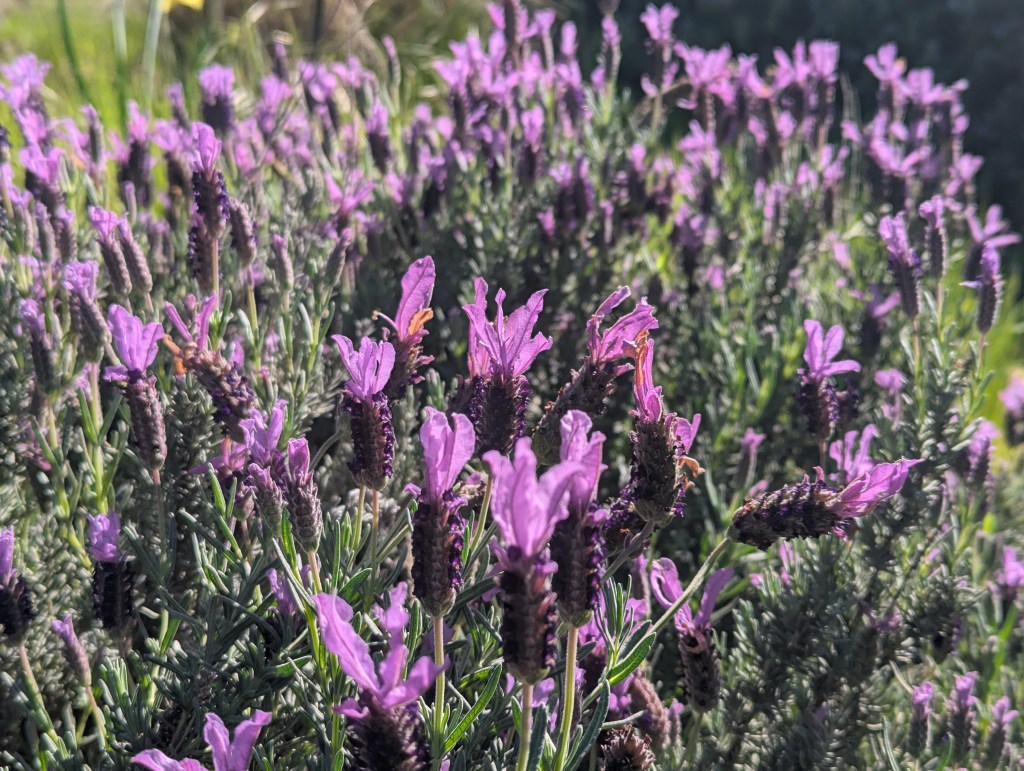
1. Lavandula stoechas, Spanish lavender compensates for its absence of floral fragrance with delightful foliar aroma, especially as the weather begins to get warmer after winter.
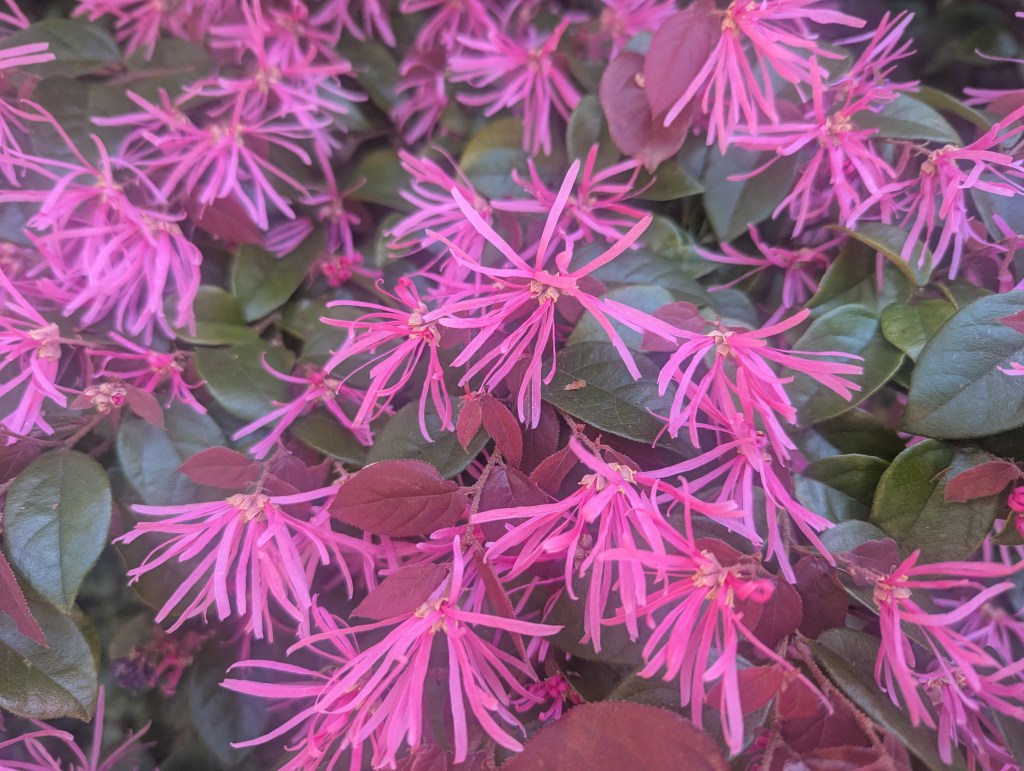
2. Loropetalum chinense, Chinese fringe flower blooms with these silly rosy pink flowers above lightly bronzed new foliage, which is collectively more colorful than simple bloom.
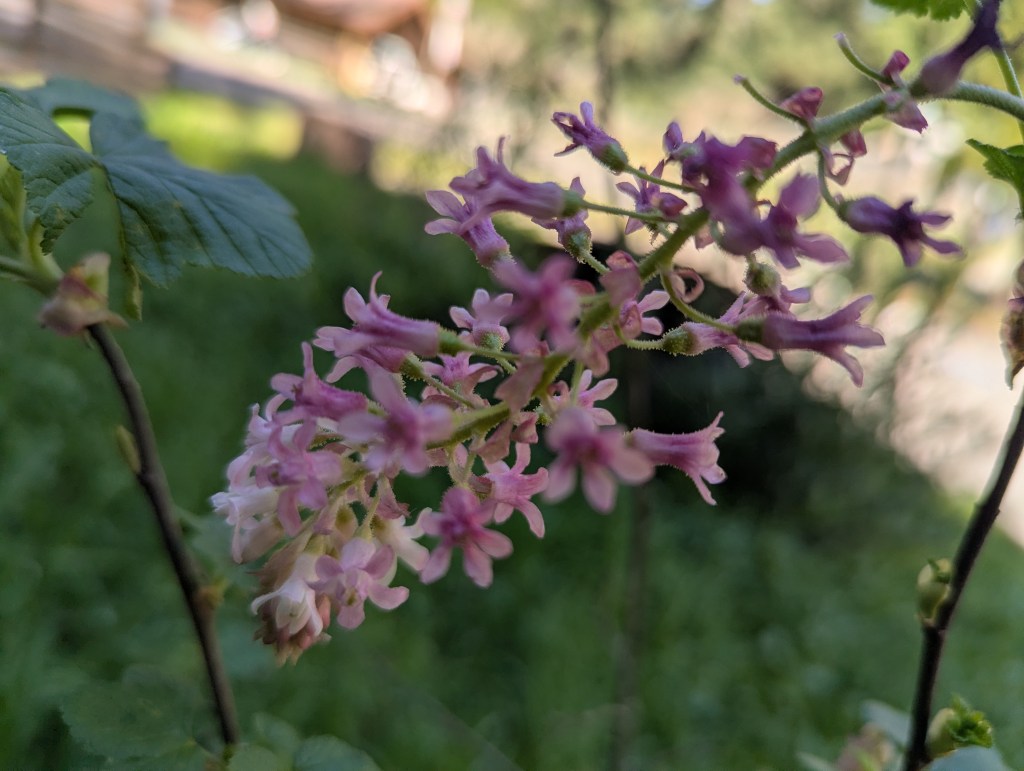
3. Ribes sanguineum, flowering red currant, although native here, does not grow wild in this particular location. This one was added to one of the landscapes, and is quite happy.
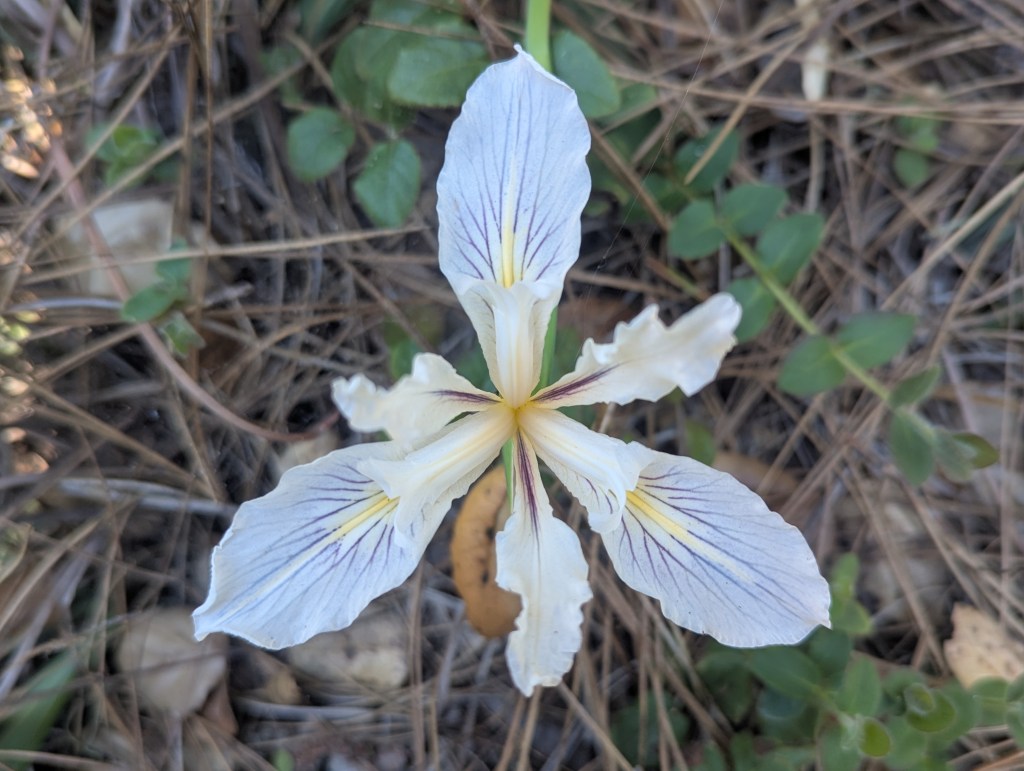
4. Iris fernaldii, Fernald’s iris does grow wild here, and seems to bloom more happily on exposed roadsides than in forests. Perhaps it appreciates the better exposure to sunlight.
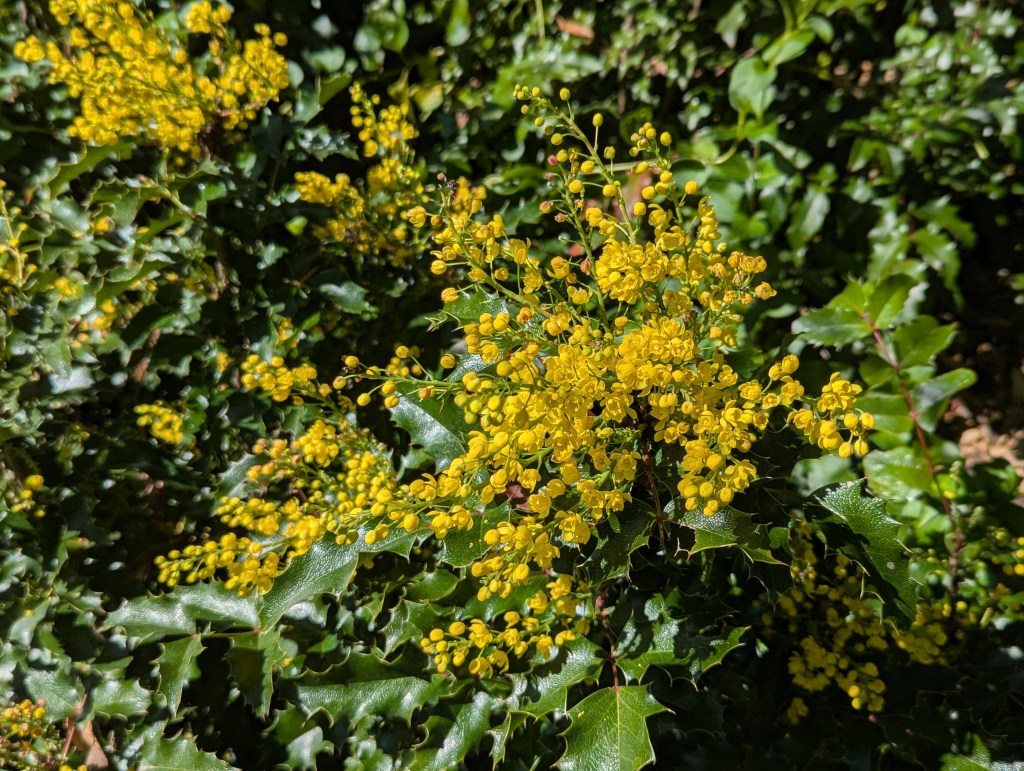
5. Mahonia aquifolium, Oregon grape is the Official State Flower of Oregon. It is native, but was likely added to the several landscapes that it inhabits here, like the red currants.
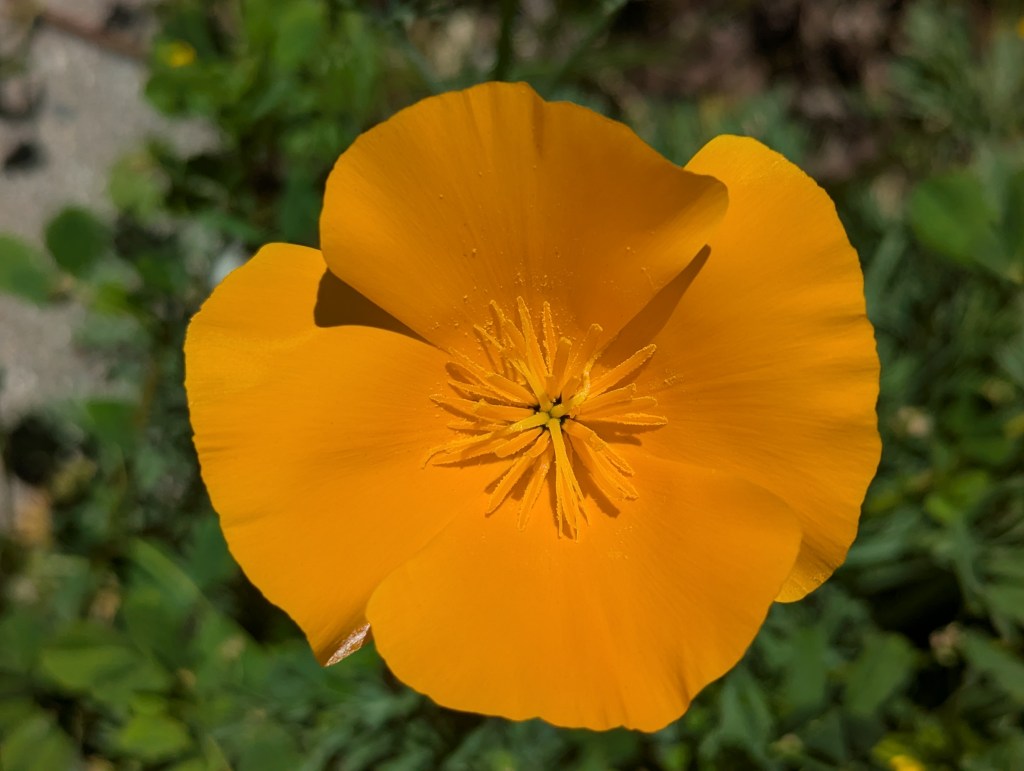
6. Escholzia californica, California poppy is the Official State Flower of California. It can be a bit prolific in some situations, while less prolific where seed are intentionally sown.
This is the link for Six on Saturday, for anyone else who would like to participate: https://thepropagatorblog.wordpress.com/2017/09/18/six-on-saturday-a-participant-guide/
 Tony Tomeo