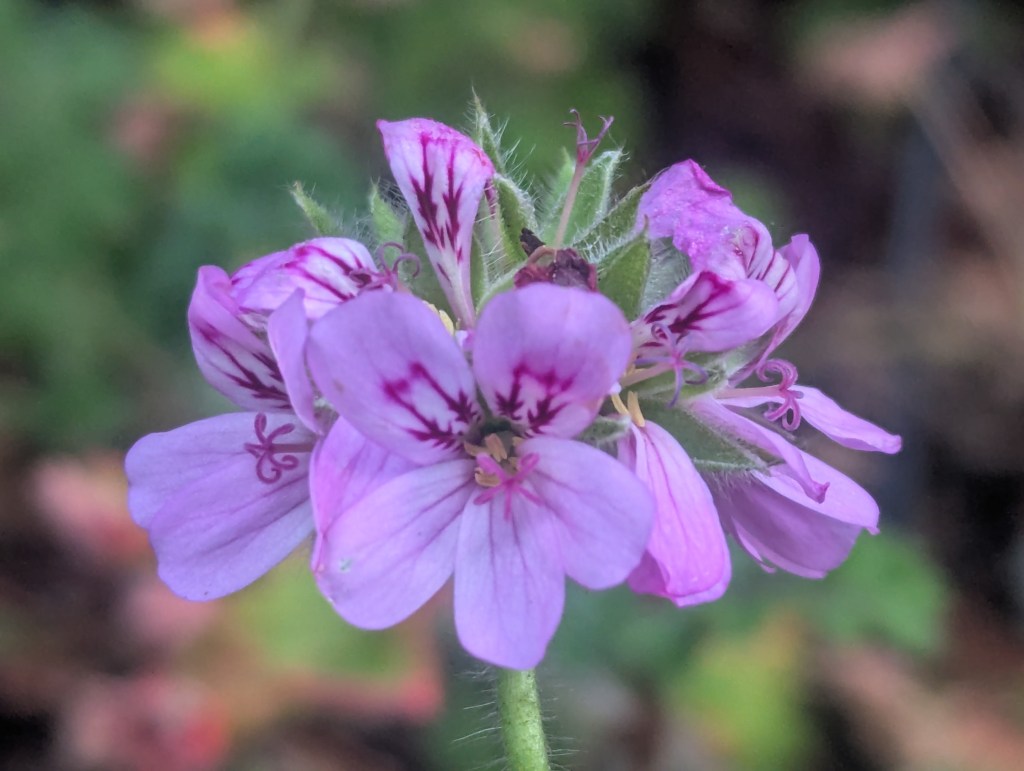
Sunday Best – Scented Geranium
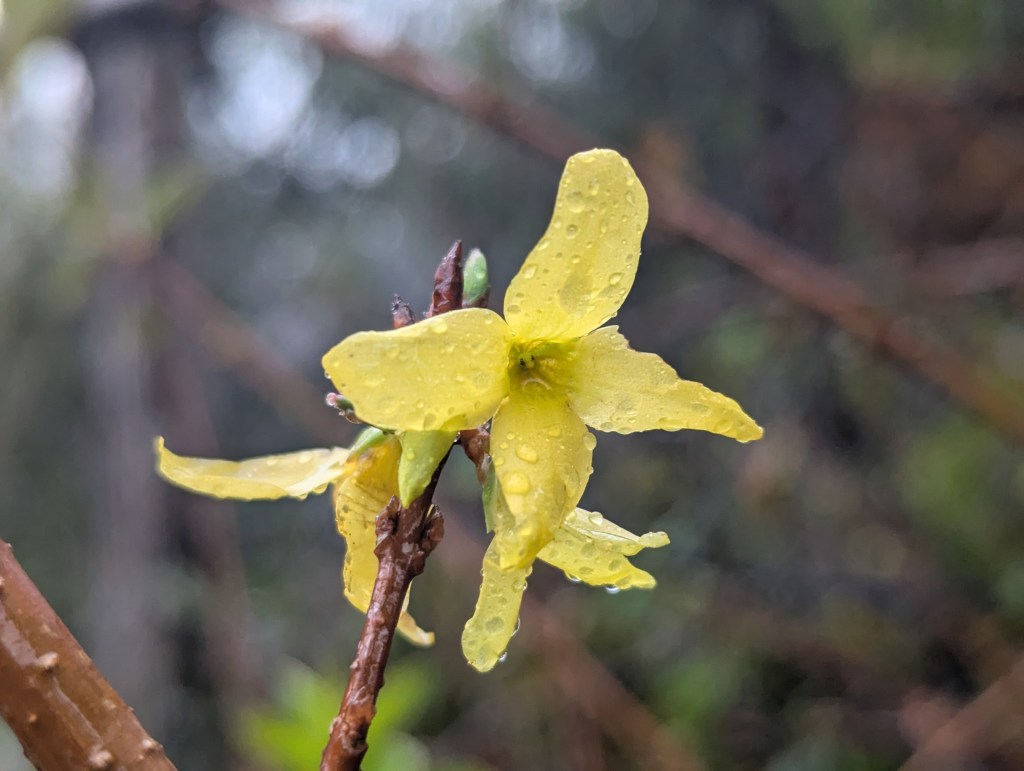
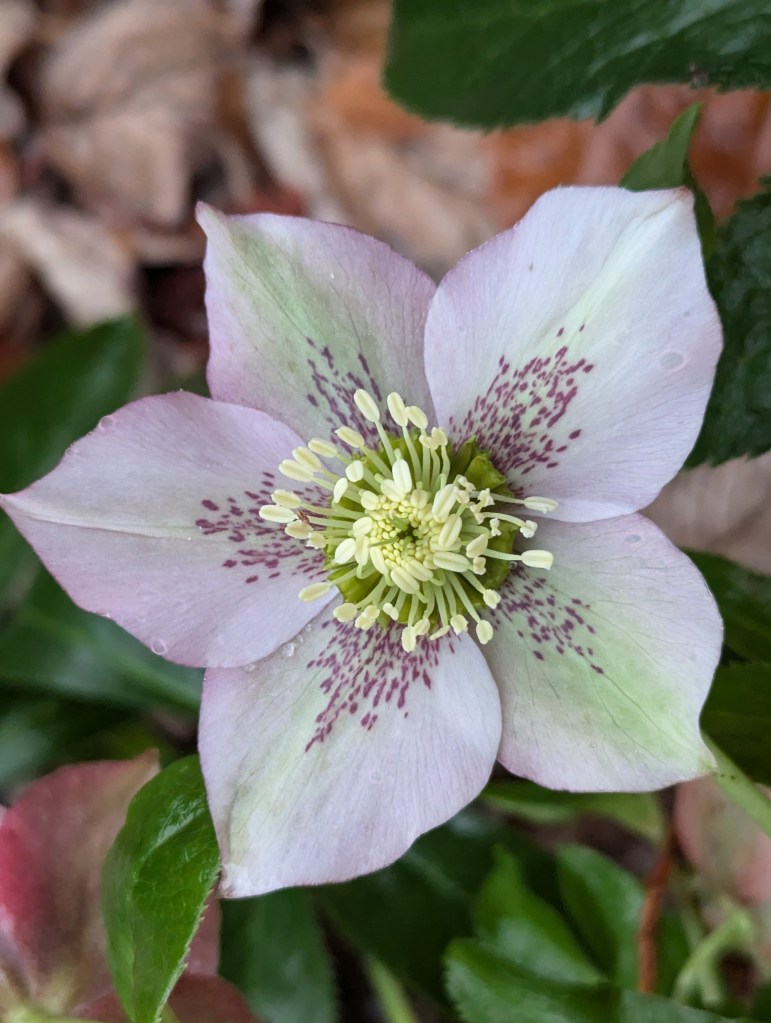
Evergreen foliage and berries are now popular for home decor for a primary reason. Not many winter flowers are blooming and available for cutting and bringing in. Most flowers prefer to bloom while more pollinators are more active. Not many pollinators are out and about while weather is cool through winter. Consequently, winter flowers may be scarce.
However, they are not actually as scarce as they seem to be. Some winter flowers bloom without drawing attention to themselves. They do not need to if they rely on wind for their pollination. Colorful flowers are colorful only to attract pollinators. For example, redwood is blooming quite privately about now. It produces no prominently colorful flowers to see.
Some winter flowers do not actually intend to bloom in winter. They are merely confused by the local climates. For example, African daisy blooms whenever the weather is warm. It does not know to stop blooming for winter here because the weather is not overly cold. Cala are tropicals, so have no concept of winter. They should not bloom, but might try to.
Camellias are some of the most familiar and popular winter flowers. Sasanqua camellias bloom before common camellias. Different cultivars of each type bloom at different times. The latest sasanqua camellias might actually bloom after the earliest common camellias. Sasanqua camellias bloom more abundantly. Common camellias provide larger flowers.
Although most salvia bloom during warmer weather, a few bloom sporadically for winter. Autumn sage seems to never be completely without bloom. Meanwhile, cultivars of witch hazel bloom curiously on bare stems. So does winter jasmine, but only in yellow. Oregon grape can bloom impressively within cooler climates. It is evergreen and blooms yellow.
Many of the better winter flowers are cool season annuals, which are no good for cutting. These comprise pansy, viola, cyclamen, dianthus, snapdragon, nemesia and primroses. Stock is exceptional, because it can be cut and brought inside and is splendidly fragrant. Ornamental kale and ornamental cabbage are foliar plants that present like wide flowers.

Half of these blooms are right on time. The other half are azaleas that really should wait until spring to bloom. I hope that some refrain from blooming now to bloom in season.
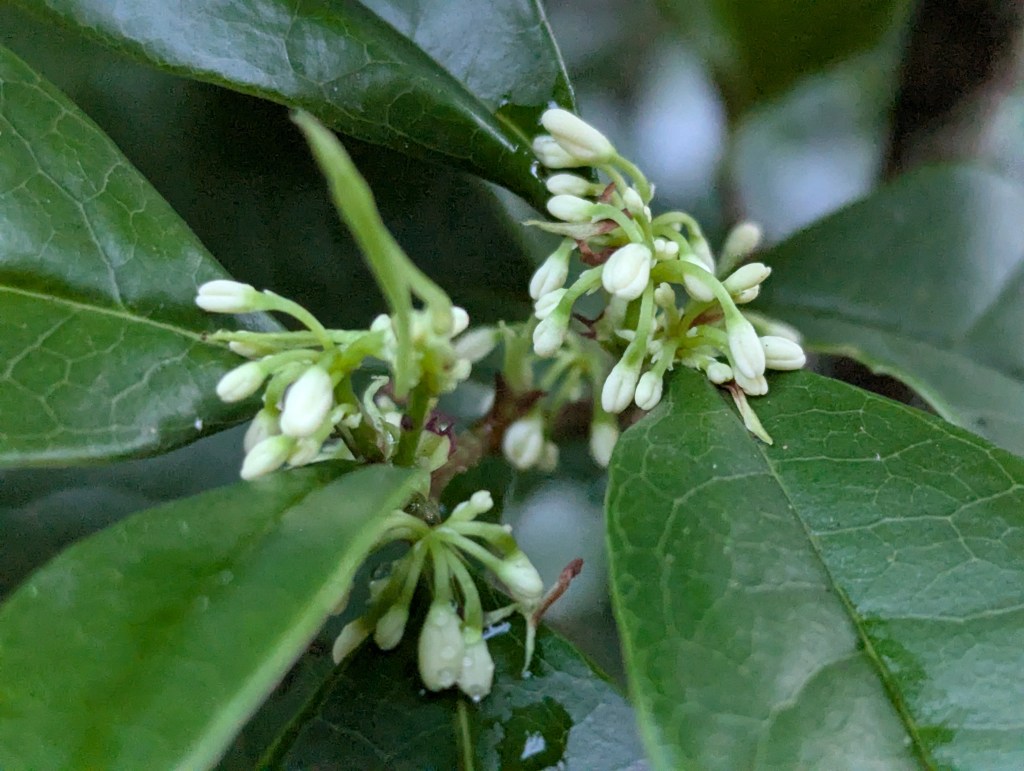
1. Osmanthus fragrans, sweet osmanthus may not be much to look at, but is exquisitely fragrant. I believe that the current cool and humid weather enhances its floral fragrance.
2. Viburnum tinus, laurustinus, which is not typically very fragrant, likewise seems to be more fragrant with cool and humid weather. This one blooms white without pink blush.

3. Osteospermum ecklonis, African daisy blooms significantly less while weather is cool, but seems to never be completely without bloom. This one blooms with a billowy center.

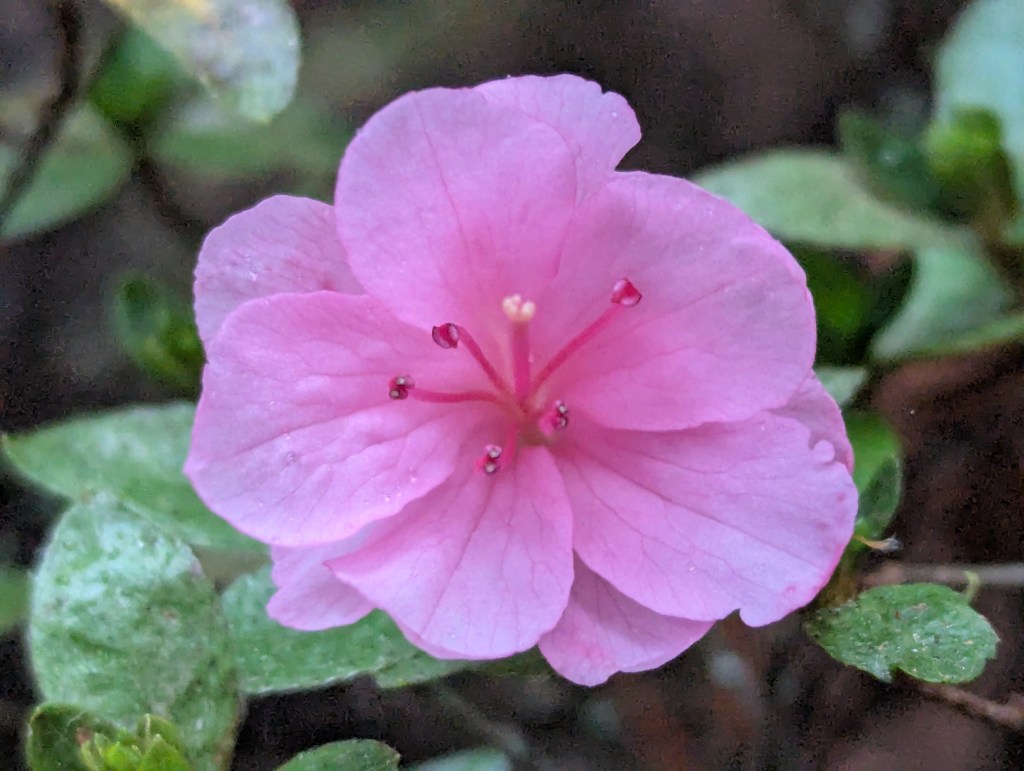
4. Rhododendron spp., azalea should not be blooming now. Flowers that bloom now will be finished and unavailable to bloom in spring. I believe that this cultivar is ‘Coral Bells’.
5. Rhododendron spp., azalea, which is likely ‘Fielder’s White’, is blooming prematurely also. If I remember correctly, it typically does this, but somehow blooms for spring also.

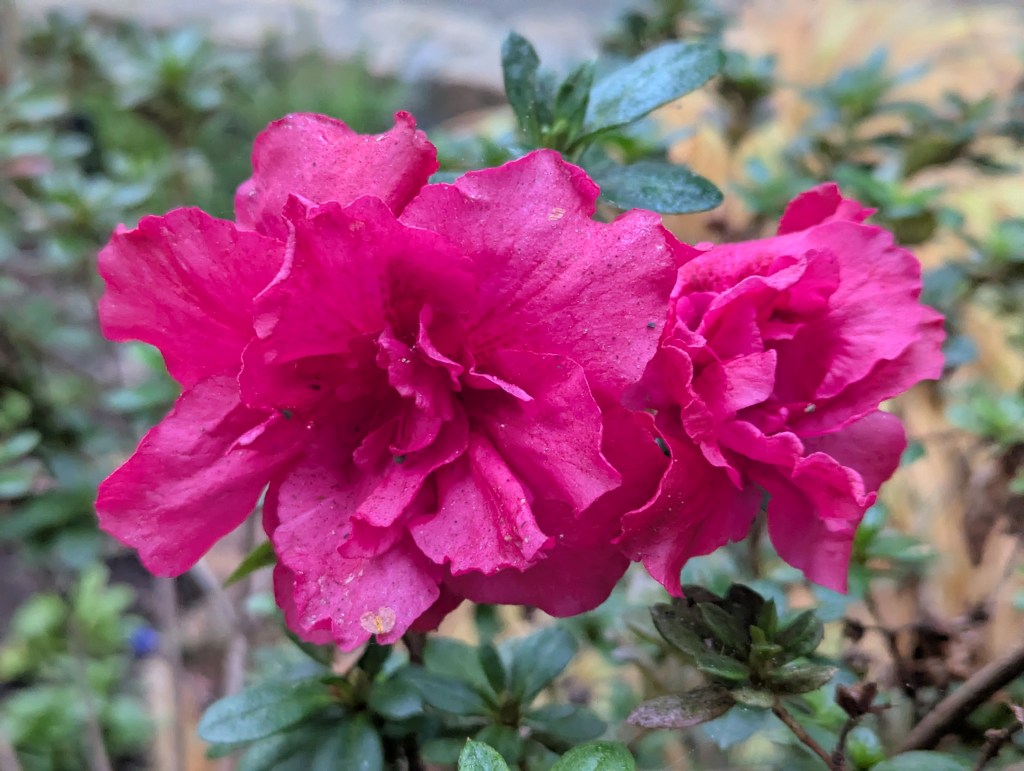
6. Rhododendron spp., azalea with double bloom is probably a recycled florist specimen. I have no idea what cultivar it is. It certainly is colorful. I hope it saves bloom for spring.
This is the link for Six on Saturday, for anyone else who would like to participate: https://thepropagatorblog.wordpress.com/2017/09/18/six-on-saturday-a-participant-guide/
As bloom of most other plants decelerates for late autumn and winter, the floral color of common annuals becomes more prominent in the landscapes at work.
1. Viola X wittrockiana, viola blooms with smaller but more profuse flowers than pansy. I am not certain if they are the same species. Also, most of the flowers face one direction.
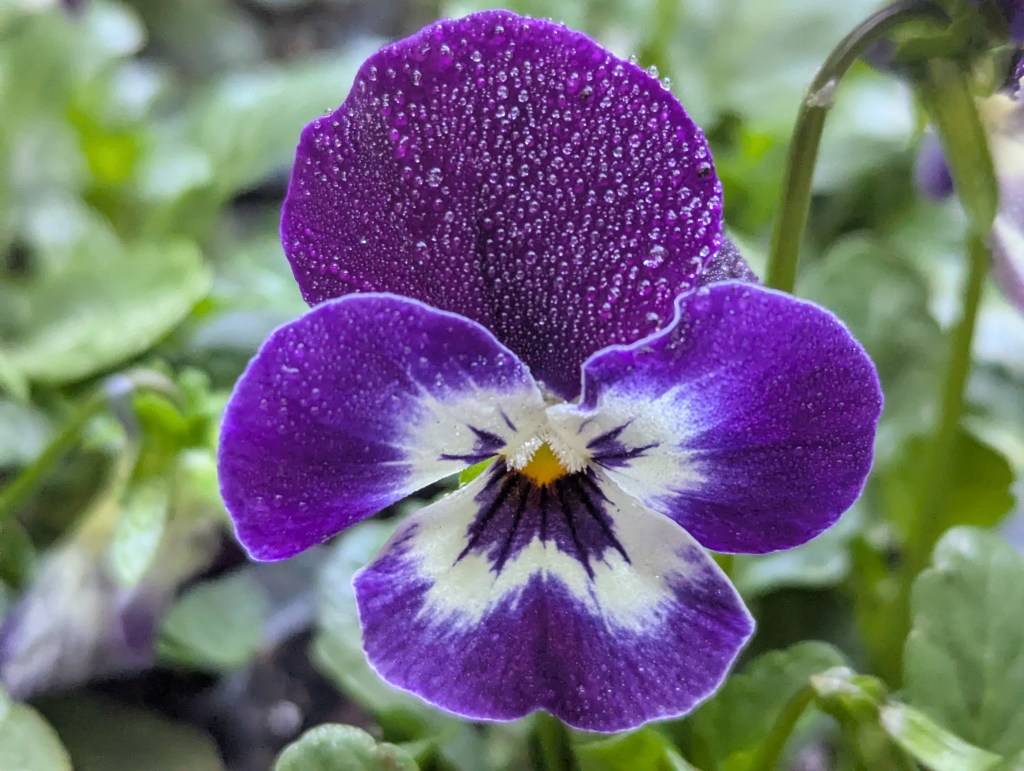
2. Viola X wittrockiana, pansy blooms with bigger but less profuse flowers which mostly face random directions. We got only two six packs to add to other flowers in a small bed.
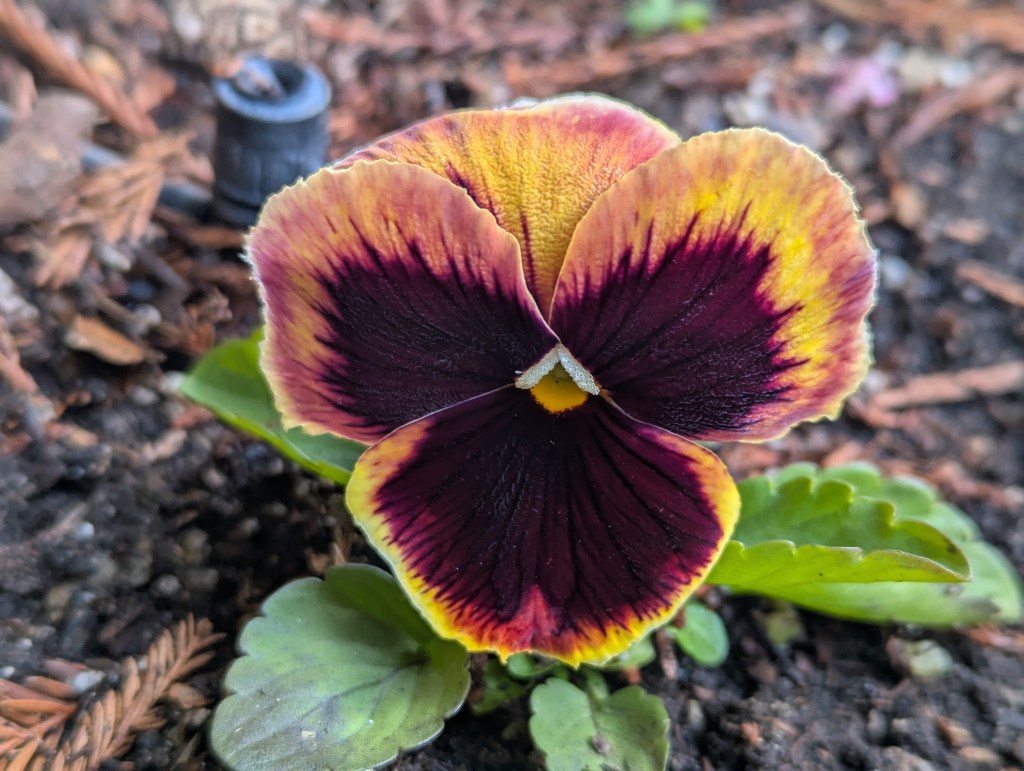
3. Viola X wittrockiana, pansy is redundant to the picture above, but is a different color. The plants are so dinky that they are scarcely visible behind their relatively wide flowers.
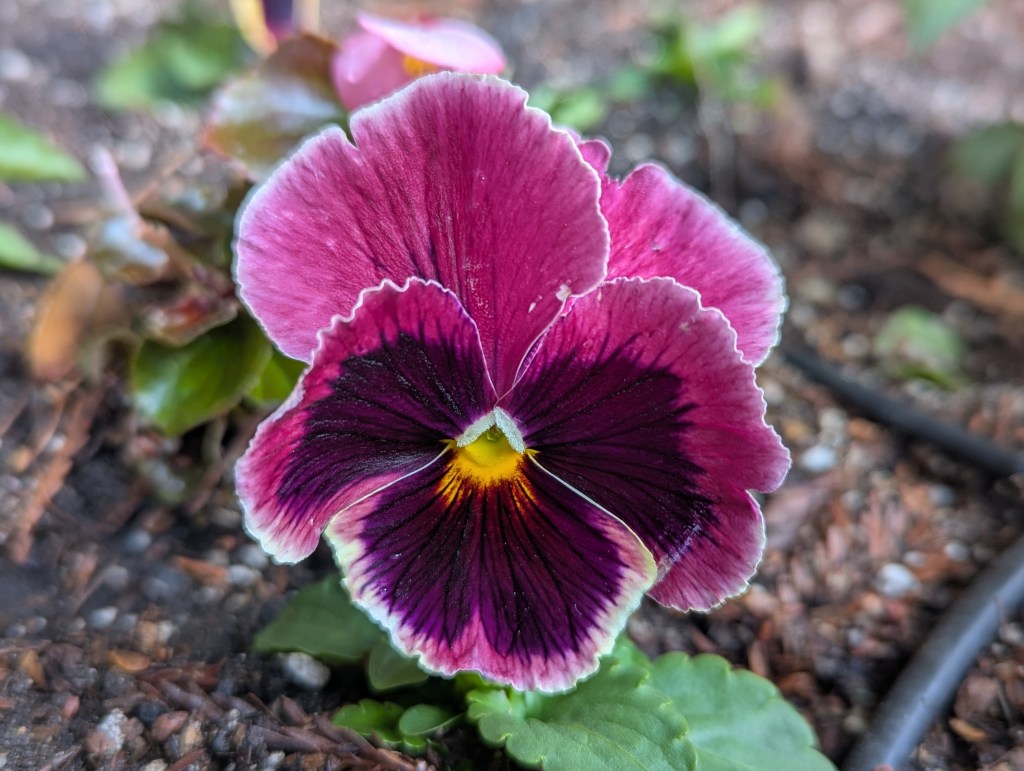
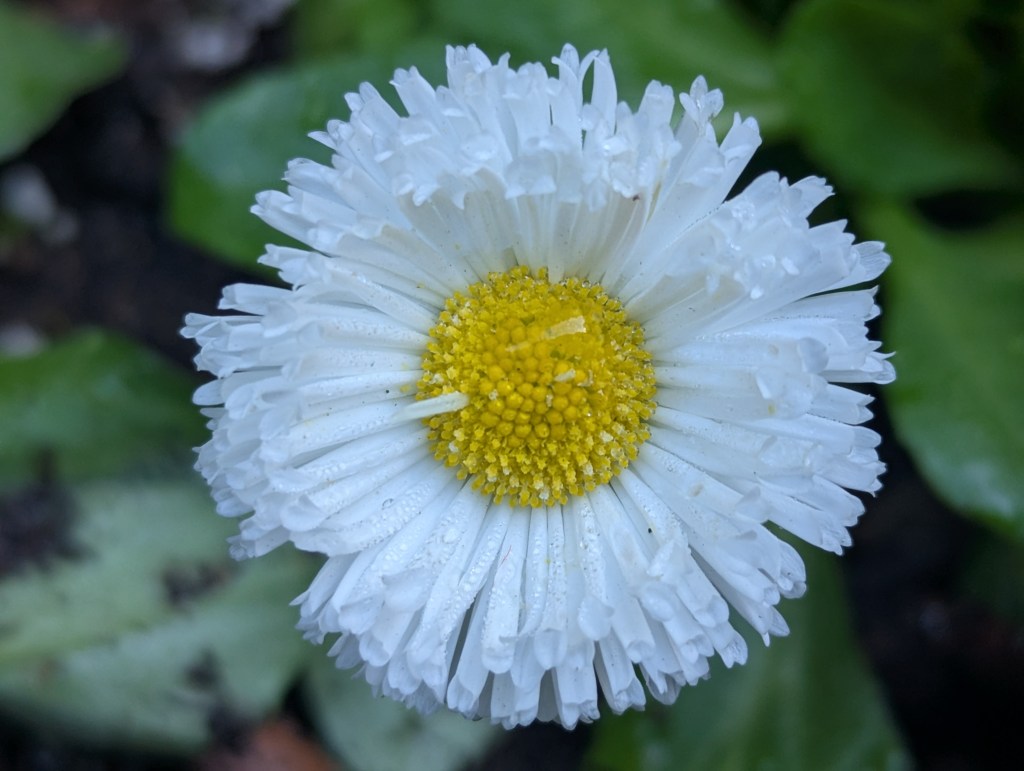
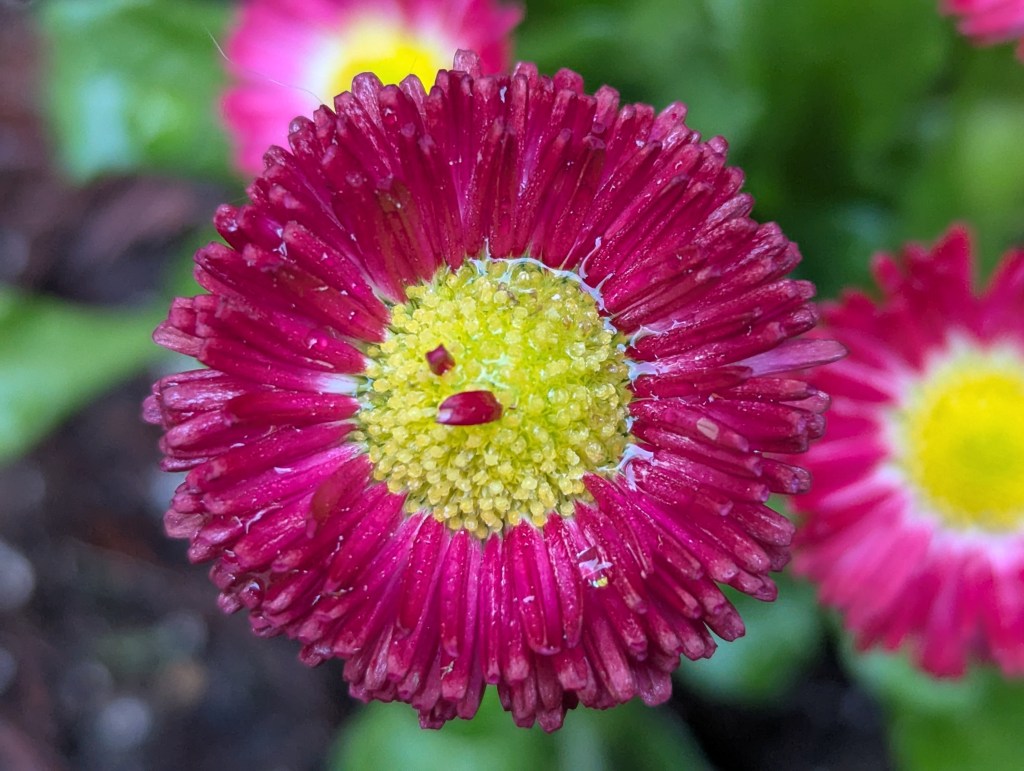
4. Bellis perennis, English daisy ranges in color from this rosy red to white like the color scheme of candy canes. I am fond of it because it is not so overly bred like other annuals.
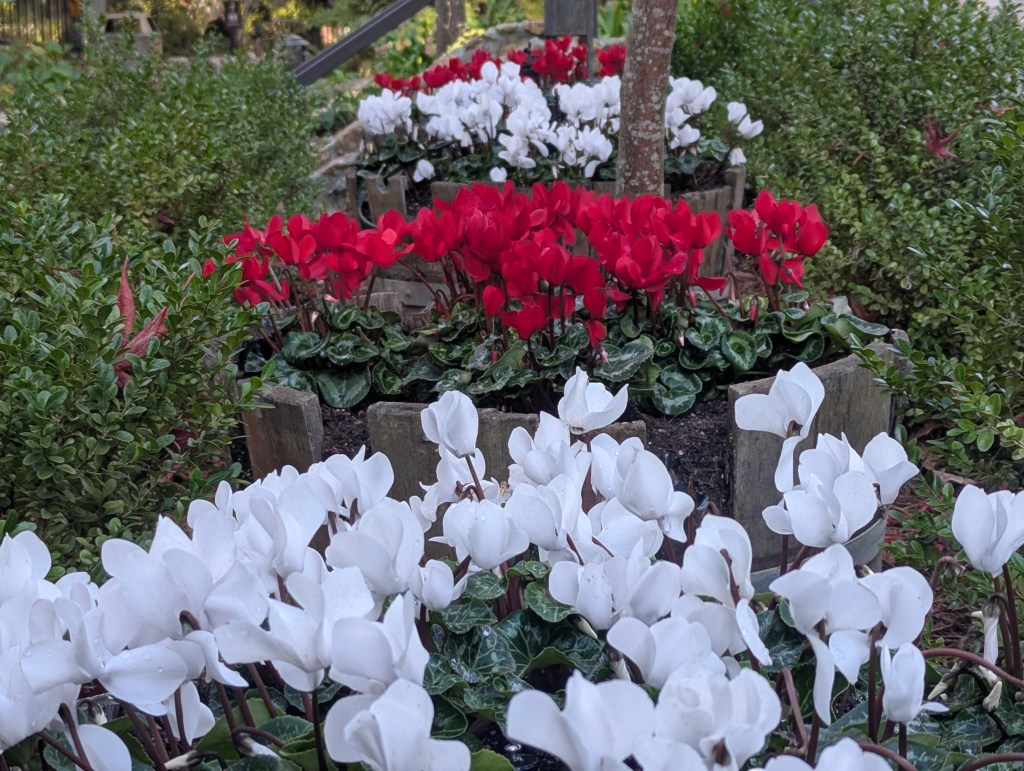
5. Cyclamen persicum, florist’s or Persian cyclamen is cheapened as an annual. I used to grow mine as cool season perennials. I also grew colors other than simple red and white.
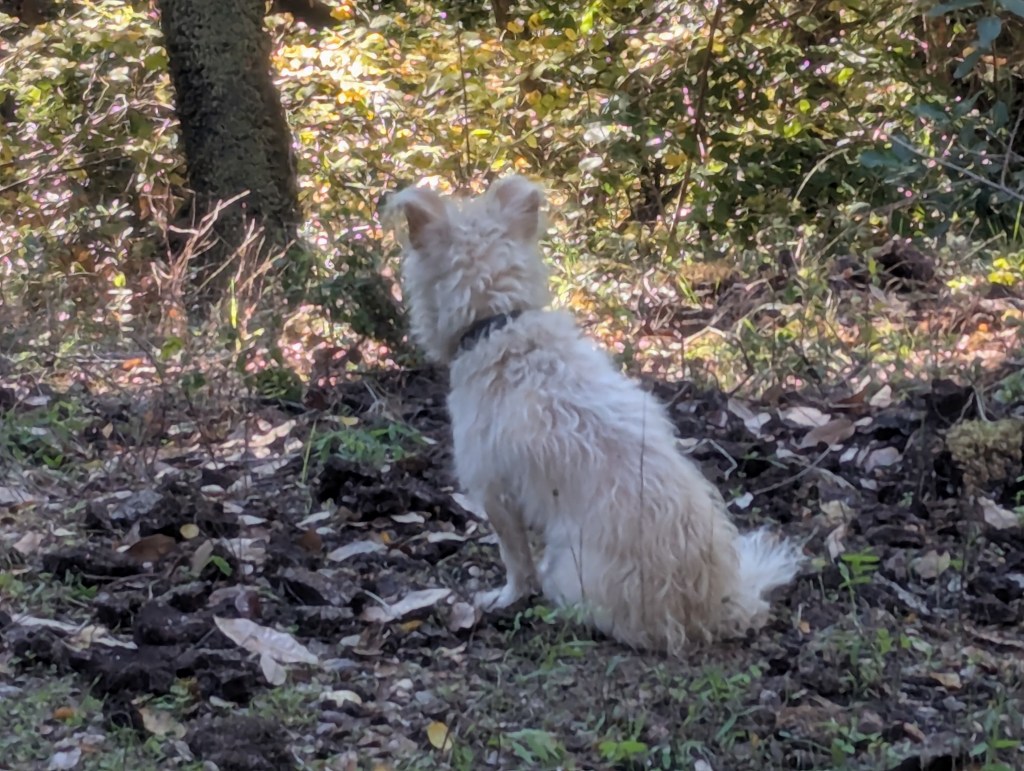
6. Rhody was unconcerned with these common annuals as he surveyed his domain early last Monday, while I burned forest green waste. He is not overly horticulturally oriented.
This is the link for Six on Saturday, for anyone else who would like to participate: https://thepropagatorblog.wordpress.com/2017/09/18/six-on-saturday-a-participant-guide/
 Tony Tomeo