Six on Saturday: Neither Rhododendrons Nor Roses

This is an intentional attempt to eschew the most obvious options.

1. Tanacetum parthenium ‘Aureum’, golden feverfew is the only of these six that I know the cultivar of, but only because it is the only cultivar that I am aware of with such sickly chartreuse foliar color that passes for golden. Its little daisy flowers are splendid though.

2. Dianthus caryophyllus, mini carnation is one of those cool season annuals that never gets removed at the end of its season. It neither flourishes nor dies, so has been here for several years. It will probably die back partially now that the weather is getting warmer.

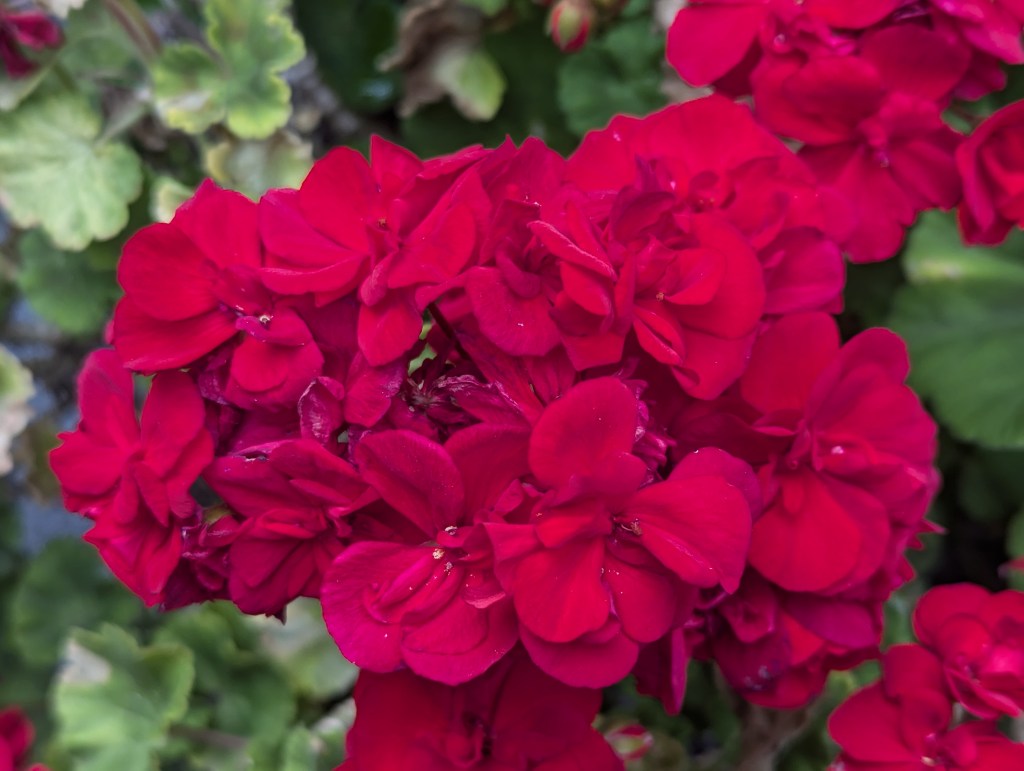
3. Pelargonium X hortorum, zonal geranium may seem to be cheap and common, but it has been very reliable. Besides, I happen to be fond of them. They were some of the first perennials that I grew during my childhood. This and others like it are modern cultivars.
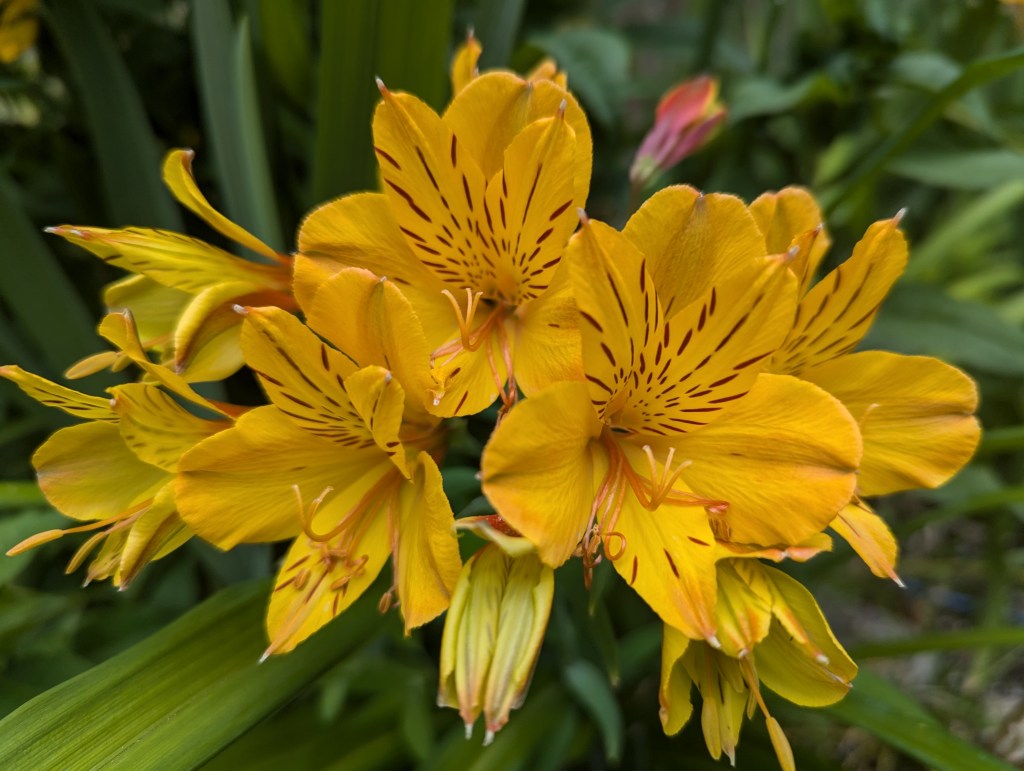
4. Alstroemeria spp., Peruvian lily was the first large scale cut flower crop that I worked with during the summer of 1986, while I was studying horticulture at Cal Poly, San Luis Obispo. This and a few cultivars at work seem to be as old fashioned as those from 1986.
5. Lilium auratum, Asiatic lily was a gift from a neighbor while its bulbs were dormant a few winters ago. It was not expected to perform as well as it has. Not only has it become reliably perennial, but it has multiplied so much that I must eventually dig and divide it.

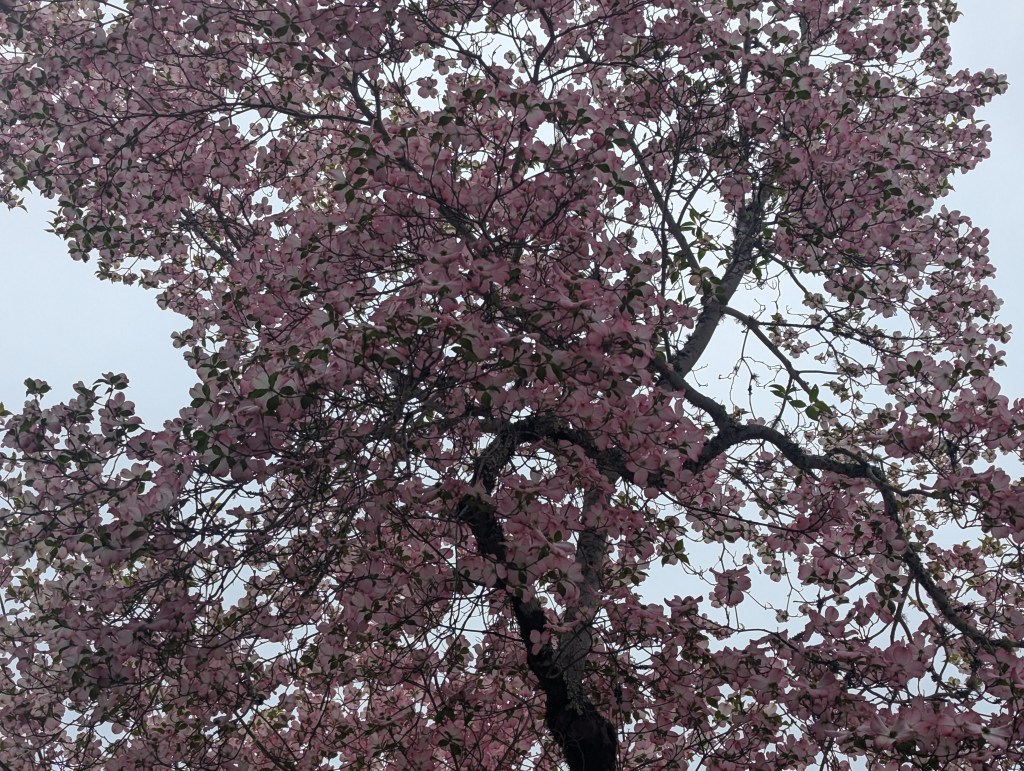
6. Cornus florida, flowering dogwood is the last dogwood to bloom so late. This could be because of distress associated with its relocation last winter. I do not remember when it bloomed last year, or if it should bloom as late next year. I suppose that we will see then.

This is the link for Six on Saturday, for anyone else who would like to participate: https://thepropagatorblog.wordpress.com/2017/09/18/six-on-saturday-a-participant-guide/

Flowers Have An Agenda

Flowers are only as colorful or fragrant as they are to attract pollinators.

When the garden is full of bloom, we do not like to think that flowers have an agenda. All their colors and fragrances seem to be displayed merely for our benefit. Who really wants to know that procreation is their real priority; that all their efforts are merely to get pollinated to make seed for the next generation?

Because flowers are not mobile like animals and insects are, they need to rely on wind or pollinators to deliver their pollen to other flowers. Flowers that are more reliant on wind for pollination are not much to look, since they do not need to advertise. The wind needs no incentive to blow. Wind pollinated flowers are instead abundant and productive, to disperse as much of their light pollen as possible.

Flowers that need pollinators need to advertise. They offer all sorts of attractive colors, fragrances, nectar and pollen to attract their particular preferred pollinators. For example, those that exploit the services of hummingbirds appeal to their discriminating taste with sweet nectar in tubular flowers that are mostly in colors that hummingbirds like, orange or red.

All the variety among flowers is designed for the variety of pollinators that they employ. Flowers that rely on nocturnal moths are large and pale, often with infrared patterns (that people do not see) to be visible in moonlight to moths drawn to their sweet fragrance. The offensive fragrances and textures of fly pollinated flowers are delightful to flies. Many flowers appeal to multiple pollinators.

Bees are of course the busiest of pollinators, as they collect nectar and pollen to make honey. They visit any flower they encounter, but prefer those that make abundant and dense pollen that they can carry away. They are very fond of the many different fruit trees; such as apple, pear, apricot, cherry, plum and all their relatives, as well as citrus. They also dig eucalyptus, wild lilac (ceanothus), hebe, firethorn, bottlebrush, honeysuckle and roses.

The difficulty for bees is finding a constant supply of flowers. As apple and pear trees finish blooming, bees want to start visiting other flowers. Bees like a variety of just about any of the annual flowers, particularly pincushion flower, cornflower, snapdragon, foxglove, sunflowers, poppies and lupines. With a good mix, something should always be blooming. Bees are also very fond of catmint, ajuga, thyme, rosemary, penstemon, lavenders and the many salvias and sages.

Those who want to attract bees to the garden should therefore plan for a good mixture of flowers that bees like, so that there is always something to keep the bees happy. Many of their favorite flowers that may not seem very colorful to us use ultraviolet patters that are quite flashy to bees. The choices are not always so obvious.

However, those who do not like bees or are allergic to bee stings, should avoid an abundance of flowers that will attract them. Unfortunately, there are no flowers or plants to repel bees. Also, the coniferous (cone bearing) evergreens and many other wind pollinated plants that are less attractive to bees produce abundant light pollen that is so problematic for allergies.

White Bearded Iris

What makes this particular white bearded iris so special? Well, all three of the bearded iris that bloom white in my gardens are special. Each arrived with history, from other important gardens. I am impressed with this one now because it is so white. I did not know what color it was when I acquired it from its garden in Monterey so many years ago. I just wanted a souvenir from that particular garden after the owner passed away, so grabbed a bit of it during the estate liquidation. It bloomed for its first season, but was a dingy grayish white. I thought it might get whiter for its second season, but continued to bloom annually with the same unimpressive color. I could not eliminate it from my collection because of its historical significance. Because it is so uninteresting, I had not shared it or, until recently, tried growing it anywhere else. Then, because bearded iris grow and proliferate as they do, I brought a small bit of it to the Iris Bed at work, where I got this picture of it. I can not explain why it is so much whiter than it had been, but I am impressed.

Six on Saturday: Here & Now

These six lack a theme. They are just random pictures of a few flowers that are blooming here and now.

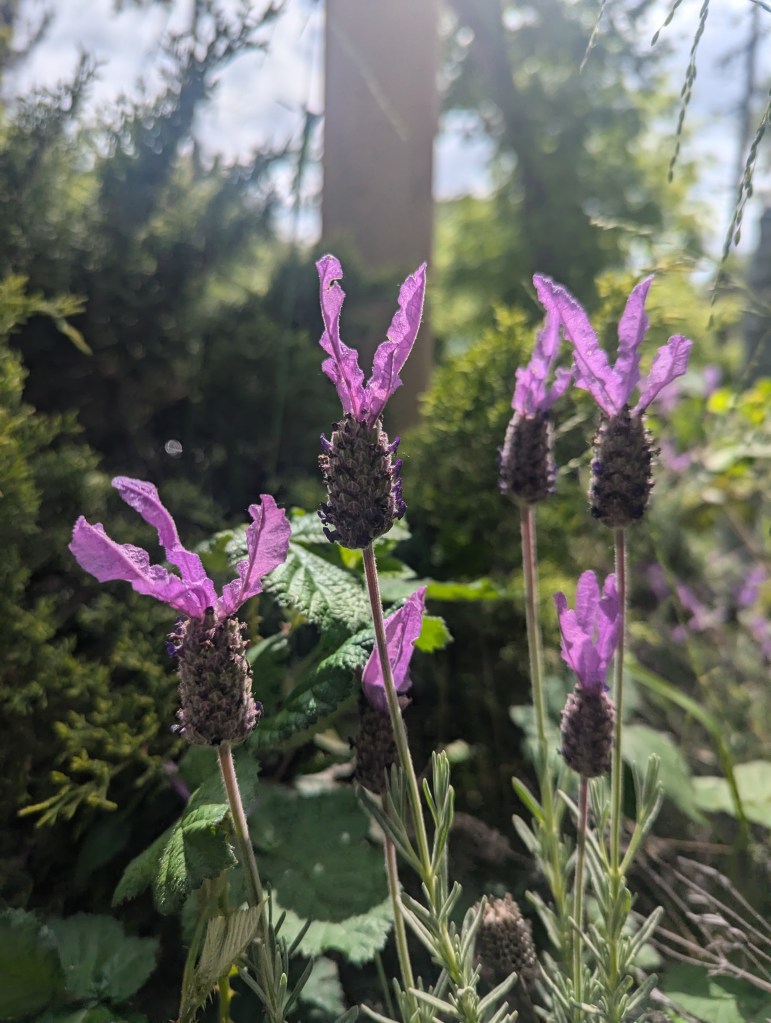
1. Lavandula stoechas, Spanish lavender posed for this picture, which was not adequate for the gardening column, but is too pretty to delete without sharing here. It looks like it is about to fly away with those long wings. A bee posed with it for the gardening column.

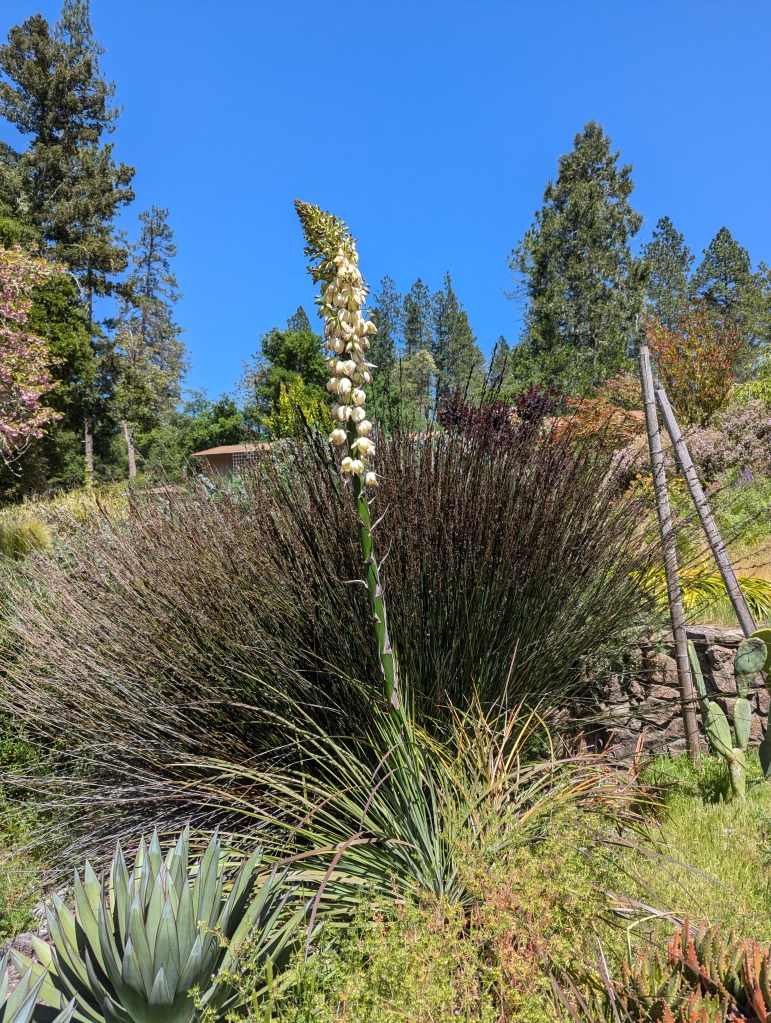
2. (Hespero)Yucca whipplei, chaparral yucca is blooming again after blooming last year. This floral truss is about twelve feet tall, and still growing. Seed that it provided last year is now growing abundantly. It is the first species of Yucca that I met in the wild in 1985.

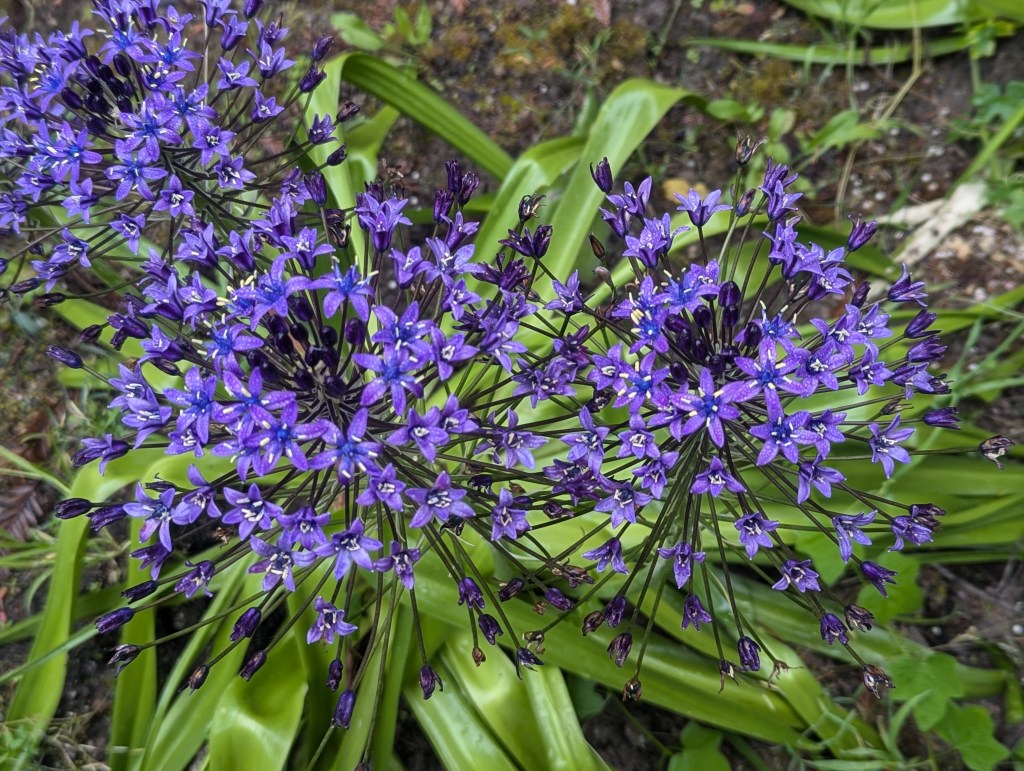
3. Scilla peruviana, Peruvian squill has been reliably perennial for about three years but has not grown much. Although the floral trusses are bigger than they were last year, they are no more numerous. Just nine remain in three groups of three, just as I planted them.

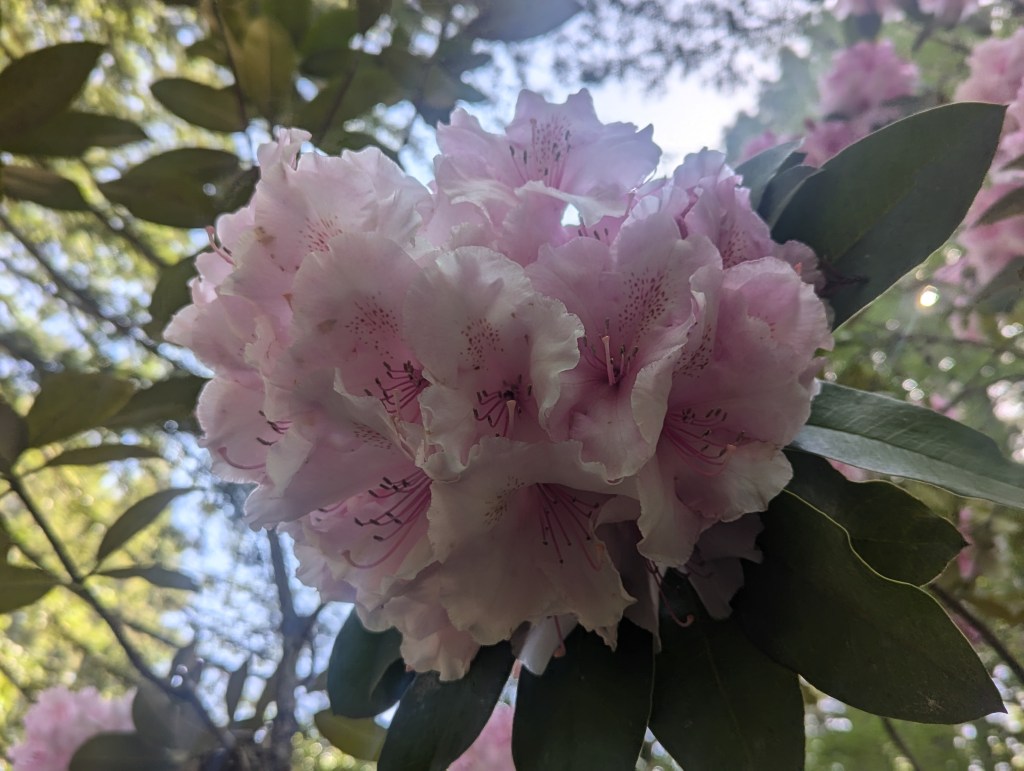
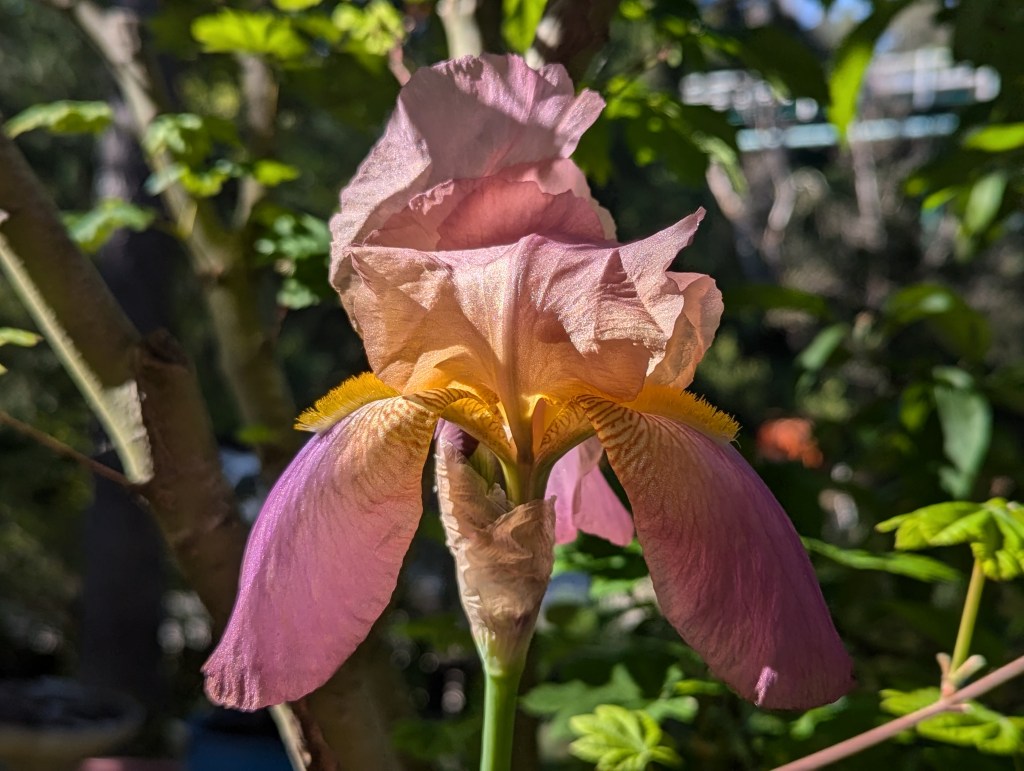
4. Rhododendron spp., like the bearded iris and cymbidium orchid, is of an unidentified cultivar. Many others are blooming now also. I refrained from posting six pictures of six different rhododendrons like I usually do though, because that can get a bit predictable.

5. Iris X germanica, bearded iris was difficult to take a good picture of at the time of day that I encountered it. Its pale color did not help. I am fond of this iris though, since I got it from Cedar Lodge at Kidder Creek, on the way to the Pacific Northwest two years ago.

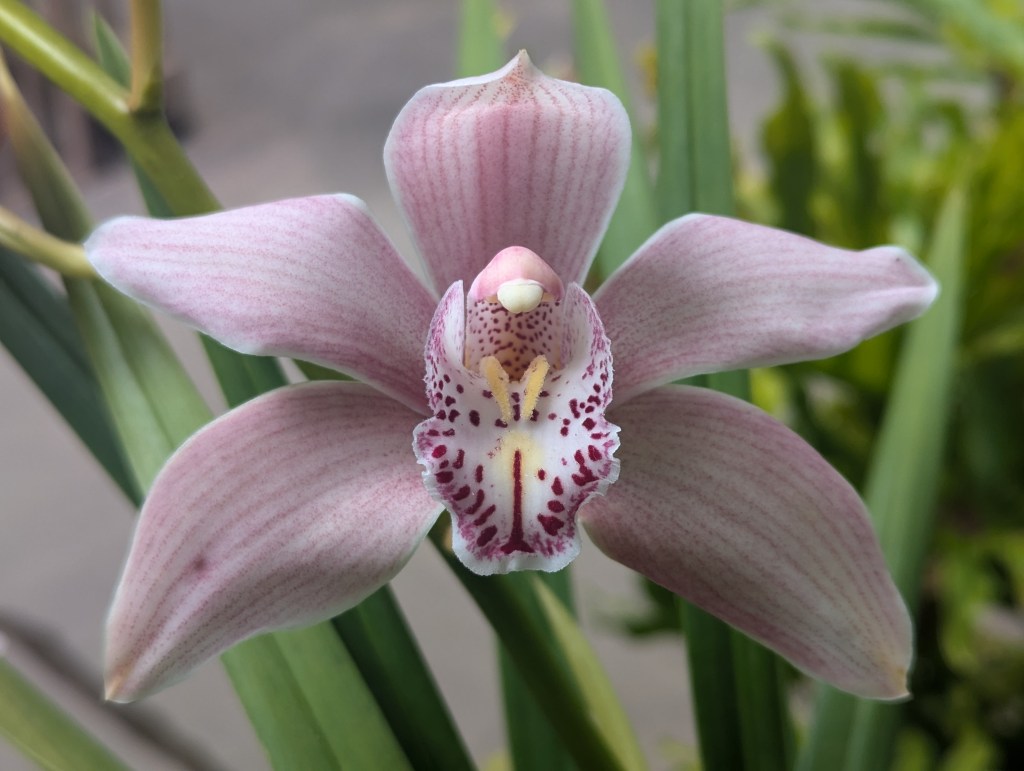
6. Cymbidium spp., has been blooming very slowly. The buds appeared over winter, and have been extending since then, but only recently opened. I never liked this orchid much anyway. A white orchid that typically blooms so impressively here did nothing this year.

This is the link for Six on Saturday, for anyone else who would like to participate: https://thepropagatorblog.wordpress.com/2017/09/18/six-on-saturday-a-participant-guide/


Six on Saturday: Bearded Iris 2025

Too many iris are blooming now to document. Therefore, I limited my selection to a few bearded iris, which includes one that is not within the landscapes at work. Perhaps some of the other species can be featured next Saturday. With so much in bloom, it is difficult to be selective.

1. Of these Six, only this one does not inhabit the Iris Garden at work. It inhabits a small roadside planter in front of the totally awesome White Raven Coffee Shoppe in Felton. I believe that it is more caramel and charcoal colored than it appears to be in this picture.

2. Of these Six, only this one is likely identified. It conforms precisely to the descriptions of ‘Rosalie Figge’, including its habit of blooming sporadically throughout the year, with abundant bloom about now. Another participant of Six on Saturday identified it as such.

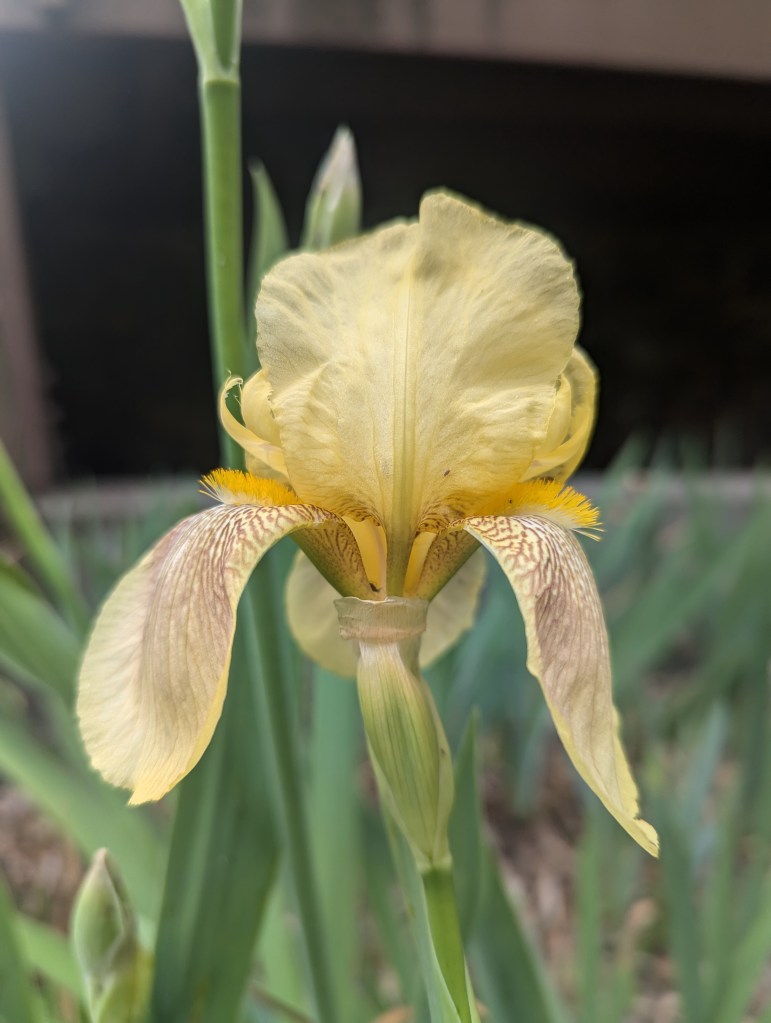
3. This relatively small pale yellow but nicely fragrant iris might be feral. It was found at a dumpsite for landscape debris, so could have grown from a deadheaded seed. It would likely be bigger and more colorful if it had grown from a discarded rhizome of a cultivar.

4. This big blue iris is as floppy as beagle ears, and is so heavy that its tall stems fall over if not staked. That is why its nearly horizontal stalk is obscured in its background behind it instead of visible below it. It is not actually as purplish as it seems to be in this picture.

5. Although more billowy and likely a bit bulkier, this garish iris needs no staking. Its tall and rather thin floral stems are sturdier than they seem to be. This happens to be one of my favorite bearded iris in this particular group. It was originally a gift from a neighbor.

6. Color is again deficient. This bearded iris is not as purplish as it seems to be here. It is actually a rich burgundy red. I remember the origins of all the other iris here but can not remember how this one was acquired. I do not remember ever seeing it before this year.

This is the link for Six on Saturday, for anyone else who would like to participate: https://thepropagatorblog.wordpress.com/2017/09/18/six-on-saturday-a-participant-guide/

White on Wednesday

Syringa vulgaris ‘Madame LeMoine’ French hybrid lilac bloomed bright white and right on time as March became April, and is not finished yet. It was somewhat of a surprise, since it remains canned until development of the landscape that it should eventually inhabit. It does not grow much while canned, so was not expected to be so spectacular in bloom. It is so spectacular that it was temporarily placed into a prominent position within another landscape, with its can mostly obscured by other vegetation, until it finishes bloom.

However, regardless of how spectacular it is, it reminds me that white is not necessarily the best color for all flowers. White happens to be my favorite color, and lilac happens to be among my favorite early spring flowers, but to me, lilac bloom should be lilac colored. I mean, it really should be that lavender or pastel purple color of traditional and formerly common old fashioned lilacs. The only advantage to this white floral color is that it would be appropriate to situations in which white is the most desirable color, or where lavender is undesirable.

Just as many flowers are at their best in white, some are best with other colors. Southern magnolia, lily of the valley, moonflower, gardenia, Easter lily and old fashioned calla are exclusively white, and would look weird in any other color. Gladiolus, tulip, hyacinth and rose can be all sorts of colors, but happen to excel at white. A few other flowers that can be all sorts of colors happen to not excel at white, such as bougainvillea, crape myrtle, English primrose, tropical hibiscus, wisteria and, of course, lilac. Both white crape myrtle and white bougainvillea happen to have been selected specifically for landscapes here, so perhaps white lilac is not so out of place.