Six on Saturday: Bluem

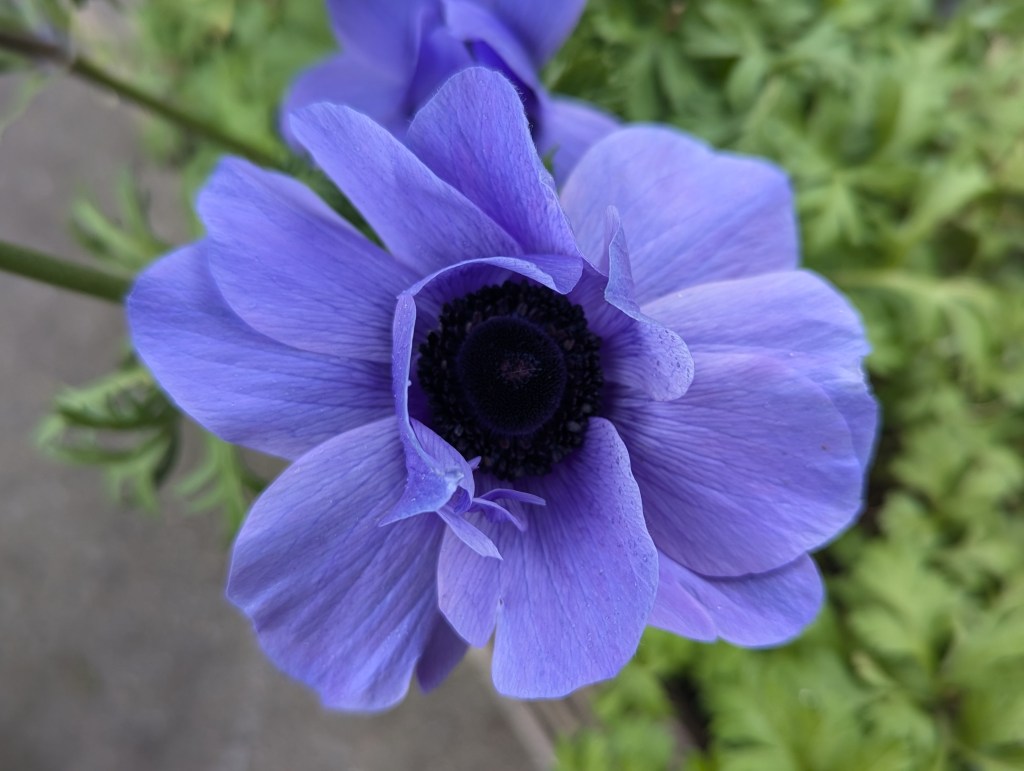
Blue is the rarest floral color. Furthermore, many flowers that appear blue are somewhat purplish, or perhaps more purple than blue. These six all look blue to me, although I can not see blue very well.

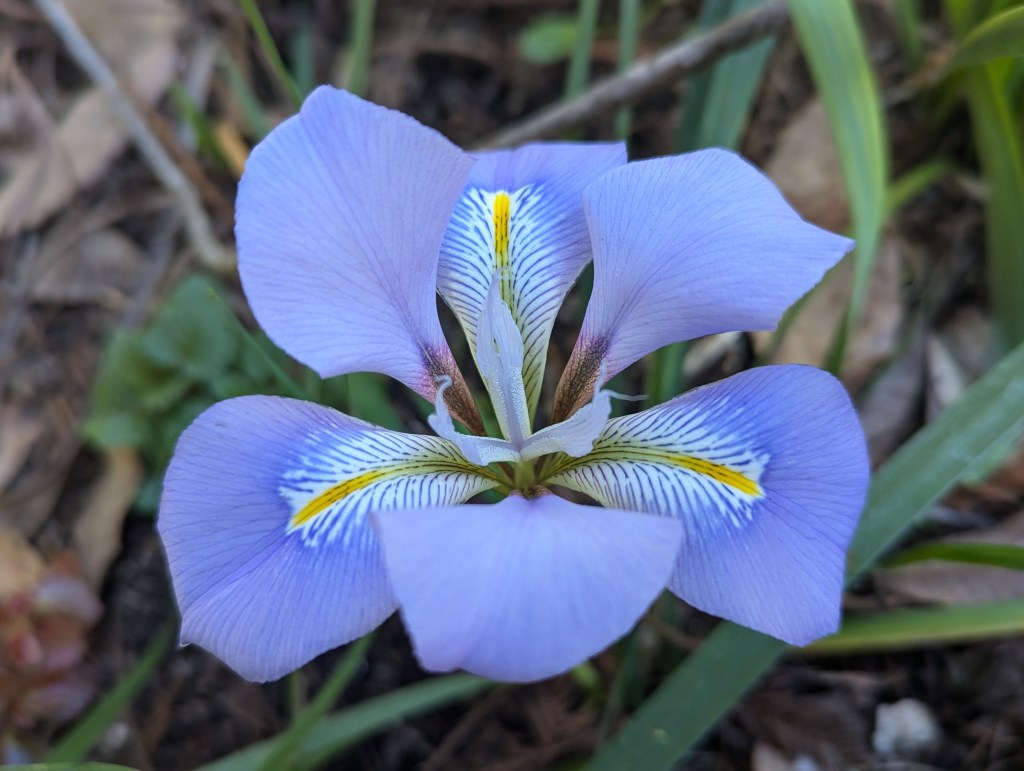
1. Iris unguicularis, Algerian iris has been blooming long enough for a third appearance here in four months. That may seem to be redundant, but it is my favorite for this week. I still do not know when to expect its last blooms. It is from Tangley Cottage Gardening.

2. Viola cornuta, viola exhibits more insect damage than I was aware of when I took this picture. Well, this is embarrassing. I do not select annuals at work, but I do enjoy taking credit for them. These bloom longer here than they would within the Santa Clara Valley.

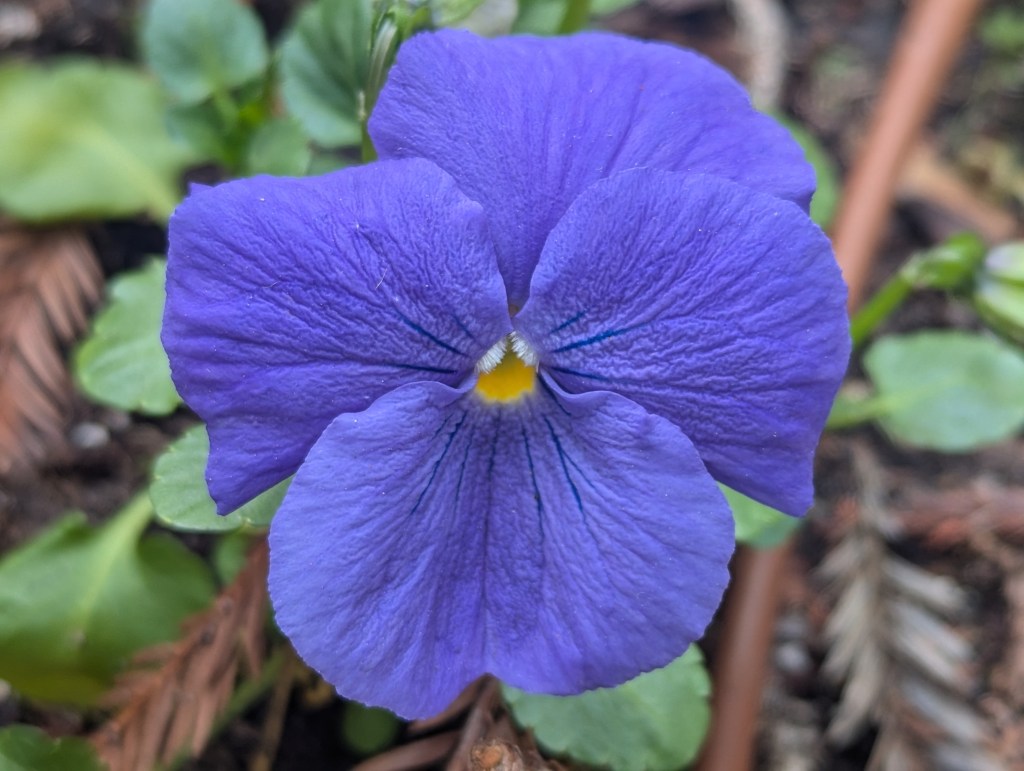
3. Viola X wittrockiana, pansy also performs better here than in the Santa Clara Valley. These blue pansies alternate with white pansies, which I prefer; but I took this picture to conform to the blue theme. We have not yet found any color that is not appropriate here.

4. Hyacinthus orientalis, hyacinth blooms thinly on floppy stems in partial shade, but is impressively reliably perennial. We should probably move the bulbs while dormant, but would prefer to instead remove an unwanted bay laurel tree that shades their landscape.

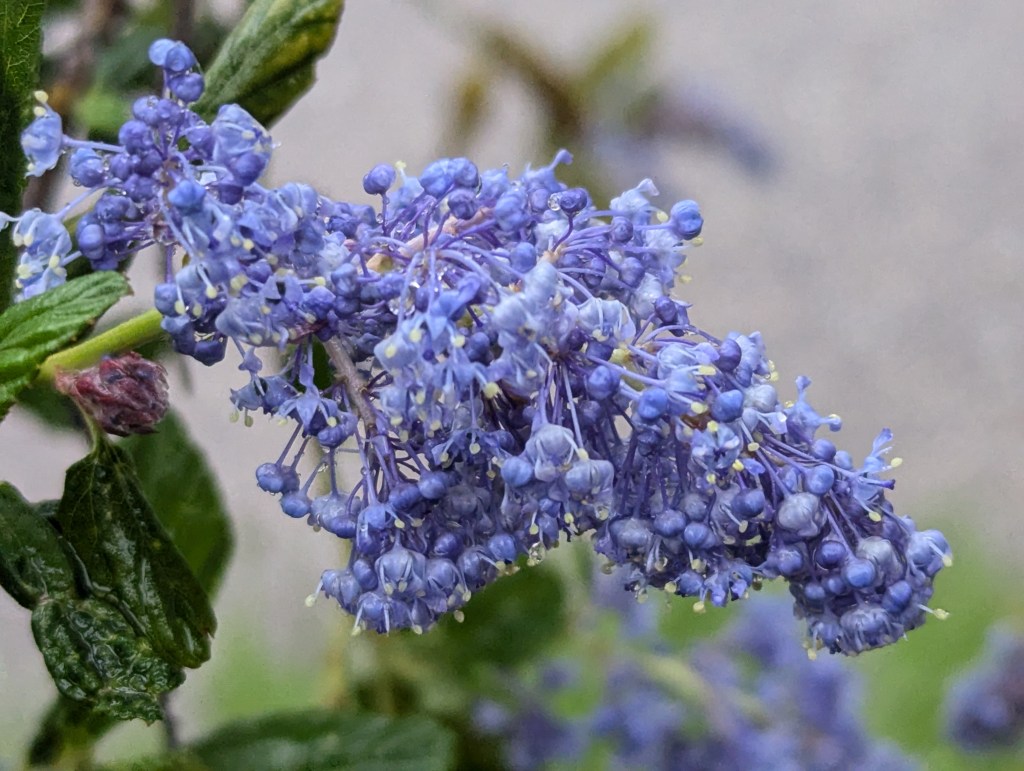
5. Ceanothus thyrsiflorus, California lilac is both locally native and added to at least one of our landscapes. Unfortunately, it is not easy to accommodate. It grew too large for its particular applications, but is difficult to prune properly without removing its best parts.

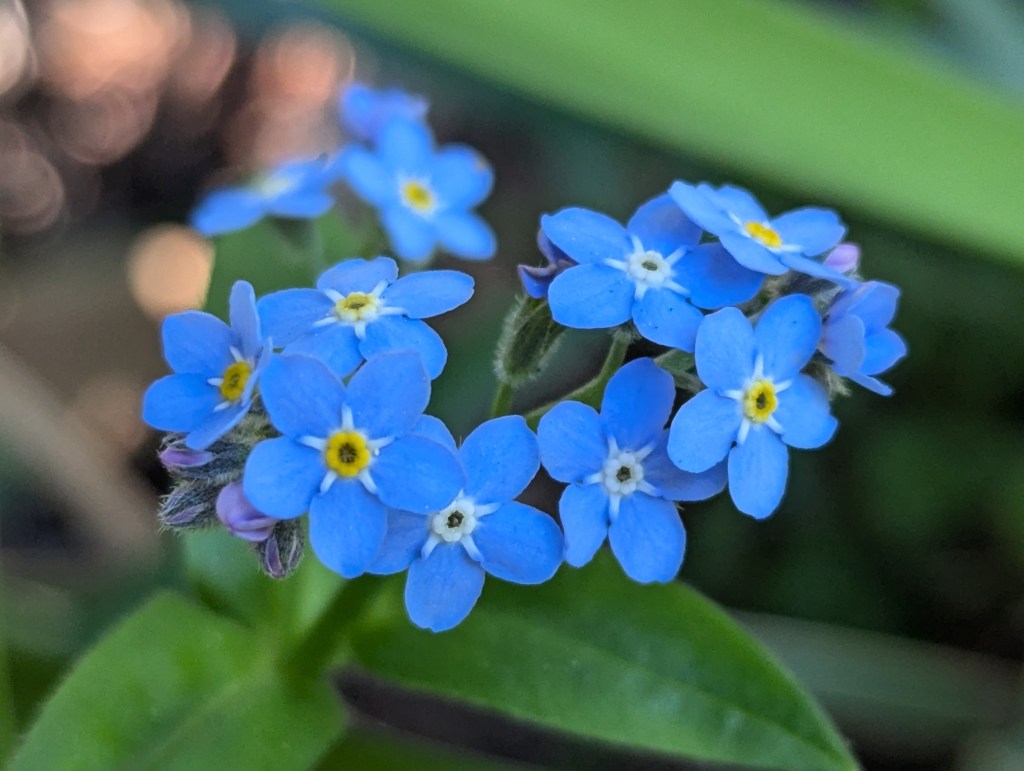
6. Myosotis sylvatica, forget-me-not is naturalized here, but not too aggressively so. It is pretty near but not within cultivated landscapes, where it can benefit from supplemental irrigation without incurring damage from weeding, raking and other gardening activity.

This is the link for Six on Saturday, for anyone else who would like to participate: https://thepropagatorblog.wordpress.com/2017/09/18/six-on-saturday-a-participant-guide/

Six on Saturday: Late Winter Color

Color is relatively scarce as spring bloom is only slowly beginning. A bit of winter bloom remains. Not all flowers bloom earlier here than in other regions. Some could actually be a bit later than expected.

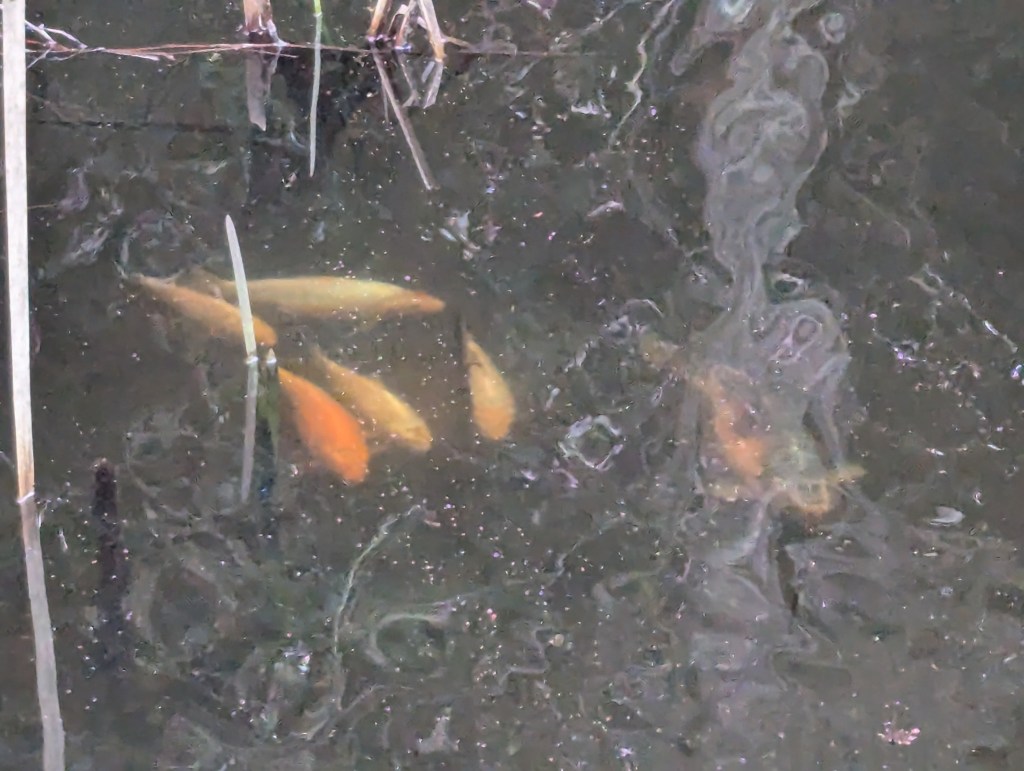
1. Lemna minor, duckweed does not grow much during cool winter weather, but lingers until sloshed by rain. After surviving through a dry January, it finally succumbed to rain during early February. Its monochromatic green revealed this more vibrant color below.

2. Viburnum tinus, laurustinus is not among my favorites. I seriously do not understand why it is as popular as it is. Nonetheless, several feral specimens inhabit some of the less refined landscapes. I do appreciate how the white bloom of this specimen is not blushed.

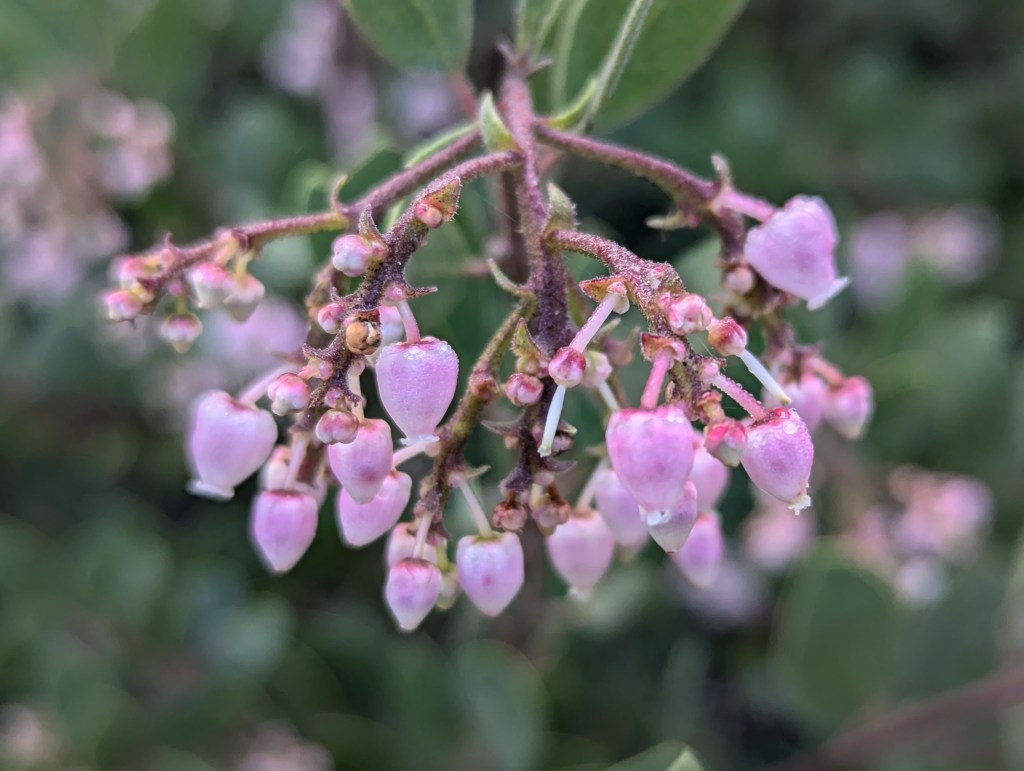
3. Arctostaphylos X densiflora ‘Howard McMinn’ manzanita qualifies as a locally native species, but is actually an unnatural hybrid of two species that, although native close by, are not locally native. I should not be so critical. It performs well within our landscapes.

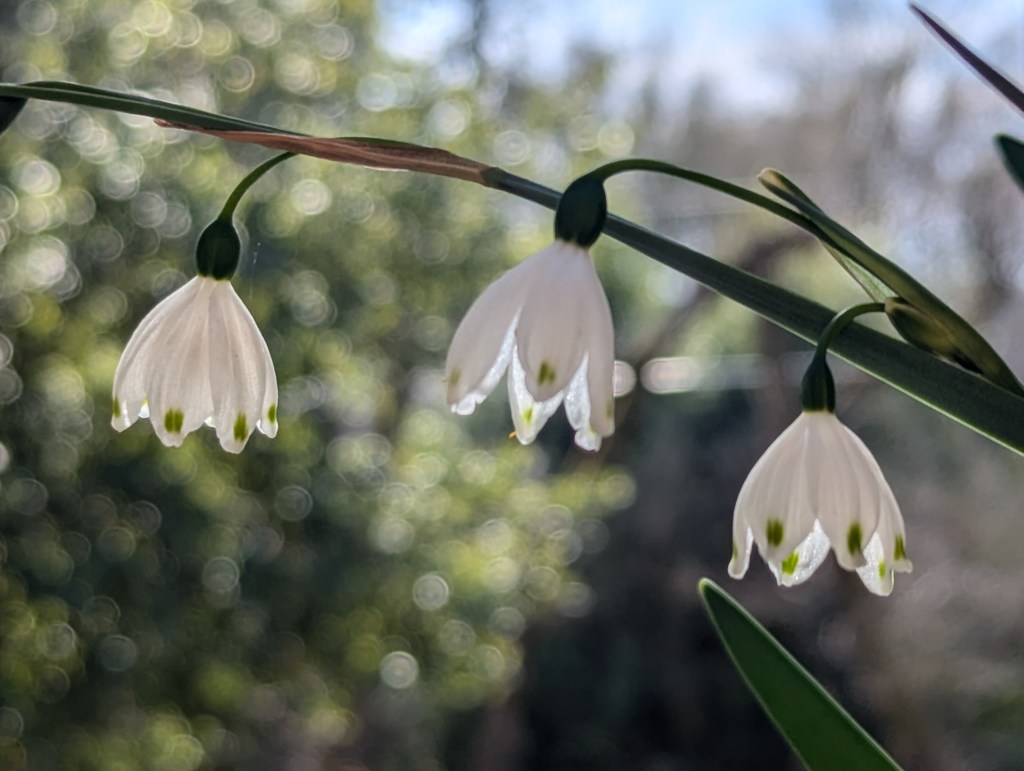
4. Leucojum aestivum, summer snowflake does not wait for summer to bloom. We know it as snowdrop because it blooms when real snowdrop, Galanthus nivalis, would bloom. There is no confusion since real snowdrop is very rare here. I have actually never seen it.

5. Iris X germanica ‘Rosalie Figge’ bearded iris is redundant to a similar picture two and a half months ago, but continues to bloom. I am beginning to wonder if it ever stops now that it has been doing so continually for so long. Fortunately, no one is bored with it yet.

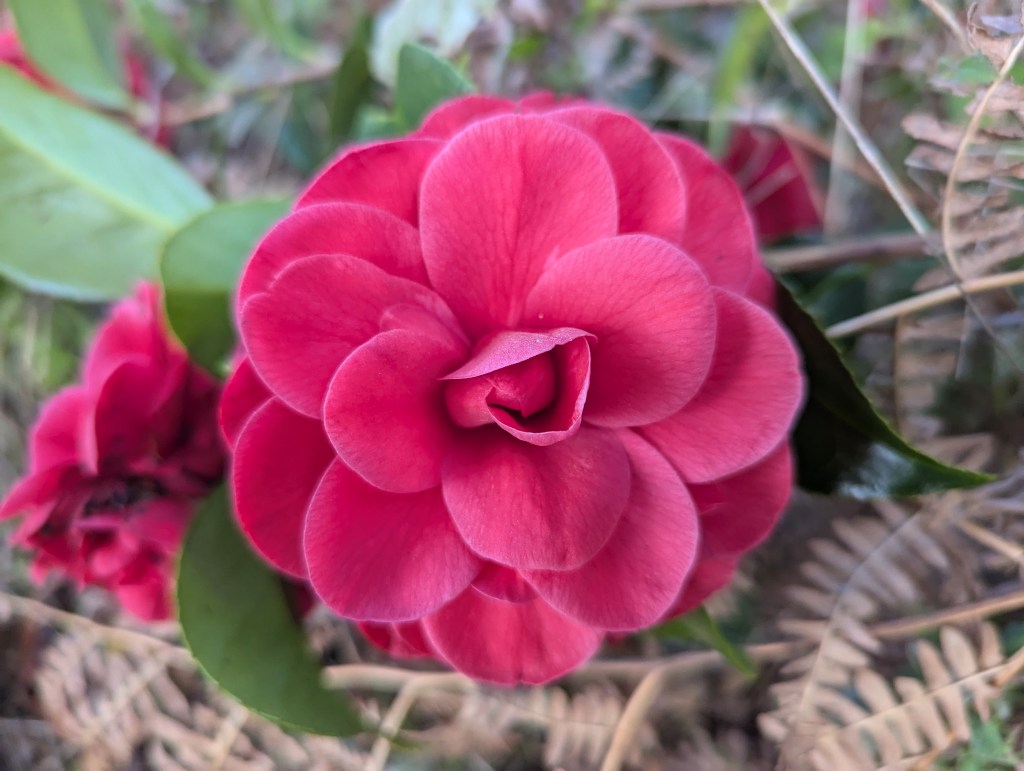
6. Camellia japonica, camellia is a different unidentified cultivar than that which posted with ‘Rosalie Figge’ bearded iris two and a half months ago, so is not so redundant. Most camellias were not blooming then, and even now, many are only beginning their bloom.

This is the link for Six on Saturday, for anyone else who would like to participate: https://thepropagatorblog.wordpress.com/2017/09/18/six-on-saturday-a-participant-guide/

Winter Flowers Bloom In Season

Some flowers naturally bloom during winter.

Evergreen foliage and colorful berries might be more prominent than flowers about now. They should be. Evergreen foliage is, as implied, evergreen. Colorful berries need to be appealing to wildlife that disperses their seed through winter. Not so many winter flowers bloom, though. Most flowers want their bloom season to be favorable for their pollinators.

Flowers that do not rely on pollinators can bloom whenever they choose to. Yet, because they do not rely on pollinators, most waste no resources on floral color. Flowers are, after all, only colorful to attract pollinators. Therefore, if flowers that need no pollinators bloom now, most are easy to ignore. Flowers that are colorful now can probably justify being so.

Most colorful flowers bloom while their pollinators are most active, during warm weather. Some from cooler climates can bloom now simply because they do not know it is winter. Some from milder climates can bloom now because they do not know how cool winter is. Several winter flowers actually bloom now to exploit pollinators who are active in winter.

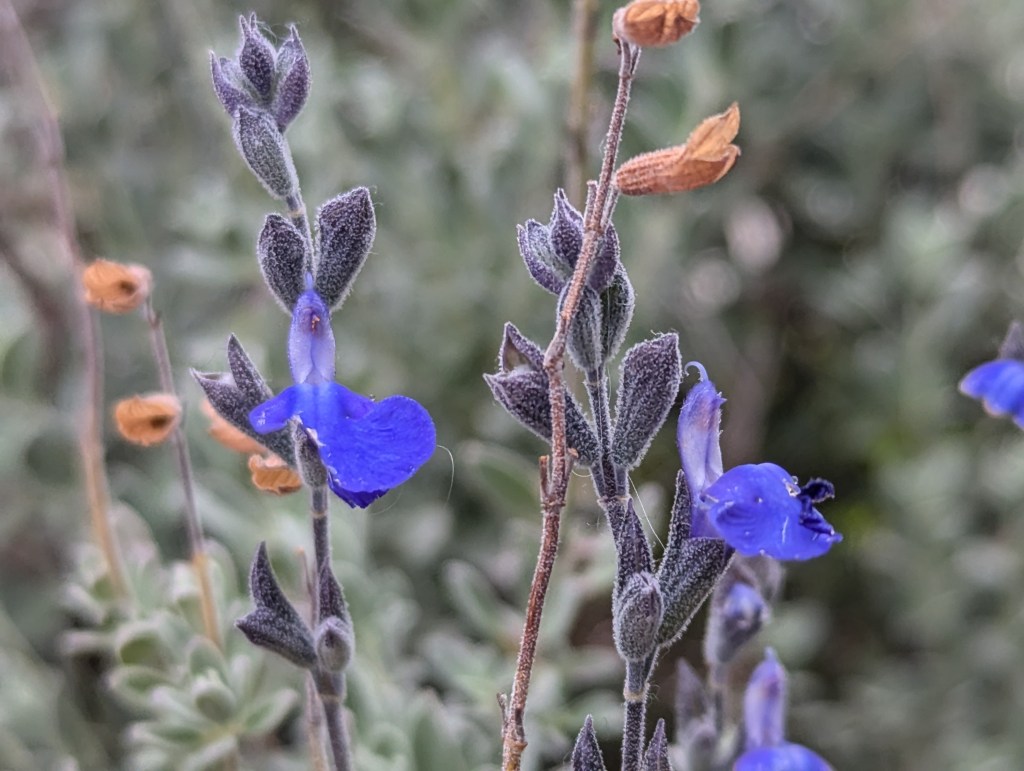
Winter flowers of some species of Salvia appeal very specifically to hummingbirds. Such species are native to regions where hummingbirds overwinter. Their floral colors are the sort that hummingbirds pursue. Their floral structure and nectar favor the eating habits of hummingbirds. They bloom during winter because that is when they expect their guests.

Camellias of various cultivars are among the most popular and reliable of winter flowers. Different cultivars bloom at slightly different times. Witch hazel cultivars can bloom nicely on bare stems where chill is adequate. Winter jasmine requires less chill and blooms as splendidly, but only with yellow. Oregon grape is also limited to yellow, but is evergreen.

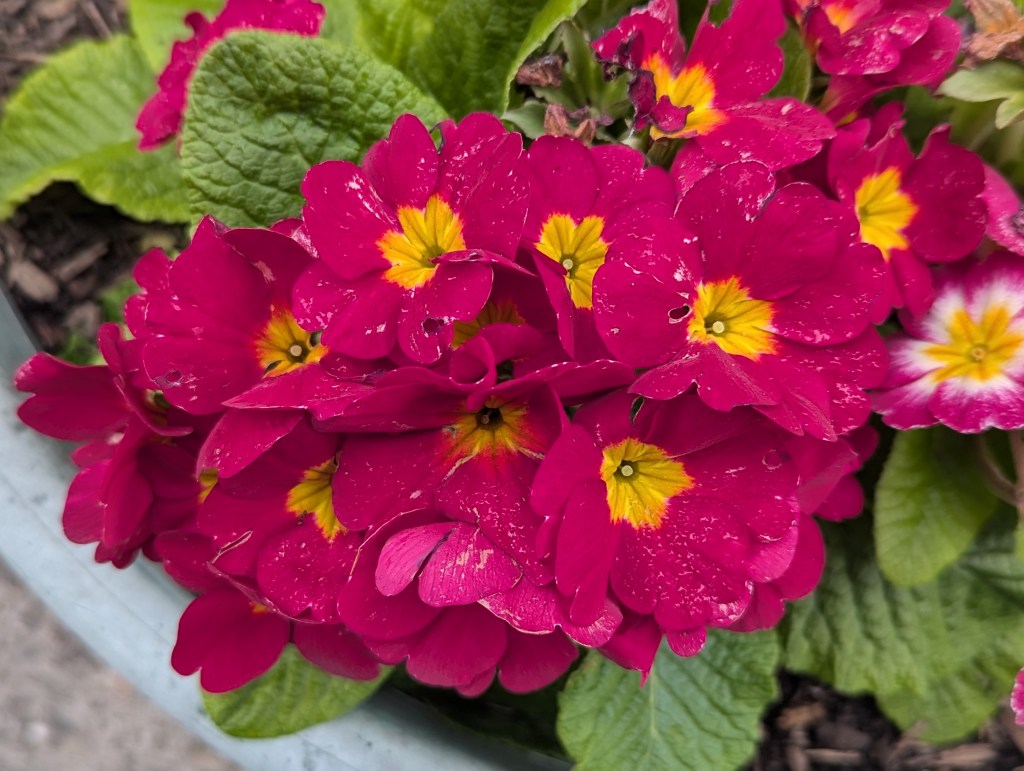
Cool season annuals generally provide the most colorful of winter flowers. Unfortunately, most perform only until warmer spring or summer weather. Pansy, viola and primrose are the most familiar. Primrose becomes popular a bit later, and can continue as a short term perennial. Ornamental kale looks like big winter flowers, but is really big colorful foliage.

Six on Saturday: Another Saturday of Flowers

A Week Of Flowers’ at ‘Words And Herbs’ got me started. It finished two weeks ago, and I did not even participate, but it reminded me that I should exhibit more floral pictures. Although the original project featured any floral pictures from any time of year, these six are all from yesterday, and actually, all are from the same relatively confined landscape. Minor frost that damages some vulnerable species within nearby landscapes is somehow less bothersome within this particular landscape. Elsewhere, some flowers are not quite as fresh. The only other common lantana within another landscape here was already cut back to the ground because its foliage succumbed to frost. It seems to know to postpone regeneration until after frost, but will likely succumb to frost next winter also. Although frost is mild here, it does happen.

1. Lantana camara, lantana was already damaged by mild frost at a lower elevation and less than a mile away. Even while damaged, though, it was still trying to bloom like this.

2. Lantana montevidensis, trailing lantana is purportedly slightly more resilient to frost than common lantana. However, its foliage can become very dark, as if it were damaged.

3. Tecomaria capensis, Cape honeysuckle is overrated. Its orange floral color is nice, but its flowers and floral trusses are too small and too scarce to display the color adequately.

4. Leonotis leonurus, lion’s tail bloom seems to resemble that of Cape honeysuckle, most likely because both attract sunbirds as pollinators where they are native in South Africa.

5. Tulbaghia violacea, society garlic is not among my favorite perennials, but is resilient and undemanding. This specimen has been abandoned for years, but constantly blooms.

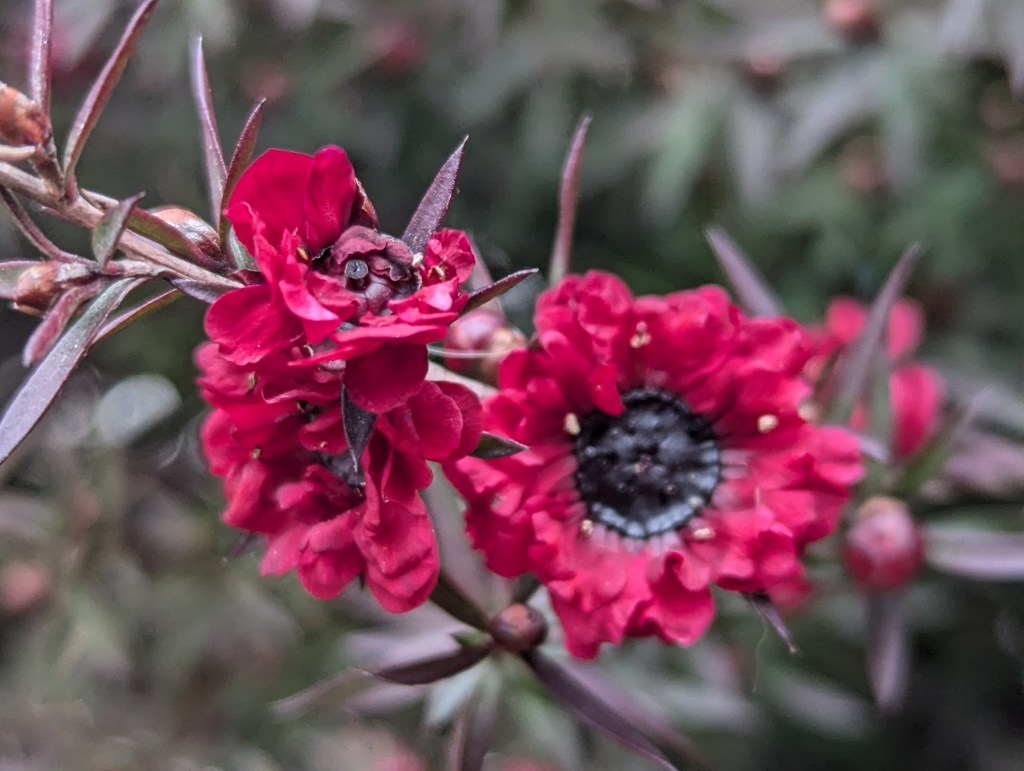
6. Callistemon viminalis ‘Little John’ bottlebrush is now Melaleuca viminalis. I learned it as a cultivar of Callistemon citriodora that is more proportionate to compact gardens.

This is the link for Six on Saturday, for anyone else who would like to participate: https://thepropagatorblog.wordpress.com/2017/09/18/six-on-saturday-a-participant-guide/


Six on Saturday: A Saturday Of Flowers

‘A Week Of Flowers’ at ‘Words And Herbs’ finished a week ago, but as I said last week, it reminded me that I should share more floral pictures.

1. Bergenia crassifolia, pigsqueak is as popular as it is because it is so easy to propagate merely by relocating rhizomes that migrate where they are not wanted. These eventually creep onto a low retaining wall around their area, providing more to relocate elsewhere.

2. Rosa spp. ‘Iceberg’ rose should finish bloom anytime. That bud to its upper left is not likely to open now that the weather is cool for winter. ‘Burgundy Ice’, in the background, is grafted onto the same rose tree with this ‘Iceberg’. I think that they look odd together.

3. Pelargonium hortorum, zonal geranium is getting overgrown enough to look shabby, but should not be pruned back until the end of winter. If it gets pruned back now, it will look even shabbier until it resumes growth as weather gets warmer at the end of winter.

4. Erigeron karvinskianus, Santa Barbara daisy flowers seems to be a bit lean in partial shade. Santa Barbara daisy can be an annoying weed, but within our landscapes, is more often an asset, adorning otherwise bare stone walls. I pull it out to refresh it after winter.

5. Rhododendron spp., azalea blooms lavishly for spring, but this particular unidentified cultivar also tosses out these few premature flowers for winter. Incidentally, it is merely coincidental that most of these Six bloom white. I just got pictures of what is prominent.

6. Helleborus X hybridus, hellebore is happy to self sow, but not as happy to perform. It does not bloom much. When it does, most of its flowers are spotty and grungy. Even the foliage is shabby. This flower, although pallid and weirdly blushed, is a delightful rarity.

This is the link for Six on Saturday, for anyone else who would like to participate: https://thepropagatorblog.wordpress.com/2017/09/18/six-on-saturday-a-participant-guide/

Six on Saturday: a Week of Flowers

‘A Week Of Flowers’ at ‘Words And Herbs’ reminded me that I really should share more floral pictures. These are from yesterday, though, not all year.

1. Salvia chiapensis, Chiapas sage blooms as long as the weather is warm. Then, it takes so long to realize that the weather is no longer warm that, by the time it finishes the last of its bloom, the weather is beginning to get warm enough for it to resume bloom again.

2. Cestrum fasciculatum ‘Newellii’, red cestrum blooms about as continuously. It should have finished blooming about a month ago, but will likely continue until more sustained cool weather just like it did last year. After pausing briefly, bloom resumes before spring.

3. Rosa spp., carpet rose will eventually stop blooming and defoliate just long enough to get pruned back to the ground. It grows back like weeds, but such vigorous growth takes some time to decelerate enough to bloom, which might not be until the middle of spring.

4. Camellia sasanqua, sasanqua camellia has become more of a small tree than a shrub. These flowers are too high up to appreciate individually, but are impressive in profusion. I thought that it is ‘Navajo’, but it now does not seem pink enough, and is a bit too ruffly.

5. Iris X germanica ‘Rosalie Figge’, unlike any other bearded iris here, blooms whenever it wants to, even during the coldest or rainiest weather, with ruins such bloom. I am not certain of its identity. Someone here on Six on Saturday suggested this name, and it fits.

6. Iris unguicularis, Algerian iris from Skooter’s garden, which is perhaps more properly known as Tangly Cottage Gardening, is now blooming to prove that it actually is winter. I am very pleased that it is such perfect blue, without purple, and blooms during winter.

This is the link for Six on Saturday, for anyone else who would like to participate: https://thepropagatorblog.wordpress.com/2017/09/18/six-on-saturday-a-participant-guide/

Alternatives For Fresh Flowers

Form develops as color fades.

There are so many choices for flowers to grow for cutting between spring and the end of summer. For autumn and winter though, the choices are somewhat limited. Of the few things that bloom this time of year, there are fewer that are good cut flowers, and even fewer that bloom continually or profusely enough to provide an abundance of flowers until other flowers start to become available again in spring. Besides, who wants to go out to the garden in wintry weather to get flowers to bring into the home?

Many plants have other parts that are showy enough to substitute for cut flowers in the home. Cut foliage, stems, seedpods and even bark can be useful. Some flowers can be dehydrated to last all year, but look nothing like they do while fresh; and the process is somewhat involved. The most convincing alternative to fresh flowers is probably dried flowers.

Not many flowers dry well. Almost all simply turn brown and deteriorate. Only a few remain intact and also keep some of their color. Roses and hydrangeas are commonly dried, although their colors fade and they become shriveled. Yarrow and baby’s breath likewise change their appearance as they dry, but not quite as much. It is not so obvious as their tiny flowers shrivel.

The best dried flowers look somewhat fresh when they are actually dried. Strawflower, statice, globe thistle and globe amaranth are four of the best examples. These flowers are actually rather ‘crispy’ while they are still fresh, and only become crispier as they dry. If left in the garden, the flowers deteriorate only because of exposure to weather, and eventually rot in winter rain.

Simply as fresh cut flowers, strawflower, statice, globe thistle and globe amaranth flowers last longer than just about any other flower. They can even be separated from mixed bouquets and dried as the other flowers deteriorate and get discarded. They only need the lower portions of their stems that were originally soaking in water to be cut off if significantly deteriorated.  

However, most dried flowers probably look best if dried immediately after getting cut, since their foliage yellows more as it dries slowly. Lightweight flowers, like baby’s breath and statice (except bulky perennial statice) can be arranged fresh but without water, and simply allowed to dry as they are arranged. The only potential problem with this technique is that flowers may be difficult to separate and recycle later.

Flowers are more often laid out to dry individually and then arranged afterward. Globe thistle and globe amaranth are rather pliable and can wilt while drying, which can change the shape and consistency of a formerly fresh floral arrangement. Once dried though, their stems remain firm, and they can then be arranged more permanently. Most flowers are adequately dry in about a week indoors (or outdoors in warm dry weather).  

Because strawflowers are rather bulky on soft stems that may wilt, they dry with straighter stems if hung upside down while drying. The biggest flowers should be hung singly. Smaller flowers can be hung in small bunches. This works for heavy flowers like roses, and wide flowers like yarrow as well.

Dried Flowers Were Formerly Fresh

Some faded bloom retains striking form.

All sorts of flowers bloom through autumn as well as winter. Honeysuckle still exudes its richly sweet summery fragrance. Honestly though, most flowers bloom for spring or early summer. They finished a while ago, and are now going to seed. Even flowers that bloom repeatedly do so less now. This is when floral design can get creative with dried flowers.

Straw flower, statice and globe amaranth are among the most familiar of all dried flowers. While still fresh, they already seem to be dry. They do not seem to change much as they dry. They neither fade nor wilt very much. Only their stems sag. If they hang upside down as they dry, their stems remain straight as they stiffen. Their foliage is likely unimportant.

Rose and hydrangea are among less conventional dried flowers that actually look dried. They fade and shrivel, but somehow develop a distinct visual appeal. Amaranth, celosia, lavender and globe thistle fade and wilt only somewhat. Because amaranth stems curve downward anyway, they need not hang to dry. Lavender stems can dry before collection.

Pampas grass and cattails are big and bold dried flowers that were popular in the 1970s. Hairspray should contain dislodged fuzz that otherwise escapes pampas grass bloom. It can also prevent cattail bloom from bursting to disperse its fuzz. Cattails typically grow in marshes, where they are difficult to reach. Pampas grass foliage inflicts nasty paper cuts.

Some dried flowers are better dried than fresh. Some are mere by products of bloom that deteriorated earlier. Dried floral trusses of lily of the Nile, without their seed capsules, are quite striking. So are dried floral spikes of New Zealand flax and some yuccas. They are merely deadheading debris otherwise. Even dried queen Anne’s lace is worth recycling.

Dried flowers do not necessarily need to be of floral origin. Dried bird of Paradise leaves develop weirdly twisty form. Colorful deciduous leaves can be as colorful in the home as in the garden. So can firethorn and cotoneaster berries. Twigs of ‘Sango Kaku’ Japanese maple and red twig dogwood provide color with form. These are only obvious examples. There are many more to experiment with.