Fasciated Lily-of-the-Nile

P90817K

Floral fasciation is a rare developmental disfigurement of a bloom, supposedly caused by the fusion of two or more blooms. Many fasciated blooms really do look like two blooms stuck together, like double daisies. Alternatively, fasciation can cause distention of a single flower of many on a foral spike of foxglove.

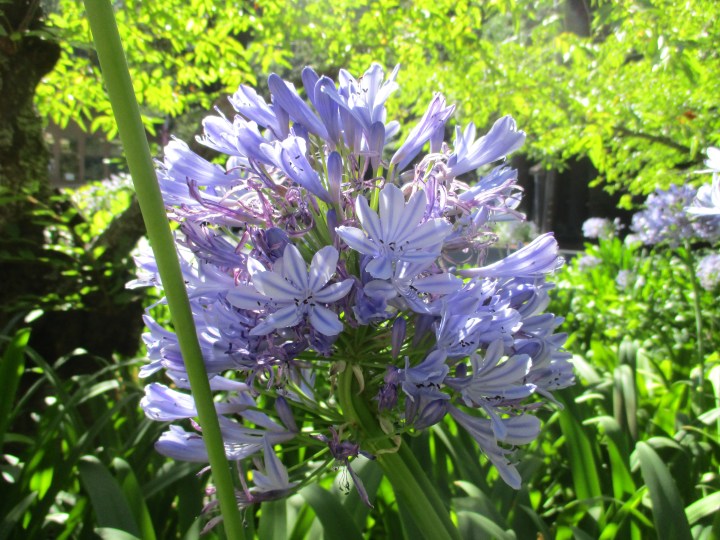
Fasciation of lily-of-the-Nile bloom is typically expressed merely as a few stray florets on the otherwise bare stalk below the main floral truss. A smaller subordinate stalk may seem to be fused to the main stalk below the stray florets.

The specimen in the picture above is exceptional. It really does look like a double bloom, with one stacked on top of the other. The atypically short and stout stem looks like a tightly fused bundle of several smaller stems. Those who do not know better might find the more billowy and more colorful fasciated bloom to be more appealing than the normal bloom pictured below.

The first picture of my ‘Six on Saturday‘ post this morning shows that this is not the only fasciated bloom here. There is another similar fasciated bloom right next to it. This suggests that the fasciation is likely caused by a genetic mutation that was shared with each of two rhizomes that split from the original.

If the mutation is sufficiently stable, and not likely to soon revert, more copies could be propagated later by division. The rhizomes split after bloom; so if one split into two last year, the two that are here now could split into four next year. If genetically stable, all four should bloom with the same fasciation next year.

To monitor their genetic stability, I should probably relocate these two odd rhizomes, to separate them from the others for observation. I suspect that they will eventually revert anyway.

P90817++

Garden Bloggers’ Bloom Day July 15 – Summer Weather Has Arrived


While so many of us in the Northern Hemisphere were contending with unusually warm weather, our weather here had been unusually mild. The weather only recently became warm for the past two weeks or so. It did not get unusually hot here like it did in so many other regions, but the warmth developed suddenly enough to damage many of the flowers that were blooming at the time. This included many of the new perennials that we happened to be installing at the time. Consequently, there were not nearly as many flowers to get pictures of as there had been in May, and some of the flowers in these pictures show damage from the sudden change in the weather. I am sorry that I neglected to participate in Bloom Day in June.

These pictures were taken at work, on the Santa Cruz County side of the Santa Cruz Mountains above Los Gatos, closer to Felton. The climate is more coastal than the chaparral climate of the Santa Clara Valley, although both are within USDA Zone 9.

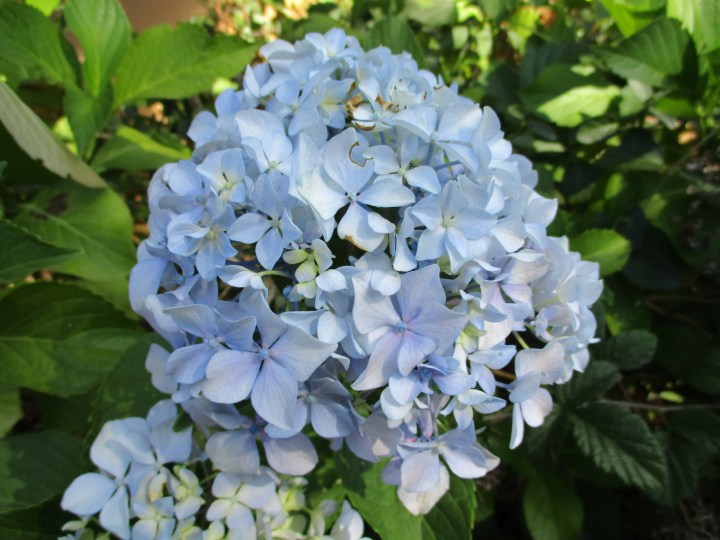
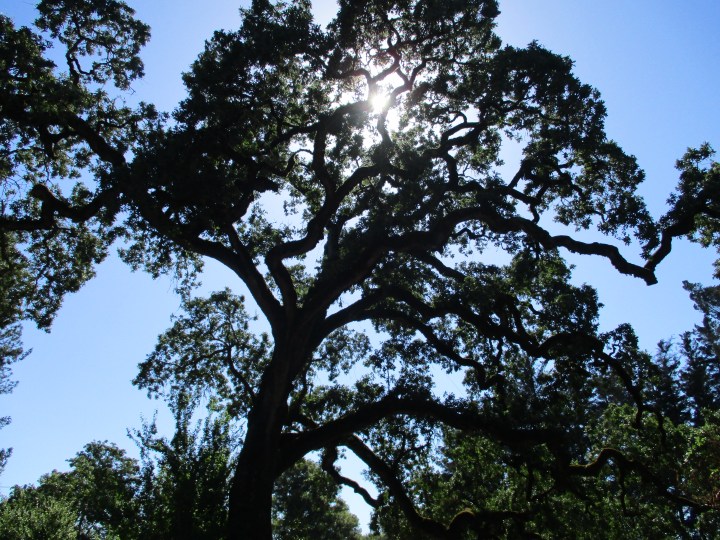
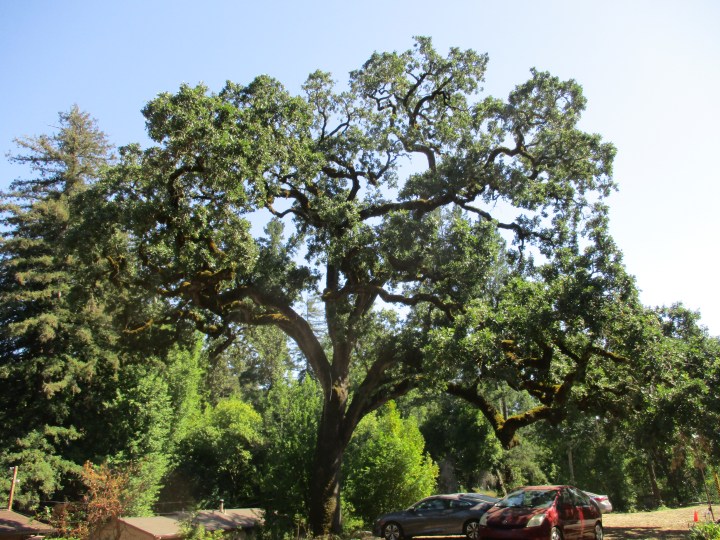
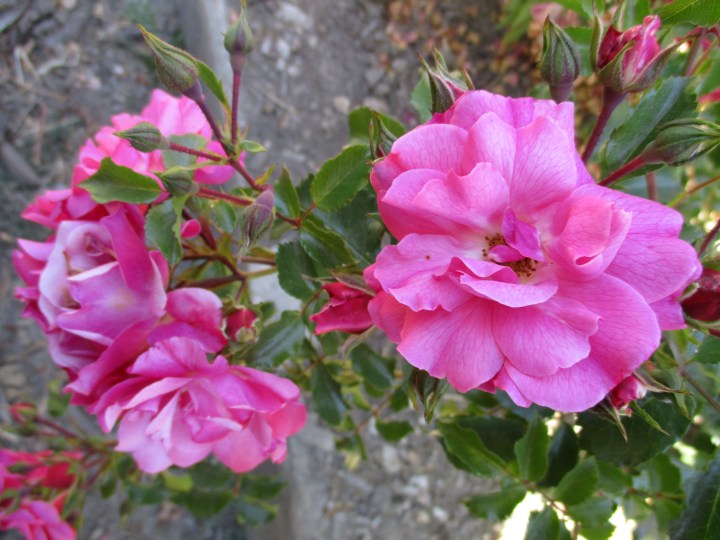
Carpet Roses are the lowliest of all roses, but they happen to be more functional for more landscape applications than other roses are. These got pruned back to a few canes over winter, and will get trimmed for confinement about now, but really do not need any more work than that. They bloom profusely in a few phases. They are only looking tired now because of the weather.7bd1Hydrangea are finishing in most other areas here. These are odd ones. They are more exposed to harsh weather conditions than others, but are somehow lasting later than those that are more sheltered. They are blue instead of pink, but are not in what would be considered acidic conditions within redwood forests. Nor were they fertilized to be blue. No one is complaining.7bd2Yarrow was planted just before the weather changed. Once established, it does remarkably well in the endemic soil and climate.7bd3Yarrow unfortunately got roasted by the sudden warmth. These yellow (or ‘golden’) flowers are getting quite crispy already.7bd4Coneflower was likewise planted just before the weather changed, and likewise got roasted. These happen to be some of the best at the moment.7bd5Valley Oak probably qualifies as appropriate for Bloom Day because it really is blooming right now. You just can not see it. The dust is everywhere. I really like this grand and sculptural tree. The valley oak happens to be the biggest oak in North America, and it also happens to live here, on the outskirts of groves of coastal redwoods, which are the tallest trees in the World.7bd6Valley Oak is so excellent that I had to get another picture of it from another angle. The first picture was looking about south toward the midday sun. This is looking almost to the east, perpendicularly to the other picture. The cars in the foreground are much closer than they seem to be. The trunk of the tree is significantly wider than it seems to be in relation to the cars.7bd7Garden Bloggers all over America and in other countries can share what is blooming in their gardens on the fifteenth of each month on “Garden Bloggers’ Bloom Day”, hosted by Carol Micheal’s May Dreams Garden at http://www.maydreamsgardens.com

Flowers For Home And Garden

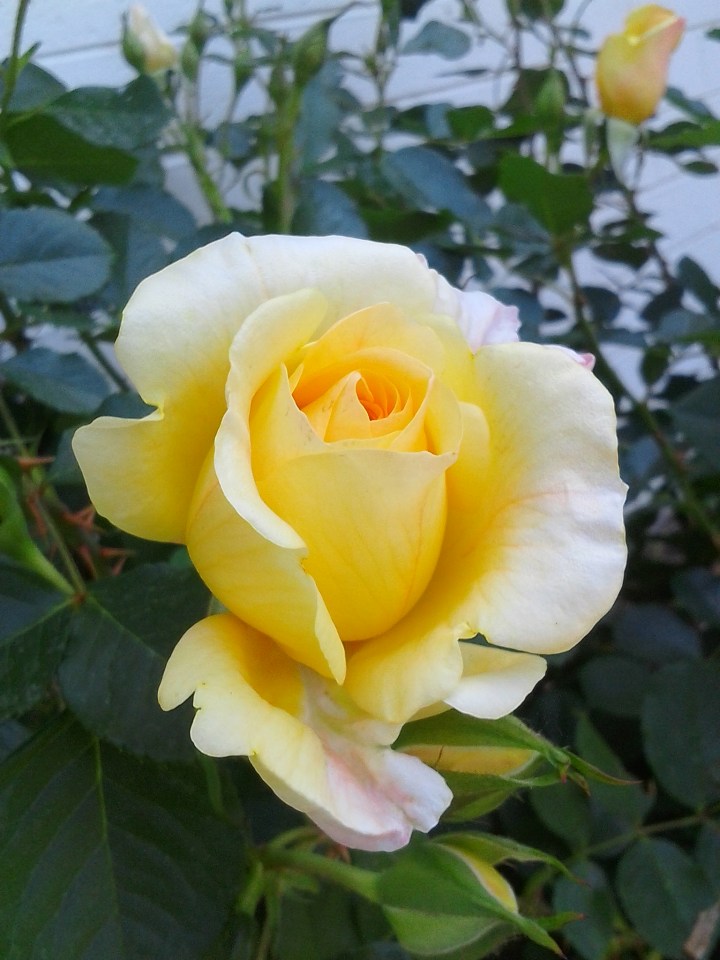
70524thumbThere is a difference. Hybrid tea and grandiflora roses were bred to be excellent cut flowers for the home. They bloom on long stems, and last well once cut. However, the rigid and thorny plants that produce these excellent blooms are realistically not much to look at. Floribunda, polyantha and climbing roses are more of a compromise with less ideal (perhaps) flowers on friendlier plants.
Conversely, bearded iris are spectacular while blooming out in the garden, but do not last so well as cut flowers. As colorful as they are, they perform best while still attached to the plants that produced them. Fading flowers might be groomed away from flowers that continue to bloom later, but are not a serious problem if allowed to linger. The garden is more forgiving than the home.

Where space allows, rose gardens or cutting gardens are areas devoted to the production of flowers for cutting and bringing into the home. Like vegetable gardens, cutting gardens might be hedged, fenced or partly concealed from the rest of the landscape. No one minds if the utilitarian plants within get deprived of their flowers, or need to be staked or caged like big tomato plants.

Taller and bulkier varieties of dahlia, delphinium, lily, Peruvian lily (alstroemeria) or sunflower that might be to big and awkward elsewhere in the garden can be right at home in a cutting garden. Compact and more prolific varieties of the same flowers work better in more prominent parts of the garden, and if prolific enough, can also provide flowers (although less spectacular) for cutting.

There are very few rules in regard to cut flowers. Many of us bring in bearded iris or daylily, even though they may not last more than a day. The buds below the flowers might bloom afterward. Blooming clematis vine, nasturtium (on or off stem), lily-of-the-Nile, zonal geranium, bougainvillea, bottlebrush, crape myrtle and even flower stalks of New Zealand flax, are all worthy cut flowers for anyone wanting to try them, especially if the garden provides enough to spare.70524thumb+