Six on Saturday: Hollywood

Vacation complicates blogging. So does spring. There is too much to get pictures of now. The pictures that I get are difficult to process while traveling without internet access. As has become typical for the past few weeks, these six pictures are already outdated. I took them prior to last Saturday, but I am only able to post them now. That is not the worst of it though. Even with so much blooming now, the only bloom within my Six for this week is scarcely visible, and half of these Six lack identifiable vegetation. The last is essentially devoid of vegetation. Heck, when it was more foliated between 1966 and 1968, the most prominent vegetation was fake. I might share six more appropriately floral pictures from the same location next week.

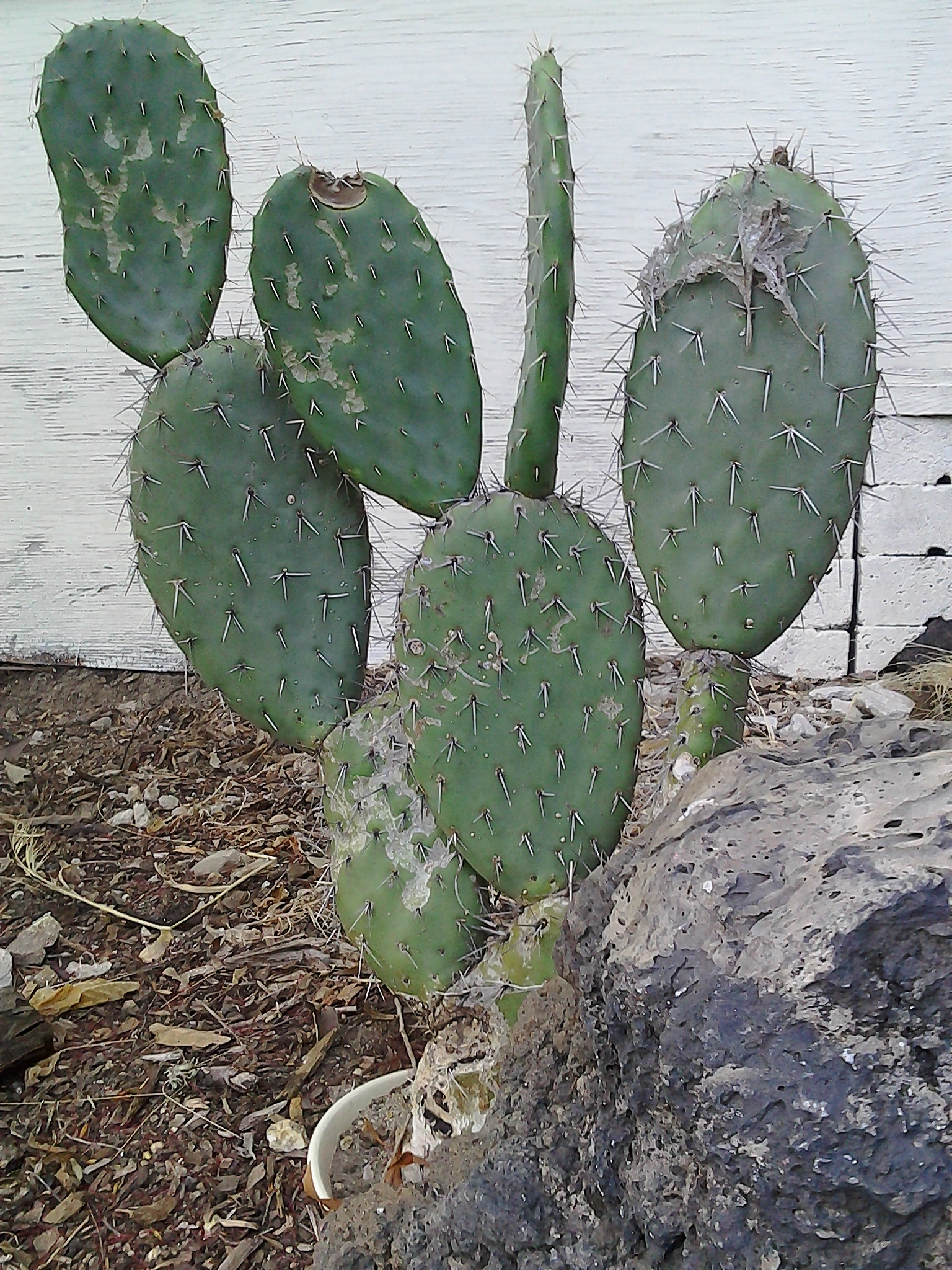
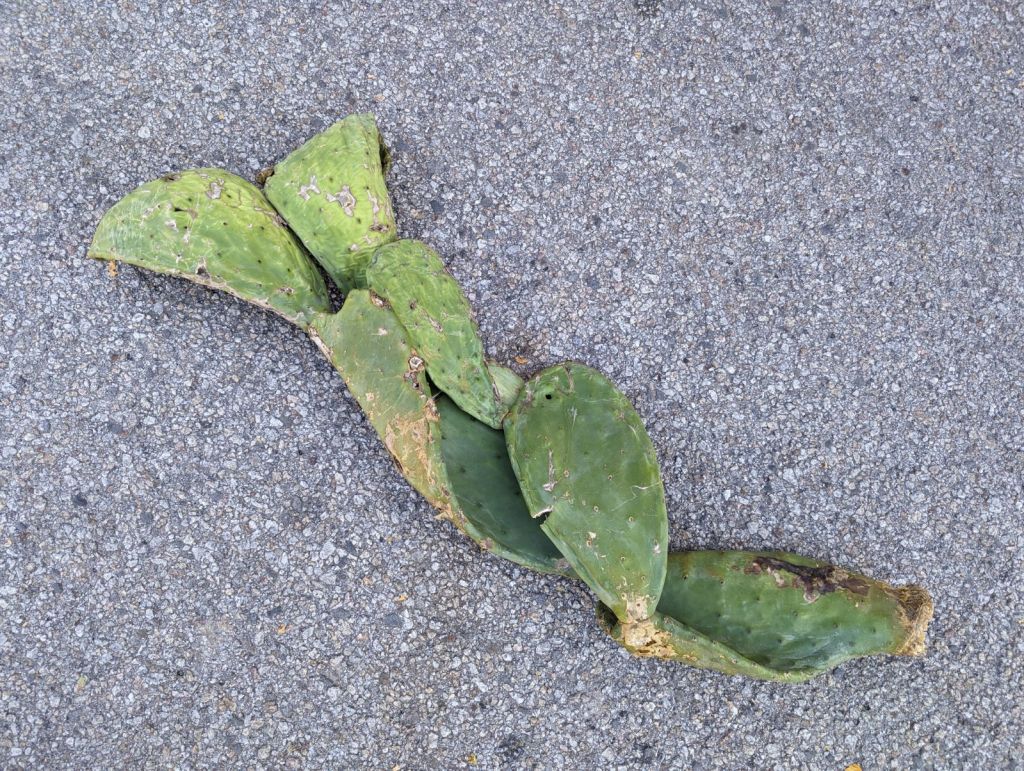
1. Opuntia phaeacantha or Opuntia littoralis, prickly pear grows wild in the Hollywood Hills. I got a picture closer to another herd for next week, but it may be another species.

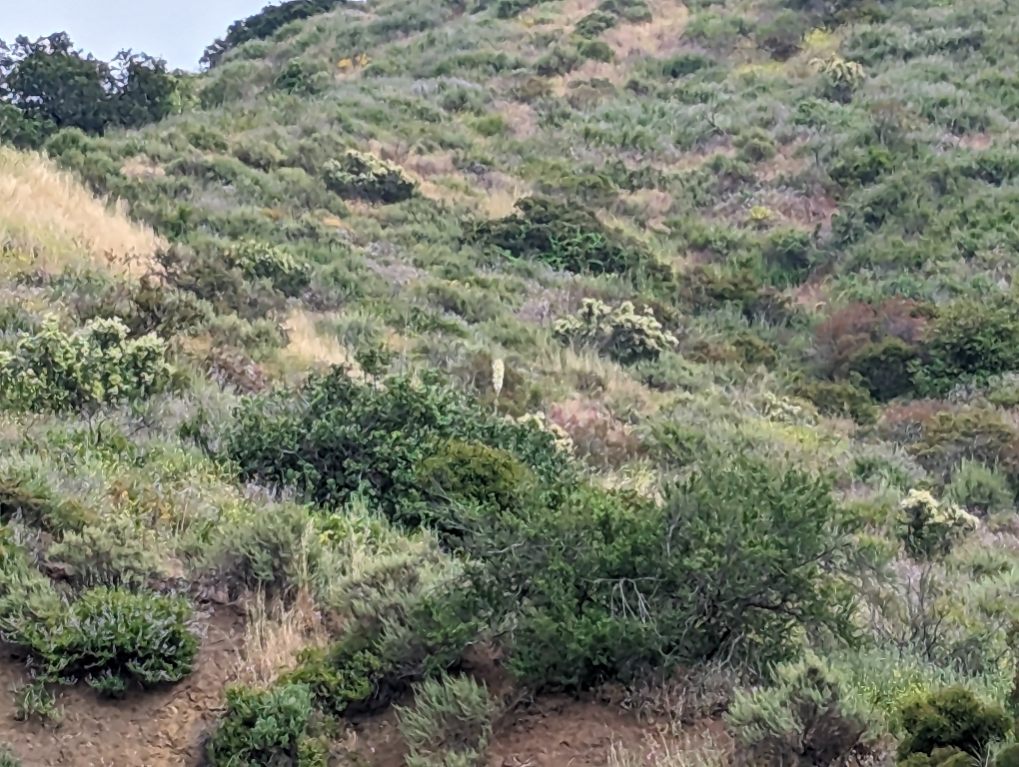
2. Hesperoyucca whipplei, our Lord’s candle blooms with an impressively tall and white floral stalk, but is barely visible at the center of this picture, taken from quite a distance.

3. Pinus pinea, Italian stone pine is obviously not native to the Hollywood Hills. I took a picture of this feral specimen because I thought it might be the legendary Wisdom Tree.

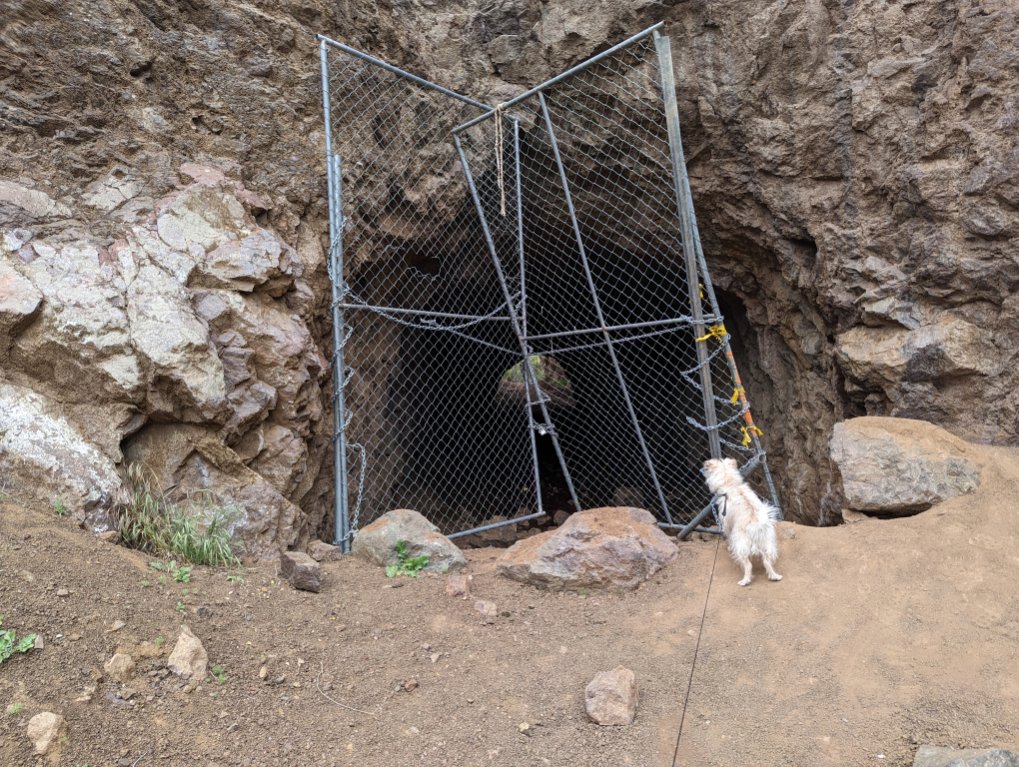
4. Not much vegetation is visible within this picture of an abandoned quarry, but Rhody directed me to this captivating scenery. Because of limited accessibility, we got no closer.

5. Zooming into the previous picture makes its scenery more captivating, and also shows a bit more vegetation within a residential landscape. Most of it is unidentifiable though.

6. Artificial English ivy with random native vegetation formerly inhabited this presently barren landscape. The busted fence is now quite uninviting. Does anyone recognize this?

This is the link for Six on Saturday, for anyone else who would like to participate: https://thepropagatorblog.wordpress.com/2017/09/18/six-on-saturday-a-participant-guide/

Old Man Cactus

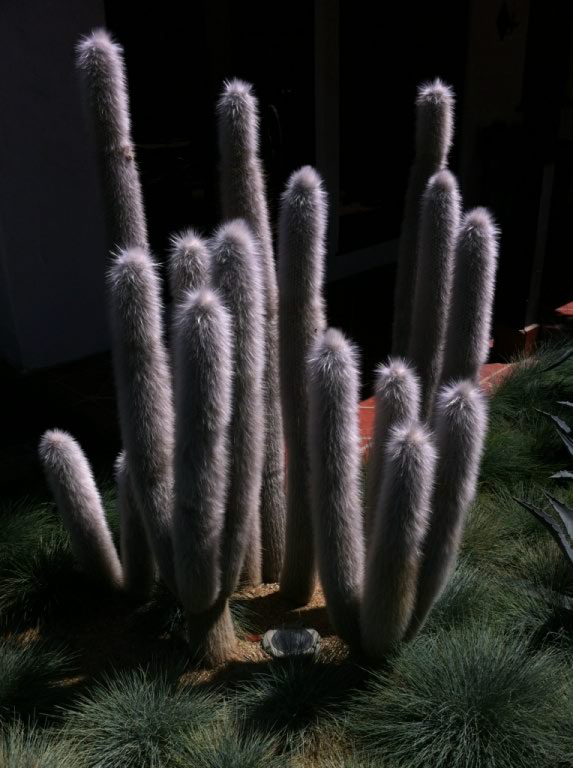
Old man cactus has developed an interesting means with which to shade itself.

The long, white hair of old man cactus, Cephalocereus senilis, that protects it from sun scald in harsh climates is what make it so striking in home gardens. However, the sharp spines concealed by the hair make it more appealing from a safe distance, like in the background behind lower perennials. The white, yellow or red flowers are rarely seen, since they only bloom on old stems that are at least a dozen years old. Such old stems are often cut down to the ground before they bloom because they get too tall and awkward, or because they eventually lose some of their hair as they get too old. There should be plenty of hairier, younger stems emerging from the basal clump to replace the older stems anyway. Individual stems rarely develop branches. Although old man cactus can get quite tall, it is typically kept less than fifteen feet tall.

Six on Saturday: Origins

Most of what comes to recover in the nursery here was originally from the landscapes at work. Some needed to be removed because it was deteriorating. Some was obstructive to another project. Some of what is here grows from seed that was found in the landscapes. Several plants here came from more unusual and unexpected sources. A few plants grew from seed or cuttings that I found while out and about elsewhere, merely because I took interest in them. Such procurement would not be such a bad habit if more of such plants were actually useful to the landscapes here. Vines require too much maintenance. Cacti, palms and tropical foliage are not sufficiently compliant with the style of our landscapes.

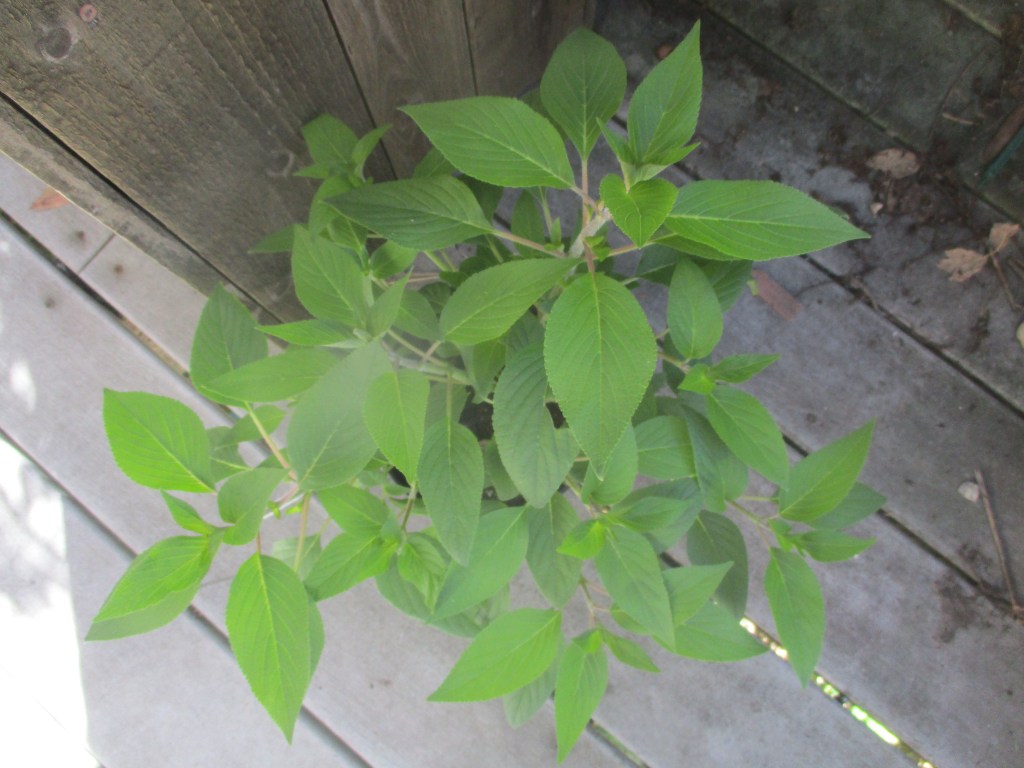
1. Salvia elegans, pineapple sage is the most likely of this Six to be useful to landscapes at work. I grew cuttings from a stem that was obstructive to my use of an ATM machine.

2. Distictis riversii (or Distictis ‘Rivers’), royal trumpet vine grew from cuttings of a wiry and stray stem that encroached far enough into a public parking space to annoy Carson.

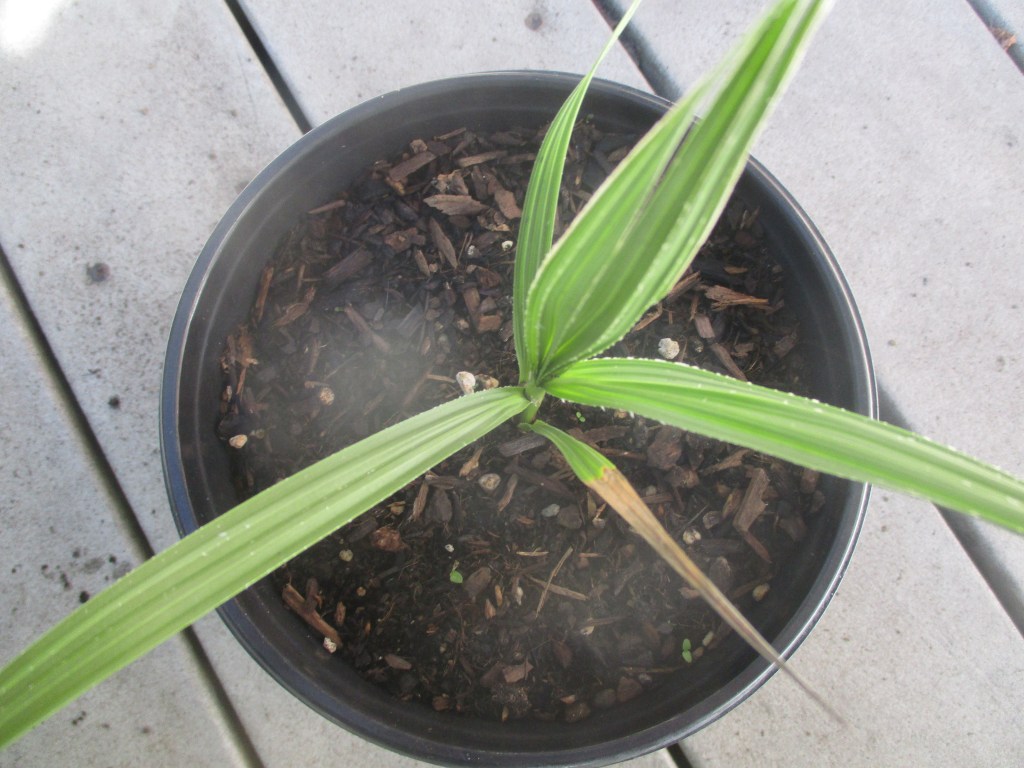
3. Washingtonia filifera, California fan palm, or desert fan palm, is the only palm that is native to California, but is rare locally. I took seed when I got the chance, but now what?

4. Musa basjoo, Japanese banana is one of four pups that I was quite pleased to acquire from an established specimen within a private garden. It now has three additional pups!

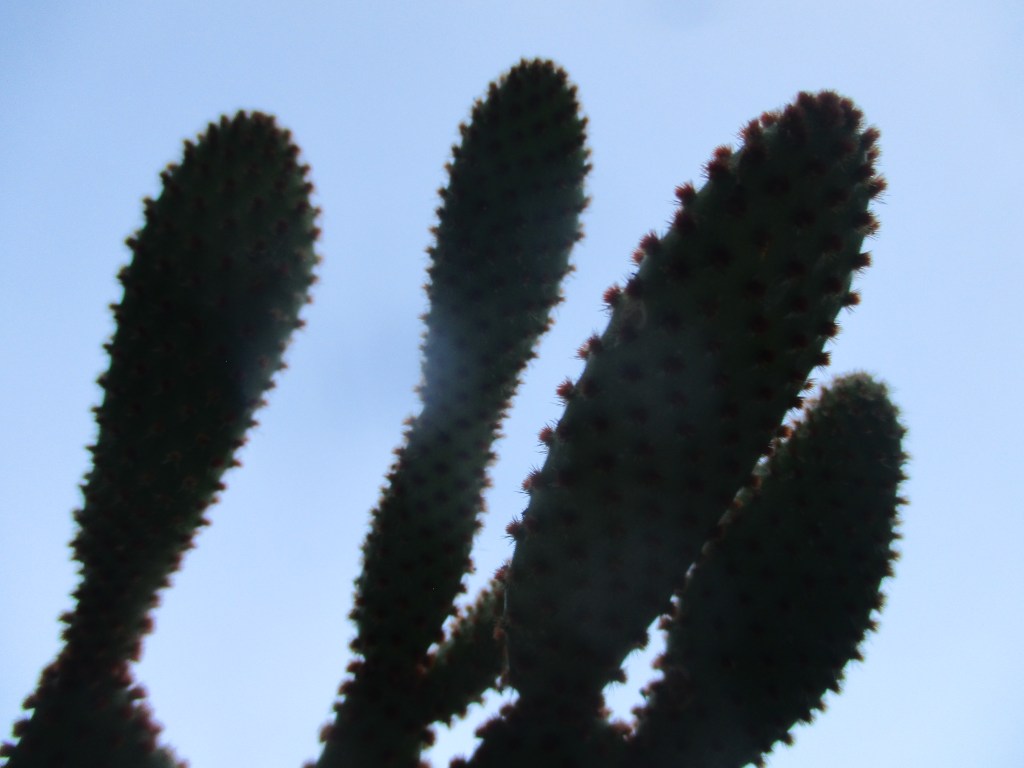
5. Opuntia microdasys, bunny ears cactus was originally a component of a prefabricated ‘terrarium’ of small tropical plants that need regular water. It was removed and left here.

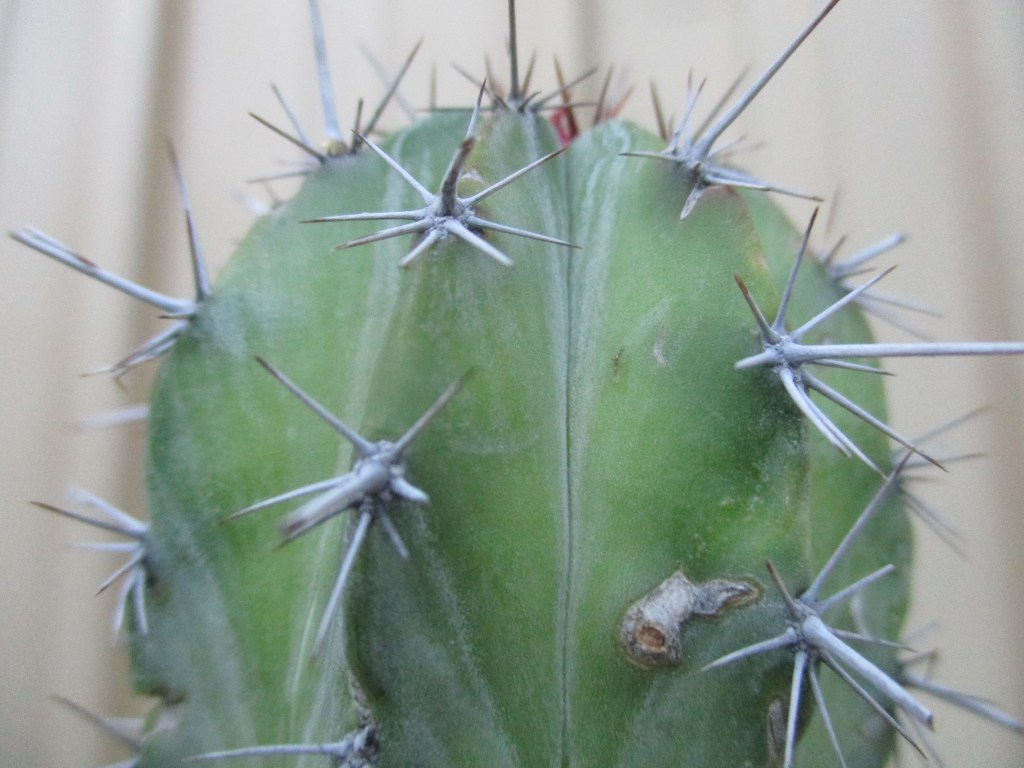
6. Carnegiea gigantea, saguaro cactus arrived with assorted potted succulents that were left by a relocating neighbor family. Actually though, I have no idea what species this is.

This is the link for Six on Saturday, for anyone else who would like to participate: https://thepropagatorblog.wordpress.com/2017/09/18/six-on-saturday-a-participant-guide/

There Is Variety In Succulents

It is difficult to believe that this stout trunk outfitted with sharp spines is a euphorb, related to leafier poinsettias.

Cacti have thick, fleshy stems outfitted with nasty spines instead of leaves. Agaves and related aloes have stout, fibrous stems that are mostly obscured by thick, fleshy leaves. (Only a few somewhat rare aloes develop bare trunks and stems.) What they have in common is that they all are succulent plants, collectively known as succulents.

There are all sorts of other succulents. Humongous saguaro cactus have hefty trunks and limbs. Diminutive impatiens (like busy Lizzie) are grown as annuals for their colorful and very abundant flowers. Many succulents have succulent stems. Many have succulent leaves. Some, like the common jade plant, have both succulent leaves and stems. Trailing ice plants, leafy begonias, and sculptural euphorbs (related to poinsettias) are all succulents.

Many succulents store water in their succulent parts because they live in dry climates. Because moisture is such a commodity where they live, cacti protect their succulent stems with sharp spines. Agave protect their leaves with sharp teeth. Euphorbs are equipped with caustic sap, and many also have spines like cactus have. Fortunately, most succulents are not so unfriendly.

Almost all succulents are remarkably easy to propagate from cuttings or by division. In the wild, pieces of prickly pear cactus that fall onto the ground will begin to develop roots through the rainy weather of autumn and winter, and be ready to grow into new plants by spring. In the home garden, cactus cuttings should be left out for a week or more so that the cut ends will ‘cauterize’ (Actually, they just dry out a bit.) and be less susceptible to rot once they get plugged into the ground or pots to grow roots. Alternatively, clumping cactus that develop multiple main stems from the base can be divided, although the spines make handling them difficult.

Most aloes and some agaves produce basal shoots known as pups, that can be split from the main plants to grow into new separate plants. Agaves that do not produce pups while young typically start to produce pups after a few (or many) years, as they mature enough to bloom. Many of the larger types produce an abundance of pups after bloom, since the main shoot dies as flowers deteriorate. If desired, one or more of the pups can be left in place or planted back to replace the parent plant.

Most other succulents are even easier to propagate. Small cuttings can be plugged wherever new plants are desired. Some can even be grown from leaf cuttings!

Pitahaya

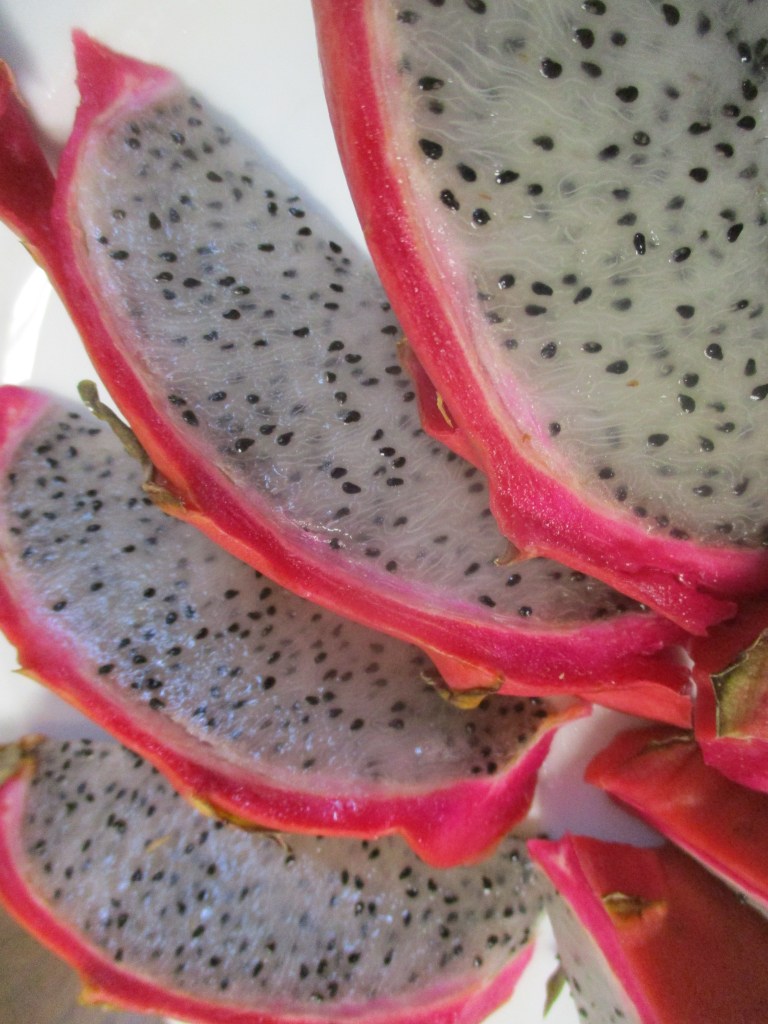
White pitaya looks almost otherworldly.

This weird tropical cactus gets mixed reviews. Pitahaya fruit, or dragon fruit, is abundant in favorable conditions, but develops potentially bland flavor. The green succulent stems may be vigorous, but develop distinctly pendulous form that resembles Sigmund the sea monster. Bloom lasts from summer to autumn, but individual flowers open for just a night. 

Selenicereus undatas is the most popular pitahaya. Its fruit weighs between half a pound and a pound, and has white flesh. Selenicereus costaricensis fruit is similar, but with red flesh, and perhaps slightly more flavor. Selenicereus megalanthus fruit is smaller, thorny and yellow, with white flesh and richer flavor. Home grown fruit is superior to market fruit.

Pitahaya grows very easily from cuttings or pruning scraps. Young stems climb with wiry aerial roots, so need substantial support. Fruiting stems hang downward from the tops of such support. Most modern cultivars need no pollinator. Some old cultivars need another of its same species for pollination. Pitahaya is vulnerable to frost where winters are cool.

Rat Tail Cactus

00617
Not many cacti cascade from planters.

When first imported to Europe from the Americas, cacti were very strange. Their distended green stems do all the photosynthesis. Vestigial leaves develop into sharp protective spines. Vestigial stems develop into more formidable thorns. One of the first cacti imported is among the weirdest. Rat tail cactus, Aporocactus flagelliformis, develops pendulous stems that do not stand upright.

In the wild, rat tail cactus cascades from rocky ledges and crotches of trees. In home gardens, it cascades splendidly from elevated planters or hanging pots. Pruning scraps make good cuttings to plug into loose stone or broken concrete retaining walls. Rat tail cactus likes warmth, but also some partial shade from hot afternoon sunshine. Yellowish stems appreciate a bit of mild fertilizer.

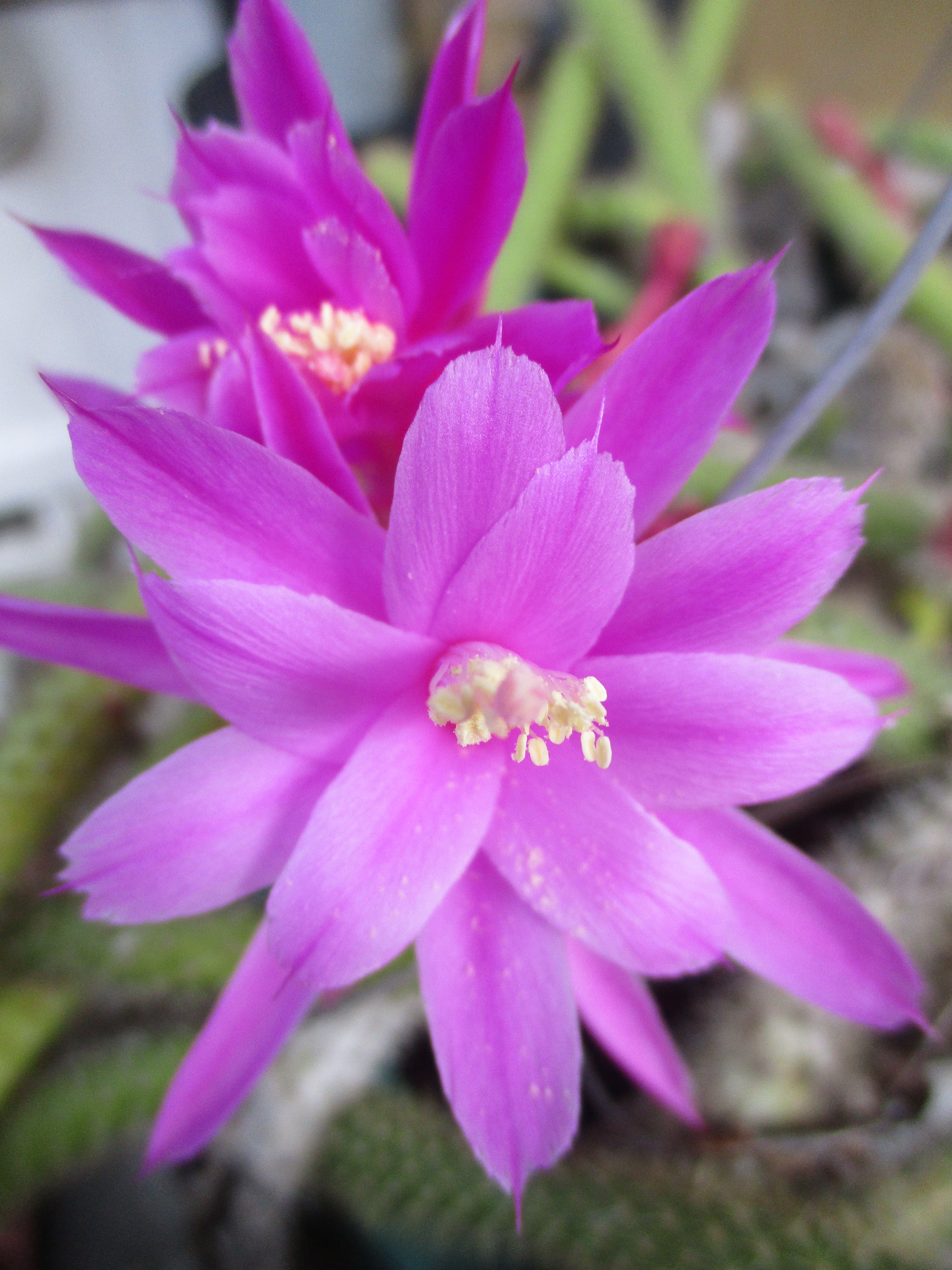
Old stems grow longer than three feet if they get the chance. However, they discolor with age. Pruning them out from the base promotes healthier and more compact growth. Most stems emerge from the base, with minimal branching beyond the base. Bloom is slightly purplish pink. Individual flowers are about two inches long and slightly wider than an inch. They last for three or four days.

Barrel Cactus

50225
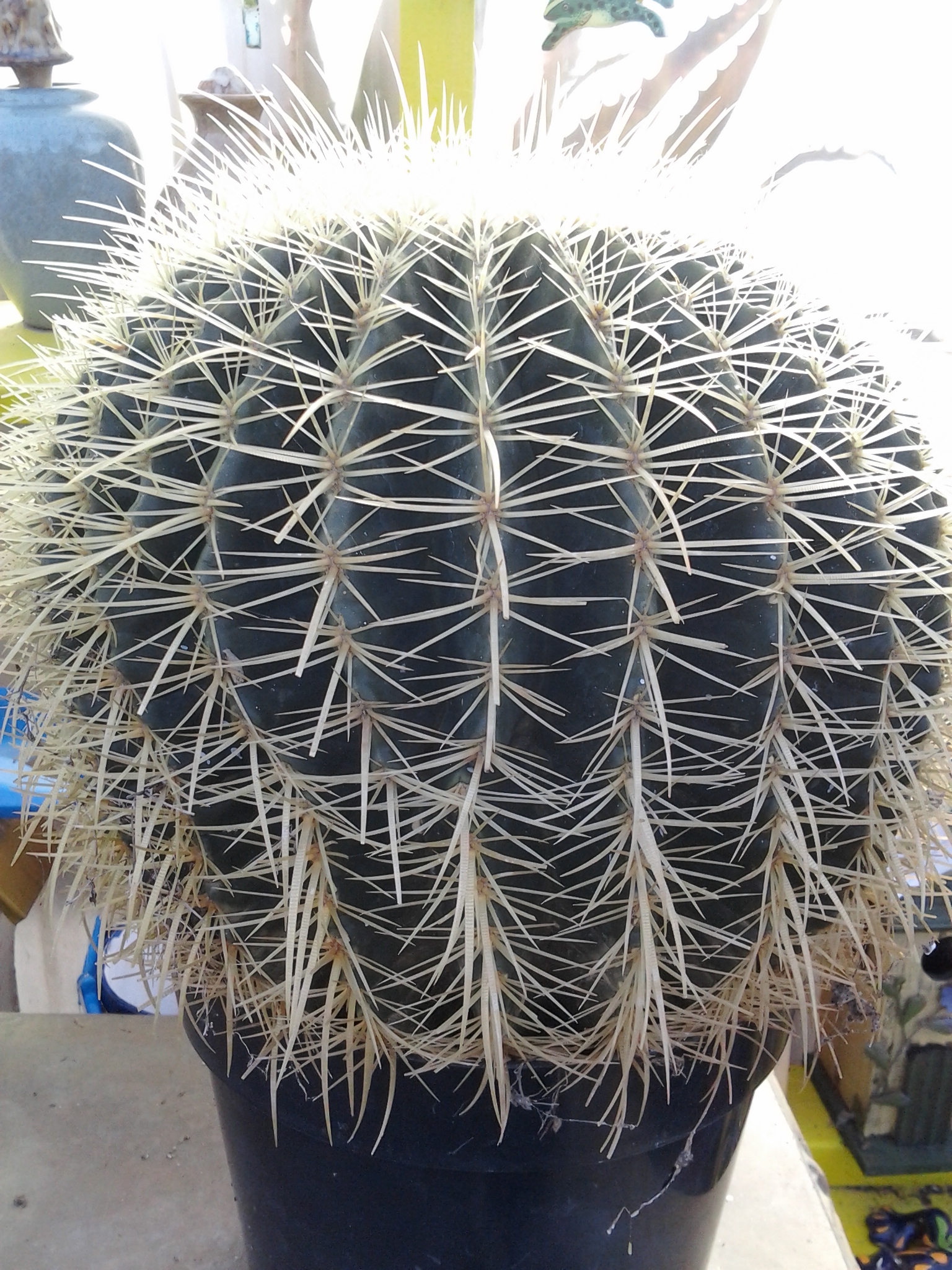
Barrel cactus spines are serious business!

‘Echino’ translates to ‘spiny’; so the genus name of barrel cactus, Echinocactus grusonii, means ‘spiny cactus’. Duh! The nearly spherical and furrowed (ribbed) plants are completely covered with stout and dangerously sharp spines. The most popular variety, known as golden barrel cactus, has pale amber yellow spines. Another variety has white spines. Tan or ruddy spines are rare.

Growth is quite slow. It takes many years for plants to get to three feet tall. Only plants that are quite mature bloom in spring or early summer with bright yellow or orange flowers that develop in a circle, like a halo around the top of the plant. Pink or red flowers are rare. Old plants typically develop a few pups (side-shoots), which may likewise take many years to bloom.

Like most cacti, barrel cactus wants a warm and very sunny location, and very well drained soil. If they do not get watered too much, they can stay potted for many years. However, because they are so nasty, they are not too welcome on porches or patios where most potted plants live. Because they are so heavy and difficult to handle, they are not as portable as they should be.

Cacti Have Bite Without Bark

50225thumb
Cacti exhibit unique and striking form.

The most inhospitable spots in the garden that no one wants to put any work into seem to be the domain of cacti, whether or not any cacti actually live there. “Oh, I will just put some cactus there!” is cliché in regard to shadeless and dry spots that get too hot with glare from a south-facing wall. Yet, such spots typically continue to be neglected, and the cactus never get planted.

Why are such distinctive and interesting plants considered to be so lowly that they should be banished to the badlands? Why should they be expected to endure what not other plants are expected to endure? After all, there are so many other distinctive xeric plants, like yuccas, agaves and some aloes, that are just as resilient, and according to some, just as lowly.

Cacti really are not as independent as commonly believed. New plants should actually get watered occasionally until they disperse their roots. If they get watered regularly, they need coarse soil that drains very well. Cactus plants that were grown in sheltered spots really can get scaled if planted where they are too harshly exposed during hot weather.

The main problem with cactus is their nasty spines. Simply planting small plants without getting poked is a challenge. Moving big potted specimens or removing overgrown cactus plants without getting seriously perforated can be daunting. So, even though they might do well in the harsh exposure at the curb, they do not belong in such a high traffic area.

Without foliage or conventional stems, cactus are either awkward to prune, or can not be pruned at all. Barrel cactus have only one or very few round stems. If one of these stems gets to wide, it can not be pruned back. Prickly pear cactus is easier to accommodate only because it has enough stems to spare those that grow out of bounds.

What makes cacti so excellent is their distinctive form. Some have strictly upright stems that resemble those of the organ pipe cactus. Some grow as clumps of short and fat stems. Others grow upward and outward with rounded and flat stems like those of the beaver tail cactus.

How To Train Your Dragon

P00126
Oh, the SHAME!

Dragon fruit became a fad on the West Coast of California several years ago. They were probably always around, but had previously been rare. When they inexplicably became more popular and common, they did so down south first. Their popularity migrated to the Santa Clara Valley a few years later. It probably will not go much farther though, since they are sensitive to frost.

It is not a bad fad, at least relative to most others. Dragon fruit, which is also known as pitaya, happens to be very easy to grow and propagate from cuttings. Locally, it needs protection from frost, but no more than other popular tropical plants. It recovers from minor frost damage quite efficiently. Pruning scraps can be rooted and grown as more plants for friends and neighbors.

Of course, I dislike fads. I am not impressed by the fruit, which might lack flavor here where the weather does not stay very warm for very long through summer. The coarsely textured and floppy plants get big and awkward. They are typically trained up onto posts from which their many long stems hang downward. An exemplary specimen looks like Sigmund the Sea Monster.

This is a fad that I dislike enough to try. I want to see what all the fuss is about. These are my first two cuttings. The upper cutting produces red fruit. The lower cutting that is marked with a line to show how deeply it should be stuck into rooting medium produces white fruit. I will know where to release them into the landscape by the time they develop roots and start to grow.

This is so shameful that I probably should not be writing about it. Oh well. Perhaps in a few months, I will write about how these cuttings will be progressing.

Epiphyllum Surprise

80808Epiphyllum oxypetalum was my very first epiphyllum. A friend’s mother gave me three long cuttings, which were cut in half to make six cuttings. They grew like weeds, and I was quite pleased with them. At the time, they were the only epiphyllum that I wanted. The wide nocturnal flowers are strikingly pure white and nicely fragrant, and stay open late into the morning if the weather is right. Since white is my favorite color, I craved no more.

Then I got bits of another epiphyllum from one of my clients. I do not know if it really is a species of epiphyllum, but it grows just like one, with the exception of the bloom. Rather than only a few huge nocturnal flowers, it blooms with many smaller pink flowers that remain open all day. It lacks fragrance. It is not as impressive as Epiphyllum oxypetalum, but it is colorful for a longer time. Besides, now that I got it, I must continue to grow it.

Shortly afterward, I acquired a bit of another epiphyllum from another client. I expected it to bloom with a bright red flower, but it did nothing. In fact, it sat around for a few years without doing anything. Finally, it bloomed for the first time this year. That is the surprise.P80714+++++

This red epiphyllum that bloomed last year is not mine. It belongs to a colleague who hangs it in public garden at work while it is blooming. This is what I expected mine to look like. I sort of believe that it happens to be one of the more popular cultivars of epiphyllum.

What I got instead was these intriguing pink blooms! I don’t know what to think. The clear whit Epiphyllum oxypetalum is still my favorite, and I really like the rich red, but these pink flowers are totally rad too!P90707P90707+P90707++