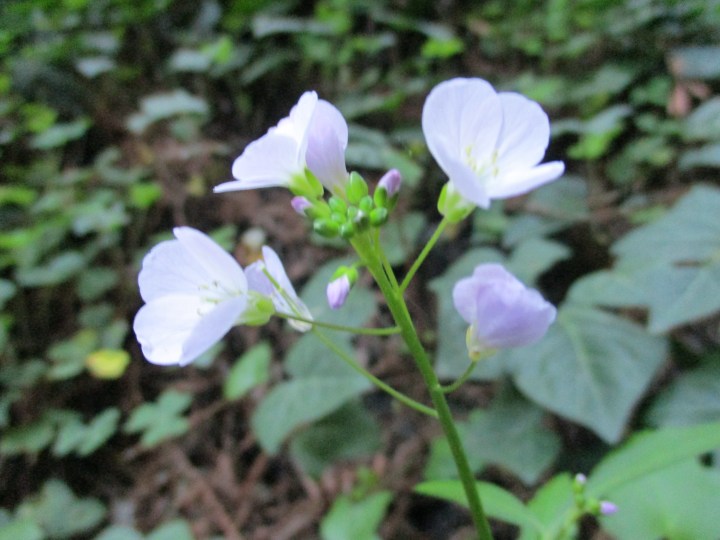
 There are so many big trees in the Santa Cruz Mountains that keep most of us looking up. It is easy to miss much of the understory plants that grow on the forest floor.
While getting the pictures for the ‘Six on Saturday’ article posted earlier, I happened to notice these few small pale flowers that contrasted more with their own dark green foliage than they would have if they were more brightly colored. Perhaps that is a technique to get the attention of pollinators. It certainly got my attention.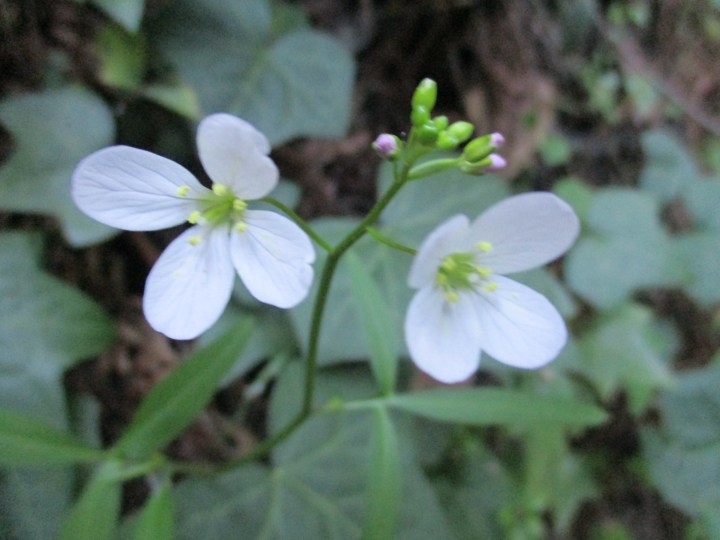 The flowers were not completely white. They were very pale hues of pink. The wood sorrel in the last picture was slightly more pinkish than the unidentified cruciferous (of the family Cruciferae) flowers of the first two pictures. Pale flowers, particularly those that seem to be adorned with barely perceptible patterns, are typically those that use infrared and ultraviolet color to attract pollinators that can see such color. If that was their intention, they would not look so bland to the pollinators whom they prefer to attract.
Much of the surrounding dark green foliage is exotic (non-native) English ivy. It climbs some of the redwood trees and makes quite a mess of the forest. Native specie are too docile to compete with it. The two species in these pictures might have been more common years ago, before the English ivy invaded.
Neither of these specie are the sort that I would plant in my own garden. I do not even know what the first species is. The wood sorrel looks too much like related oxalis. Although several specie of oxalis are popular in home gardens, I still think of them as invasive weeds. Yet, in their natural environment, they are too happy and pretty to not be appealing.
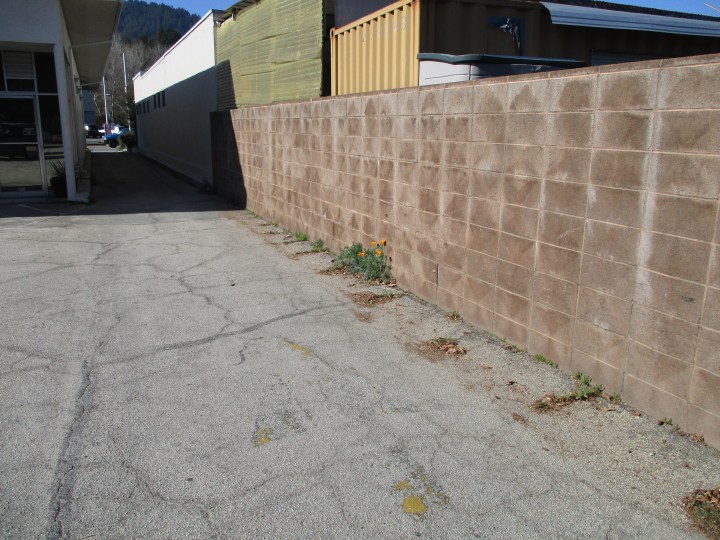 Not just any poppies; California poppies, the state flower of California.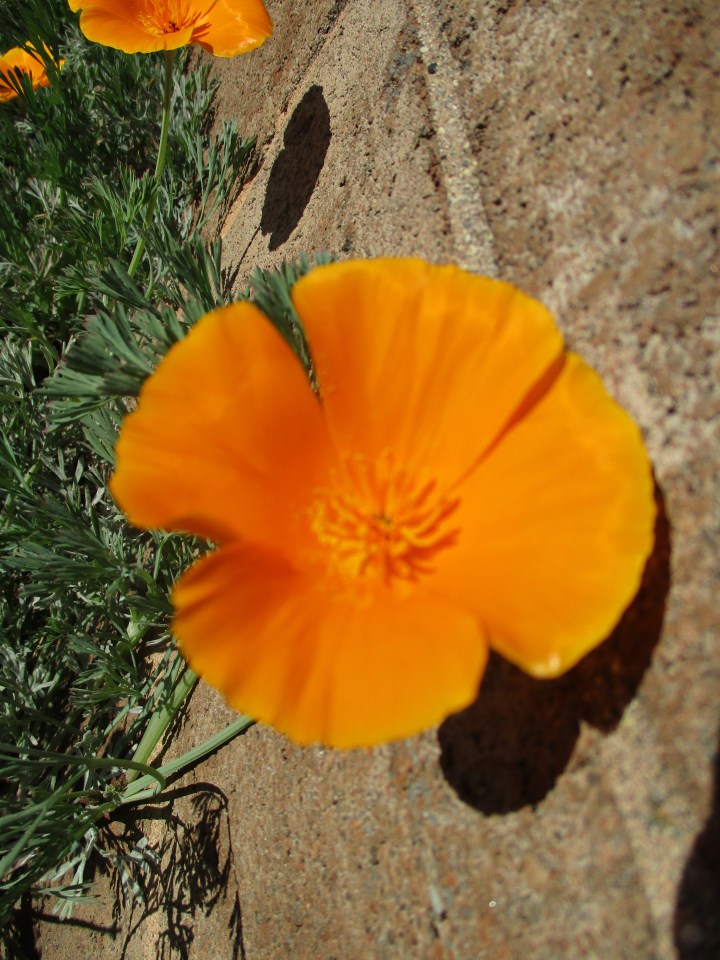
 “It’s not nice to fool Mother Nature.” That old margarine commercial was lame back in the 1970s, but the quote is so true. Inadvertent interference with the natural process of wildfires has unfortunately increased the combustibility of the flora of forests and wildlands throughout California. No one really meant to interfere with the process. It is just what happens when we need to protect our homes and properties from fire.
