 The most popular hardwood in California is essentially unavailable in nurseries. California black oak, Quercus kelloggii, provides between a quarter and a third of the hardwood timber harvested in California. One would not know it by its sporadic appearance within mixed forests of the Coastal Ranges. It is much more common in the Sierra Nevada, which might be why no one grows it.
Mature trees can top out at thirty feet with broad canopies if well exposed, or might be more than seventy feet tall and relatively slender if they must compete with other trees. The biggest trees are more than a hundred feet tall. The sculptural trunks are usually less then four feet wide. Trunks of old trees are commonly rotten inside. Gray and smooth young bark gets rough and dark with age.
The distinctively lobed deciduous leaves of California black oak are not much more than four inches long. They can get nearly twice as long on the most vigorous growth, or where shaded. The dark green foliage will slowly turn brown or yellow through autumn, and then defoliate through winter. It can turn a brighter yellow or orange, but then defoliates faster, if the weather gets cool fast.
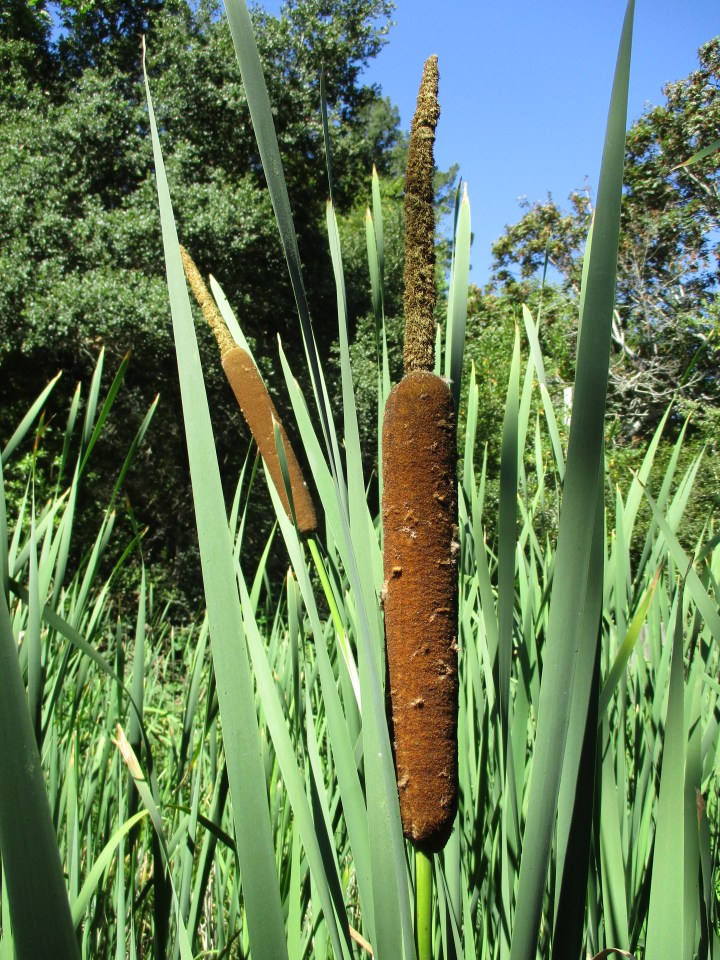 Urban sprawl replaced the formerly vast orchards of the Santa Clara Valley a long time ago. Nowadays, it is difficult to imagine that they were ever here. Apricots, prunes, cherries, almonds, walnuts and all that the region was once famous for are all now rare commodities.
 This sort of weather pattern does not happen very often. Late spring is normally pleasantly warm, and the weather gets progressively warmer through summer, which typically includes a few unpleasantly warm days. It rarely gets too hot here, and when it does, it does not last for more than a few days, and tends to cool off at least somewhat at night. The air is normally arid. Humidity is uncommon in a chaparral climate.

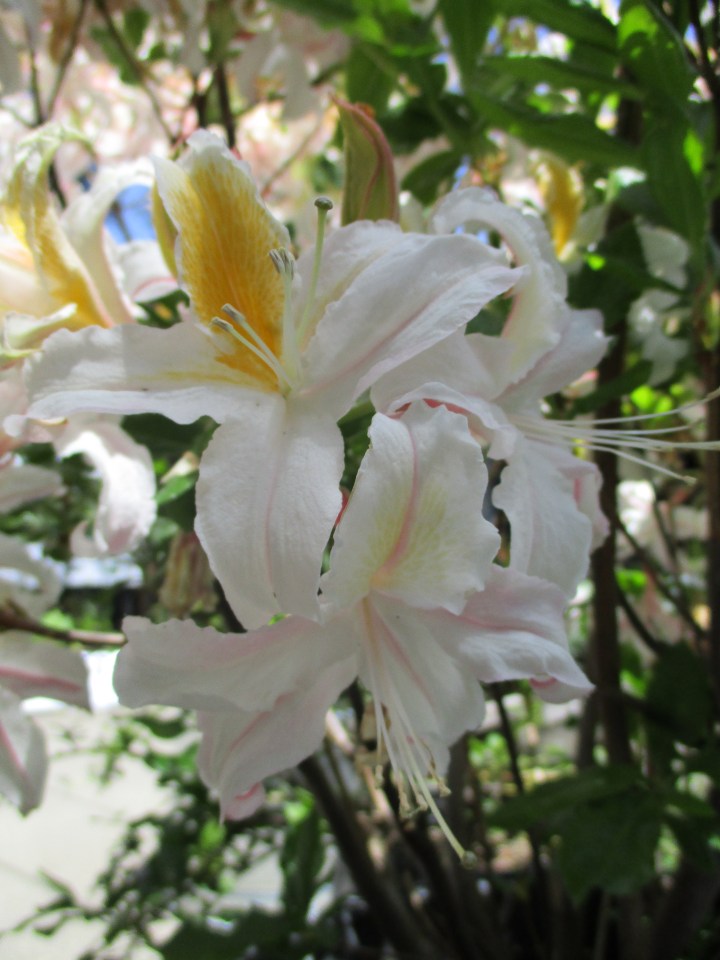 We think of rhododendrons and azaleas as being from cooler and moister climates. After all, that is where they do best. Yet, there does happen to be a native western azalea, Rhododendron occidentale, that lives in the Sierra Nevada and coastal ranges from San Diego County to just southwest of Portland, Oregon. (Azalea and Rhododendron are varied specie of the same genus.)
 Erigeron karvinskianus
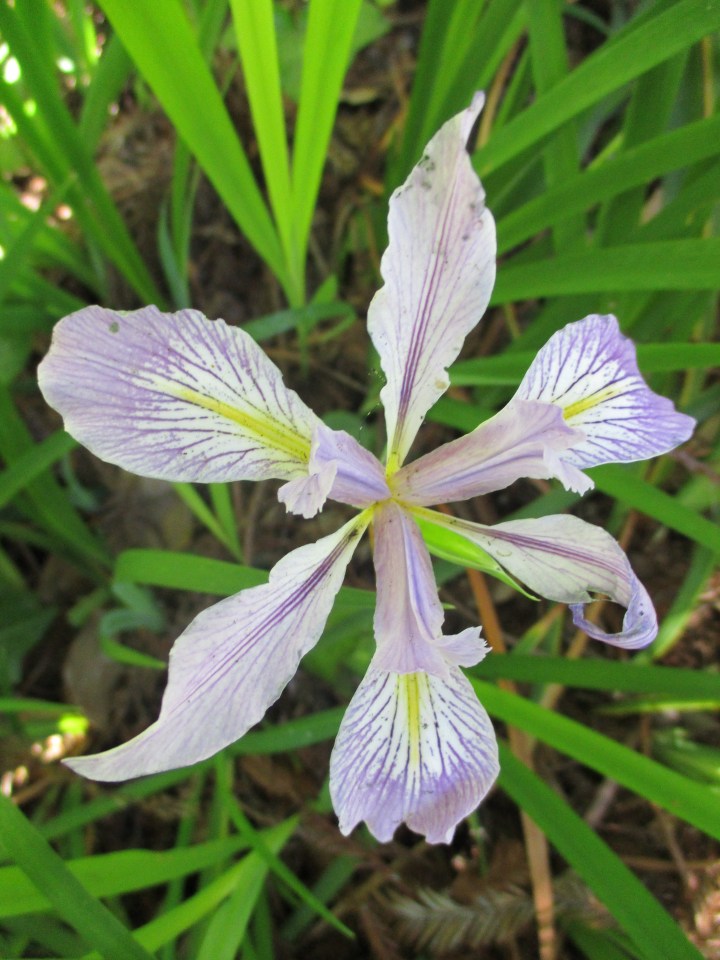 It is not as if the previous article about it was inadequate.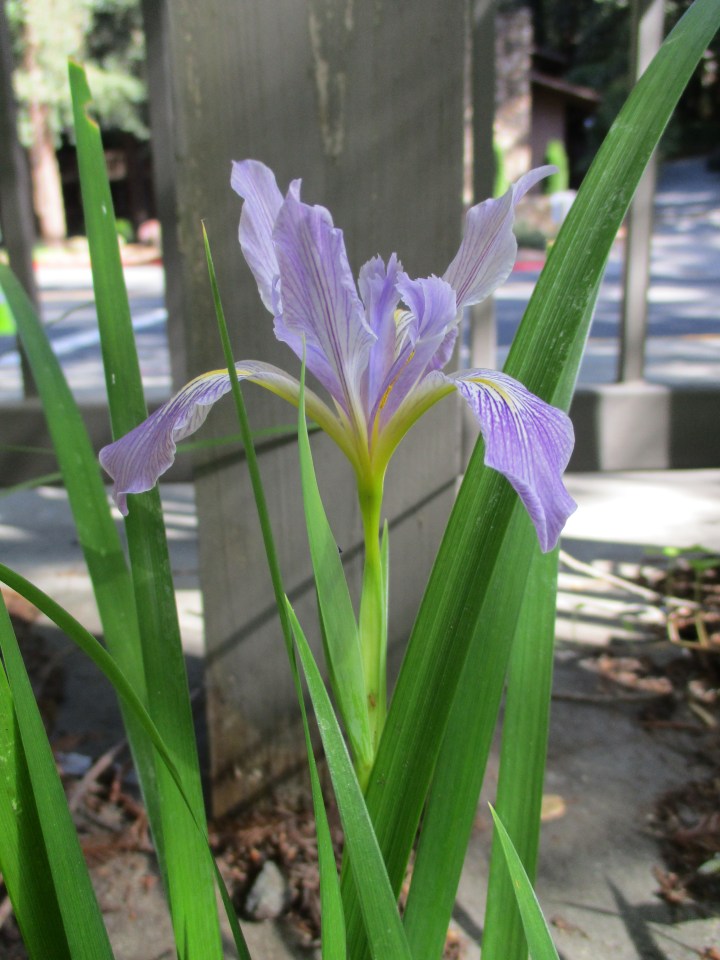
 There really is a bearded iris that happens to be named ‘San Francisco’. It is related to ‘Los Angeles’, but not ‘San Jose’. (I really want to find a copy of ‘San Jose’ for my own garden!) Both ‘San Francisco’ and ‘Los Angeles’ are white with a slight blue highlight, and an even slighter reddish edge that is easy to miss. I can not remember which one of the two is whiter than the other, but the whiter one may lack the reddish edge altogether.
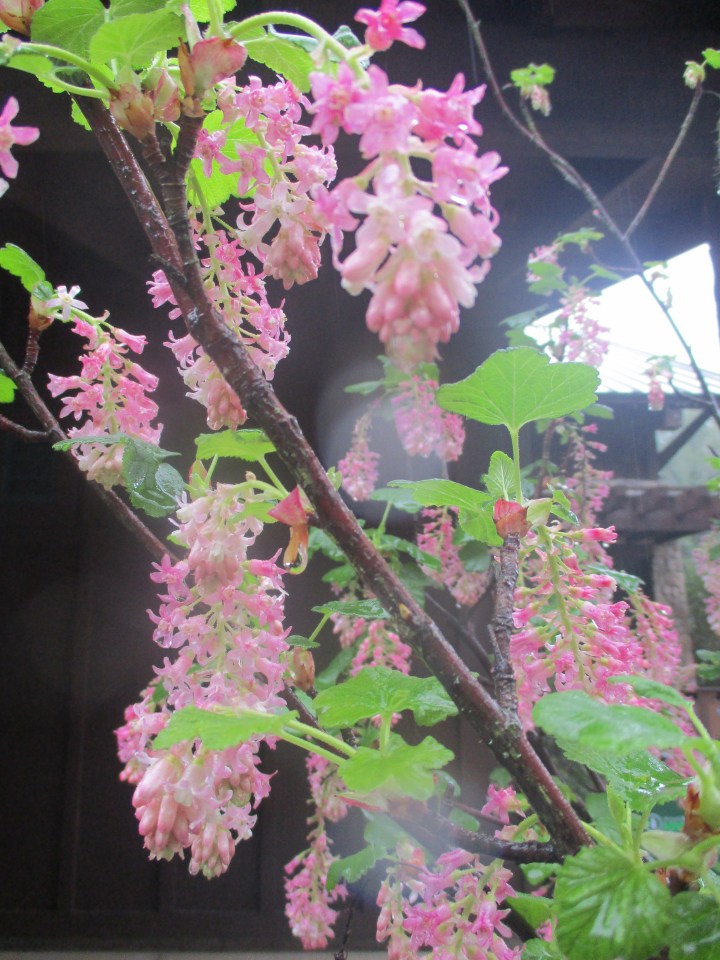 We tend to think of currants as being from Europe, Russia or Eastern North America. The pink flowering currant, Ribes sanguineum glutinosum, is actually endemic to canyons and riparian sites of the coastal ranges of California. Because it is an understory species that lives in the partial shade of large trees, it is quite tolerant of shade, and even prefers a bit of shade rather than full sun.


 What ever happened to Point Reyes ceanothus? It is such a nice low growing shrub, with small holly-like leaves, and cheery blue flowers in very early spring. It was quite popular when it initially became available, but now seems to be rare. Maritime ceanothus, Ceanothus maritimus, from San Luis Obispo County, is a similar species that presently seems to be getting more attention.
