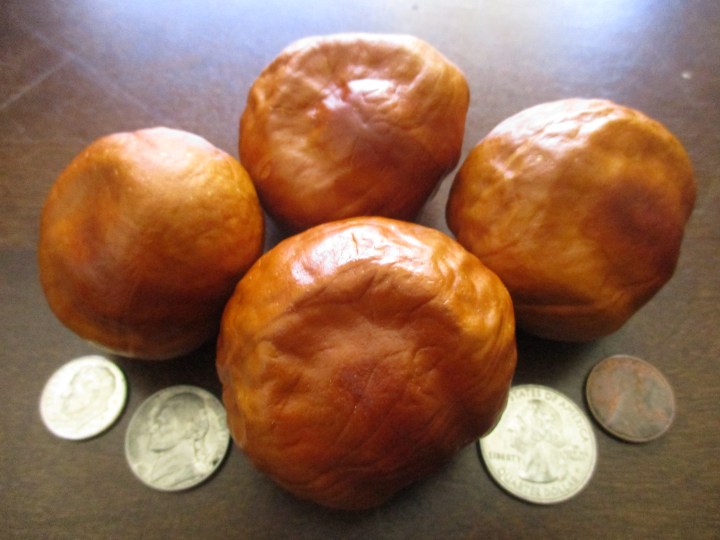
 California flora is remarkable. It all does what it must to live comfortably in every ecosystem, climate and geographical region here.
California horsechestnut or California buckeye, Aesculus californica, is one of the more unusual native species. It is so in tune with the climate that it makes other deciduous trees seem to be inexperienced. Of course, to those who are unfamiliar with it, it just looks dead right now.
In chaparral climates of California, some deciduous trees start to defoliate early, before the weather starts to get cool in autumn. California sycamores, for example, can start to defoliate late in summer if the weather gets too warm and dry for them to want to hold their foliage any later. Such defoliation is more the result of minimal humidity than the result of chill.
California horsechestnut takes this technique one step further, by shedding spring foliage even earlier in summer, then refoliating once the rain starts in autumn, and then defoliating again as the late autumn foliage succumbs to frost through winter. It is ‘twice-deciduous’. It is a weird process that should not work, but obviously does.
It seems like a tree that is defoliated most of the time would exhaust its resources and wear itself out. However, California horsechestnut somehow stores enough resources to produce weirdly big seeds. These in the picture above are the same that were featured in ‘Six on Saturday‘ last week, while they were still in their husks.
Squirrels might chew on a few of these seeds, but do not bother storing them. They are mostly ignored by wildlife, perhaps because of their objectionable flavor. So, without squirrels to bury them, they fall to the forest floor near the trees that produce them, where they are too bulky to sift through the detritus to reach the soil below.
It makes one wonder why they put so much of their limited resources into seeds that are too big to reach the soil, but unappealing to wildlife that might otherwise disperse and bury them.
They know what they are doing.
Once the rain starts, and the seed sense that the weather is damp, they germinate on the surface of the detritus on the forest floor, and extend their tap roots through the detritus to the soil below. The seeds are too bulky to reach the soil directly, but contain all that their primary tap roots need to survive without desiccation until they reach the damp soil.



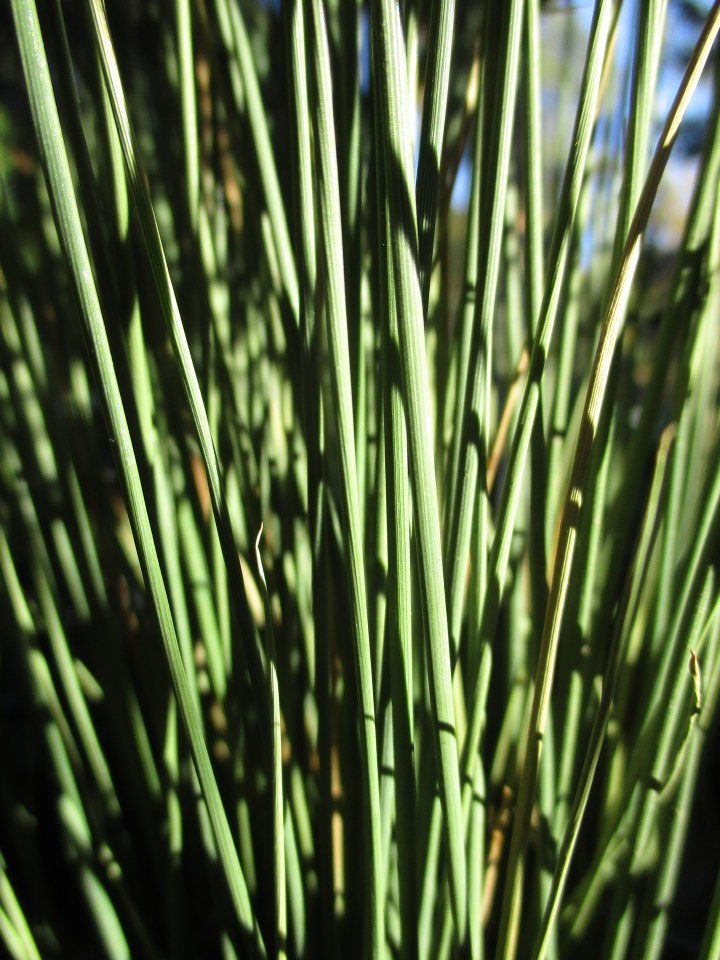 Not to be confused with the Canadian rock band from the 1970s, this rush, Juncus patens, is native to riparian areas between western Washington and San Diego County. It is also known as the common rush because it is, obviously, the most common species of the genus on the West Coast. It is only occasionally planted intentionally, but more often sneaks into well irrigated landscapes.
 Within its natural range on the West Coast between the southern extremity of Alaska and the southern extremity of California, Western sword fern, Polystichum munitum, is the most common of the native ferns. A few disjunctive wild colonies live as far inland as the Black Hills of South Dakota. Yet, with few exceptions, Western sword fern is difficult to cultivate outside of the natural range.
 Tony Tomeo