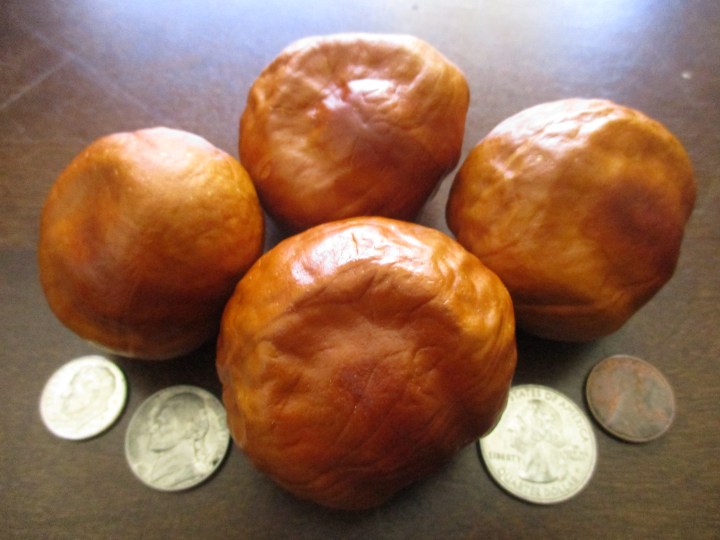
 California flora is remarkable. It all does what it must to live comfortably in every ecosystem, climate and geographical region here.
California horsechestnut or California buckeye, Aesculus californica, is one of the more unusual native species. It is so in tune with the climate that it makes other deciduous trees seem to be inexperienced. Of course, to those who are unfamiliar with it, it just looks dead right now.
In chaparral climates of California, some deciduous trees start to defoliate early, before the weather starts to get cool in autumn. California sycamores, for example, can start to defoliate late in summer if the weather gets too warm and dry for them to want to hold their foliage any later. Such defoliation is more the result of minimal humidity than the result of chill.
California horsechestnut takes this technique one step further, by shedding spring foliage even earlier in summer, then refoliating once the rain starts in autumn, and then defoliating again as the late autumn foliage succumbs to frost through winter. It is ‘twice-deciduous’. It is a weird process that should not work, but obviously does.
It seems like a tree that is defoliated most of the time would exhaust its resources and wear itself out. However, California horsechestnut somehow stores enough resources to produce weirdly big seeds. These in the picture above are the same that were featured in ‘Six on Saturday‘ last week, while they were still in their husks.
Squirrels might chew on a few of these seeds, but do not bother storing them. They are mostly ignored by wildlife, perhaps because of their objectionable flavor. So, without squirrels to bury them, they fall to the forest floor near the trees that produce them, where they are too bulky to sift through the detritus to reach the soil below.
It makes one wonder why they put so much of their limited resources into seeds that are too big to reach the soil, but unappealing to wildlife that might otherwise disperse and bury them.
They know what they are doing.
Once the rain starts, and the seed sense that the weather is damp, they germinate on the surface of the detritus on the forest floor, and extend their tap roots through the detritus to the soil below. The seeds are too bulky to reach the soil directly, but contain all that their primary tap roots need to survive without desiccation until they reach the damp soil.
 Within its natural range on the West Coast between the southern extremity of Alaska and the southern extremity of California, Western sword fern, Polystichum munitum, is the most common of the native ferns. A few disjunctive wild colonies live as far inland as the Black Hills of South Dakota. Yet, with few exceptions, Western sword fern is difficult to cultivate outside of the natural range.
 If California poppy had not been designated as the California state flower, Matilija poppy, Romneya coulteri, might have been. It was nominated, but was less popular at the time, partly because it was familiar only to those near its native range in Southern California. Some of us know it as ‘fried egg flower’, because the big and floppy white flowers with yellow centers look like fried eggs.
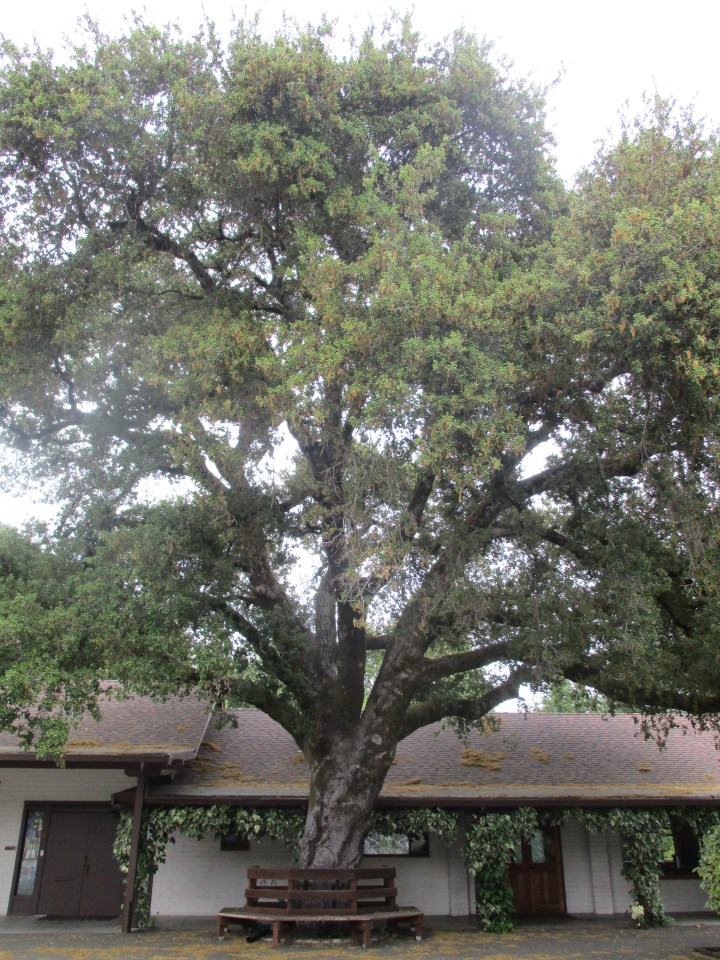 The valley oak of the Sacramento Valley, San Joaquin Valley, and coastal valleys to the west, is the grandest oak of North America. Within the coastal half of that range, and extending down past San Diego, the coat live oak, Quercus agrifolia, is a nearly comparable second grandest. The biggest subjects may be as tall as seventy feet, and nearly as wide, with trunks wider than ten feet!
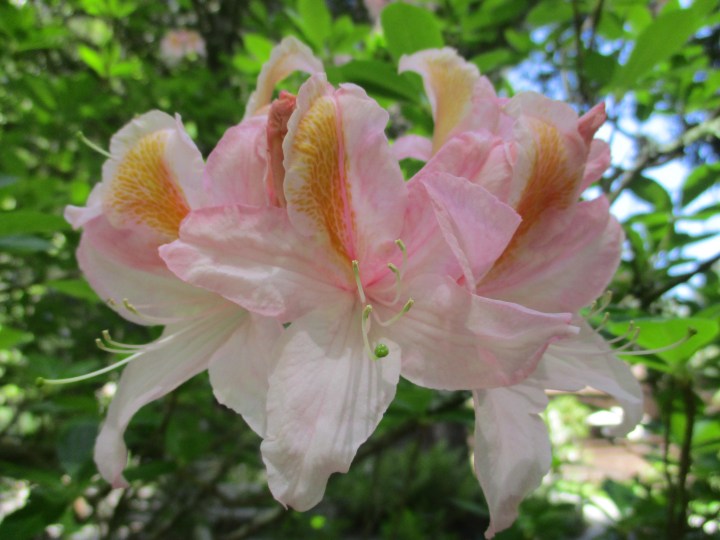 There are countless species and cultivars of rhododendrons. Some have been in cultivation for centuries. Their big bold blooms are spectacular against a backdrop of their dark evergreen foliage. They prefer shelters spots, and some are happy to bloom in places that are too cool and too shaded for other flowers to bloom so well. They are so impressive that no one notices that they lack fragrance.
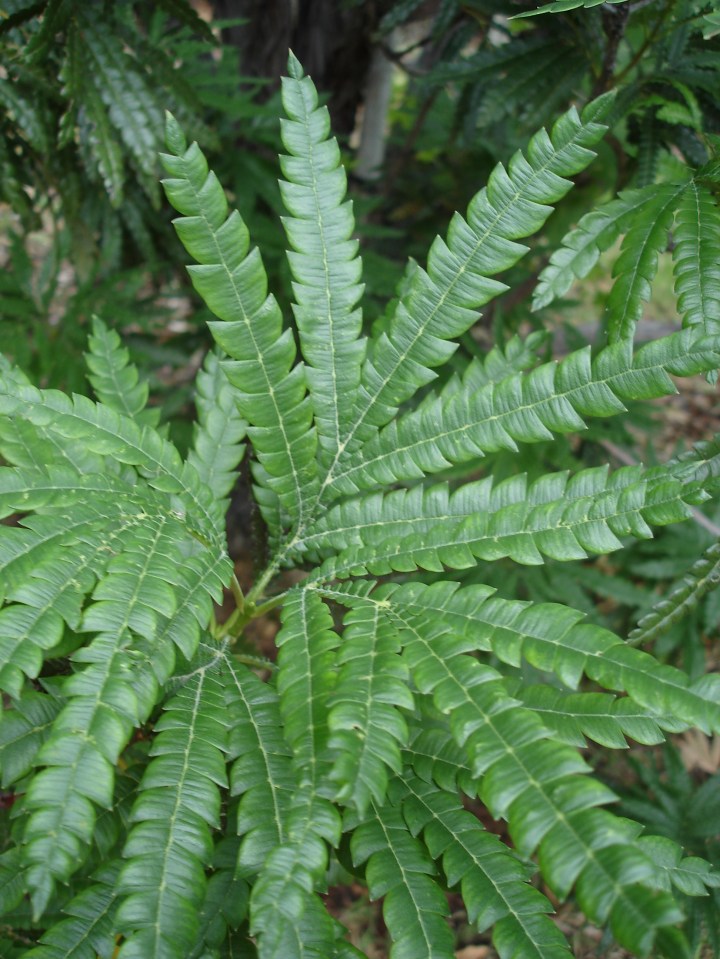 A few years ago, it was known as Santa Catalina Island ironwood. However, the rare subspecies native to Santa Catalina Island lacks the distinctively angular foliar lobes of the Santa Cruz Island ironwood, Lyonothamnus floribundus ‘aspleniifolius’. The evergreen compound leaves are about five inches long and four inches wide with three or five narrow leaflets, and look like chicken feet.
 Other species must be more interesting than what is native here. There are supposedly as many species of Trillium as there are of Yucca; forty-nine. All but ten are native to North America. The others are in eastern Asia. They are desirable and respected perennials to those who are familiar with them. White trillium is the official wildflower of Ohio, as well as the official floral emblem of Ontario. Ours would not likely qualify for such status.
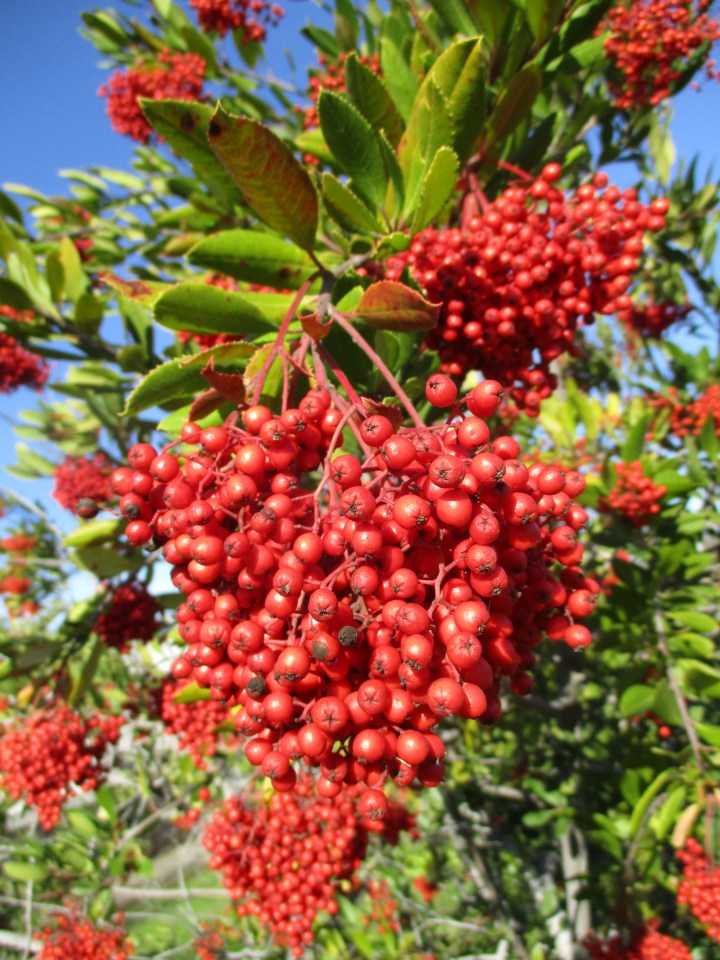 Botanists took a while to contrive an identity for toyon, which is also known as Christmas berry and California holly. It was classified as a species of Crataegus, two different specie of Photinia and two other specie of Heteromeles before it was finally identified as Heteromeles arbutifolia. Meanwhile, the town named after it changed its name only once from Hollywoodland to Hollywood.
 This would be a good topic for one of my rants on Wednesday, except that it is too silly for that.
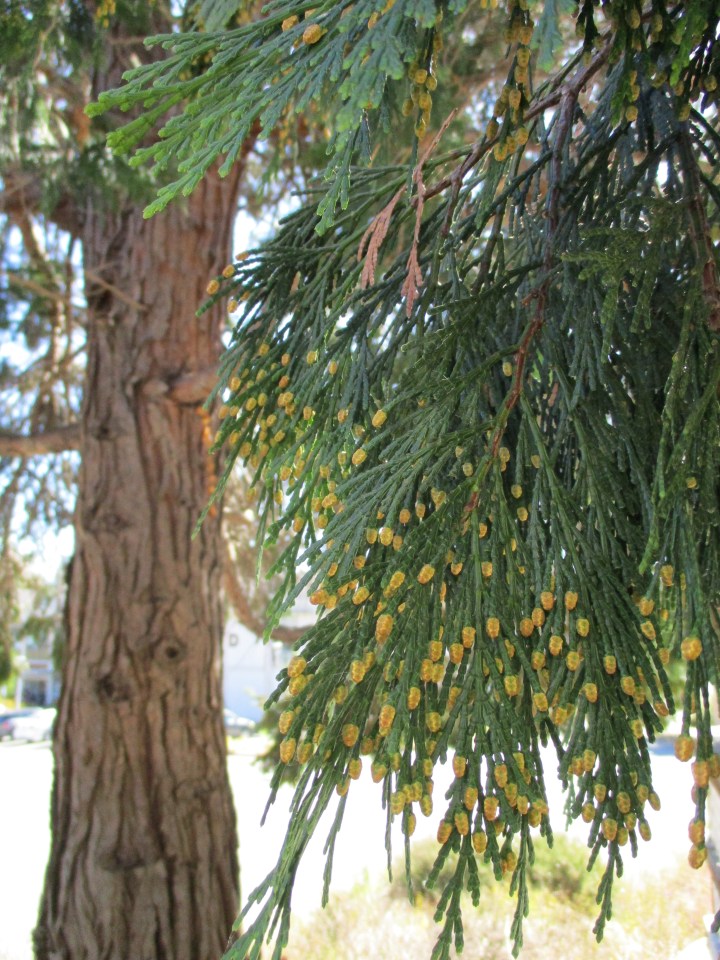 Calocedrus decurrens. Incense cedar. The first tree that I ever planted was a small incense cedar, like the tree in the picture here. Of course, it was not this big when I planted it.
