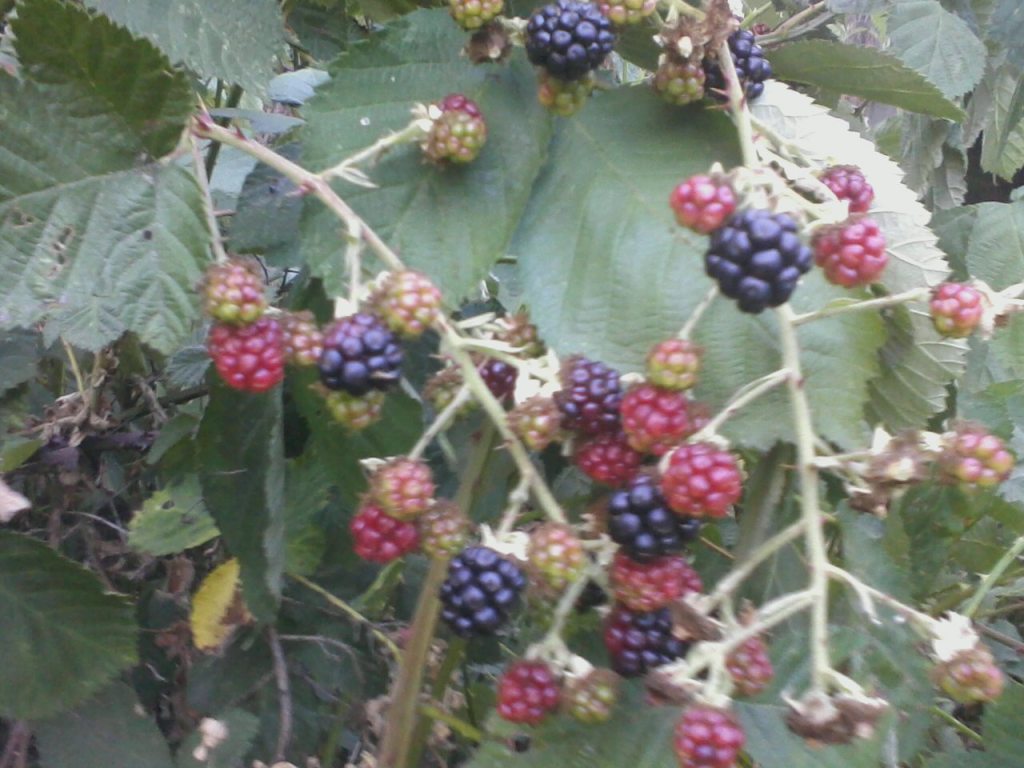
Rampant brambles of feral blackberry, Rubus fruticosus, canes are much too common and give blackberries a bad reputation. Yet, with regular selective grooming and pruning, their biennial stems that emerge from woody perennial roots are both more productive and easier to contain than one would guess. ‘Primocanes’ grow rapidly to six to sixteen feet in the first year. In the second year, they become ‘floricanes’, which do not grow longer, but instead develop lateral stems that bloom and fruit. Only a few modern ‘fall bearing’ or ‘everbearing’ cultivars fruit on primocanes.
Canes are trailing, semi-trailing or erect. As the names imply, trailing types like ‘Marion’, ‘Boysen’ and ‘Olallie’, need support. They are the most popular locally because they are more productive. Erect types that need no support, like ‘Navaho’, ‘Choctaw’ and ‘Arapaho’, are less productive, but because they are more tolerant to frost, are more popular where winters are colder. Old classic blackberry varieties are quite prickly. Modern thornless varieties are becoming more popular as more varieties are developed. All have palmately compound leaves with five or seven leaflets. Simple small white or pale pink flowers that bloom late in spring are followed by the familiar blackberries that are ripening now.

 Of all the aggressively invasive exotic species on the West Coast, Himalayan blackberry, Rubus armeniacus, could be the nastiest! It seems to be impossible to kill. It forms dense thickets of wickedly thorny canes that develop roots where they touch the ground. Even if canes are cut to the ground, and the roots are pulled out, new plants regenerate quickly from remaining bits of roots.
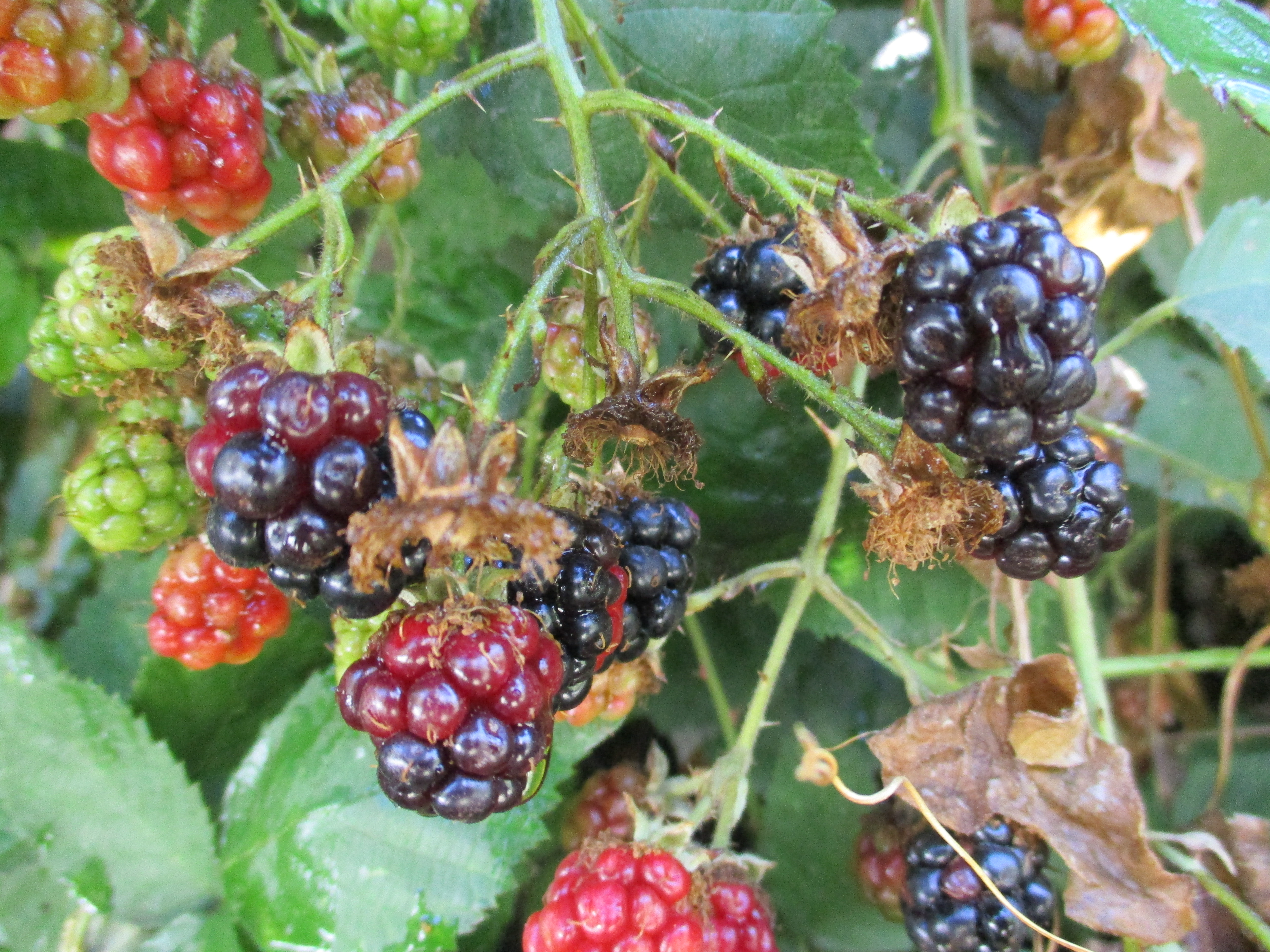 Himalayan blackberry is to cane berries what blue gum is to eucalypti. It is what gives all cane berries a bad reputation, and is why so few of us want to grow them. Himalayan blackberry grows as an extremely vigorous weeds, extending sharply thorny canes over anything within reach. When the canes are removed, the tough roots are extremely difficult to remove and kill.
 While dormant for winter, some types of plants get dug from the soil and sent to nurseries as ‘bare root’ stock. Some get packaged with their otherwise bare roots contained in bags of damp sawdust. Most just get heeled into damp sand in the retail nurseries where they get sold. These simply get pulled from the sand when sold.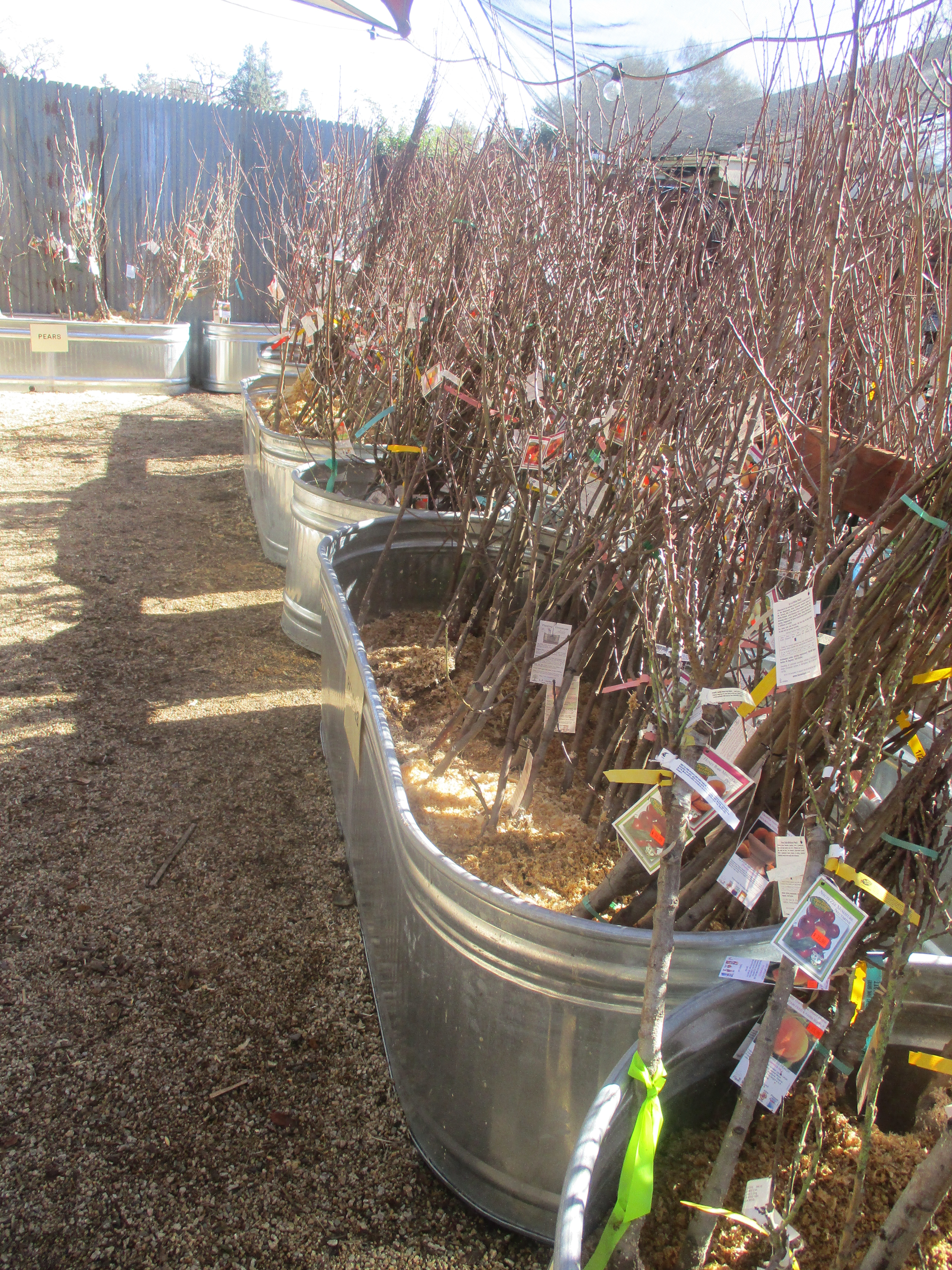
 Christmas tree lots at nurseries come and go at a good time. Cut and live Christmas trees become marketable just as retail sales of other items is declining. Although autumn is the best season to plant many things, not many of us want to be out in the garden as the weather gets cooler. As Christmas trees get sold and relinquish their space, bare root nursery stock becomes available.
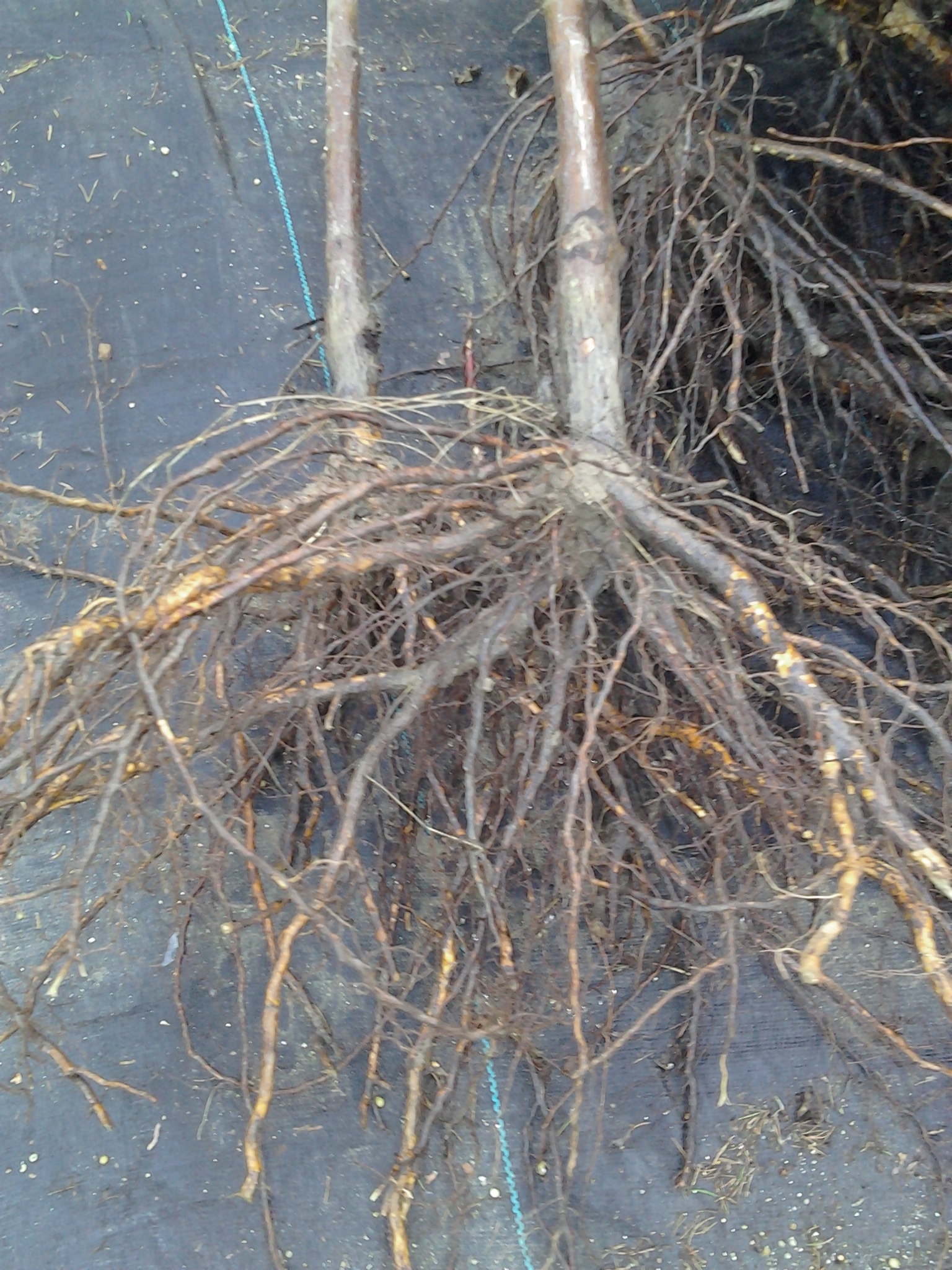 Anyone who has had undergone surgery knows the advantages of unconsciousness. Any frat boy who woke up after a night of overly indulgent inebriation, with his face adorned with objectionable graffiti, knows the disadvantages. A lot can happen while one is unaware that it is happening. This is exactly why so many bare root plants become available while they are dormant through winter.
 Tony Tomeo