Potted Christmas Trees Grow Up

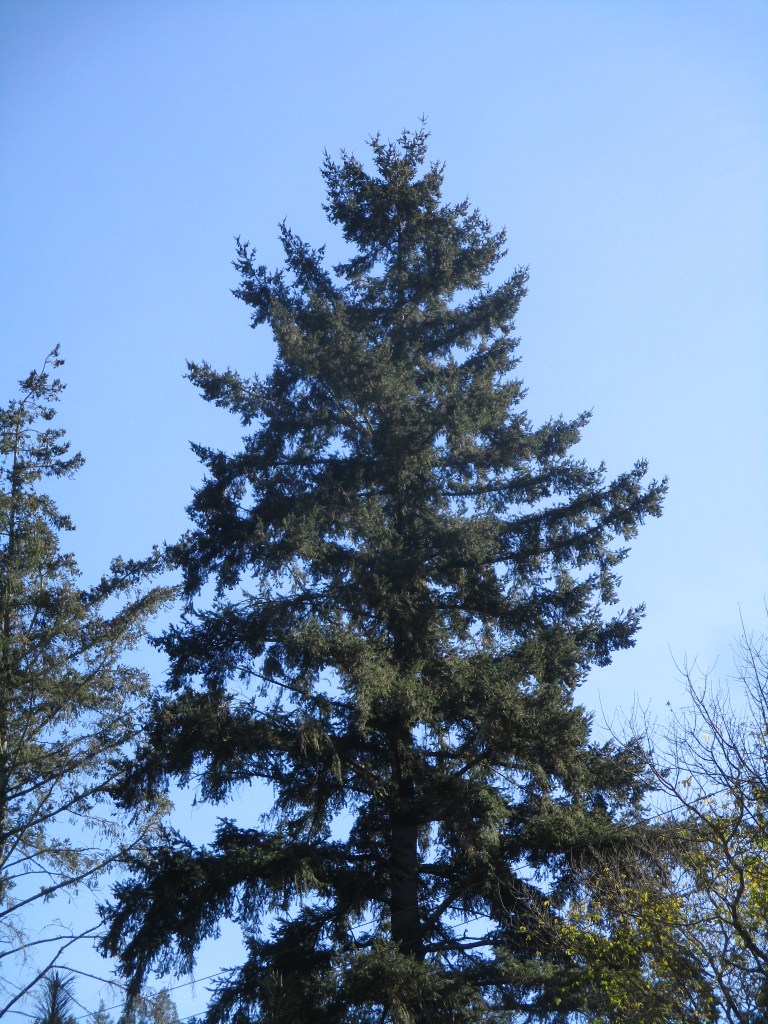
Dwarf Alberta spruce stays very compact.

There should be no stigma associated with cut Christmas trees. They grow on farms, not within natural ecosystems, as some believe. Like cut foliage, cut flowers and vegetables, they are an agricultural commodity. They generate no more greenwaste than an average lawn. Yet, potted Christmas trees are popular as an ‘environmentally responsible’ option.

Potted Christmas trees, however, can be more of an environmental detriment. Only those that perform for a few years consume less resources than cut Christmas trees. Almost all deteriorate too much during their first summer for a second Christmas. Therefore, they do not perform any more perpetually than cut trees. They are, however, costlier and smaller.

The expense of potted Christmas trees is proportionate to the resources which they use. Proportionately, they require more fertilizers, pesticides and infrastructure than cut trees. This is also relevant environmentally. So is their synthetic growing medium, plastic pots, and for some, mylar wrapping. Transportation is more efficient only for the smallest sorts.

Regardless, for many households, potted Christmas trees remain after Christmas. Some of the most expensive sorts are fortunately more likely to be practical sorts. They may be compact types that are conducive to confinement within big pots. If so, they may function as Christmas trees for a few years. Afterward, they might fit nicely into their home garden.

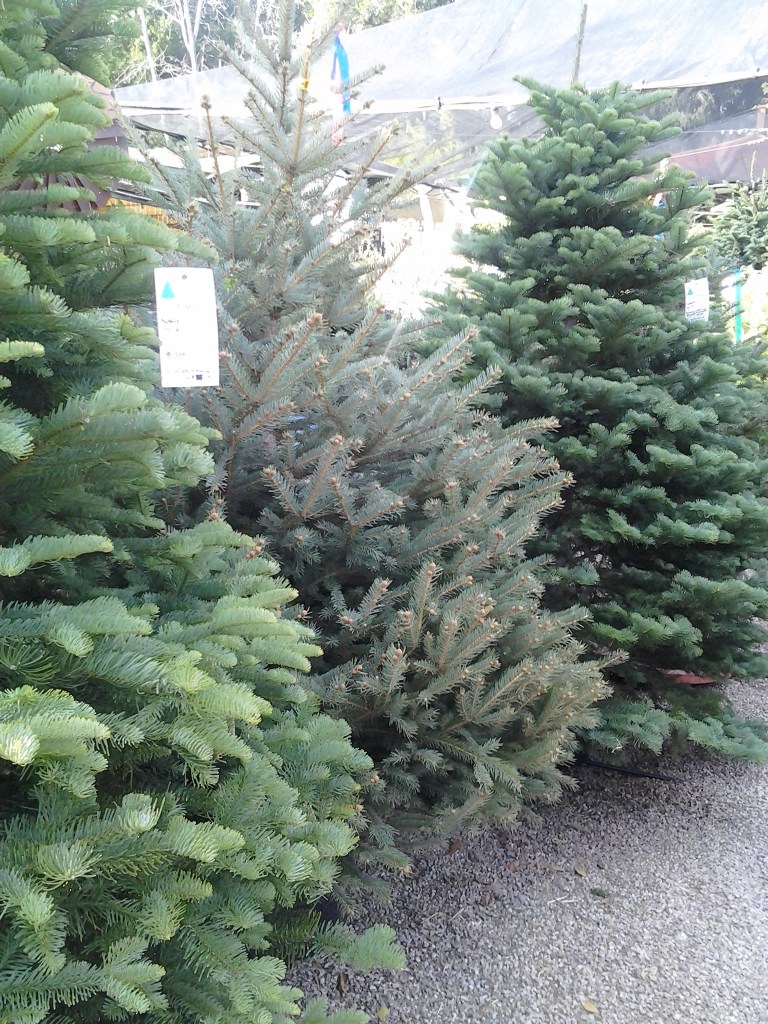
This includes a few cultivars of spruce as well as fir and even pine. Dwarf Alberta spruce is easy to accommodate in both pots and gardens. Large specimens are expensive and rare though, so few need accommodation now. Blue spruce is more practical as a potted Christmas tree, but grows larger. Eastern redcedar can stay in a large pot for a few years.

The most common potted Christmas trees are Italian stone pine and Canary Island pine. These are the small sorts with cheap ornaments and mylar wrapping. They too often lack identification or description of how large they grow. Consequently, those who plant them too often provide inadequate space. Such big trees can be very destructive as they grow.
Merry Christmas!

This was much more awesome than gold, frankincense or myrrh!

Happy Birthday Jesus!

What is a suitable birthday gift for Someone Who has no use for anything worldly, but lived like He did? Gold, frankincense and myrrh seemed like good ideas in the beginning, although they were presented a year prior to His first birthday. Contrary to modern commercialism, a Lexus or Mercedes Benz might not be so appropriate for Someone Who preferred to come into town on a colt, and not the Dodge sort. Perhaps that is why it is customary to present gifts to others instead. Such gifts are Christmas gifts because so few have the same birthday.

Although overly elaborate or abundant gifts are a tradition that I find to be objectionable, I enjoyed many relatively minor gifts when I was a kid. Within my first few years, although I do not remember exactly when, I received my first tree, which was a seedling of Calocedrus decurrens, California incense cedar, from Amador County. A year or two afterward, I received a ‘Meyer’ lemon tree. During the same time, I received seed for many types of vegetables and a few flowers, as well as a set of child-sized gardening tools of premium quality. They lasted long enough for my mother to use the shovel to clean ash from the woodstove long after I graduated to a real shovel.

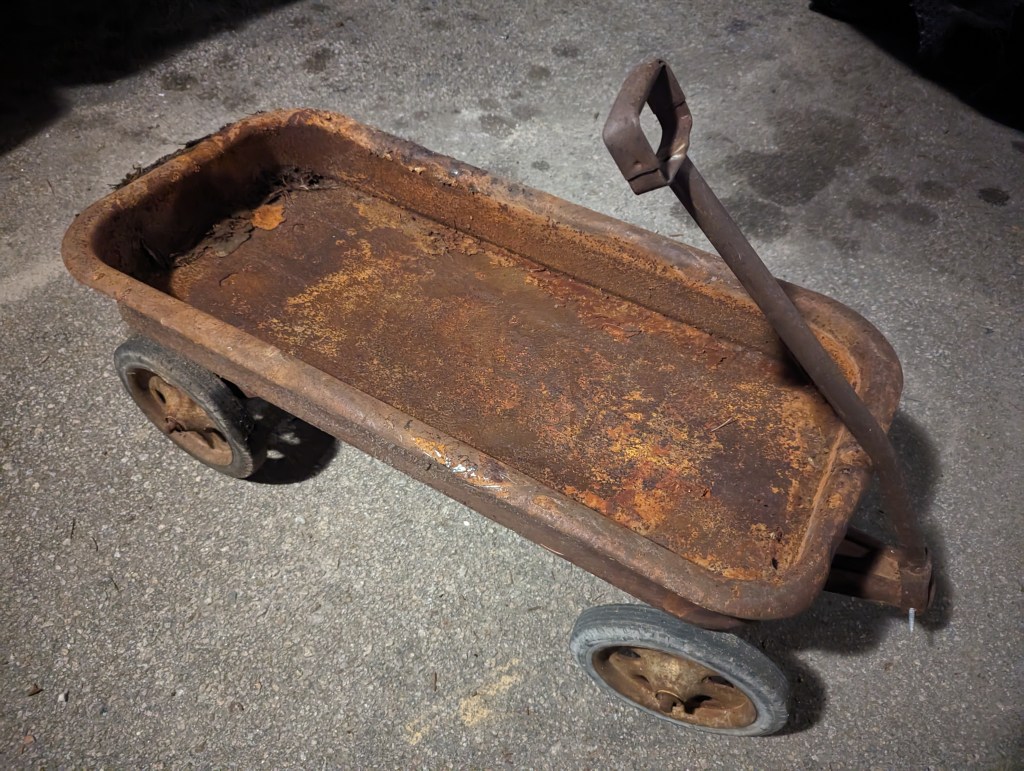
The most awesomely awesome Christmas gift that I received back then was my deluxe Radio Flyer wagon! It was my first luxury sedan that worked like a pickup! It was as durable as the other gardening tools. After I went to college, my mother used it to bring in firewood. It is out back right now, more than half a century after I received it new. It may continue to work in my garden as long as I do.

Merry Christmas!

This was much more awesome than gold, frankincense or myrrh!

Happy Birthday Jesus!

What is a suitable birthday gift for Someone Who has no use for anything worldly, but lived like He did? Gold, frankincense and myrrh seemed like good ideas in the beginning, although they were presented a year prior to His first birthday. Contrary to modern commercialism, a Lexus or Mercedes Benz might not be so appropriate for Someone Who preferred to come into town on a colt, and not the Dodge sort. Perhaps that is why it is customary to present gifts to others instead. Such gifts are Christmas gifts because so few have the same birthday.

Although overly elaborate or abundant gifts are a tradition that I find to be objectionable, I enjoyed many relatively minor gifts when I was a kid. Within my first few years, although I do not remember exactly when, I received my first tree, which was a seedling of Calocedrus decurrens, California incense cedar, from Amador County. A year or two afterward, I received a ‘Meyer’ lemon tree. During the same time, I received seed for many types of vegetables and a few flowers, as well as a set of child-sized gardening tools of premium quality. They lasted long enough for my mother to use the shovel to clean ash from the woodstove long after I graduated to a real shovel.

The most awesomely awesome Christmas gift that I received back then was my deluxe Radio Flyer wagon! It was my first luxury sedan that worked like a pickup! It was as durable as the other gardening tools. After I went to college, my mother used it to bring in firewood. It is out back right now, more than half a century after I received it new. It may continue to work in my garden as long as I do.

Christmas Trees Grow On Farms (2011)

Christmas trees grow on farms rather than forests, but some farms are in forests.

(This is an old article from 2011, so much of the information within is no longer relevant.)

Douglas, grand, white and Noble firs, as well as sierra redwoods, Monterey pines and at least fourteen other varieties of Christmas trees can be found and cut at Santa’s Tree Farm and Village near Half Moon Bay. Certainly, no one needs that many Christmas trees; and most select only one. Yet it is good to know that somewhere within such a vast selection, there is the perfect Christmas tree. Santa’s Tree Farm and Village also provides wreathes, garlands, tree stands, flocking, fire retardant and delivery.

On weekends, Sleighbells Gift Shop is open from 9:00 a.m. to 4:00 p.m.; and through December 18, Santa Visits between 9:30 a.m. and 4:30 pm.. For $2, children from two to ninety-two and older can ride the train from 9:30 a.m. to 4:00 p.m., as weather allows. Younger children ride for free. Santa’s Tree Farm is open between 8:00 a.m. and 5:00 p.m. on weekends (except for closing at 1:00 p.m. on Christmas Eve), and from 9:00 a.m. to 5:00 p.m. on weekdays.

Except for trees on the Diamond lot and pre-cut trees, prices range from $46 to $69. VISA and Mastercard and leashed dogs are welcome. Santa’s Tree Farm and Village is at 78 Pilarcitos Creek Road at Highway 92, six and a half miles from Highway 280 on the way to Half Moon Bay. Coupons, showtimes (yes, ‘showtimes’) and more information can be found at the website http://www.santastreefarm.com, or by telephoning 650 – 726 2246.

Atlantic cedar, Austrian pine, Arizona cypress, Leyland cypress Scott’s pine, sugar pine, white fir, as well as many other varieties of Christmas trees can also be obtained from Crest Ranch Christmas Tree Farm, located in the Santa Cruz Mountains west of the San Lorenzo Valley. Douglas firs, pines, cedars and cypress are $37 up to five feet tall, and $7.40 for each additional foot. White and Greek fir varieties are $42 up to five feet tall, and $8.40 for each additional foot. All sales are cash or check. An ATM is available.

The beautifully scenic picnic area is a good excuse to bring lunch, or at least get something at the snack bar. Leashed dogs are welcome. More information can be found at the website http://www.crestranch.com or by telephoning 831 – 426 1522. Crest Ranch Christmas Tree Farm is open from 8:00 a.m. to 5:00 p.m. until December 20, and is located at 12200 Empire Grade outside of Felton.

Live Christmas Trees Eventually Mature

Most conifers are not so compact.

Christmas trees grow on farms. They are an agricultural commodity. Their unnatural and intensive cultivation is no asset to any associated natural ecosystem. Their harvest does not deprive ecosystems of natural components. Live Christmas trees are at least equally as unnatural. Their cultivation involves more synthetic materials and unnatural irrigation.

There should be no shame associated with the procurement of cut Christmas trees. They are merely cut foliage that is significantly more substantial than that which accompanies cut flowers. Furthermore, live Christmas trees are not an ecologically responsible option. They are merely potted plants that can be difficult to accommodate within home gardens.

That certainly should not invalidate the appeal and potential practicality of live Christmas trees. With proper maintenance, other potted plants, such as houseplants, can grow and perform for many years. Since live Christmas trees are coniferous species that get rather large, they demand more attention. All are not necessarily totally unmanageable though.

Some compact conifers, such as dwarf Alberta spruce and compact cultivars of Colorado blue spruce, can remain within pots for many years. They need either larger pots as they grow, or occasional root trimming if they stay within their same pots for a few years. Their roots outgrow pots as slowly as their canopies grow. They also require diligent watering.

Unfortunately, the most common of decorated live Christmas trees that are available from supermarkets are also the most problematic. Most are either Canary Island pine or Italian stone pine, which grow surprisingly large for such seemingly innocent small evergreens. They very often go into compact gardens, where their bulky roots displace infrastructure, such as pavement and turf grass.

Contrary to popular belief, planting live Christmas trees in the wild after Christmas is not a practical option. Because their roots were confined to pots, they rely on irrigation while they disperse roots into the ground. They can not survive without irrigation after the rainy season. Besides, trees that are not native could be detrimental to the native ecosystems.

Christmas Trees Dead Or Alive

Live Christmas trees can get huge.

Poinsettias, Christmas cacti, cyclamen, various forced bulbs and several other seasonal potted plants are again becoming popular. It happens annually prior to Christmas. Heath, heather, rosemary, English holly with berries, and delightful compact conifers have been gaining popularity for many past years. Seasonal potted plants are increasingly diverse.

Unfortunately, few survive for long after Christmas. Forced bulbs exhaust their resources. Cyclamen are likely to rot after a month or so. Very few retire to a garden. Poinsettia gets too lanky in the garden to be a favorite. Most seasonal plants simply succumb to neglect. After their primary performances, they are no longer interesting enough to justify tending.

In reality, some of these seasonal potted plants are little more than cut flowers with roots. These roots allow them to live longer than cut flowers, but their ultimate fate is the same. Wreaths, garlands and various seasonal cut greenery likewise serve a purpose, but only temporarily. Without roots, it all lacks any potential to retire into a garden after Christmas.

Christmas trees are really not much different. Although there are several different sorts of Christmas trees, they fit into similar categories as cut foliage and seasonal potted plants. Obviously, they are seasonal. They need not last much longer than Christmas. Although, some have a potential to do so, few survive or function for more than a few Christmases.

Contrary to popular belief, and their expense, cut Christmas trees are generally the most practical Christmas trees. They are essentially a very substantial sort of cut foliage. They grow on farms like any other foliage and vegetables. After such a tree serves its purpose, it resigns to compost or green waste recyclery. A freshly cut tree can replace it next year.

Large potted Christmas trees may seem to be more practical, but require maintenance to remain as appealing as they are now for another year. Despite the expense, few last that long. They want to get out of confinement, so that they can grow as trees. Pre-decorated small trees are Italian stone pines. They grow much too big for contained home gardens.

Christmas Trees Are Major Cut Foliage

Few Christmas trees are naturally compact.

Cut foliage is a common ingredient of ready-made mixed bouquets. Bundles and individual stems of cut foliage are available with cut flowers from florists. Cut foliage is the primary component of most wreaths and garlands that are now so popular for Christmas décor. It is another horticultural commodity like cut flowers, bulbs or nursery stock. Cut foliage is like vegetables that no one eats.

Cut Christmas trees are extreme cut foliage. They just happen to be much larger than stems of cut foliage that become wreathes and garlands. They grow on plantations like other crops. Contrary to a rather popular belief, Christmas trees are a renewable resource. Furthermore, cut Christmas tree production is less detrimental to the environment than the production of live Christmas trees.

Time and space are the only advantages of live Christmas tree production. As they grow, they occupy less space for less time. Obviously, cut Christmas trees need more space and time to grow. However, they do not consume proportionate quantities of water and fertilizers. Nor do they necessitate the consumption of the various plastics and synthetic potting media that potted trees need.

Regardless of the best intentions, few live Christmas trees come home for Christmas after their first. They often get too shabby through warm and dry summer weather to bring back in. The small and inexpensive sort with attached decorations rarely survive potted for more than a few months. If live Christmas trees were less perishable, their consumptive production could be more justified.

Whether they retire after a single Christmas or several, live Christmas trees must recover from previous shearing. Only dwarf Alberta spruce are naturally densely conical. Pruning other species to strict conical form is unnatural and disfiguring. As they recover, live Christmas trees need space to grow. Many, such as Italian stone pine and Canary Island pine, get far too big for urban gardens.

Experienced arborists concur that many problematic trees were originally small and seemingly innocent live Christmas trees.

Not So Merry Christmas Trees

Cut Christmas trees are just really big cut foliage, like what comes with cut flowers.

By now most people have already acquired their Christmas trees. Some are live trees in containers. Some are artificial. Most are cut firs, pines, or alternatively, spruces, cedars, cypresses or even junipers. For at least the next two weeks, these trees dutifully maintain their healthy green vigor to brighten our homes with Christmas cheer.

Cut trees should have no problem lasting from the time they were originally cut through Christmas, as long as they get plenty of water. Artificial trees do not have much choice in the matter. Live trees are probably more reliable than cut trees are in regard to freshness, but can be more awkward to accommodate in the home, since they are more likely to leak excess water that can damage floors. If they they get a bit dry, live trees can also be sensitive to relatively dry and warm interior air after spending autumn out in cool and humid garden environments.

The main problem with living Christmas trees though, begins after Christmas. Spruces and other compact evergreens that can work as Christmas trees for several years need to be returned to the garden and maintained until next Christmas. Retired living Christmas trees, including those common, small trees that can be purchased with a few decorations already wired to their stems, eventually need to be planted out into the garden. Circling roots (that grow around the perimeter of a container in search of a way out) need to be severed so that they do not get constricted as they mature.

Unfortunately, with few exceptions, living Christmas trees mature into significant trees when they get the chance to grow. Those common, pre-decorated trees are most commonly juvenile Italian stone pine or Canary Island pine, which become very large trees. Because they seem so innocent as small potted trees, they often get planted in very awkward situations where they do not have enough space to grow without damaging nearby features.

Planting such a tree out in a forest is not practical, since it will not survive through the first year without supplemental watering. Their roots are just too confined to reach out for moisture. Even if such a tree could survive, it would not be an asset to the forest, since it would be an exotic (non-native) species.

Christmas Trees – Dead Or Alive

41203thumbChristmas trees are like vegetables. Really, they are like big vegetables that do not get eaten. They are grown on farms, and then harvested and sent off to consumers. Although they smell like a forest, and they are descendents of trees that naturally grow in the wild somewhere, there is nothing natural about their cultivation. In fact, most are grown a very long way from where their kind are from. Therefore, bringing a cut Christmas tree into the home takes nothing from the wild, and does not interfere with nature any more than eating vegetables does.
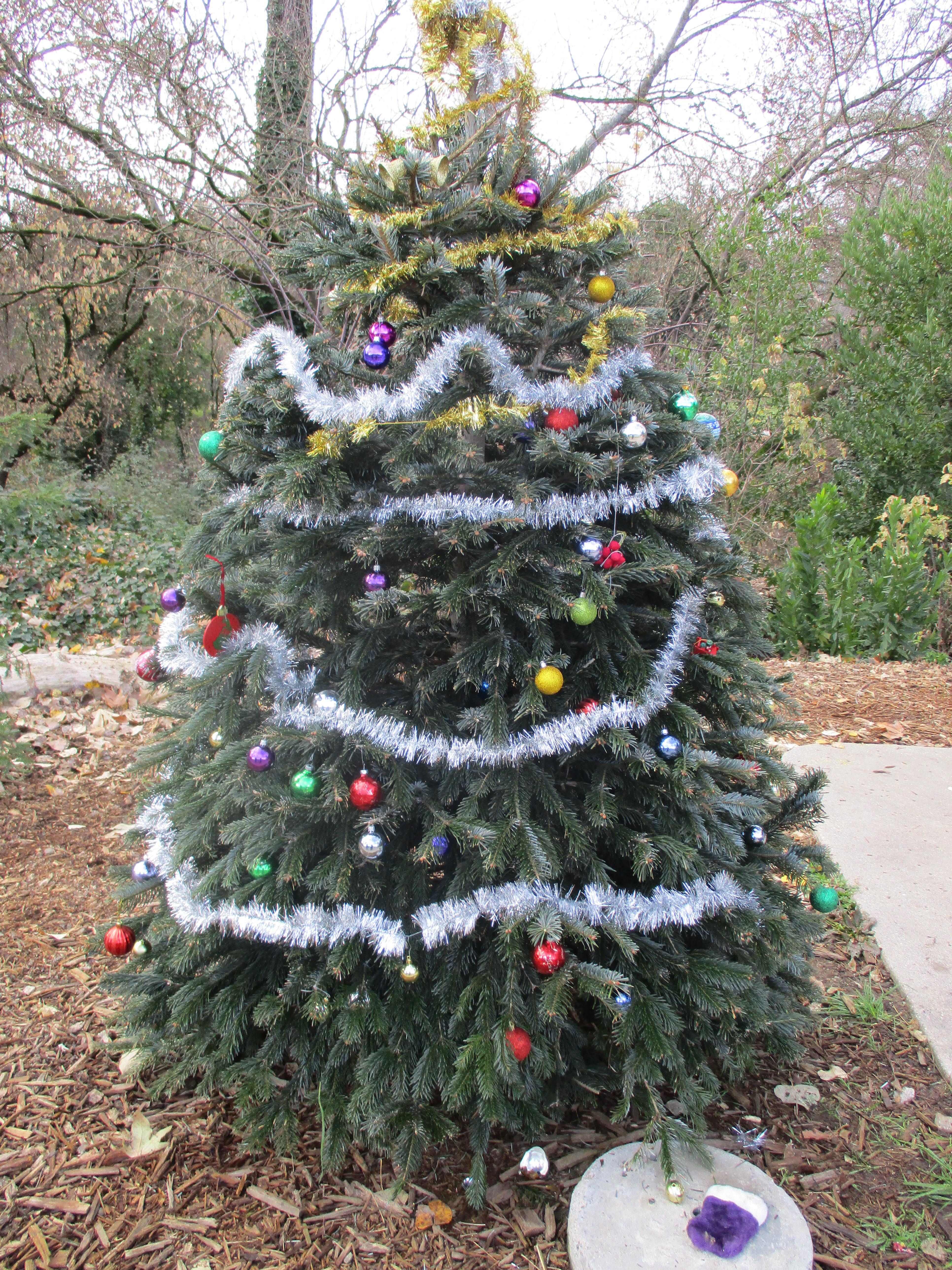
Firs, particularly Douglas fir, are the most popular of Christmas trees. Pines are probably the second most popular. Redwoods, spruces, cedars, cypresses or even Junipers can also work. They each have their own distinct color, texture and aroma. Healthy and well hydrated trees that continue to get watered as needed should have no problem lasting through Christmas. Ultimately though, cut Christmas trees are not good for much after Christmas, and eventually get composted or otherwise disposed of.

Living Christmas trees might seem like a better option to cut Christmas trees because they dispel any unfounded guilt associated with cut Christmas trees, and initially seem to be less disposable. The problem is that they have problems of their own. Simply purchasing one is a big expense. Even the big ones are smaller than cut trees, but much heavier and unwieldy. Contrary to popular belief, only a few types that grow slowly, such as some spruce, can actually live in a tub for more than one or two years, and even they can be finicky.

The main problem is where to plant a living Christmas tree when it outgrows its container. Conifers innately do not like to be confined for too long. Yet, in the ground, most grow into substantial trees. The common little Christmas trees that are already decorated are actually the worst since they are juvenile Italian stone pines or Canary Island pines, which grow big and fast. Potted trees can not be planted out in the wild because their confined roots need to be watered until new roots can disperse. Even if they could survive, non-native trees should not go into natural ecosystems.

Tannenbaum

IMG_1983Many towns display a Town Christmas Tree in a prominent and centrally located public space.

The Town Christmas Tree in Los Gatos is a now mature but formerly feral deodar cedar that grew by chance next to the railroad tracks where they passed through downtown a very long time ago. As the railroad tracks were removed, and the rail yard was redeveloped into the Town Plaza, the maturing cedar tree survived the process to become the most prominent tree there. Because it just happened to be a symmetrically conical coniferous tree in the most prominent spot in town, it was a natural choice for the Town Christmas Tree. It gets lit up and decorated for Christmas, and is where children can meet up with Santa Claus.

The Town Christmas Tree in Felton is the Featherstone Tree, which is a mature coastal redwood tree that happened to be planted right on the edge of Highway 9 a very long time ago by Mr. Featherstone, simply because he admired the species so much, https://tonytomeo.com/2017/10/05/big-tree-in-a-small-town/ . Like the Town Christmas Tree of Los Gatos, it just happened to develop into the right sort of tree in the right spot to become the Town Christmas Tree. It too gets lit up and decorated, although it is not as conical as it used to be.

Last year, someone delivered a decorated cut Christmas tree to a picnic area in Felton Covered Bridge Park, where many of the Homeless Community congregate. No one knows who delivered it, or how he, she or they did so undetected. It was a rather fancy tannenbaum (fir) that was not cheap. Someone or a few someones put quite a bit of effort and expense into this unusual gesture, to share a bit of joy with others in the Community.

It was not like a Town Christmas Tree for the Homeless Community, as if the Homeless Community is somehow separate from the rest of Felton. It was more like a household Christmas tree for those who lack a house to live in. It certainly made the annual Christmas Luncheon for the Homeless Community there at the picnic area much homier.