
Chrysanthemum compensates for its lack of fragrance with rich color and variable form. Centuries of breeding have produced countless shades and tints within the yellow, orange and red range. This includes pink as a tint of red, cream as a tint of yellow, and bronze as a shade of orange. Some reds and pinks are precariously close to purple or lavender. There is, of course, white as well.
Flowers may be solitary big pom-poms, multiple small buttons, or anything in between. Many are daisy types, mostly with bright yellow centers. Spider chrysanthemums have strangely elongated and hooked ray florets, which are generally thought of as ‘petals’. Some chrysanthemums that would otherwise bloom with many small flowers can be groomed to bloom with fewer bigger flowers.
Chrysanthemums with compact growth and uniform bloom are popular as short term annuals for autumn. Their primary bloom phase is impressively profuse. Unfortunately, few get an opportunity to bloom again. Other cool season annuals replace most of them for winter. In ideal situation, with rich media and regular watering, chrysanthemums can actually perform as short term perennials.

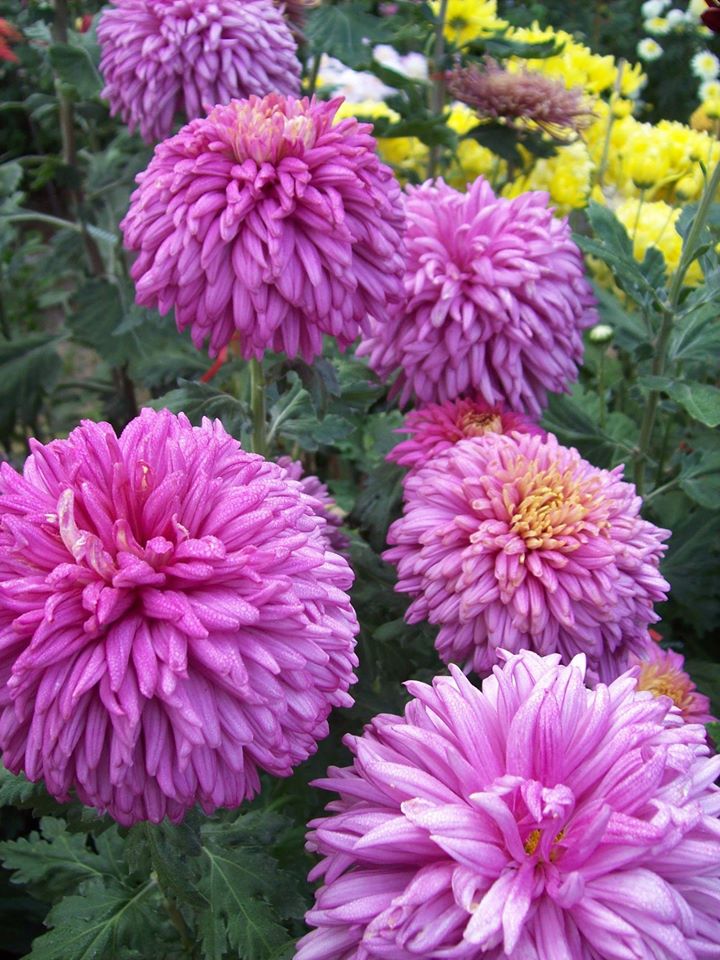 It is impossible to fit enough information about chrysanthemums into just a few sentences. Centuries of breeding have produced too many cultivars to document. Flower color ranges through many shades and hues of yellow, orange, red, pink, bronze, cream, lavender and almost purple, as well as white. (True purple is purportedly lacking.) Many have yellow centers. The deeply lobed leaves are strongly aromatic.
 Only a few decades ago, when horticulture was taken more seriously, potted blooming plants like chrysanthemums, orchids, azaleas, hydrangeas, lilies and even poinsettias, got the respect that they really deserve. Now they are more commonly purchased in full bloom, enjoyed only as long as their bloom lasts, and then discarded as their blooms deteriorate.
 Tony Tomeo