Cool Season Color Returns Seasonally

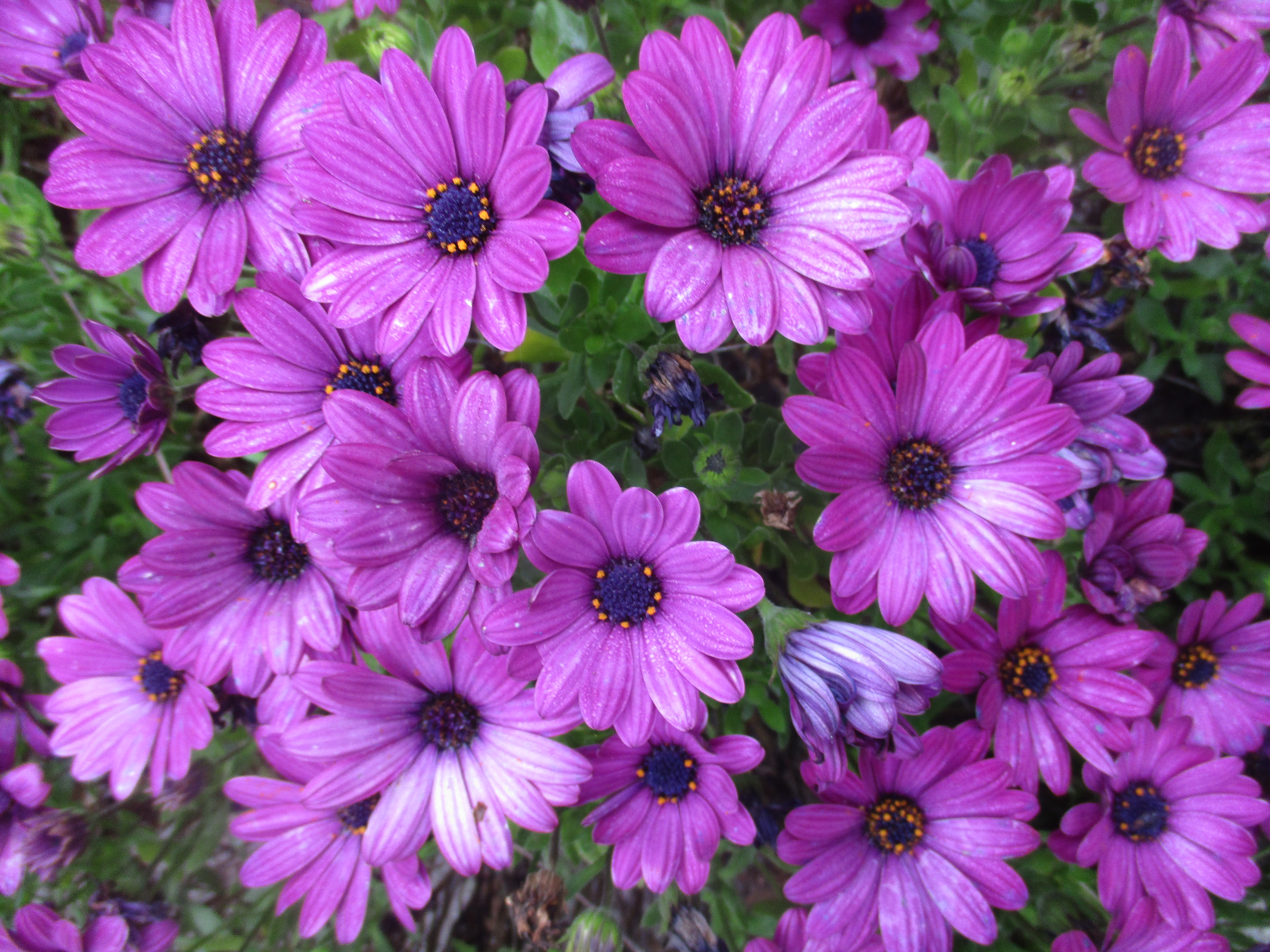
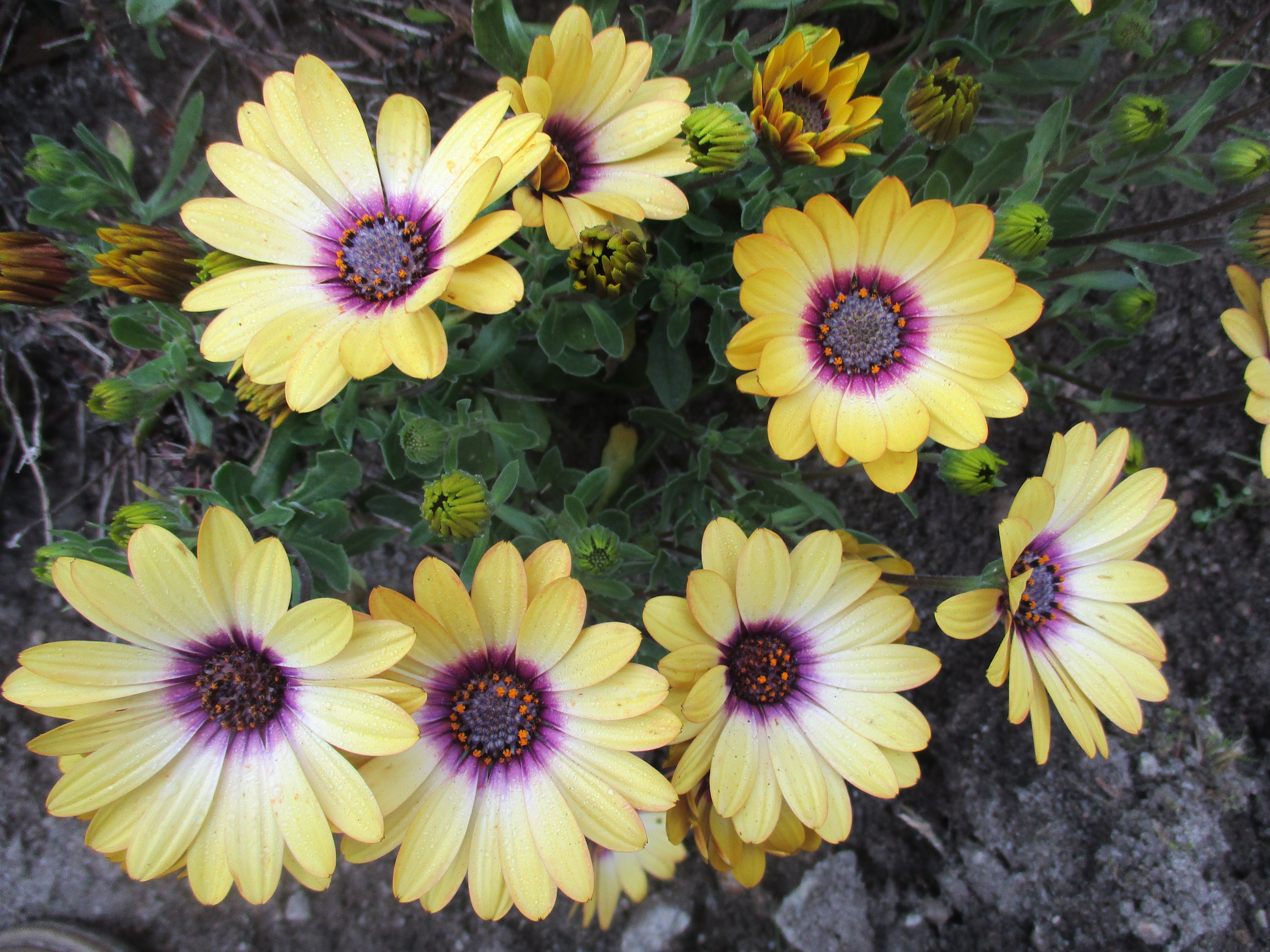
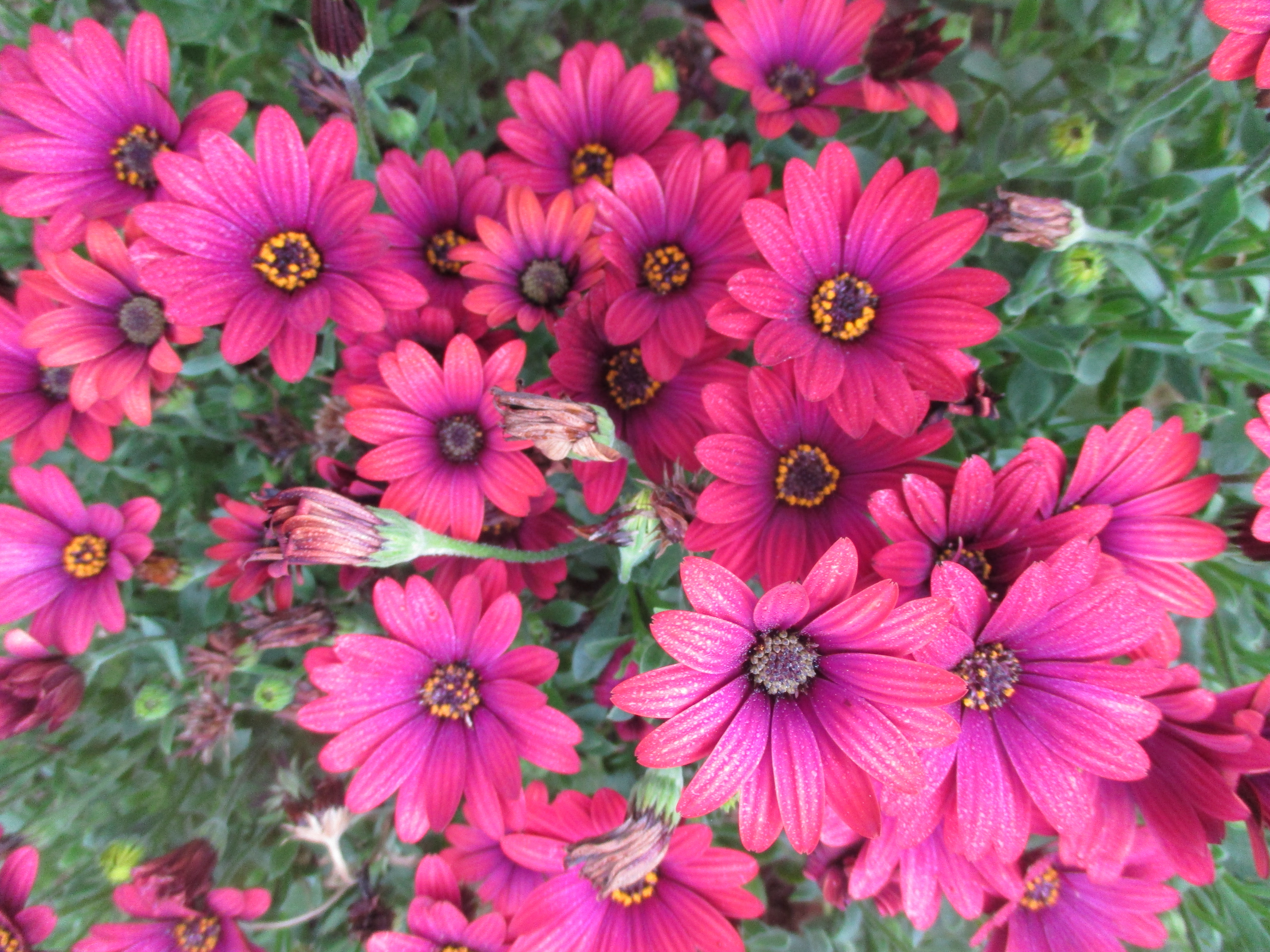
Pansies and violas like cool weather.

Cool season vegetables are the first clue. Now that they are seasonal, cool season color is also seasonal. Both comply with similar schedules. Their cool season centers around winter, including portions of spring and autumn. Some prefer to start early. Some prefer a later start. They also finish at variable times through spring. Some perform until summer.

Warm season color also complies with distinct schedules. Some might finish a bit earlier than their cool season replacements begin. Conversely, some could continue to perform a bit later than their replacement allows. It is gratifying when color of one season finishes as color of the next season begins. That will become more likely later within the season.

Cool season color has a few designations. Winter commonly replaces cool season. Yet, it includes adjacent portions of autumn and spring. Bedding plants or annuals commonly replaces color. Yet, many are actually perennials, and none are limited to bedding. Large homogenous beds are passe anyway. Some perennials linger after their primary season.

Also, some species behave differently here than within other climates. Wax begonias are warm season color, but may dislike locally arid warmth. They perform better for spring or autumn than for summer here. Actually, they become as popular as summer ends as they are when winter ends. They bloom until frost, or continually and perennially without frost.

Growth is slower during cool weather. Therefore, seed for cool season color should start early. For most, small plants, such as those from cell packs, are more efficient than seed. Cyclamen grow so slowly that they are only available in expensive four inch pots. Some cool season color is better for autumn or spring. This includes marigold and snapdragon.

Pansy and viola are the most popular of cool season color. Pansy are a type of viola with fewer but bigger flowers. Various types of primrose are nearly as popular, and can bloom until summer heat. Iceland poppy can grow a bit later in autumn to bloom through winter. Sweet William is a perennial that blooms now until spring, and can resume next autumn. Ornamental cabbage is bold foliar cool season color.
Muskogee?

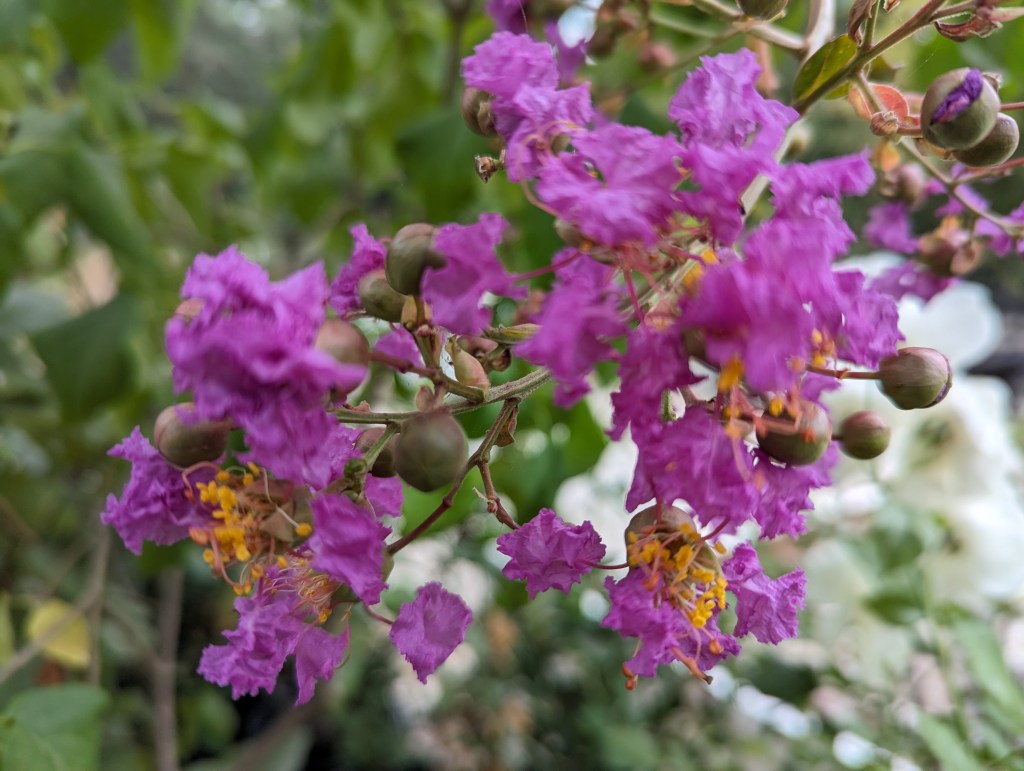
This is not a color I had expected.

What cultivar of crape myrtle is this?! I realize that this picture is blurred, which is why it was not included within my ‘Six on Saturday’ post this morning, but it is the floral color that is important. Is it purplish pink, or just bright pink? What cultivar does it look like?

I expected this crape myrtle to be one of the old reliable cultivars because it was a gift from the Arbor Day Foundation. The primary old reliable cultivar that blooms with similar floral color is ‘Muskogee’. Yet, even with my limited ability to discern color quality, this floral color seems to be a bit too rich. I sort of expect a milder and scarcely purplish pink from ‘Muskogee’. I suppose that the Arbor Day Foundation can also grow modern cultivars like the rest of us.

Regardless of its identity, it is certainly pretty. The foliar color during autumn is comparable to that of old reliable cultivars. Because neighbors like it, I grew a few copies for them. We would like to incorporate more crape myrtles into the landscapes at work. The abundance of spring color from other species there mostly finishes prior to the summer bloom of crape myrtle. Summer is the busiest season, so justifies flashy color.

Embarrassingly though, I am still none too keen on crape myrtle. If I did not typically spell ‘crape’ as ‘crepe’, I would prefer to spell it without the ‘e’ at the end. I was impressed with it when I first started to notice it through the 1980s, but then realized that it was becoming too common through the 1990s. That was long after Brent told me that it had become too common throughout the Los Angeles region significantly earlier. Decades later, it is still too much of a good thing.

White Bloom Brightens Cool Shade

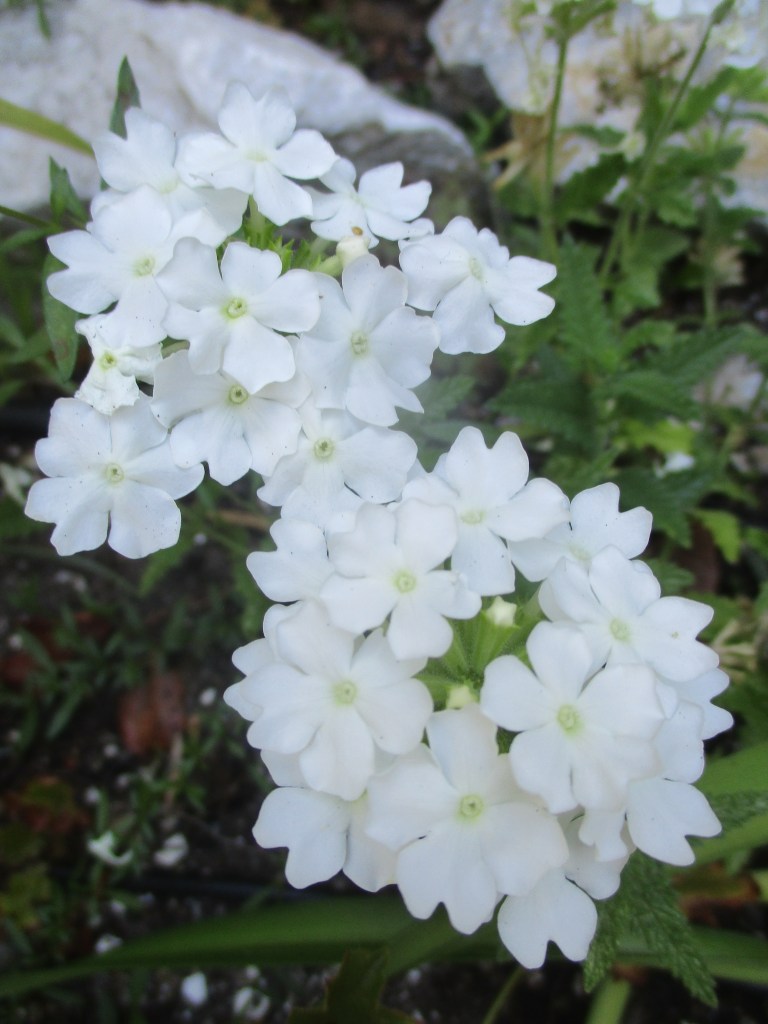
White might be an acquired taste.

White and black are supposedly opposites. White is a combination of all wavelengths of visible light. Black is a complete absence of such light. In other words, white is a mixture of all colors, while black is the absence of any color. This seems contrary to the common perception of white as a complete lack of color, and black as a complete mix of all colors.

It actually makes sense. The two really are opposites of both each other and themselves. This is about horticulture though, rather than physics. Black is quite rare as a floral color. White is not. The vast majority of flowers do not rely on color to attract pollinators, so are green or brown. Otherwise, most other prominent flowers in many ecosystems are white.

Like inconspicuous green and brown flowers, many white flowers exploit wind more than pollinators. Such flowers are generally profuse, but mostly diminutive and unimpressive. Other flowers that appear to be white utilize infrared or ultraviolet colors that are invisible to people, but colorful to nocturnal pollinators. Some of them are pale during the daytime.

Otherwise, the majority of white flowers that are popular within home gardens are just as flashy as their nonwhite associates. For many types of flowers, such as roses, camellias, azaleas and the countless types of annuals, floral color is more variable than floral form. White is simply another option for color. It serves various specific and practical purposes.

While brightly colorful annuals are appealing within sunny and exposed situations, white flowers brighten darker situations. They contrast nicely with dark green foliage and richly colorful flowers. Petunias that might be a bit too deep purple for a particular situation can mix with similar but white petunias to be more harmonious. White can be a buffering tint.

Colors should preferably be appropriate to their particular applications. Such selection is more aesthetic than horticultural. Some plants, such as gladiola, petunia, calla, oleander and some lily, excel at white bloom. Bougainvillea and crape myrtle excel at richer color.

Color Outside The Spectral Lines

Infrared and ultraviolet are humanly invisible.

Green is the most common floral color. It only seems to be rare amongst flowers because almost all green bloom relies on wind for pollination. Thus, neither color nor fragrance is useful to get the attention of pollinators. Actually, green flowers do not get much attention at all. They are easy to ignore in the wild, and generally unpopular within home gardens.

Most showy green flowers such as zinnia, chrysanthemum, hydrangea and gladiolus are progeny of unnatural breeding. Showy but naturally green flowers such as hellebore and orchid are merely incidentally green, as they employ infrared or ultraviolet color to attract pollinators. Although people can not see infrared or ultraviolet color, many pollinators do.

After all, flowers bloom only for pollination. Many customize color as well as fragrance to appeal to preferred pollinators. They are merely incidentally appealing to people as well. People breed flowers to be more appealing to people, even if unappealing to pollinators. Nonetheless, even breeding is limited to characteristics that initially attracted pollinators.

It is impossible to identify the most common color among flowers that rely on pollinators. Pollinators are regional. Therefore, red and orange flowers may be more common where hummingbirds who prefer red or orange are more common. Purple flowers may be more common where bees or certain butterflies who prefer purple are the dominant pollinators.

Yellow seems to be the most common natural color of flowers of North America. Red and orange are very common as well. Although common, pink is merely a tint of red, so is not a real color. Neither is brown, which is a shade of orange. Although very common among flowers that rely on wind pollination, it is quite rare among flowers that rely on pollinators.

Blue is the rarest natural floral color. Many flowers that seem to be quite blue are actually purplish. Purple is uncommon, but not as rare as blue. Ultraviolet and infrared get almost no consideration since they are invisible to people. However, both are common amongst most showy flowers, particularly white and maybe red flowers. Red is invisible to insects, though infrared is not.

Something Blue

Is periwinkle blue, or slightly purplish?

Blue must be unpopular with the more common of pollinators. After all, colorful flowers are designed to attract some sort of vector to exchange pollen. It seems that most pollinators like yellow. Red and pink (which is actually a tint of red) seem to be more appealing to hummingbirds. Butterflies seem to really like pink and orange. Many flowers that seem to be white actually use infrared to attract bees, or ultraviolet to attract nocturnal moths. Other white flowers rely on wind, which is not discriminating about color.

Of the primary (red, yellow and blue) and secondary (orange, green and purple) colors, the only color that is more uncommon than true blue is green. That is probably only because green flowers do not contrast much against green foliage, so would be harder to find. Many blue flowers, like thyme, lavender, blue potato bush and jacaranda, are closer to purple. Some blue and purple color is probably only incidental, and in conjunction with invisible (to humans) ultraviolet coloration or patterns.

Except for purplish blue jacaranda, there are no substantial trees to bloom blue. Empress tree is flashy, but is even more purplish. However, most ceanothus, including a few that can grow as small trees, are famous for their clear blue bloom. Plumbago, blue hibiscus, echium and rosemary are blue blooming shrubbery. Creeping rosemary is a nice groundcover. Hydrangea has the potential to bloom blue, but often turns purplish or pink because of soil alkalinity. Lilac and wisteria vine can be lavender, pink or white, as well as ice blue.

There are several perennial and annual salvias and lupines that bloom blue. Russian sage, catmint, carpet bugle, campanula, perennial statice and lily-of-the-Nile are some of the other familiar perennials for blue flowers. Delphinium should probably be more familiar. Grape hyacinth and various iris bloom briefly but spectacularly with some of the richest shades of blue. Even though there are not many blue flowers to choose from, there is quite a bit of variety.

Annual statice, aster, zinnia, bachelor button, nierembergia, nigella, pincushion flower, forget-me-not and cineraria are uncommon annuals that are enjoyed by those who crave blue. Petunia happens to be one of the most popular of warm season annuals that also happens to produce some excellent blues. Later, brightly colored pansy and primrose can be just as flashy as popular cool season annuals.

Color Is Not Black And White

Annuls must change with the seasons.

Several months ago, warm season vegetable plants replaced cool season vegetable plants. More recently, new cool season vegetable plants began to grow from seed, to replace warm season vegetable plants. Annual vegetables grow only within specific seasons. As they finish, they relinquish their space to those that grow in the next season. Annual color operates in the same manner.

‘Color’ is another word for ‘annuals’ or bedding plants that provide colorful bloom. Those that grew earlier were warm season annuals or summer annuals. Those that replace them through autumn are cool season annuals or winter annuals. Of course, there is nothing black and white about color. Some color from last summer can linger late. Some for next winter prefers an early or late start.

Furthermore, much of the color that cycles through gardens as annuals actually has potential to perform as perennials. If cut back and obscured by more seasonable color through their dormancy, some types can regenerate when it is again their season to perform. For example, cut back busy Lizzie that bloomed last summer can overwinter underneath primrose, and start over next spring.

Marigold and chrysanthemum can start bloom early, before summer ends, but may not perform for long. Some chrysanthemum bloom only once, before vacating their space for other cool season color that does not mind starting later. Cyclamen and ornamental cabbage happen to prefer late planting, to avoid Indian summer. Warmth causes cabbage to bolt, and promotes rot of cyclamen.

Pansy, viola and various primrose have always been popular. Sweet William, Iceland poppy and stock are not as common. Stock should be, since it is so delightfully fragrant. Both nasturtium and alyssum bloom nicely through either summer or winter, depending on when they started to grow from directly sown seed. Some fibrous begonia can perform through winter if sheltered from frost.

Most color does well from cell packs. Nasturtium should only grow from seed. Chrysanthemum and cabbage might be better from four inch pots. Cyclamen may only be available in four inch pots.

Six on Saturday: Unidentified Colors

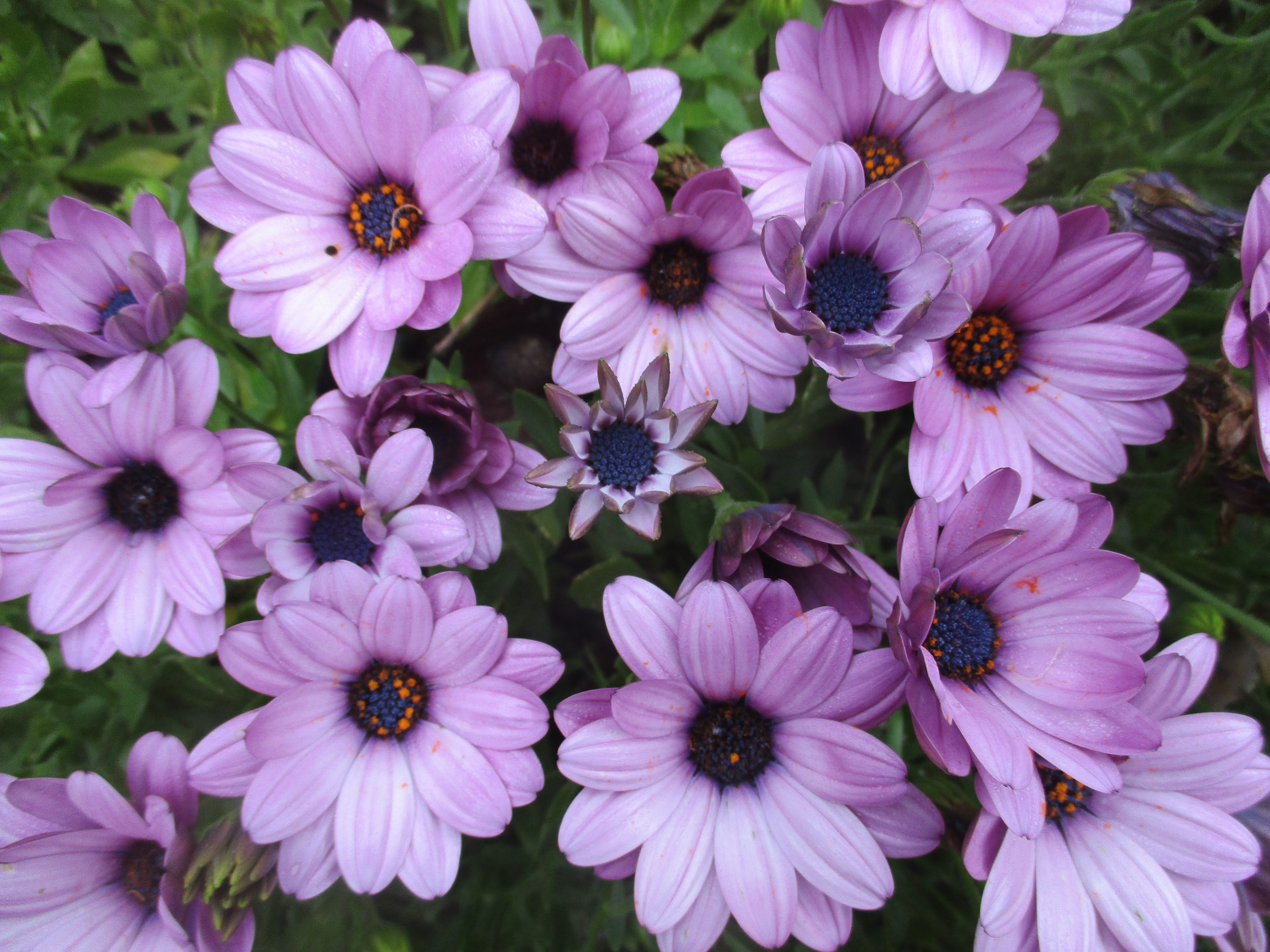
Girls can see more colors. Furthermore, they know all their fancy names. Sometimes, I suspect that they just make up names as necessary. There are four African daisies at work that are odd colors that I can not identify, and another flower that I know is not lavender.

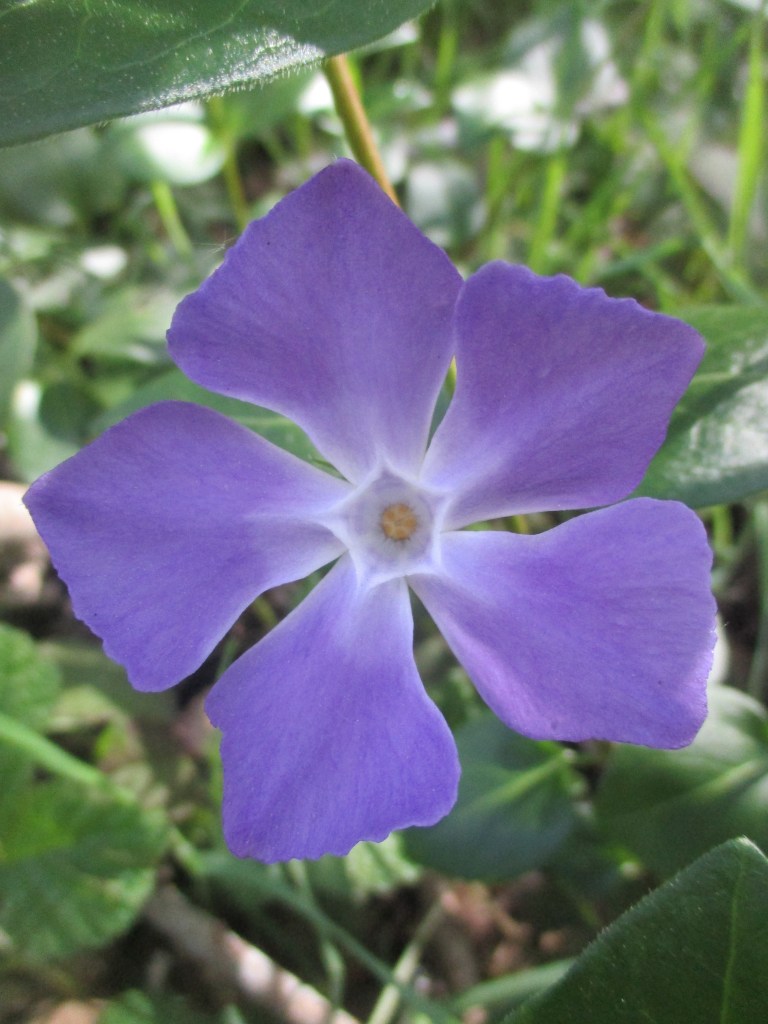
1. Blue is the easiest of these colors. Others might say it is pale, soft or sky blue. Even I can see that it is most definitely not lavender, as some might insist. Is this species so easy to identify?P00314-1

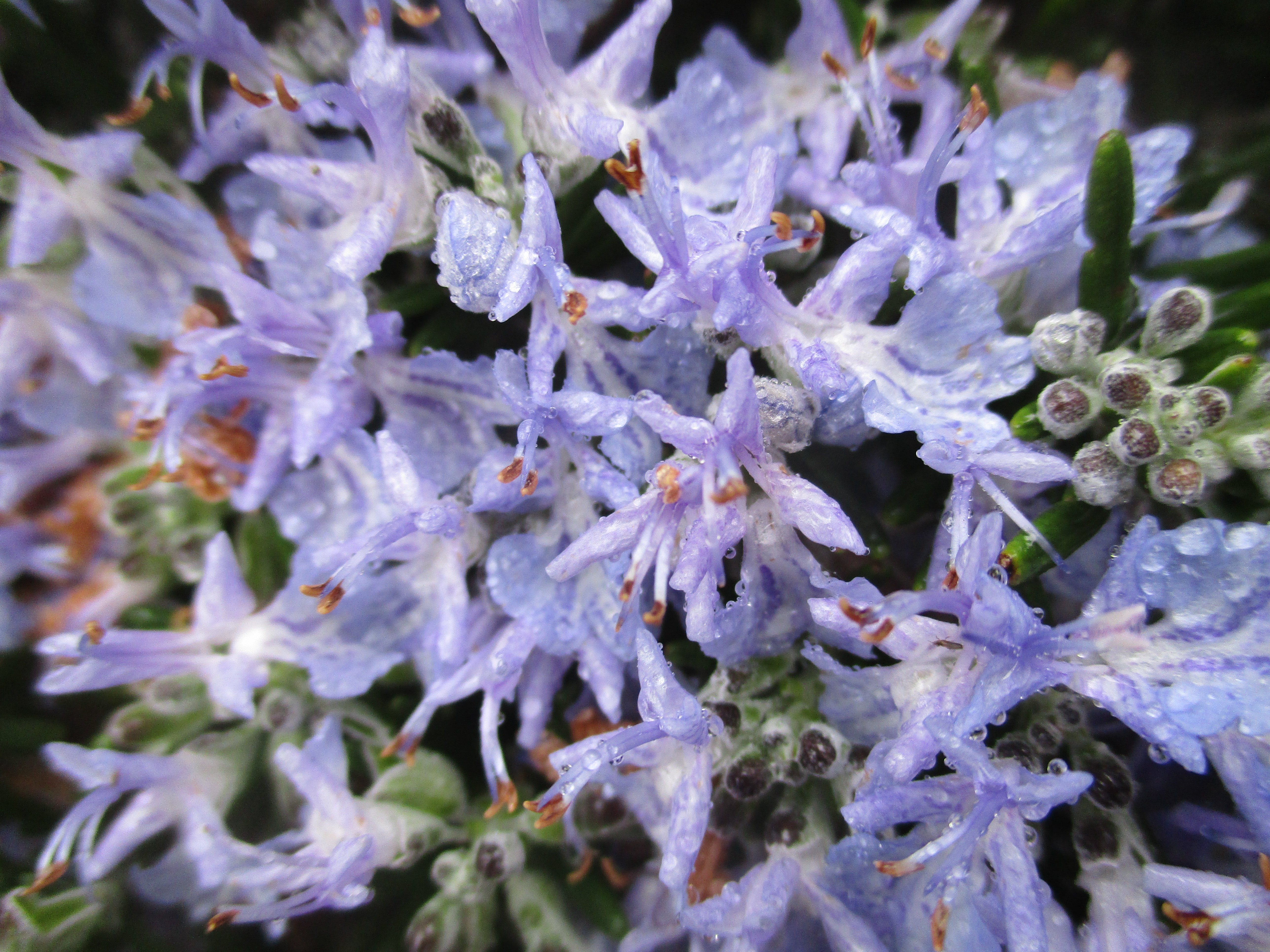
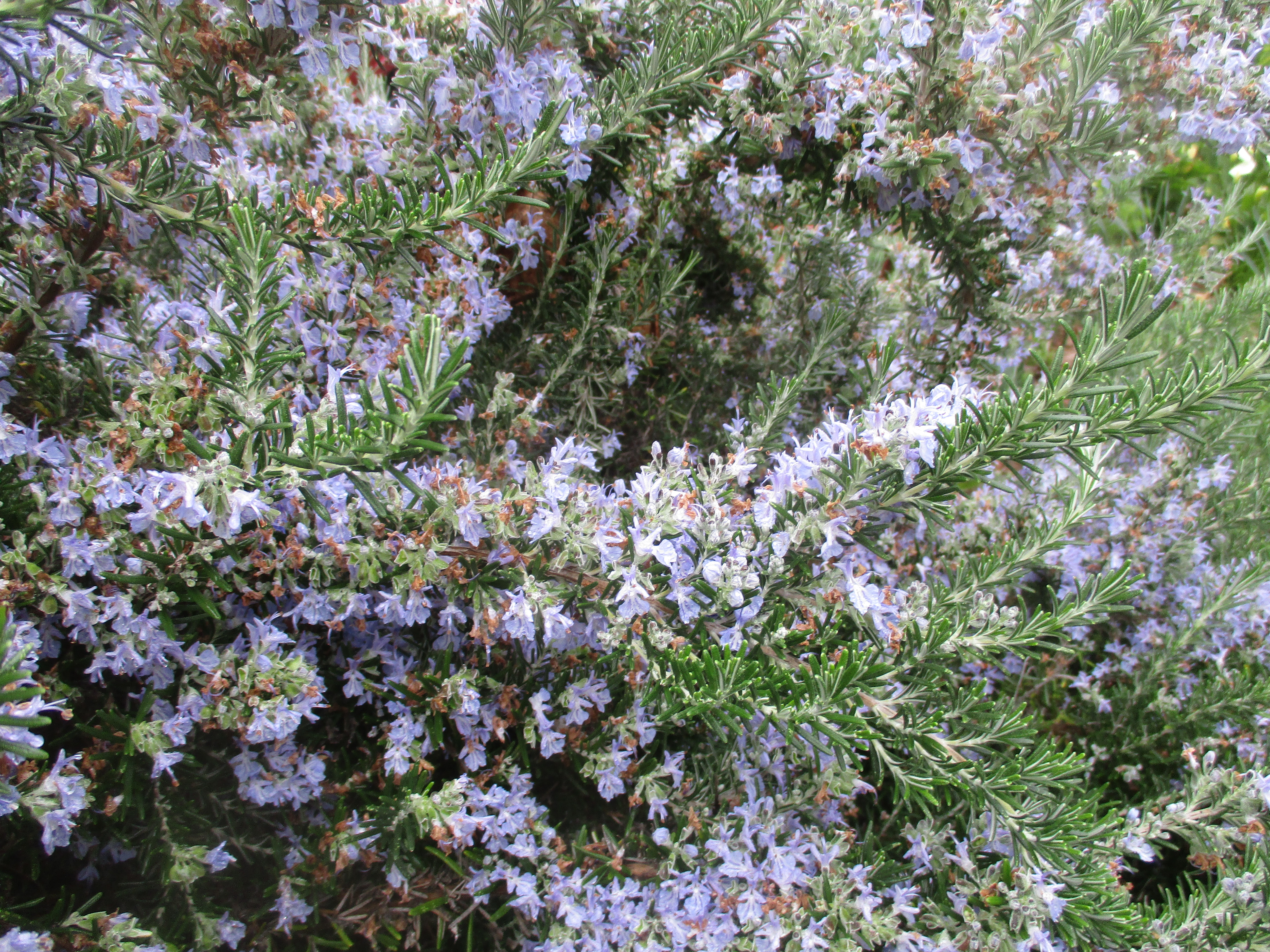
2. Blue is the only color for rosemary. It is more obvious up close in the previous picture. It is easier to mistake it for lavender if that is the color that is expected from the particular species.P00314-2

3. Lavender is how I would describe this color. Perhaps it is pale lavender. I have been told that this is lilac or pale lilac. That makes sense, since common lilac blooms with lavender flowers.P00314-3

4. Purple or light purple works for this one. Heck, if the previous is pale lavender, this could be lavender . . . that is not pale. Alternatively, it could be lilac, . . . but probably not the pale sort.P00314-4

5. Yellow or pale yellow should be good enough. I do not know what buff is, but I do not believe that this is it. Nor does it strike me as lemon or butter yellow. I know what colors lemons are.P00314-5

6. Red should be good enough, although I would believe if this is rust or rusty red. I am open to suggestion on this one. It is quite a distinctive color. I like it, even though I can not identify it.P00314-6

This is the link for Six on Saturday, for anyone else who would like to participate:

https://thepropagatorblog.wordpress.com/2017/09/18/six-on-saturday-a-participant-guide/

White Hydrangea

P90907KWhat ever happened to the formerly common white hydrangea? It used to one of the three standard types of hydrangea; and the other two were really variants of the same sorts of ‘pink or blue’ hydrangea that I wrote about in ‘Horridculture – True Colors‘. The few hydrangeas that are white nowadays are lacy, flat-topped, blushed . . . or anything but simple classic white.

This old fashioned simple white hydrangea is just as elegant now as it has always been. It is always white, without pretense of blue or pink. There is no point of giving it something it does not really need just to change its natural color (like those of us in the Santa Clara Valley do to make pink hydrangeas blue; or those of us in the Tualatin Valley do to make blue hydrangeas pink).

The bulky and almost spherically rounded form of this floral truss distinguishes this old fashioned type as a ‘mophead’ hydrangea. Nowadays, ‘lacecap’, ‘mountain’, ‘smooth’, ‘panicle’, ‘oakleaf’ and ‘climbing’ hydrangeas are the more popular types. There is certainly nothing wrong with contemporary types, but there is nothing wrong with the old fashioned ‘mophead’ types either.

When it is time to prune the hydrangeas this winter, we might take cuttings from this particular specimen, in order to grow a few copies of it. Pink and blue hydrangeas, which get fertilized accordingly (to maintain their desired colors), happen to suit the landscapes very nicely here, but a few more white hydrangeas would brighten the rich dark green of the forest splendidly.

Besides, the old fashioned simplicity and elegance of this old fashioned white mophead hydrangea seem to be more compatible with the old redwoods and other mature forest trees than the relative flashiness of modern cultivars that were popularized only in the past few decades.

Mellow Yellow

P90427KThis picture of a yellow Pacific Coast iris probably should have been incorporated into the Six on Saturday post earlier today. I omitted it because I was not so impressed with how the color showed up. It is really more yellow than it looks. In this picture, it looks more like a discolored version of the white Pacific Coast iris. This sort of variation, that might have been normal for old fashioned photography, is not expected of digital imagery.
It sort of reminds me of how some insects and other pollinators see flowers so differently with infrared or ultraviolet. Are infrared or ultraviolet faded in digital imagery as well? It would make sense, since there is no need for normal cameras to record colors that we can not see. Nor is there need for computer monitors to display such invisible colors. Ironically, modern technology can modify color to make that which in invisible to us visible.
Modern technology is always improving the quality of stored data, and the presentation of such stored data. Perhaps there really are ways to take pictures that record infrared and ultraviolet, although I can not imagine why there would be a use for such technology. Video is good about recording and presenting motion. Audio records and presents sound. Regardless, none of it is good enough to keep us from actually enjoying our real gardens.
Pacific Coast iris blooms in all sorts of weirdly bright colors now. Modern technology has certainly had its way with them as well. The flowers are bigger and bolder than they naturally were. The foliage is greener and fluffier. Yet, to me, the best are still those that grow wild and bloom on the coast of San Mateo County, with unassuming flowers in subdued shades of greyish blue, like faded denim.