
Sitka and Brewer spruce both live at low elevations and near the coast within their native ranges. Yet, neither perform as well here as blue spruce, Picea pungens, which is native to much higher inland regions of the Rocky Mountains. It grows neither as big nor as fast here as in the wild, so few old local trees are taller than thirty feet, or broader than twenty.
Although compact, blue spruce should get sufficient space to develop its densely conical form without pruning for confinement or clearance. Such pruning is disfiguring. Since the evergreen canopy is so dense, it should retain low branches to the ground for as long as possible. Blue spruce works more like big and formal shrubbery than like compact trees.
Some cultivars of blue spruce are very stout and rounded. Most have remarkably blue or silvery color. Seed grown trees (which are not cultivars) are sometimes available online. They have potential to exhibit notable variation. Some might develop slightly more open canopies, with elegantly upwardly curved limbs. Spruce needles are about an inch long with quite a prickly texture.
 Climate is why the European larch, Larix decidua, is so rare here. It prefers cooler weather in both winter and summer, and more humidity. Foliage can roast if too exposed through summer. Small trees that are partly sheltered or partly shaded by larger trees have the best color and foliar density. Larch are innately reliant on somewhat regular watering, so are not drought tolerant. The mildly cool weather of autumn is enough to brown the formerly bluish foliage, which falls shortly afterward.
 Well, that is certainly a contradiction of terms. One might say it is an oxymoron. Decades ago, it really was how we classified what we now know more simply as ‘deciduous conifers’. There are not many of them. Ginkgo is a gymnosperm like conifers are, but is not really a conifer. Otherwise, there are only five other types of deciduous conifers, which defoliate through winter.
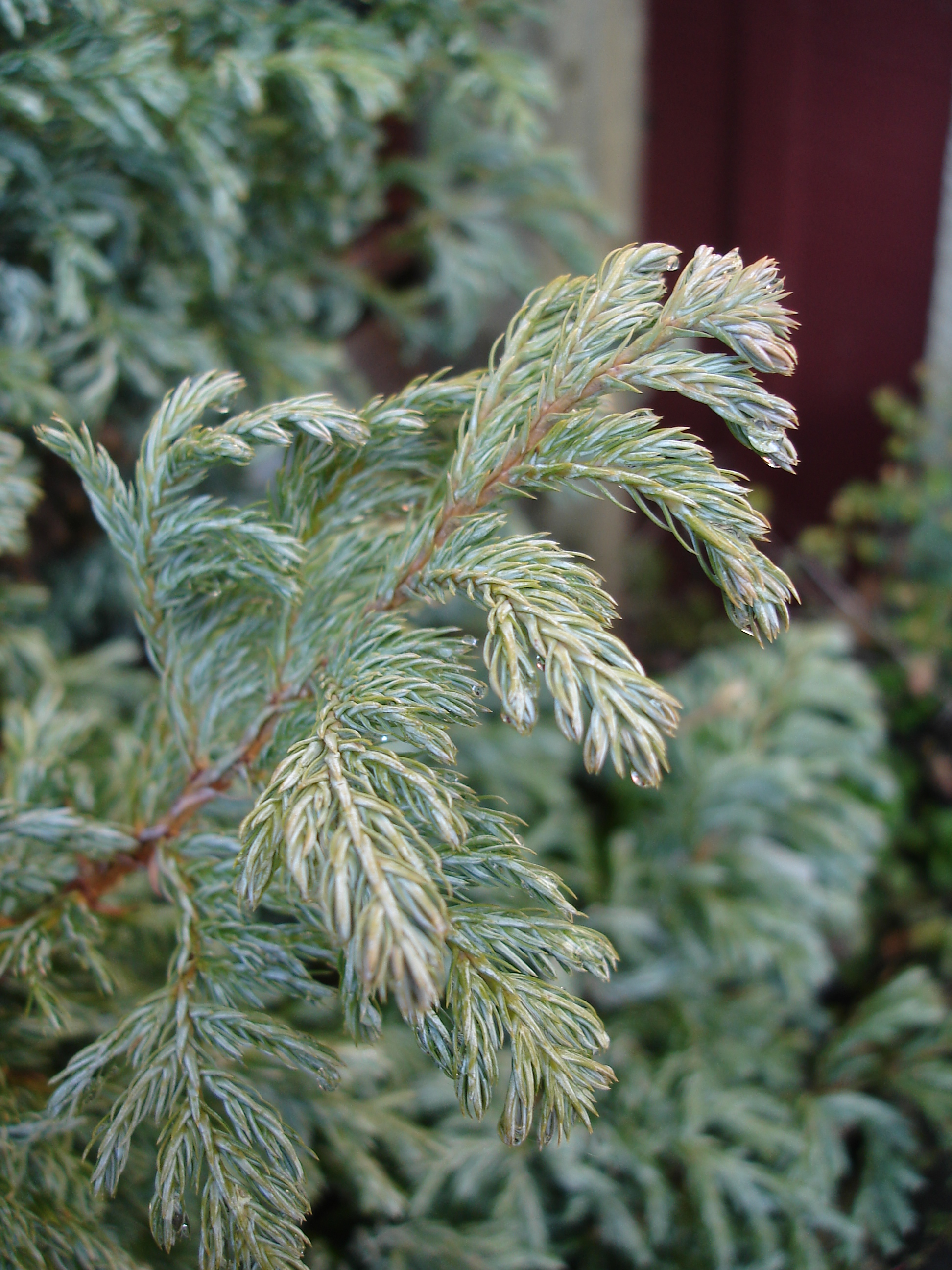 Between New England and the Pacific Northwest, the boulevard cypress, Chamaecyparis pisifera ‘Cyano-viridis’, is classified as a small tree, even though it gets no bigger than large shrubbery. Locally, only very mature specimens reach the eaves, without getting much more than half as broad. Trunks and limbs remain concealed by fluffy evergreen foliage. Warm and dry air limit growth.
 It is so tempting to dress up a densely conical dwarf Alberta spruce, Picea glauca ‘Conica’, as a garden gnome for Halloween. They are so symmetrical that they seem to have been shorn that way. They are too small to be classified as trees, but are not as shrubby as most shrubbery either. Their practicality is rather limited to formal situations where their strict symmetry is desirable.
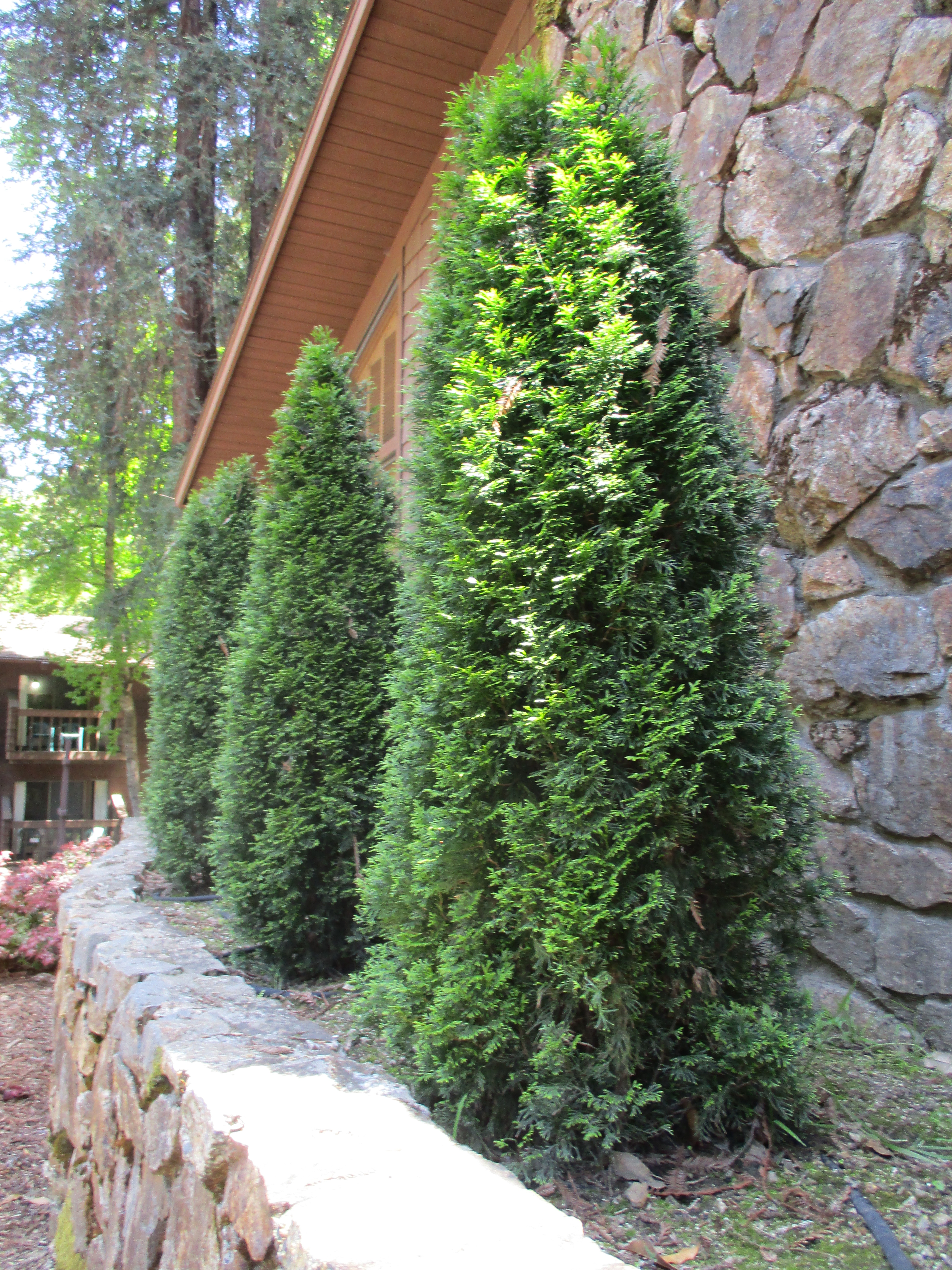 We all know what autumn is for. Planting, of course. Yes, it is a recurring theme; but there are so many different things to plant. Dormant bulbs need to get into the ground before cool and rainy winter weather. Deciduous plants that should be planted while dormant prefer an early start if planted as soon as they defoliate in autumn. Believe it or not, most evergreen plants are no different.
 Tony Tomeo