Rock Gardens

Succulents that would not survive in alpine gardens where rock gardens were originally popularized are quite popular for rock gardens here.

Rock gardens, as they are known now, evolved from more traditional alpine gardens that were designed to display specimens of small plants found in the mountains of Europe. These plants were mostly compact and slow growing to be adapted to the harsh climates and rocky soils of higher elevations, but do not compete well with more aggressive plants. They consequently need their own space, and are quite happy surrounded by rock or gravel to insulate the surface of the soil and control weeds. Slight slopes, as well as the abundance of rock, enhance drainage to replicate mountainous conditions.

Compact plants from all over the world now find homes in rock gardens. The compact nature of rock garden makes them practical for small spaces, particularly where slopes make other gardening difficult. Sculptural, colorful or lichen covered rocks, as well as garden sculpture, can be as ornamental as the plants that surround them. Larger stones can substitute for low retaining walls.

Plants for rock gardens do not need to be from mountainous areas, but should be compact. They must also be appropriate to the particular microclimate. For example, small succulents and cacti want to be as exposed in a rock garden as they would be in a real landscape. Lily-of-the-valley shrub conversely prefers sheltered cooler spots.

Trees for rock gardens are generally very small. Pendulous (weeping) and dwarf Japanese maples are more desirable than those that eventually grow into mid sized trees. Dwarf forms of spruce, eastern hemlock, cedar, fir and false cypress all work well. There are also several dwarf pines to choose from, including dwarf cultivars of Scots, Japanese red, tanyosho, mugho, white and pinon pines.

Dwarf forms of cotoneaster, hebe, holly, rockrose, germander and Japanese barberry have become as popular in rock gardens as the more traditional small heathers and heaths. There are several compact junipers as well. Some rock gardens plants grow into small shrubbery. Others sprawl about as mats or dense ground cover.  

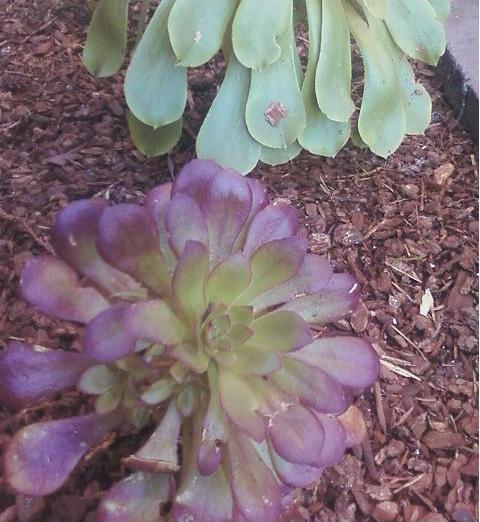
Thrift (sea pink), campanula, snow-in-summer, fleabane, coral bells, plantain lily, evergreen candytuft, carpet bugle (Ajuga spp.), and small herbs like thyme and oregano are some of the more popular perennials for rock gardens. Mat forming penstemon, columbine, cranesbill, saxifrage, rockcress and dwarf types of dianthus and primrose are more difficult to obtain, but worth trying. There are of course many small succulents like aeonium, echeveria, stonecrop (sedum) and ice-plant.

Crocus, grape hyacinth, snowdrop and wild freesia are the only common bulbs that are well suited to rock gardens. Uncommon dwarf cyclamen (not Cyclamen persicum), small types of narcissus and diminutive iris that can sometimes be found by mail order catalogues, online, or occasionally in nurseries that stock unusual plants are actually more proportionate to rock gardens than they are in more typical types of gardens.
Horridculture – Trash Talk

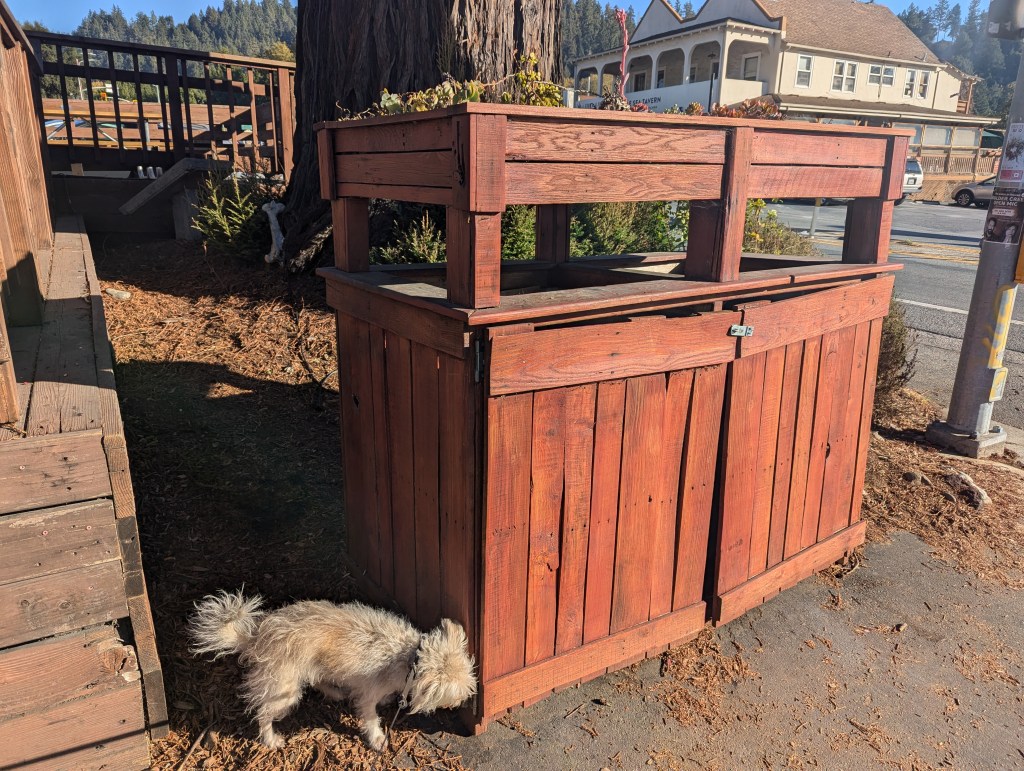
Public trash receptacles are a good concept. Without them, some of us would be more likely to litter. Contraptions such as this are most likely a good concept too, since they are somehow more visually appealing than exposed trash cans. Also, they are unlikely to fall over and spill as exposed trash cans sometimes do. Originally, one half of this receptacle was designated for trash, and the other half was designated for recyclables. This is another good concept, but was very unfortunately discontinued because it is so commonly ignored that someone must sort through less than efficiently sorted trash and recyclables. The only obvious component of this device that may not have been such a good concept is the planter box that hovers above it. Once outfitted with a nice collection of succulent perennials, it was left to survive as well as it can, which has not been very well. Succulents were likely selected for this particular application because they are supposedly ‘drought tolerant’. However, only some are drought tolerant, and only because they extend their roots as they must in order to find moisture, which they are unable to do while confined to this hovering planter box. Although they have been surviving, they have not been very happy about it. I suspect that someone must sometimes give them water, but these succulents want a bit more. Realistically, they would be happier in the ground behind the trash receptacle. There is certainly plenty of vacant space for them there, and they would be more visually appealing where they would actually be more visible than they are above average eye level. If some sort of vegetation is desirable above the trash receptacles, small shrubs or vines in the ground next to them would be happier than succulents above them. It would have been better to maintain the space that is already in need of maintenance than to add more.

The Hedge on the Ledge – Update

The Hedge on the Ledge continues to develop. Nothing has been added or subtracted from it since its previous update late last July. The vegetation has only grown and been moved about a bit. Perhaps that is an understatement. It has grown more substantially than it should have been allowed to within a situation that it should not actually be in. The only other change is that the pair of parakeet flower pups and the pair of banana pups switched places. It is so overgrown that it obstructs sunlight that would otherwise brighten the associated window. That was not so bad during warm weather of summer. It might not be so desirable as weather cools for autumn. Besides, all of this overgrown vegetation should relinquish its space to smaller vegetation that can benefit from the sheltered position and associated but presently unused heating mat through winter. After all, shelter from minor frost and access to electricity for a heating mat were the original justifications for the installation of this silly shelf below only the half of its window that opens. If I had known that it would still be here, I might have constructed it as a window box instead of an exposed shelf, so that the black vinyl cans and their faded old labels would not be so prominently visible. Eight #1 cans fit neatly onto the shelf, with three 4″ pots nestled into the spaces between them. An elastic strap holds them firmly in place so that they do not get blown off. The vegetation includes:

4 – #1 Solandra maxima ‘Variegata’ cup of gold vine – back row closest to window

2 – #1 Musa acuminata ‘Golden Rhino Horn’ banana – left and right corners of front row

2 – #1 Heliconia psittacorum (unidentified) parakeet flower – middle of front row

2 – 4″ Cucurma longa (unidentified) turmeric – left and right between rows

1 – 4″ Agapanthus africanus ‘Peter Pan’ lily of the Nile – middle between rows

Container Gardening

These containers are almost completely obscured by their contents.

Container gardening is one of those trends that I could do without in my own garden. Even though I know that it is actually very practical for several reasons, I prefer to grow as much as I can directly in the ground because I do not want to take care of contained plants. However, even with only minimal potted plants around my garden, the steep embankment above my driveway has reminded me of one of the many reasons why people like to grow plants in large or hanging pots, elevated planters or window boxes. There are just so many plants that look so good cascading out of containers.

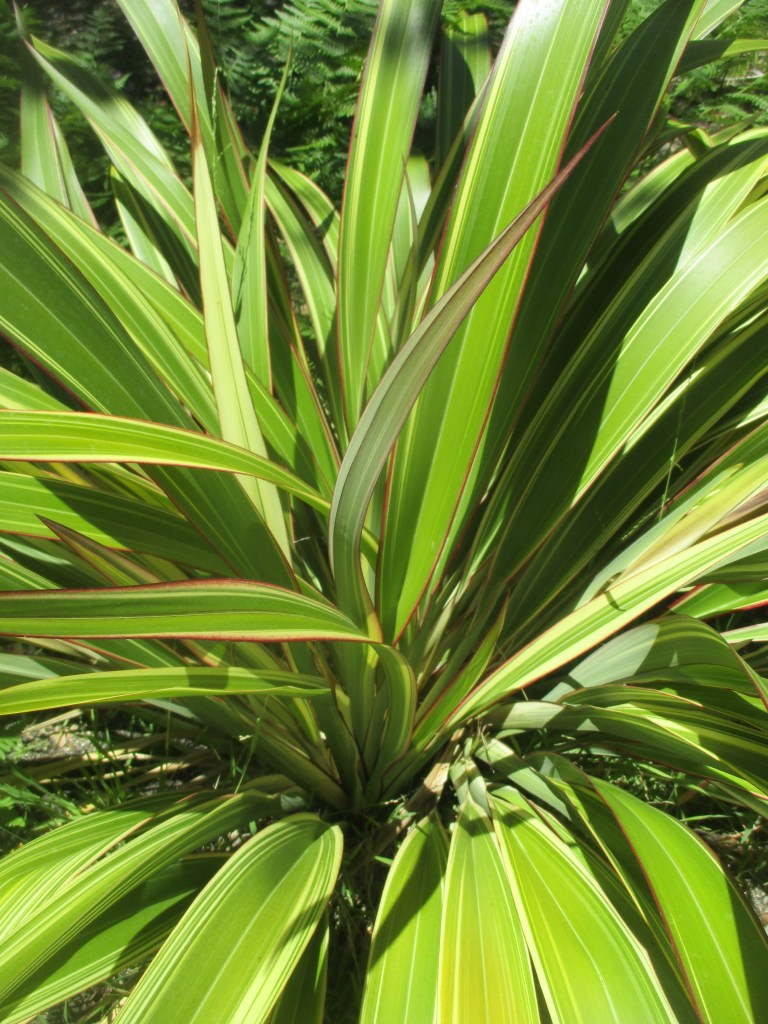
The lily-of-the-Nile that I planted on top of part of the embankment to hold the soil together actually look really cool leaning over the top edge, and would look just as good in large planters. The smaller ‘Peter Pan’ lily-of-the-Nile is more proportionate to smaller urns. Since these do not hang over the edges too far, they look even better mixed with more pendulous plants like trailing rosemary, verbena, ivy geranium and dwarf periwinkle. Upright plants like fuchsia and smaller types of New Zealand flax in the middle of mixed plants add good contrasting form. Dracaenas (Cordyline spp.) were traditional vertical accent plants of Victorian gardening.

Low planters and pots, as well as many hanging pots, are very often best outfitted with traditional cascading annuals like lobelia, sweet alyssum, petunia, portulaca and my favorite, nasturtium. Even if annuals that do not cascade are the central features of mixed planters, cascading plants around the edges really maximize the show by spreading even more flower color over the exteriors of the containers. Colorful perennials like fibrous begonias, busy Lizzie, campanula, fleabane, scaevola and dusty miller may not cascade as well as the annuals, but add width, and probably cascade adequately for ‘artfully’ designed pots that are too appealing to obscure completely.

In sheltered lanais and porches, spider plant, burro tail and wandering Jew are classic solitary perennials for hanging pots. What orchid cactus lacks in form and foliage, it makes up for with bold flowers.

The largest pots and planters can benefit from simple ground covers like shore juniper and English ivy, perhaps dressed up with flowering annuals. Gazanias can provide their own flowers, so can instead be dressed up with the colorful and textural foliage of blue fescue or another grassy perennial. Asparagus densilforus has such bold texture and form alone that it does not necessarily need the color of annuals.

Mixing Things Up

Annuals are nice, but so are a few more substantial or perennial plants.

Large pots, urns and planter boxes filled with ridiculously colorful blooming annuals are certainly nothing new. However, more small perennials and even a few small shrubs and trees are being planted along with the annuals, and allowed to stay indefinitely as fewer annuals get replaced around them as the seasons change.

These plants only need to be tolerant of confinement, regular watering and the comings and goings of the annuals around them. Upright plants should go in back, behind the lower annuals. Cascading and ground cover type plants should go in front.

Small forms of New Zealand flax and trunkless dracaena palms (Cordyline spp.) add texture, form and motion to large planters, but may eventually get too big if not properly pruned. Larger shoots can be pruned out to allow smaller shoots to take over. Alternatively, overgrown plants can be removed and put out in the landscape when they get too big.

Hollywood and Rocky Mountain junipers have striking form if pruned to show it off, and are easier to contain with selective pruning than reputed. Even without the interesting branch structure of junipers, arborvitaes are appreciated for their similar finely textured foliage and their rich green or yellow color. ‘Blue Rug’ juniper, a grayish ground cover juniper, cascades nicely from large planters.

Large succulents that tolerate water, such as good old fashioned jade plant and various aeoniums, offer bold texture and form in the background. They are easy to prune as they grow, and do not have aggressive roots. Low clumping aloes do the same in front.

Euonymus fortunei, English ivy, various iceplants and other ground cover plants do well cascading over the edges of large planters.

There really is not much limit to the variety of perennials and small shrubs and even trees that play well with others in planters of blooming annuals, and do not mind the confinement and regular watering. Annuals are still the best for flashy floral colors. Yet, the other plants excel in form, texture, foliar color and motion in the breeze.

Too much in the garden may be going to pot.

Container gardenin is overrated.

The class of 1985 epitomized the ‘Decade of Decadence’ with the raddest of styles in the wildest of colors. My generation is perhaps more familiar than any other with the pursuit of senseless fads and trends. Now that it is about a quarter of a century later, many of us continue such indulgences in our gardens.

Container gardening has become a fad that, despite its practicality for all sorts of applications, has become so common that it actually makes gardening more work than it should be. Modern homes are built with expansive porches and walkways that are designed to accommodate large urns and other planters, instead of more modest and proportionate porches and walkways that leave more space for planting things in the ground around them. Runoff from the planters stains pavement and rots decking. Besides, all the clutter of planters looks like a garage sale.

For balconies, roof gardens or wherever exposed soil is otherwise unavailable, container gardening may be the only option. Containers also help with plants that need to be moved to sheltered spots during frost. However, few plants are as happy in containers as they would be in the ground. Contrary to popular belief, it is better to amend inferior soil in the ground than to grow plants in potting soil within pots.

Where pots or other containers are necessary, they should either be shaded, or otherwise insulated from the heat of the sun. The black vinyl cans that plants arrive from the nursery in are not only unappealing, but can get warm enough in the sun to roast roots. Yet, they are both obscured and shaded simply by getting placed within slightly larger urns or planters.

Other thin plastic pots can transfer heat like black vinyl, but tend to be cooler because they are most often lighter colors that absorb less heat from sunlight. Thicker materials, such as terracotta, are better insulated. Roots prefer the porosity of unglazed pots, although some glazed pots can stay cooler. Plants within containers are often able to provide their own shade by cascading out over the edges, or spreading out above.

Yet, more substantial plants that provide more substantial shade still need to be complaisant to confinement. Plants that need to disperse their roots will never be comfortable in containers. Neither will plants that are not conducive to pruning, but want to grow into large shrubs or trees.

Not All Plants Like Fads.

Ornate pots and planters can be as decorative as the plants within them, and provide extra accommodation for more plants.

Like so many fads too often are, container gardening is overrated, and is actually contrary to the currently most faddish of fads; sustainability. Plants in containers need more regular watering than those that can disperse their roots more extensively into the ground. Those that are so indulged also want fertilizer to be applied more regularly, but are more likely to be damaged if fertilized too generously. Because confinement is stressful, plants in containers are innately more susceptible to disease and pests. Some plants need more pruning for confinement.

Then there are the problems with the containers. If exposed to sunlight, thin plastic containers get warm enough to cook roots within. Pots that do not drain adequately or that sit in their own drainage basins can stay saturated enough to kill roots. Water in drainage basins allows mosquitoes to proliferate. Seepage from large pots can rot decks and stain pavement. Self watering containers work nicely for houseplants (if used properly!), but lack drainage, so can not be used out where they are exposed to rain.

The advantages to container gardening are actually quite limited. Containers are obviously needed for houseplants, and where exposed soil is not available, like on balconies. They are also convenient for plants that want better soil than they can get in the garden, especially if the rest of the garden is responsibly landscaped with sustainably undemanding plants that do not require soil amendment or regular watering. Frost sensitive plants can be moved easily to sheltered locations if contained. Flashy plants like orchids and tuberous begonias that get displayed prominently while blooming can be concealed while not so impressive.

Of course there are many pendulous plants like Boston fern, spider plant, string or pearls and burro’s tail that really are at their best in hanging pots. It is also hard to deny that there are all sorts of artsy containers, like colorfully glazed pots and sculptural concrete urns, which are appealing enough to justify growing plants in them, even if just to show off the fun containers. Bonsai requires containers, but that is another big topic!

Mexican Heather

Mexican heather has finely textured foliage.

The minute bright pink flowers of Mexican heather, Cuphea hyssopifolia, are less than a quarter inch long, but are enough to get the attention of the hummingbirds who really dig them. Flowers can rarely be more purplish or even more rarely white. The limber stems are well foliated with finely textured and narrow leaves that are not much more than half an inch long. Mature plants are typically lower but a bit wider than two feet. Overgrown plants can be pruned severely at the end of winter to regenerate over summer.

Some Plants Can Go To Pot.

What ever happened to those poinsettias and cyclamen from last Christmas?

Chrysanthemums, hydrangeas, azaleas, callas, kalanchoes and miniature roses can not really be as happy as they seem to be while in full bloom at the florist counter. Then there are all the seasonal blooming plants like Easter lilies and poinsettias. Wrapped in undraining mylar, often with ribbons and bows, they are actually quite humiliated.

All are forced to bloom in artificial greenhouse environments that are nothing like the home environments that they ultimately go to. As they finish bloom, most get retired directly to the garden where many are unable to adapt quickly and efficiently enough to survive for long. Many do not make it that far, but get sent to the compost or the trash by those who prefer to not prolong their agony.

These potted plants (which are actually known as ‘pot plants’ in the horticultural industries) are not like houseplants, since they are not actually expected to survive for long in the home. They are only expected to perform for a limited time while in bloom.

Adapting to the home environment is not the difficult part. Most potted plants can manage that for a while, but eventually want more sunlight. Hydrangeas, roses, Easter lilies and other deciduous plants also eventually want a cool winter for their dormancy. The problem is adapting to exposure to the sunlight and weather that these plants crave. Foliage can get scorched, frozen or desiccated.

As unsightly as plants can be during transition, most can eventually replace their greenhouse foliage with foliage that is adapted to their new environment in the garden if transitioned slowly and carefully. Large ‘forced’ flowers will eventually be shed or can be pruned off as they deteriorate. The more sensitive types of plants should be moved to a sheltered spot on a porch or in partial shade for a few months before being moved to more exposed spots. Once in the garden, they will want regular watering until their roots disperse.

Deciduous plants and bulbs can stay in the sheltered spot until they defoliate for winter. If put into their permanent location while dormant and bare, their new foliage that emerges in spring will be adapted to the new exposure.

Aloes, Christmas cactus and various other succulents are considerably more resilient and adaptable than the more common potted plants. Both rosemary and small olive trees that have become trendy during the past many years can likewise be adaptable if not kept in the home too long. Olive trees can stay potted indefinitely if pruned regularly, or can go into the garden where there is room to grow. Christmas trees are just as adaptable, but do not want to stay potted for long. Sadly though, most get much too big for home gardens.

Drought Tolerance Necessitates Root Dispersion

Extensive root dispersion enhances drought tolerance.

Fads certainly complicate gardening. Most are merely marketing tactics. Most are bogus. Many even contradict their justifications! For example, most new, trendy and supposedly sustainable plant cultivars are genetically weak because of extensive breeding. Drought tolerance likewise has potential to be a constructive fad, but is so commonly misapplied.

Incidentally, its terminology is somewhat inaccurate. Drought is an extended but unusual pattern of dry weather. Whether the duration is for one year, or many, it is not permanent. The dry weather that persists through summer locally is normal for the chaparral climate. It is therefore a normal characteristic of climate, rather than abnormal weather conditions.

Drought tolerance is therefore practical here as chaparral tolerance. Most plants that are drought tolerant are naturally endemic to chaparral regions or deserts. Many of the native species naturally exhibit remarkable drought tolerance. Once established, they might not require any more moisture than they get from annual rainfall. Some prefer dry conditions.

Drought tolerance should not imply that such plants are undemanding. In some regards, they are more demanding and less adaptable than plants that require frequent watering. Such plants rely on extensive root dispersion to procure the moisture they require within dry situations. Most do not adapt to confinement, even if watering is enough to cause rot.

Container gardening is therefore a fad that is incompatible with drought tolerance. It only uses less water for plants that use more water. Also, modern drip irrigation, which is very practical for plants that rely on irrigation, requires a bit more effort for plants that use less moisture. To not promote rot, emitters must move farther from main trunks as plants grow.

Many of the most sustainable and drought plants are old fashioned sorts that became too common years ago. Fortunately, some are regaining popularity again. Some of the more compact eucalypti are proportionate to modern gardens. Grevillea, bottlebrush, rockrose, juniper, rosemary, salvia, lavender and New Zealand flax are as drought tolerant as they had always been.