Pots are a bit more common within our landscapes than they should be, but they can be justified.
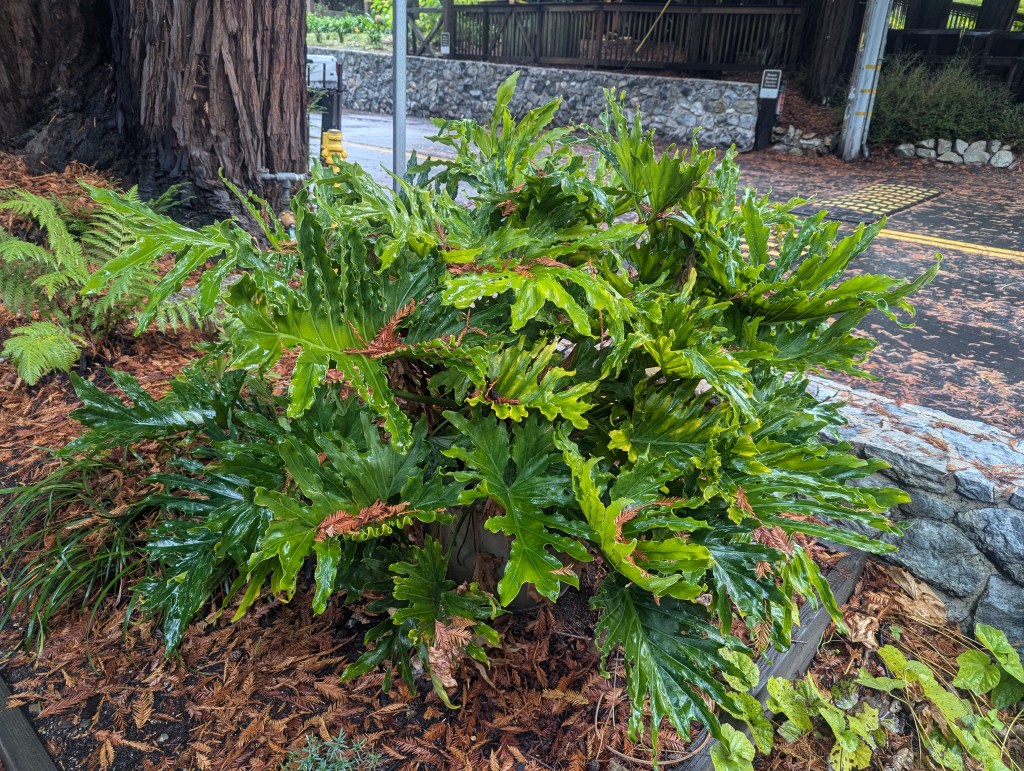
1. Philodendron selloum ‘Lickety Split’ split-leaf philodendron grew efficiently enough to obscure its pretty green pot within a few months, but does not seem to grow much now. It seems to merely replace old foliage with new foliage. The stems do not elongate much.
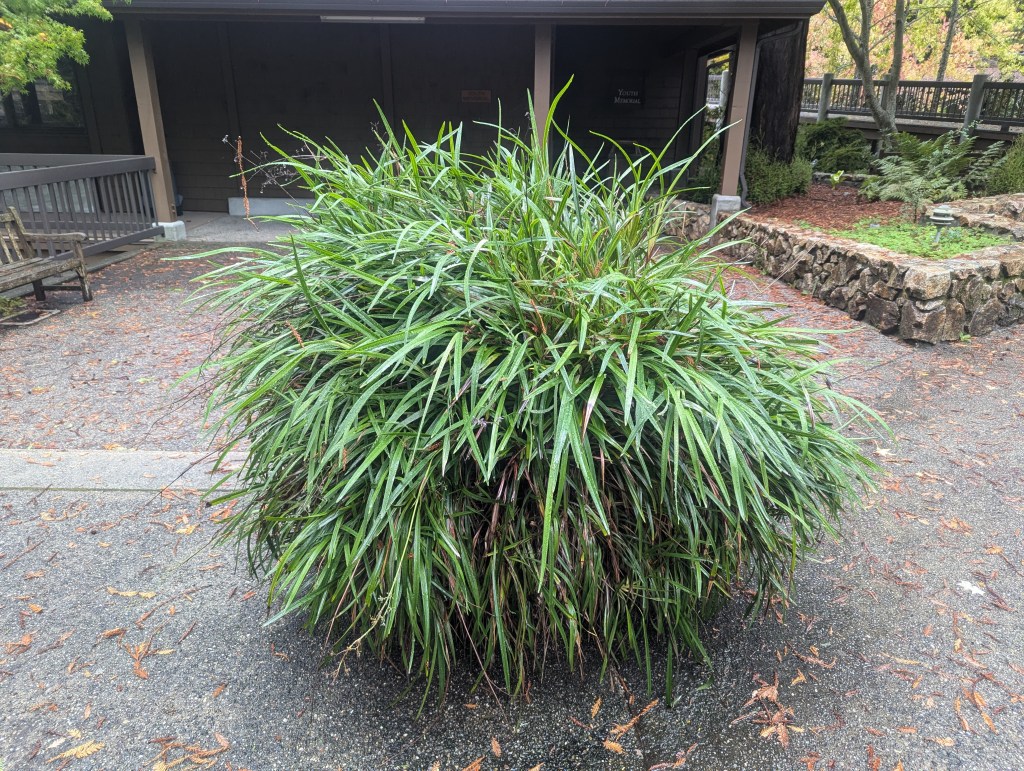
2. Dianella caerulea, blueberry lily is named Sigmund because it looks like a shabby sea monster. It is in a large terracotta pot that it now completely obscures. It visually softens the blunt end of a low stone retaining wall that separates a few stone steps from a ramp.
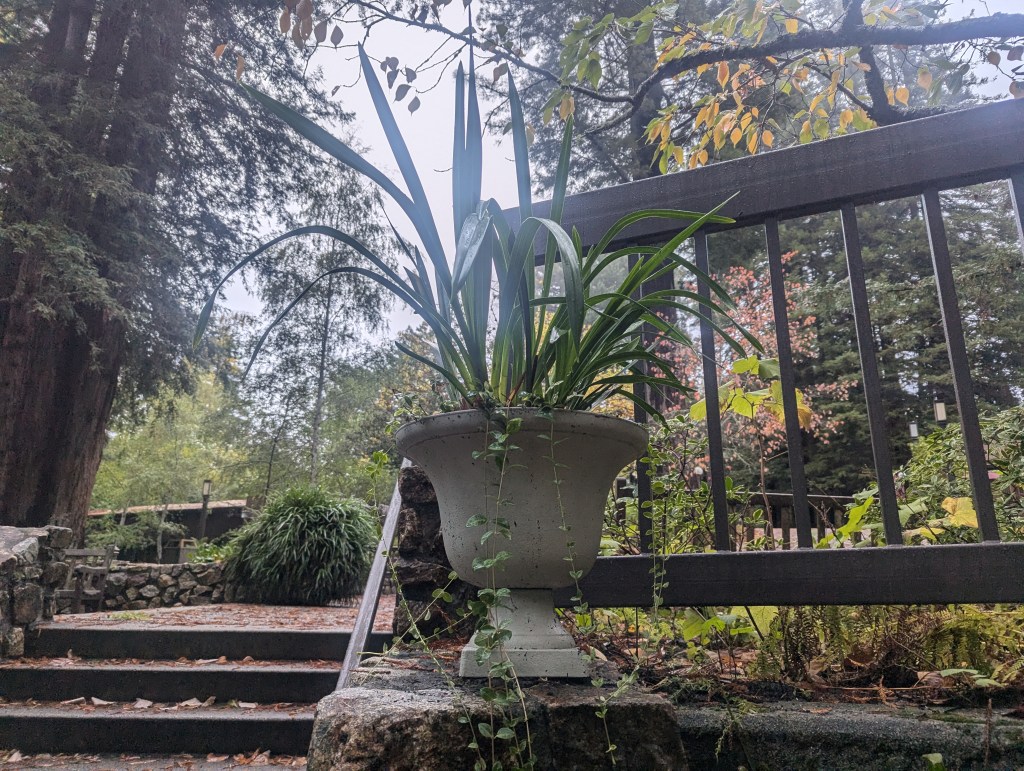
3. Cymbidium, orchid with a few small bits of Vinca minor ‘Alba Variegata’, small white variegated periwinkle are in a cheap plastic urn, with Sigmund in the background to the left. I know neither the species nor the cultivar of the orchid, but it blooms white nicely.
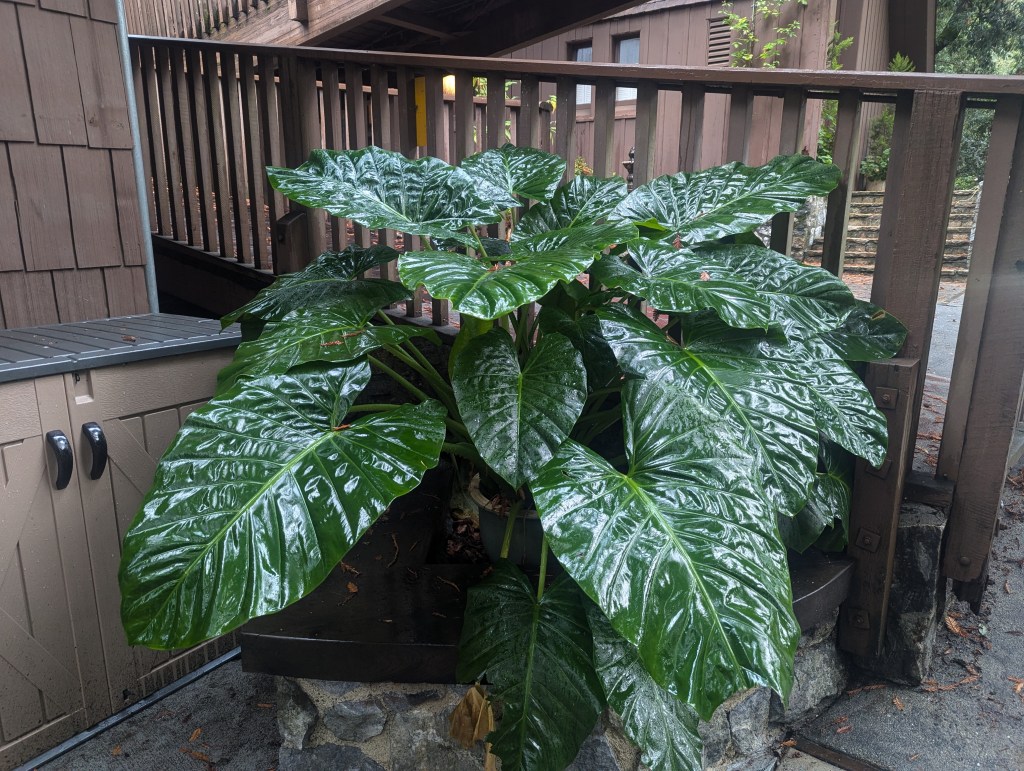
4. Alocasia odora, taro, or whatever species this is, has grown quite nicely to obscure its pot, just like the split-leaf philodendron and Sigmund. It was taken from a vacated home with an Australian tree fern two years ago. Sadly, the old home will soon be demolished.
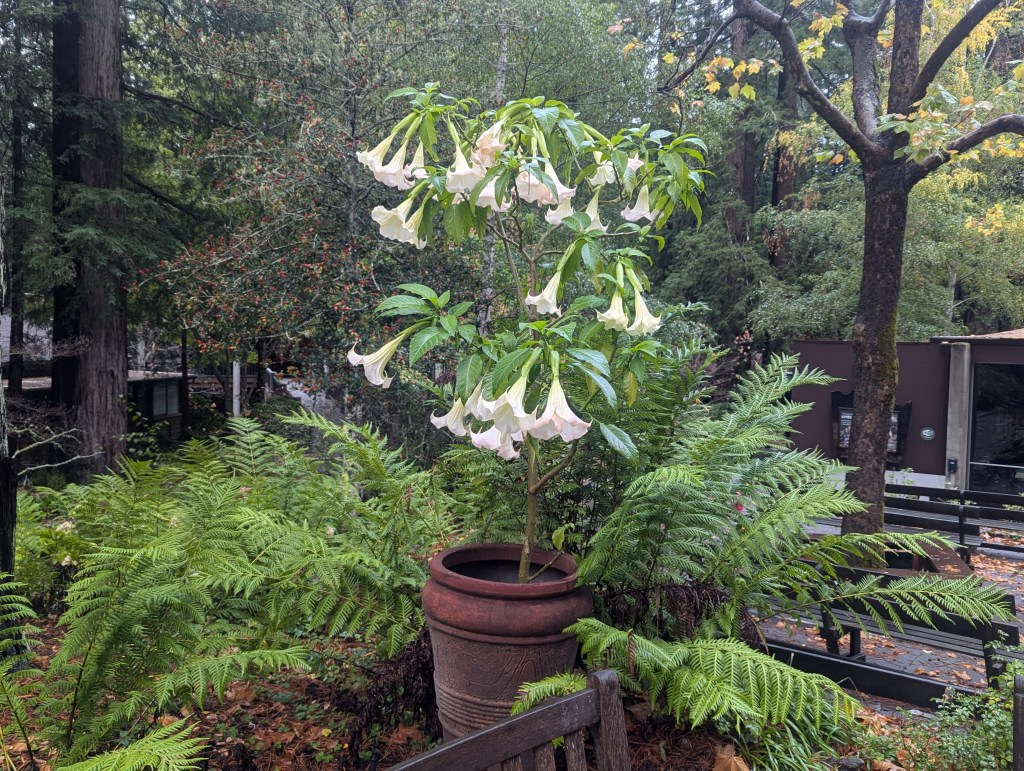
5. Brugmansia, angel’s trumpet really is getting to be redundant, but is also really quite pretty. Like the orchid, both its species and cultivar are unknown. I grew it from a scrap from a green waste pile in East San Jose. Its big terracotta urn was a gift a few years ago.
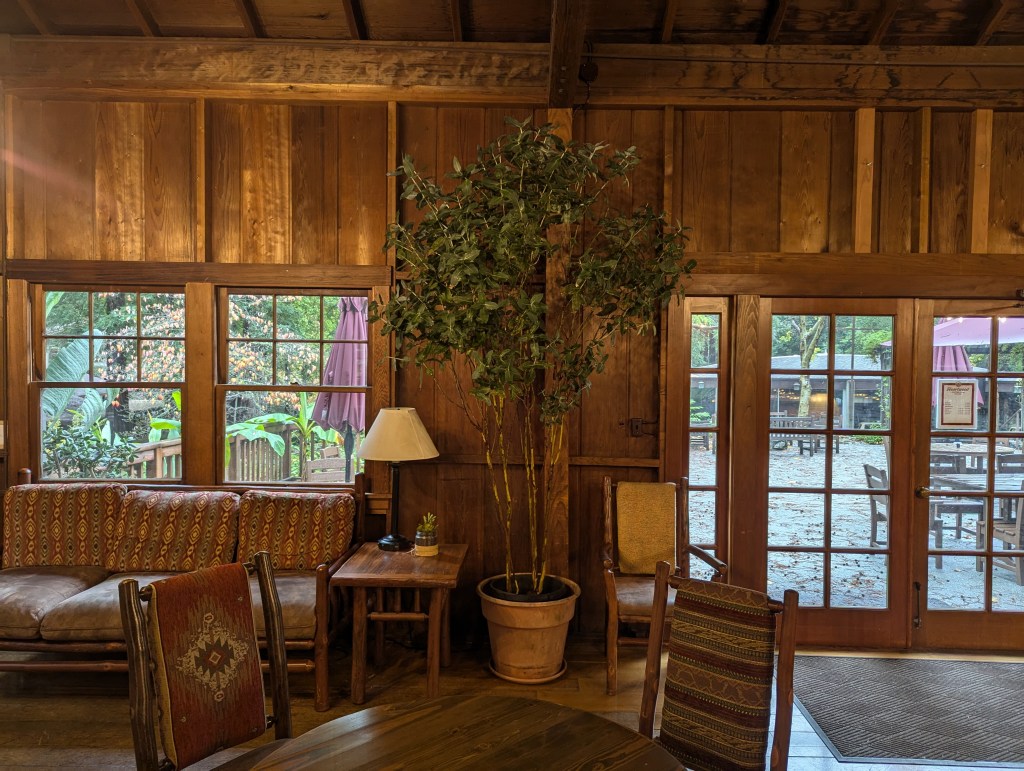
6. Eucalyptus globulus ‘Compacta’, dwarf blue gum is certainly not a typical houseplant. Yet, here it is within an antique coffee shoppe lounge at work. We do not know how long it can survive here without direct sunlight, but will eventually find out. It is quite grand.
This is the link for Six on Saturday, for anyone else who would like to participate: https://thepropagatorblog.wordpress.com/2017/09/18/six-on-saturday-a-participant-guide/


 Aside from all the seasonal raking and dormant pruning, there is not as much to do in the garden as there was earlier in the year. Lawns do not need much mowing. Hedges do not need much shearing. Untimely mowing and shearing can actually damage lawns and hedges. Watering, which was so important while the weather was warm, is now rare in the cool weather between rain.
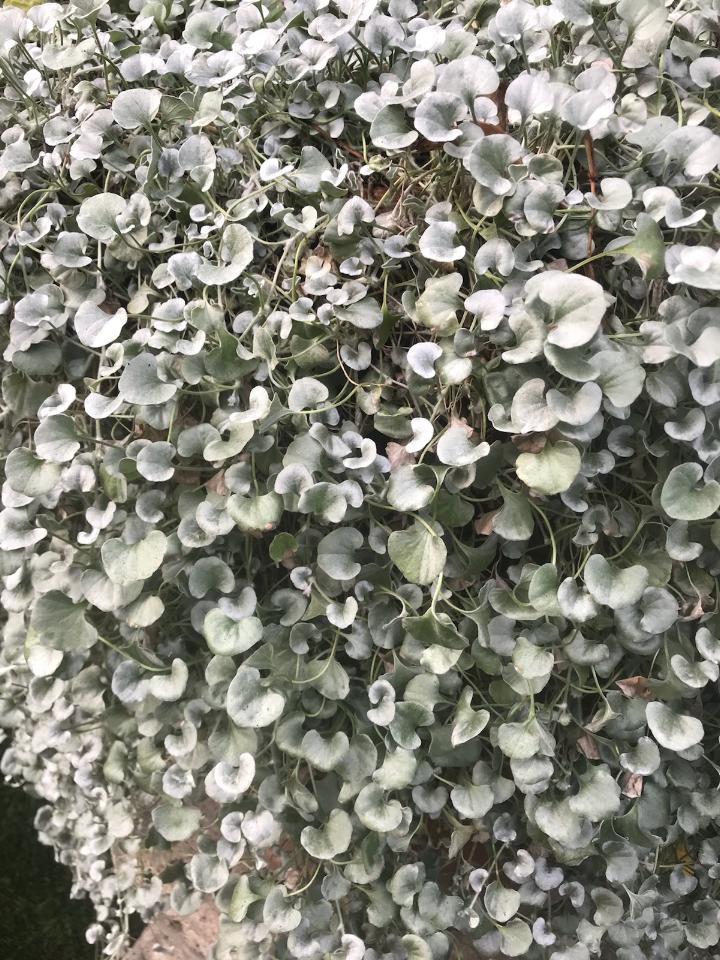 No one seems to know what ever happened to old fashioned dichondra lawns. Everyone seemed to like them, especially those of us who dislike turf grasses. Somehow, they became passe and very rare. The formerly common dichondra that such lawns were made of is now merely a resilient weed in turf lawns. But wait! We have not heard the last of this resilient and appealing perennial.
 It may not always bloom profusely, but sweet pea shrub, Polygala fruticosa, blooms sporadically through most of the year. Even when not much color is evident from a distance, a few flowers can likely be found on closer inspection. For some reason, bloom seems to be quite colorful now. Bloom phases should be more profuse in spring and summer. The pea flowers are soft purplish pink.
 Tony Tomeo