Cultivars Are The Real Cloned Mutants

80516thumbIt is not science fiction. It involves neither ninjas nor turtles. Cultivars really are mutant plants that can only be propagated by cloning. The word ‘cultivar’ is a portmanteau (two words combined into a single word) of ‘cultivated’ and ‘variety’. Unlike other varieties of plants that can be perpetuated by seed, cultivars must be cultivated by unnatural techniques to maintain their genetic distinction.

For example, ‘Alamo Fire’ is a variety of Texas bluebonnets with maroon flowers. The original seed were collected from a few naturally occurring variants with maroon flowers, and grown into more plants with maroon flowers, which provided more seed. No seed was collected from those that bloomed blue. By repeating this process of selection a few times, the variety was developed.

The variety ‘Alamo Fire’ is now sufficiently genetically stable to perpetuate itself, which means that subsequent generations will also bloom with maroon flowers. However, a few blue flowers might bloom in any generation; and unless they are weeded out before producing seed, they will eventually dominate until the entire colony reverts from maroon back to the more genetically stable blue.

‘Meyer’ lemon is an example of a cultivar. It must be propagated vegetatively by cuttings, or perhaps grafted onto understock. In other words, it must be cloned. It is a genetically unstable hybrid of a lemon and an orange, so plants grown from their seed would be very different from the parent. Many hybrids are so genetically unstable that they are sterile, and unable to produce viable seed.

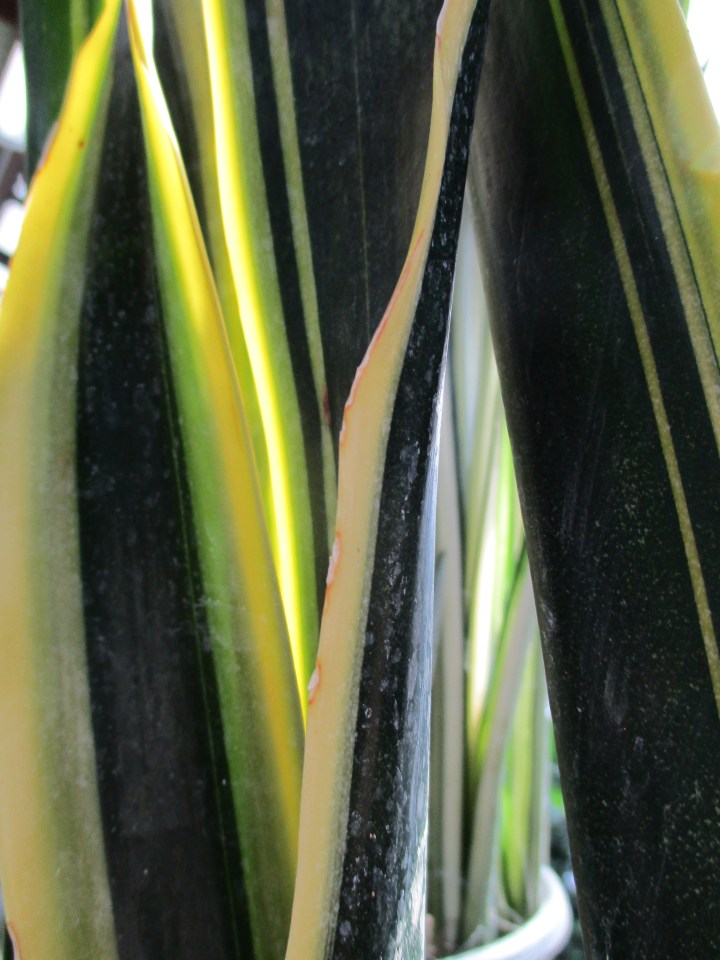
Many variegated or dwarf cultivars of all sorts of plants are not hybrids, but are mutants. It is common for some arborvitaes to produce ‘sports’, which are simply mutant growth that is somehow different from the original growth. If a sport has a desirable characteristic, such as densely compact growth, variegation, or golden foliage, it can be cloned as a cultivar. Just like ‘Meyer’ lemon, a dwarf golden arborvitae is very unlikely to produce genetically similar seedlings.
Sport

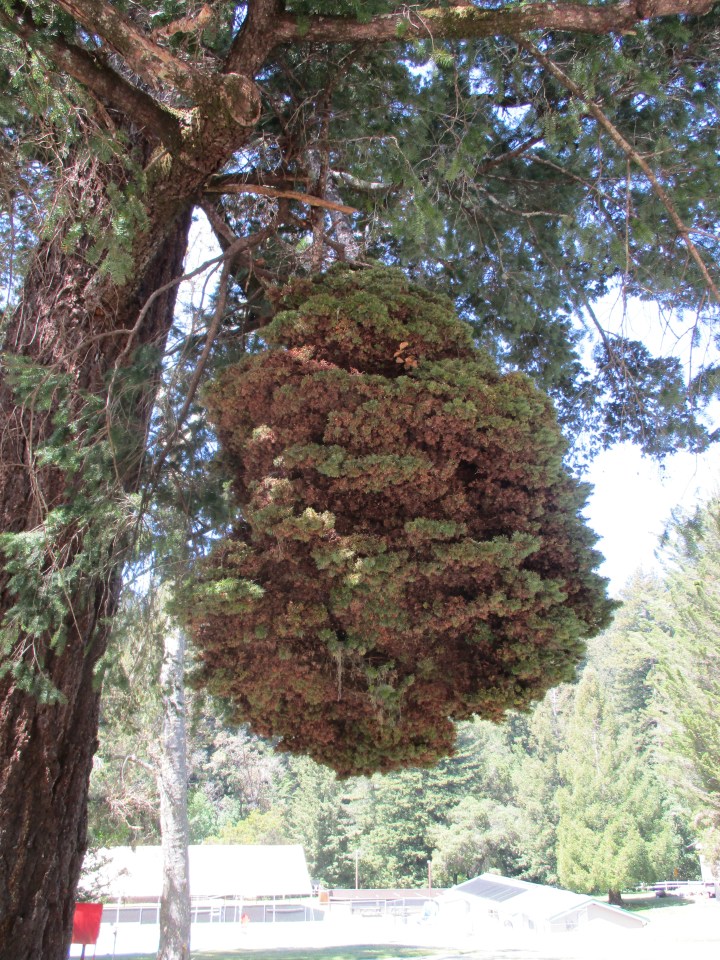
P80506Not just any sport; a witch’s broom sport! Remember the quidditch tournament of the first Harry Potter Movie? Well, it has nothing to do with that. You should not be watching such movies anyway.

This sort of ‘sport’ is merely a genetic variant growth. This particular sport happens to be known as a ‘witch’s broom’.

There is quite a variety of other sports.

Sometimes, a plant is going along minding its own business, when all of a sudden, it produces a stem with variegated leaves. Unlike the plain green leaves on the rest of the plant, the leaves on the sport are outfitted with white margins. In the wild, such a sport would probably not last long. Since it has less chlorophyll than the unvariegated foliage, it would grow slower, so would eventually be overwhelmed and shaded out by the more vigorous greener foliage. However, if someone happens to find this variegated sport, and determines that the variegation might be an attribute, it can be propagated as a new variegated cultivar of the species.

Sometimes, a plant is going along minding its own business, when all of a sudden, it produces a stem with bronzed foliage, or gold foliage, or leaves that are shaped differently from those on the rest of the plant. Perhaps new stems are more pendulous than they normally are. Sometimes, growth is more compact. It might even be rather stunted and disfigured, branching into a tuft of densely arranged twiggy stems known as a ‘witch’s broom’.

Such growth does not look like a witch’s broom for very long. As it grows, it develops into a densely shrubby mass that eventually gets too heavy to be supported. If the dense growth is appealing, it can be propagated as a new cultivar, like the dwarf Alberta spruce was reproduced from a witch’s broom sport of the common white spruce, or the pencil point juniper was reproduced from a witch’s broom sport of the common juniper (Juniperus communis ‘Compressa’).

This massive witch’s broom happens to be on a Douglas fir. It has been here for decades. It sure is ugly, but also interesting. It could be interesting enough to be reproduced.

Dingo

P80407K

Dogs and humans have been in a symbiotic relationship longer than history can document. Dogs naturally became more domesticated as humans did, and have been more or less selectively bred for a few thousand years.

Dingos are different. No one knows for certain how domesticated they were when they first came to Australia. They probably had been domesticated enough to come on boats with the first humans to migrate to Australia. After arriving in Australia, they became feral, although still symbiotically migrating with humans. They are now considered a native species of Australia.

Many species of plants have lived symbiotically with humans as well. As long as humans have been living with dogs, they have been domesticating and breeding plants. As plants were more extensively bred, they became more dependent on humans for their perpetuation. Some are so overly bred that they are sterile and unable to perpetuate without human intervention to propagate them vegetatively. Others, although unnaturally productive in regard to what humans want from them, are too weak or otherwise inferior to survive in the wild.

However, there are some extensively bred plants that escape their domestic lifestyles, and perpetuate feral descendants who retain some of the domestic characteristics of their extensively bred ancestors. They are not quite like naturalized plants that were merely imported in a more or less natural state from other regions, or those that naturalize and revert to a natural state. Characteristically, they are between wild plants and extensively bred and selected domestic plants. They have developed their own stable but feral lineage that can perpetuate in the wild.

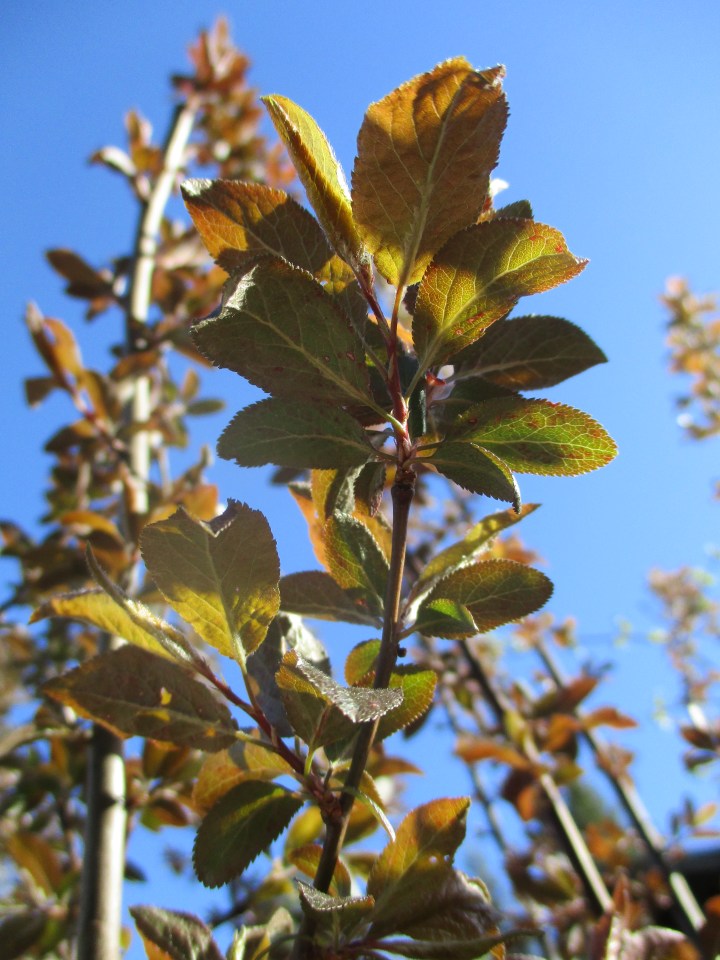
For example, the purple leaf plum has been developed as an ornamental tree for a very long time. Several vegetatively propagated cultivars are now available. The ancestors were likely discovered as mutants with darker bronzed foliage. These primitive mutants were more or less genetically stable, and were likely able to perpetuate naturally. It is difficult to say for certain. From these ancestors, seedlings with even darker foliage were selected, and bred to find more seedlings with even darker foliage, and so on. Because of this selective breeding, purple leaf plum trees grown as domesticated ornamental trees now have darker foliage they would naturally in the wild. They are propagated vegetatively because some are so overly bred that they are sterile, and seedlings from those that can produce viable seed would be likely be more genetically stable, and therefore less genetically ‘developed’. This is why feral seedlings from purple leaf plums that can produce viable seed are not as dark purplish bronze as their parents. Seedlings from the seedling trees are even lighter bronze. They may never be completely green, but they will not be dark purplish bronze either. They are feral purple leaf plums, like dingoes.