Beyond Fresh Cut Flowers

Palm fronds are striking cut foliage.

Most flowers bloom in spring. Many bloom a bit later and though summer. Not nearly so many start to bloom in autumn or though winter. This time of year, there is more to clean up from fading blooms than there are fresh blooms to cut and bring in.

Much of the color in the garden through autumn is provided by colorful foliage or foliage that gets colorful as the weather gets cooler. Later in winter, some plants have colorful bark and stems that gets revealed by winter defoliation. Coral bark Japanese maple, red twig dogwood and some arctic willows have remarkably colorful twigs.

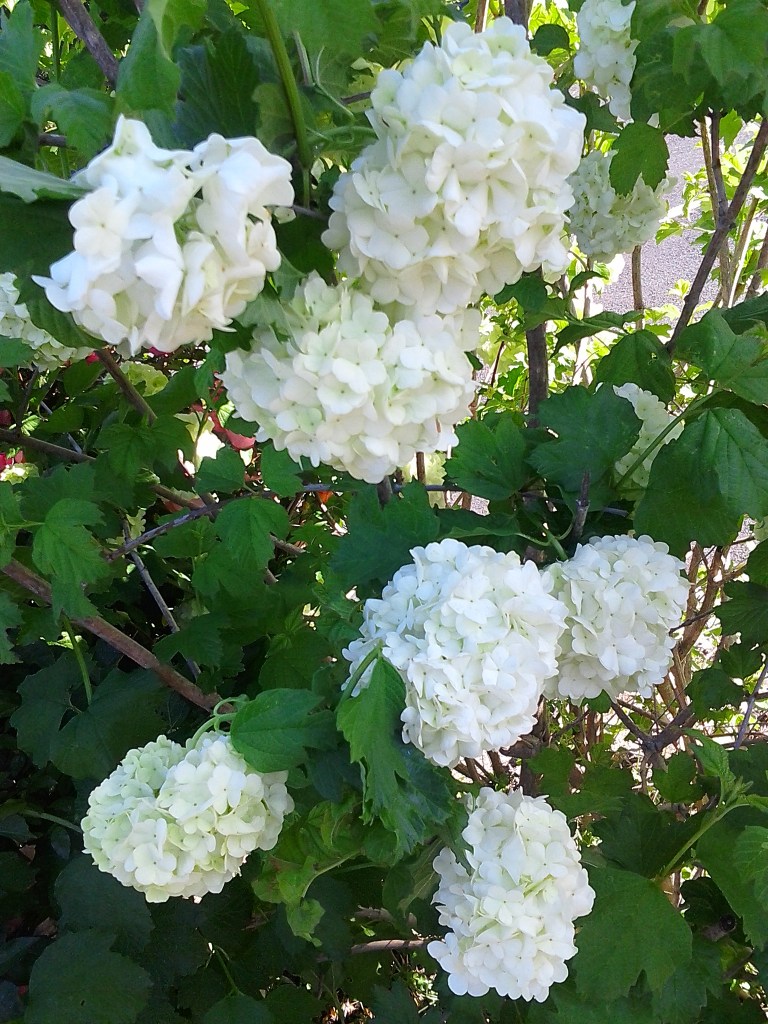
Blooms of a few plants are sometimes cut and recycled after they fade because their dried flowers, flower stems or seed pods are appealing. Hydrangeas are not so attractive as they deteriorate out in the garden, but can be cut and hung upside down to dry to substitute for fresh flowers later. If done quickly, many types hold their color somewhat. Those that do not hold their fresh color may turn an appealing shade of brown.

Queen Anne’s lace can likewise be a nice dried flower, but is not so easy to hide in the garden while it dries. If cut and hung to dry, individual stems should be hung separately, since they bend and are difficult to separate if hung in clusters. Their flat-topped flower trusses curve inward as they dry, so they look nothing like they do fresh.

The rigid flower stems of New Zealand flax are rather sculptural protruding from their softer foliage. These same stems can be cut, plucked of seed pods, and like dried hydrangeas, used as cut flowers when there is not much else to get out of the garden. Ironically, New Zealand flax flowers sometimes get cut before they bloom, since not everyone appreciates their contrast against their own softly textured foliage.

Years ago, New Zealand flax flower stems were actually dried and spray painted! For those daring to try this technique, it also works well with lily -of-the-Nile flowers stems and trusses (plucked of their seed pods), Heavenly bamboo flower stems, and even dried pampas grass blooms. However, pampas grass blooms are deprived of their fluffiness and most appealing quality by spray paint. Bird-of-Paradise leaves twist interestingly as they dry, to provide texture with or without paint.

Fronds (leaves) of some fan palms can provide bold cut foliage. Mediterranean fan palm is difficult to handle because of the nasty teeth on the stalks, but has nice rounded leave that fan out nicely behind other flowers. They can be cut into smaller fans, or even other not so rounded shapes. Windmill palm is much easier to handle, but is a bit larger, so is more likely to need to be trimmed to shape. All are easy to cut with common scissors, and can be dried and spray painted.

There is probably more in the garden to substitute for cut flowers than would be guessed. Useful plant parts can be found in the least expected of places.

Horridculture – Long Stem Rose

I grew a nearly exemplary long stem rose!

Well, I did not exactly do it myself. One of three specimens of ‘Proud Land’ hybrid tea rose that I installed into the rose garden in about 1984 did all the work. I was quite pompous when I found it though. After all, I maintain this particular specimen in a can here until it relocates into another rose garden.

I certainly did not expect such a bloom only a week before November. Although roses can bloom until winter dormancy, the latest are generally on short stems. Increasingly cool weather decelerates formerly vigorous growth.

This particular rose bloomed on a stem that was more than three feet long! It would have been ideal for Miss Piggy of the Muppet Show! Goodness, it could have been too good for Miss Piggy!

‘Proud Land’ hybrid tea rose

The flower might have lacked perfect form, and the foliage might have been slightly blemished, but with such an awesome stem, they were inconsequential. Perhaps I should have stripped the foliage and cut the flower off, in order to most effectively display the near perfection of this most astounding stem!

After cutting it, I removed the thorns and lower foliage, and put it in water outside the lounge at work. According to tradition, unless someone else is presently experiencing marital tension of some sort, the first of the gentlemen with whom I work to find roses there takes them to his wife. This was only a single rose, but was very special. It was gratifying to know that someone with whom I work was about to experience a very special evening, although I gave it no more thought than that.

Then, the gentleman who claimed it mentioned that it was too long, and before I could protest, he cut the stem in half.

the discarded half

Proud Land

Proud Land

‘La France’, in 1867, was the first hybrid tea rose to be hybridized. ‘Peace’, in 1945, was the first hybrid tea rose to be classified as a hybrid tea rose. Yes, it took quite a while.

Afterward, hybrid tea roses became very popular both for the cut flower industry and home gardens from the 1950s through the 1980s. Because of their single bold flowers that bloom on tall and sturdy stems from spring until autumn, they are still very popular as florist flowers. However, more florific floribunda roses became more popular for home gardens through the 1990s. Since the turn of the Century, all sorts of simpler shrubby roses, such as carpet roses, became more popular than all of the other types of roses. Hybrid tea roses and other types that produce comparably exemplary cut flowers require more specialized maintenance than most people want to commit to. Sadly, hybrid tea roses are now passe.

‘Proud Land’ was the first of the hybrid tea roses that I installed into my mother’s new rose garden in 1984. It came from Jackson & Perkins while Jackson & Perkins was still based out of Medford in Oregon. Unfortunately, it suckered so profusely during its first season that I wrote a letter to Jackson & Perkins about it. Jackson & Perkins generously replaced it for the following season. Also, my mother, who was unaware of the replacement, purchased another replacement. As if that were not enough, I managed to abscise all sucker and burl growth from the original while it was dormant for the following winter. So, three individual specimens of ‘Proud Land’ bloomed at the center of the small rose garden for 1985, which was the year that I graduated high school.

Technically, hybrid tea roses are at their best after about five years, but should probably be replaced before about ten years. ‘Proud Land’ continued to perform though, with no indication of deterioration, until I finally removed them in 2020. They live here now. I grew a few ungrafted copies from their pruning scraps. I should properly graft a few copies also. Realistically, there is no need to retire the originals.

Some consider hybrid tea roses to be passe. I consider them to be historical.

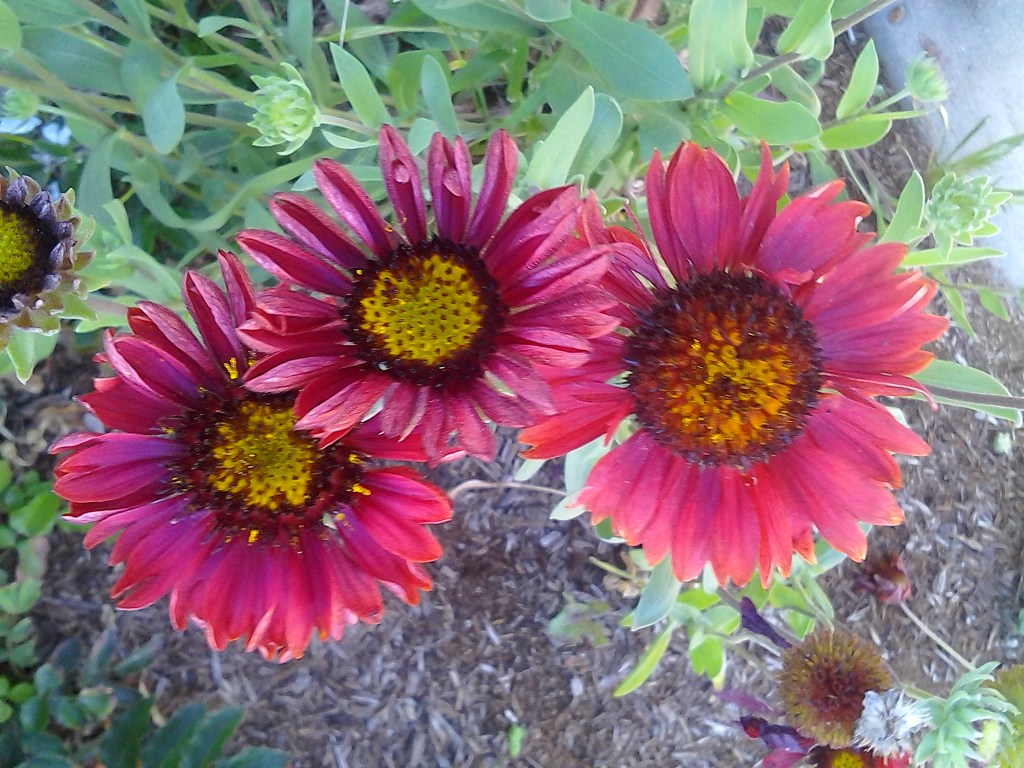
Blanket Flower

Blanket flower covers a flower bed.

The bright colors and patterns of blanket flower, Gaillardia, resemble those of blankets made by native American Indians. The daisy flowers are typically two different shades of red, orange, yellow, brown or yellowish white. Not many varieties bloom with single colors. Taller varieties can get almost two feet tall, with slender but sturdy stems that are good for cutting. The narrow leaves are mostly basal, so do not crowd bloom.

The more popular varieties of blanket flower are perennial. Healthy plants can slowly get quite broad, and can self sow their seed to spread a bit farther. Annual varieties can not get as broad, but often self sow more efficiently than perennial types do. Once it gets growing, blanket flower does not need much water. However, regularly watered plants are already blooming. Modestly watered plants wait until summer.

Calla

Few flowers are as elegant as callas.

If only it did not like such regular watering, the common white calla, Zantedeschia aethiopica, would be quite a sustainable perennial. Once established, it can be difficult to get rid of, particularly in well watered gardens. Even unwatered plants that die to the ground through dry summer weather are merely dormant and waiting for rain to regenerate and bloom.

The remarkably elegant blooms stand about two or three feet tall, each with a single spathe loosely wrapped as a flaring cone around a spadix that supports the indistinguishable diminutive flowers. The bright white spathe is often more than four inches wide, and can be twice as wide in shade. The spadix is only about three or four inches long, and as yellow as Big Bird. The spongy dark green leaves are about a foot or two tall.

‘Green Goddess’ blooms with a longer and recurved spathe with a green tip and margins. Colorful callas are actually different specie. All parts of all types of callas are incidentally toxic.

A Few Favorite Cut Flowers

Try unconventional cut flowers if you can.

Flowers add such variety of color and fragrance to the garden that it is no wonder that they are so popularly cut and brought from the garden into the home. Even though larger quantities of flowers can be purchased from markets or florists without depleting those blooming in the garden, growing our own can be so much more rewarding. We may not be able to grow all the varieties of flowers that commercial growers can grow in greenhouses or other climates, but we can grow many other varieties of flowers that commercial flower growers do not provide.

Many flowers can be grown specifically for cutting, like vegetables are grown to be harvested. Some, like cosmos and daisies, can be grown in such abundance in mass plantings that it is easy to cut a few without anyone missing them. Other flowers, like roses and New Zealand tea tree, are merely by-products of plants that also function as shrubs, vines, trees and even ground covers.

Peruvian lilies are some of the best cut flowers, not only because they last so long after getting cut, but also because they bloom so much through such a long season that there are usually enough flowers for the garden as well as the home. The taller and unfortunately rare types grown by commercial flower growers are better for cutting than the more common ‘garden varieties’ are.

Callas are likewise among the better prolific cut flowers, but only bloom white. The colored types are neither as prolific nor as reliable. Believe it or not, lily-of-the-Nile makes good cut flowers when they bloom white or blue in the middle of summer. They are just awkward because their blooms are so round.

Gladioli are good either as cut flowers or for color in the garden, but unless they are planted in large quantities, they are not prolific enough for both. Like vegetables, they can be planted in phases (in season) to prolong the bloom season. Unfortunately, they need to be planted annually because they do not often naturalize. Those that do naturalize will synchronize their bloom season after the first season.

Several types of iris bloom more generously, and some are happy to naturalize, but only a few types are good cut flowers like Dutch iris are. Some bearded iris wilt within hours of getting cut.

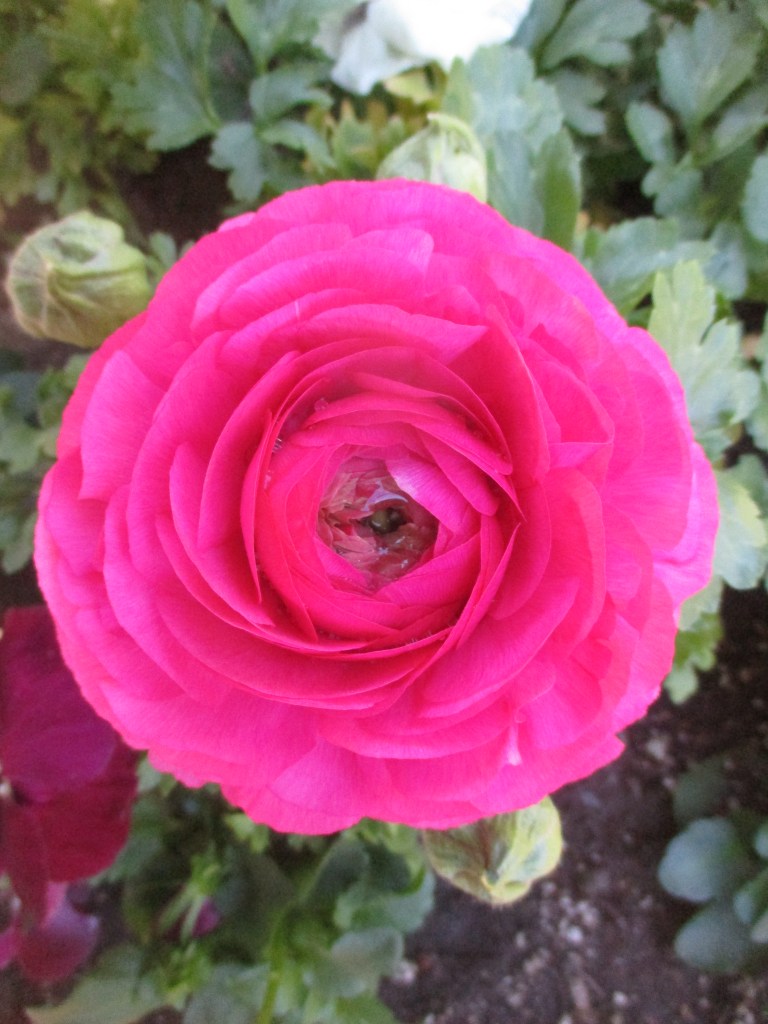
Ranunculus

Ranunculus enjoys mild weather through spring.

If their strange tubers got into the garden last autumn, ranunculus should be blooming by now. Although their schedule suggests that they crave winter chill like other spring bulbs, they merely want to disperse their roots early. Then, they can bloom as winter ends, and continue until spring weather gets too warm for them. They mostly finish prior to summer. 

If tubers did not get into the garden earlier last autumn, young ranunculus plants become available from nurseries late in winter. Although generally a spring annual, tubers, which go dormant by summer, have potential to regenerate perennially for subsequent springs. Digging and storing tubers through most of their dormancy might improve their potential.

Ranunculus bloom can be pink, red, orange, yellow, purple, cream or white. Flowers are plump and neatly dense with many papery petals, like little peony flowers. They stand on sturdy stems about half a foot to a foot high. Their finely textured basal foliage resembles parsley, but with a lighter color. Dormant tubers are tufts of short, plump and woody roots.

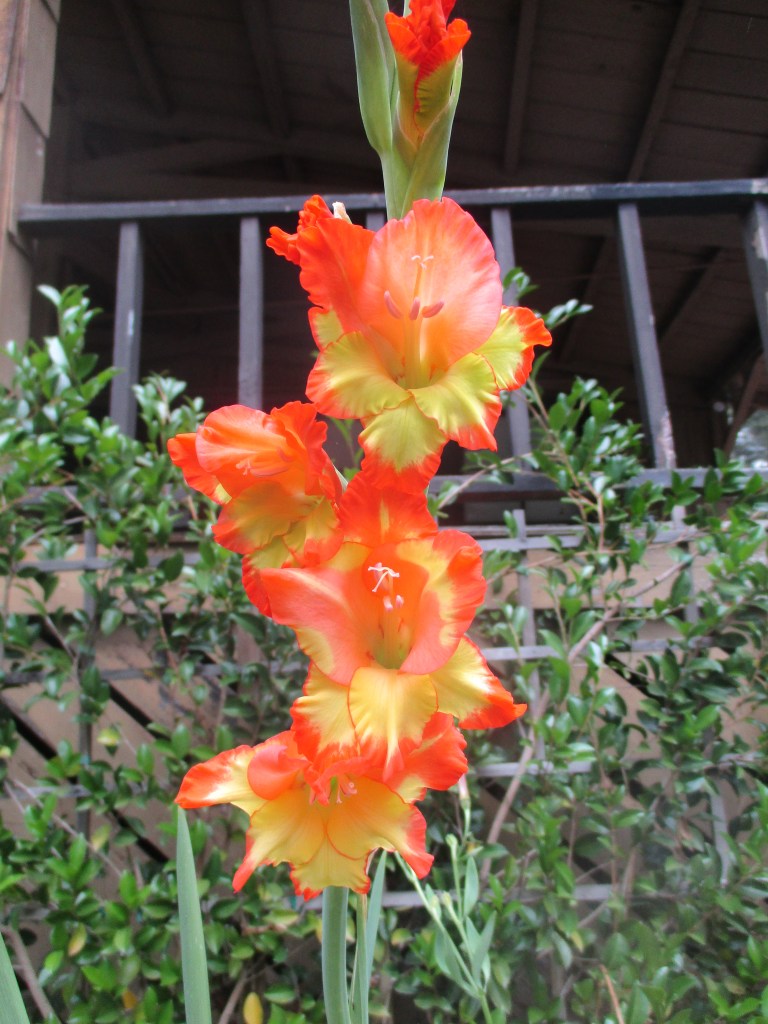
Gladiolus

Gladiolus are still just dormant corms.

Although they will not bloom until summer or autumn, gladiolus are in season now. Their corms, which are like bulbs, are now available from nurseries, and are ready for planting. Unlike earlier spring bulbs, they need no chill, and should not generate new foliage until warmer spring weather. Corms prefer to be at least four inches deep, in sunny situations. 

The most popular and common gladiolus, Gladiolus X hortulanus, are hybrids of several species. They bloom more impressively than their simpler parents, but are not as reliably perennial. Most corms bloom for only a single season, although some within each group may bloom for a second season or more. Blooms can get heavy enough to need staking. 

Bloom can be bright or pastel hues of any color except true blue, perhaps combined with another related color. Individual florets are not large, but they share their floral stalks with several similar florets that bloom upward from the bottom. Long and pointed leaves stand upright, flaring only slightly to the left and right. The tallest gladiolus can get six feet high.

Stock

Stock happens to excel at purpleness.

This is one of those annuals that could be a short term perennial if it gets the opportunity to do so. In most climates, stock, Matthiola incana, is a popular warm season annual that relinquishes its space to cool season annuals before it gets too worn in autumn. Locally, because it does not mind mild frost, it is more popular as a cool season annual for winter.  

Floral color ranges through both pale and rich pastels of purple, red, pink, yellow, cream and also pure white. Flowers may be single or double. In close proximity, bloom is richly fragrant. Foliage is light grayish green. Individual leaves are somewhat narrow. Removal of deteriorating floral stalks before they develop seed pods prolongs subsequent bloom.

Many garden varieties of stock stay relatively low and compact. Some may get no higher than a foot. Florist varieties that produce long stems for cutting might get as high as three feet. Overgrown plants get shabby after a primary season, but may regenerate from hard pruning. However, secondary growth is generally irregular and likely marginally reliable.

Dried Floral Material Worth Recycling

Yucca bloom produces interesting floral stalks.

Gardens might be colorful throughout the year here. There is not much time between the latest of the autumn flowers and the earliest of the spring flowers. Winter flowers are glad to compensate for the lapse. Of course, there are plenty of flowers in spring and summer. Nonetheless, dried flowers are more popular now that there are fewer flowers for cutting.

The quantity of flowers blooming within a particular season might not be proportionate to the quantity of flowers available for cutting. Flowers that bloom through winter, even if as abundant as spring or summer flowers, do not develop as fast. Harvesting too many bird of Paradise flowers depletes the limited supply before something else can replace them.

Deciduous foliage that provides spectacular color through autumn is no substitute for cut flowers. Nor is the majority of colorful bark that becomes more prominent through winter. Some colorful berries can function like cut flowers, but only if there are plenty to spare in the garden. Conventional dried flowers that grew last summer may be useful about now.

For the venturesome and resourceful, unconventional dried flowers and other dried plant parts can also be fun. Such items, unlike statice, straw flower, lavender and other familiar dried flowers, might be byproducts of gardening. They might be derived from detritus that should otherwise go to compost or greenwaste. Some might even be products of weeds!

Pampas grass, both garden varieties and the invasively naturalized type, produces bold blooms that dry quite well. Because the leaves can cause such nasty paper cuts, flowers might be easier to harvest from a distance, with a pole pruner. Hair spray can contain the fuzz, so that it does not disperse indoors. Cat tails, if still intact, are compatible with them. 

Floral stems of lily of the Nile, New Zealand flax, and some species of Yucca are striking even after bloom. After deadheading, they can become flowerless dried flowers. Fruiting structures are no problem to remove. If within reach, some palms may provide distinctive bloom trusses. Floral design can be as imaginative as gardening and landscape design.