Gathering Seed To Grow Later

Variegation is generally nontransferable by seed.

Deadheading, or the removal of deteriorating bloom, is contrary to the purpose of bloom. It conserves resources for subsequent bloom or vegetative growth. It neatens associated vegetation. Deadheading is certainly justifiable. However, it eliminates most seed before it can develop. Seed is the priority of bloom. Gathering seed can be a good compromise.

Techniques for gathering seed are as variable as bloom and subsequent seed. For some popular annuals and perennials, it is as simple as deadheading. Their seed develops as fast as their bloom deteriorates. Seed is easy to shake from dried stems of rose campion, campanula and columbine. Cut stalks of lily of the Nile must dry for their seed to mature.

Gathering seed from vegetable fruits can be a bit more complicated. Some are mature as soon as their containing fruits ripen. For example, seed from ripe chile peppers are ready for drying and storing immediately. However, zucchini must mature too much to be edible for its seed to finish developing. Furthermore, squash seed is likely to not be true to type.

This is often a consequence of cross pollination from other varieties of the same species. Progeny of very different parents inherit genetic qualities of both parents. Similarly, many extensively bred varieties exhibit reversion. Their progeny can be more similar to distant ancestors than direct parents. Reversion may be progressive through a few generations.

Reversion is less likely among hybrids only because most hybrids are sterile. Gathering seed from them is generally either futile or impossible. Some hybrid canna develop seed capsules that contain no viable seed. Seedlessness is an advantage of seedless hybrid watermelon. Viable seed of the few hybrids that could produce it is wildly unpredictable.

Most mutations, such as variegation or dwarfism, are not inheritable. Seed of variegated Kaffir lily therefore grows into unvariegated specimens. Some seedlings mature through a juvenile phase prior to bloom. This is why avocado seedlings grow so lean without fruit in their first few years. Ultimately, gathering seed is most practical for simple wildflowers, annuals, perennials and some vegetables.
Volunteering at the San Jose Heritage Rose Garden

The San Jose Heritage Rose Garden is the most complete collection of ancestral roses in the World!

(This article is recycled from several years ago, so information about events is now outdated.)

            No matter how careful I am to avoid spending any money at Spring in Guadalupe Gardens, I have never escaped without purchasing something, or a few or even several somethings that I did not need but really wanted for my garden. My plunder was relatively meager this year, but did include three climbing roses from Liggett’s Rose Nursery.

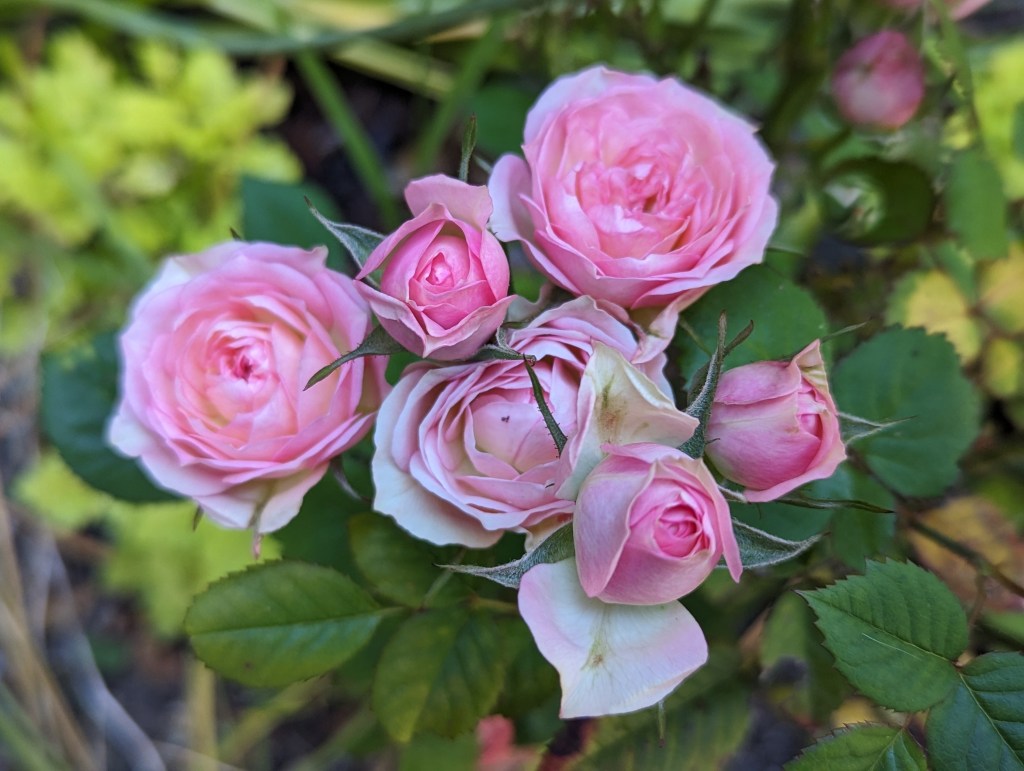
            One is a ‘Renae’ rose that blooms all summer with remarkably fragrant pale pink blooms. Its fragrance is so obnoxiously strong though; that I gave the plant to my neighbor, and told him that it ‘smells good’. It really does smell good, albeit from a distance, such as in my garden.

            The other two roses are ‘Lamarque’, with abundant fluffy white blossoms all summer. The robust fragrance is fortunately more tolerable. I really like the monstrous canes that are already reaching out to cover a bare embankment.

            The two ‘Lamarque’ roses are manageable so far. I really do not know how manageable they will be next year though. It would be nice if they could go wild, and only get pruned as they encroach into trees and the driveway. However, roses perform best if properly maintained. I will want to be able to prune off deteriorating flowers to promote subsequent bloom. This process of ‘dead heading’ will not be so easy if I can not reach all the canes.

            The Heritage Rose Garden has a similar challenge. Although most of the plants are within reach of anyone wanting to prune them, there are simply too many plants for a herd of goats to remove all the spent blooms from. Since goats are not such a feasible option in a rose garden, volunteers are invited to attend a Rose Deadheading Blitz from 5:00 to 7:30 p.m. every second Tuesday of each month, beginning June 8 and continuing until September 7.  

            No experience is needed, either for deadheading the roses or for swilling the ice cream served afterward. Volunteers should bring shears and gloves, and wear closed-toe shoes. Shears are available from the staff if necessary. 

            The Heritage Rose Garden is located on Taylor Street at Spring Street, just east of Coleman Avenue in San Jose. Volunteers can get more information or sign up by contacting Volunteer Coordinator, Lucy Perez by telephone at 298 7657 or by email at lperez@grpg.org

            My bounty from Spring in Guadalupe Gardens of past years includes many succulents, particularly a few specie of Crassula that were frozen by frost early last winter. Their recovery has been delayed by the lingering cool and rainy weather through spring. Now that I am removing the last of the sludge that remains from the previously frozen leaves and stems, I am finding where snails have been hiding and breeding. Even though the sludge is harmless, the snails within are not. I probably should have cleaned it out earlier.

            Foliage of fruit trees, roses or other plants that has been infected with peach leaf curl, powdery mildew or any other disease should likewise be removed and disposed of. Either next spring or later this year, secondary infection is much more likely without sanitation.

Deadheading Redirects Resources For Growth

Deteriorating flowers lose their appeal fast.

Early spring bulbs that went into their gardens last autumn are now blooming. Some are already done. Some summer bulbs should begin to bloom as the last spring bulbs finish. A few of them might bloom as late as autumn. Ultimately, like the earliest of spring bulbs, all eventually finish. As they do, their deteriorating flowers will necessitate deadheading.

Deadheading is simply the removal of deteriorating blooms. For many species, it diverts resources from fruiting into other growth. Many species can utilize diverted resources for subsequent bloom. Many become more intent on blooming again after deprivation of any prior fruiting. Spring bulbs instead utilize all their diverted resources for new bulb growth.

For spring bulbs, it is the most practical response to deadheading. Most bloom only once annually. Therefore, they can not divert resources directly to subsequent bloom. Instead, they prioritize vegetative growth of bulbs to grow and bloom for the next spring. They are patient. Reproduction remains their priority. They merely regroup before another attempt.

Because of extensive breeding, many spring bulbs can not produce viable seed anyway. Of course, this does not prevent them from trying. Even seeding or fruiting structures that contain no viable seed can be unappealing. For them, deadheading is merely aesthetic. Some complicated hybrids that might produce viable seed are unlikely to be true to type.

Elimination of viable seed that is not true to type is as practical as it is aesthetic. Without deadheading, such seed can grow into feral progeny. Such ferals may be more similar to remote ancestors than to their direct parents. They can be aesthetically inferior, but more prolific. Eventually, less desirable feral bulbs may displace their more desirable parents.

Because they are small but abundant, some freesia avoid deadheading. Resultant ferals are more fragrant but less colorful with pale white bloom. They are more prolific, so might eventually displace their parents. Common grape hyacinth and snowflake are too florific to deadhead, but are true to type. Actually, they can become invasive in some situations. Montbretia are very likely to be invasive.

Deadheading Can Enhance Bloom

Without deadheading roses divert resources from continued bloom to fruiting and seeding.

It takes quite a bit of effort for flowers to bloom. It takes even more effort and resources for pollinated flowers to produce seed and the fruiting structures that contain the seed. If the seed of certain aggressive plants get dispersed, we need to put even more effort into pulling up the seedlings. It just never seems to end!

Removal of deteriorating flowers, commonly known (even by those of us who missed that generation) as ‘deadheading’, can eliminate so much of this extra work. Not many plants benefit from deadheading; but most that do are really grateful for it. Others that do not care one way or the other simply look better without their deteriorating flowers.

It is of course impossible to deadhead large flowering trees or vast areas of ground cover. Regularly shorn hedges should never need deadheading because they never get the opportunity to bloom or develop fruit. Plants that are appreciated for the ornamental quality of their fruit should of course not be deadheaded.

Most roses get deadheaded as they bloom because the development of their fruiting structures, known as ‘hips’, takes enough resources to compromise subsequent bloom. Removal of these hips therefore promotes bloom. Only the few types of roses that are grown for their showy hips should not get deadheaded. Phlox, daisies, zinias, dianthus and all sorts of plants with long continual bloom seasons likewise benefit from deadheading.

Some types of iris that produce seed perform better with deadheading, not because they will bloom again during the same season, but because they can divert resources to vegetative growth (like rhizomes and foliage) that will sustain bloom during the following year. Most bearded iris (that do not produce seed) and lily-of-the-Nile do not seem to care if they get deadheaded, but are generally more appealing without their finished flower trusses.

Four o’ clocks can not be deadheaded without also removing developing flowers, so can only be allowed to bloom and throw their invasive seed all over the garden. It is easier to pull their seedlings later. We have a bit more control over crocosmia. Even though they do not need to be deadheaded, they are less invasive and more appealing without their scraggly brown stalks and seed capsules.

Bloom Is Bountiful For Spring

Many flowers bloom only for spring.

Bloom that was delayed by the unusually wintry winter is making up for lost time. Spring bulbs, flowering cherries and deciduous magnolias were amazing. Wisterias and lilacs continue their pastel display within some climates. More flowers bloom during springtime than at any other time of year. Even roses of summer will begin their performance soon.

Pollination is the priority of all flowers. The majority of flowers exploit wind for pollination. Because they need not attract pollinators, they are neither very colorful nor very fragrant. Colorful and fragrant flowers are the minority that compete for the attention of pollinators. This includes the same colorful and fragrant flowers that are desirable for home gardens.

Whether reliant on wind or pollinators for pollination, flowers adhere to a strict schedule. Some colorful and fragrant flowers want to be receptive while their pollinators are active. However, pollinators are more likely to adjust their schedules to exploit favorite flowers. After all, there is another major incentive for spring bloom. Seed needs time to develop.

Pollination is the priority of all flowers because it is how they generate seed. Some seed develops fast enough to grow into new plants within the same year. Some annuals can actually procreate for a few fast generations annually. Most seed develop slower though. They mature during summer, overwinter, and ultimately grow during the following spring.

For now, garden enthusiasts should enjoy the most abundant bloom of the year. That will not require too much exertion. Fresh fruit of summer will develop later. Some flowers that deteriorate without producing fruit may justify deadheading. This redirects resources for vegetative growth, and eliminates any unwanted seed. Besides, it might be a bit neater.

The most profuse spring flowers generally bloom only once annually. They will not do so again until next spring. Some less profuse bloomers may repeat with later bloom phases through summer. Of course, some flowers bloom within other seasons between summer and even winter. Their individual schedules are appropriate to the climates that they are originally native to.

Deadheading Conserves Resources

If not deadheaded, roses can put a lot of resources into production of seed and hips.

It takes quite a bit of effort for flowers to bloom. It takes even more effort and resources for pollinated flowers to produce seed and the fruiting structures that contain the seed. If the seed of certain aggressive plants get dispersed, we need to put even more effort into pulling up the seedlings. It just never seems to end!

Removal of deteriorating flowers, commonly known (even by those of us who missed that generation) as ‘deadheading’, can eliminate so much of this extra work. Not many plants benefit from deadheading; but most that do are really grateful for it. Others that do not care one way or the other simply look better without their deteriorating flowers.

It is of course impossible to deadhead large flowering trees or vast areas of ground cover. Regularly shorn hedges should never need deadheading because they never get the opportunity to bloom or develop fruit. Plants that are appreciated for the ornamental quality of their fruit should of course not be deadheaded.

Most roses get deadheaded as they bloom because the development of their fruiting structures, known as ‘hips’, takes enough resources to compromise subsequent bloom. Removal of these hips therefore promotes bloom. Only the few types of roses that are grown for their showy hips should not get deadheaded. Phlox, daisies, zinias, dianthus and all sorts of plants with long continual bloom seasons likewise benefit from deadheading.

Some types of iris that produce seed perform better with deadheading, not because they will bloom again during the same season, but because they can divert resources to vegetative growth (like rhizomes and foliage) that will sustain bloom during the following year. Most bearded iris (that do not produce seed) and lily-of-the-Nile do not seem to care if they get deadheaded, but are generally more appealing without their finished flower trusses.

Four o’ clocks can not be deadheaded without also removing developing flowers, so can only be allowed to bloom and throw their invasive seed all over the garden. It is easier to pull their seedlings later. We have a bit more control over crocosmia. Even though they do not need to be deadheaded, they are less invasive and more appealing without their scraggly brown stalks and seed capsules.

Catch Weeds Before They Go To Seed.

Seed pods not only look unkempt and inhibit continued bloom, but can disperse too many seeds of otherwise worthy plants.

It may seem futile to pull certain weeds this late in the season. Those in unrefined parts of the garden that get little or no irrigation might be so dry that they only deteriorate and scatter their abundant seeds when pulled. The soil may be so dry that roots are difficult to extract, especially since the drying foliage now separates from the roots so easily. The only hope is that removal of dying weeds might eliminate at least some of the seeds for the next generation of weeds.

Foxtail and burrclover are not only annoying, but are also dangerous to dogs and cats as their seeds mature and dry. After all, the seeds rely on animals for dispersion, so intentionally stick to fur. The problem is that seeds can get stuck in more than fur, and sometimes get into ears, eyes, nostrils and elsewhere. Seeds from a few other weeds can do the same.

Cheeseweed is not a dangerous weed, and is relatively easy to eradicate. The roots even stay attached to the stems when they get pulled. The problem with leaving them to mature is that they become infested with rust (a fungal disease) that spreads to other desirable plants. Saint John’s wort, snapdragons and roses are particularly susceptible to rust.

Feral Jupiter’s beard and montbretia that grow where they were not intentionally planted are often allowed to bloom before getting pulled. However, after bloom, stems separate so easily from roots that most of the roots remain to regenerate as soon as they are able. If left long enough after bloom, both Jupiter’s beard and montbretia sow seeds to infest even more.

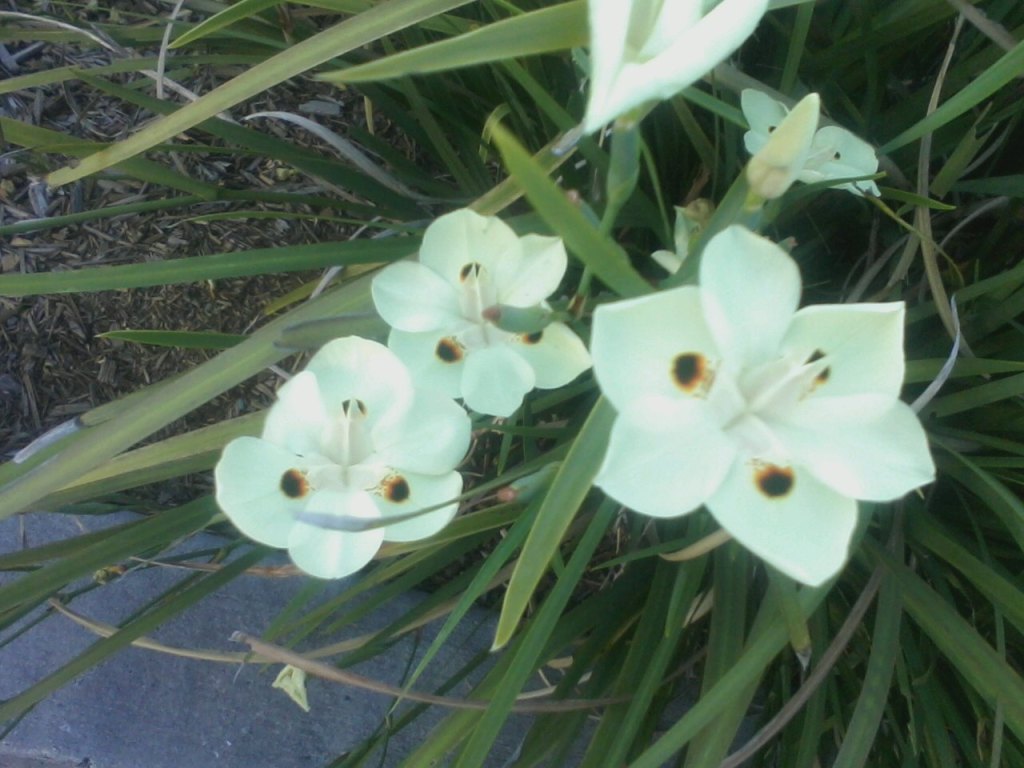
Fortnight lily (or African iris) are not often a weed, but can get that way if their seed capsules are not removed before they mature and pop open. Besides, development of these capsules diverts resources from continued bloom. It is best to remove the capsules before they get floppy, and to remove as much of the finished flower stem as possible without removing stems that have not yet bloomed.

Both dusty miller and coleus are grown for their distinctive foliage but not their bloom. Flowering stems stretch and exhibit inferior foliar color and texture, so can actually get snipped before they bloom.

Deadhead Spring Bulbs After Bloom

Most spring bulbs are done blooming.

Fruiting warm season vegetables that are now in season, such as squash, tomatoes and beans, are more abundant with regular harvest. Plants that produce such fruit respond to their natural obligation to generate seed. Deprivation of the fruit that contains their seed stimulates production of more. Similarly, it is helpful to deadhead some flowering plants.

Deadhead grooming is a type of pruning, even if it does not involve pruning shears. It is, in simple terms, the removal of deteriorating flowers after bloom. For some plants, it only improves aesthetic appeal. For many others, it redirects resources from seed production into subsequent bloom, or vegetative growth that eventually sustains subsequent bloom. 

Now that early spring bulbs are finishing bloom, it is time to deadhead them. Most bloom just once annually, so without the distraction of seed production, will prioritize vegetative growth into new bulbs to bloom for next year. Many of the summer bulbs that bloom later bloom more than once annually, so divert conserved resources into subsequent blooms.

However, many cultivars of spring bulbs are too extensively hybridized to produce viable seed. For them, deadhead grooming merely eliminates unappealingly deteriorated floral carcasses, while their foliage continues to sustain the development of new bulbs for next year. The foliage of most deteriorates slowly through warming spring or summer weather. 

Some extensively hybridized modern cultivars are not sterile though. Some can produce feral progeny that are less appealing than the hybrid parents, but are vigorous enough to displace them. Deadhead grooming eliminates most or all of the unwanted feral seed. Of course, for wild grape hyacinth and snowdrop, seed can be left to develop and disperse.

Established colonies of feral freesias can be allowed to make seed for more of the same. However, hybrid freesia benefits from deadhead grooming to eliminate feral seed. Dutch iris, narcissus, daffodil, tulip, hyacinth and lily can also benefit from deadhead grooming, for a variety of reasons. Some are sterile. Some are not. Some get shabby. Some do not.

Many Perennials Want Seasonal Grooming

Where frost is not a major concern, old canna foliage can be cut back as new growth develops.

Here on the west coast, autumn and winter weather is so mild that the native coral bells are already starting to develop new foliage on top of the old foliage from this last year. Technically, they are evergreen, so the old foliage does not need to be shed; but if it is not too much to ask, some types look better with a bit of grooming.

Other perennial plants that are from climates with stronger seasons and colder winters are not quite so evergreen. Many shed all of their foliage and are completely bare for at least part of the winter. Only a few, like cyclamen, are at their best through autumn and winter.

Dried watsonia foliage should be removed now if it has not been removed already. It is not so easy to pluck off like gladiola foliage is, so it should be cut off with shears. Because new foliage for next year develops before the old foliage of this past year is completely brown, it is often necessary to cut the old a few inches above the ground in order to avoid damaging the new.

The so called ‘evergreen’ daylilies can be even messier. New foliage is rather delicate, so it is easily tattered by the removal of old foliage. The ‘deciduous’ types may seem to be less appealing because they are bare for part of autumn and winter, but are so much easier to groom by simply removing all of the deteriorating old foliage as soon as it separates easily from the roots.

Deteriorating flowers can be removed from cannas; but their lush foliage can stay until it starts to deteriorate later in winter. Even if it survives winter, it should eventually be cut to the ground as it gets replaced by new growth in spring.

The many different iris have many different personalities. Most should be groomed sometime between summer and late autumn, although Dutch iris were groomed much earlier. Bearded iris that do not get divided can be groomed simply by plucking off big old leaves to expose smaller new shoots below.

Some dahlias bloom until they get frosted. Most though, are already finished. They do not need to be cut back all at once, but can be cut back in phases as leaves and stems dry and turn brown.

Six on Saturday: Naked Ladies And Neighbors

Naked lady, Amaryllis belladonna, is common beyond the landscapes here. Most live on roadsides, likely because that is where we relocate superfluous bulbs, and toss seed after deadheading. All the flowers of a big colony outside the gates at our industrial yard got harvested as they came into bloom this year! Another colony at the historic depot blooms most spectacularly, and was just deadheaded after I got these pictures. Since they were finished with bloom, and still lack foliage, there was not much to get six pictures of. That is why I got two pictures of their neighbors with a third picture of where former neighbors had been.

1. Sarcococca ruscifolia, which does not do well elsewhere, became an exemplary foundation hedge here on the historic depot. Why is it all gone now? A sewer to a septic system was replaced.

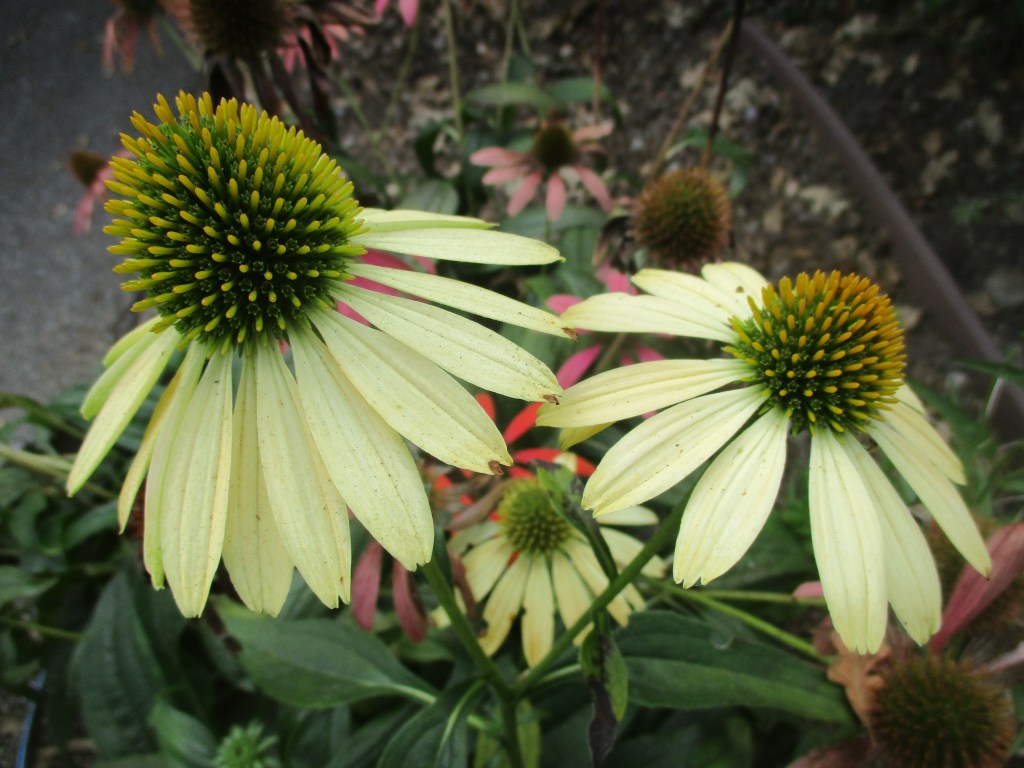
2. Echinacea purpurea continues to bloom on the front of the same historic depot. It is prettier than that recently exposed mud between the foundation and the driveway on the opposite side.

3. Amaryllis belladonna continues to bloom, sort of. The majority finished bloom a while ago. Their many bare stems are visible in the background. A few small colonies bloom distinctly later.

4. Amaryllis belladonna otherwise looks like this now. The stems that finished blooming are slightly taller than those that continue to bloom slightly later. Seed will get tossed on the roadside.

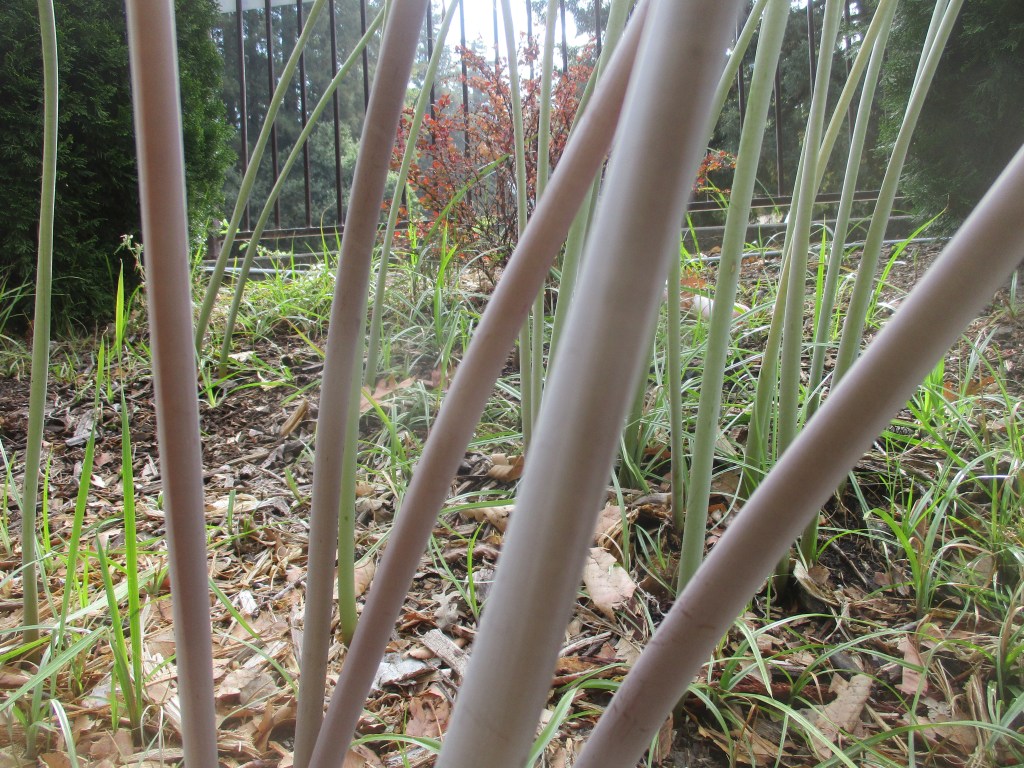
5. Amaryllis belladonna that bloom later have pale brownish stems. The five pale brownish stems in the foreground here continue to bloom. The greener stems in the background are finished.

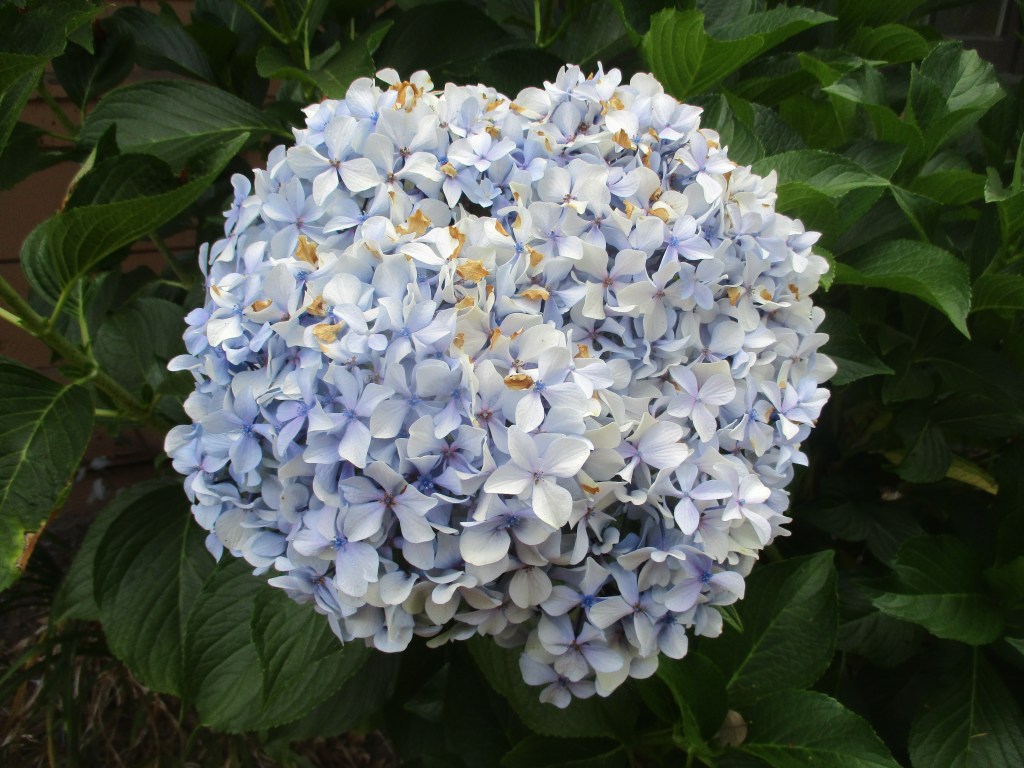
6. Hydrangea macrophylla is unusually happy in front of the historic depot. This floral truss is about a foot wide. There would be more like this, but deer ate them and the roses before bloom.

This is the link for Six on Saturday, for anyone else who would like to participate: