
‘A Tree Grows In Brooklyn’ documents the resiliency and invasiveness of the common but typically undesirable tree of Heaven, Ailanthus altissima. Once a single female tree get established, the extremely prolific seeds get everywhere, including cracks in concrete. The resulting seedlings conquer wherever they are not dug out. If cut down, they just resprout from the roots.
Male trees smell horrible while blooming for about a month in spring or summer. They are pollinated by flies, so naturally smell like what flies like. The tiny yellowish or tan flowers hang on panicles that can be a foot and a half long. Female blooms are not as big, prolific or objectionably fragrant. However, stems, leaves and all other parts of both genders smell rotten when handled.
Tree of Heaven, which has earned the alternative names of ‘tree of Hell’, ‘stink tree’, ‘ghetto elm’ and ‘ghetto palm’, is no longer a tree that gets planted by choice. It is typically a tree that plants itself, and on rare occasion, happens to grow into a good situation. They should not be allowed to overwhelm more desirable trees, or get too close to concrete or other damageable features.
Young trees grow very fast to about forty feet tall. Older and slower trees do not get much taller, although sheltered trees can get twice as tall, with elegant gray bark. They do not live much more than fifty years. The big pinnately compound leaves are surprisingly pretty. On vigorous shoots, individual leaves can get as long as two and a half feet, with leaflets as long as six inches.



 Climate is why the European larch, Larix decidua, is so rare here. It prefers cooler weather in both winter and summer, and more humidity. Foliage can roast if too exposed through summer. Small trees that are partly sheltered or partly shaded by larger trees have the best color and foliar density. Larch are innately reliant on somewhat regular watering, so are not drought tolerant. The mildly cool weather of autumn is enough to brown the formerly bluish foliage, which falls shortly afterward.
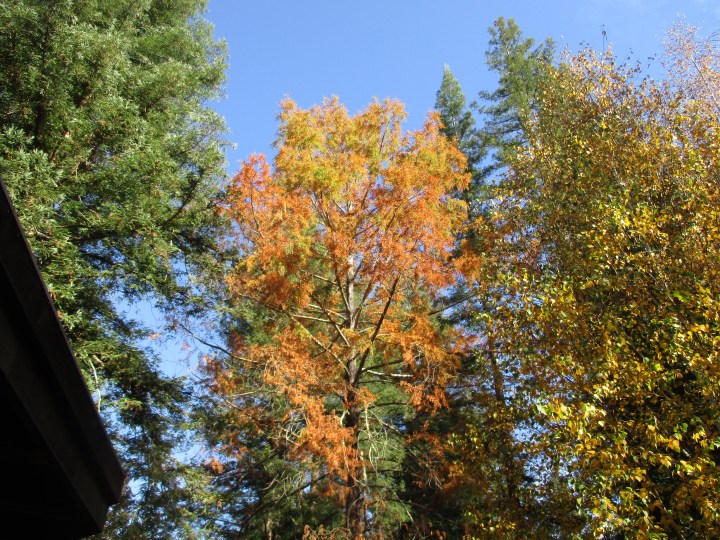 Well, that is certainly a contradiction of terms. One might say it is an oxymoron. Decades ago, it really was how we classified what we now know more simply as ‘deciduous conifers’. There are not many of them. Ginkgo is a gymnosperm like conifers are, but is not really a conifer. Otherwise, there are only five other types of deciduous conifers, which defoliate through winter.
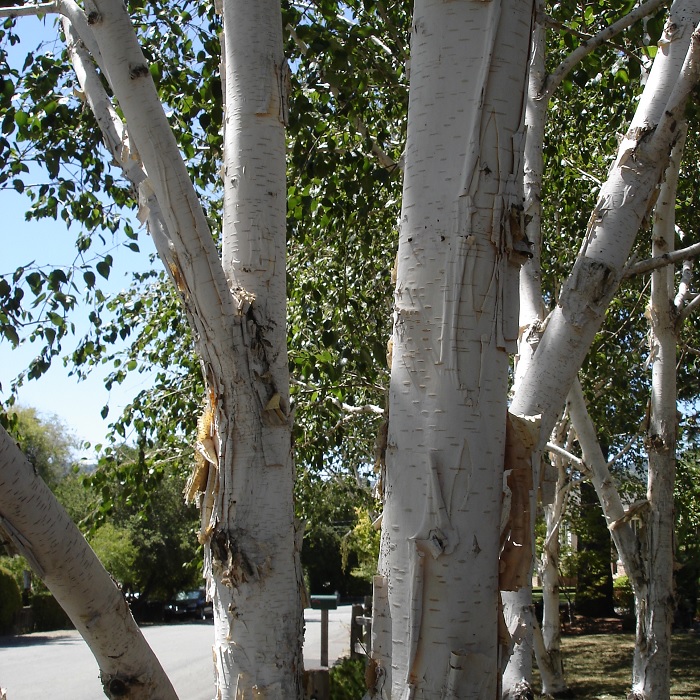
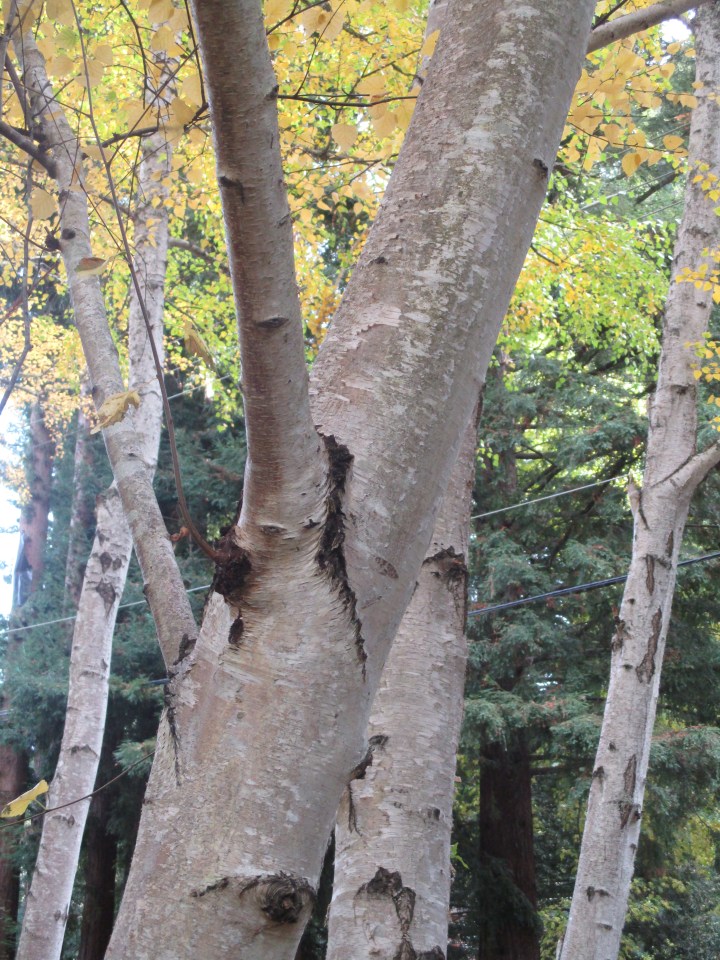 Like a flower girl scatters rose petals ahead of a wedding procession, European white birch, Betula pendula, tosses its small deltoid leaves soon after turning soft yellow with autumn chill. Color may not last long on the trees, but becomes a delightful mess for those who appreciate such assets. The primary allure though, is the slender strikingly white trunks, accented with black furrowing.
 It is almost never planted in home gardens, but the native red willow, Salix laevigata, has a sneaky way of getting where it wants to be. The minute seeds go wherever the wind blows them. Because it is a riparian tree, red willow prefers well watered spots. If not detected and pulled up in the first year, it can grow rather aggressively, and overwhelm more desirable plants, although the somewhat sparse canopy makes only moderate shade.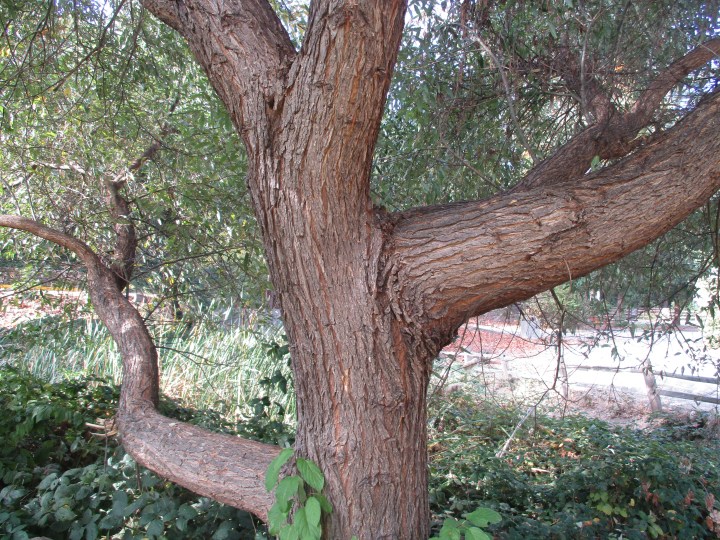
 Tony Tomeo