Landslide

This is the other side of the landslide that I posted a picture of for Six on Saturday a few days ago. As I mentioned then, it looked worse from this side. I suspect that it came down immediately prior to my arrival. No one else was aware of it, and there was no indication that anyone had tried to get around it or move any of its debris. It was just past my driveway, which is where Carson, the Roadmaster, was parked. However, because there are two households beyond it, the debris needed to be removed promptly. I did not want anyone else to do it, though. I wanted to separate the stone from the soil because I can use the stone to construct low retaining walls. Also, I wanted to use the soil to fill low spots within parking spaces at the top of the driveway. Although these low spots are very close to where the soil and stone was, and it should have been very obvious that soil could have been used to fill them, I know from experience that few put much effort into performing such a tasks in an efficient manner. Actually, they often seem to put significant effort into inefficiency. For example, the mound to the far right of the picture is debris from an landslide that occurred earlier. It is directly adjacent to a low spot that remains low because no one bothered to put any debris into it. So, now, there is a high spot directly adjacent to a low spot. Large stones were pushed over the edge, where they rolled into a portion of my garden below, bashed bark from trees, and are now where I do not want them to be. I hoped to avoid such problems with this landslide.

Weed Abatement Beyond Refined Gardens

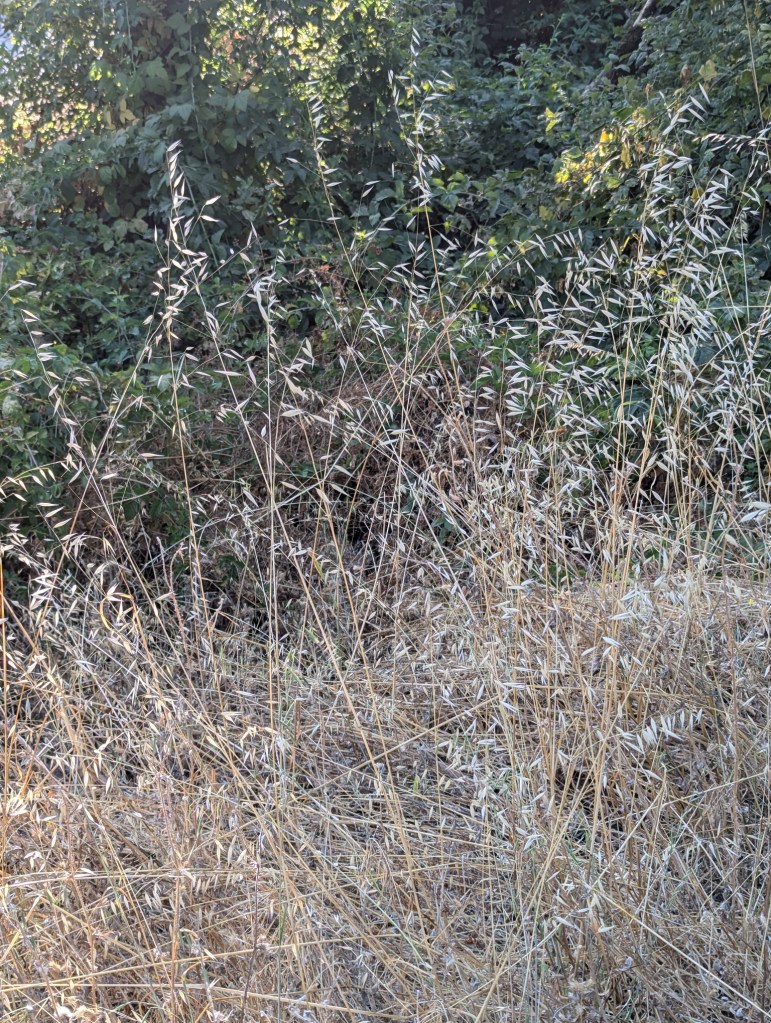
Dry weeds can be very combustible.

Gardening involves weeds. Gardening outside of refined gardens involves more weeds. A few of such weeds are native species which grow where they are undesirable. Most of the most aggressive are naturalized exotic species. Collectively, they are an unpleasant consequence of unmanageable external biodiversity. They necessitate weed abatement.

Weed abatement is a standard procedure within refined gardens. Most know it simply as weeding. Ideally, it is harmless to desirable vegetation. It may be a relatively simple task where desirable vegetation excludes weeds. Also, weeds are less abundant where they lack sources of seed to regenerate. Timely weeding should eliminate much of their seed.

Unfortunately, no garden is isolated from external influences. Weed seed sneaks in from uncultivated spaces, adjacent gardens or beyond. Suburban and rural gardens might be close to wildlands or forests. Many of such weed seed sources are beyond the control of their victims. Some are merely easy to ignore because they are out of view or not in use.

For some unused or unseen areas, weed whacking can be more practical than weeding. It entails cutting undesirable vegetation almost to grade with a motorized weed whacker. Manual weed whackers, although rare, are not extinct. Weed whackers are not selective. They can sever desirable annuals or perennials that mingle with undesirable vegetation.

The primary advantage of weed whacking is that it is fast and efficient. With good timing, it eliminates bloom or developing seed prior to dispersion of seed. Diminishment of seed inhibits subsequent proliferation, and is much safer for pets. Foxtail seed are notoriously hazardous. Besides, overgrown weed vegetation becomes a fire hazard as it desiccates.

Viable basal stems and roots that remain after weed whacking are not much of an asset. Many types of perennial and biennial weeds regenerate from such growth. However, to a very minor degree, such vegetation may contribute to healthy biodiversity. It may sustain some beneficial insects and soil microorganisms. Also, it can inhibit surface soil erosion.

Horridculture – Horrid Weather

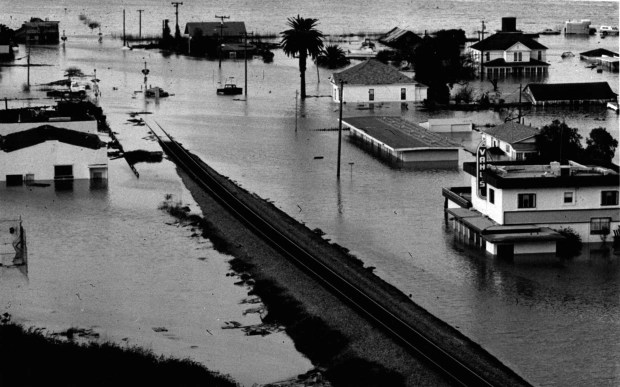
Alviso in 1983

This is no horticultural gripe, as is traditional here on Wednesday. Actually, it is not much of a gripe at all. It is merely a brief description of the unpleasantries of the current situation here.

Rain is predicted to resume prior to two this morning, and continue almost until tomorrow evening. It is expected to be remarkably voluminous. Strong wind that begins about eleven is expected to continue for a bit more than a day, until about two tomorrow. The ground is already saturated from the major storm on New Year’s Eve, and minor rain afterward. Rain may pause only for Friday, but may then resume for the foreseeable forecast.

This weather could be the worst since the winter of 1982 and 1983. If so, the results would be worse now than they were then. So many more people live here and nearby now. Flooding, mudslides and everything that stormy weather causes will affect many more people than ever before.

The area across the road from here is to be completely evacuated in the morning because of expected flooding. It already flooded on New Year’s Day. A parking lot nearby is already full of cars from that neighborhood.

The burn scar from the CZU Fire two years ago has not yet recovered, so is unusually susceptible to erosion and mudslides.

This sort of weather may be no more than what is normal in ‘average’ climates. It is just more than we are accustomed to in the mild climate here. As I schedule this to post at midnight in about a quarter of an hour, the weather is still pleasant, without indication of what is predicted.

I should get some sleep now. The crew and I will likely be very busy in the morning, and exhausted, cold and wet by noon.

Utilitarian Garden Features Became Aesthetic

Nasturtium used to be more utilitarian.

Gardening is fun. Furthermore, gardens are pretty. Some gardens also produce fruits and vegetables. Not very long ago, production of fruits and vegetables was more of a priority for more gardens. Some big gardens generated firewood and a bit of forage for livestock. Contemporary abundances allowed gardening to become more aesthetic than utilitarian.

Such abundance may not seem so apparent while so many of society could benefit from a bit more. People work more than ever to earn resources to purchase produce that they can not grow in their gardens while working so much. It has become more feasible to do so. Landscape maintenance is just another expense that many would prefer to eliminate.

Nonetheless, some popular features within modern home gardens evolved from formerly utilitarian features. Many such utilitarian features were common within the infrastructures of home gardens prior to the development of any modern technology that replaced them. Some were popular only because such technology was either expensive or uncommon.

Shade trees are among the most traditional and perhaps more recognizably utilitarian of landscape features. Although, even they have evolved. With modern air conditioning and insulation, their shade is less important than their aesthetic appeal. Window screens and rain gutters are also modern technologies that made particular garden features obsolete.

Window boxes, which are now mere ornamental features, were originally popularized for aromatic vegetation, to repel insects from windows. Rosemary, nasturtium, ivy geranium and petunia had always been some of the more popular repellent plants for this purpose. They do not obscure much sunlight as they cascade delightfully outward and downward.

Foundation plantings, which now merely soften the perpendicularity of vertical walls and horizontal garden spaces, were also utilitarian features. Compact and resilient shrubbery or perennials inhibited erosion caused by rain falling from eaves above. They obstructed splattering mud from below also. Indian hawthorn and lily of the Nile were quite effective. They could survive through summer without much irrigation, but then survive excessive moisture through winter.

When It Rains, It Pours

P00418K-1
Mudslide!

The only reason we developed a small vegetable garden here this year is that we have been unable to go to work for about a month. Without my second most time consuming employment, I had time to clear a small unused space (which was not nearly as simple as that sounds) and sow seed for vegetables. It was a late start a month ago, but not too late.

In fact, there was still time to do it before the last storm to go through. I know that sounds trivial, but as a Californian who is accustomed to gardening in a chaparral climate, and sometimes where there is no water available, planting prior to a storm ‘seems’ to be rather important. I know it is not. Water is available here. Otherwise, I would not grow vegetables.

Not only was there a storm, but there was a second storm later! Of course, it is not really that simple. The first light duty storm was nice, and soaked things sufficiently. Then the weather stayed strangely cool for this time of year. Nothing germinated. Then the second storm was brief but torrential enough to erode all of the recently sown seed right out of the new garden!

It was too comical for me to be too annoyed by it. I only needed to see what survived the erosion so that I could replace what did not. I almost replaced everything anyway, just because I was that certain that nothing survived.

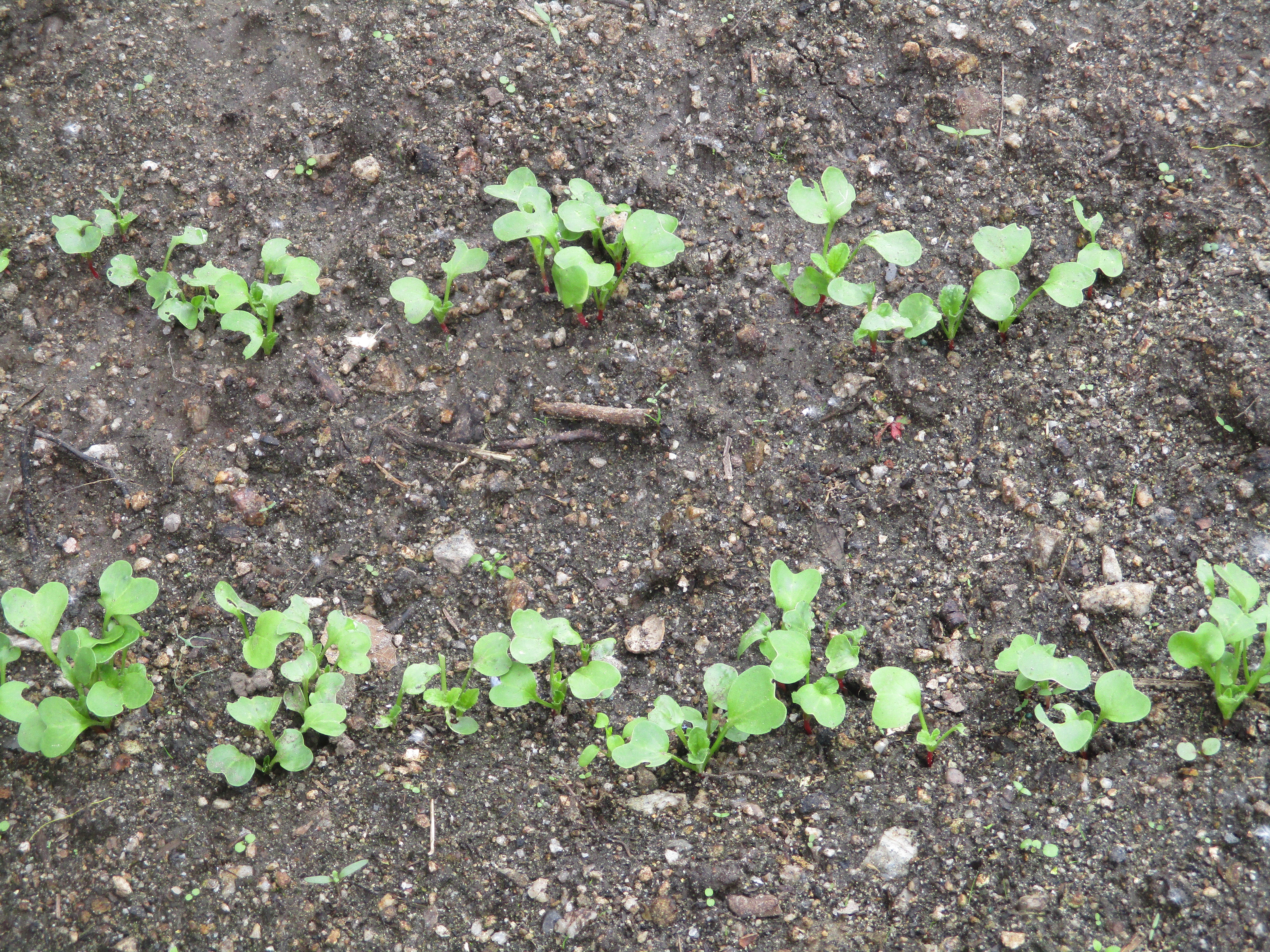
Well, as it turned out, not much was missing! The garden got a slow start, and was delayed again by cool weather, but somehow seems to be recovering nicely. Even some of the very old seed that I did not expect to be viable has germinated.

P00418K-2
A late batch of radish somehow survived.

Now, I must go work in the garden.

P00418K-3

P00418K-4
Late but ready to go.

Six on Saturday: Mudslide


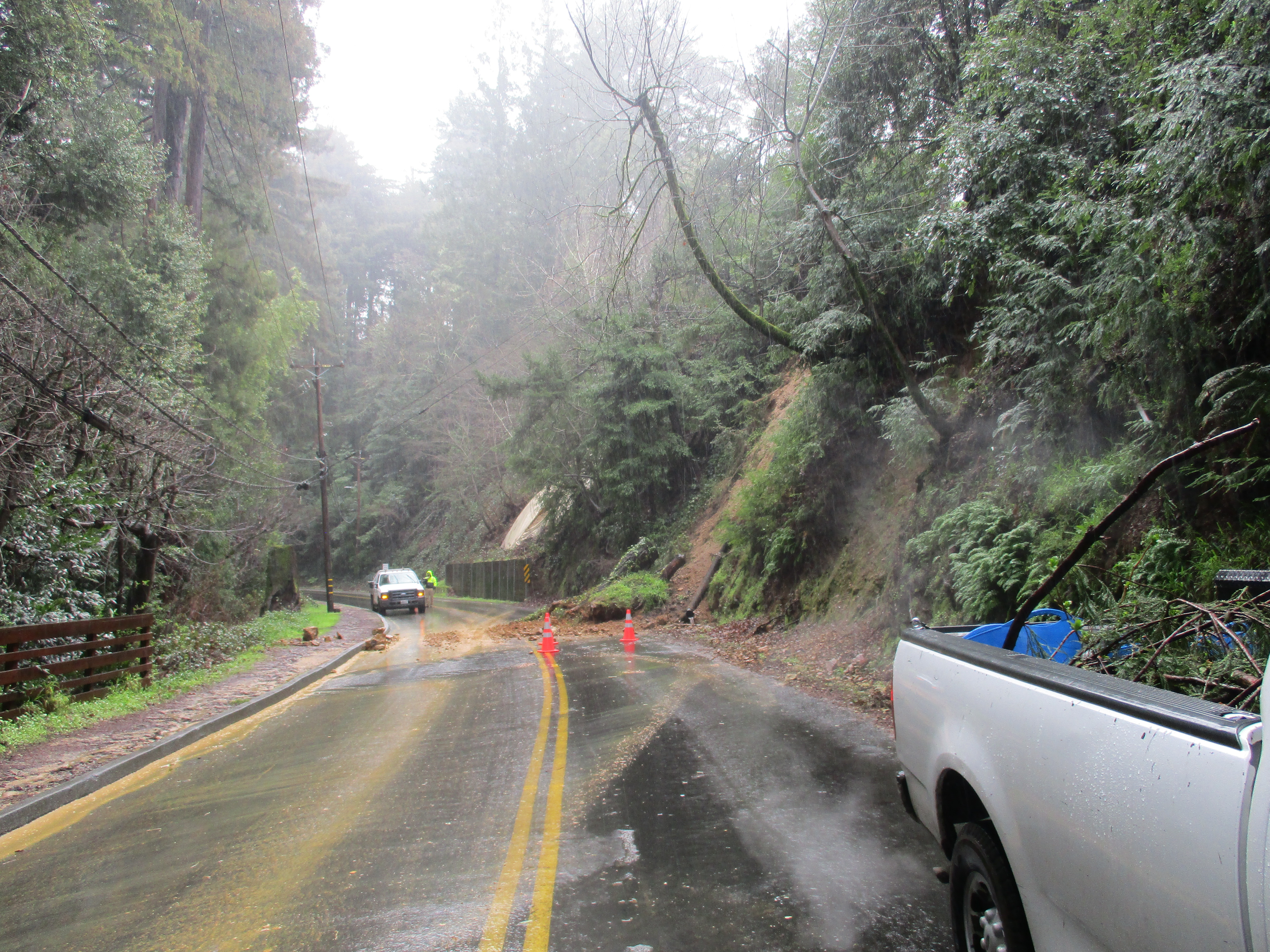
With all the rain, it was no surprise. Mudslides are somewhat common here, and they sometimes close roads. In fact, we were sort of expecting a small mudslide almost in this particular spot right when we got the call about it. The only slight surprise was that it was right next to where we expected it to be. The cliff that we expected to make this sort of mess was still intact under the tarps put over it to deflect some of the rain.

Fortunately, it was a small mudslide that blocked only one lane. We were able to direct traffic through the other lane while the blocked lane was cleared of debris by a small bulldozer.

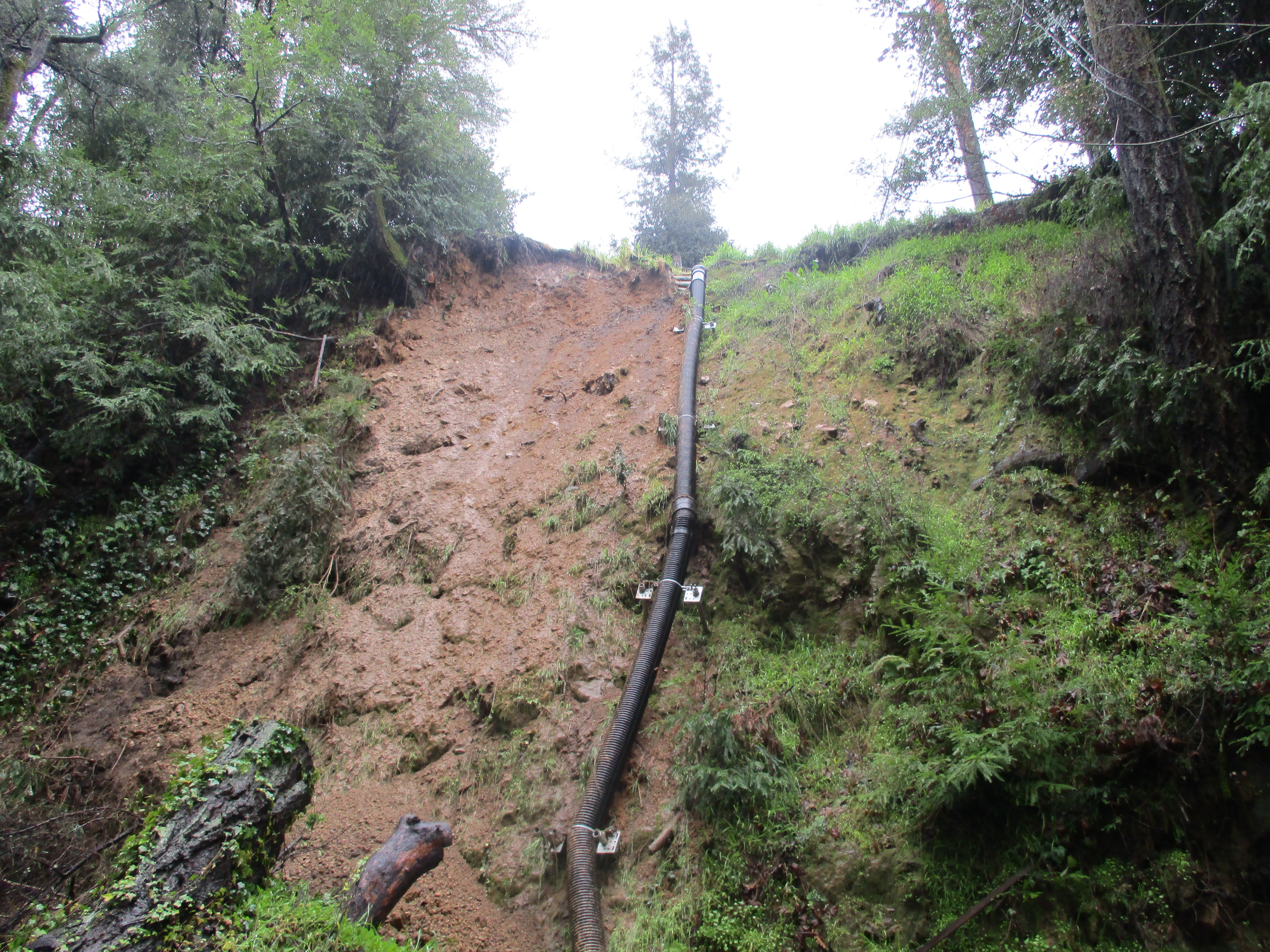
The top of the cliff slid to the bottom along with a stump of a Douglas fir that was cut down many years ago. The Douglas fir was cut down so that it would not destabilize the soil that it was rooted into as it moved in the wind. However, The soil was destabilized as the Douglas fir roots that held it together decayed. This is actually a common dilemma, since trees sometimes need to be cut down before they cause such problems, but the death and decay of the roots of such trees ultimately cause the same problems.

The sorts of trees that could be coppiced do not do so well in the dry soil on top of cliffs. Otherwise, we could plants willows, cottonwoods or something of the sort, and cut them down as they get too big, without killing the roots. They would be happy to regenerate and continue the process. The sorts of plants that prevent surface erosion do not do much to stabilize the soil. Otherwise, we could put something as simple as freeway iceplant (Carpobrotus chilensis) on top, and let it cascade downward over the unstable area.

1. It was nothing too serious, but just enough to block the inbound lane. Tarps over the cliff that we expected to make this sort of mess are visible above the retaining wall just beyond. My work pickup in the lower right corner of the picture blocked the inbound lane with its headlights and hazard flashers on. I directed incoming traffic around it into the clear outbound lane as it was available. The young man off in the distance moved his pickup out of the outbound lane, and also directed traffic accordingly. When necessary, he stopped traffic while incoming traffic used the outbound lane. We communicated by radio and hand signals.P90309
2. This is the stump of the Douglas fir that was cut down so that it would not dislodge the soil and cause a mudslide. A decayed stump of a smaller madrone tree is to the right. Their rotting roots and the English ivy were insufficient to stabilize the top of the cliff.P90309+
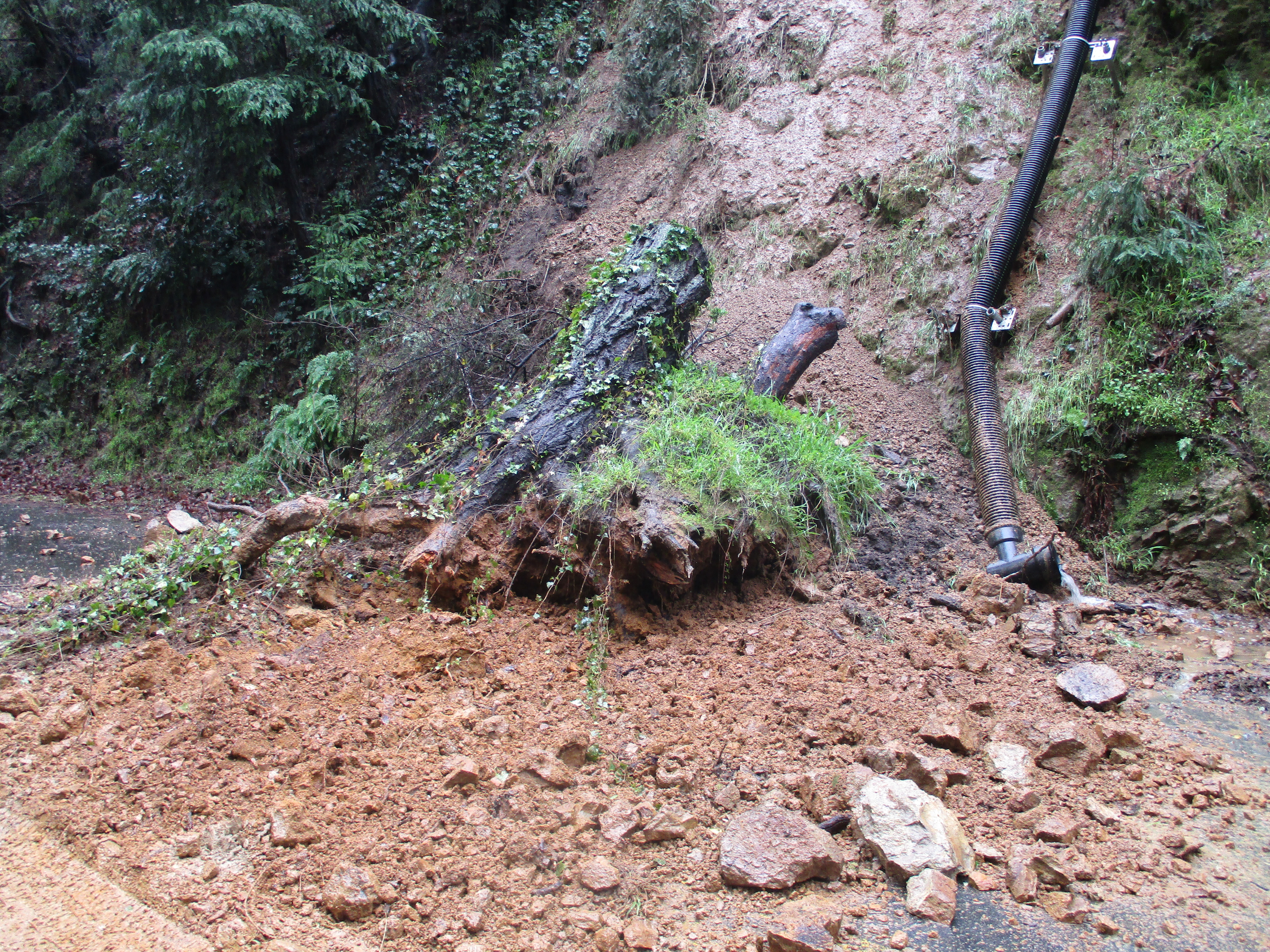
3. These significant mudstone boulders on the far side of the road could have done some serious damage to a car if one had gotten in their way.P90309++

4. That is where the Douglas fir stump came from, just to the left of the drainage pipe. It did not get very far. That is it at the lower left corner.P90309+++
5. We arrived about ten. By noon, there was not much evidence of what had happened. We left the cones because the road was slippery with mud.P90309++++

6. This is supposed to be a gardening blog, so here is an unidentified fern that witnessed the whole ordeal from a stable portion of the same cliff. There is slightly more flora to this story than two dead stumps and a bit of ivy.P90309+++++

This is the link for Six on Saturday, for anyone else who would like to participate:

https://thepropagatorblog.wordpress.com/2017/09/18/six-on-saturday-a-participant-guide/

Creeping Myoporum

80912The familiar sandalwood, Myoporum laetum, that is such a resilient small tree or big shrub in windy coastal climates, might make the wrong impression for the less familiar creeping myoporum, Myoporum parvifolium. Creeping myporum does not get much more than a foot high unless it climbs over stones or other obstacles, and it might stay less than six inches deep in exposed spots.

The evergreen foliage is dense enough to prevent most weeds from getting through. The tiny and narrow leaves are only about half an inch or an inch long, perhaps a bit longer. Clustered white starry flowers that begin to bloom late in spring continue to bloom through summer. Although tiny, and neither profuse nor remarkably showy, they are a nice accent to the rich green of the foliage.

Creeping myporum prefers full sun and occasional watering. It rots easily if watered too much. Its other weakness is that it does not tolerate traffic well. Creeping myoporum is a low growing shrub with woody stems that can break if trampled on. Individual plants can get ten feet wide if they get the chance. They are typically planted much closer together so that they cover the ground faster.

Rain Is Necessary But Messy

10914Water is no more scarce in California than it has been in recorded history. The problem with it is that it is a limited resource that must be shared amongst too many people. Likewise, rainstorms are no more torrential than they have ever been. Floods, erosion and wind are only more destructive now because there is so much more infrastructure that can be damaged than ever before.

Rain and wind are perfectly natural. Furthermore, it is natural for the weather to knock down limbs or entire trees. It only seems unnatural when these limbs or trees fall on houses, cars or anything else that gets in their way. Plants actually enjoy rainy weather much more than we do. Some like to be rinsed of dust and debris left from former infestations of mites, aphid, scale or sooty mold.

What plants do not like about rain is erosion. It is bad enough that so many plants in refined gardens are deprived of their own litter to insulate the surface of the soil. It is even worse if the bare soil gets eroded away from fine feeder roots at the surface of the soil. This is something that the rest of us would agree on. We do not want gullies carved into slopes, or drains clogged with mud.

Trees, shrubs and some stout perennials with aggressive roots are useful where the potential for major erosion is a concern, but might not do much for annoying surface erosion. Sprawling and spreading plants that form dense networks of low branches and surface roots are more effective. They soften the splatter of rain, slow the flow of drainage, and catch much of any dislodged silt.

Groundcover plants like ivy, gazania and iceplant are probably the best option for controlling surface erosion. Dense and low shrubbery that spreads over the ground and holds its own debris probably work just as well. These include low junipers, trailing rosemary and dwarf coyote brush. Larger shrubbery can help if it can drag its lowest limbs on the ground, and no one rakes below it.

Mulching limits erosion while new plants grow. Although new mulch needs to be added annually as old mulch decomposes, less will be necessary as plants grow and cover more area. Mulch is also effective where no plants are desired. For large areas, especially where plants are not expected to fill in, landscape cloth below ornamental bark inhibits weeds. However, coarse bark slowly shifts downhill, so replaces one kind of erosion with another, and will eventually need to be raked back uphill.