Arizona Cypress

Established Arizona cypress needs no irrigation.

Although not native, Arizona cypress, Hesperocyparis arizonica, behaves as if it is. It is native to deserts and chaparrals of Mexico, New Mexico and, of course, Arizona. Hence, new specimens only require irrigation until they disperse their roots. Afterwards, they are satisfied with seasonal rainfall. They are more resistant to pathogens than other cypress.

Most modern Arizona cypress cultivars are bluish gray with densely conical form. A few are yellowish, pendulous or columnar. ‘Blue Ice’ is a strikingly silvery bluish gray cultivar of smooth Arizona cypress. Most old Arizona cypress trees exhibit significant variation because they grew from seed. Some develop irregular form or more greenish drab color.

In the wild, Arizona cypress can grow taller than sixty feet. Locally, few get forty feet tall, particularly since modern trees are compact cultivars. Most stay less than twenty feet tall, and some stay about half as wide as they are tall. They work well as informal evergreen hedges. Smooth Arizona cypress exfoliates rough outer bark to expose smooth red inner bark. It is Hesperocyparis arizonica variety glabra.

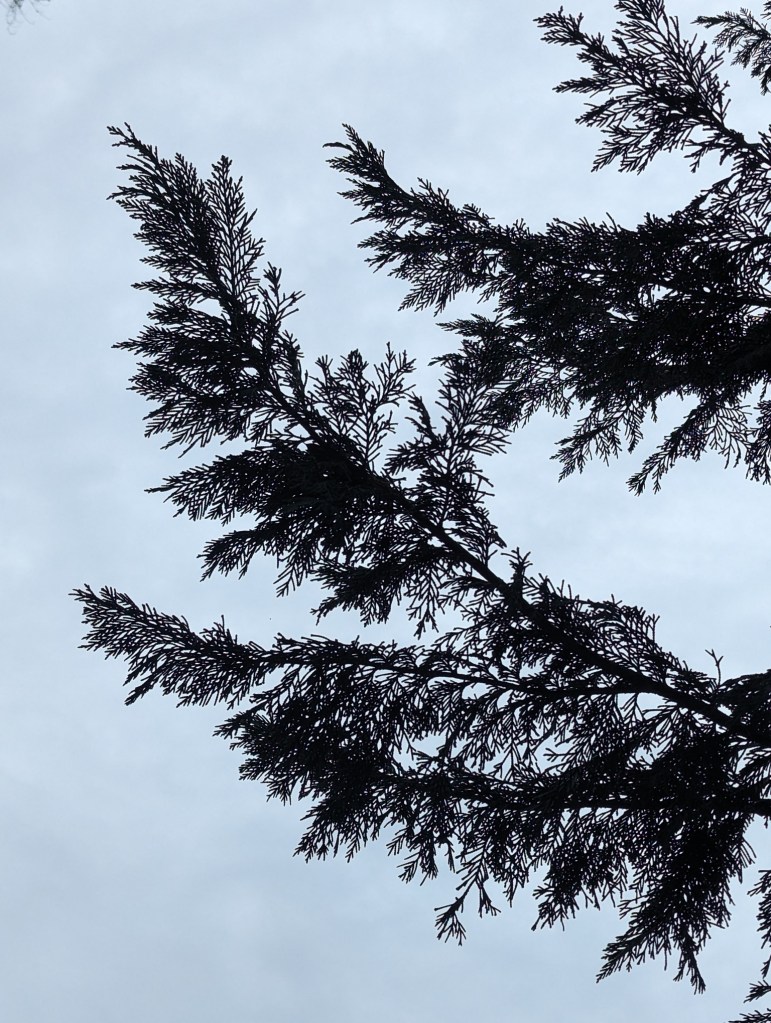
‘Citriodora’ Monterey Cypress

This cultivar is also known as lemon cypress.

            Supposedly, ‘Citriodora’ Monterey cypress, Cupressus macrocarpa ‘Citriodora’, can get more than thirty feet tall and nearly as wide. Yet, it grows slowly enough to function like small trees or large shrubs. Even if it eventually gets a bit too large, it is much more conducive to occasional pruning than typical Monterey cypress is, and can even be artfully pruned into informal hedges. (However, nonselective shearing deprives if of its naturally appealing form.)

            With its lemon yellow foliage, ‘Citriodora’ Monterey cypress resembles golden arborvitae, but is even brighter yellow and has distinctive cypress-like branch structure. Its older foliage within eventually turns darker green to add depth and enhance the structure. ‘Citriodora’ Monterey cypress looks best locally if at least partially shaded by larger trees during the afternoon.

Leyland Cypress

Leyland cypress ‘was’ an intergeneric hybrid.

Taxonomy is a mess for Leyland cypress, X Cupressocyparis leylandii. The X preceding its genus name indicates that it is an intergeneric hybrid. Monterey cypress, Cupressus macrocarpa is the paternal parent of the original hybrid. Nootka cypress, Chamaecyparis nootkatensis, is the maternal parent. However, its name is now Cupressus nootkatensis.

Therefore, Leyland cypress is now Cupressus X leylandii, and an interspecific hybrid. It inherited attributes from both parents, as well as innate vulnerabilities. It can grow very vigorously to more than thirty feet tall in fifteen years. However, it may not live for another fifteen years afterward. It is very susceptible to cypress canker and a few other diseases.

This is why Leyland cypress often accompanies more permanent but slower vegetation. By the time it finishes its life cycle, the other vegetation is ready to replace it. Most large specimens are less than forty feet tall, with densely conical form. The evergreen foliage is grayish deep green. Less common cultivars are more grayish, yellowish or variegated.

Redgum Eucalyptus

Red gum eucalyptus is notably drought tolerant. Apparently, it can also temporarily tolerate saturation.

Although not quite as aggressive, sloppy, big or structurally deficient as the notorious blue-gum eucalyptus, the red-gum eucalyptus, Eucalyptus camadulensis, is one of the ‘other’ eucalyptus that give eucalyptus a bad reputation. It is realistically too big and messy for refined urban gardens, and can be combustible if overgrown or too abundant. It is consequently probably not available in nurseries, despite being one of the most common species of eucalyptus (second only to blue-gum) in California. Red-gum eucalyptus has the advantage of being one of the most resilient large scale trees for unrefined or semi-wild landscapes, and works well where it has space to grow in many of the local county parks.

Lemon Cypress

Lemon cypress foliage is mildly aromatic.

Monterey cypress is a famously rugged tree that inhabits harshly exposed coastal cliffs. It grows fast to get big and gnarly with age. Lemon cypress, Hesperocyparis macrocarpa ‘Goldcrest’, is a more civilized cultivar. It might potentially grow nearly forty feet tall, but at less than a foot annually. Vertical trunks support compact and relatively columnar form.

Lemon cypress foliage is densely evergreen, with tiny and tightly set scale leaves. New spring growth is impressively cheery yellow. It fades somewhat to yellowish chartreuse through summer. If the weather gets cool enough through winter, the foliage can get a bit more amber. The foliar aroma is coincidentally slightly lemony, to match the foliar color.

Once established, lemon cypress does not require much more than occasional pruning. It is satisfied with only infrequent irrigation, and might survive with none at all. Actually, it is susceptible to rot with generous or frequent irrigation. ‘Goldcrest Wilma’ is susceptible to foliar diseases within its even denser foliage. It stays compact enough for pots though (Incidentally, Hesperocyparis was Cupressus.)

Japanese Black Pine

Japanese pine is more proportionate to confined urban home gardens than more common species.

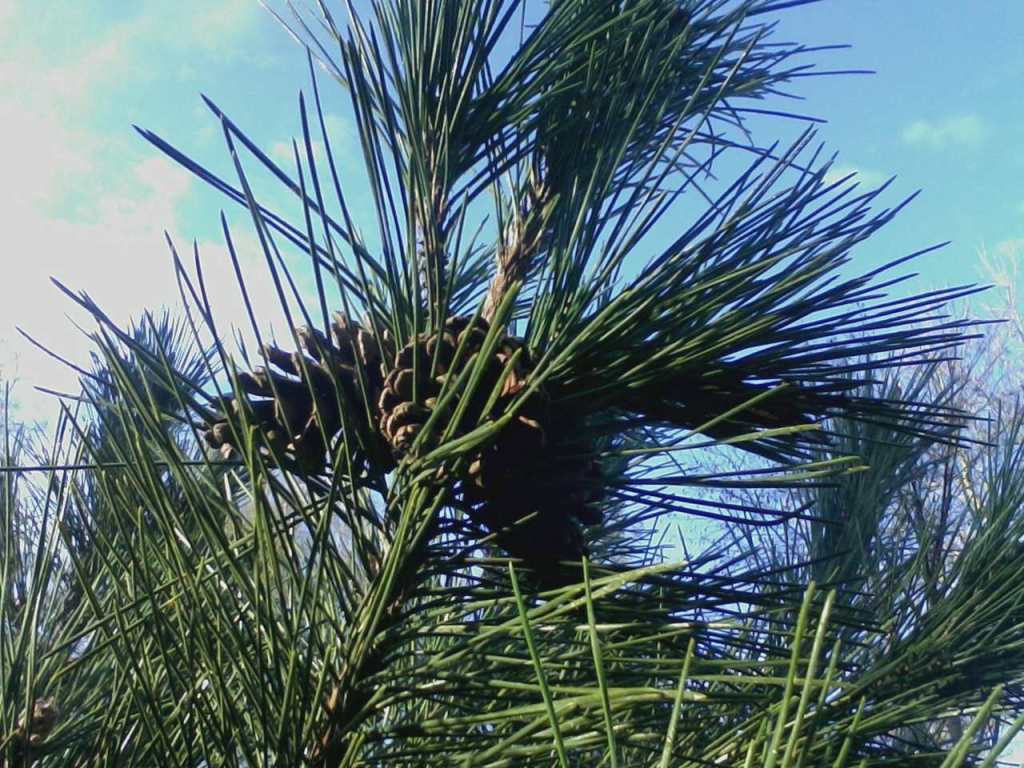
Not many large specimens of Japanese black pine, Pinus thunbergiana, can be seen around the Santa Clara Valley. They can get taller than a hundred feet on straight trunks in their natural range on the coast of Japan, but locally, rarely get more than a quarter as tall on leaning and irregular trunks. They just are not quite as happy in the dry air here (minimal humidity). They are purported to be more tolerant of smog than most other pines that were so sensitive to the nasty smog of the 1970’s, but are more likely to become infested with insect pathogens as they get old.

With their angular and somewhat open growth, and classic pine foliage and cones, Japanese black pines are one of the more distinctive pines. Since they do not get too large, they can work well as sculptural specimen trees in small garden spaces and atriums. Even if they grow up above the eaves, their leaning trunks and outstretched lower limbs with rough gray bark are as distinguished as those of larger trees.

The paired somewhat stiff needles are about three or four inches long. The small but stout cones stay green through most of their first year of development, and then turn brown as they mature and open to disperse their seed in the second year. They are only about two inches long, but can become annoyingly abundant among aging trees.

Atlas Cedar

Amy Carter had the most boss treehouse in an Atlas cedar.

My generation can remember when Amy Carter, the daughter of former President Carter, got a treehouse built in a mature Atlas cedar, Cedrus atlantica, at the White House. It was so cool that it was ‘boss’! Besides being more luxurious than a typical treehouse, it was designed by President Carter to not damage the tree even slightly.

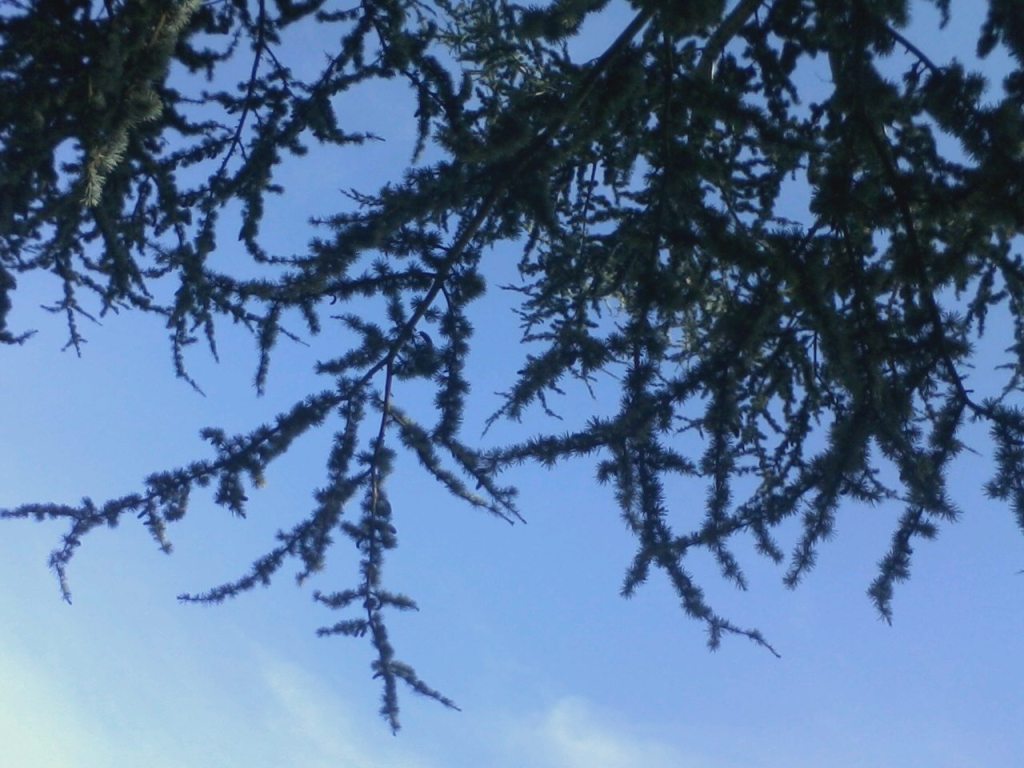
Here in the west, most Atlas cedars are cultivars (cultivated varieties) with blue foliage that often rivals that of Colorado blue spruce. Most have strictly horizontal or angular limbs with stiff, densely foliated branches. Some are so pendulous (weeping) that they need to be staked to be kept off the ground. They actually look great trained along the tops of retaining walls, even without staking, with their blue foliage cascading over. Others are strictly upright and narrow. Colorado blue spruce may have better color; but Atlas cedar has more interesting variation of form.

It is also better adapted to the local Mediterranean climate than spruces and other conifers are, and gets much larger. Mature Atlas cedars can get as tall as a hundred feet, with trunks as wide as five feet.

Grecian Bay

Grecian bay does not get as massive as the native bay laurel.

The native bay laurel should not be confused with the Grecian or sweet bay. Despite the similarities, the native bay laurel grows into a large tree. The foliage can be used as seasoning like Grecian bay, but has a very different and much more pungent flavor. It can often be found fresh in markets, labeled as Grecian or sweet bay, and has likely ruined all sorts of recipes.

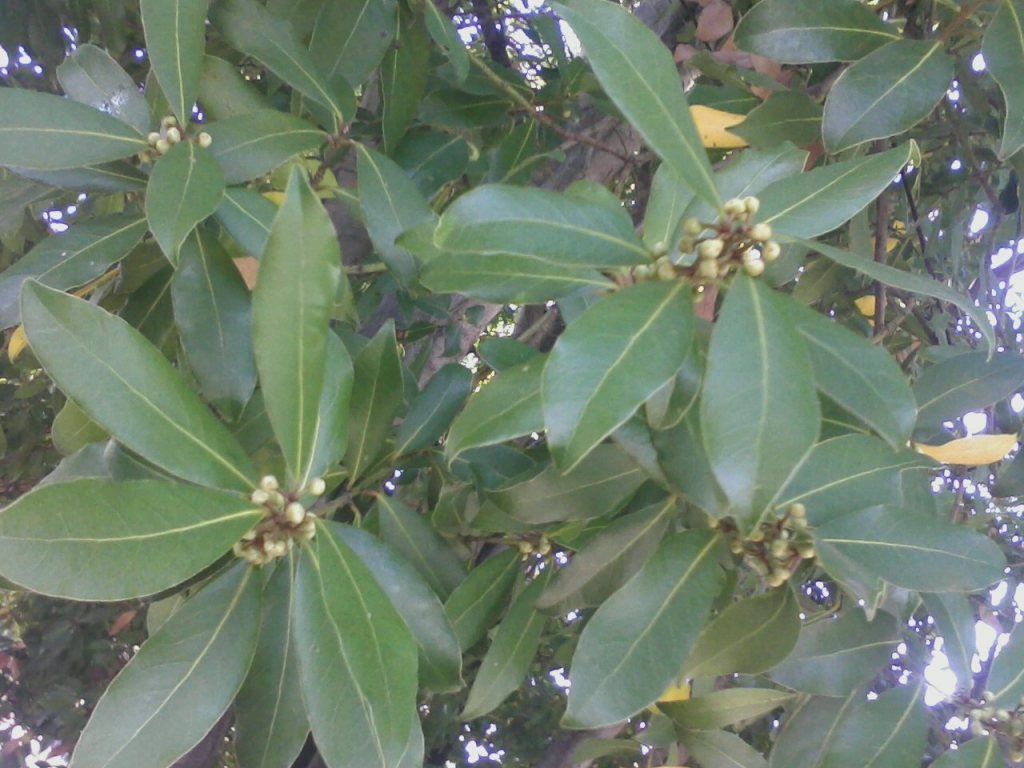
Grecian or sweet bay,  Laurus nobilis, stays much smaller much longer. It takes many years to grow to thirty feet tall, often with many trunks flaring out from the center. Trees that are nearly twice as tall are ancient. Because of slow growth, Grecian bay can be happy in large containers as long as it is pruned to stay proportionate to the confined root system.

The three or four inch long, and inch or so wide leaves of Grecian bay can be difficult to distinguish from those of bay laurel. The minor differences are that Grecian bay leaves have slightly undulate margins with a few small and sometimes barely perceptible serrations (teeth) that bay laurel lacks. The leaf apexes of Grecian bay leaves are typically a bit more blunt. For culinary purposes, it is important to be aware that dried leaves and fresh leaves have very different flavors.

Colorado Blue Spruce

With such densely foliated low limbs reaching the ground, Colorado blue spruce functions as much as large shrubbery as a small tree.

Colorado and Utah share the same stately state tree; the Colorado blue spruce, Picea pungens, which is native to the Rocky Mountains between Arizona, New Mexico and southern Idaho. Colorado blue spruce are stoutly conical trees that grow slowly to eventually get more than seventy five feet tall. Where they need to compete with other trees in forests, the biggest are nearly twice as tall with trunks nearly five feet wide. However, because they grow so slowly, and do not get much bigger then they need to, well exposed trees stay proportionate to home gardens for many decades. Many shrubby compact cultivars actually stay less than ten feet tall. Foliage can be grayish green to silvery pale blue. The stiff and sharply pointed needles are about three quarters to an inch and a quarter long, and densely set on relatively rigid stems.

The elegant silvery blue foliage of the Colorado blue spruce is striking either in front of or behind darker evergreen foliage, like that of redwoods or junipers. These stout and densely foliated trees make any garden look a bit more woodsy.

Cork Oak

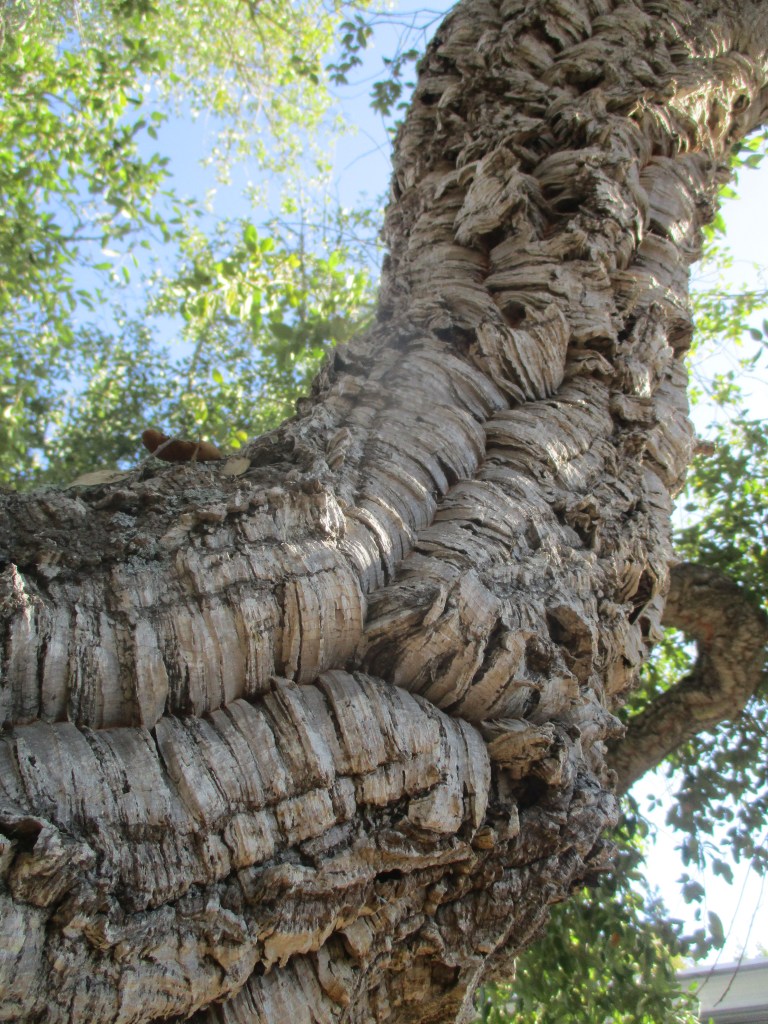
The bark actually looks like cork.

This is a tree that takes some time to impress. Bloom is uninteresting. Foliage is no more distinctive than that of coast live oak. Instead, the most spectacular characteristic of cork oak, Quercus suber, is the boldly striated and uniquely spongy texture of its mature bark. Such bark takes a few years to develop, but gets so thick that it seems significantly older.

As its name implies, cork oak had historically been the exclusive source of bark for corks and cork products. As modern and more practical materials diminished demand for such bark, cork oak became more popular as an evergreen shade tree. It is quite happy within the arid chaparral climates of California. In fact, it behaves much like native oak species.

Mature cork oak trees generally stay less than forty feet tall, even if their trunks are wider than three feet with their unusually thick bark. Without excessive irrigation, their roots are notably complaisant. Low branches are more visibly sculptural than high branches. With pruning for adequate clearance though, trees with high branches are striking street trees. Foliar and floral debris is quite messy during spring bloom.