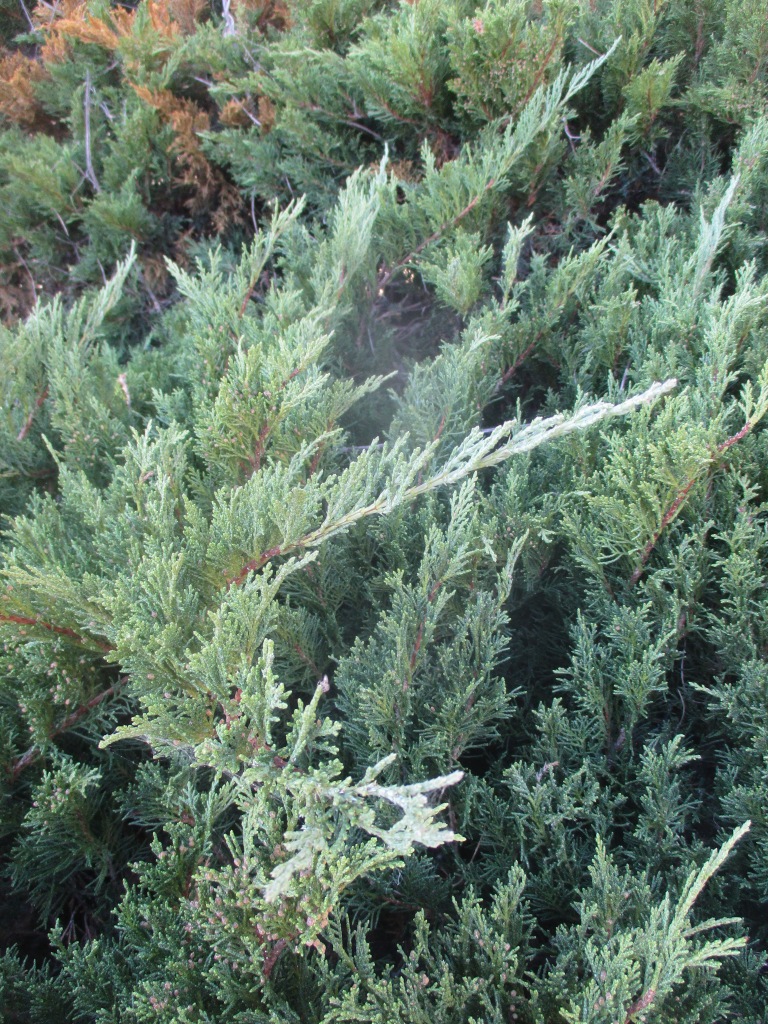
Fads come and go. Many can be good, even if only briefly. A few might be bad enough to later stigmatize the object of the fad. For example, the formerly esteemed crape myrtle is now familiar as a mundanely common tree. Flashy bloom and complaisance contributed to its excessive popularity. Most sorts of juniper are similarly victims of their previous fad.
A few cultivars of juniper suddenly became overly popular during suburbanization of the 1950s. They were remarkably reliable and resilient. Most were shrubbery or low hedges. A few were groundcover. Hollywood juniper grew as a compact sculptural tree. However, most junipers grew too big. They became difficult to maintain, or impossible to renovate.
As many outgrew suburban gardens, few junipers outgrew their reputation. Even modern cultivars that were unavailable during the fad of the 1950s are perhaps less popular than they should be. Realistically, many old and new cultivars of juniper are quite practical for refined home gardens. They merely need to be appropriate to their particular application.
Many cultivars of several species of Juniperus are commonly available. Straight species are very rare from nurseries, although a few are native nearby. All junipers are evergreen with tiny awl or scale leaves. Foliar color ranges from forest green to silvery gray. Bloom is unremarkable. Some junipers produce pretty and aromatic blue, gray or black berries.
Junipers generally do not respond favorably to pruning that damages their natural forms. Those that grow as groundcovers, with stems that sprawl over the surface of the soil, are not offended by pruning to contain their edges. However, most groundcover junipers are actually just low shrubbery. Pruning might leave holes within their dense foliar canopies.
Junipers that grow as small trees do not mind removal of lower limbs at their main trunks, but object to partial pruning or ‘stubbing’ of such limbs. Regardless of their natural forms, all junipers should be proportionate to their particular applications. With sufficient space, they can mature and develop their naturally distinguished forms with minimal altercation. Maintenance could really be quite minimal.

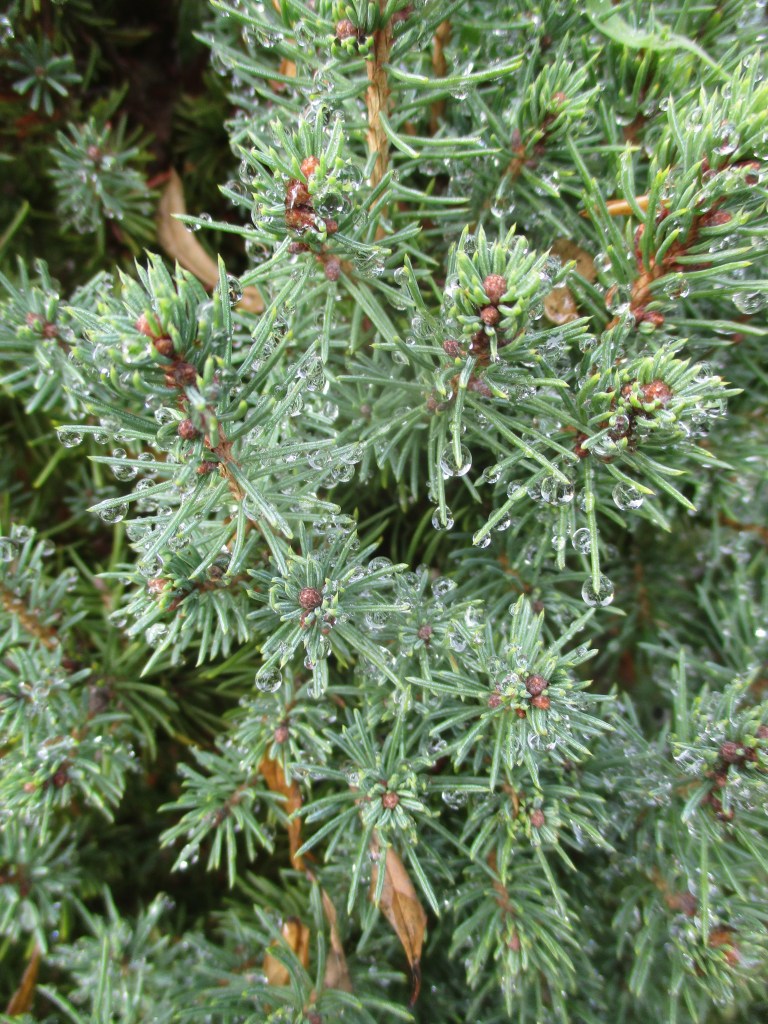
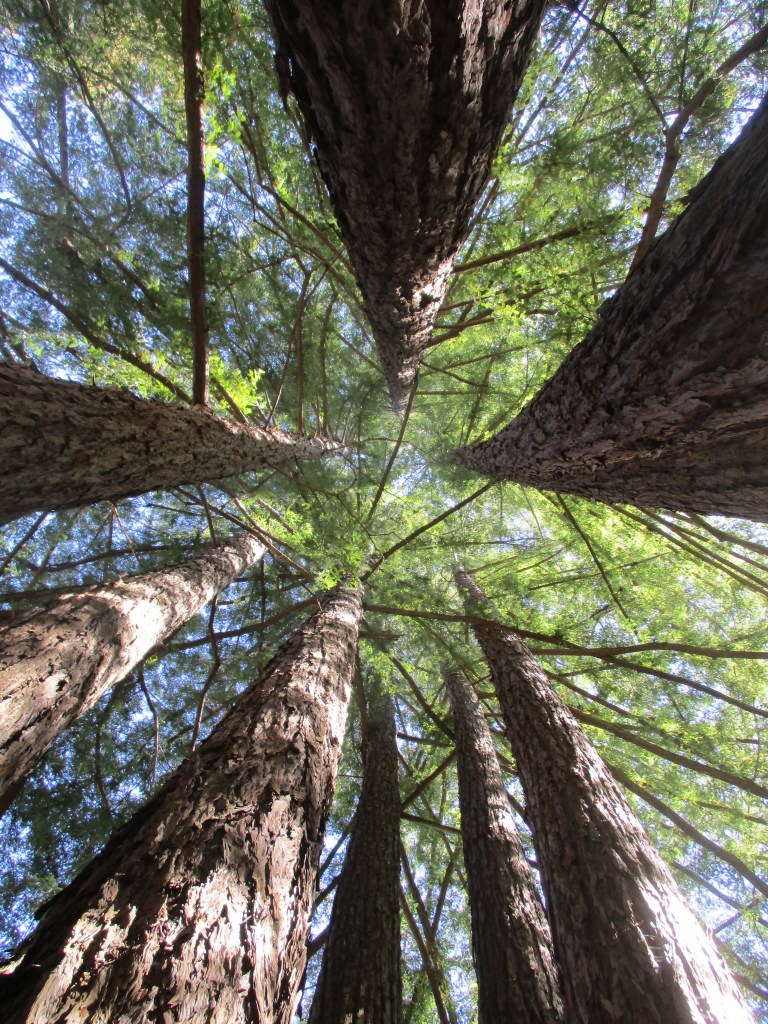

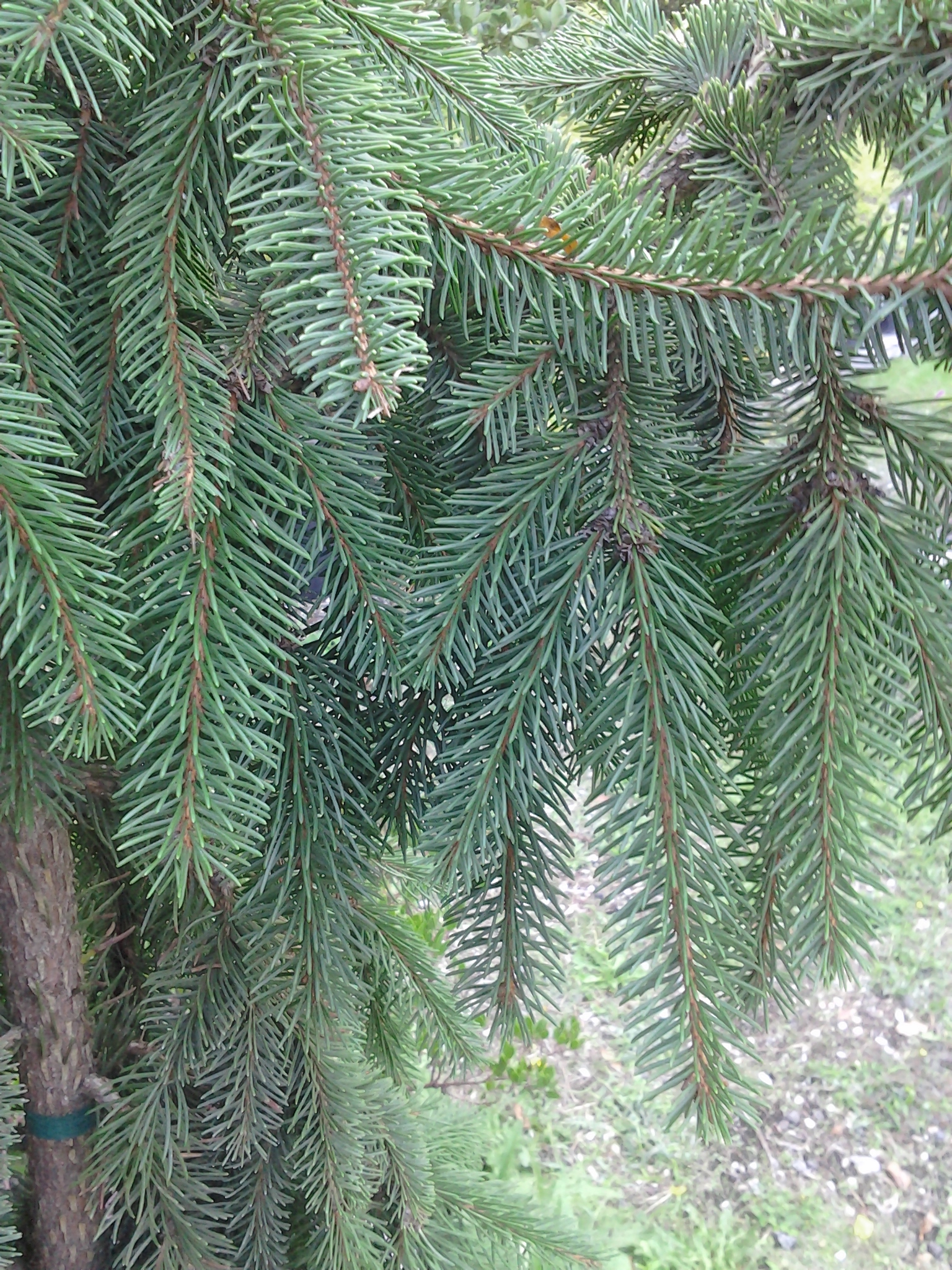 ‘Conifer’ and ‘evergreen’ are almost synonymous. Of the two, ‘evergreen’ is the more familiar term. Some people do not know what a ‘conifer’ is. Simply speaking, an evergreen is a plant that retains foliage throughout the year, even while deciduous plants defoliate through winter. A conifer is a plant that produces seeds in cones, such as pine cones, although many are not easy to recognize as such. Actually though, not all evergreens are conifers; and not all conifers are evergreens.
 As the deciduous trees that will soon be coloring for autumn defoliate for winter, the evergreen trees will become more prominent. Some evergreen trees will drop some of their foliage along with deciduous trees through autumn and winter. Many drop some of their old foliage as new foliage develops in spring, or later in summer. All are on distinct schedules, but are never completely bare.
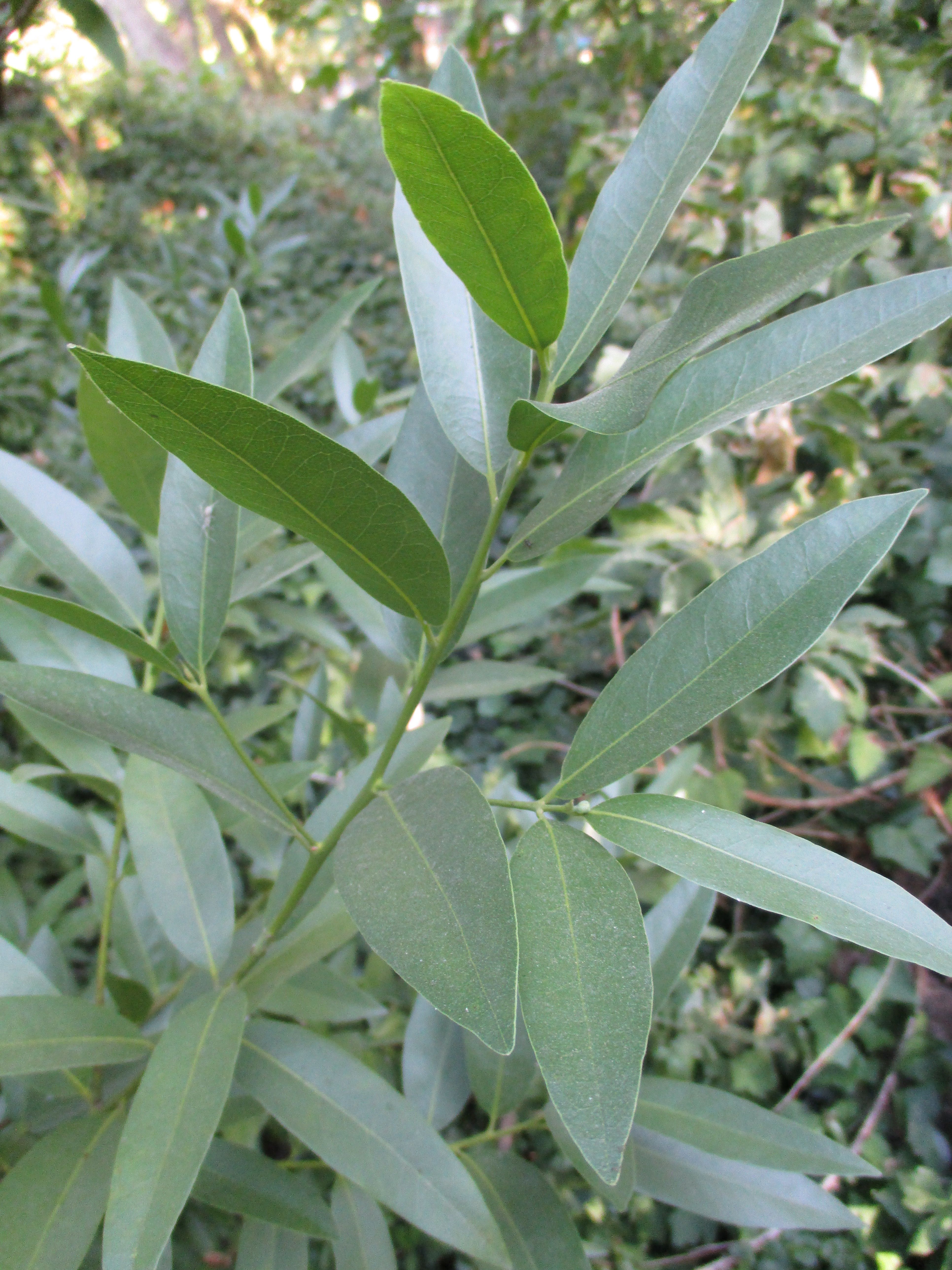 Just because California bay, Umbellularia californica, can be used like Grecian or sweet bay for culinary purposes does not necessarily mean that it should be. California bay has a stronger and much more pungent flavor and aroma. Some might suggest substituting less than half California bay for Grecian bay. However, even if the intensity is adjusted accordingly, the flavor might be off.
 Many of our trees live at our homes longer than we do. Some of our trees were there before we got there. Some of the trees we plant will be there for whomever comes along after we are gone. Trees very often evolve into something very different from what they were intended to be. Nonetheless, since they are the most significant features of our gardens, trees must be selected carefully.
