
Camellias have been blooming for a while now. I typically get rather good pictures of them. The pictures are nothing too artistic, of course, and are intended to merely exhibit the floral color and form. A bit of the glossy foliage in the background is nice.
The picture above is not so useful for exhibiting much of the floral characteristics. Even the pink color is muted by the sloppy background and gray sky above. Zooming in would not have corrected the positioning of the flowers. I simply could not get close enough to do any better.
That eave in the lower right corner of the picture is above a two story building. That is where all the blooms of this particular camellia shrub are located. With so much of the lower growth shaded out and gone, this shrub is more like a small tree. The bloom is too high up to be appreciated. The picture below demonstrates what it all looks like without zooming in.
If there were windows facing this big camellia shrub or tree, I would likely prune it only a bit lower, just to keep it below the eave and within view of the windows. Without windows, I know that I really should prune the tall trunks back to what little lower growth remains, in order to promote more growth and bloom closer to ground level where it can be appreciated.
The difficulty I have with pruning it back is that this big camellia shrub or tree is so impressively big and sculptural, and all the glossy foliage looks so good in the foreground of the rich dark brown wall. I do not know what is more important here, the sculptural limbs and rich green foliage that lasts throughout the year, or the colorful but seasonal bloom.

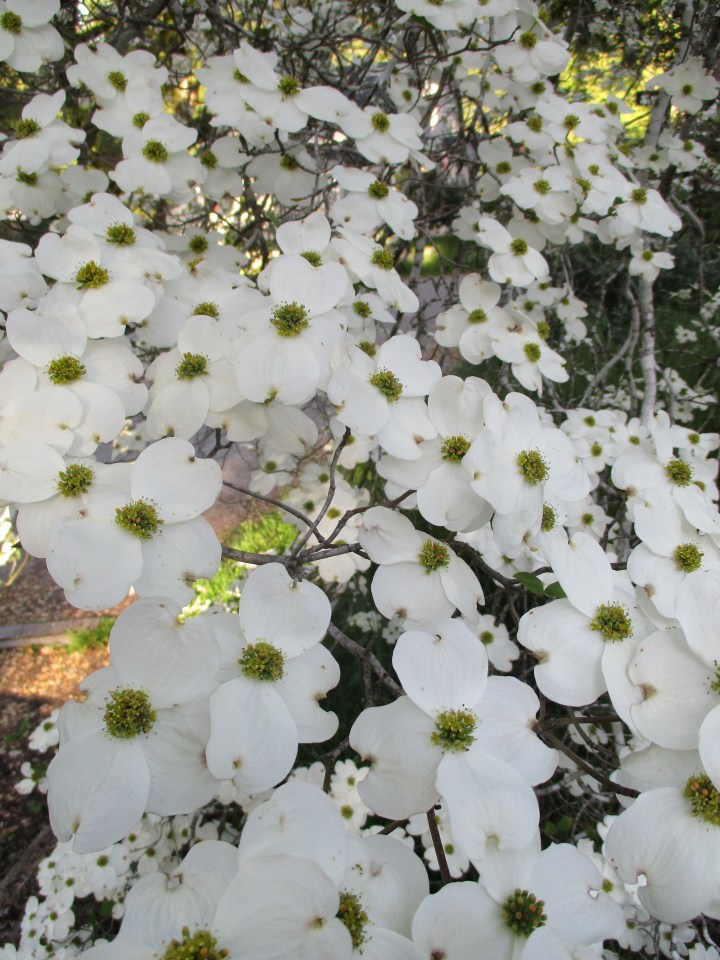
 It seems that everyone who has ever experienced the seductive yet powerful fragrance of gardenia, Gardenia jasminoides, wants to grow it, but very few actually can. Gardenias like warmth, but prefer more humidity than they get here, which is why they seem to be happier in partial shade, in atriums, or in urns that can be moved out of harsh exposure during summer. In such sheltered spots, aphid, scale and sometimes whitefly can be problematic.
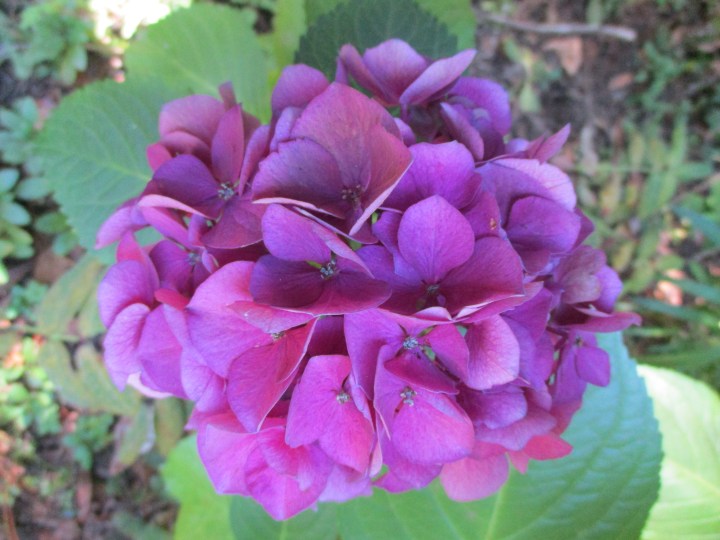 Bearded iris can bloom in almost any color. It is expected of them. There is not much they can do to surprise us.
 It is gratifying to see renewed interest in this old fashioned flower. Naturally occurring varieties of some of the nearly three dozen species of Iochroma were popular decades ago. Some might actually be naturally occurring hybrids that have yet to be identified. Many modern cultivars (cultivated varieties) were intentionally bred or hybridized for more compact growth and profuse bloom.
 It is impossible to say who the parents were. So many specie were hybridized to develop the many cultivars of flowering maple that the Latin name of the collective group is simply Abutilon X hybridum, which means exactly what it looks like. They are hybrids of various and rarely documented species of Abutilon. The ‘X’ dispels any doubt. ‘Chinese lantern’ is another common name.
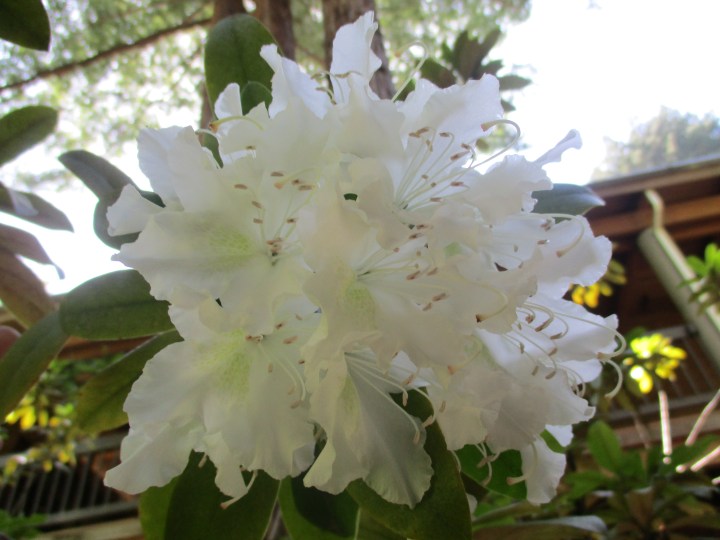
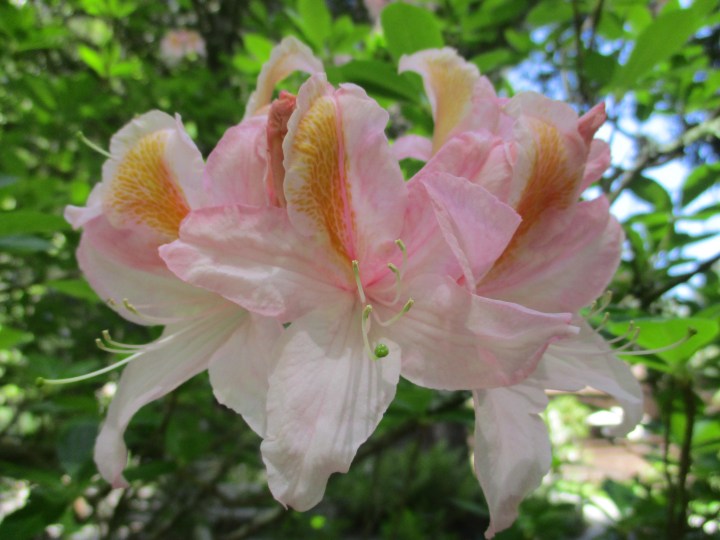 There are countless species and cultivars of rhododendrons. Some have been in cultivation for centuries. Their big bold blooms are spectacular against a backdrop of their dark evergreen foliage. They prefer shelters spots, and some are happy to bloom in places that are too cool and too shaded for other flowers to bloom so well. They are so impressive that no one notices that they lack fragrance.


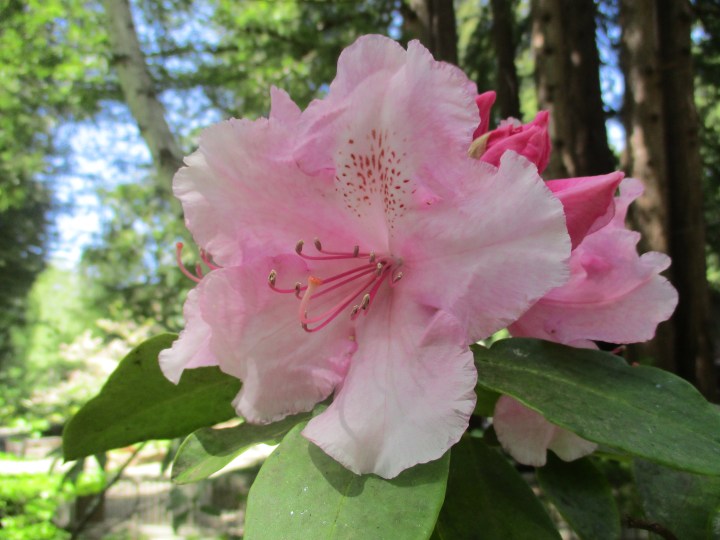


 Long before hydrangea blooms with its distinctively round floral trusses of abundant small flowers, the snowball bush, Viburunum opulus ‘Roseum’, shares its own unique version of similar bloom. Although the cultivar name suggests that the bloom would be pink or red, it is exclusively white. Hydrangea will bloom later, mostly in pink or red, with some in blue or lavender, and a few in white.
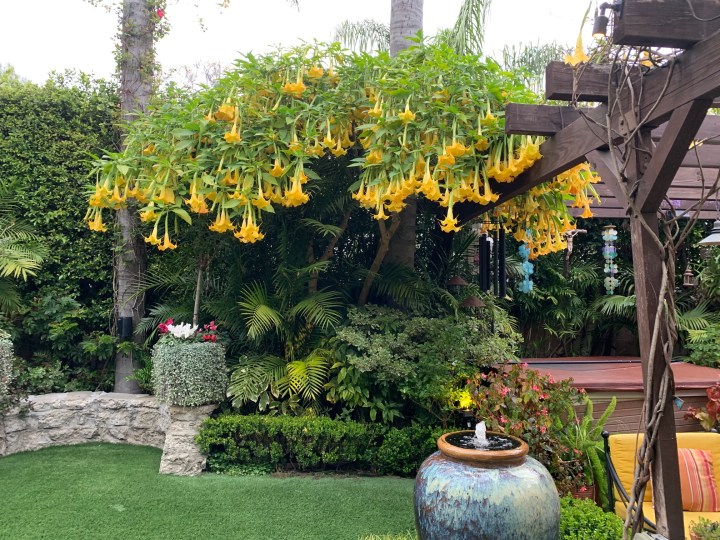 When spelled like that, the whole thing looks like someone’s long name. ‘Charles Grimaldi’ really is someone’s name, and the particular cultivar of brugmansia happens to be named after him. Because no one knows who the parents of this hybrid cultivar are, the species name is omitted. It is therefore described by just the genus name followed by the cultivar name, as Brugmansia ‘Charles Grimaldi’; or simply ‘Charles Grimaldi brugmansia’.
 Tony Tomeo