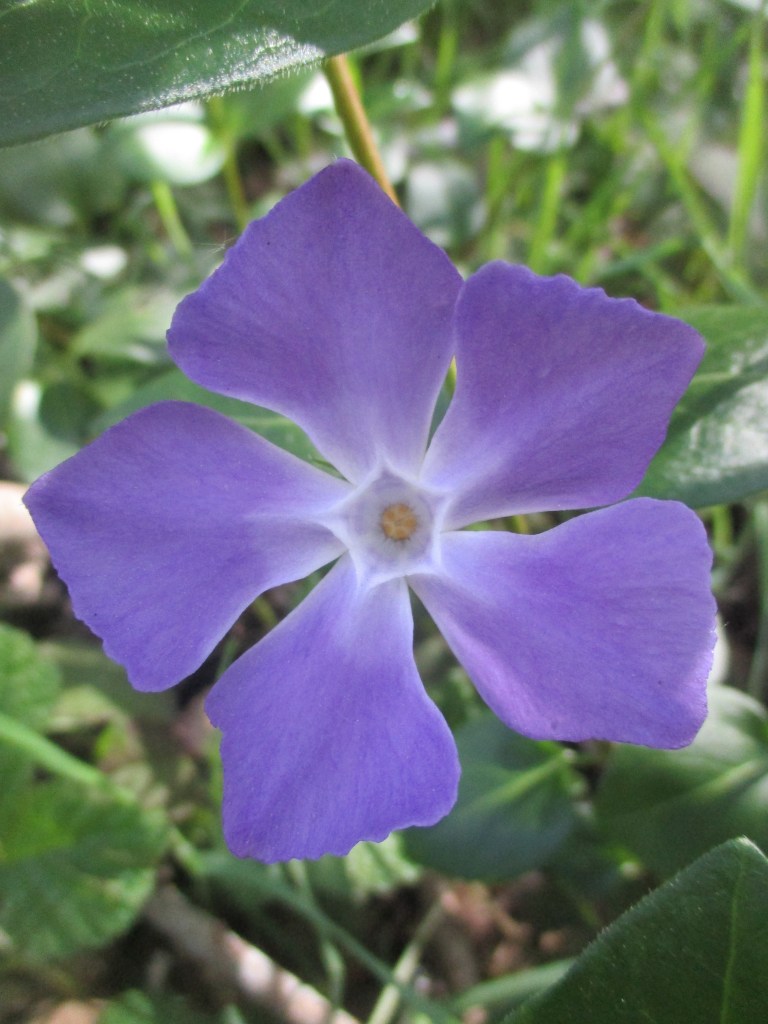
Dwarf periwinkle, which is a vigorous but manageable ground-cover here, is an invasive weed in other regions. Locally, common periwinkle, Vinca major, is the more aggressive sort. It naturalizes in riparian situations and damp parts of unrefined landscapes. Stolons can be difficult to pull completely from the soil. Seed disperses secretively but efficiently.
Periwinkle is almost never available in nurseries nowadays. It tends to infest gardens by sneaking in. Then, the foliage and bloom can be too appealing to eradicate. More plants are easy to divide from established colonies. Growth is tidier if mown at the end of winter. As it regenerates, it gets more relaxed, and finally gets floppy. It looks shabby if trampled.
Periwinkle blooms with sporadic but delightfully clear blue bloom. Individual flowers are about an inch and a half wide. The evergreen leaves are an inch or two long. Wiry stems get a foot or two deep. Cultivars with white or purplish blue bloom were available before
periwinkle naturalized. Periwinkle with foliar variegation still inhabits some old gardens. It is slightly more complaisant.
Wildflowers have been quite a fad. Relative to most fads, they are not so impractical. For some situations, they are a good excuse to waste less effort and resources on unrefined parts of the garden. Of course, they all require some degree of effort and resources. Most are neither as wild nor as natural as their marketing suggests them to be. Few are native.
Wildflowers that lived here centuries ago, prior to the introduction of exotic species, were relatively unimpressive. Although some bloomed spectacularly, they did so within a brief season. Winter is too cool for pollinators that wildflowers intend to attract. Summer is too dry for bloom to last long. Most bloom was limited to the transition from winter into spring.
The same native wildflowers bloom even less now than they did centuries ago because of competition with exotic species. Most exotic species that compete with wildflowers are feral forage crops that lack colorful bloom. They grow so vigorously that they obscure the natives. Mitigation of such undesirable vegetation ruins wildflowers that mature within it.
Most of the best wildflowers here now are as exotic as feral forage crops. Those that are native might be more reliant on unnatural cultivation. California poppy, evening primrose, and native annual lupines might prolong bloom with a bit of extra water through summer, but need weeding. With the same watering, (non-native) cosmos stands up to the weeds.
Unfortunately, vegetation management is more important than wildflowers outside of the refined garden. Overgrown weeds are combustible and can be dangerous to pets. Weed whacking too often involves wildflowers before they get their chance to bloom, as well as foliage of spring bulbs after bloom. (It sometimes damages bark of trees and shrubs too.)
Some low and dense perennial wildflowers are more reliable than annual sorts because they exclude annual weeds. Saint John’s wort and periwinkle are invasive exotic plants, but work well as ground covers. Mowing or shearing them late in winter slows their competing weeds, and also enhances their foliar density before competing weeds regenerate.
As I mentioned last week, these pictures were obtained a week and a day ago. The flowers were fresher then. I suspect that they are all finished or nearly so by now, although money plant is still colorful in some sheltered situations. The flower that might be California bluebell did not last long at all. I should have looked for seed, but could not find it again. This is an odd batch. I know more about what I work with here than almost anyone else, but some unfamiliar items are baffling.
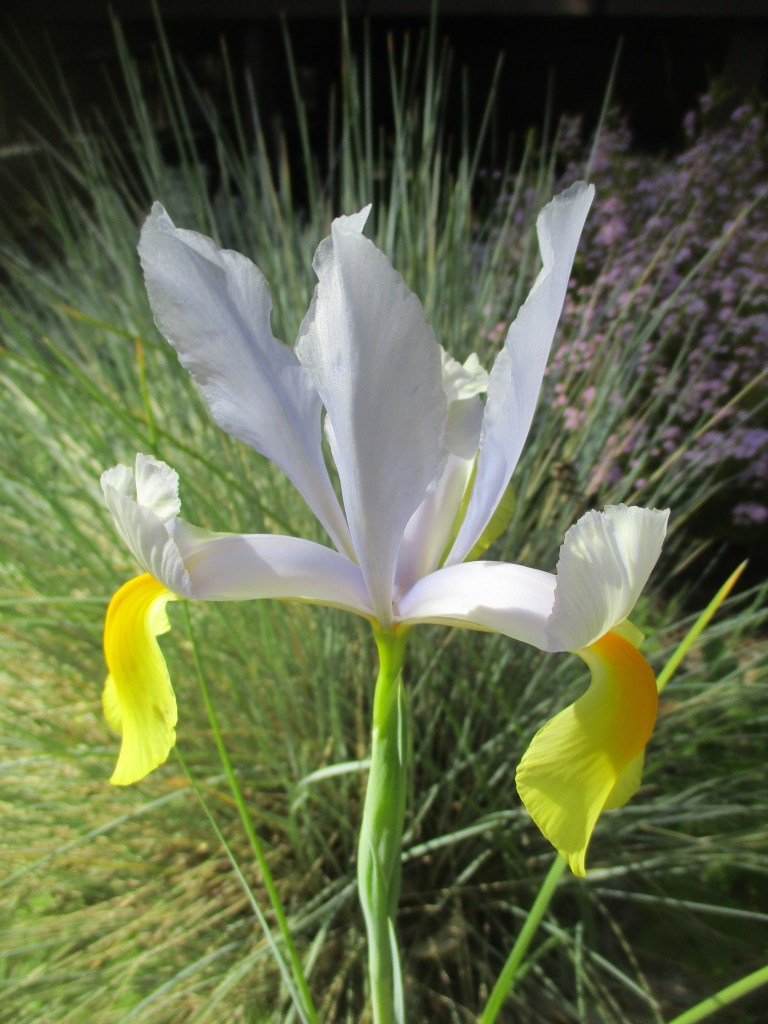
1. Is this Dutch iris? It was planted years or perhaps decades ago, but only started blooming, along with freesia and ixia, after overgrowth above it was cleared. I have never grown Dutch iris.
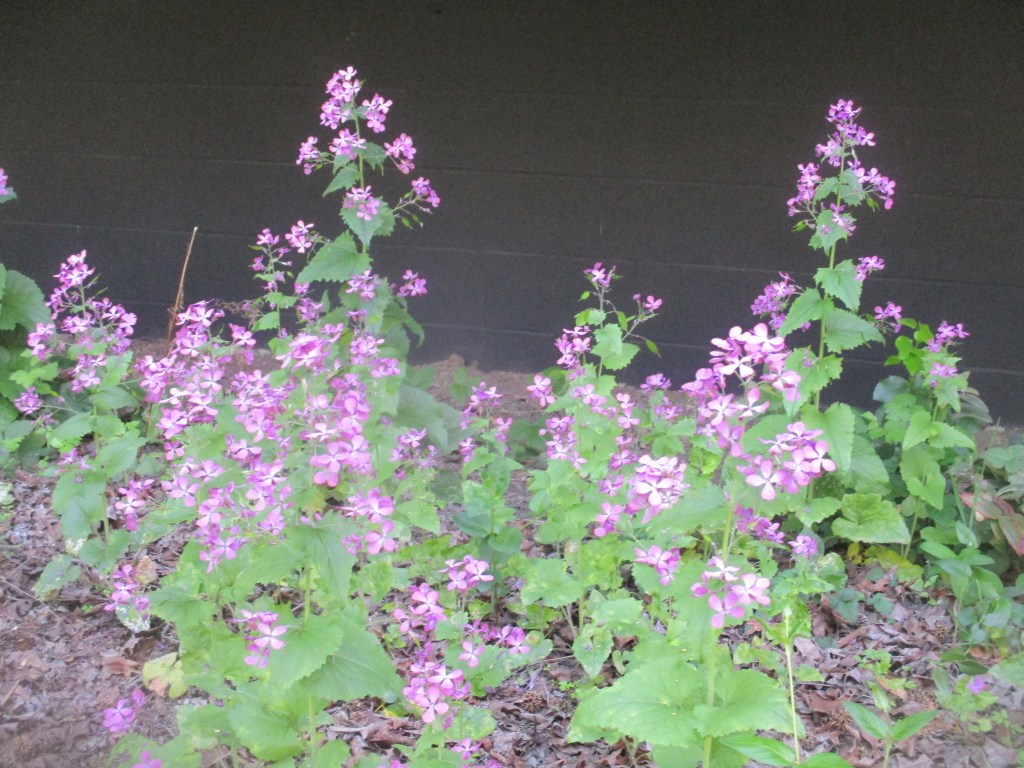
2. Is this money plant or honesty? I honestly believe that it is money plant. Others might bet money that it is honesty. I know they are the same. I would nonetheless prefer the proper name.
3. This one I can identify as wild cucumber. It is also known as manroot. The annoyingly weedy vines are surprisingly easy to pull out. However, the massive and resilient tubers make more.
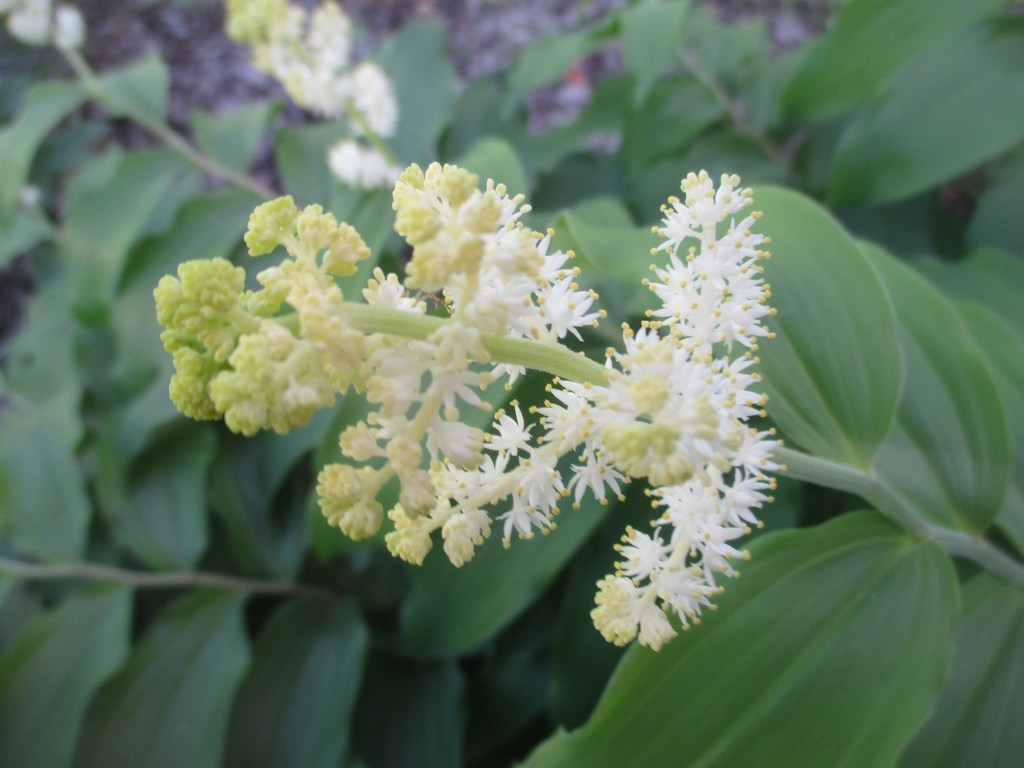
4. This is supposed to be false Solomon’s seal, but is real enough for us, since it is the only one we know. It is native, so lives in the surrounding forest and sometimes moves into landscapes.
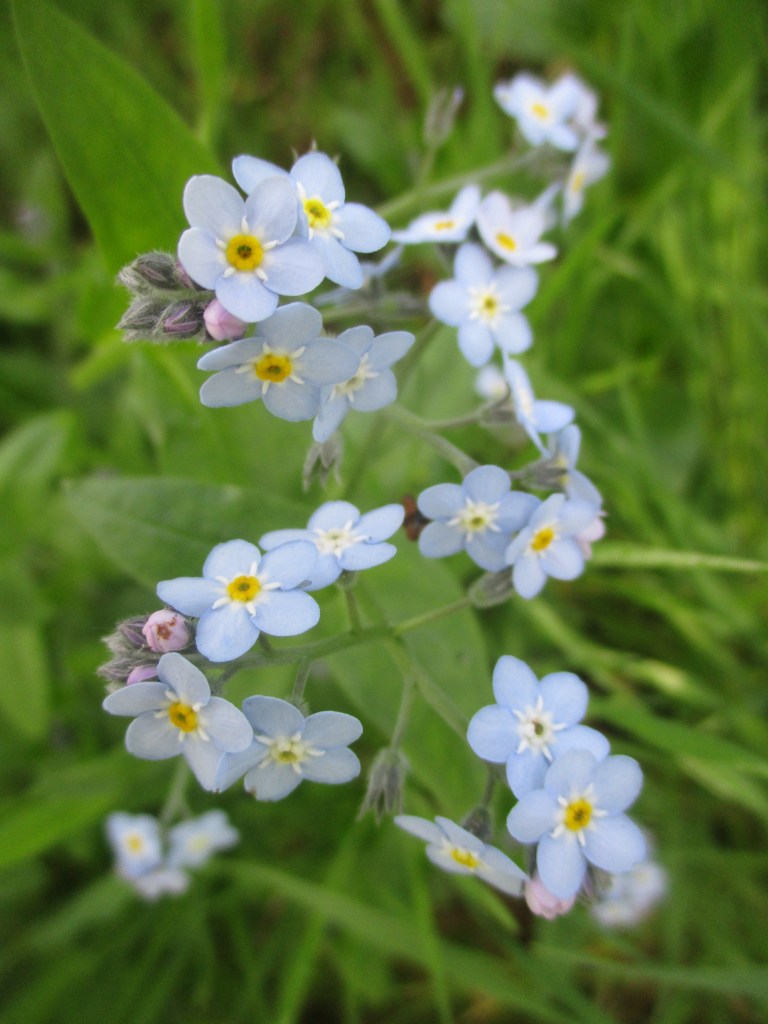
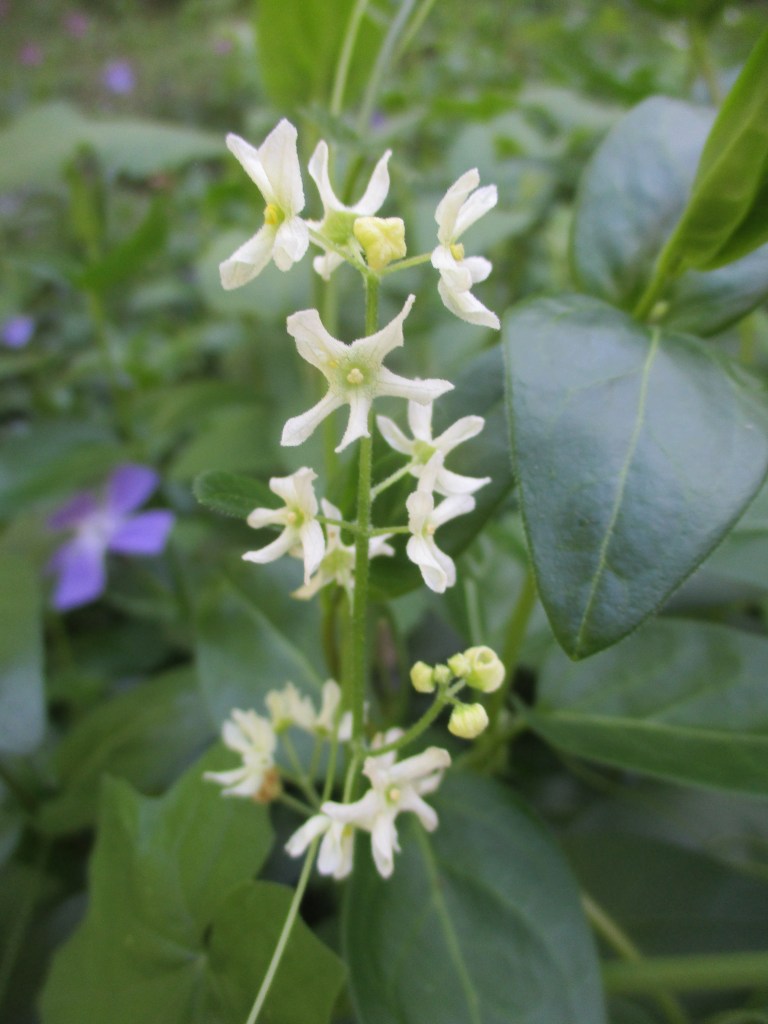
5. What is this?! Seriously, I have no idea! It appeared on a dry roadside after the taller grassy vegetation got cut down. The foliage seems to be that of California bluebells. It is likely related.
6. I know what this is, but doubt that you do. It is from one of only two species of its genus that is native regionally. The other species is endemic to every state except for Alaska and Hawaii.
This is the link for Six on Saturday, for anyone else who would like to participate:
The first four of my Six on Saturday are somewhat dated since they are not really from last week. It did not seem right to simply waste them. Actually, my pictures for the next two Saturdays were taken yesterday, so will also be more than a week old when they post. Perhaps I should not mention such violations. What is more important is the sixth picture here and now. It is not of particularly good quality, but it is what everyone really wants to see.
1. Laurustinus never got my attention before I noticed others sharing pictures of it. Still, I do not quite understand the allure. It is somewhat naturalized here. This one is whiter than others.
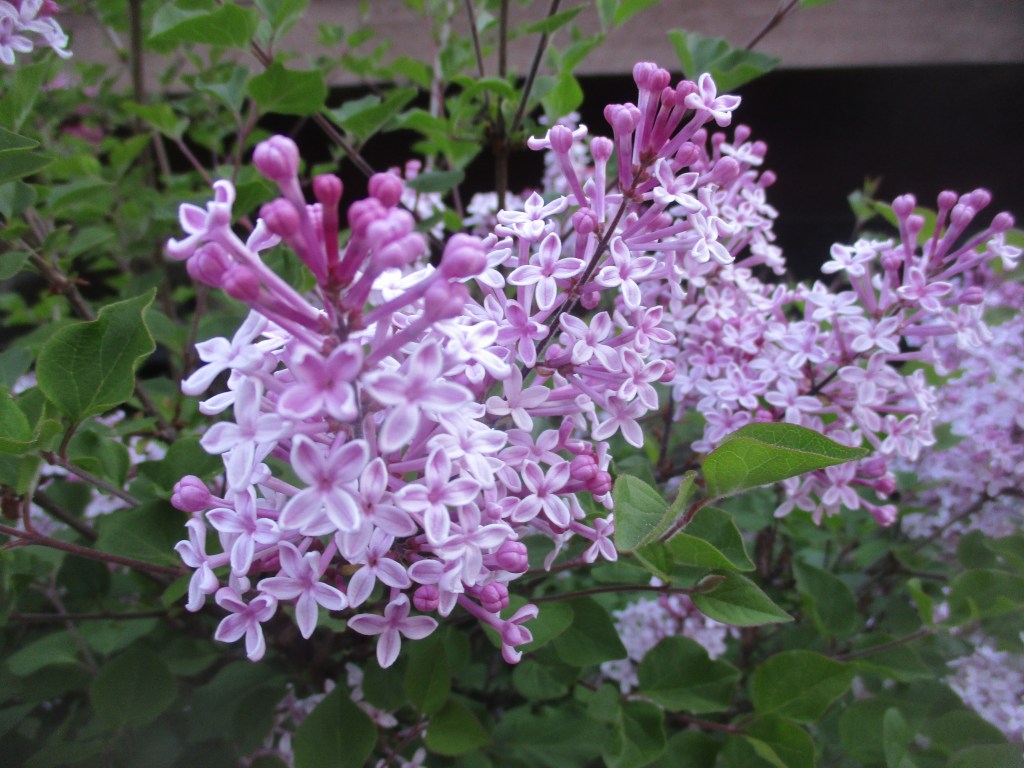
2. Fake lilac fails to impress those of us who know what real common lilac is. This runty little scrub is a trip hazard that happens to smell pretty. Its fragrance makes me crave common lilac.
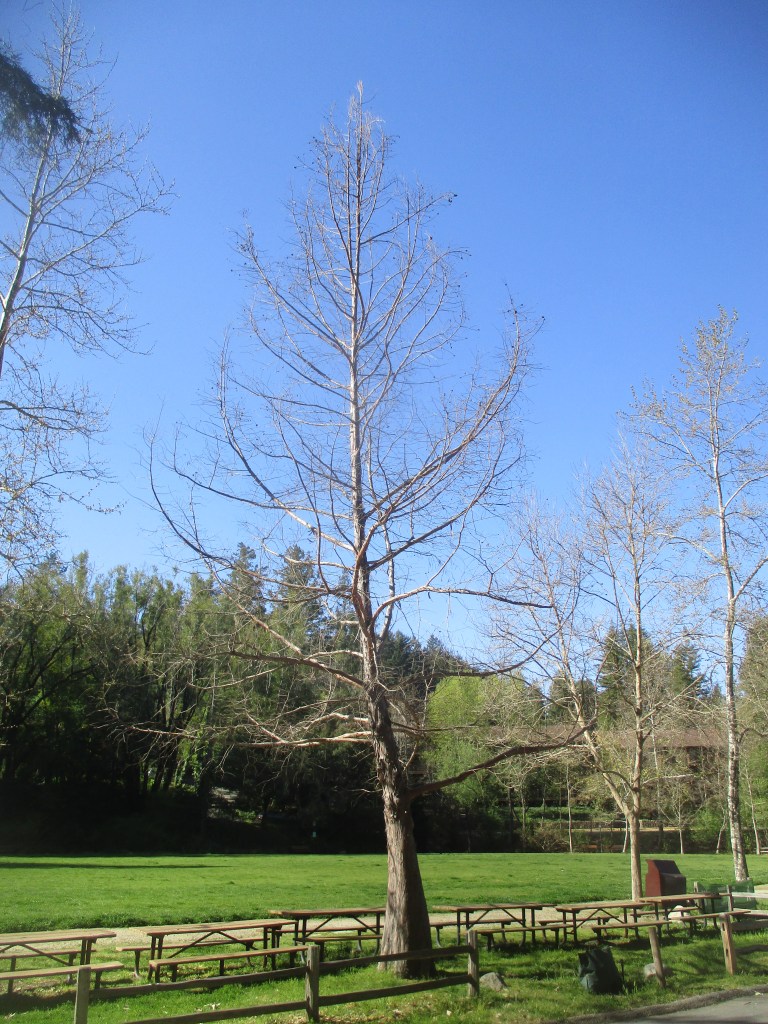
3. This is the first bald cypress that I ever got to work with, after meeting the species for the first time in Oklahoma in the autumn of 2012. Sadly, this is its last picture before it got cut down.
4. ‘In A Vase On Monday’ (IAVOM) is a meme that I almost participated in for the first time three weeks ago or so. I just could not get a good picture. There is quite a bit to write about here.
5. What must I say about this one? I encounter all sorts of weird situations at work. Part of this black cherry tree is getting milled. Part of it is firewood. The process was rather ‘complicated’.
6. Rhody says the first three pictures are mundane, the fourth is too dark, and the fifth is just VERY weird. The sixth picture could have been the best, if only Rhody would have cooperated.
This is the link for Six on Saturday, for anyone else who would like to participate:
Redundancy was not apparent to me as I collected these pictures of flowers that are blooming somewhat later than typical. Not only is the topic the same as last week, but daffodil is featured again, and comprises half of these six! A major (but not redundant) difference this week, which will most certainly compromise the popularity of my blog, is the absence of a picture of Rhody.
Incidentally, my Six on Saturday for next week will be redundant to #1 below, and will again lack a picture of Rhody, but it is a popular topic that I never discuss.
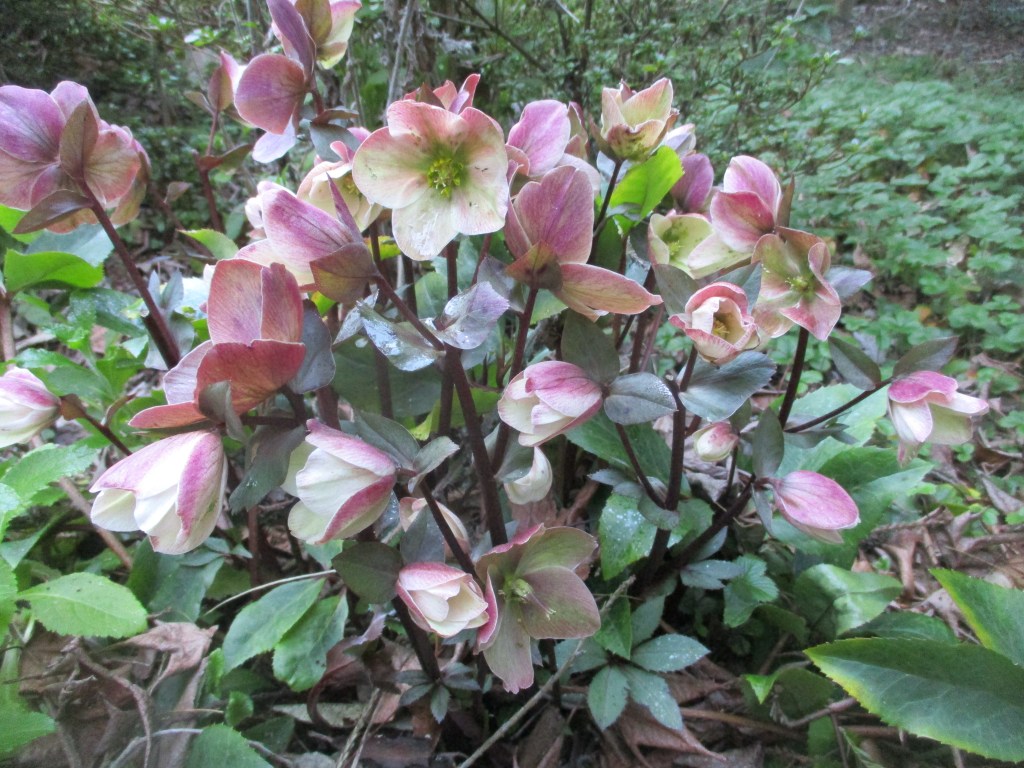
1. Hellebore is something that I am none too keen on. Bloom just happens to be remarkable this year. This one blooms most profusely. There will be more redundancy with these next week.
2. Sweetbox is also blooming unusually well this year, even if they are still not much to look at. Fragrance is their priority. Their sneaky bloom is usually more obscured by the glossy foliage.
3. Camellia bloom is not as late as it seems to be. Others bloom sporadically even a bit later. I think that this one would be prettier if it were lower than the roof, and visible from the carport.
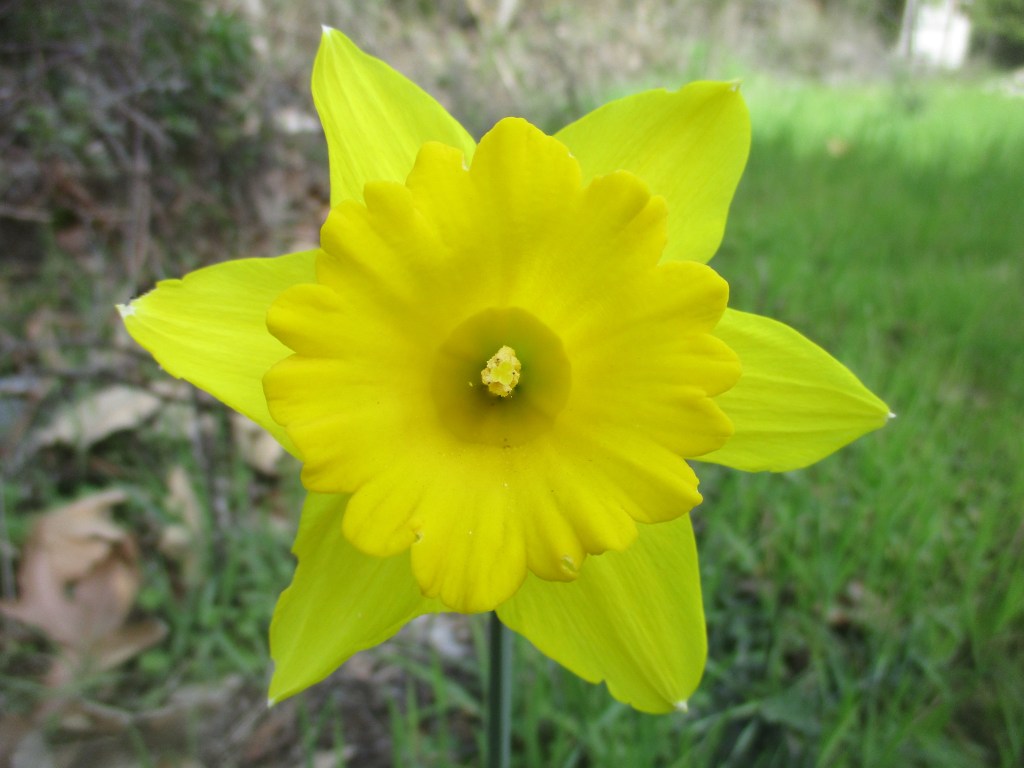
4. Daffodil is technically very different from those of last week. This and the two others are all feral in unlandscaped areas near our industrial shop buildings. This one looks like ‘King Alfred’.
5. Daffodil, whether truly feral or not, can be quite variable. I suspect that they came into the site with soil or debris that was removed from landscapes, and dumped here through the years.
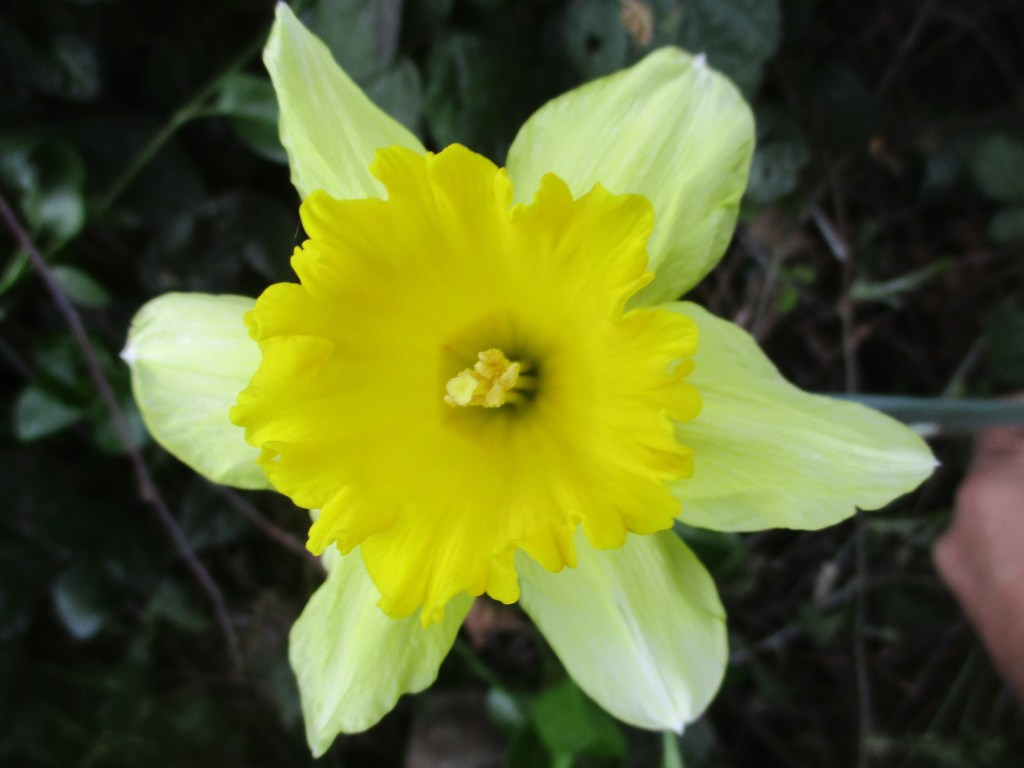
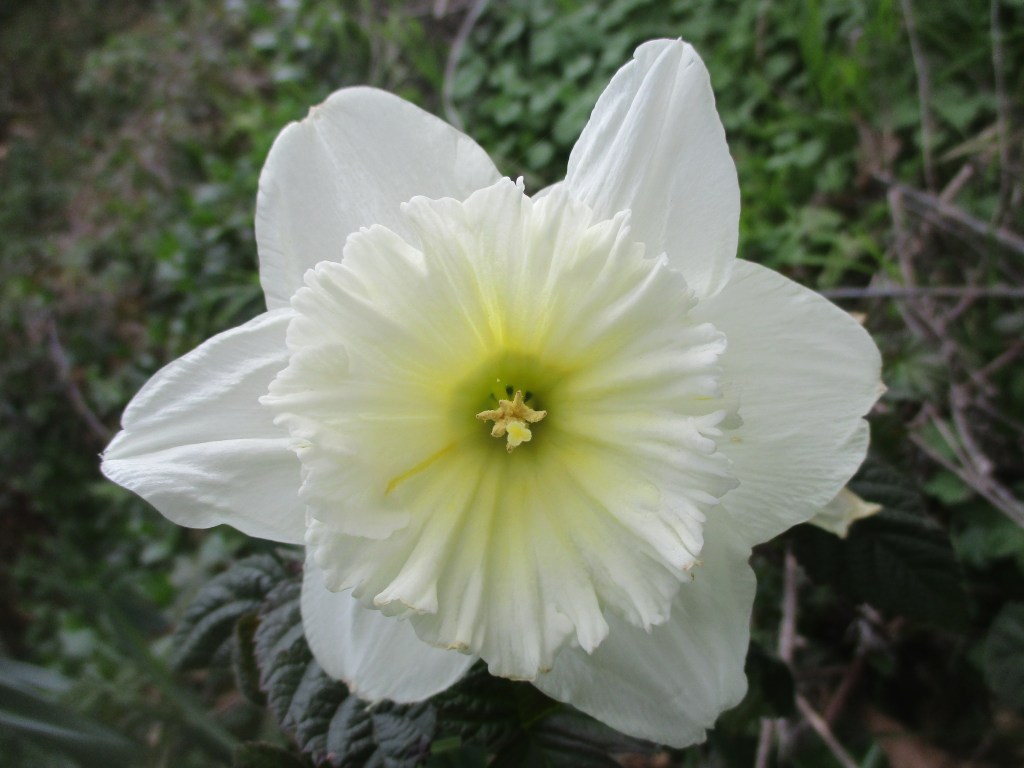
6. Daffodil, in my opinion (which, in my opinion, is the most important opinion), should look like ‘King Alfred’! The next best option is like ‘King Alfred’, but white! Could this be ‘Mount Hood’?
This is the link for Six on Saturday, for anyone else who would like to participate:
All of the popular fruit trees produce flowers. Otherwise, they could not produce fruit. The stone fruits, such as almond, apricot, cherry, peach, plum and prune, bloom very impressively this time of year. (Stone fruits have single large seeds known as stones. Almonds are the large stones of small fruits that resemble peaches.) The pomme fruits, such as apple and pear, bloom about as prolifically shortly afterward, followed lastly by related but rare quince.
The difference between these trees and their counterparts known as ‘flowering’ trees is not so much the flowers, but the fruit. ‘Flowering’ is something of a euphemism for trees that might otherwise be known as ‘fruitless’, since they produce either uselessly small fruit, or no fruit at all.
This may seem silly to those who enjoy growing fresh fruit in the garden. However, fruit trees require so much pruning in winter, and can be so messy if the fruit does not get completely harvested. The flowering trees are happy to provide the profuse bloom without so much maintenance and potential mess. Because they were developed as ornamental trees, their flowers are more impressive, with many more shades of pink, as well as white. Many types bloom with big and fluffy double flowers.
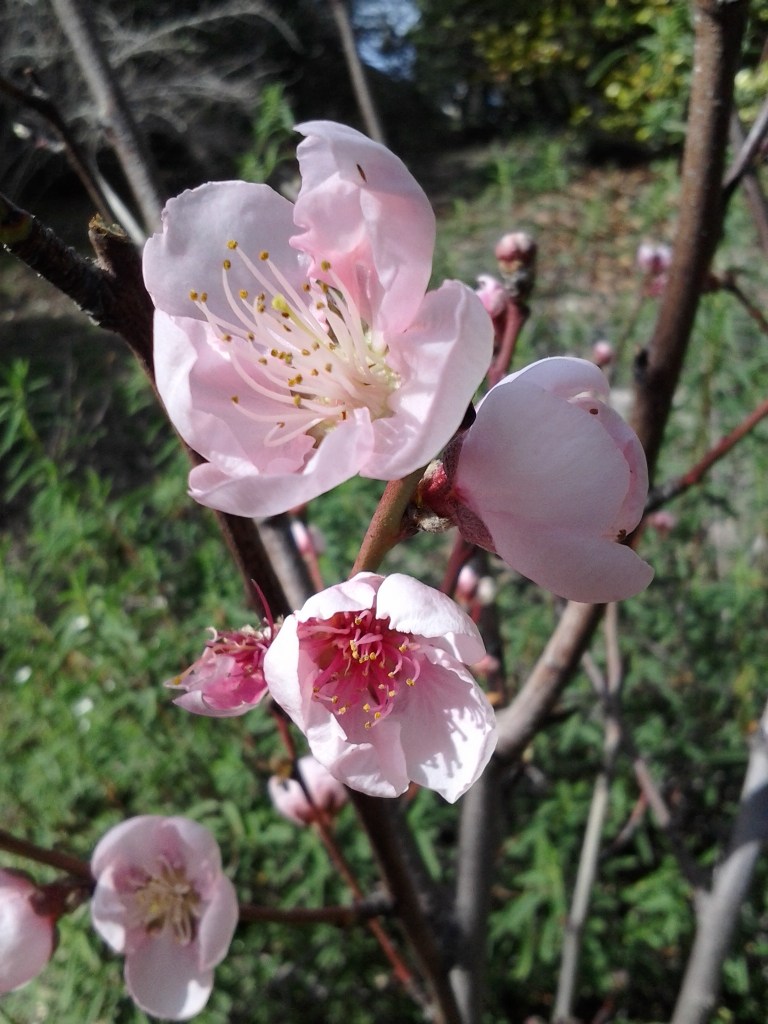
Flowering cherry and plum are probably the most popular of the flowering stone fruit trees. Most flowering plums have purplish foliage, so are more commonly known as purple-leaf plum. Flowering almond, apricot, prune and peach are relatively somewhat rare. Most flowering stone fruit trees are completely fruitless, but some purple-leaf plum can produce messy and sour plums as they mature.
Flowering pear is probably not recognized as such because it is more often known as fruitless pear. Ironically, it can produce enough tiny pear fruit to be messier than other flowering fruit trees. Flowering pear blooms only white, and is not as florific as the other flowering trees, but grows large enough to be a mid-sized shade tree, and has the advantage of remarkable foliar color in autumn. Evergreen pear is an entirely different sort of tree that only blooms well if the weather is just so, and lacks fall color (because it is semi-evergreen).
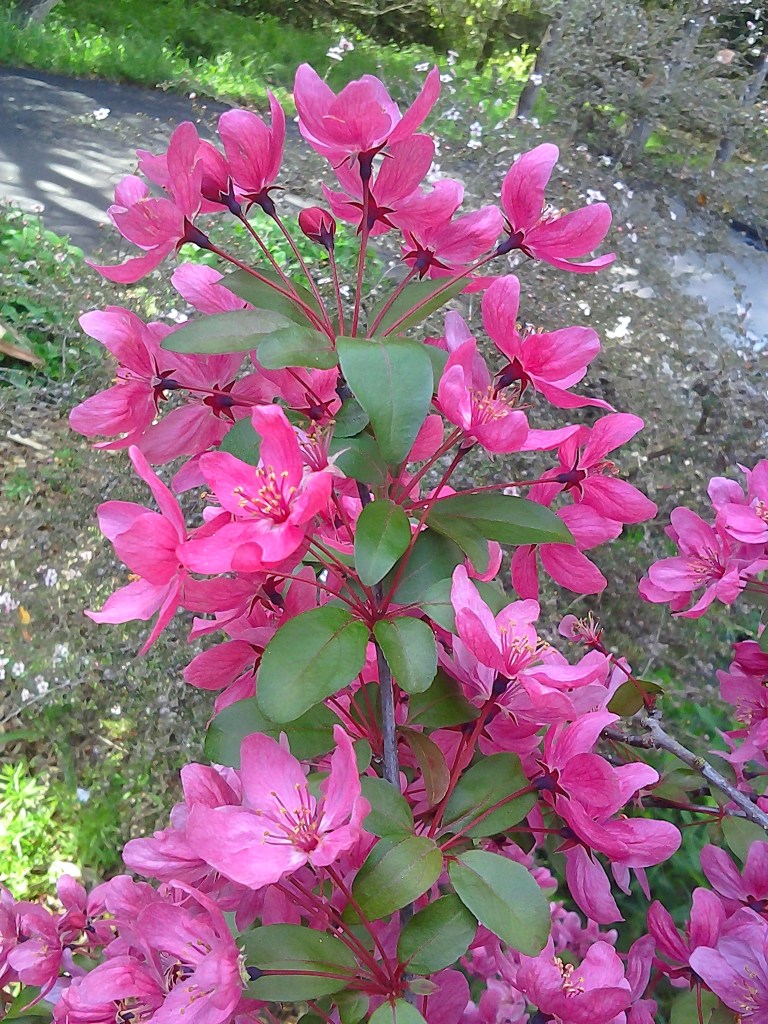
Flowering apples are known as flowering crabapples. Unlike the other flowering trees, many flowering crabapples develop a sloppy branch structure if not pruned almost like trees that produce fruit. Yet, the weirdest of the flowering trees is the flowering quince, which is not even the same genus as fruiting quince. It develops into a thicket that blooms before everything else. Fruiting quince instead matures into a rampant tree, and blooms after the other fruit trees.
What is the difference between narcissus and daffodil? That is very open to interpretation. Daffodil is really only a particular type of narcissus that tends to bloom with larger and more colorful flowers that lack the rich fragrance of the smaller and commonly white flowers of other narcissus. Most daffodil bloom singly. Only a few bloom with a few flowers together. Other narcissus are outfitted with more individual flowers to each stem.
When they were buried in sunny spots last autumn, bare daffodil bulbs looked like pointed onions. They rested through much of winter so that they could be among the first flowers to bloom late in winter. The rather short and narrow bluish leaves stand vertically. The flaring flowers face outward with a bit of a downward or upward tilt. After bloom, deteriorating flowers should be plucked, but foliage should remain until it yellows and gets shed naturally.
The most familiar daffodil are bright yellow. Others can be white, various shades of orange or yellow, or a combination of these colors. Six outer petals (which are actually three petals and three sepals) radiate around a central trumpet.
Rhody and I needed to go to San Jose for the past three days, and will be going there again at least until April. We had not been there or even into the Santa Clara Valley for a very long time. I did not realize how long we had been gone until I collected my accumulation of mail on the way through town, and found Christmas cards!
1. Tecoma stans is the second most important topic of my Six for this week! The Shrub Queen sent me these seed from wild plants that are native to Southern Florida! It is so rare here that I had seen it only a few times prior. A compact cultivar became available only a few years ago. I wanted the straight species. Embarrassingly, these seed were in my mailbox since December.
2. Camellia japonica is still blooming, with buds that will continue even longer. Technically, it is not late. Some bloom as late as March. I do not remember the name of this particular cultivar.
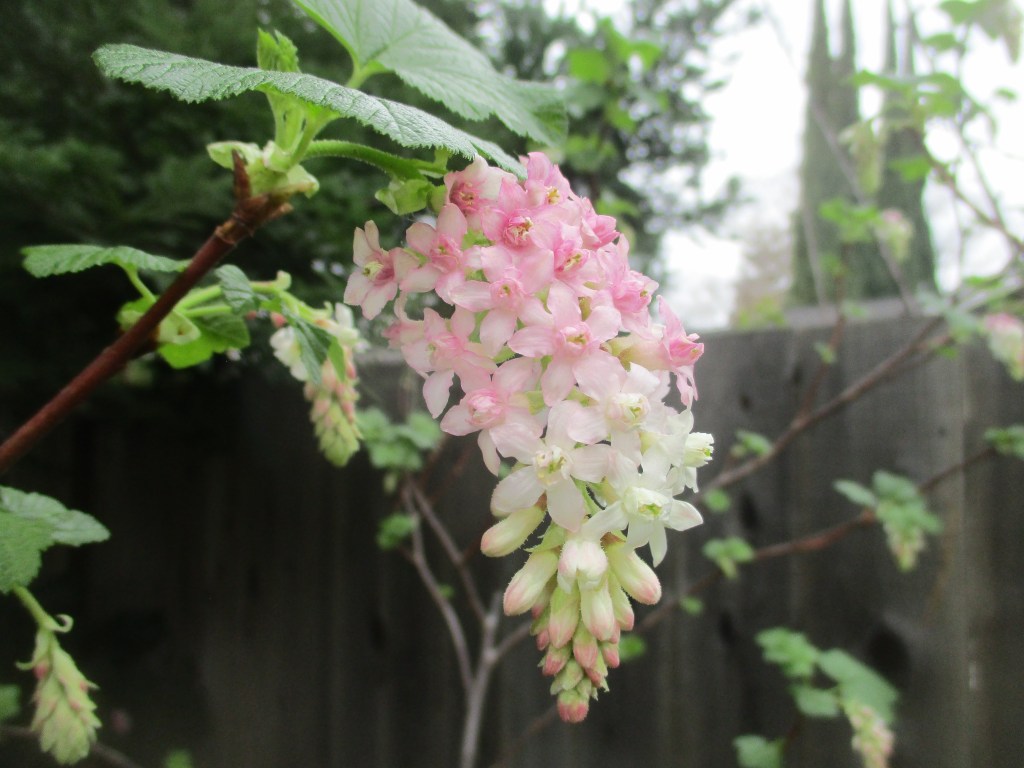
3. Ribes sanguineum is native to the forests only a few miles from here. This one and another like it were planted here a few years ago. Two others that bloomed white did not last very long.
4. Narcissus pseudonarcissus, or simply ‘daffodil’, bloom sporadically in the oddest of situations. Their bulbs remained where they got planted years ago, as the landscape changed over them.
5. Spirea prunifolia ‘Plena’ is sparsely branched, but perhaps delightfully so. I am surely no expert in regard to aesthetics, but it seems to me that more profuse bloom would be less delicate.
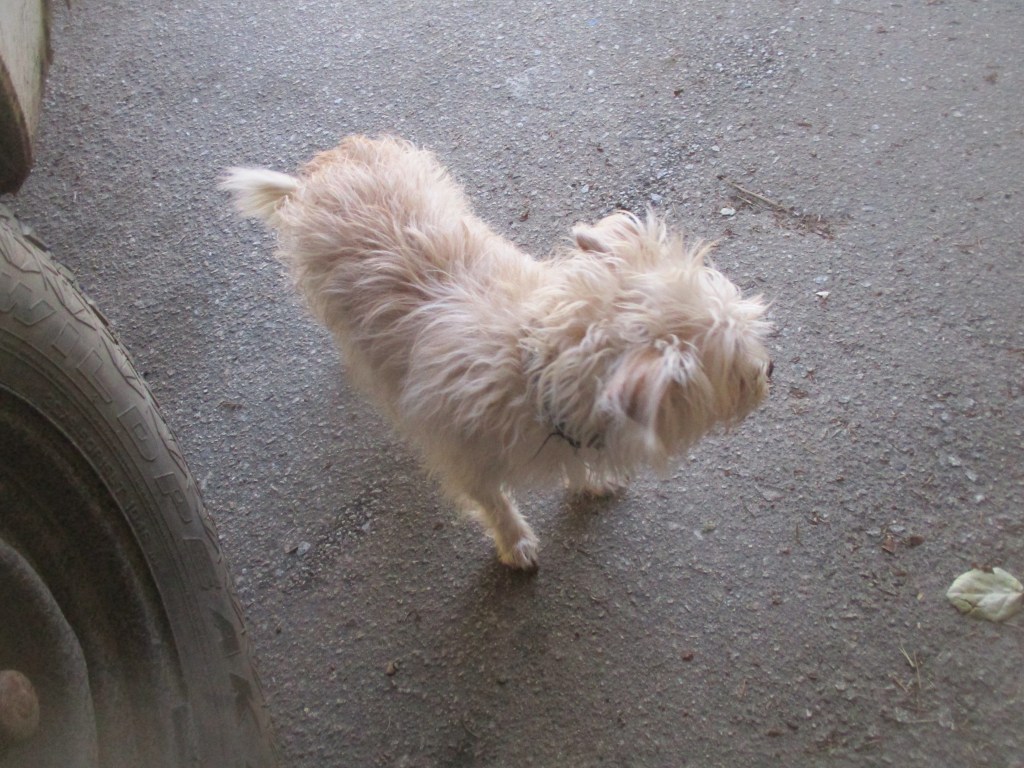
6. Rhody is the most important topic of my Six for this week. This was the moment immediately prior to his realization that I was aiming the camera at him, and his spry reaction to avoid it.
This is the link for Six on Saturday, for anyone else who would like to participate:
Pussywillow is an odd cut flower. It is neither fragrant nor very colorful. It just gets cut and brought into the home because the distinctively fuzzy catkins are so interesting. They are appealing alone or mixed with other late winter flowers. The otherwise bares stems can get cut just as soon as the fuzz is beginning to become visible within the swelling buds. Bloom accelerates once the cut stems are brought into a warm home.
There are actually several other plants that can provide bare twigs that can be ‘forced’ into bloom in the home. ‘Forcing’ is simply the acceleration of bloom of such twigs by cutting them and bringing them from cool winter weather into warm interior ‘weather’. Flowering quince, flowering cherry and flowering (purple leaf) plum have likely finished bloom; but forsythia, hawthorn, flowering crabapple and many of the various fruit trees that have colorful bloom will be ready to be forced any time. Some daring people even force redbud, dogwood, witch hazel, lilac and star and saucer magnolias.
When the deciduous fruit trees that bloom well need to be pruned in winter, some people intentionally leave a few spare branches to be cut and forced later, just before bloom. These include almond, cherry, apricot, plum, prune, nectarine, peach, pear, apple and a few others. When stems get cut for forcing, they should be pruned out from the trees according to proper dormant pruning techniques, and can be trimmed up accordingly when brought into the home. Flowering (non-fruiting) trees should likewise be treated with respect when stems for forcing get pruned out.
Twigs to be forced should be cut just as the flowers are about to bloom, and preferably, as a few flowers are already blooming. They should be put in water immediately, and if possible, cut again with the cut ends submerged. Buds that will be submerged when the stems are fitted into a vase should be removed.
Once in a warm home, the rate of bloom will be accelerated, although everything blooms at a particular rate. Apple and pear bloom later than most, and can bloom slow enough to justify cutting stems while already blooming. As forced stems bloom, they can be quite messy, but the mess is probably worth it.
Merry Christmas! Okay, perhaps not. This posted at midnight, precisely as Christmas Day ended. These are not exactly Christmas flowers anyway. They are not even Christmas colors. The pictures are actually from the previous week. I knew then that I would not likely want to go out to get pictures last week. Until now, Christmas was the priority. There was no work to go to.
My six are very limited this week. There are only two genera and three species. There could be more if the Osteospermum have species designations. I know them only as ‘hybrids’. If there are any cultivar names, I do not know what any of them are.
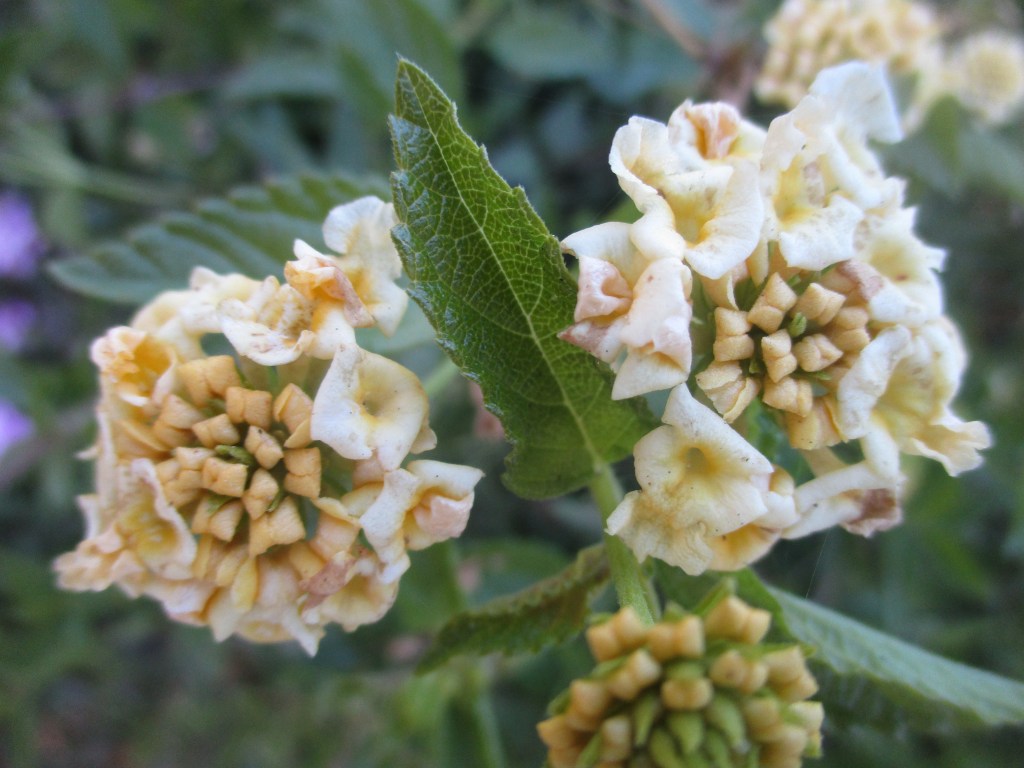
1. Lantana montevidensis – grows as a ground cover. The color range of the bloom is limited. This color is common, but I thought that individual flowers more commonly have white centers.
2. Lantana camara – is the ‘other’ lantana. It is shrubbier and better foliated. Floral color is more variable and generally more brightly colored. Bloom is not as extensive, but is more prolific.
3. Lantana camara – likes this particular landscape where I got these pictures. Another solitary specimen down the road and at a lower elevation already looks shabby from cooling weather.
4. Osteospermum – within this landscape are all modern hybrids. If anyone knows who their parents are, they do not share such information anymore. I think this color might be ‘lavender’.
5. Osteospermum – looks more purplish than the previous picture. I am no good with colors. Despite the attributes of modern hybrids, I still prefer old fashioned Osteospermum fruticosum.
6. Osteospermum – colors are not easy to describe. Is this one light burgundy red or ruddy pink? There might be six or so cultivars here. This unidentifiable color happens to be my favorite.
This is the link for Six on Saturday, for anyone else who would like to participate: