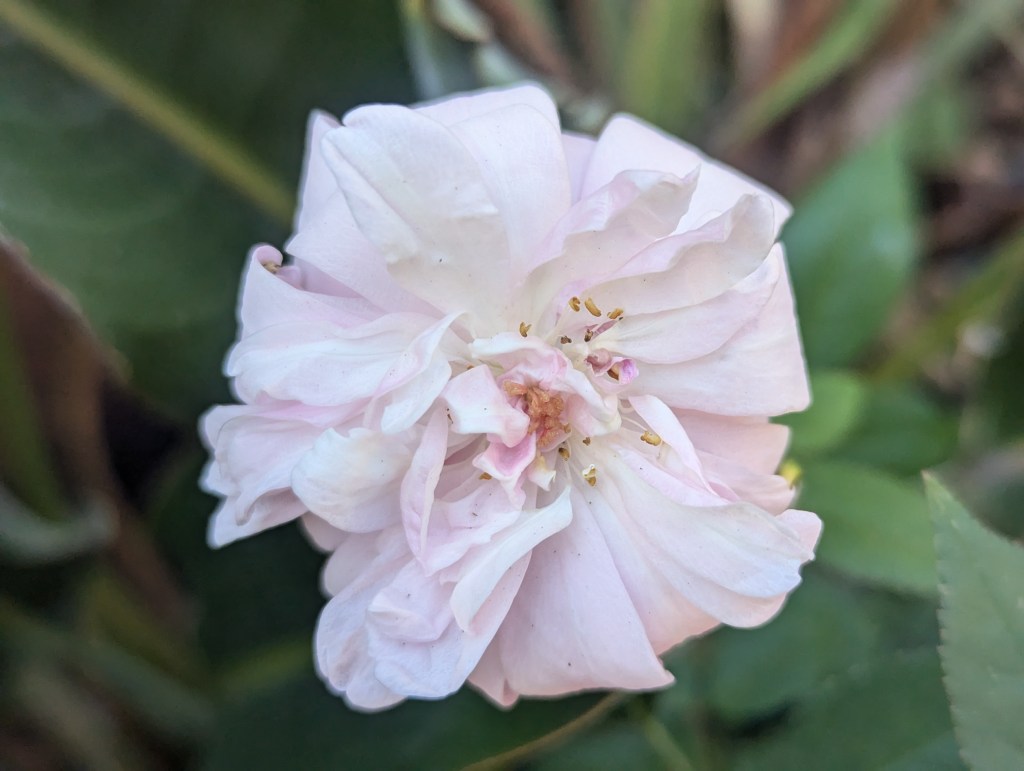
Sunday Best – Pale Pink Miniature Rose

Once it gets established in a garden, it will likely always thrive there. Torch lily, Kniphofia uvaria, is as reliable and resilient as lily of the Nile and African iris. It is as easy to divide for propagation too. Mature specimens can survive without any more water than they get from annual rainfall. They might appreciate some through the middle of summer, though.
Old fashioned torch lily blooms for summer or early autumn, so some are blooming now. Modern cultivars are more likely to bloom earlier. Densely conical floral trusses suspend many narrow and tubular flowers. They stand as high as five feet on otherwise bare floral stalks. Dense mounds of grassy basal foliage should grow no more than three feet high.
Flower buds are orange as they begin to bloom, and then fade with age to pastel yellow. Because floral spikes bloom upwards from the bottom, they turn yellow at the base while orange on top. They resemble candy corn. Some cultivars are paler white at the base, or more reddish orange at the tip. Others are uniformly orange, yellow or soft creamy white.
Although the weather is predicted to be more typical, it was prematurely autumnish last week. It is a reminder that it really is time for Autumny and wintry flowers to come into season while summery flowers go out of season. This “Six on Saturday” is about some of such coming and going. (To comply with guideline #7 of the participant guide for Six on Saturday, I am limiting verbiage.)
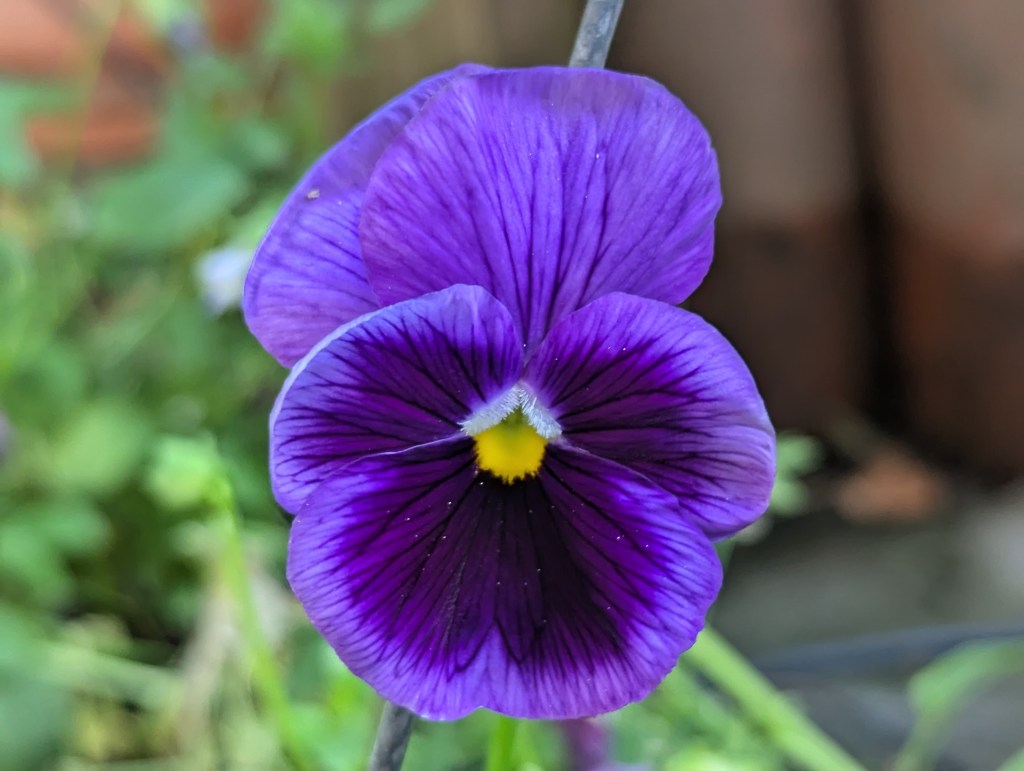
1. Viola wittrockiana, pansy is traditional for winter floral color. It replaces petunia, and should last until petunia becomes seasonable again next spring. It is coming into season.
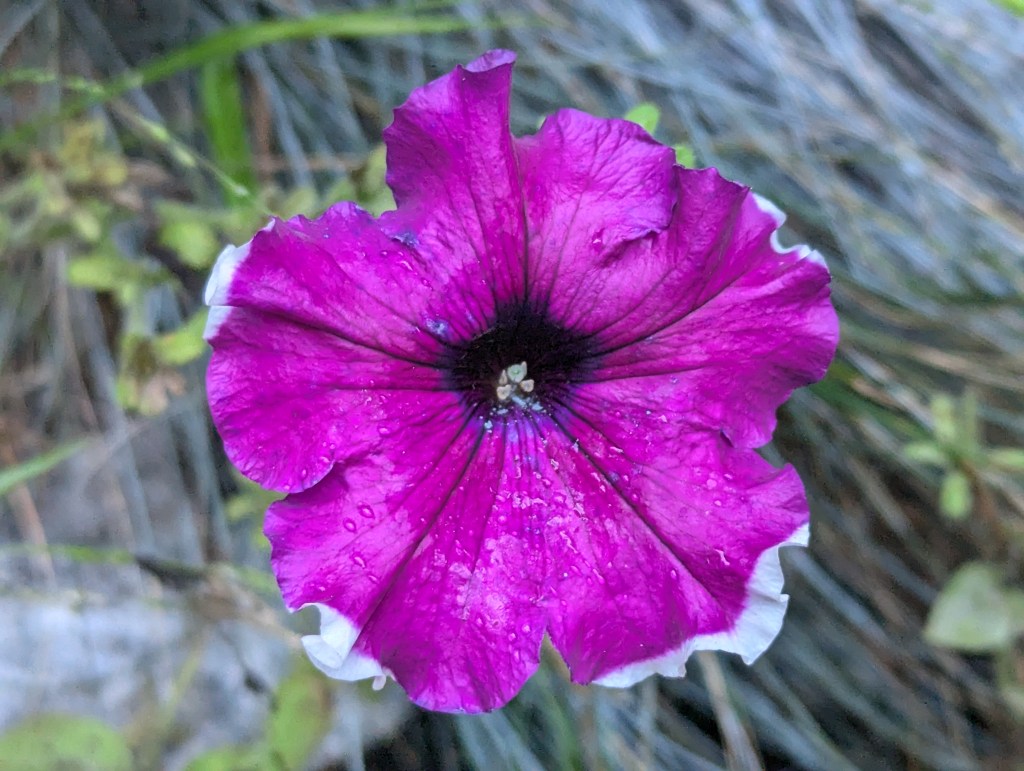
2. Petunia X hybrida, petunia is traditional for summer floral color. It replaced pansy as pansy finished its season last spring. It is going out of season now. Do you see a pattern?
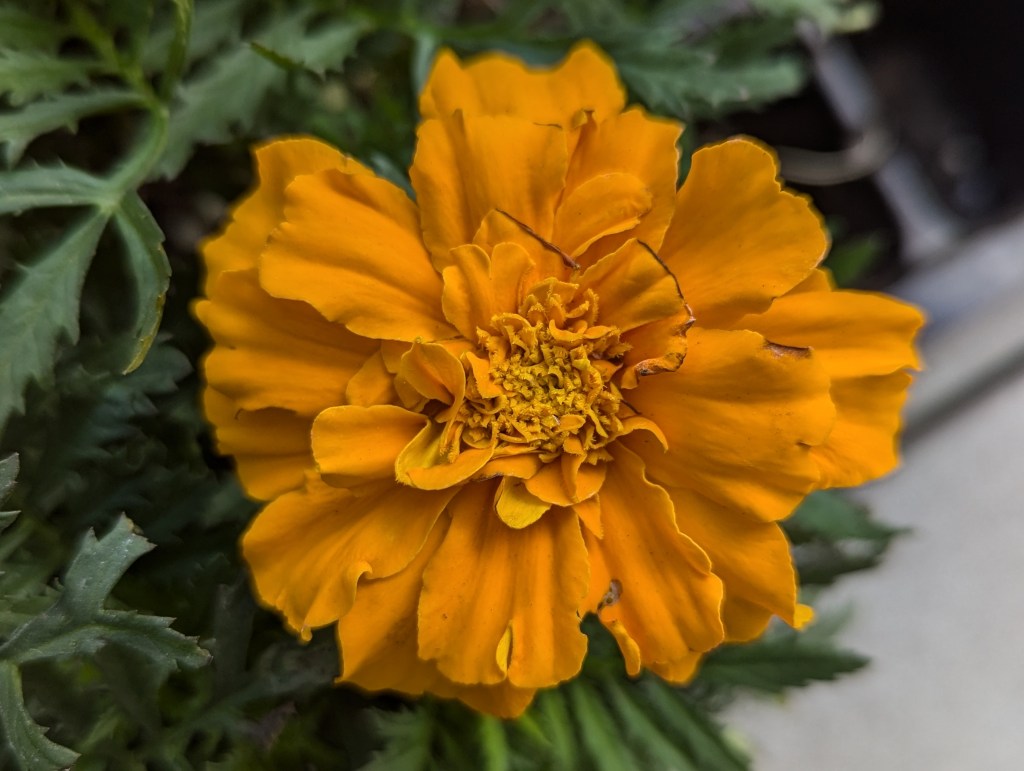
3. Tagetes patula, marigold is traditional for autumn floral color. It was just installed as a narrow border for a small rose garden. For there, it is one of the more reliable annuals.
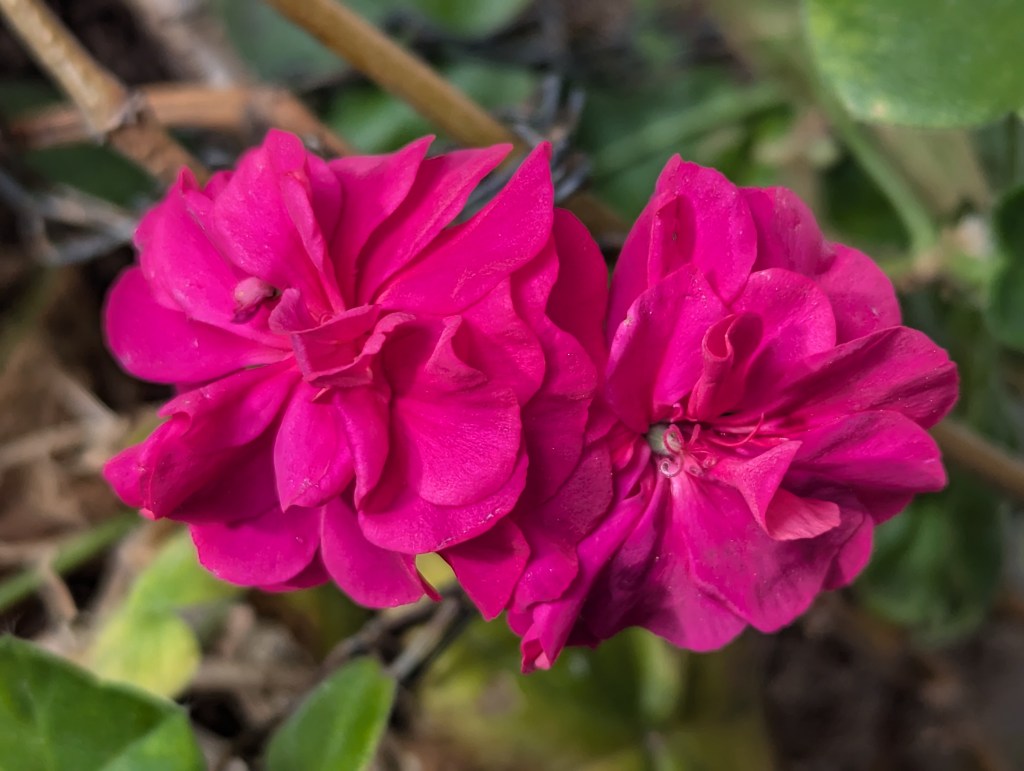
4. Pelargonium peltatum, ivy geranium, in eight or so baskets, hung from the eaves of a prominent building at work, but never flourished. They will be recycled somewhere else.
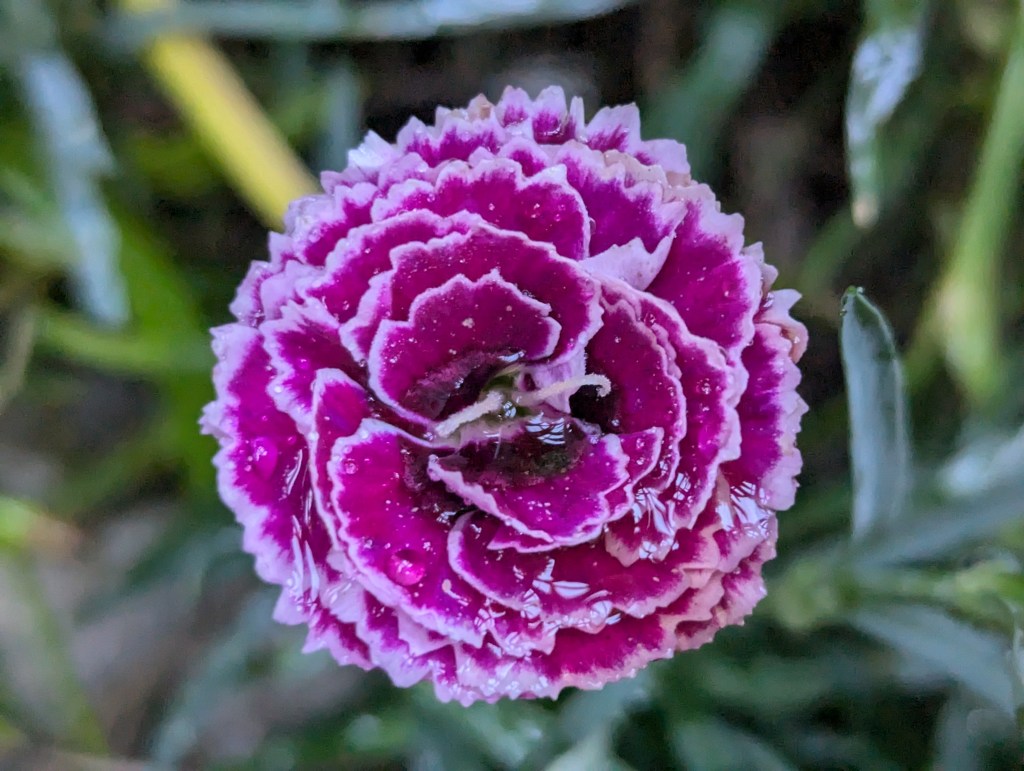
5. Dianthus caryophyllus, carnation does not do much through summer, but now begins to bloom as nights become cooler. I forget that it is here. I also forget how delightful it is.
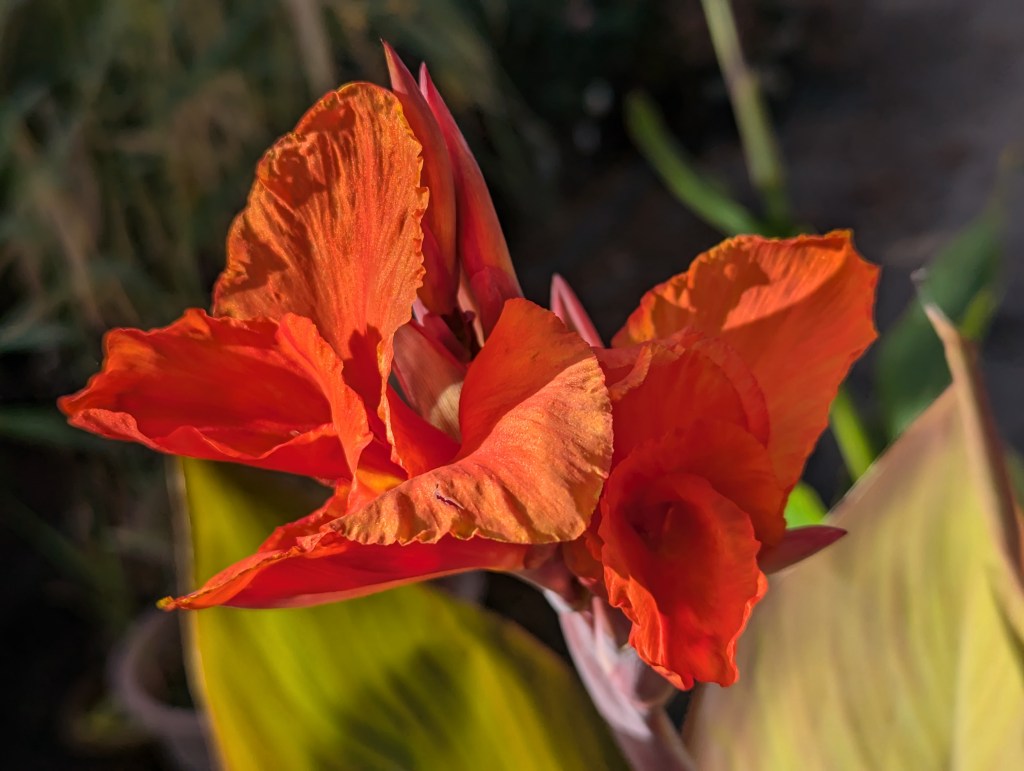
6. Canna, canna blooms a bit less enthusiastically as the weather begins to cool, but can technically bloom until it gets frosted. If it does not get frosted, it can bloom continually.
This is the link for Six on Saturday, for anyone else who would like to participate: https://thepropagatorblog.wordpress.com/2017/09/18/six-on-saturday-a-participant-guide/
The unseasonably relocated roses that I had been so concerned about for the past month or so continue to surprise with more growth and bloom. So do a few other species. These first three happen to be from Tangly Cottage Gardening. The following two happen to be white. The last happens to not be of horticultural orientation.
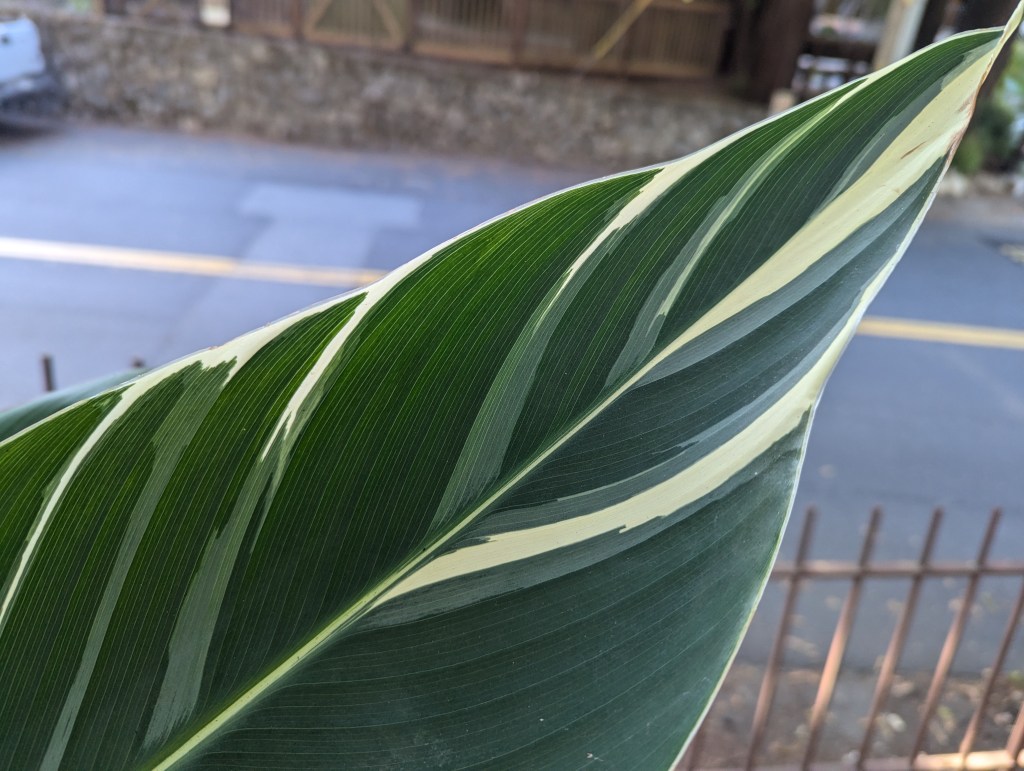
1. Canna ‘Stuttgart’, along with a few other fancy potted Canna, unfortunately needed to be relocated from the deck that they inhabited at work. However, it seems to be happier after relocation, and makes larger and more ornate leaves, which is what it is grown for.
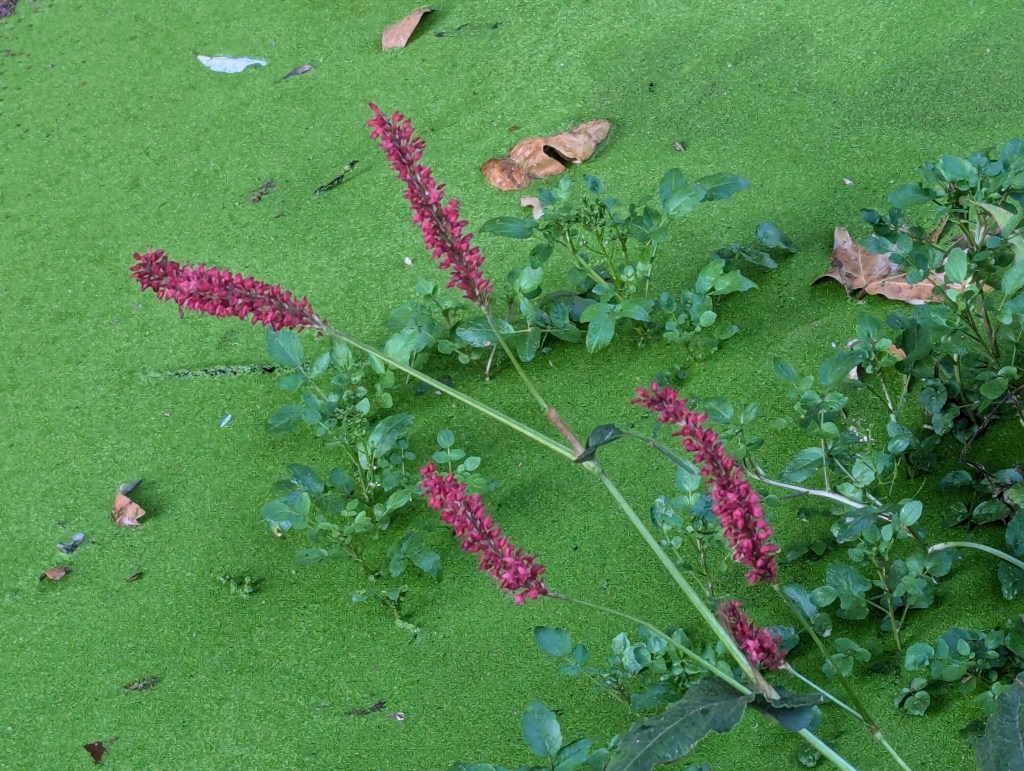
2. Persicaria amplexicaulis ‘Firetail’ bloomed lightly but on time for early summer, and then bloomed again before the original bloom faded completely. The secondary bloom is only now fading, with a backdrop of duckweed and watercress. (This is an older picture.)
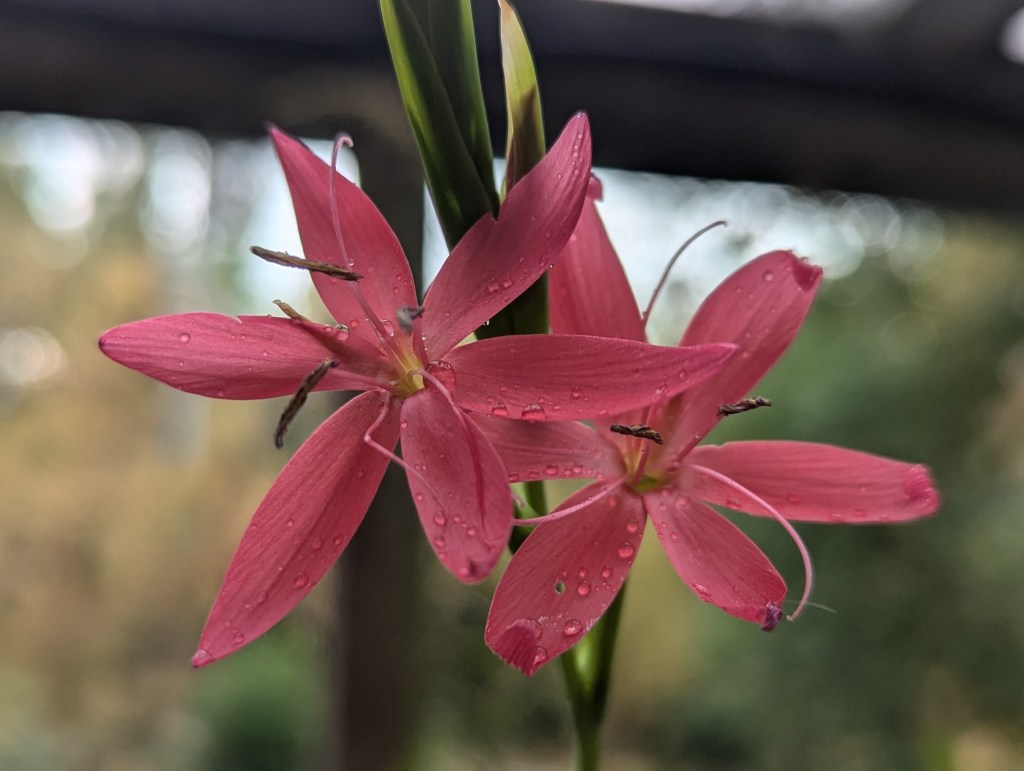
3. Hesperantha coccinea, crimson river lily was not expected to bloom because it was so dinky when it arrived late last winter. I thought that its bulbs would need to mature for a year or so before they would be mature enough to bloom. Apparently, it wastes no time.
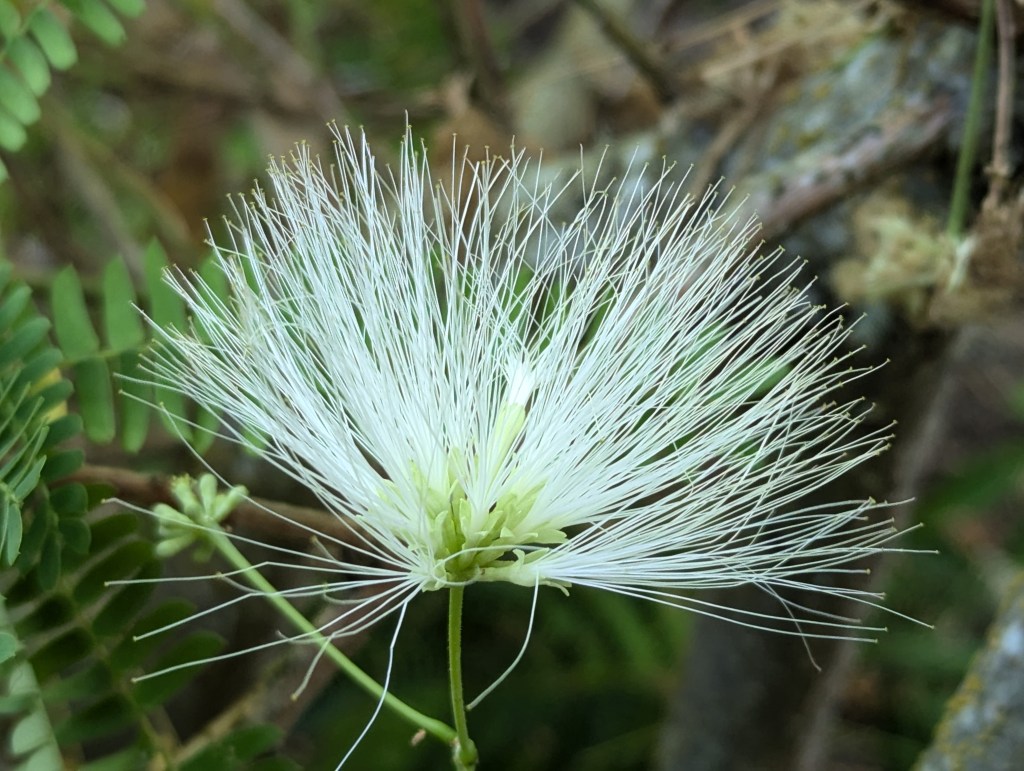
4. Albizia julibrissin, silk tree blooms white instead of pink, although, because it blooms on top of its high canopy, not much of it is visible from the ground. It finished blooming already, but some minor pruning recently revealed a few of these aberrant white flowers.
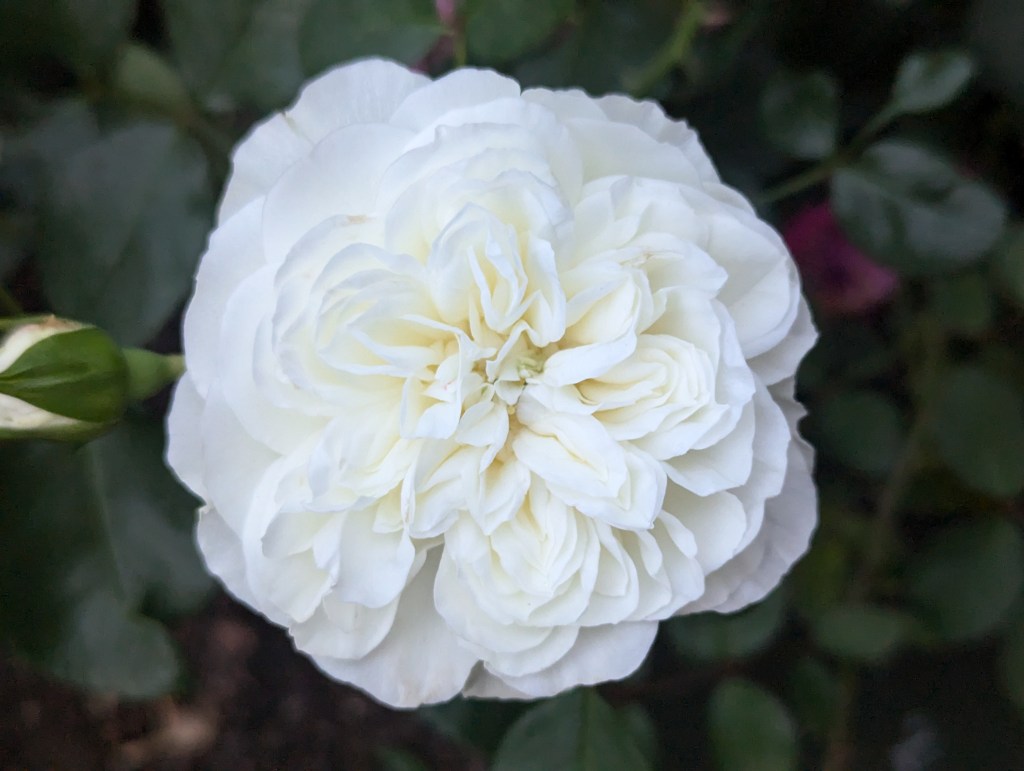
5. Rosa spp., rose is another of the few roses that were not expected to bloom after their unseasonable relocation. It seems to be a climbing type, with long and limber stems, and trusses of small flowers. I am impressed that it not only survived, but is growing so well.
6. Heather fails to be as impressed by these developments that I find to be so surprising.
This is the link for Six on Saturday, for anyone else who would like to participate: https://thepropagatorblog.wordpress.com/2017/09/18/six-on-saturday-a-participant-guide/
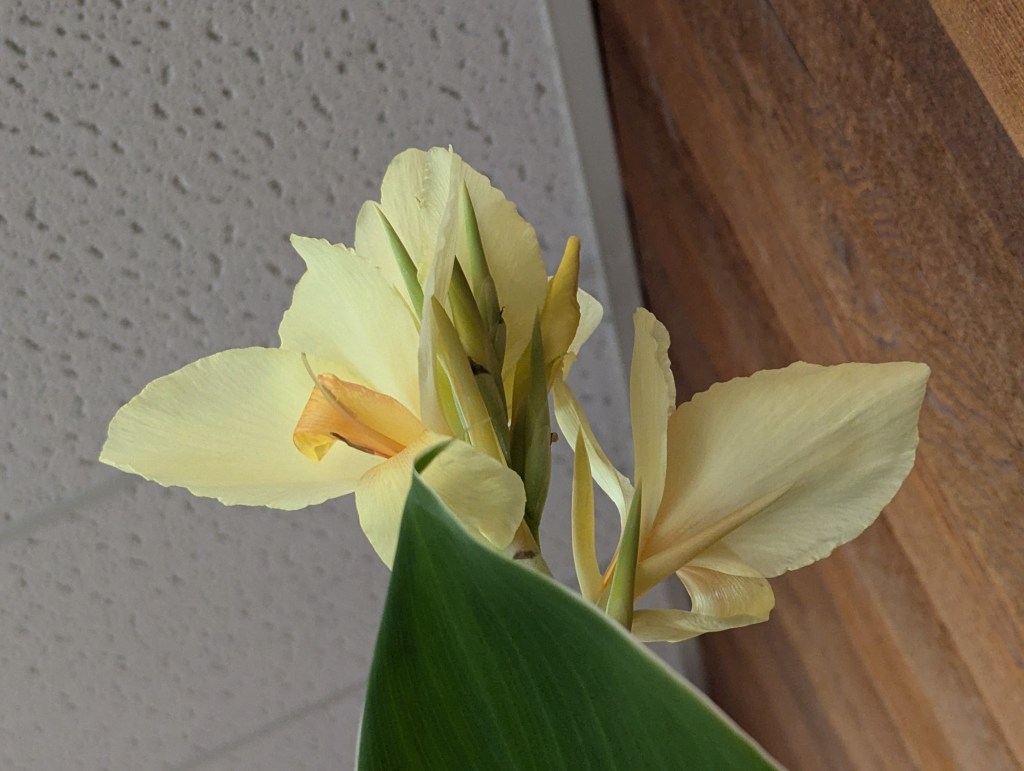
Just about everything in my garden has history in someone else’s garden. Almost nothing came from a nursery. I like to say that purchases are against the rules. However, I did purchase ‘Alaska’ Canna from Horn Canna Farm because I want to grow a white canna. I am over the shame already, and am very fond of this first white canna that I have seen since I was very young. As you can see, it is not very white, and is more of a creamy white or vanilla white. Actually, it is very pale yellow. It is presently growing as a houseplant in one of the buildings at work, which might have enhanced the pale yellow color of its bloom. I believe that it would have been whiter out in the weather. It is already growing quite nicely, so will need to move out into a landscape with all the other Canna for next year. I doubt that it will be as popular as the other brightly colored Canna, but a few who see it in bloom might recognize how rare creamy white Canna are now. I think that ‘Alaska’ would contrast splendidly with the dark bronze foliage of ‘Australia’.
As mentioned last week, I got pictures of the roses that were in bud at the time, in bloom now. It will be autumn on Monday, though, and cool season annuals are replacing warm season annuals.
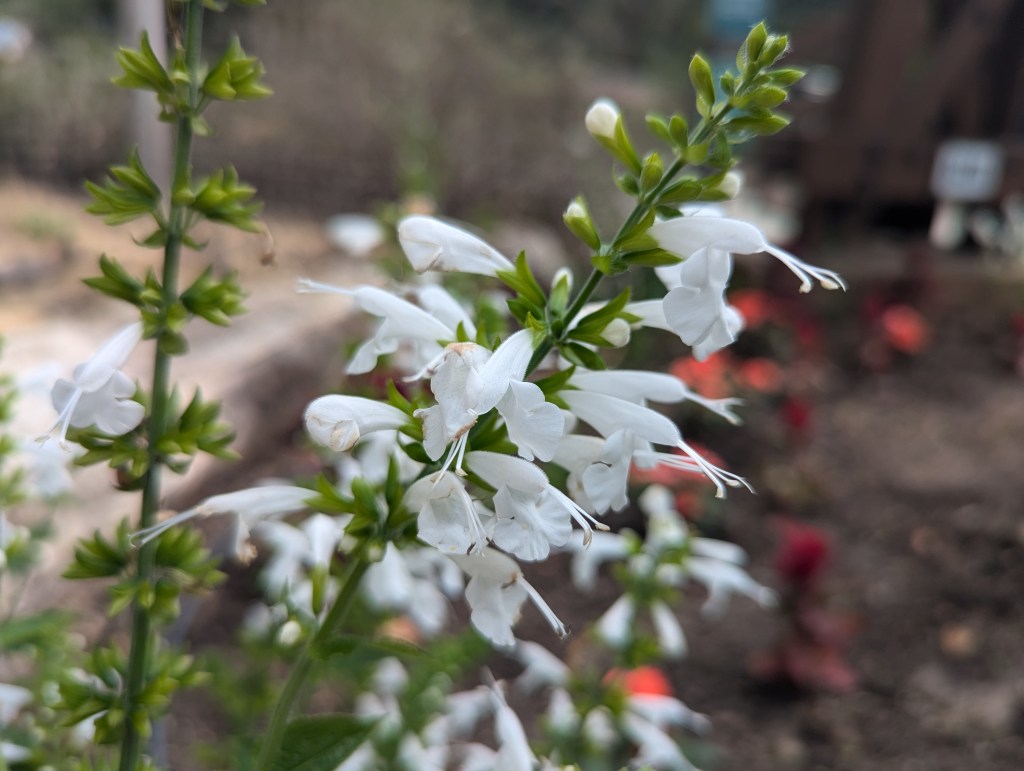
1. Unidentified Salvia was added to one of the landscapes by someone who was here for the summer, just prior to his departure. Now, I have no idea what it is. I could ask, but I feel that I should recognize it, or at least be able to identify it. I like its pure white bloom.
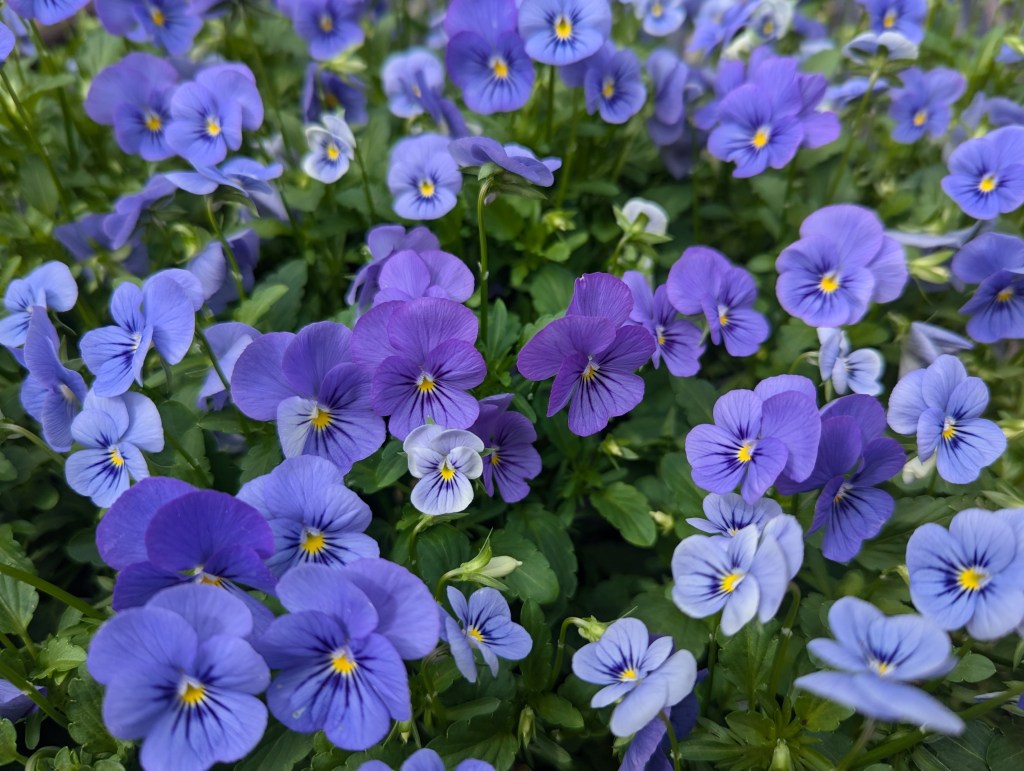
2. Viola is now in season, whether or not it seems as if it should be. We must rely on the date as much as the weather. While the weather suggests that it is still summer, the date insists that Monday will be autumn. These viola will be safe with several days of warmth.
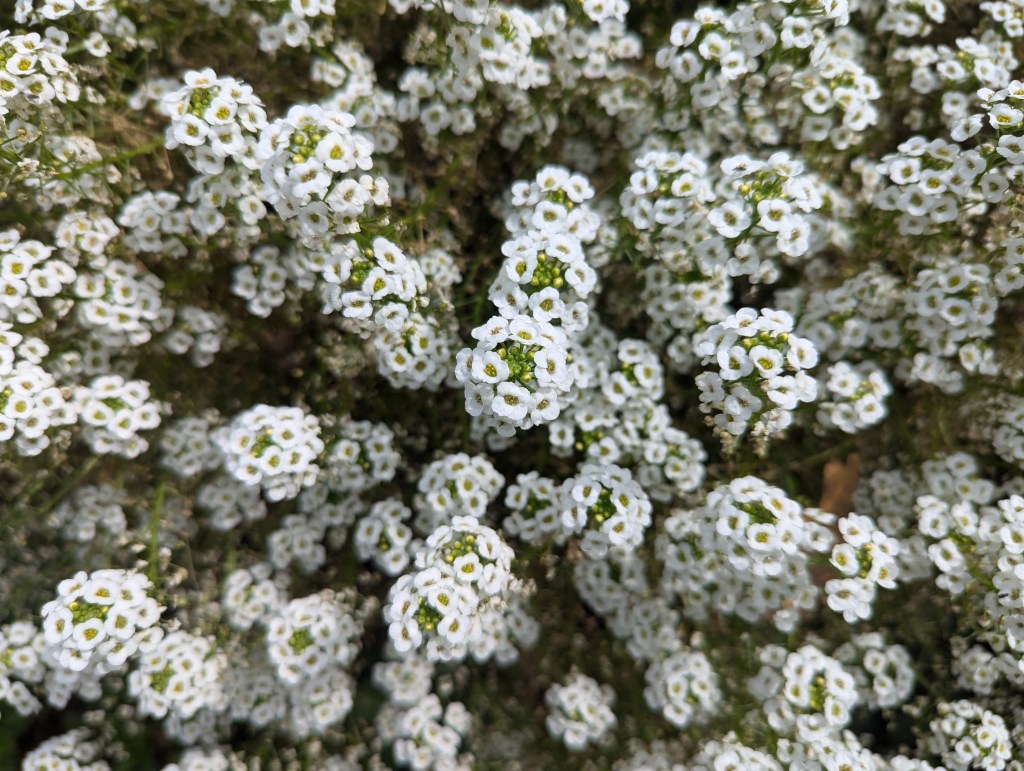
3. Lobularia maritima, alyssum makes the transition from warm season annuals to cool season annuals difficult. It is still too pretty to remove. Technically, it could perform as a short term perennial until individual plants get too old. By that time, it can reseed itself.
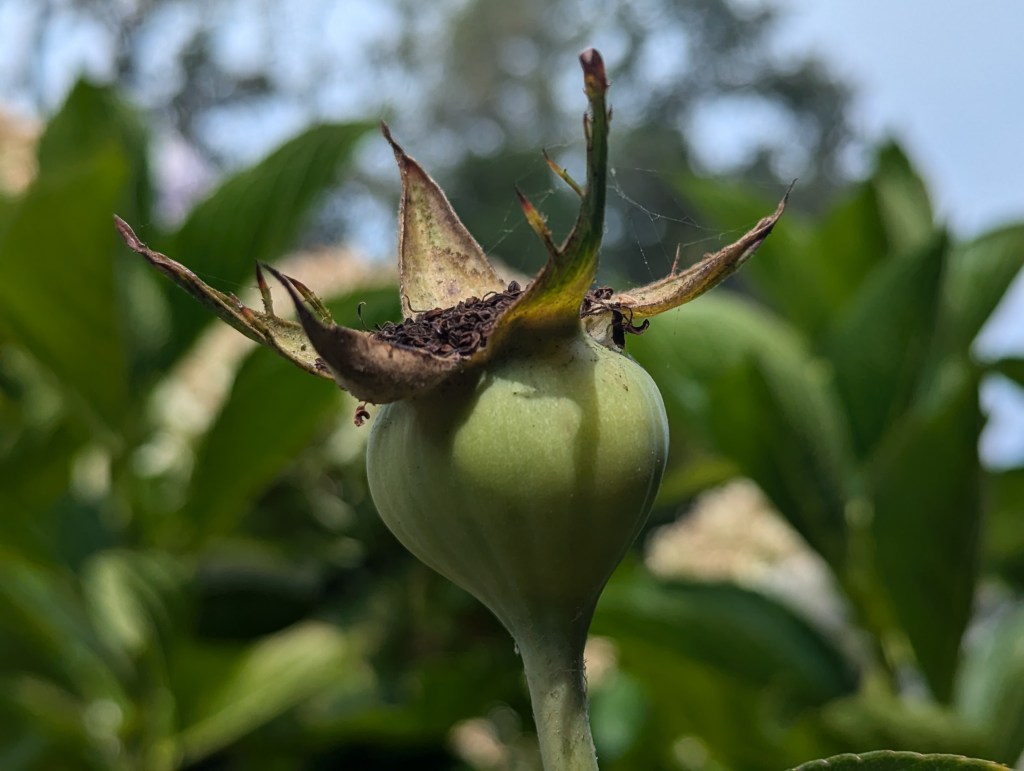
4. Rosa spp. of an unidentified cultivar produced a few notably plump rose hips like this to remind me that I have been negligent with deadheading. Now that subsequent bloom is unlikely, I could leave them to ripen. However, the new roses are continuing to bloom.
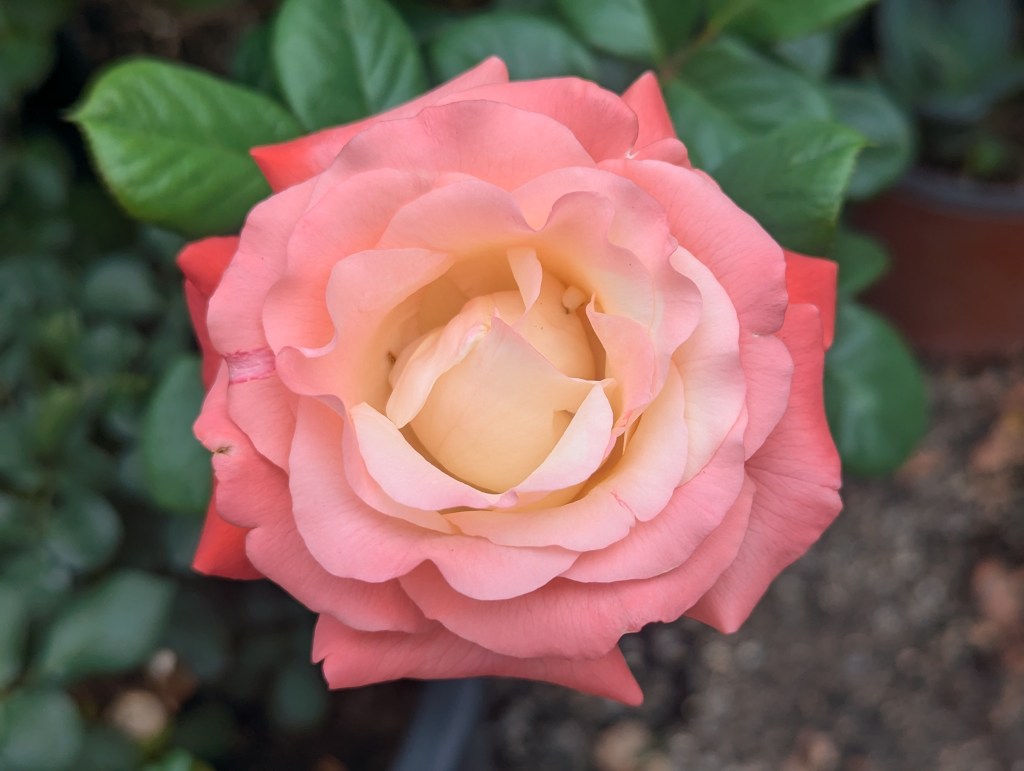
5. Rosa ‘Sheer Magic’ rose is one of the new roses that surprisingly bloomed after brutal and unseasonable relocation. This is the same flower that I posted a picture of while still in bud last week. A few more floral buds continue to develop but will lack time to bloom.
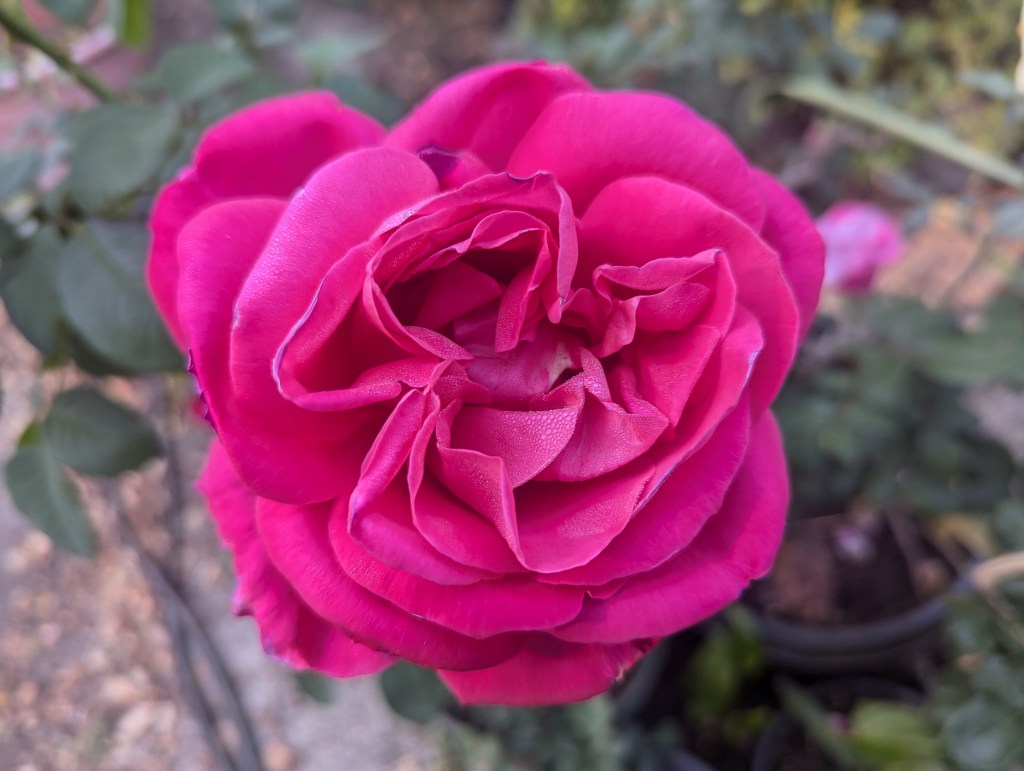
6. Rosa spp. of an unidentified cultivar is another of the new roses. This is also the same flower that I posted a picture of while still in bud last week. I have reason to believe that this rose is ‘Chrysler Imperial’, which should be red, but very often blooms reddish pink.
This is the link for Six on Saturday, for anyone else who would like to participate: https://thepropagatorblog.wordpress.com/2017/09/18/six-on-saturday-a-participant-guide/
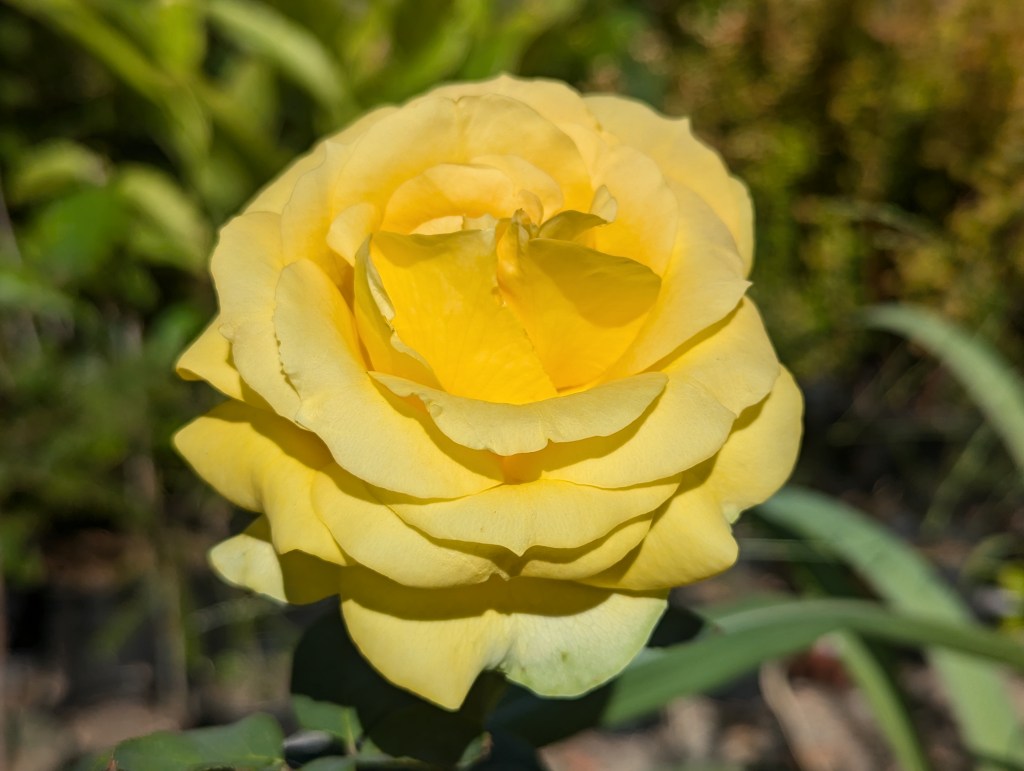
Again, it makes sense at the end.
1. Rain dampened the landscapes for the first time since last spring. It was not much and did not last for long, but was fun while it lasted. Actually, it was barely more than drizzle and made only a few tiny and grungy puddles. Pavement had not been rinsed in months.

2. Agapanthus orientalis, lily of the Nile confirms the end of summer by finishing bloom and necessitating deadheading. One last bloom looks silly and lonely at the center of this big colony. It may be cheap and common, but lily of the Nile happily blooms for months.
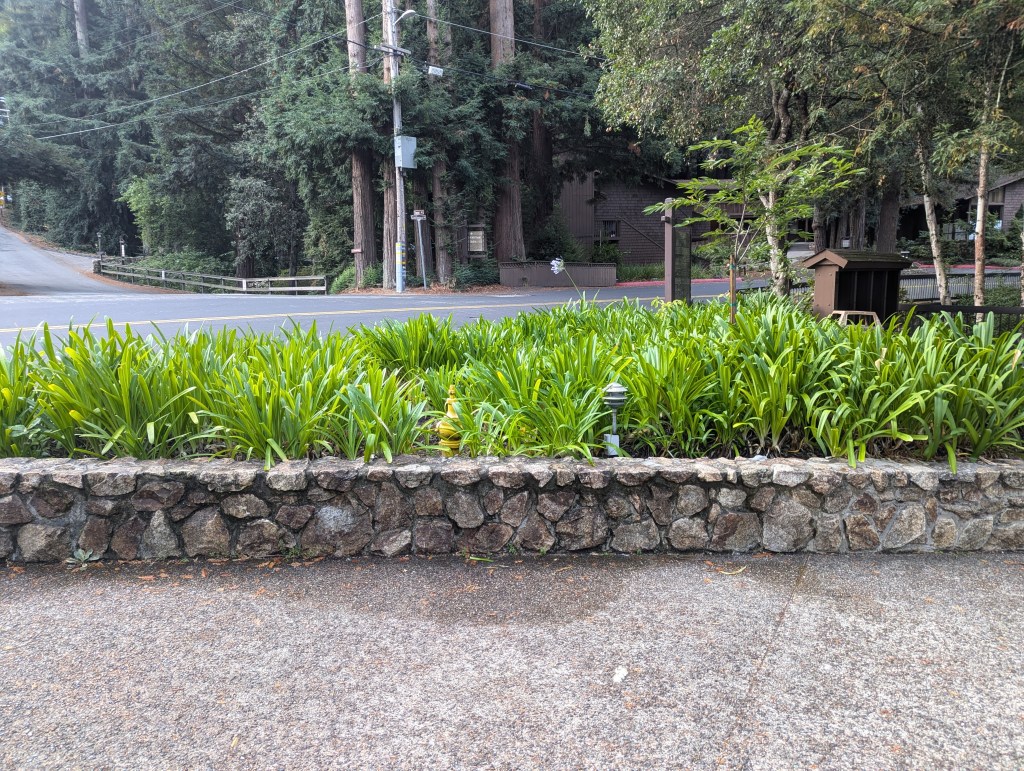
3. Pelargonium X hortorum, zonal geranium has left the building. The Post Office looks better without its shabby planter boxes that were so predictably bashed by parking cars. Some believe that we must replace them with other prominent potted plants. I disagree.

4. Rosa ‘Sheer Magic’ rose was actually labeled as such. I misidentified another rose that was blooming last week as such because I thought that it looked about right. I found the label afterward. This is the only one of four recycled roses that retained its original label.
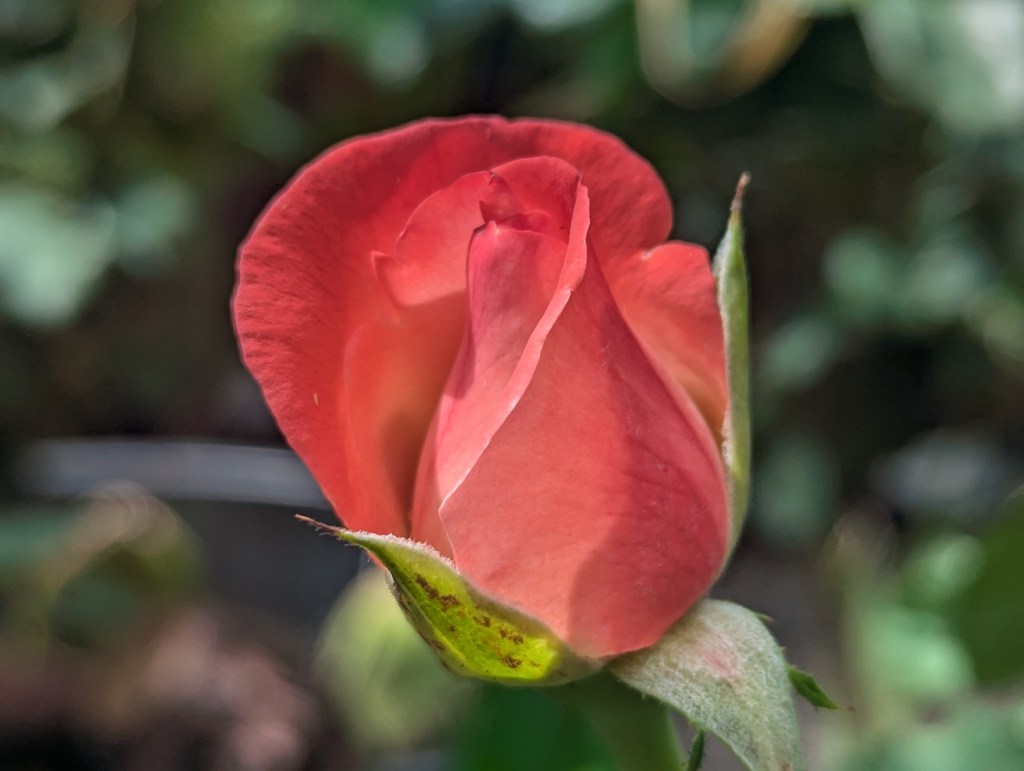
5. Rosa, rose is one of the other three recycled roses that did not retain its original label. It looks as if it is about to bloom red. Perhaps I will get a picture of it for next week. Any color would be nice from roses that were not expected to survive an untimely relocation.
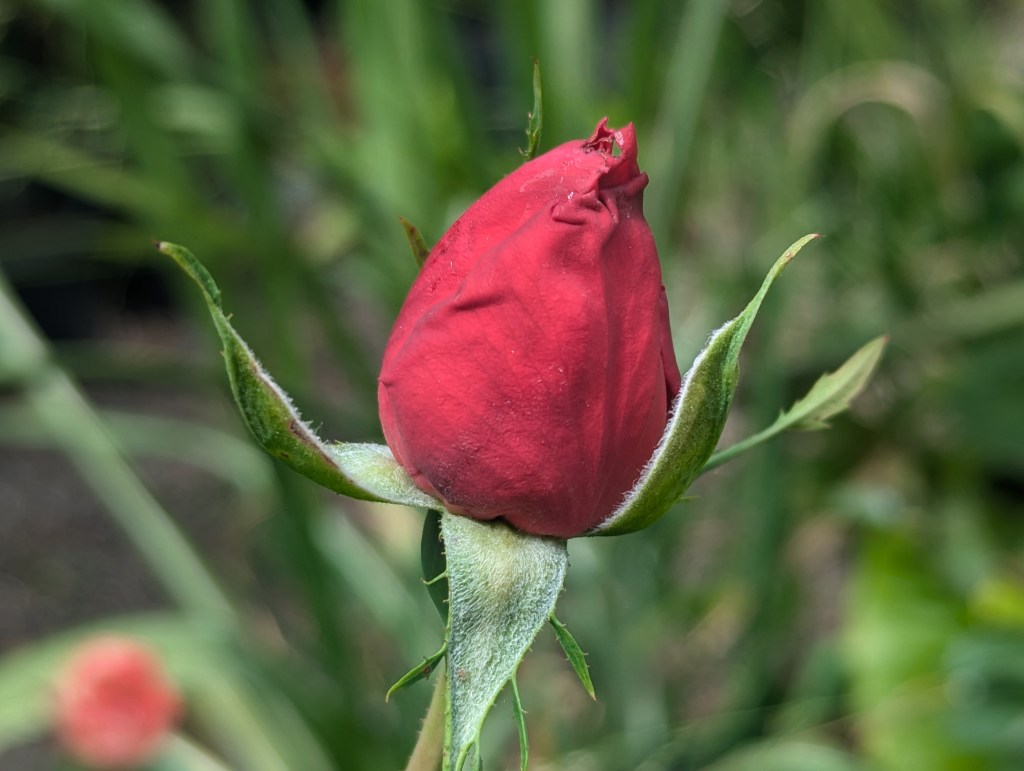
6. Rosa ‘Proud Land’ rose is not one of the four relocated roses, but is from my own rose garden. It was too pretty to not show off. I planted it with two others in about the winter of 1984 or 1985. Although I did not choose it, ‘Proud Land’ is likely my favorite red rose.
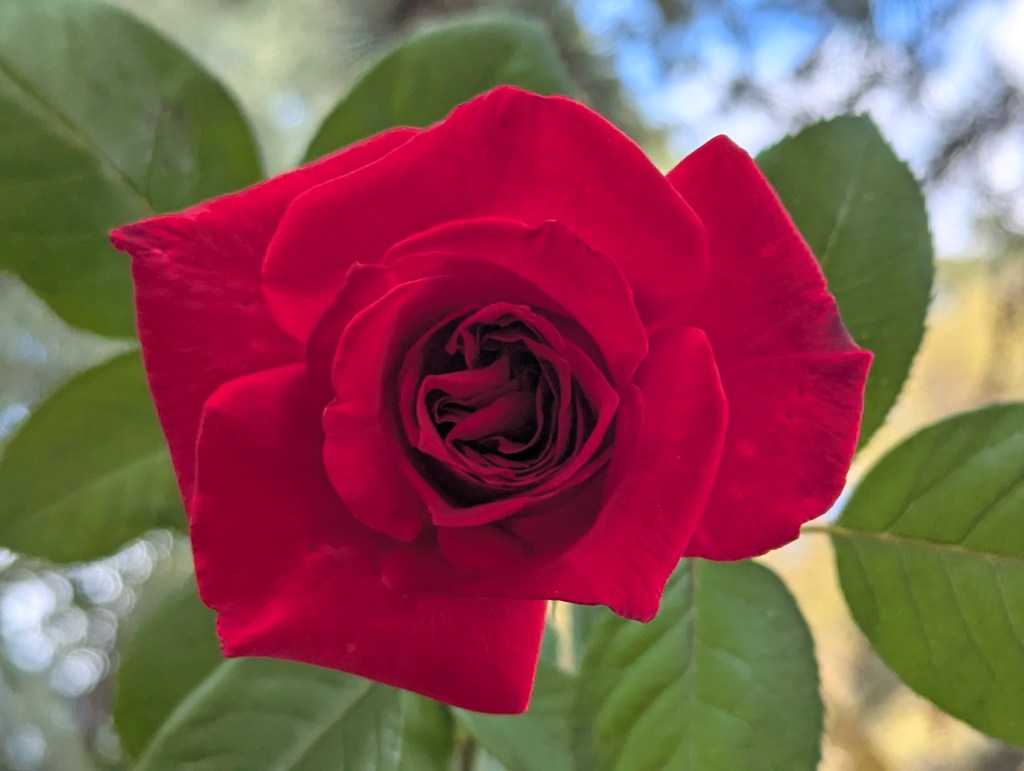
This is the link for Six on Saturday, for anyone else who would like to participate: https://thepropagatorblog.wordpress.com/2017/09/18/six-on-saturday-a-participant-guide/

Warm season annuals that started late last winter should be finishing their season soon. It might seem as if they replaced their predecessors, cool season annuals, only recently. This is the nature of annual bedding plants. They perform only for their particular season. It is now about time for cool season annuals, or winter annuals, to begin another season.
There is no need to hurry, though. The several different cool season annuals operate on different schedules. Only the earliest begin as small plants now, and even they can wait. Some prefer to begin later during autumn. Cyclamen and ornamental kale can even wait until winter. Only annuals that start as seed really must do so while the weather is warm.
Besides, some warm season annuals still perform too nicely for immediate replacement. Ideally, they are only beginning to deteriorate as they relinquish their space. Sometimes, some varieties are already grungy before their replacement. This facilitates their removal without guilt. However, some warm season annuals might continue to perform until frost.
Furthermore, some annuals, both cool season and warm season, are actually perennial. They merely function as annuals because their replacement is easier than their salvage. Busy Lizzie, for example, can remain mostly dormant through winter below new pansies. As the pansies finish in spring, the older busy Lizzie can regenerate for another season.
Sweet William and various primrose are cool season annuals that are actually perennial. Both can bloom until next spring becomes too warm for them. Then, they become mostly dormant until the following autumn. Any that remained dormant through last summer can regenerate and bloom this autumn. Perhaps they take turns performing with busy Lizzie.
Pansy and viola are the most familiar and reliable of cool season annuals. Marigold and snapdragon are popular now, but only as autumn annuals. They may not perform well for winter. Wax begonias might perform almost throughout the year with grooming after frost. Stock is the most fragrant of the cool season annuals. A few short varieties are available.

 Tony Tomeo