 Remember the movie from 1988? I don’t either. I never saw it. Gang violence is not my idea of a good time. The title ‘Colors’ refers to the use of distinguishing colors by the gangs of Los Angeles. Gang members wear colors that correspond to their respective gang affiliation.
As autumn progresses, some of us get to gloat about our colors. New England gets the most and best colors, with a full range of reds, oranges and yellows, as well as browns and burgundies. The Appalachian Mountains to the south seem to go lighter on the reds and burgundies, concentrating more on oranges. The upper Midwest around Minnesota excels at the rich reds, with yellows confined to groves of cottonwoods. The lower Midwest does well with clear browns alternating with yellows, and even some oranges. The Rocky Mountains have a good range of color, with more gold than the Appalachians Mountains, but it is not as spectacularly concentrated. The bright colors contrast more with evergreens.
Here on the West Coast, we have yellow. . . . and redwoods . . . and palm trees. The bright yellow cottonwoods are quite flashy farther inland and in Nevada, where they grow along creeks and rivers that flow through the southern deserts. The only orange and rusty red we get from native specie here is from poison oak. Cottonwoods, willows, sycamores, box elders and even the bigleaf maples all turn yellow; and only when the weather is just so. Box elder foliage is more likely to shrivel and turn tan. Sycamore and willow foliage usually gets rather shabby.
To get the bright oranges and reds that everyone else in American enjoys, we plant exotic (non-native) trees; and there are not many choices that color reliably in our mild climate. Sweetgum is probably the most reliable, and the most variable with its color. Pistache and flowering pear are the second best choices, although flowering pear has a serious problem with fireblight here. Gingko colors very nicely, but is limited to yellow, which we already have a bit of.
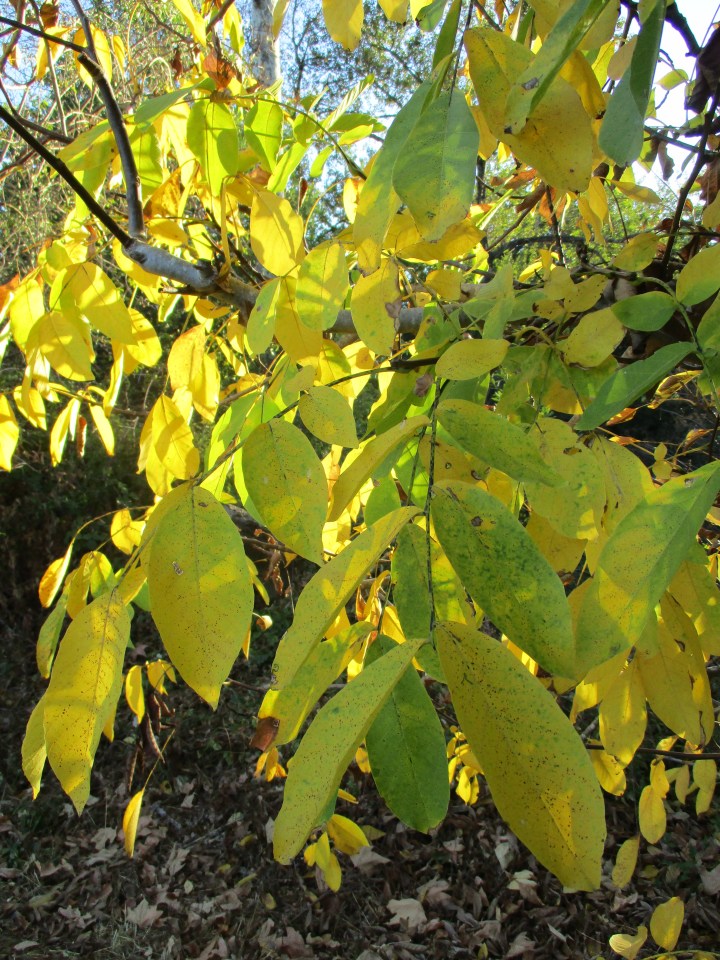
While everyone else is posting pictures of their autumn color online and bragging to Californians about it, our color is only beginning to develop here. The most reliably colorful of the exotic trees seem to be doing well; but the natives and some of the exotics are defoliating prematurely, without much color at all. Honeylocusts have dropped most of their foliage while it is still lemon-lime green. Box elders just look sickly. Cottonwoods drop leaves as soon as they turn yellow, leaving only green leaves up in their canopies. The English walnut in the picture is the best color I could find.
It happens this way sometimes. This year, it might be a result of the unusually warm weather so late in summer, after the weather had already started to turn milder. It is impossible to say for certain. We take what we can get. We are not known for autumn color here.
 What an unflattering name for such striking tropical foliage! The pointed and strap-shaped evergreen leaves of mother-in-law’s tongue, Sansevieria trifasciata, stand vertically, about two or three feet tall. They are rather rigid, and seem to be plastic with a glossy finish. Almost all modern varieties are variegated with silvery gray, white, cream or yellow stripes or banding. Dwarf varieties stay shorter, with flared foliage.
 Shortly after germinating and producing their first few leaves, many seedlings start to produce foliage that is indistinguishable from the foliage that they will produce for the rest of their lives. Other plants might initially be outfitted with leaves that are smaller, thicker, or somehow slightly different from what will appear later. Then there are those that produce juvenile growth that is completely distinct from later adult growth.
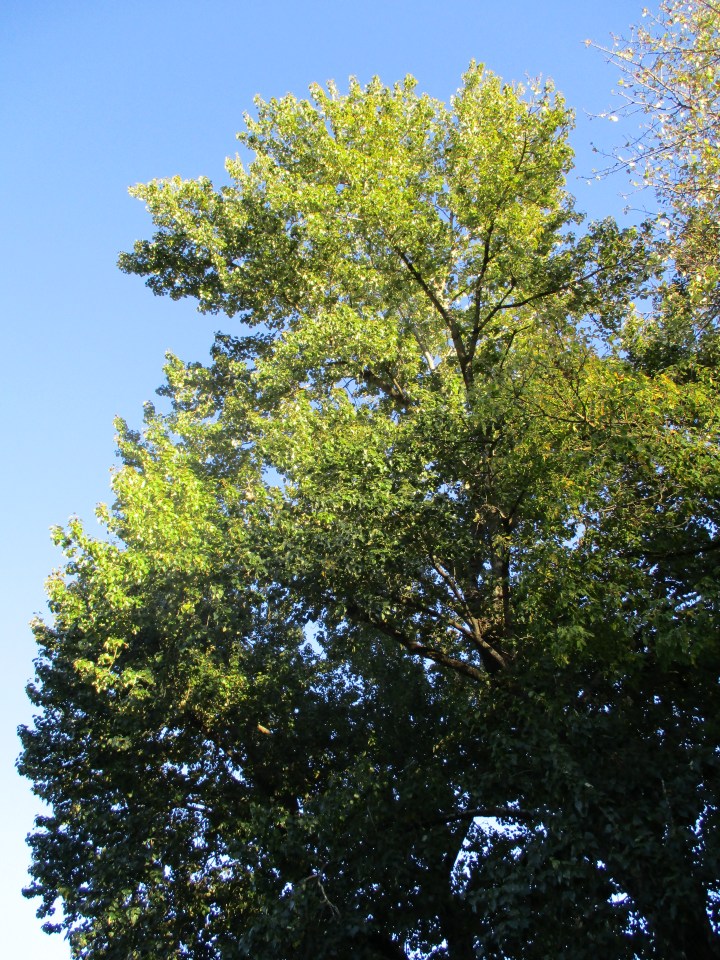
 The trees look spooky now. Box elders, honeylocusts and alders, and even some of the sycamores, have dropped so much of their foliage since that weirdly hot weather a few weeks ago. The smoky sky as a backdrop enhances the spooky factor. The trees do not seem to be too distressed. They just dropped their leaves a bit early to conserve resources. If they had not dropped foliage by now, they would be dropping it soon anyway.
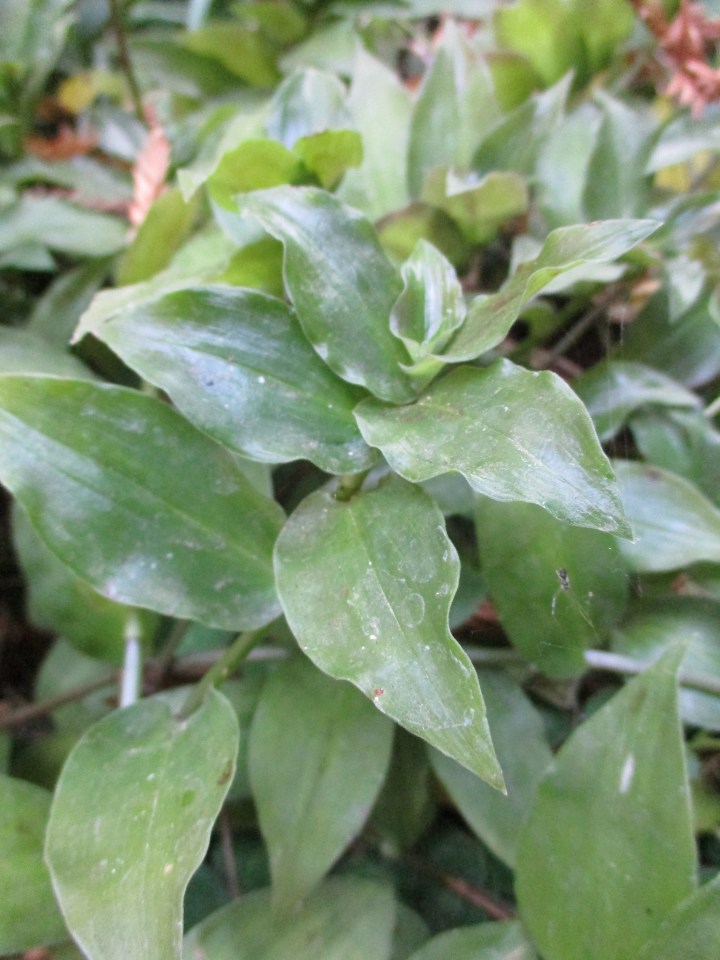 It could not have survived out in the desert for forty years. Wandering Jew, Tradescantia fluminensis, would have desiccated before its first summer. Well watered gardens are a completely different situation. Wandering Jew can become invasive and mix with other more desirable ground covers, only to die back and turn dark brown through winter. It starts over the following spring.
 Philodendrons, dracaenas, ferns, palms or any sort of tropical foliage inside our homes only create an illusion of closeness to nature. Naturally, these plants live in very different climates, mostly thousands of miles away. Not only do they have no business in our homes; they have no business on the North American Continent. Some can live in the garden, but only with unnatural watering.
 Tony Tomeo