More flowers bloom as winter becomes early spring than at any other time of year. For many flowers, bloom is significantly accelerated this year because winter was so very warm. Flowering cherry, purple leaf plum and most of the stone fruit trees (such as almond, cherry, apricot, nectarine, peach, plum, prune and all their various hybrids) have already bloomed.
Color is what gets noticed first. After all, that is what all the flashy colors are intended for, to get the attention of pollinators. Yet, there is more to the indirect mating strategies of flowers than color. Because flowers lack the mobility to pollinate each other, they do what they must to attract others to disperse their pollen for them. Some use fragrance.
Generally, flowers prefer one tactic or the other. This is why the most colorful flowers lack fragrance, and the most fragrant lack color. Gardenia (which is not easy to grow locally), star jasmine, honeysuckle, Pittosporum tobira, Pittosporum undulatum and night blooming jasmine are not exactly colorful while blooming. The powerfully fragrant flowers of sweet osmanthus and sweet box barely get noticed.
Pink jasmine and mock orange (Philadelphus spp.) are flashier, only because their blooms are so profuse. Southern magnolia has spectacularly big flowers, but they are mostly obscured by dense foliage high above view. Cereus cactus and moon flower are likewise spectacular, but bloom at night to attract nocturnal moths for pollination.
Only a few flowers are both colorful and fragrant. Lilac and wisteria are among the more familiar. Both bloom early in spring, with a similar color range of lavender, blue, pink and white. Lilac is shrubby. Wisteria is an aggressive vine. ‘Charles Grimaldi’ angel’s trumpet is a big shrubby perennial that blooms rich yellow, but may only be fragrant at sundown.
Freesia, hyacinth, lily and bearded iris are flashy and fragrant flowers grown from bulbs, although hyacinth and most lilies rarely bloom a second year, and many lilies and bearded iris lack fragrance. Sweet alyssum is a mildly fragrant annual that blooms white, pink or lavender.
 It seems that everyone who has ever experienced the seductive yet powerful fragrance of gardenia, Gardenia jasminoides, wants to grow it, but very few actually can. Gardenias like warmth, but prefer more humidity than they get here, which is why they seem to be happier in partial shade, in atriums, or in urns that can be moved out of harsh exposure during summer. In such sheltered spots, aphid, scale and sometimes whitefly can be problematic.
 There is some debate about the origin of the common name of Confederate jasmine. Some attribute it to its popularity in the former Confederate States of America. Others believe it originated in the Malay Confederacy, much closer to its native range. That is irrelevant here, where we know this popular vine with very fragrant flowers simply as star jasmine, Trachelospermum jasminoides.
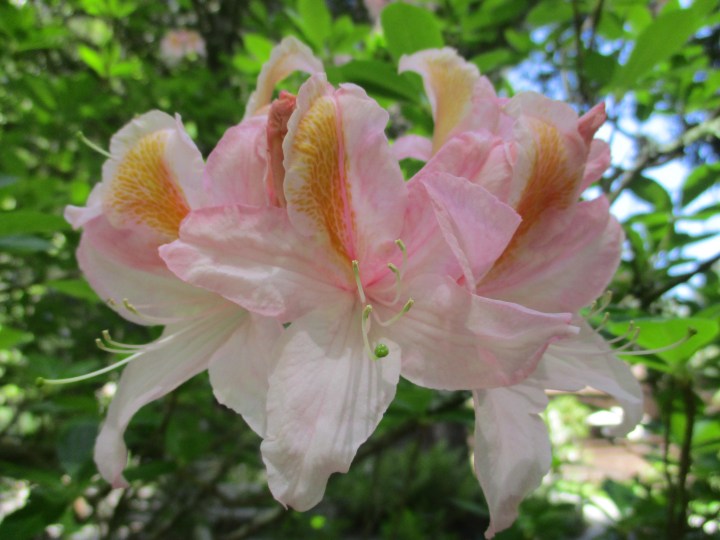 There are countless species and cultivars of rhododendrons. Some have been in cultivation for centuries. Their big bold blooms are spectacular against a backdrop of their dark evergreen foliage. They prefer shelters spots, and some are happy to bloom in places that are too cool and too shaded for other flowers to bloom so well. They are so impressive that no one notices that they lack fragrance.
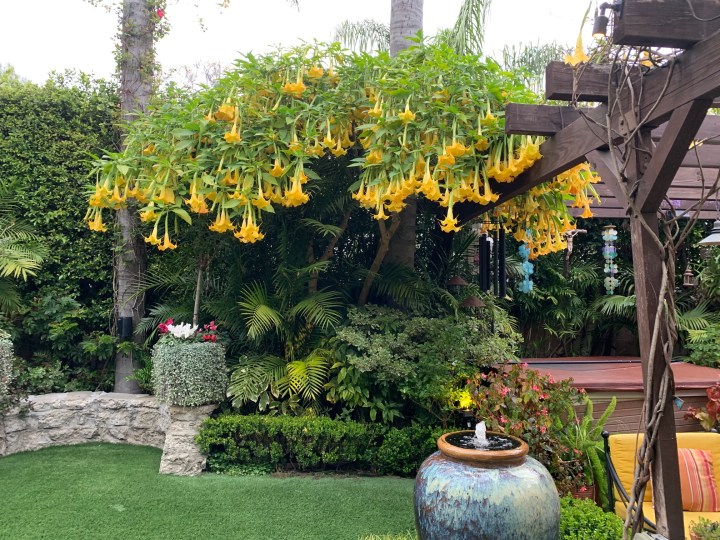 When spelled like that, the whole thing looks like someone’s long name. ‘Charles Grimaldi’ really is someone’s name, and the particular cultivar of brugmansia happens to be named after him. Because no one knows who the parents of this hybrid cultivar are, the species name is omitted. It is therefore described by just the genus name followed by the cultivar name, as Brugmansia ‘Charles Grimaldi’; or simply ‘Charles Grimaldi brugmansia’.
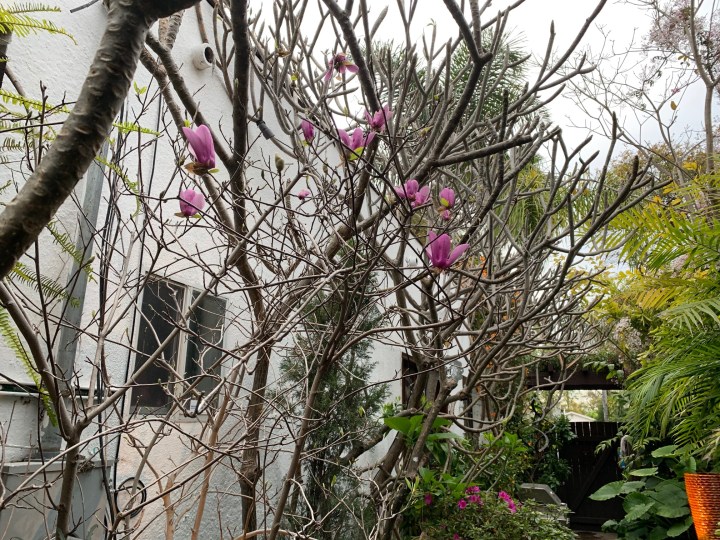 This is why one should not ask someone else who is very vain to take a picture of something important. The vain only take good selfies. Others subjects are too unimportant to them to bother getting a good picture of.
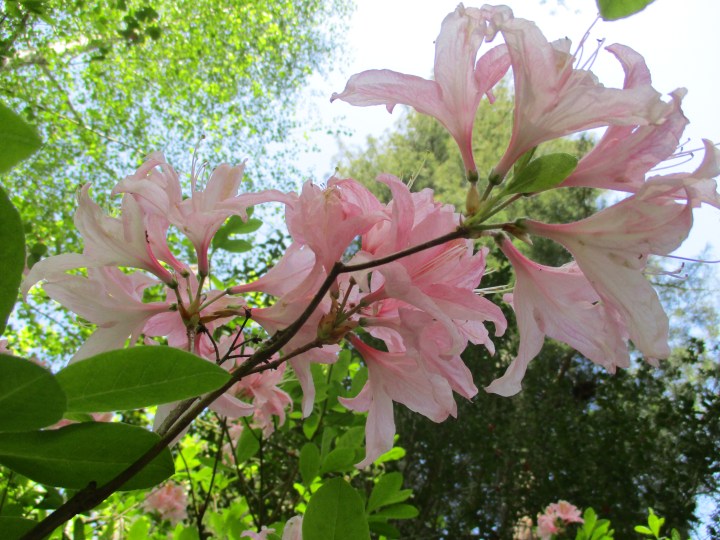
 They are not a myth. They are quite real. So are the related and similar deciduous azaleas. There are certainly not as popular or as diverse as the familiar evergreen cultivars, but they have their place.
 (The article from my weekly gardening column that is typically posted on Thursday was posted yesterday, which is why this article, which is more appropriate for Wednesday is posted today.)
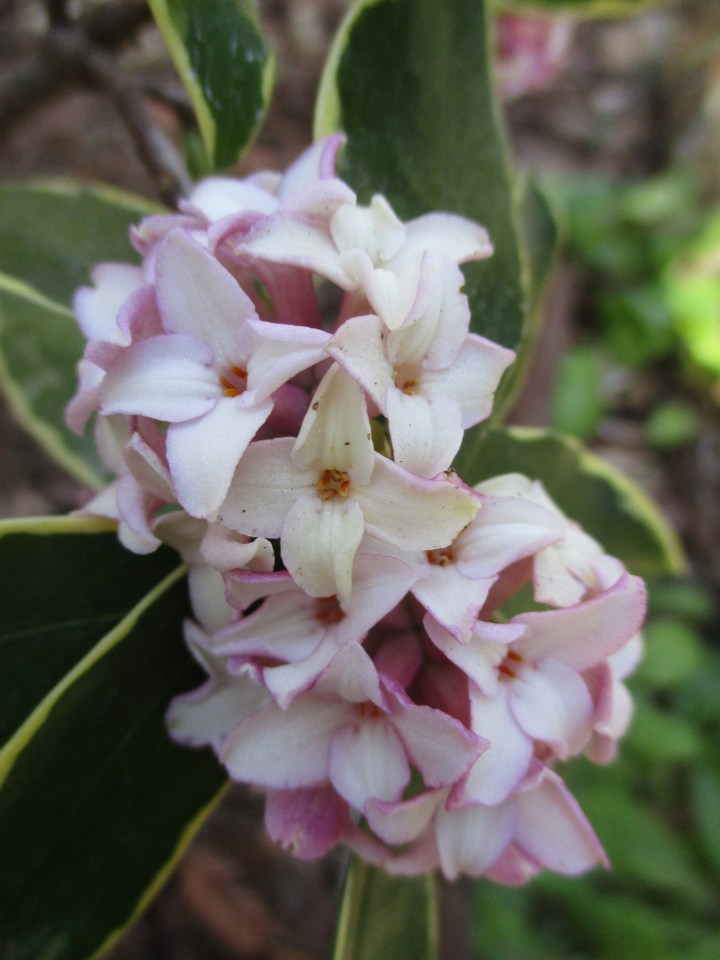
 When the weather warms up a bit between frosty weather and winter storms, the rich fragrance of winter blooming daphne, Daphne odora, is at its best. The domed trusses of tiny pale pink flowers are not much wider than a quarter, so are easy to overlook while investigating the source of the fragrance. ‘Aureomarginata’, the standard cultivar, has glossy evergreen leaves with narrow pale yellow margins. Mature plants are only one or two feet high. All parts of the plant are incidentally toxic.
 Tony Tomeo