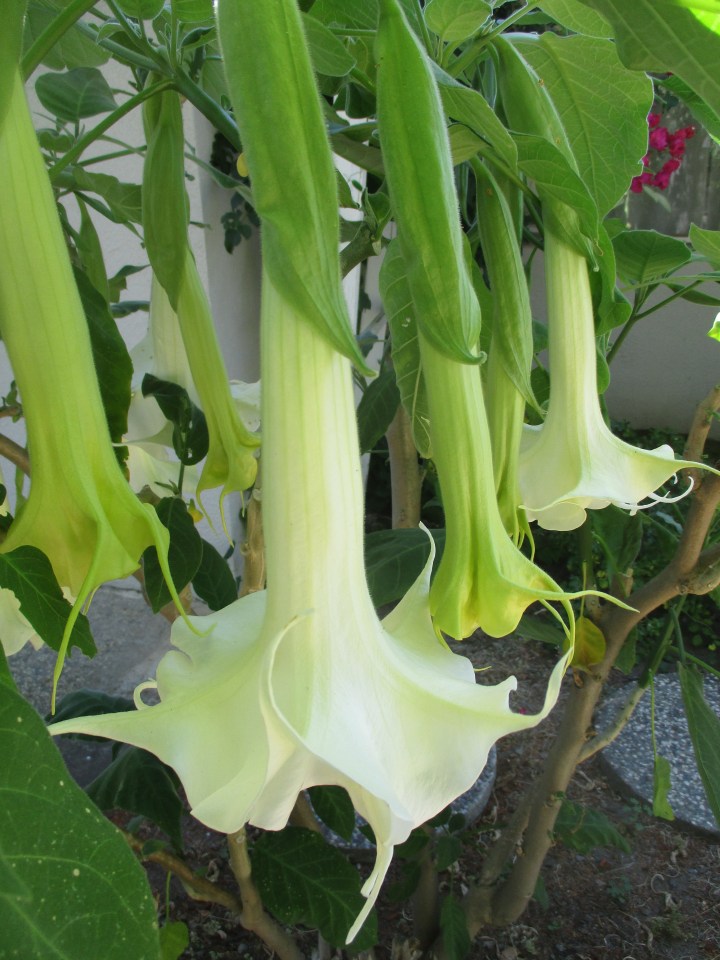
Human intervention has sustained the seven species of angel’s trumpet, Brugmansia, since their prehistoric extinction from the wild. They were likely endemic to tropical regions from Venezuela to Chile, and southeastern Brazil. Their extinction was likely a consequence of the natural extinction of animals that dispersed their seed. Most garden varieties are hybrids of the various species.
Angel’s trumpet is either a big shrub or small tree, with rather herbaceous stems. The more popular cultivars can get more than eight feet tall. Cultivars that might get twice as tall are rare. The soft leaves get about six inches long and half as wide. Leaves might get almost twice as long on vigorous growth. Some cultivars have slightly tomentous (fuzzy) foliage. A few have variegated foliage.
Although generally sporadic, and pastel hues of pink, orange, yellow or white, bloom is impressive. The pendulous trumpet shaped flowers are commonly longer than six inches, and half as wide. Double flowers are frilly. Several cultivars are delightfully fragrant, particularly in the evening. All plant parts are very toxic. Plants damaged by frost in winter are likely to regenerate from their roots.
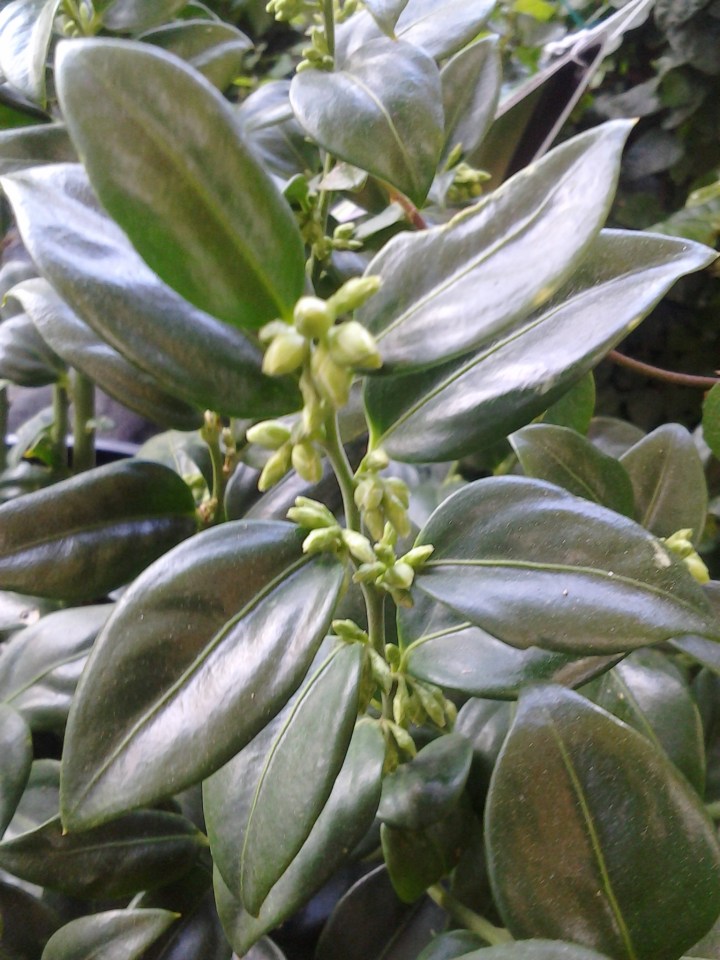
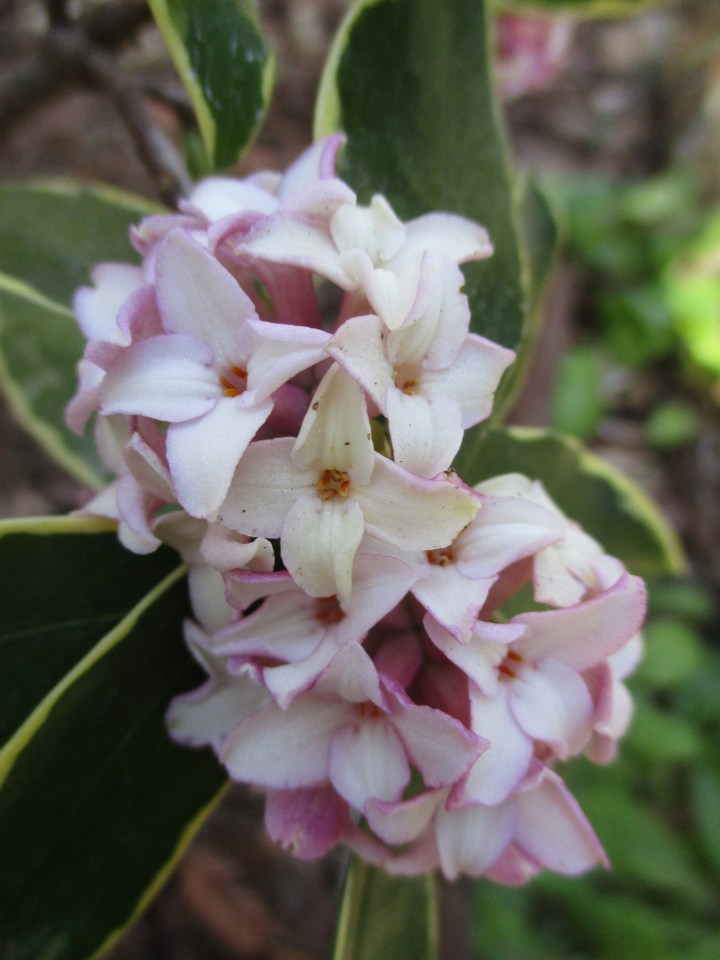
 It seems that everyone who has ever experienced the seductive yet powerful fragrance of gardenia, Gardenia jasminoides, wants to grow it, but very few actually can. Gardenias like warmth, but prefer more humidity than they get here, which is why they seem to be happier in partial shade, in atriums, or in urns that can be moved out of harsh exposure during summer. In such sheltered spots, aphid, scale and sometimes whitefly can be problematic.
 There is some debate about the origin of the common name of Confederate jasmine. Some attribute it to its popularity in the former Confederate States of America. Others believe it originated in the Malay Confederacy, much closer to its native range. That is irrelevant here, where we know this popular vine with very fragrant flowers simply as star jasmine, Trachelospermum jasminoides.
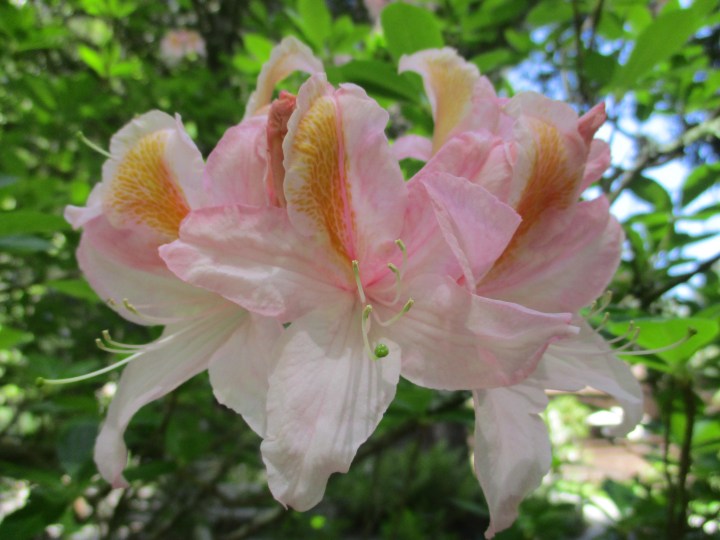 There are countless species and cultivars of rhododendrons. Some have been in cultivation for centuries. Their big bold blooms are spectacular against a backdrop of their dark evergreen foliage. They prefer shelters spots, and some are happy to bloom in places that are too cool and too shaded for other flowers to bloom so well. They are so impressive that no one notices that they lack fragrance.
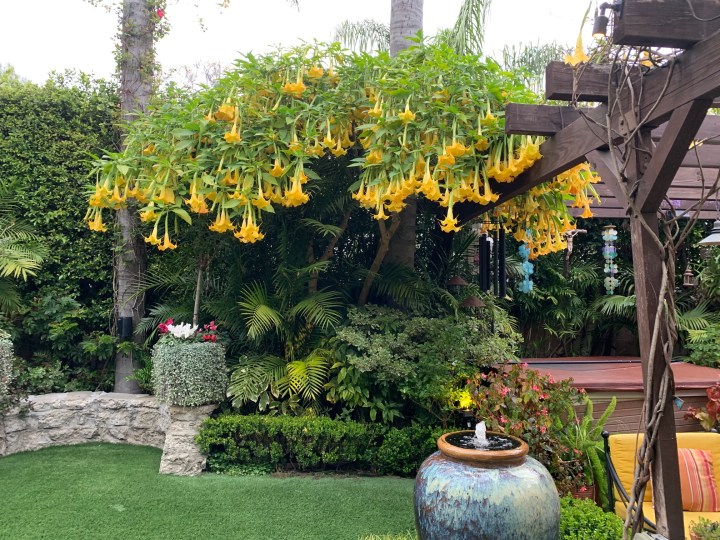 When spelled like that, the whole thing looks like someone’s long name. ‘Charles Grimaldi’ really is someone’s name, and the particular cultivar of brugmansia happens to be named after him. Because no one knows who the parents of this hybrid cultivar are, the species name is omitted. It is therefore described by just the genus name followed by the cultivar name, as Brugmansia ‘Charles Grimaldi’; or simply ‘Charles Grimaldi brugmansia’.
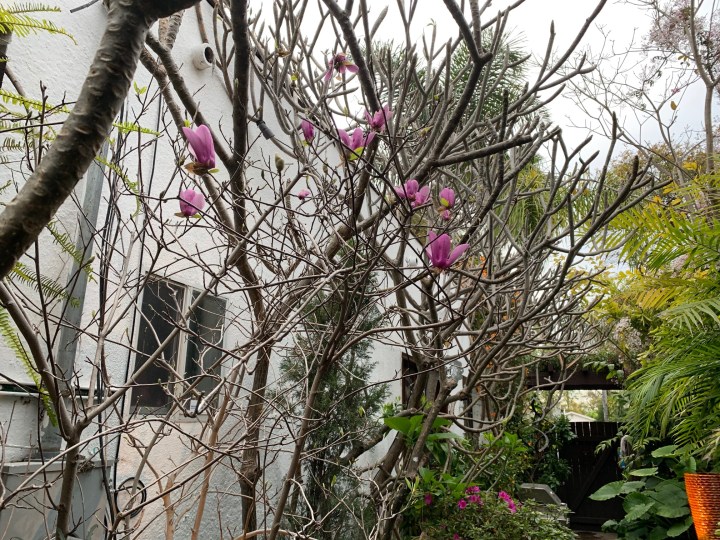 This is why one should not ask someone else who is very vain to take a picture of something important. The vain only take good selfies. Others subjects are too unimportant to them to bother getting a good picture of.

