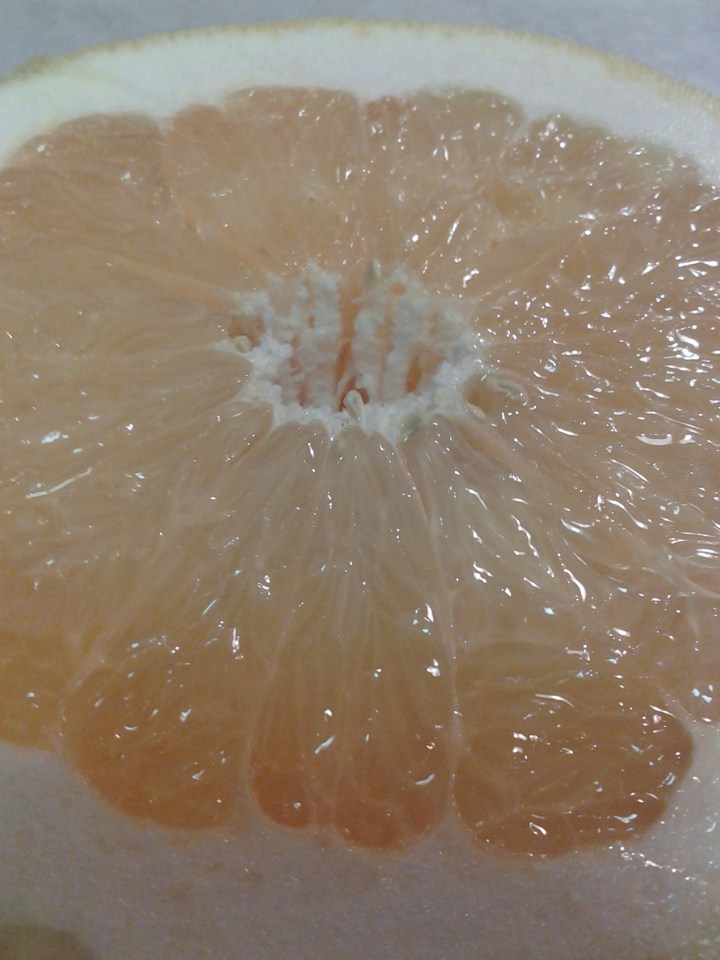
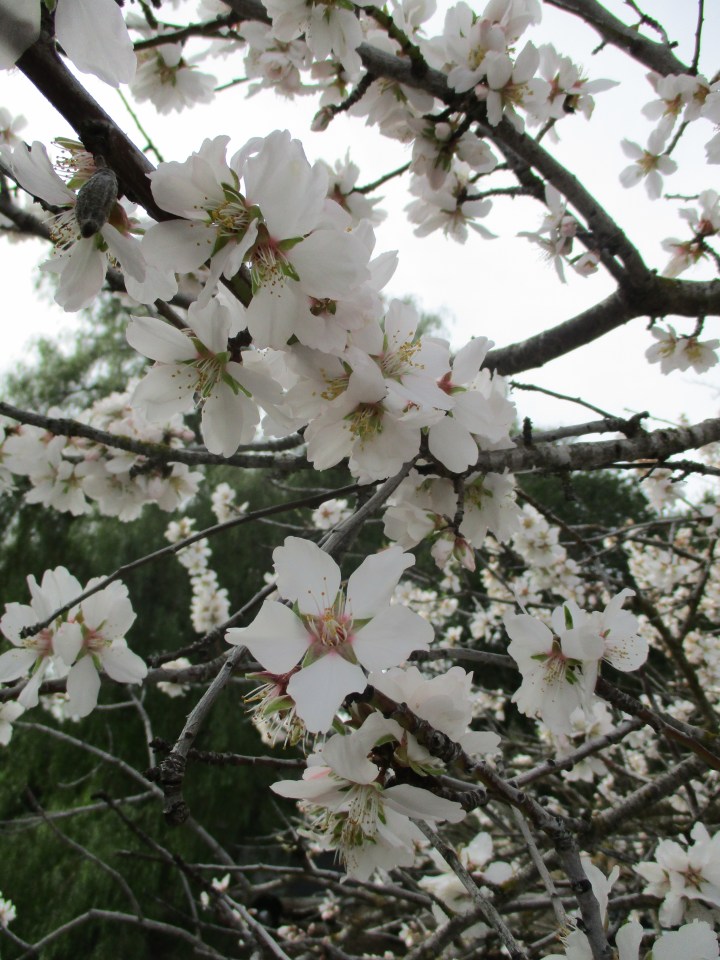
Kumquat

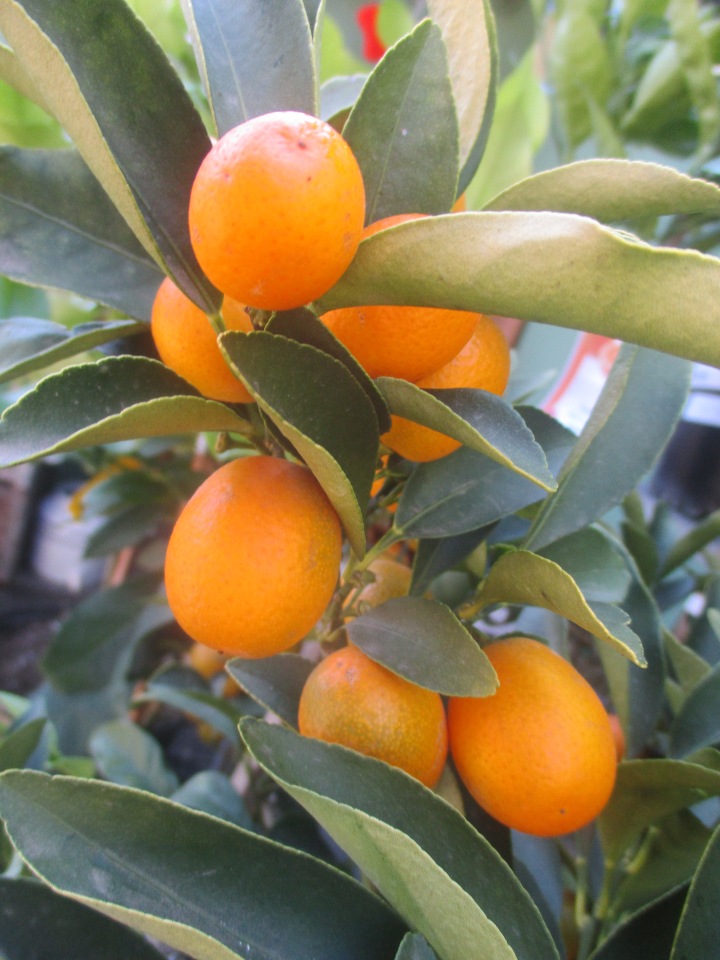
80131Tet, on February 16, will be the Vietnamese New Year’s Day for the Year of the Dog! Any year associated with the dog must be pretty excellent. Anyway, potted and fruited kumquat trees are very traditional decorations for Tet. Although less popular than orange and lemon trees, they are the most compact of the citrus trees, so are therefore the most adaptable to compact home gardens.
They grow slowly and may never reach first floor eaves. The evergreen leaves are a bit thicker, smaller and darker green than those of Mandarin orange. Stems are mostly thornless. The compact growth is quite symmetrical, so might only occasionally need to be trimmed for a stray stem here and there. Clusters of small white flowers bloom about the time the last of the fruit gets harvested.

Kumquat has the distinction of being the ‘other’ citrus. Although the genus is alternatively known as Citrus, experts know it as Fortunella. Those with round fruit are Fortunella japonica. Those with oval fruit are Fortunella marginata. The abundant fruits are not much bigger than big grapes, and are eaten whole, with the seeds spit out. The tart pulp with the sweet skin is a tangy combination.

When Life Gives You Lemons

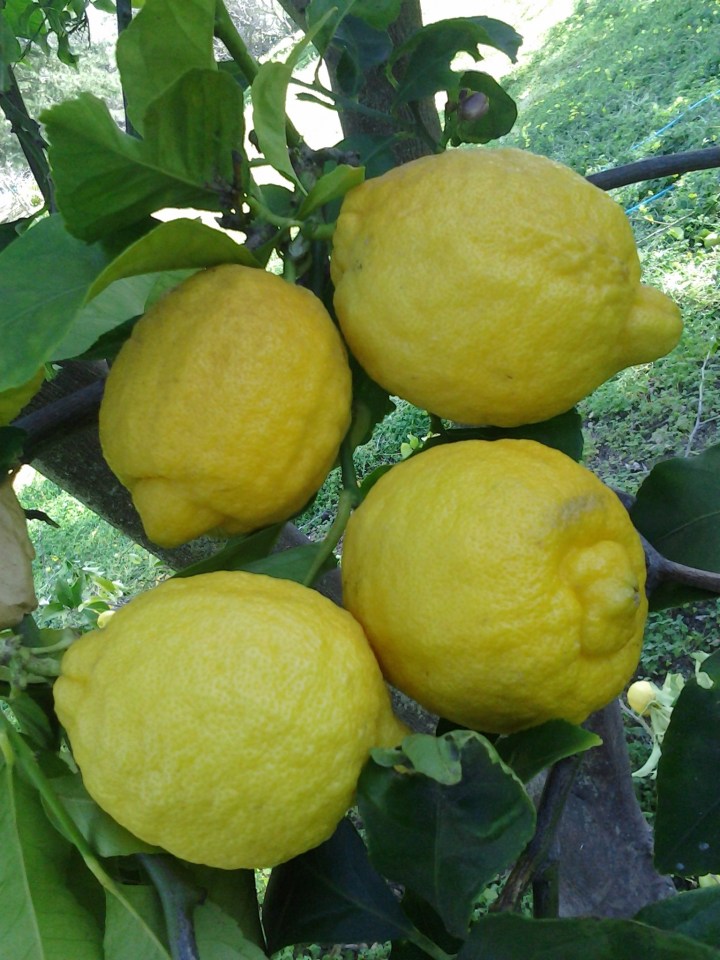
80131thumbWhen life gives you lemons, it is likely this time of year. Although, the most popular garden varieties of lemon, like ‘Meyer’ and ‘Eureka’, continue to produce at least a few more fruits sporadically through the year. ‘Lisbon’ lemon that is still used in orchard production, and is the ancestor of the household ‘Eureka’ lemon, produces almost all of its fruit in winter, and blooms shortly afterward.
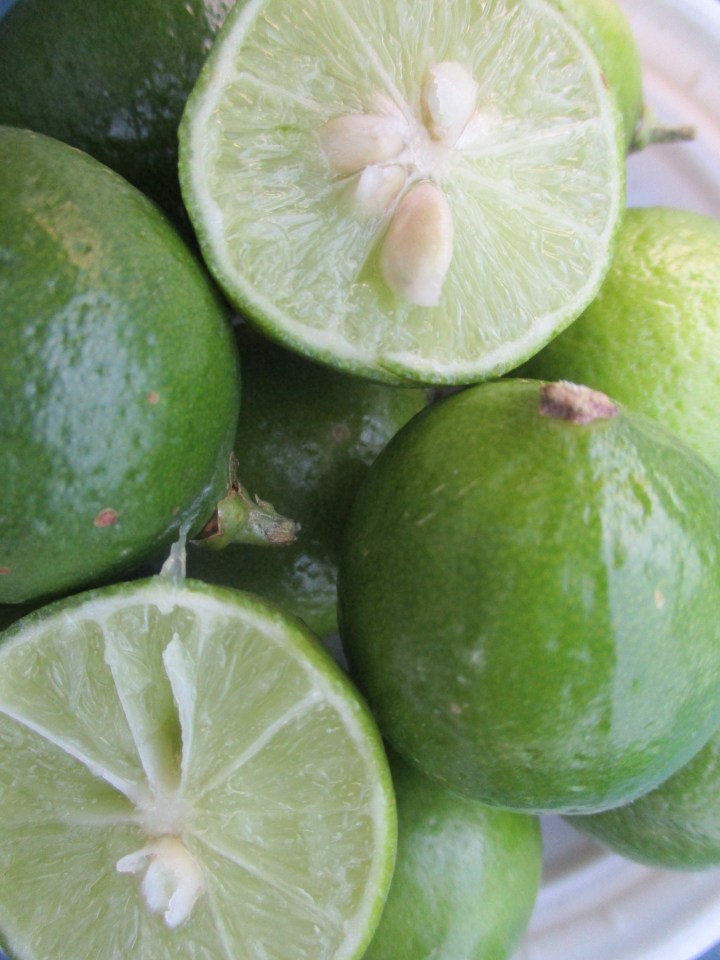
Ripe citrus in the middle of winter impresses those in climates where winter is too cold for much to happen in the garden. They could not grow a citrus tree if they wanted to. Even here, frost can damage some of the more sensitive citrus varieties, like ‘Mexican’ lime. Unlike the fruits of summer, citrus fruits ripen slowly and are not so perishable, so do not need to be harvested right away.

This means that if it is raining, cold or just to wintery to go outside, citrus fruits can be left on the tree until the weather improves. Most of us prefer to pick them in small batches anyway. Ideally, fruit should get picked as it is consumed. Lemons and limes typically get picked individually as needed, until there are so many that some need to be bagged and shared with friends and neighbors.

Mandarin oranges are the most perishable of the citrus. Because their skins are so loosely attached to the pulp, the pulp can oxidize, lose flavor and eventually get dry and pithy. Incidentally, a ‘tangerine’ is merely a Mandarin orange that was developed in North or South America. A surprisingly sour (unknown) Mandarin orange might really be a ‘Rangpur lime’, which is not a lime at all.

Unlike most fruit that continues to ripen after harvest, or pears that actually delay ripening until after harvest, citrus fruits stop developing flavor once picked. It is best to taste them for confirmation of ripe flavor prior to harvest. Some Mandarin oranges may have slightly greenish blotches on them even when completely ripe. The best ‘Valencia’ oranges can look rather yellowish. Grapefruits might mellow if left in their trees past ripeness, but can also inhibit bloom.

Proper Bare Root Planting Technique

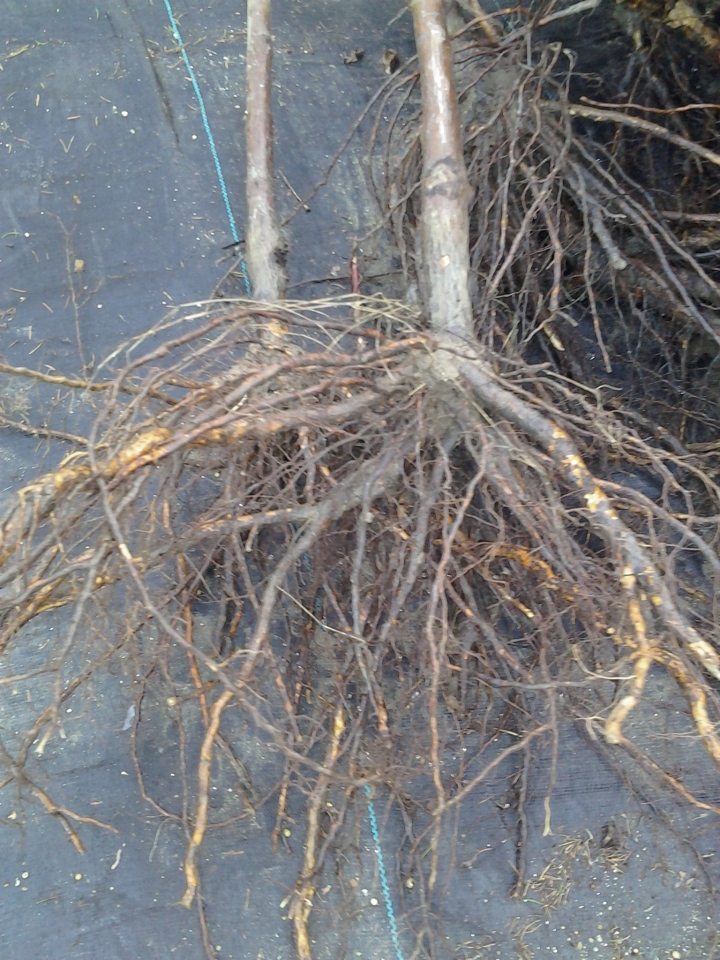
80124thumbBare root plants are less expensive, easier to handle, and easier to prune into a desired form than canned (potted) plants are. Also, they get established into the garden easier. Yes, even with less roots, they disperse their new roots directly into the surrounding soil more efficiently than secondary roots escaping from crowded roots that had been confined to cans of media (potting soil).

Bare root plants have no incentive to stay confined. They get planted while dormant, and wake up surrounded only by their new soil, with nothing else to get in the way. Canned plants might have been circling their roots within a limited volume of media for a while, trying to find a way out. Once they get in the ground, they may not like what they find there, and try to stay close to the familiar.

Bare root plants should not get too much of a good thing. The need only minimal soil amendment. They might like a bit of organic matter to retain moisture and to keep the soil loose while they get oriented to their new home. A bit of fertilizer would be nice too. Yet, new bare root plants should not get so much amendment that they do not want to disperse their roots beyond the planting hole.

Planting holes do not need to be very big at all. They should be wider than the roots can be spread, but not deeper. Loosing the soil and adding amendments below will cause new plants to sink. Graft unions of grafted plants must remain above grade. Plants with big roots, like fruit trees and roses, prefer their roots to be spread out over a cone of soil in the center of their planting hole.

Most bare root fruit trees are sold with more branches than they need, so should be pruned after planting. Some might get pruned by half. The superfluous stems are there both to cushion the trees in transport, and also to allow more choices for pruning. Some of us want to prune down to lower branches, while others want to prune up to slightly higher branches. Berry canes need very small planting holes, and get pruned back to only two or three buds above ground.P80115

Bare Root Stock Is Here

80117thumbChristmas tree lots at nurseries come and go at a good time. Cut and live Christmas trees become marketable just as retail sales of other items is declining. Although autumn is the best season to plant many things, not many of us want to be out in the garden as the weather gets cooler. As Christmas trees get sold and relinquish their space, bare root nursery stock becomes available.
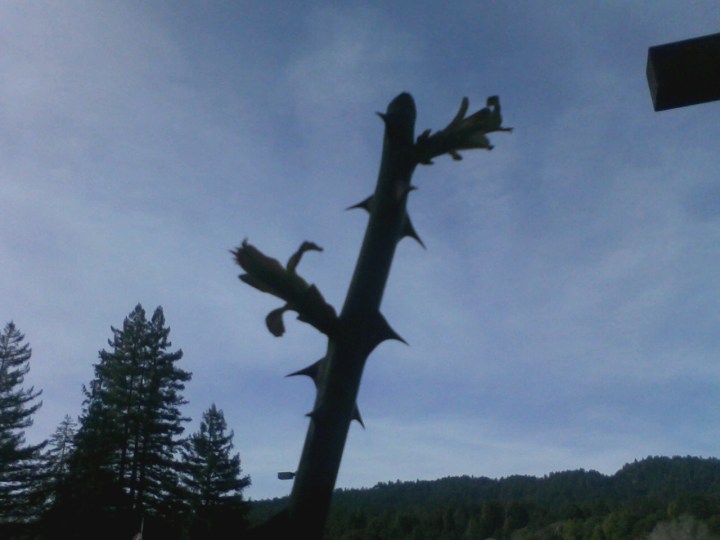
Smaller bare root plants might be available first, because they can be brought in before leftover Christmas trees get recycled after Christmas. These include grapevines, currants, gooseberries, blueberries, blackberries, raspberries and perennials like rhubarb, asparagus and strawberries. Roses might be included too, but because they are so numerous, they often arrive with fruit trees.

Deciduous fruit trees are the majority of bare root stock. They include stone fruits, pomme fruits, figs, pomegranates, persimmons, walnuts and almonds. Stone fruits are of the genus Prunus, including apricot, cherry, plum, prune, peach, nectarine and almond. Pomme fruits are apple, pear and quince (pictured above). The flowering counterparts to some of these fruit trees may be available as well.

The flowering counterparts are those that are grown for colorful bloom rather than fruit production. Flowering stone fruit trees, such as the famous flowering cherries, produce no fruit. Flowering crabapples produce small and potentially messy fruits. Flowering quinces are actually a different genus than the fruiting types. Most are fruitless. Flowering pears are not often available bare root.

While dormant in late autumn, bare root plants are dug and deprived of the soil that they grew in. They get planted into their new homes before they wake up in spring. Some are packaged in damp sawdust. Others get heeled into damp sand. The advantages of bare root stock relative to canned (potted) stock are that bare root stock is less disfigured, lacks disfigured and circling roots, gets established in a new environment more efficiently, is easier to transport, and is significantly less expensive.

Most Pruning Happens In Winter

30206thumbWithout specialized pruning while they are bare and dormant in winter, many deciduous fruit trees would be overburdened by their own fruit next summer. The production of excess fruit can waste resources. The weight can disfigure and break limbs. The trees certainly do not want to get so overworked; but they have been unnaturally bred to produce bigger, better and more abundant fruit.
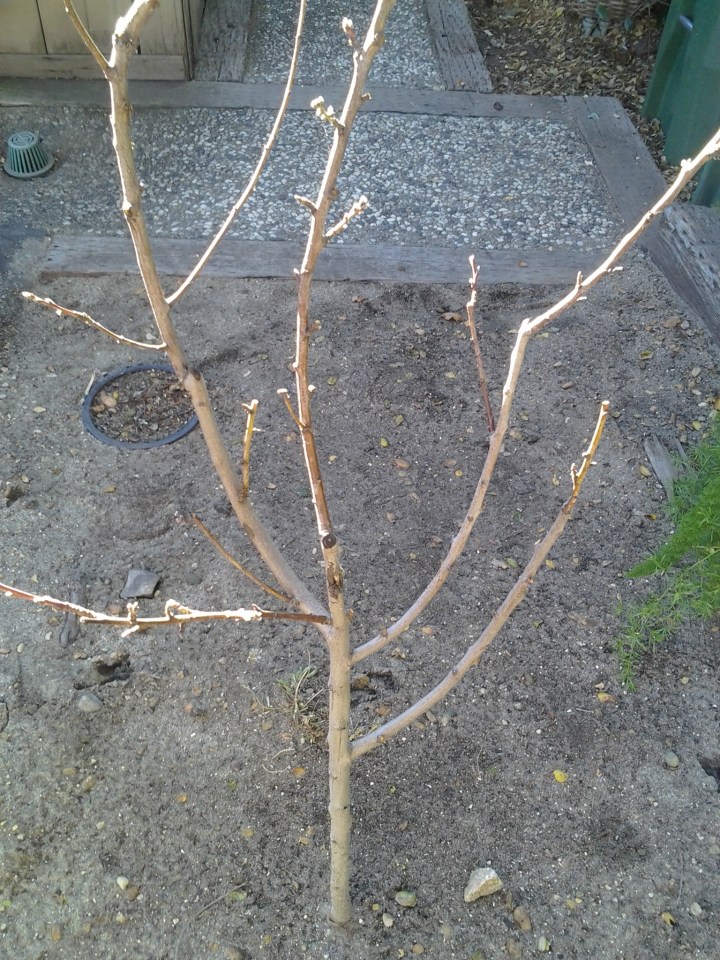
Proper pruning of dormant fruit trees improves the structural integrity of the limbs, and limits the weight of fruit that will develop on the remaining stems. This might seem to be counterproductive, but it is the only way to keep limbs from breaking or growing so high that the fruit is out of reach. It also concentrates resources into fewer but superior fruit, instead of more fruit of inferior quality.

Dormant fruit tree pruning can not be adequately described in only a few paragraphs. Yet, it is so important and so specialized that anyone wanting to grow fruit trees should learn about it. Each type of tree requires a particular style of pruning. Something they have in common is that the ‘four Ds’, which are ‘Dead, Dying, Diseased and Damaged’ stems, obviously need to be pruned out.

The various stone fruit trees (which are of the genus Prunus) need various degrees of a similar style of pruning. Heavy fruit, like peach and nectarine, necessitate more aggressive pruning than does lighter fruit, like plum and prune. Lighter fruit is easier to support. Some cherry and almond trees may not need to be pruned every year. (Almonds are ‘stones’, and their hulls are the ‘fruit’.)

Flowers of next spring and fruit of next summer will develop on stems that grew last year. These stems need to be pruned short enough to support the fruit that can potentially develop on them. If too long, they will sag from the weight of the fruit. If too short, they will not produce enough fruit. Stems that grow beyond reach can be pruned even more aggressively to stimulate lower growth.

Apple and pear trees also produce on the stems that grew during the previous year, but produce more on short and gnarled spur stems that continue to produce for many years without elongating much. Therefore, the tall vigorous stems that reach upward, particularly from upper limbs, can be cut back very aggressively if necessary. Aggressive but specialized pruning keeps trees sturdy and contained, and also improves the quality of fruit production.40101thumb

Bare Root Stock Has Advantages

31225thumbAnyone who has had undergone surgery knows the advantages of unconsciousness. Any frat boy who woke up after a night of overly indulgent inebriation, with his face adorned with objectionable graffiti, knows the disadvantages. A lot can happen while one is unaware that it is happening. This is exactly why so many bare root plants become available while they are dormant through winter.
Bare root plants get dug and deprived of the soil that their roots grew in, leaving the roots bare. Some get their roots packaged into bags of damp sawdust. Others get their roots heeled into bins of damp sand in retail nurseries. Roots are only bagged or heeled in to stay fresh. They get pulled from their sand or separated from their bag of sawdust when ultimately planted into the garden.

It might seem violent, but it all happens while the plants are dormant and unaware of what is happening. They go to sleep happily rooted into the ground wherever they grew, and then wake up in a home garden somewhere else. It only takes a short while to get reoriented before they develop new foliage and new roots as if nothing ever happened. The whole process is surprisingly efficient.

Canned (potted) plants are actually less efficient in some ways. They are bulkier and therefore more difficult to bring home from the nursery. Their confined roots are more likely to be disfigured or binding. (Roots that wrap around the inside of a can will constrict on themselves as they grow.) The media (potting soil) could contain disease. Worst of all, canned stock is much more expensive.

Bare root plants are remarkably easy to plant. Their planting holes only need to be big enough to contain the roots. Soil amendment should be minimal. If too much amendment is added, or holes are too deep, new plants are likely to sink. Graft unions (the distinctive ‘kinks’ just above the roots) of grafted trees must remain above grade. Roots should be spread out laterally and downward.

Smaller bare root plants like cane berries, grapevines, gooseberry and currant are already moving into nurseries where Christmas trees are relinquishing their space. Fruit trees like apricot, cherry, plum, prune, peach, nectarine, almond, apple, pear, quince, fig, pomegranate and persimmon will arrive next, followed by blueberry and roses. Poplar, flowering cherry, flowering crabapple, forsythia, lilac, wisteria, rhubarb, strawberry and asparagus might also be available.

Mexican Lime

71227Those who can grow Mexican lime, Citrus aurantifolia, get to brag to their friends who can not, even if they are only a few miles away in slightly cooler spots. It really is marginal here. If it gets too cool in winter, it can defoliate. Frost can damage or kill the stems. Because it stays smaller than other citrus, Mexican lime happens to do well in large pots that can be moved to shelter for winter.

Mature trees can get taller than six feet, but not much higher than first floor eaves. The limber stems have small but sharp thorns. The two inch long evergreen leaves are glossy and nicely aromatic. The small white flowers are actually less fragrant. The round one or two inch wide fruits ripen from rich green to pale greenish yellow. The peel is very thin and tough, which is ideal for squeezing the juice from the very juicy and aromatic, but potentially seedy, greenish yellow pulp within.

Holy Guacamole!

P71202.jpgHorticulturists have a way of making all those long Latin names sound easy to pronounce. Lyanothamnus floribundus ‘Asplenifolius’ – Syzigium paniculatum – Metasequoia glyptostroboides. I do not know why proper pronunciation of their names is so important. They have no ears. They can not hear if we simply call them ‘Earl’. Even if they could hear, they would not respond.

Communication with other people is probably more important. Yet, we are so often unable to spell something as seemingly simple as the sound of a palm frond falling to the ground. Does it sound like “whoosh”, or “splat”, or some combination of both? What do the Santa Anna Winds sound like as they blow through a grove of Aleppo pines? What does a red flowering gum full of bees sound like?

Heck, Brent could not even tell me what an incident that he heard in his own backyard sounded like. As he came home from work and was getting out of the car in the driveway a few days ago, he heard in rapid succession, a loud ‘CRACK!’ followed immediately by a loud ‘WHOOSH!’ and a big ‘THUD!’ and ‘BANG!’. Well, I was sort of clear on all that, but it was the finale that was baffling him.

He said it sounded like someone dumping out a big bucked of tennis balls filled with something to make them heavy. I did not ask how he knew what that sounded like, or what the tennis balls were filled with, or why anyone would fill tennis balls with anything, or . . . He was obviously unsatisfied with that explanation, so said it sounded more like a whole bunch of billiard balls bouncing off of the bumpers all at the same time, without bumping into each other. Well, that is some pretty talented pool.

Okay, so it sounded like when you get into an elevator on the ninth floor of the Bank of America Tower, you know the big one downtown, and the bottom falls out of your big bag of ‘Eureka’ lemons somewhere between the fifth and fourth floors, and everyone is staring because it is noon thirty on Friday, and . . . well you know, . . . and then there was this . . . and . . . ain’t nobody got time for that!

Dude, just shut up! I get it.

Well, he went to the backyard to investigate. The source of the commotion was not immediately apparent from ground level. Everything seemed to be in order, maybe a bit sunnier, which might not have been noticed anywhere else after autumn . . . but this is Los Angeles. When Brent looked up to the deck on the flat roof of the office, it all became clear.

The big avocado tree in the neighbor’s garden dropped a big limb onto the deck. The last strange sound he heard was that of so many heavy avocados hitting the deck and scattering in every which direction, including down the wrought iron spiral stairs. All the patio furniture and cool potted plants up there got clobbered. Fortunately, there was no serious damage, and the avocado tree should be fine. Most of the fruit was in good condition. Only those that fell down the stairs were pulverized into lumpy guacamole.

The Secret Affairs Of Flowers

61207thumbThere are some things about plants that we might be better off not knowing about. For instance, their idea of sex is even weirder than that of humans! Generally, flowers of ‘monoecious’ plants have male parts and female parts that do what they must to produce seed, which is often contained in some sort of fruit structure. Some plants can pollinate themselves. Ick! Others require separate but compatible pollinators.

Some plants bloom with both but separate male and female flowers. Female pine cones that produce seed are very different from the male pine flowers that produce pollen. Female flowers of spruce and several other conifers bloom higher in the canopy than male flowers. This promotes better cross pollination, since pollen must be blown upwardly but relatively randomly to the cones instead of simply falling from above.

Dioecious plants might seem less . . . weird. They actually have separate genders. Some are female. Some are male. Female plants require pollination from male plants in order to produce seed and fruit, though some can provide a few of their own male flowers if they sense a lack of males in the neighborhood. Ick again! There are certain advantages to every method of pollination, whether it makes sense to us or not.

One advantage of dioecious plants that does make sense to us is that messy fruit can be prevented by growing one gender or the other. Modern cultivars of Chinese pistache and maidenhair tree (gingko) are male, so can not produce the messy fruit that older trees are notorious for. Female date palms recycled from old date orchards are unable to produce dates without the male pollinators that do not get recycled.

However, this is a disadvantage if holly can not make berries because it lacks pollinators. Decades ago, scions (stems) of male holly were grafted onto female plants. Alternatively, male plants were sold along with female plants.

Blue Ribbon

P71001Somewhere in the San Lorenzo Valley, there is a little old lady who is stitching a blue quilt. It is made of all the blue ribbons that she wins every year at the Jelly and Jam Contest of the Santa Cruz Mountains Harvest Festival. I do not know who she is, but I recognize her squiggly writing on the fancy labels. It is barely legible. Her hands are worn and tired from three quarters of a century off picking fruit, processing it into jelly and jam, and then stitching all her blue ribbons together. She probably giggles as she works, and thinks about everyone who wins only red or white ribbons.

Three years ago, I submitted my blue elderberry jelly and ‘Shiro’ white plum jam into the contest. They both won! Blue elderberry won second place. White plum won third. Two years ago, the blue elderberry jelly won second place again, although the white plum jam did not win anything.

Last year, I submitted the maximum of five jellies and jams. I was determined to get my blue ribbon! In conjunction to blue elderberry jelly and white plum jam, I also submitted peach jam, blackberry jelly and Santa Catalina Island cherry jelly. However, the Jelly and Jam Contest was not publicized like it should have been. Very few people were aware of it. Consequently, there was only ONE other entry! It was a sloppy and seedy strawberry and kiwi jam made from fruit that was not likely home grown. I knew I would finally win my blue ribbon, and probably red and white too! Technically, it was not cheating. It was just the way things worked out.

It was no surprise that the blackberry jelly won third place. It was a bit of surprise that the blue elderberry won second place, even though it had done so twice before. I was hoping that it would be the blue ribbon winner. That was not a problem. I was sure it won second place only because one of the other three had won first place. I stepped off the grandstand after claiming each of the two ribbons, but thought about just staying there for the third. I did the tactful thing and walked off stage.

Finally, the first place winner of the blue ribbon in the Jelly and Jam Contest was to be announced. I was halfway into my first step back to the grandstand when I heard “STRAWBERRY AND KIWI JAM”! What?! How was this possible? What was she putting in that jam?! The winner was not present to claim her ribbon, but she won nonetheless. I imagined her watching with a telescope from the window of her secret hideout in the mountains above town, and laughing maniacally.

Well, the Santa Cruz Mountains Harvest Festival was yesterday. For the Jelly and Jam Contest, I submitted only two entries; blue elderberry jelly and blackberry jelly. There were only four other entries; fig jam, peach jam, another blackberry jelly and the infamous strawberry and kiwi jam. I was pleased that my blackberry jelly won third place, and I still hoped for the blue elderberry jelly to win second or first. The peach jam won second. It was made by . . . WHO? MY MOTHER’S PEACH JAM WON SECOND PLACE?! This was intolerable! I ALWAYS win at least second place! What made it worse is that I lost to my MOTHER’S peach jam! Where did she learn how to make jam? . . . and from peaches from the tree that I grew? Before I could recover from this baffling revelation, the first place winner was announced; and it was again, the strawberry and kiwi jam.

Wow! I do not know what to think. I got to meet the lady who makes the strawberry and kiwi jam. She is not a little old lady who lives in a secret hideout. She is a pretty young lady, and she actually told me that she does not intend to compete next year, and told me that I should try her recipe. I thanked here but declined. I do not want to use store bought produce. Now the difficult part. I need to deliver the second place red ribbon to my mother who was not there to claim it.