 Horticulturists have a way of making all those long Latin names sound easy to pronounce. Lyanothamnus floribundus ‘Asplenifolius’ – Syzigium paniculatum – Metasequoia glyptostroboides. I do not know why proper pronunciation of their names is so important. They have no ears. They can not hear if we simply call them ‘Earl’. Even if they could hear, they would not respond.
Communication with other people is probably more important. Yet, we are so often unable to spell something as seemingly simple as the sound of a palm frond falling to the ground. Does it sound like “whoosh”, or “splat”, or some combination of both? What do the Santa Anna Winds sound like as they blow through a grove of Aleppo pines? What does a red flowering gum full of bees sound like?
Heck, Brent could not even tell me what an incident that he heard in his own backyard sounded like. As he came home from work and was getting out of the car in the driveway a few days ago, he heard in rapid succession, a loud ‘CRACK!’ followed immediately by a loud ‘WHOOSH!’ and a big ‘THUD!’ and ‘BANG!’. Well, I was sort of clear on all that, but it was the finale that was baffling him.
He said it sounded like someone dumping out a big bucked of tennis balls filled with something to make them heavy. I did not ask how he knew what that sounded like, or what the tennis balls were filled with, or why anyone would fill tennis balls with anything, or . . . He was obviously unsatisfied with that explanation, so said it sounded more like a whole bunch of billiard balls bouncing off of the bumpers all at the same time, without bumping into each other. Well, that is some pretty talented pool.
Okay, so it sounded like when you get into an elevator on the ninth floor of the Bank of America Tower, you know the big one downtown, and the bottom falls out of your big bag of ‘Eureka’ lemons somewhere between the fifth and fourth floors, and everyone is staring because it is noon thirty on Friday, and . . . well you know, . . . and then there was this . . . and . . . ain’t nobody got time for that!
Dude, just shut up! I get it.
Well, he went to the backyard to investigate. The source of the commotion was not immediately apparent from ground level. Everything seemed to be in order, maybe a bit sunnier, which might not have been noticed anywhere else after autumn . . . but this is Los Angeles. When Brent looked up to the deck on the flat roof of the office, it all became clear.
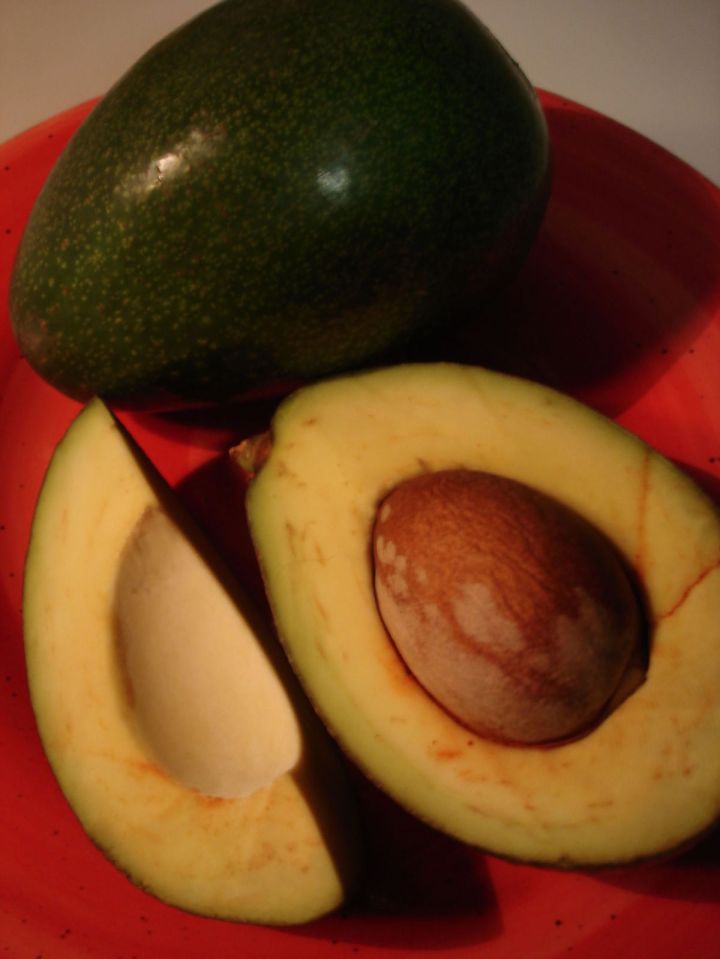
The big avocado tree in the neighbor’s garden dropped a big limb onto the deck. The last strange sound he heard was that of so many heavy avocados hitting the deck and scattering in every which direction, including down the wrought iron spiral stairs. All the patio furniture and cool potted plants up there got clobbered. Fortunately, there was no serious damage, and the avocado tree should be fine. Most of the fruit was in good condition. Only those that fell down the stairs were pulverized into lumpy guacamole.
 There are some things about plants that we might be better off not knowing about. For instance, their idea of sex is even weirder than that of humans! Generally, flowers of ‘monoecious’ plants have male parts and female parts that do what they must to produce seed, which is often contained in some sort of fruit structure. Some plants can pollinate themselves. Ick! Others require separate but compatible pollinators.
 Somewhere in the San Lorenzo Valley, there is a little old lady who is stitching a blue quilt. It is made of all the blue ribbons that she wins every year at the Jelly and Jam Contest of the Santa Cruz Mountains Harvest Festival. I do not know who she is, but I recognize her squiggly writing on the fancy labels. It is barely legible. Her hands are worn and tired from three quarters of a century off picking fruit, processing it into jelly and jam, and then stitching all her blue ribbons together. She probably giggles as she works, and thinks about everyone who wins only red or white ribbons.
 I have very few reservations about using chemicals in my garden. I bet you did not expect to read that. It is the quick and easy explanation about my philosophy on garden chemicals. Almost all chemicals that are available to the general public are reasonably safe if handled and applied properly. I am actually more concerned about the larger volumes of chemicals used in the landscape industry, and applied by technicians who can not read the labels or write their use reports. Yes, it happens. Anyway, some of the sugars, salts, preservative and other components of some of the food I eat is more dangerous than chemicals I use in the garden.

 Tony Tomeo