When Life Gives You Lemons

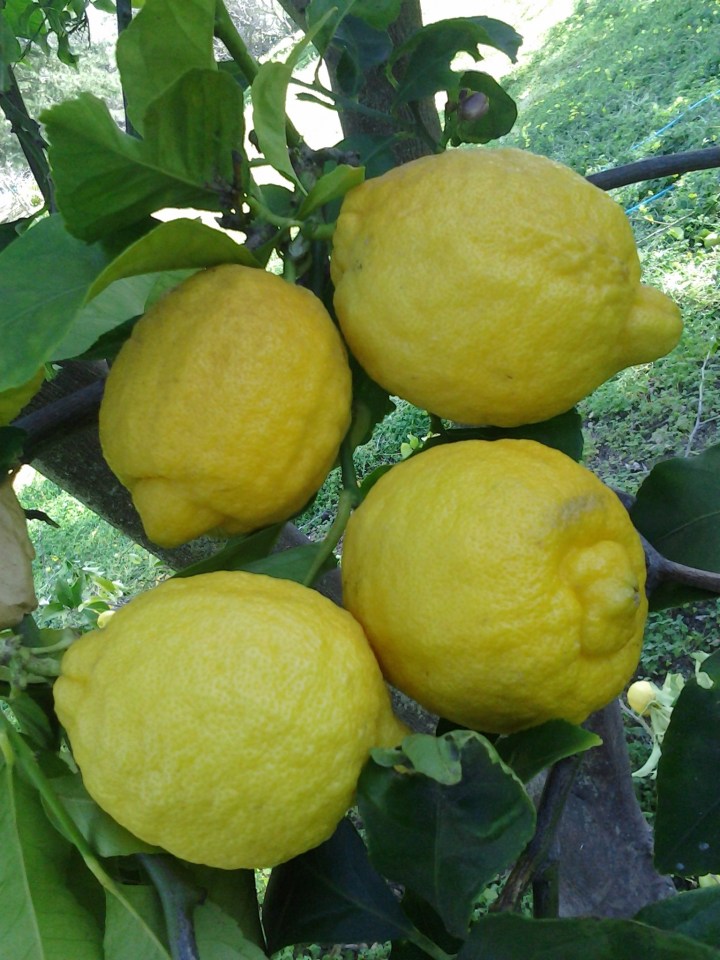
80131thumbWhen life gives you lemons, it is likely this time of year. Although, the most popular garden varieties of lemon, like ‘Meyer’ and ‘Eureka’, continue to produce at least a few more fruits sporadically through the year. ‘Lisbon’ lemon that is still used in orchard production, and is the ancestor of the household ‘Eureka’ lemon, produces almost all of its fruit in winter, and blooms shortly afterward.
Ripe citrus in the middle of winter impresses those in climates where winter is too cold for much to happen in the garden. They could not grow a citrus tree if they wanted to. Even here, frost can damage some of the more sensitive citrus varieties, like ‘Mexican’ lime. Unlike the fruits of summer, citrus fruits ripen slowly and are not so perishable, so do not need to be harvested right away.

This means that if it is raining, cold or just to wintery to go outside, citrus fruits can be left on the tree until the weather improves. Most of us prefer to pick them in small batches anyway. Ideally, fruit should get picked as it is consumed. Lemons and limes typically get picked individually as needed, until there are so many that some need to be bagged and shared with friends and neighbors.

Mandarin oranges are the most perishable of the citrus. Because their skins are so loosely attached to the pulp, the pulp can oxidize, lose flavor and eventually get dry and pithy. Incidentally, a ‘tangerine’ is merely a Mandarin orange that was developed in North or South America. A surprisingly sour (unknown) Mandarin orange might really be a ‘Rangpur lime’, which is not a lime at all.

Unlike most fruit that continues to ripen after harvest, or pears that actually delay ripening until after harvest, citrus fruits stop developing flavor once picked. It is best to taste them for confirmation of ripe flavor prior to harvest. Some Mandarin oranges may have slightly greenish blotches on them even when completely ripe. The best ‘Valencia’ oranges can look rather yellowish. Grapefruits might mellow if left in their trees past ripeness, but can also inhibit bloom.

Berries Are For The Birds

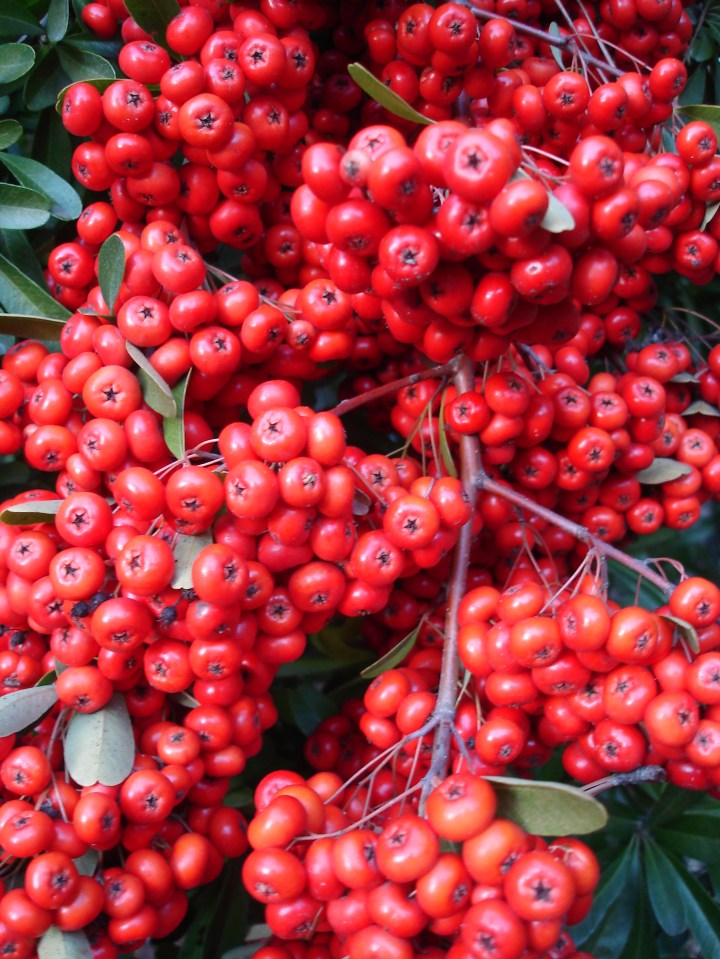
51125It is probably no coincidence that certain berries and small fruits are so colorful through winter while colorful flowers are relatively scarce. Like flowers, they want to get others to do something for them. Flowers use color, aroma, flavor and sometimes even texture to attract and reward pollinators. Colorful berries and fruits do the same to attract birds and animals who disperse their seeds.
There are not many colorful flowers blooming in winter to distract anyone from colorful berries and fruit. Those who want them are pretty intent on finding them anyway. There is not much else for overwintering birds to eat. Squirrels probably have plenty of acorns and nuts stored, but might enjoy a few berries too. No matter how abundant they are, there is serious competition for berries.

Most types of berries and small fruits that are so colorful through winter contain tiny seeds that get eaten along with the fruit. In this manner, the seeds get taken away from their origin as easily as birds fly away. They then get dispersed as birds do what birds do (that can be so annoying on a freshly washed car). Digestion only scarifies these seeds, which might not germinate otherwise.

This all might be much more information than necessary for home gardening. All we really need to know is that there are several plants that can produce colorful berries through winter while other color is limited. Although, it might be useful to be aware that these colorful berries are likely to eventually be depleted by the birds and any other wildlife that they are intended to be appealing to.

Then again, winter berries are popularly grown specifically to attract birds and wildlife to the garden. Either way, if berries are grown for their color or to attract birds, they have the potential to be messy. Those that do not get eaten eventually fall onto whatever is below them. Those that do get eaten fall (in ‘another form’) all over the neighborhood, and of course, onto freshly washed cars.

Coincidentally, most plants that produce colorful winter berries are related. They are of the ‘rose’ family, ‘Rosaceae’, and produce similar ‘pomme’ fruits that look like minute apples. Firethorn (pyracantha) is the most colorful and prolific. The various cotoneasters, including some low growing ground-covers, are similar, but not so prolific. Toyon is a colorful native that works nicely in unrefined landscapes. English hawthorn is a small deciduous tree.

Mexican Lime

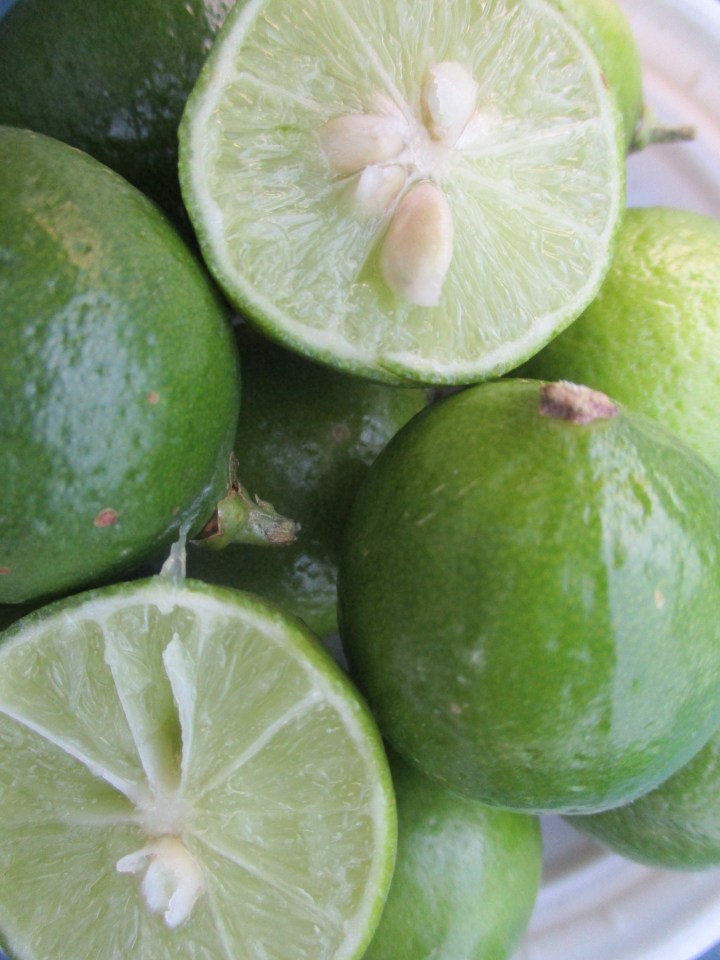
71227Those who can grow Mexican lime, Citrus aurantifolia, get to brag to their friends who can not, even if they are only a few miles away in slightly cooler spots. It really is marginal here. If it gets too cool in winter, it can defoliate. Frost can damage or kill the stems. Because it stays smaller than other citrus, Mexican lime happens to do well in large pots that can be moved to shelter for winter.
Mature trees can get taller than six feet, but not much higher than first floor eaves. The limber stems have small but sharp thorns. The two inch long evergreen leaves are glossy and nicely aromatic. The small white flowers are actually less fragrant. The round one or two inch wide fruits ripen from rich green to pale greenish yellow. The peel is very thin and tough, which is ideal for squeezing the juice from the very juicy and aromatic, but potentially seedy, greenish yellow pulp within.

Holy Guacamole!

P71202.jpgHorticulturists have a way of making all those long Latin names sound easy to pronounce. Lyanothamnus floribundus ‘Asplenifolius’ – Syzigium paniculatum – Metasequoia glyptostroboides. I do not know why proper pronunciation of their names is so important. They have no ears. They can not hear if we simply call them ‘Earl’. Even if they could hear, they would not respond.
Communication with other people is probably more important. Yet, we are so often unable to spell something as seemingly simple as the sound of a palm frond falling to the ground. Does it sound like “whoosh”, or “splat”, or some combination of both? What do the Santa Anna Winds sound like as they blow through a grove of Aleppo pines? What does a red flowering gum full of bees sound like?

Heck, Brent could not even tell me what an incident that he heard in his own backyard sounded like. As he came home from work and was getting out of the car in the driveway a few days ago, he heard in rapid succession, a loud ‘CRACK!’ followed immediately by a loud ‘WHOOSH!’ and a big ‘THUD!’ and ‘BANG!’. Well, I was sort of clear on all that, but it was the finale that was baffling him.

He said it sounded like someone dumping out a big bucked of tennis balls filled with something to make them heavy. I did not ask how he knew what that sounded like, or what the tennis balls were filled with, or why anyone would fill tennis balls with anything, or . . . He was obviously unsatisfied with that explanation, so said it sounded more like a whole bunch of billiard balls bouncing off of the bumpers all at the same time, without bumping into each other. Well, that is some pretty talented pool.

Okay, so it sounded like when you get into an elevator on the ninth floor of the Bank of America Tower, you know the big one downtown, and the bottom falls out of your big bag of ‘Eureka’ lemons somewhere between the fifth and fourth floors, and everyone is staring because it is noon thirty on Friday, and . . . well you know, . . . and then there was this . . . and . . . ain’t nobody got time for that!

Dude, just shut up! I get it.

Well, he went to the backyard to investigate. The source of the commotion was not immediately apparent from ground level. Everything seemed to be in order, maybe a bit sunnier, which might not have been noticed anywhere else after autumn . . . but this is Los Angeles. When Brent looked up to the deck on the flat roof of the office, it all became clear.

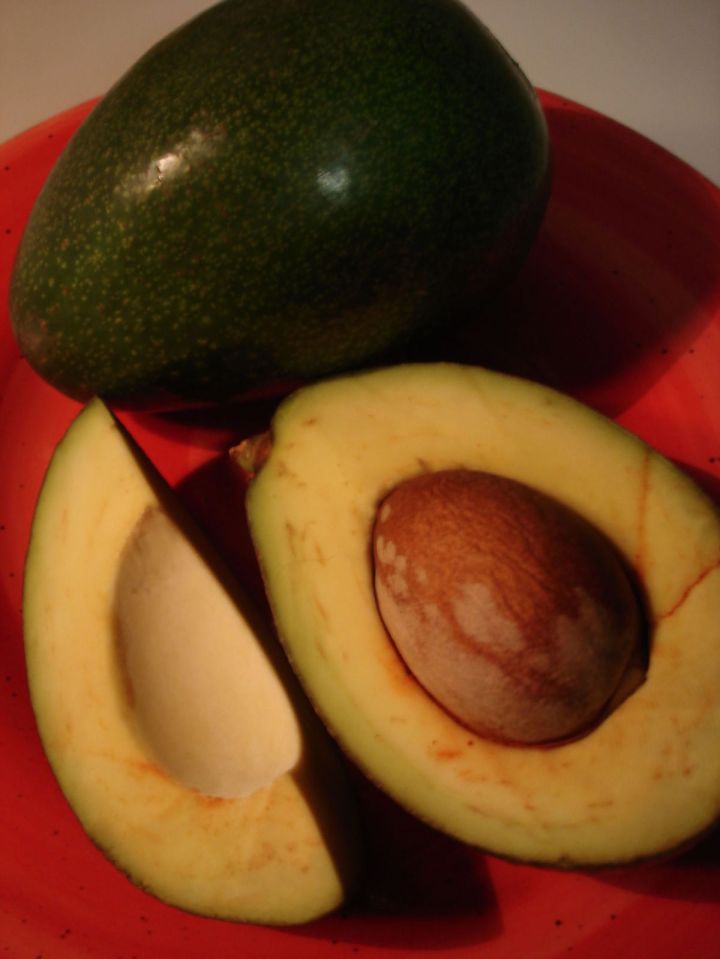
The big avocado tree in the neighbor’s garden dropped a big limb onto the deck. The last strange sound he heard was that of so many heavy avocados hitting the deck and scattering in every which direction, including down the wrought iron spiral stairs. All the patio furniture and cool potted plants up there got clobbered. Fortunately, there was no serious damage, and the avocado tree should be fine. Most of the fruit was in good condition. Only those that fell down the stairs were pulverized into lumpy guacamole.

The Secret Affairs Of Flowers

61207thumbThere are some things about plants that we might be better off not knowing about. For instance, their idea of sex is even weirder than that of humans! Generally, flowers of ‘monoecious’ plants have male parts and female parts that do what they must to produce seed, which is often contained in some sort of fruit structure. Some plants can pollinate themselves. Ick! Others require separate but compatible pollinators.

Some plants bloom with both but separate male and female flowers. Female pine cones that produce seed are very different from the male pine flowers that produce pollen. Female flowers of spruce and several other conifers bloom higher in the canopy than male flowers. This promotes better cross pollination, since pollen must be blown upwardly but relatively randomly to the cones instead of simply falling from above.

Dioecious plants might seem less . . . weird. They actually have separate genders. Some are female. Some are male. Female plants require pollination from male plants in order to produce seed and fruit, though some can provide a few of their own male flowers if they sense a lack of males in the neighborhood. Ick again! There are certain advantages to every method of pollination, whether it makes sense to us or not.

One advantage of dioecious plants that does make sense to us is that messy fruit can be prevented by growing one gender or the other. Modern cultivars of Chinese pistache and maidenhair tree (gingko) are male, so can not produce the messy fruit that older trees are notorious for. Female date palms recycled from old date orchards are unable to produce dates without the male pollinators that do not get recycled.

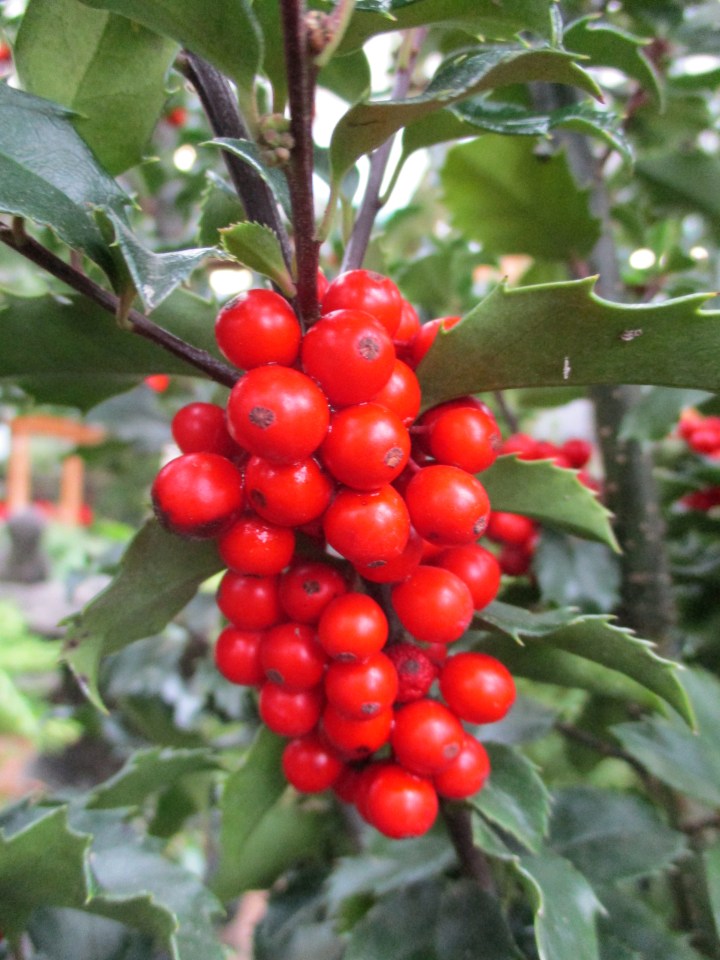
However, this is a disadvantage if holly can not make berries because it lacks pollinators. Decades ago, scions (stems) of male holly were grafted onto female plants. Alternatively, male plants were sold along with female plants.

Plants Grow Up So Fast

50429thumbShortly after germinating and producing their first few leaves, many seedlings start to produce foliage that is indistinguishable from the foliage that they will produce for the rest of their lives. Other plants might initially be outfitted with leaves that are smaller, thicker, or somehow slightly different from what will appear later. Then there are those that produce juvenile growth that is completely distinct from later adult growth.
There are many reasons for juvenile growth. It might be a competitive advantage for plants that live in dense forests. For others, it might deter grazing animals. Ivy actually has three phases, with juvenile ‘ground cover’ growth that creeps over the forest floor in search of a vertical support, adolescent ‘vine’ growth that climbs the support, and adult ‘tree’ growth that blooms and seeds when it gets to the top of the support.

Eucalyptus trees produce juvenile growth that is more pungently resinous than adult growth, in order to deter animals that would otherwise eat it. Adult growth develops when the main trunks have grown beyond reach of most of the threatening animals. Vigorous new growth that develops in response to breakage or pruning later in life is also outfitted with juvenile foliage so that koalas and other climbers leave it alone.

Avocado trees grown from seed produce no obvious juvenile growth, but without wasting their effort on blooming and fruiting, they grow very fast and lanky to compete with a dense forest canopy, whether real or imagined. For their first several years, they need to be pruned for structure and containment. They eventually produce adult branches, and start to bloom and produce fruit (although the fruit might be variable.)

Avocado trees obtained from nurseries are grafted so that they are genetically identical to a specific cultivar (for conformity of fruit), and so that they can start to produce right away. Their ‘scions’ (upper part of grafted trees) are obtained from adult growth of stock trees, so do not take several years to mature. The same technique works for citrus, which otherwise produce fruitless and wickedly thorny juvenile growth.

Sometimes, juvenile growth is preferred. Ivy gets pruned out of trees and off of walls to preserve the juvenile growth as an appealing and efficient ground cover plant, while also eliminating the potentially destructive climbing vines.51104

Anatomically Correct Horticulture

P71026Certain fruits and vegetables were so much more palatable before studying botany. Knowing what they really are sort of puts a damper on things.

Real fruits, including those known as vegetables, are no problem. We all know what they are, and they have the seeds to prove it. Just like flowers reward pollinators with nectar, many plants use fruit to get animals and people to disperse their seeds. Therefore, the fruit is designed to be eaten.

The majority of vegetables are fine too. It seems natural to eat leaves, stems, roots and even flowers. Things get a bit weird with petioles of rhubarb, celery and cardoon, since the leaves are not eaten. Cinnamon bark and saffron stamens also seems a bit odd. What about maple syrup? Is it a vegetable too?

Then there are fruits and vegetables that are not what we think they are.

You will never look at a potato the same way knowing that it is a subterranean stem known as a stolon. If it is looking back at you, it is because it has eyes, which are actually modified axillary buds, which only stems are equipped with. It it were a modified tuber or or a tuberous root like most of us think it is, it would not have these eyes.

Pineapple might be watching too, with its many eyes. Each eye actually represents a flower. What we think of as a pineapple fruit is actually a densely crowded collection of distended and fused flowers. Does that mean it is a vegetable like broccoli or cauliflower?

Strawberry is sort of fruity; but only what we think of as strawberry ‘seeds’. They are actually single seeded fruits known as ‘achenes’. Really, those little black things are outfitted with everything that they need to be classified as fruit. The red part of the strawberry is only a ‘receptacle’ for the achenes.

Everyone knows that fig trees do not bloom. So, how do they make fruit? Well, they technically don’t make any visible fruit; but they do bloom. What we think of as a fig fruit is actually a weird inside out inflorescence, with minute flowers on the inside. Each species of fig is pollinated by a particular species of minute wasp that enters the inflorescence through a very small hole at the end. Minute achenes about the size of strawberry achenes are the crunchy bits in ripe figs. To make figs even more unappealing, some wild figs contain the eggs and larvae of the wasps that went inside to deposit their eggs before dying there. Yum. Most garden varieties attract the wasps, but lack the necessary floral parts for the wasp to want to leave their eggs there. They therefore do the job of pollinating without dying inside.

Blue Ribbon

P71001Somewhere in the San Lorenzo Valley, there is a little old lady who is stitching a blue quilt. It is made of all the blue ribbons that she wins every year at the Jelly and Jam Contest of the Santa Cruz Mountains Harvest Festival. I do not know who she is, but I recognize her squiggly writing on the fancy labels. It is barely legible. Her hands are worn and tired from three quarters of a century off picking fruit, processing it into jelly and jam, and then stitching all her blue ribbons together. She probably giggles as she works, and thinks about everyone who wins only red or white ribbons.
Three years ago, I submitted my blue elderberry jelly and ‘Shiro’ white plum jam into the contest. They both won! Blue elderberry won second place. White plum won third. Two years ago, the blue elderberry jelly won second place again, although the white plum jam did not win anything.

Last year, I submitted the maximum of five jellies and jams. I was determined to get my blue ribbon! In conjunction to blue elderberry jelly and white plum jam, I also submitted peach jam, blackberry jelly and Santa Catalina Island cherry jelly. However, the Jelly and Jam Contest was not publicized like it should have been. Very few people were aware of it. Consequently, there was only ONE other entry! It was a sloppy and seedy strawberry and kiwi jam made from fruit that was not likely home grown. I knew I would finally win my blue ribbon, and probably red and white too! Technically, it was not cheating. It was just the way things worked out.

It was no surprise that the blackberry jelly won third place. It was a bit of surprise that the blue elderberry won second place, even though it had done so twice before. I was hoping that it would be the blue ribbon winner. That was not a problem. I was sure it won second place only because one of the other three had won first place. I stepped off the grandstand after claiming each of the two ribbons, but thought about just staying there for the third. I did the tactful thing and walked off stage.

Finally, the first place winner of the blue ribbon in the Jelly and Jam Contest was to be announced. I was halfway into my first step back to the grandstand when I heard “STRAWBERRY AND KIWI JAM”! What?! How was this possible? What was she putting in that jam?! The winner was not present to claim her ribbon, but she won nonetheless. I imagined her watching with a telescope from the window of her secret hideout in the mountains above town, and laughing maniacally.

Well, the Santa Cruz Mountains Harvest Festival was yesterday. For the Jelly and Jam Contest, I submitted only two entries; blue elderberry jelly and blackberry jelly. There were only four other entries; fig jam, peach jam, another blackberry jelly and the infamous strawberry and kiwi jam. I was pleased that my blackberry jelly won third place, and I still hoped for the blue elderberry jelly to win second or first. The peach jam won second. It was made by . . . WHO? MY MOTHER’S PEACH JAM WON SECOND PLACE?! This was intolerable! I ALWAYS win at least second place! What made it worse is that I lost to my MOTHER’S peach jam! Where did she learn how to make jam? . . . and from peaches from the tree that I grew? Before I could recover from this baffling revelation, the first place winner was announced; and it was again, the strawberry and kiwi jam.

Wow! I do not know what to think. I got to meet the lady who makes the strawberry and kiwi jam. She is not a little old lady who lives in a secret hideout. She is a pretty young lady, and she actually told me that she does not intend to compete next year, and told me that I should try her recipe. I thanked here but declined. I do not want to use store bought produce. Now the difficult part. I need to deliver the second place red ribbon to my mother who was not there to claim it.

Pumpkins Wait For No One

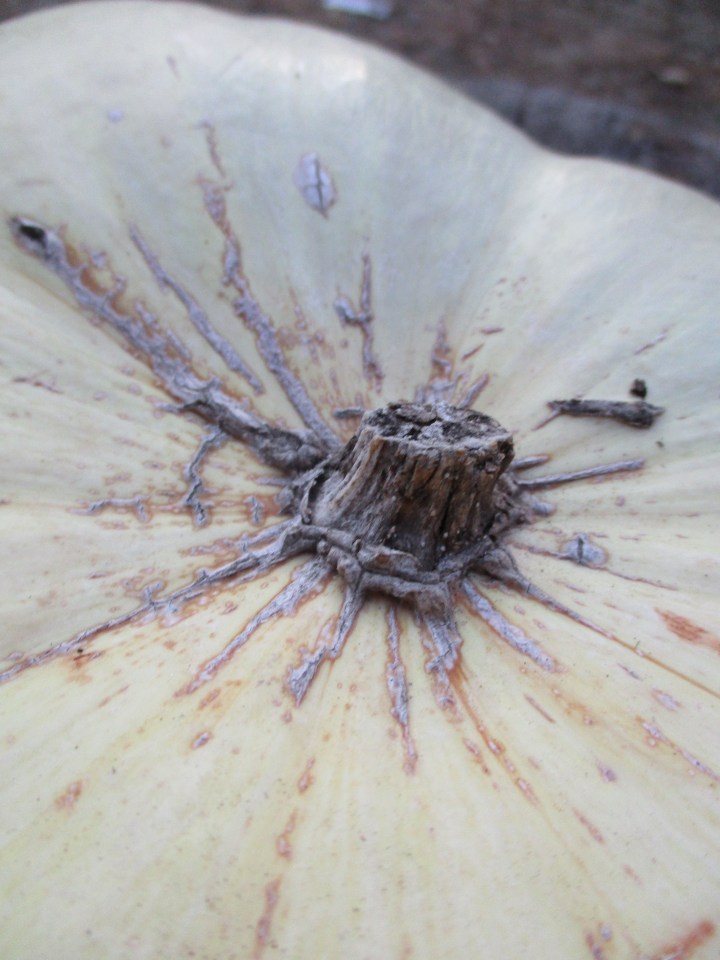
71004thumbThings might have gone better for Cinderella if she had taken a Buick to the ball instead of that detrimentally punctual pumpkin coach. It was on such a tight schedule! It might have seemed like a good idea on the way too the ball. It certainly was a unique ride. The problem was that it made no accommodation for Cinderella’s tardiness at midnight. It adhered firmly to its own strict schedule.

Pumpkins and other vegetables are just as punctual in our own gardens. Pumpkin leaves eventually succumb to mildew late in summer. This year, they might be a bit more worn out than they typically are by this time, because of the surprisingly warm weather a while back. They are just finishing up anyway. They only need to sustain fat pumpkin fruit as it ripens for the next month or so.

Some of the oldest leaves might get cut away if they get so dry and crispy that they are obviously no longer viable. The best and most functional leaves will be farthest from the roots. Unfortunately, that is also where the ripening pumpkins are. They need the leaves to sustain them, but they also need sunlight to color well. Leaves that shade fruit should be bent away, or cut away if necessary.

For even ripening, pumpkins should be grown on their sides, and turned or rolled a quarter turn every few days or so. There is no precise formula, but they should not be turned in the same direction too much. Otherwise, they get twisted off their stems. They can be grown standing on their flower ends if they sometimes get turned on their sides to expose their flower end undersides.

Regular turning also promotes symmetry, and should prevent the fruit from sitting in the same position long enough to rot. Just to be safe, in well watered gardens, or where the soil is constantly moist, it might be a good idea to put small boards under pumpkins. Unfortunately, there is no remedy for damage caused by the heat. Damaged pumpkins will just make uglier jack-o’-lanterns.

Big bright orange pumpkins with thin shells work best for jack-o’-lanterns. Smaller brownish orange pumpkins with thick shells are grown for baking and pies. Their external appearance is not as important, although well ripened pumpkins have better flavor. White, pink, green, yellow, red and even blue gray pumpkins are just weird. They look great for Halloween, but do not taste like much.

The Physics Of Fruit

datsun_b210_1_76Sir Isaac Newton had something to say about an apple that was a victim of gravity. My high school physics professor was even better. He taught us all about velocity, force, inertia, vectors and much of what he had to teach us about physics with the help of a very ripe persimmon . . . and an insipid green 1976 Datsun B210.

I was reminded about these lessons a few years ago while Brent and I were in his old neighborhood in Los Angles. He pointed out an old burnt-orange Caprice that was in remarkably good condition. It had less than the typical wear and tear for a car that was nearly as old as we were. Brent pointed out a nearly imperceptible but specific dent in the driver side tail flank, and explained that it was made by a hard under-ripe peach. I did not need to ask how a green peach had attained sufficient force to cause such damage. I grew up in the Santa Clara Valley, where we all know the joy of attacking cars with fruit.

Most of our ammunition was apricots in various stages of ripeness. While in season, the orchard provided an unlimited supply. While they were out of season, we took what we could get from other fruit trees. Winter was meager; but just before 1977 became 1978, we discovered the gloriously humongous and squishy fruit of the ‘Hachiya’ persimmon tree in a neighbor’s front yard. Each fruit had the destructive force of a large ‘Marsh’ grapefruit, but with a squish factor of tapioca pudding! We had never seen anything like it!

Our first victims probably did not know what hit them. They probably heard the mild thuds on their cars, and drove home believing that they had been hit with the typical and mess-less lemons or oranges that are available in winter. Only after parking their shiny cars and getting out did they witness the horror or ‘Hachiya’ persimmon! Perhaps that is how ‘Hachiya’ got its name. It sounds Japanese for something someone would say in response to such a hideous mess. “Hachiya! What happened to my Mitsubishi?!” I do not know if Mitsubishi was around back then. Most of our targets were big American cars.

Then one day, we got a more challenging and more appropriately Japanese victim; a bland green Datsun B210. It was a smaller and speedier target than what we were accustomed to. Our small herd of neighborhood boys ran out to greet it; but then something unexpected happened. The car stopped. The red-headed leprechaun driving it saw us coming and just stopped there before the first persimmon took flight.

We were baffled. The other boys dropped their fruit and ran. I was too annoyed. I did not want to waste the big fruit that the persimmon tree had put so much work into. So, . . . I threw it. It made first contact on the right side of the windshield, and slid its sloppy ripe goo over most of the windshield to the driver’s side. Yes, it was glorious!

I stood there briefly in awe before I realized that the driver of the car was just glaring back at me . . . with the LOOK! Yes, it was the look; the look that said, “If I did not have these short leprechaun legs, I would run after you and beat you into the mud!”. Then I ran off to join the other boys, believing that was the end of it. I occasionally saw the Datusn around the neighborhood afterward, but did not think much of it, unless the leprechaun driving it happened to glare menacingly back at me.

We started high school a few years later. Part way through the first day, I got to my physics class just before the teacher arrived. I was already seated when he walked in, and glared right at me. Yes, it was HIM; the leprechaun! For the first time ever, I saw him smile. He did not have long fangs dripping with blood, but he was terrifying nonetheless. This was going to be a long nine months!

It wasn’t that bad. In fact, the leprechaun was one of many excellent professors at my high school. We all liked him. He did have an odd way with word problems though; you know, those situations involving ‘object A’ and ‘object B’. We had word problems like, “If object ‘persimmon’ weighs .75 pounds and is traveling east at 25 mph, and object ‘Datsun’ weighs 2,000 pounds and is traveling southwest at 25 mph, how much force will object ‘persimmon’ exert against object ‘Datsun’ when they collide?”.