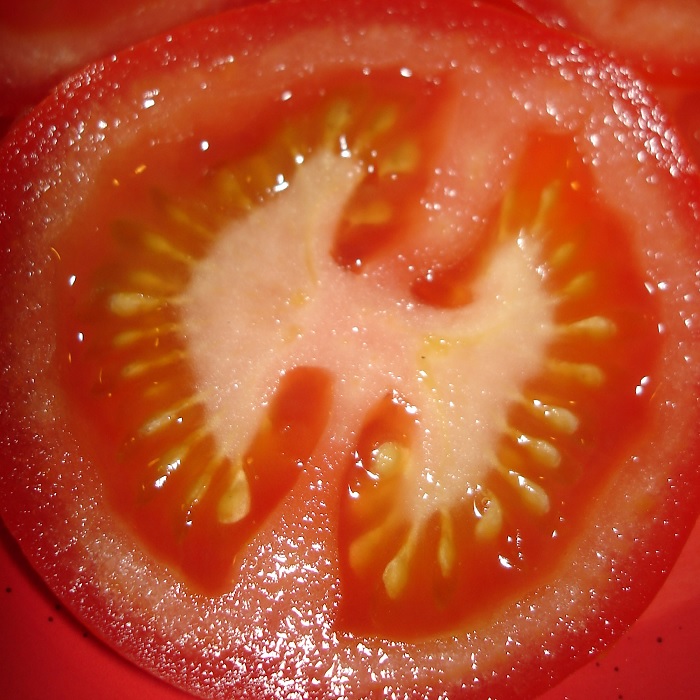
Anatomically Correct Horticulture

P71026Certain fruits and vegetables were so much more palatable before studying botany. Knowing what they really are sort of puts a damper on things.

Real fruits, including those known as vegetables, are no problem. We all know what they are, and they have the seeds to prove it. Just like flowers reward pollinators with nectar, many plants use fruit to get animals and people to disperse their seeds. Therefore, the fruit is designed to be eaten.

The majority of vegetables are fine too. It seems natural to eat leaves, stems, roots and even flowers. Things get a bit weird with petioles of rhubarb, celery and cardoon, since the leaves are not eaten. Cinnamon bark and saffron stamens also seems a bit odd. What about maple syrup? Is it a vegetable too?

Then there are fruits and vegetables that are not what we think they are.

You will never look at a potato the same way knowing that it is a subterranean stem known as a stolon. If it is looking back at you, it is because it has eyes, which are actually modified axillary buds, which only stems are equipped with. It it were a modified tuber or or a tuberous root like most of us think it is, it would not have these eyes.

Pineapple might be watching too, with its many eyes. Each eye actually represents a flower. What we think of as a pineapple fruit is actually a densely crowded collection of distended and fused flowers. Does that mean it is a vegetable like broccoli or cauliflower?

Strawberry is sort of fruity; but only what we think of as strawberry ‘seeds’. They are actually single seeded fruits known as ‘achenes’. Really, those little black things are outfitted with everything that they need to be classified as fruit. The red part of the strawberry is only a ‘receptacle’ for the achenes.

Everyone knows that fig trees do not bloom. So, how do they make fruit? Well, they technically don’t make any visible fruit; but they do bloom. What we think of as a fig fruit is actually a weird inside out inflorescence, with minute flowers on the inside. Each species of fig is pollinated by a particular species of minute wasp that enters the inflorescence through a very small hole at the end. Minute achenes about the size of strawberry achenes are the crunchy bits in ripe figs. To make figs even more unappealing, some wild figs contain the eggs and larvae of the wasps that went inside to deposit their eggs before dying there. Yum. Most garden varieties attract the wasps, but lack the necessary floral parts for the wasp to want to leave their eggs there. They therefore do the job of pollinating without dying inside.

Blue Ribbon

P71001Somewhere in the San Lorenzo Valley, there is a little old lady who is stitching a blue quilt. It is made of all the blue ribbons that she wins every year at the Jelly and Jam Contest of the Santa Cruz Mountains Harvest Festival. I do not know who she is, but I recognize her squiggly writing on the fancy labels. It is barely legible. Her hands are worn and tired from three quarters of a century off picking fruit, processing it into jelly and jam, and then stitching all her blue ribbons together. She probably giggles as she works, and thinks about everyone who wins only red or white ribbons.
Three years ago, I submitted my blue elderberry jelly and ‘Shiro’ white plum jam into the contest. They both won! Blue elderberry won second place. White plum won third. Two years ago, the blue elderberry jelly won second place again, although the white plum jam did not win anything.

Last year, I submitted the maximum of five jellies and jams. I was determined to get my blue ribbon! In conjunction to blue elderberry jelly and white plum jam, I also submitted peach jam, blackberry jelly and Santa Catalina Island cherry jelly. However, the Jelly and Jam Contest was not publicized like it should have been. Very few people were aware of it. Consequently, there was only ONE other entry! It was a sloppy and seedy strawberry and kiwi jam made from fruit that was not likely home grown. I knew I would finally win my blue ribbon, and probably red and white too! Technically, it was not cheating. It was just the way things worked out.

It was no surprise that the blackberry jelly won third place. It was a bit of surprise that the blue elderberry won second place, even though it had done so twice before. I was hoping that it would be the blue ribbon winner. That was not a problem. I was sure it won second place only because one of the other three had won first place. I stepped off the grandstand after claiming each of the two ribbons, but thought about just staying there for the third. I did the tactful thing and walked off stage.

Finally, the first place winner of the blue ribbon in the Jelly and Jam Contest was to be announced. I was halfway into my first step back to the grandstand when I heard “STRAWBERRY AND KIWI JAM”! What?! How was this possible? What was she putting in that jam?! The winner was not present to claim her ribbon, but she won nonetheless. I imagined her watching with a telescope from the window of her secret hideout in the mountains above town, and laughing maniacally.

Well, the Santa Cruz Mountains Harvest Festival was yesterday. For the Jelly and Jam Contest, I submitted only two entries; blue elderberry jelly and blackberry jelly. There were only four other entries; fig jam, peach jam, another blackberry jelly and the infamous strawberry and kiwi jam. I was pleased that my blackberry jelly won third place, and I still hoped for the blue elderberry jelly to win second or first. The peach jam won second. It was made by . . . WHO? MY MOTHER’S PEACH JAM WON SECOND PLACE?! This was intolerable! I ALWAYS win at least second place! What made it worse is that I lost to my MOTHER’S peach jam! Where did she learn how to make jam? . . . and from peaches from the tree that I grew? Before I could recover from this baffling revelation, the first place winner was announced; and it was again, the strawberry and kiwi jam.

Wow! I do not know what to think. I got to meet the lady who makes the strawberry and kiwi jam. She is not a little old lady who lives in a secret hideout. She is a pretty young lady, and she actually told me that she does not intend to compete next year, and told me that I should try her recipe. I thanked here but declined. I do not want to use store bought produce. Now the difficult part. I need to deliver the second place red ribbon to my mother who was not there to claim it.

Pumpkins Wait For No One

71004thumbThings might have gone better for Cinderella if she had taken a Buick to the ball instead of that detrimentally punctual pumpkin coach. It was on such a tight schedule! It might have seemed like a good idea on the way too the ball. It certainly was a unique ride. The problem was that it made no accommodation for Cinderella’s tardiness at midnight. It adhered firmly to its own strict schedule.
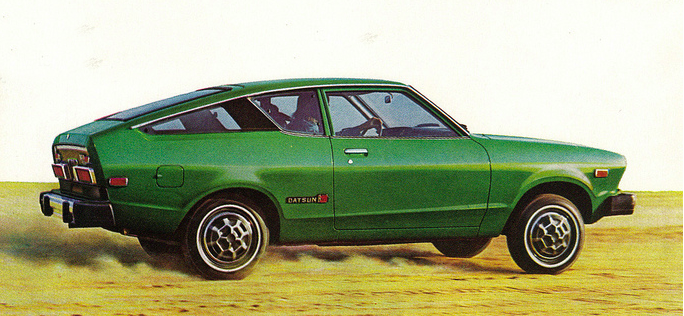
Pumpkins and other vegetables are just as punctual in our own gardens. Pumpkin leaves eventually succumb to mildew late in summer. This year, they might be a bit more worn out than they typically are by this time, because of the surprisingly warm weather a while back. They are just finishing up anyway. They only need to sustain fat pumpkin fruit as it ripens for the next month or so.

Some of the oldest leaves might get cut away if they get so dry and crispy that they are obviously no longer viable. The best and most functional leaves will be farthest from the roots. Unfortunately, that is also where the ripening pumpkins are. They need the leaves to sustain them, but they also need sunlight to color well. Leaves that shade fruit should be bent away, or cut away if necessary.

For even ripening, pumpkins should be grown on their sides, and turned or rolled a quarter turn every few days or so. There is no precise formula, but they should not be turned in the same direction too much. Otherwise, they get twisted off their stems. They can be grown standing on their flower ends if they sometimes get turned on their sides to expose their flower end undersides.

Regular turning also promotes symmetry, and should prevent the fruit from sitting in the same position long enough to rot. Just to be safe, in well watered gardens, or where the soil is constantly moist, it might be a good idea to put small boards under pumpkins. Unfortunately, there is no remedy for damage caused by the heat. Damaged pumpkins will just make uglier jack-o’-lanterns.

Big bright orange pumpkins with thin shells work best for jack-o’-lanterns. Smaller brownish orange pumpkins with thick shells are grown for baking and pies. Their external appearance is not as important, although well ripened pumpkins have better flavor. White, pink, green, yellow, red and even blue gray pumpkins are just weird. They look great for Halloween, but do not taste like much.

The Physics Of Fruit

datsun_b210_1_76Sir Isaac Newton had something to say about an apple that was a victim of gravity. My high school physics professor was even better. He taught us all about velocity, force, inertia, vectors and much of what he had to teach us about physics with the help of a very ripe persimmon . . . and an insipid green 1976 Datsun B210.

I was reminded about these lessons a few years ago while Brent and I were in his old neighborhood in Los Angles. He pointed out an old burnt-orange Caprice that was in remarkably good condition. It had less than the typical wear and tear for a car that was nearly as old as we were. Brent pointed out a nearly imperceptible but specific dent in the driver side tail flank, and explained that it was made by a hard under-ripe peach. I did not need to ask how a green peach had attained sufficient force to cause such damage. I grew up in the Santa Clara Valley, where we all know the joy of attacking cars with fruit.

Most of our ammunition was apricots in various stages of ripeness. While in season, the orchard provided an unlimited supply. While they were out of season, we took what we could get from other fruit trees. Winter was meager; but just before 1977 became 1978, we discovered the gloriously humongous and squishy fruit of the ‘Hachiya’ persimmon tree in a neighbor’s front yard. Each fruit had the destructive force of a large ‘Marsh’ grapefruit, but with a squish factor of tapioca pudding! We had never seen anything like it!

Our first victims probably did not know what hit them. They probably heard the mild thuds on their cars, and drove home believing that they had been hit with the typical and mess-less lemons or oranges that are available in winter. Only after parking their shiny cars and getting out did they witness the horror or ‘Hachiya’ persimmon! Perhaps that is how ‘Hachiya’ got its name. It sounds Japanese for something someone would say in response to such a hideous mess. “Hachiya! What happened to my Mitsubishi?!” I do not know if Mitsubishi was around back then. Most of our targets were big American cars.

Then one day, we got a more challenging and more appropriately Japanese victim; a bland green Datsun B210. It was a smaller and speedier target than what we were accustomed to. Our small herd of neighborhood boys ran out to greet it; but then something unexpected happened. The car stopped. The red-headed leprechaun driving it saw us coming and just stopped there before the first persimmon took flight.

We were baffled. The other boys dropped their fruit and ran. I was too annoyed. I did not want to waste the big fruit that the persimmon tree had put so much work into. So, . . . I threw it. It made first contact on the right side of the windshield, and slid its sloppy ripe goo over most of the windshield to the driver’s side. Yes, it was glorious!

I stood there briefly in awe before I realized that the driver of the car was just glaring back at me . . . with the LOOK! Yes, it was the look; the look that said, “If I did not have these short leprechaun legs, I would run after you and beat you into the mud!”. Then I ran off to join the other boys, believing that was the end of it. I occasionally saw the Datusn around the neighborhood afterward, but did not think much of it, unless the leprechaun driving it happened to glare menacingly back at me.

We started high school a few years later. Part way through the first day, I got to my physics class just before the teacher arrived. I was already seated when he walked in, and glared right at me. Yes, it was HIM; the leprechaun! For the first time ever, I saw him smile. He did not have long fangs dripping with blood, but he was terrifying nonetheless. This was going to be a long nine months!

It wasn’t that bad. In fact, the leprechaun was one of many excellent professors at my high school. We all liked him. He did have an odd way with word problems though; you know, those situations involving ‘object A’ and ‘object B’. We had word problems like, “If object ‘persimmon’ weighs .75 pounds and is traveling east at 25 mph, and object ‘Datsun’ weighs 2,000 pounds and is traveling southwest at 25 mph, how much force will object ‘persimmon’ exert against object ‘Datsun’ when they collide?”.

Never Forget the Valley of Heart’s Delight


The Santa Clara Valley really was as idyllic as the natives say it was. It was excellent for us kids, as well as for our parents who raised us here. That is why it is also know as the Valley of Heart’s Delight.

Every autumn, the orchards would turn soft yellow. Cherry orchards got a bit more orange. Apple and pear stayed greener later. The foliage still smelled sort of fruity. Leaves would start to fall with the first breezes and cool autumn rain. There was still mud here back then. It was real orchard mud; not the sort that happens because a gardener waters the lawn way too much.

By winter, the foliage on the ground smelled earthy. . . very earthy. It might have been slippery to walk on. The upper stems of the bare trees reached upward as if they were not expecting to be slowed down by the change in the weather. The trees seemed to watch each other getting pruned, and then point and laugh at each other when it was all done. Debris piled on the edges of the orchards burned fast, and then smoldered for a few days, with a narrow wisp of almost sweet smelling smoke.

Spring made you think the whole world was in bloom! It was billowy white bloom. Apricot was the best, but cherry ad almond were brighter white. Prune seemed to be very slightly blushed. It was all white, but different flavors of white. It was so soft and fragile. The fragrance was surprisingly simple, sort of fruity, and . . . perfect. Apple and pear bloomed later, giving the illusion that bloom lasted a long time. However, each type of orchard bloomed only for a short time. Let’s be honest; apple and pear did not smell quite as good as the rest; and some described them less graciously than those of us who were kids back then. Walnut and fig, well, they were always the odd ones anyway.

Summer smelled like fruit. It was everywhere. It smelled sort of grassy at first while the fruit was developing. By the end, it smelled way too ripe. Finally, it smelled like wine and toasted soil. The soil here really was great. It was grey and heavy. Summer was warm but only rarely hot. Mustard grew under the trees, and then wilted down just before getting cut.

We were all raised with horticulture, whether we realized it or not, or whether we liked it or not. We all got peanut butter and jelly sandwiches in our lunchboxes because our mothers had to get rid of the apricots somehow. Fudge at Christmas was overloaded with walnuts. Mom’s apple pie was not revered here like everywhere else in America. It was our culture. It was everywhere.

Even though almost all of us were natives, and most of our parents were natives, and some of our families had been here for several generations, the horticulture was imported from all over the place. Apricots, cherries, prunes, peaches, almonds, walnuts, figs, pears, apples; there was just about every fruit tree imaginable. They came from Turkey, France, Italy, Spain, Greece, England, Persia . . . really anywhere and everywhere. Our ancestors brought their horticultural expertise from Italy, Spain, Japan, Oklahoma, Portugal, Mexico and who knows where else. It all came here and somehow got mixed together to make the Valley of Heart’s Delight, our own distinct culture within the Santa Clara Valley.