Pruning Cane Berries

Their habit of overwhelming untended gardens gives blackberry canes a bad reputation. Their thicket like growth in their native habitats does not help. They are certainly not ‘low maintenance’ and need intensive specialized pruning later in the year. Yet, they become available with other bare-root plants this time of year for a reason. They make great blackberries!

New bare-root blackberry plants do not look like much when they are first planted, and do not produce berries in their first year. They will instead be busy dispersing roots and producing biennial canes that will produce berries the following year. Root barriers can prevent their aggressive roots from getting into neighbors’ gardens, particularly since south or west facing fences are just as practical for supporting trailing canes as trellises are.

‘Trailing’ types like ‘Marion’, ‘Boysen’ and ‘Olallie’ blackberries, which are also known as ‘boysenberry’, ‘marionberry’ and ‘olallieberry, are the most popular locally. ‘Erect’ types, like ‘Arapaho’, ‘Choctaw’ and ‘Navaho’ are more tolerant to frost, so are more popular where winters are colder. ‘Semierect’ types are hybrids of trailing and erect blackberries. 

In their second year, trailing and semierect canes that grew during the first year should be trained onto trellises, fences or wires. As their fruit gets depleted later in summer, these canes can be cut to the ground. Some of the new canes that developed through the season need to be trained onto the same supports to replace the older canes as they get removed.

There should be more than enough new canes. About ten to fifteen of the best canes of trailing types should be selected and pruned to about six or seven feet long. Semierect types need about half as many canes, and can be pruned about a foot shorter. Extra canes should be cut to the ground. A few of the smaller extra canes can be left through summer to be separated with roots as new plants during the following winter.

Side branches that grow from the pruned canes through late summer and early autumn should get pruned to about a foot long at the end of the following winter. New growth from these stubs will produce fruit during the following summer. The process of replacing the old canes with new canes can be repeated as the fruit gets depleted.         The process is similar for erect blackberries, but no support is needed. During the second year, canes should be cut to about two and a half feet tall in the middle of summer. Secondary branches from these canes should be cut to about a foot long in winter. As fruit gets depleted and replacement canes develop during the following summer, these mature canes can get cut to the ground. New canes then get pruned just like the older canes were.
Cane Berries

Thorny stems complicate pruning.

The fruits of summer are still a few month away. The work necessary to produce them needs to get done now though. Just like bare root trees, bare root raspberry canes get planted while dormant in winter, and later require intensive specialized pruning to keep them in control and to promote abundant production. Canes that are already established need to get pruned now and every winter.

New plants should be planted about two or three feet apart, and then cut back so that only a single bud is visible above ground. Root barriers should keep them from venturing under fences and into neighbor’s gardens, particularly since south or west facing fences are ideal spots to grow raspberries. Alternatively, raspberries can be planted in sunken #15 cans (15 gallon nursery pots), with or without the bottoms cut off. Cans should be buried up to their rims because any exposed black vinyl collects warmth from the sun, which is uncomfortable for the roots within. Mulch should insulate the soil until new foliage provides shade.

The few new canes that should develop during the next few months should be able to support their own weight, but may be easier to work with if tied to a fence or trellis. The popular everbearing types, like ‘September’, ‘Heritage’, ‘Summit’, ‘Golden Summit’ and ‘Fallgold’ may produce fruit on top of their new canes by autumn. The tops of these canes should get cut down as low as fruit developed during the following winter. The remaining lower portions of canes that did not produce fruit in the first year should produce fruit by the second summer, and should be pruned to the ground as the fruit finishes.  

As the spent canes get removed, about five to ten of the best new canes should be selected and tied in place if desired. All other canes should be cut to the ground. Like the canes of the previous year, the selected canes should develop fruit on top in autumn and get pruned as they finish in winter, and then develop more fruit down low before getting pruned out during the following summer. This process should be repeated annually.

‘Willamette’, ‘Tulameen’ and ‘Canby’ are traditional summer bearing raspberries. They do not produce in their first year, and will need to be pruned to about five feet tall during the following winter. As these canes develop fruit, many new canes emerge below. Every winter afterward, about five to ten of the new canes should be selected and pruned to about five feet as spent canes and unneeded canes get cut to the ground.

Citrus Are Summery For Winter

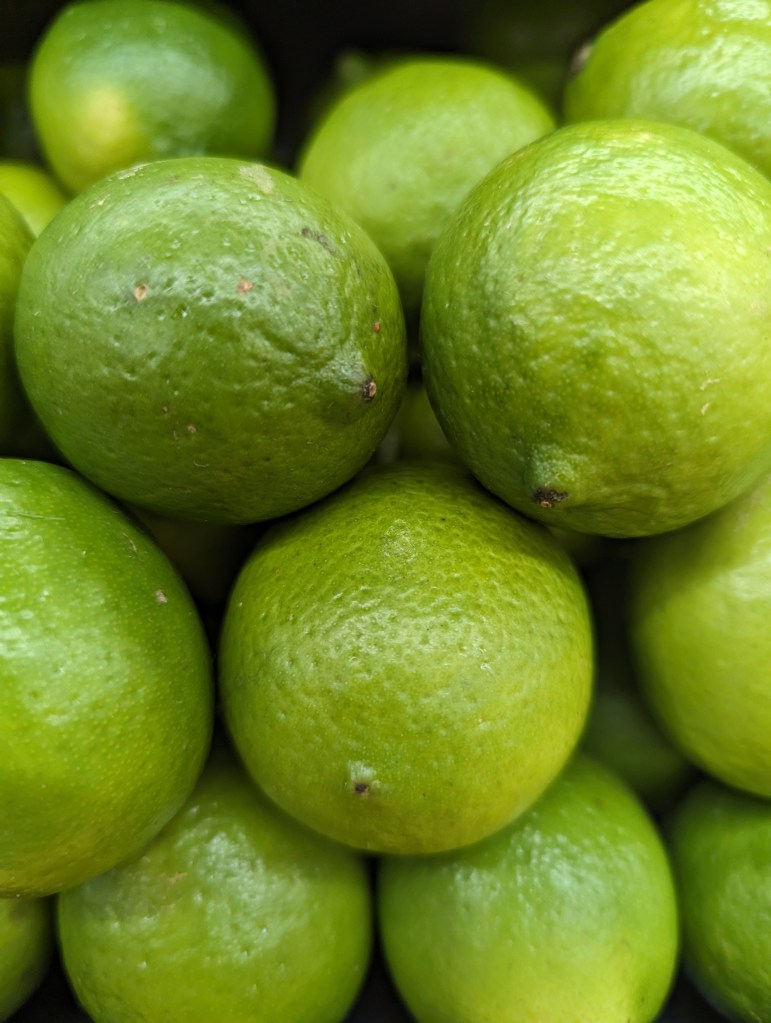
Limes are the most diverse citrus.

Citrus trees are not like deciduous fruit trees. They are not marketable as bare root stock. They do not need winter pruning. Actually, winter pruning might initiate premature growth that is vulnerable to frost. Deciduous fruit trees remain dormant so can only dream about fruiting for next summer. Citrus trees are happily evergreen, and fruiting abundantly now.

Citrus somehow seem to be more summery than fruit that actually ripen for summer. Iced lemonade is so traditional for warm summer weather. Oranges for Christmas might seem to be out of season when they really are not. Although Mandarin oranges are perishable, other ripe citrus last for weeks or months. Several ripen sporadically throughout the year.

‘Valencia’ oranges, which are the traditional juicing oranges, might last through summer. They may sustain the belief that orange juice is a summery beverage. Several grapefruit cultivars can last about as long. ‘Eureka’ lemon is mostly seasonal, but also generates a few fruits throughout the year. ‘Bearss’ lime may be even more productive out of season.

With only one exception, all species and cultivars of citrus are of the same Citrus genus. Kumquats are of the Fortunella genus, but typically qualify as Citrus for simplicity. Citrus fruit is sweet, sour or bitter. Most familiar oranges are sweet. ‘Seville’ is a sour orange for marmalade. ‘Bouquet de Fleur’ is a bitter orange for infusing with Grand Marnier cognac.

Oranges, lemons, limes, grapefruits, kumquats and Mandarins are all very familiar. All of these fruits are available from grocery markets. Their trees grow in many home gardens. Tangerines are simply Mandarins or Mandarin oranges of the Americas. Pomelos, which are larger ancestors of grapefruits, are still uncommon. So are tiny and tart calamondins.

They are not the most unusual, though. Blood oranges provide tangy red juice. ‘Rangpur’ lime is a sour Mandarin orange that is as acidic as a ‘Eureka’ lemon. Tangelos combines the tartness of grapefruits with the sweetness of Mandarin oranges. Sweet limes lack the acidity of typical limes, so are for eating like oranges. These are merely a few examples.

Nectarine

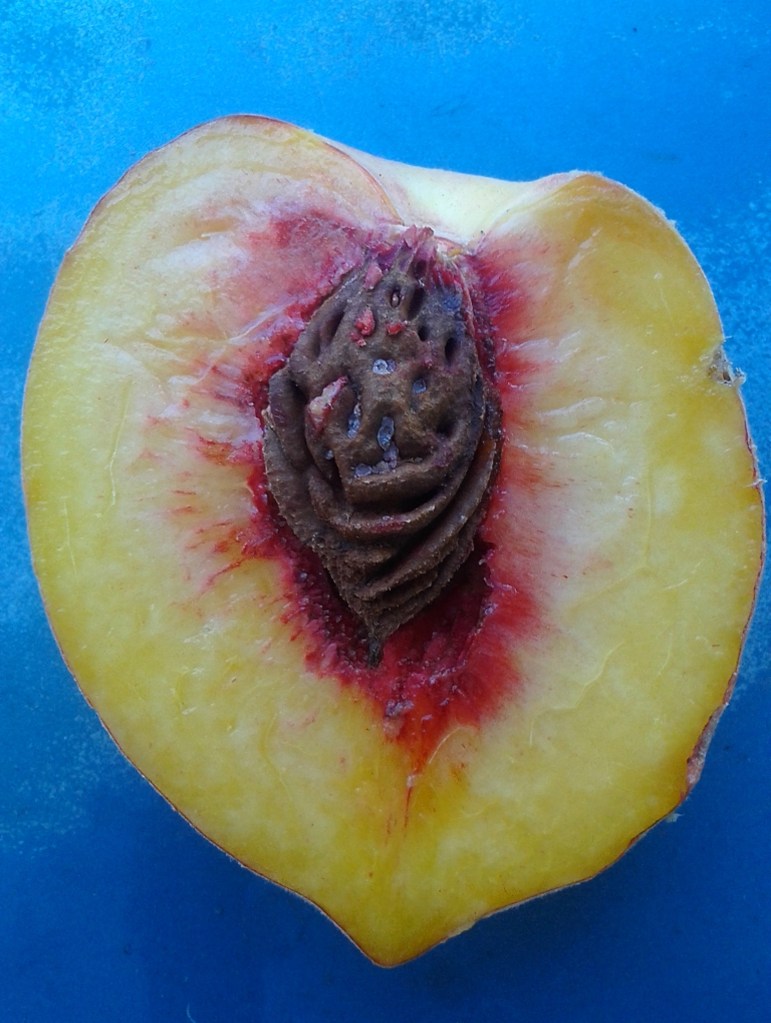
Nectarines are merely peaches without fuzz.

Stone fruit classification can get confusing. All stone fruit are of the same genus, Prunus. This includes almonds, which are stones or seeds of inedible fruit. Prunes are European fruits that are conducive to juicing and drying. Plums are similar Japanese fruits for fresh consumption, but not for drying. The two are more different than peaches and nectarines.

Nectarines, Prunus persicaria var. nucipersica, are simply peaches without fuzz. Cultural requirements are about the same for both. They need only very minor chill through winter to vernalize, and enjoy summery warmth. Trees are not very productive for their first year or two. Then, they may produce for only about twenty years. Thirty year old trees are old.

Both nectarine and peach trees require aggressive pruning while dormant during winter. Otherwise, they can not support the weight of their big and abundant fruit during summer. Semidwarf trees, which are the most popular, can potentially grow twenty feet high. They should stay half as high with adequate pruning. Most of their fruit should be within reach. Bare root trees initially disperse roots more readily than canned trees.

Vaccinium

Vaccinium ovatum, California huckleberry

Cranberries have been elusive. I know of no one who grows them here. Furthermore, I am told that no one grows them here because they do not grow here. I am not convinced. They grow well in portions of western Oregon. Some of the riparian climates here are not too different from climates there. I am determined to try growing cranberries, even if I can grow only a few. Just this year, I procured seed that should vernalize through winter. If they grow, they will be comparable to those that grow wild within their native range, rather than a cultivar.

Blueberries were uncommon decades ago. I can remember, when I was a kid, being told that no one grows them here because they do not grow here, just like I am told in regard to cranberries. Well, nowadays, blueberries, although still uncommon, are not rare, and are actually somewhat popular among those who want to grow them. I grow a few only because I acquired them from a garden that they needed to be removed from. Otherwise, I would prefer to try cranberries. I can not complain about the blueberries, though. They are still here after a few years because they are reasonably productive.

Huckleberries, or at least one species of huckleberry, are native. Although quite rare within home gardens, and more typically grown as an alternative to boxwood rather than for berries, they can produce a few berries. They might be more productive if cultivated more for berry production than merely for aesthetic appeal. I have collected enough berries from wild colonies of huckleberry to make jelly, which is encouraging. It is also encouraging that the native huckleberry is Vaccinium ovatum, which is the same genus as both blueberry and cranberry. I wonder how different their cultural requirements are.

Wintry Berries Are Already Colorful

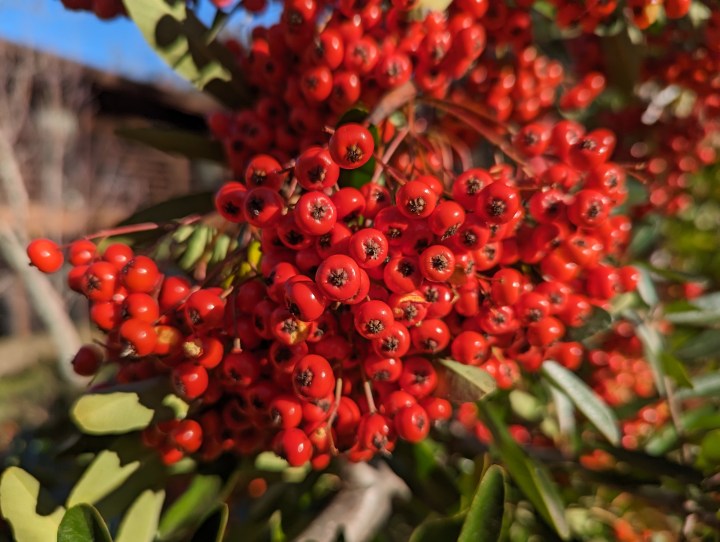
Most wintry berries are bright red.

Seed of most vegetation here finishes developing by late autumn to be ready for winter. It wants to germinate while soil is damp, and before it gets dry after spring. Some needs to vernalize with a bit of chill to be ready to germinate prior to spring. Some offers incentive to birds or other wildlife to disperse it. It develops within colorful fruits and wintry berries.

Both migrating and overwintering birds enjoy wintry berries while other food gets scarce. Squirrels and other wildlife are likely to indulge as well. Seed within such fruit is resilient to digestion. In fact, many of such seed germinate better after digestion softens their hard exteriors. For them, digestion by their vectors is comparable to vernalization by weather.

This is why wintry berries are so colorful. They want to be visually appealing to birds and other vectors who disperse their seed. Their vectors need no more persuasion than that. They instinctively recognize a free meal when they see it. While they eat well, vegetation which feeds them benefits from dispersion of its seed. It is a mutually beneficial situation.

Birds and wildlife are not exclusive beneficiaries of ripe wintry berries. Many people who enjoy gardening appreciate their vibrant color. Such color is particularly appealing where floral color is deficient during winter. Many who enjoy gardening instead prefer any birds who eat such berries. Unfortunately, wintry berries will not last long after birds find them.

Wintry berries are already developing color, a month or so before the beginning of winter. Some may become more prominent as autumn foliar color eventually diminishes. Almost all wintry berries are bright red, but some are rusty red, orange or even golden. Greenish pittosporum berries are not so prominent. Elderberries are uncommon in home gardens.

Firethorn is the most prominent of wintry berries here. Various cotoneasters are likely the second most prominent, with rustier red color. Toyon berries are more colorful than those of cotoneaster, but are less common. English hawthorn can retain its berries longer than its deciduous foliage, but is rare. Because they lack pollination, most hollies are fruitless.

Elderberry

Blue elderberry is native here.

Although almost never planted intentionally, elderberries occasionally appear in strange places, wherever their seeds get dropped by the birds or rodents who eat their berries. The blue elderberry, Sambucus mexicana / caerulea, is native and most common between California, British Columbia and the Rockies. The American elderberry, Sambucus canadensis, is more common elsewhere, and also appears in the west where it had historically been imported for berry production. Some modern cultivars (cultivated varieties) with gold, bronze, or lacy foliage are actually related to European elderberries.

Except for compact cultivars, elderberries grow rampantly to about fifteen feet tall and wide. Aggressive pruning in winter keeps them looking fuller and more densely foliated. Overgrown plants can be rejuvenated by getting cut to the ground. The big leaves are divided into seven leaflets that are two to six inches long. Blue elderberry foliage is softly serrate and a bit more variable, with five to nine leaflets that may be as short as one inch.

Wide flat trusses of pale white flowers that bloom in late spring or early summer produce small but potentially abundant and richly flavored berries. Blue elderberries are dark blue dusted with white powder on trusses to about six inches wide. American elderberries are darker and more purplish on trusses that can be wider than eight inches. (Red elderberries are toxic!)

Birds Enjoy Colorful Fruits and Berries.

Brightly colored berries are an incentive for birds to disperse the seed within.

Colorful fruit and berries that ripen in autumn and winter bring more than their own color to the garden. They also attract all sorts of birds. Some birds want to fatten up on the earlier and typically more abundant and colorful fruit before migrating south for the winter. Other birds that stay through winter eat fruit and berries that develop over a longer season, after the migratory birds are gone.

The most abundant and brightly colored red fruit of pyracantha (or firethorn) appeals to the early migratory birds that want to fatten up fast and get south. Cotoneaster, toyon and English hawthorn are not quite as flashy, but appeal to the same crowd of migratory birds. These sorts of plants get their colorful fruit early on in the season, but are then stripped of it rather efficiently.

The fruit of pyracantha, cotoneaster and toyon is not often very messy since almost all of it gets consumed; but the birds that eat it can be remarkably messy before they fly south. Coincidentally, these three plants are often grown as informal hedges and screens around the perimeters of large parking lots, so the mess is a traditional nuisance for many parked cars this time of year.

Chokeberry and elderberry ripen early enough for the migratory birds, but do not get devoured so efficiently because they are not so brightly colored. Migratory birds seem to prefer bright red or orange berries, so are likely to leave black chokeberries and blue elderberries for overwintering birds, which stay through winter. Strawberry tree, although not very productive, appeals to both crowds, and anyone else who might be interested in their fruit, by producing bright red berries throughout the year.

Persimmon, holly, loquat, some mahonia and some crabapple are even a bit more selective, by ripening their fruit later in autumn and winter after the migratory birds are gone. Pomegranate fruit splits open in the middle of winter, exposing a buffet of juicy red berries with meaty seeds for anyone who hasn’t gone south for the winter. Many pittosporums do the same, but without the colorful advertisement. Of course, most of us want to get our persimmons, loquats and pomegranates before the birds do!

Citrus such as lemons, oranges, grapefruits and mandarins that ripen later in winter do not attract birds, so we only need to share these fruits with our friends and neighbors. Citrus are colorful enough on their own anyway.

‘Karpooravalli’ Banana

‘Karpooravalli’ is a relatively undemanding cultivar.

‘Cavendish’ and its variants have always been the most familiar types of banana locally. They are the most popular that are available from produce markets. From nurseries, they remain the most commonly available cultivars. A few other options are only beginning to become available. A few of these could be more reliably productive within local climates.

‘Karpooravalli’ has been available here for quite a while, but remains uncommon. Those who are familiar with it often describe it as wanting ‘only sunshine and water.’ It tolerates soil of inferior quality better than other cultivars, and craves less fertilizer. Within rich soil, it may crave none. It should likely stay away from fences that its pups could sneak under.

‘Karpooravalli’ is supposedly the sweetest of the Indian bananas. Although its fruit is a bit shorter than more familiar bananas, it is often a bit plumper. Ripe fruit is yellow with pale green blush, and delightfully aromatic. Foliage is more resilient to wind than that of most other cultivars. It can stand more than fifteen feet tall on its very vigorous pseudostems.

Banana Trees Actually Produce Bananas

Banana trees provide boldly lush foliage.

Banana trees, much like palms, arboriform yuccas and cordylines, are herbaceous trees. They develop no secondary xylem, or wood. What seems to be trunks are pseudostems, which are just leaves in very tight bundles. These pseudostems grow from subterranean corms, which can grow rather big. Each pseudostem is monocarpic, so dies after bloom.

Although they are very easy to grow, banana trees are not very popular. They can be too easy to grow, and become overwhelming. In some climates, frost can ruin their foliage for part of the year. In some exposures, their foliage can get shabby from wind. Some expect generous and frequent applications of fertilizer. All want generous and frequent irrigation.

These characteristics are contrary to growing banana trees merely for appealing foliage. Realistically, that is what most are for. Those of the Ensente genus are fortunately easier to maintain, but fruitless. Their lushly huge leaves are spectacular, relatively durable and generate much less debris. However, after a few years, they die without generating pups.

Banana trees of the Musa genus generate fruit, although some are primarily ornamental. A few produce delightfully colorful fruit that is too small, seedy or starchy to be palatable. Musa are more pervasive although less popular than Ensente. While Ensente come and go, Musa are reliably perennial. Several produce enough pups to potentially be invasive.

Musa, unlike Ensente, therefore develops colonies of a few to many pseudostem trunks. A few new trunks can replace each old trunk faster than they can deteriorate after bloom. Removal of deteriorating old trunks promotes growth and fruiting of new trunks. So does culling of congested new trunks. They propagate very easily by division with intact roots.

Because banana trees are tropical, they are unfamiliar with the seasons here. They grow fast with warmth but very slowly without it. They bloom randomly though. Flowers that try to bloom during autumn may stagnate long enough to rot through winter. Late fruit can do the same. Fruit that begins to develop early is much more likely to finish prior to autumn. Some cultivars develop faster.