Prickly Pear

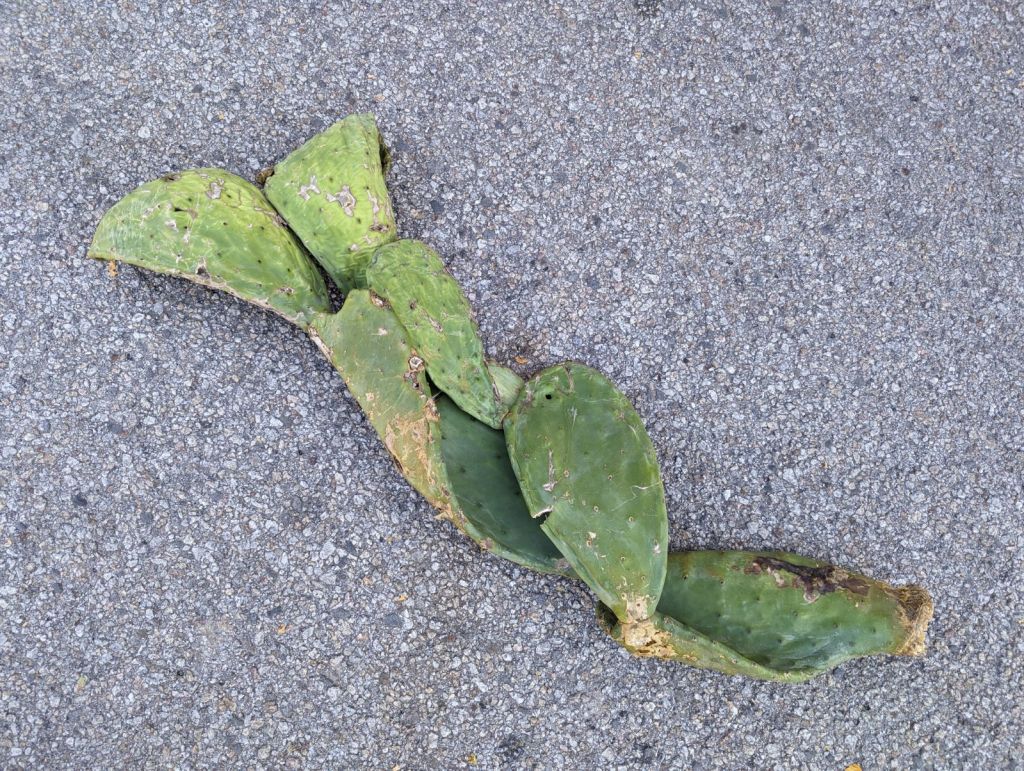
I can make good use of this bit of greenwaste.

It is certainly no pear, and its particular cultivar is not overly prickly. Nonetheless, it is commonly known as ‘prickly pear’. It is also known as ‘Indian fig’, but is neither a fig, nor from India. The Mexican Spanish name for its fruit is ‘tuna’, but in American English, that seems fishy.

However, within its proper linguistic context, ‘tuna’ would be the least misleading of the common names of the fruit of ‘nopal’. ‘Nopal’ is the common name of various species of Opuntia, many of which are popularly grown as vegetables. ‘Nopales’ are plural. ‘Nopalitos’ are sliced or otherwise processed as small bits for culinary application.

Anyway, this shabby bit of nopal appeared within our big greenwaste pile at work. I find it annoying when neighbors exploit our greenwaste pile for disposal of greenwaste that is obviously not from our landscapes, as if I will not notice. Such debris often includes dirt and other crud or even trash that can not be chipped, and is almost never staged to facilitate efficient chipping.

This was quite a find though. It can be cut into six separate pieces to be plugged in between the five Arizona cypress that I installed as an informal hedge along the outer road. I would not have considered doing so if this had not appeared unwanted on our greenwaste pile. Nopal that I plugged a bit farther out, closer to the road, were shredded by weed whackers on a few occasions until they ultimately succumbed.

I already grow one unidentified cultivar of nopal for its eventual production of rich red tuna. I have no idea what this new acquisition is either, and it could be the same as what is already here, but I sort of hope that it produces yellow or gold tuna with milder flavor.
Cane Berries Require Diligent Maintenance

Without proper pruning, cane berries become wicked thickets.

Given the opportunity, blackberry and raspberry canes become rampant thickets. The trick is to keep them contained and controlled so that they can produce berries without conquering the garden. Besides, proper pruning promotes production. Properly maintained canes are therefore both better behaved and more productive

Berry canes are certainly not low maintenance, and should be selectively pruned a few times through the year. The type of pruning needed is determined by the type of growth that the canes exhibit in particular seasons. Spent canes or upper portions of everbearing raspberry canes that produced berries through summer and early autumn will need to be removed by the end of winter while new canes that grew through this year get trained to replace them.

Pruning and thinning of new canes should be delayed until the end of winter; but removal or pruning of spent canes can begin as soon as their fruit gets depleted. Spent canes of traditional summer bearing raspberries like ‘Willamette’, ‘Tulameen’ and ‘Canby’ can be pruned to the ground. ‘September’, ‘Heritage’, ‘Summit’, ‘Fallgold’ and other everbearing raspberry canes should be pruned only as low as their fruit was produced. Lower portions that did not produce fruit should be left to bloom and produce berries next spring.

Just like raspberry canes, new blackberry canes that grew this year do not need to be pruned until late winter. However, the canes that grew last year and are finishing berry production this year can be pruned to the ground as their last berries get taken. There is no rush for this procedure, but getting it done early makes later pruning of new canes for next year a bit easier.

Of course, every different cultivar (cultivated variety) of raspberry and blackberry behaves differently. Some finish producing and are ready to be pruned sooner than others. Their behavior is also affected by climate and environmental conditions, so that the same variety may be earlier or later in different areas, or even different parts of the same garden.

Favorite berry canes are very easy to propagate by division of superfluous new shoots during winter. Alternatively, spent canes that should be removed can be ‘layered’ instead. They simply need to be bent down and partially buried, and can be dug and separated as they develop roots.

The top few inches of cane should extend above the soil. At least a few inches of cane below the top should be buried a few inches below the surface of the soil. The length of cane between the buried portion and the base of the parent plant can remain exposed.

Layering can be done at any time of year if the layer (buried section of cane) gets watered while developing roots. Layering this time of year is easiest though, because layers get plenty of water from rain through winter, and develop roots most efficiently as they come out of dormancy late in winter or early in spring. If layers are buried where new plants are desired, they do not need to be dug and moved next year.

Blackberry

Blackberries are ripening slowly this year because of the mild weather.

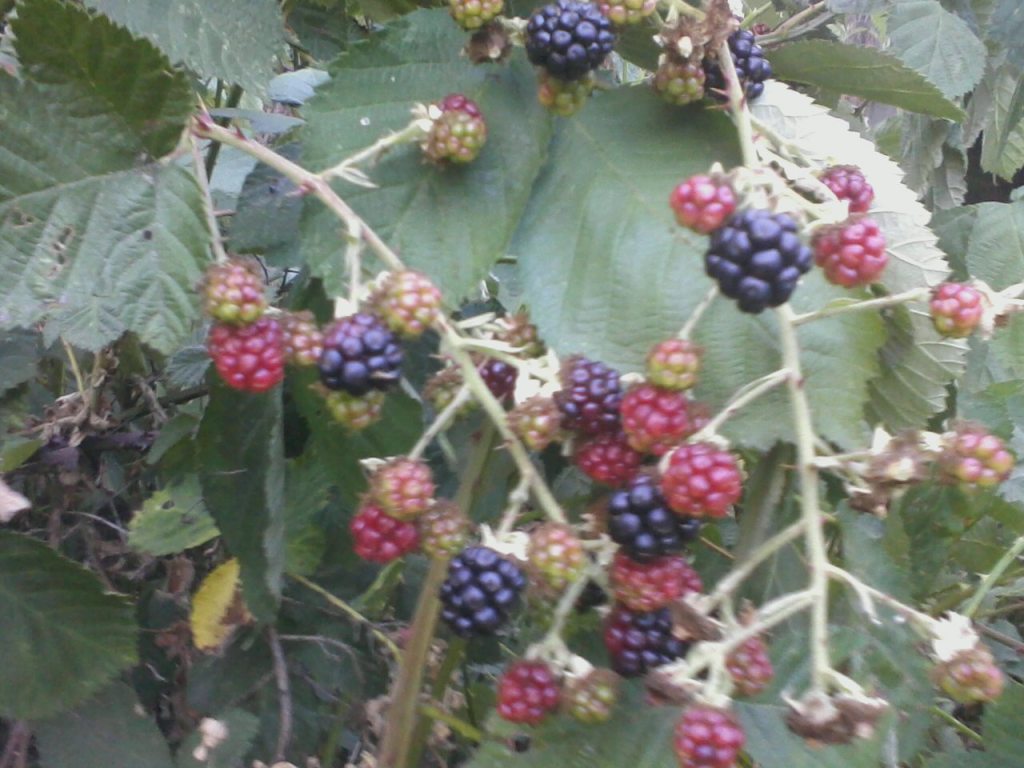
Rampant brambles of feral blackberry, Rubus fruticosus, canes are much too common and give blackberries a bad reputation. Yet, with regular selective grooming and pruning, their biennial stems that emerge from woody perennial roots are both more productive and easier to contain than one would guess. ‘Primocanes’ grow rapidly to six to sixteen feet in the first year. In the second year, they become ‘floricanes’, which do not grow longer, but instead develop lateral stems that bloom and fruit. Only a few modern ‘fall bearing’ or ‘everbearing’ cultivars fruit on primocanes.

Canes are trailing, semi-trailing or erect. As the names imply, trailing types like ‘Marion’, ‘Boysen’ and ‘Olallie’, need support. They are the most popular locally because they are more productive. Erect types that need no support, like ‘Navaho’, ‘Choctaw’ and ‘Arapaho’, are less productive, but because they are more tolerant to frost, are more popular where winters are colder. Old classic blackberry varieties are quite prickly. Modern thornless varieties are becoming more popular as more varieties are developed. All have palmately compound leaves with five or seven leaflets. Simple small white or pale pink flowers that bloom late in spring are followed by the familiar blackberries that are ripening now.

Blackberries And Raspberries Are Expensive For A Reason.

Cane berries need aggressive pruning, but are no fun to prune.

All the raspberries and blackberries that are now ripening do not come without a price. The canes that produce them may grow like weeds, and in many gardens really are weeds, but they need quite a bit of work. Like the deciduous fruit trees that need such meticulous pruning while dormant in winter, berry canes need winter pruning while dormant, as well as summer pruning as the berries finish.

Blackberry canes that have produced fruit should be cut at the ground as the fruit gets depleted. Then, for ‘trailing’ varieties, about a dozen of the new canes that grew since spring should be selected, pruned to about six feet long, and trained onto the same supports that the removed canes used. ‘Semi-erect’ varieties need only about half as many canes, and get cut about a foot shorter. (‘Erect’ varieties that get cut even shorter are not common locally.) All other canes should be cut to the ground. Through the rest of summer, the pruned canes develop side branches which should eventually get pruned to about a foot long in winter to bloom and produce fruit next year; but that part must wait.

Summer bearing raspberries, like ‘Willamette’, ‘Tulameen’ and ‘Canby’, do not need to develop side branches to produce fruit next year, so do not necessarily need to be groomed of spent canes and pruned just yet, and can actually wait until winter. Everbearing raspberries like ‘September’, ‘Heritage’ and ‘Fallgold’, are not nearly so simple, although canes that were selected while young last winter and allowed to grow through summer likewise need no pruning just yet. The top portions of these canes will produce fruit later in autumn, and later in winter, get pruned down as low as fruit developed. However, the lower portions of older canes that fruited the previous year and got their tops pruned down last winter are now finishing their second and last phase of fruit production, so should get pruned out as they finish.

Quince

Quince has become a rare fruit.

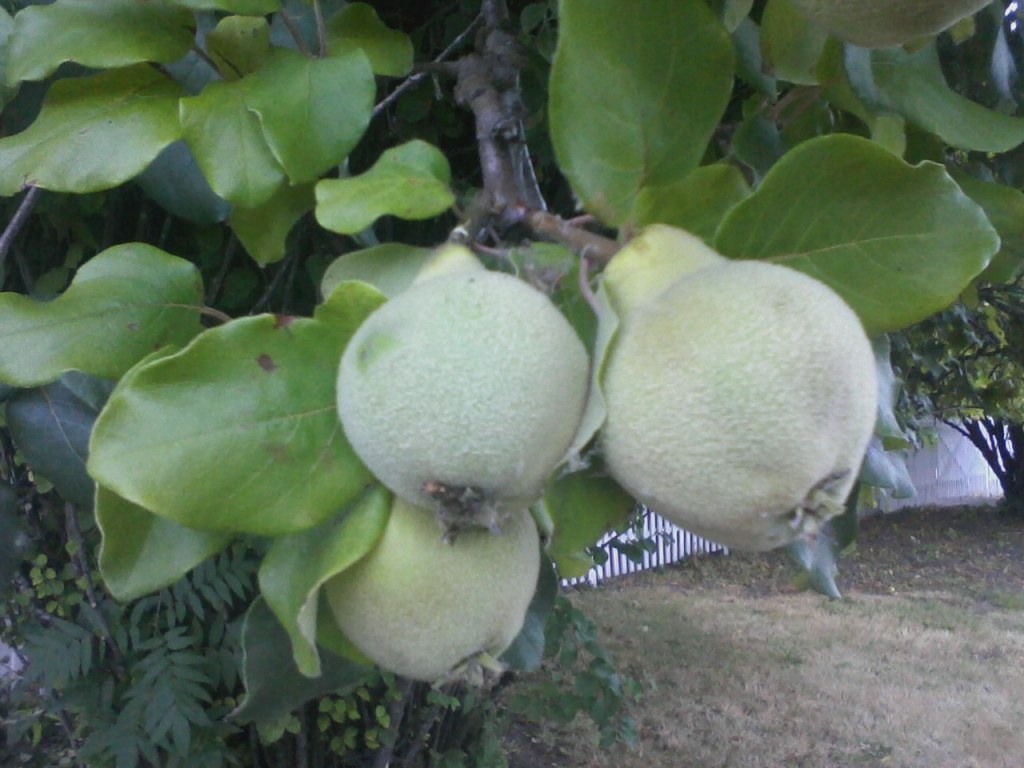
With the many slender arching trunks, quince, Cydonia oblonga, is more like a large deciduous shrub than a fruit tree. Even old trees are not much more than twenty feet tall and broad. Most of the rare trees that can be found are old, because quince is such an old fashioned fruit. The fruit is still immature and covered with white pubescence (fuzz). By late autumn, it will be remarkably aromatic and resemble golden pears, about four inches long and nearly as wide, and so hard that it should be cooked.

Rain Can Ruin Bloom And Developing Fruit

Bloom is not really early. Frost and unusually torrential rain just happen to be late.

Again this year, the excellent weather that makes gardening so much fun even through winter has the potential to become a problem. Winters are innately mild here, and like this year, are sometimes mild and warm enough to prompt many plants to bloom much too early. Many of the fruit trees and their ‘flowering’ (non-fruiting) counterparts are already finishing bloom as if it is the middle of spring, even though the equinox is about two weeks away. This should not be a problem for the flowering cherries, plums, pears and apples (flowering crabapples), but is risky for the many trees that should produce fruit.

The problem is that, despite the weather, it really is winter and early spring, so could potentially rain while fruit trees are blooming. The rain can batter the blooms, or cause them to rot before they set fruit, compromising or even eliminating the fruit production for the following summer. Trees that are not blooming, or just barely showing ‘color’ of the first few blossoms, should be safe. Also, the trees that bloomed earliest and have already set fruit should likewise be safe, as long as the weather does not stay rainy too long, which it almost never does here. Trees that are in full bloom when it rains are the most sensitive to damage.

It is impractical to cover mature trees with plastic sheeting to protect them from rain. Even if it is possible to get the sheeting over the trees, it knocks much of the bloom or developing fruit off anyway. Also, if the sheeting is not removed when the rain stops, it can trap humidity, which can rot the blooms that were so carefully protected from the rain. (Although, high trees hold the plastic high enough from the ground to allow for good air circulation.)

Small trees are easier to cover, but do not produce enough fruit to worry about. In other words, it would be easier to buy fruit at a market, or to get it from friends and neighbors with different varieties (that bloom at different times) than to put too much effort into protecting trees from the rain. In most situations, it is best to just accept that fruit trees will sometimes have ‘off’ years when they either do not produce, or produce only minimal quantities of fruit. The good news is that trees that lose some but not all of their fruit often produce best.

Plum bloom is not resilient to late frost or rain.

Canning

Surplus fruits and vegetables can be canned for later.

It seems to me that the reason that so many of the kids I grew up with do not like apricots is that they were so common when we were younger. Because there were still several abandoned orchards, and most of us had at least one apricot tree in our backyards, we ate apricots in every form imaginable; fresh, dried, in pies, in cobblers, as jams, as apricot nectar (juice) and of course, canned. By the time we grew up and moved on, we were done with apricots.

Apricots happen to be one of the many ‘high-acid’ fruits that are remarkably easy to preserve by canning, which is how and why they are available as jams and canned apricots at any time of the year. In fact, almost all of the fruits that were so commonly grown in the vast orchards of the Santa Clara Valley, like prunes, plums, cherries, nectarines, peaches, apples and pears, are also high-acid fruits that are relatively easy to can in various forms. ‘Low-acid’ vegetables, like broccoli, corn, pumpkin (squash), spinach and beets, as well as meat and poultry, were not so commonly canned only because they take considerably more work to can with the use of a pressure cooker (in order to achieve higher temperatures).

Because home canning can potentially be dangerous if done improperly, it is best to learn something about it first. This is why the Guadalupe River Park Conservancy has arranged for UC Master Preserver Susan Algert to conduct the workshop ‘Safe Methods for Food Preservation and Canning’. Participants will learn the importance of canning to kill toxic pathogens, and why high-acid produce gets canned in a hot water bath while low-acid foods need to be canned in a pressure cooker. Canning is an alternative to freezing for preserving overly abundant produce from the garden.

(Outdated information regarding classes has been omitted from this recycled article.)

Mandarin Orange

Mandarin oranges are the earliest citrus.

Mandarin orange, Citrus reticulata, and nuts are some of the more traditional goodies for Christmas stockings. In Northern Europe centuries ago, nuts from the Americas were still exotic treats. The availability of perishable citrus fruits from Mediterranean regions relied on expensively efficient shipping. Consequently, citrus fruits were almost like delicacies.

Even when shipping was slow, Mandarin oranges ripened in time to arrive by Christmas. However, they needed fast shipping because they are more perishable than other citrus. They are innately more prone to oxidation because their rind and segments fit so loosely together. Of course, that is why they are so delightfully easy to peel, pull apart and share.

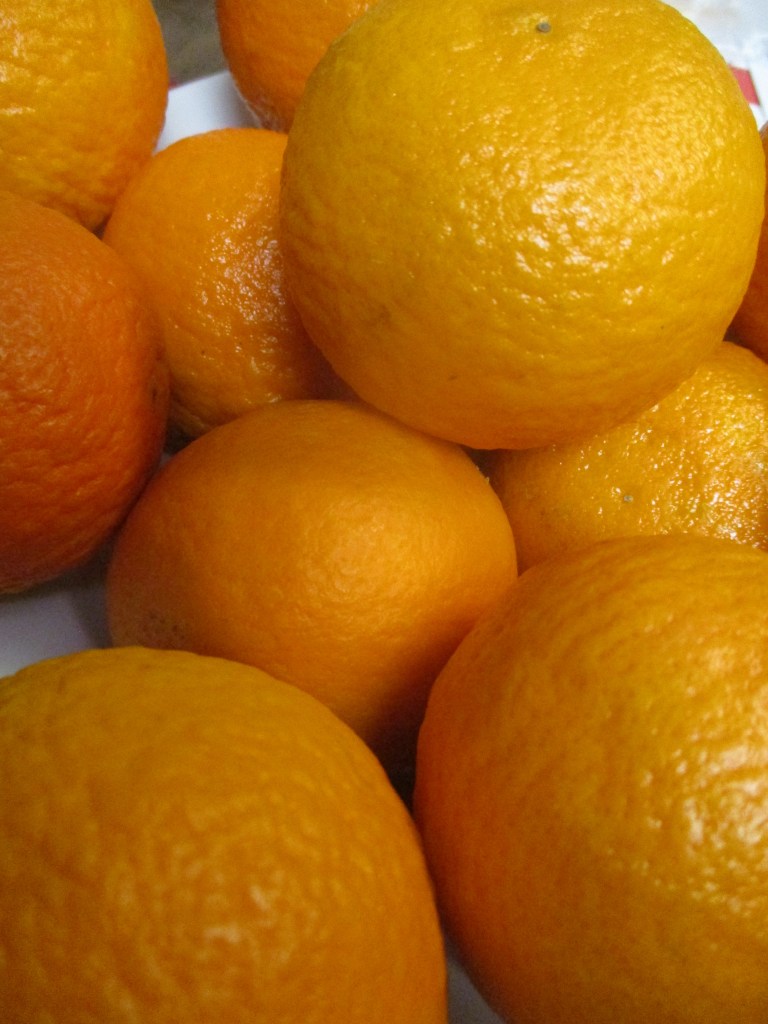
Mandarin oranges are smaller, more oblate, brighter orange, but also more variable than common sweet oranges. Among their many cultivars, their smaller leaves and thorniness are likewise variable. Very few very old trees grow taller than fifteen feet. Tangerines are merely barely genetically distinct Mandarin oranges that developed within the Americas.

Citrus Fruit Brightens Wintry Gardens

Summery citrus fruit ripens during winter.

Chilled lemonade certainly is nice when the weather gets warm during summer. Orange juice also seems to be more appropriate to warm weather. In fact, most citrus fruit seems to be more summery than wintery. Yet, most of it ripens through winter. Mandarin oranges are more perishable than most other citrus fruit, so are best long before warmer weather.

Citrus trees are defiantly contrary to the deciduous fruit trees that produce fruits of spring and summer. Not only does their fruit ripen during opposite seasons, but they also prefer pruning during opposite seasons. Many need no pruning or only minor grooming as they age. Any necessary pruning should happen after the last cool or frosty weather of winter.

Citrus fruit is not as perishable as spring and summer fruit are. Mandarin oranges oxidize within a month or so only because their rind is so loose. Other citrus fruit remains fresh in the garden for months, even through warm weather. Some actually improves with a bit of aging. For fruit that lingers late, vermin are more likely to be a problem than deterioration.

Slow deterioration is a major advantage for such abundant citrus fruit. There is less rush to collect more after collecting too much. For more sporadic production, many cultivars of citrus bloom sporadically prior to and after their primary season. ‘Eureka’ lemon is not too overwhelmingly productive in season, but before and after, provides a few more lemons.

Citrus fruit are remarkably diverse. Many are best simply for fresh eating. Many are better for juicing. Some are best for other culinary applications. Mandarin oranges and oranges are basically sweet. Lemons and limes are basically sour. Grapefruits are basically bitter. Citrus fruit exhibits a prevalence within combination of these three basic flavor elements.

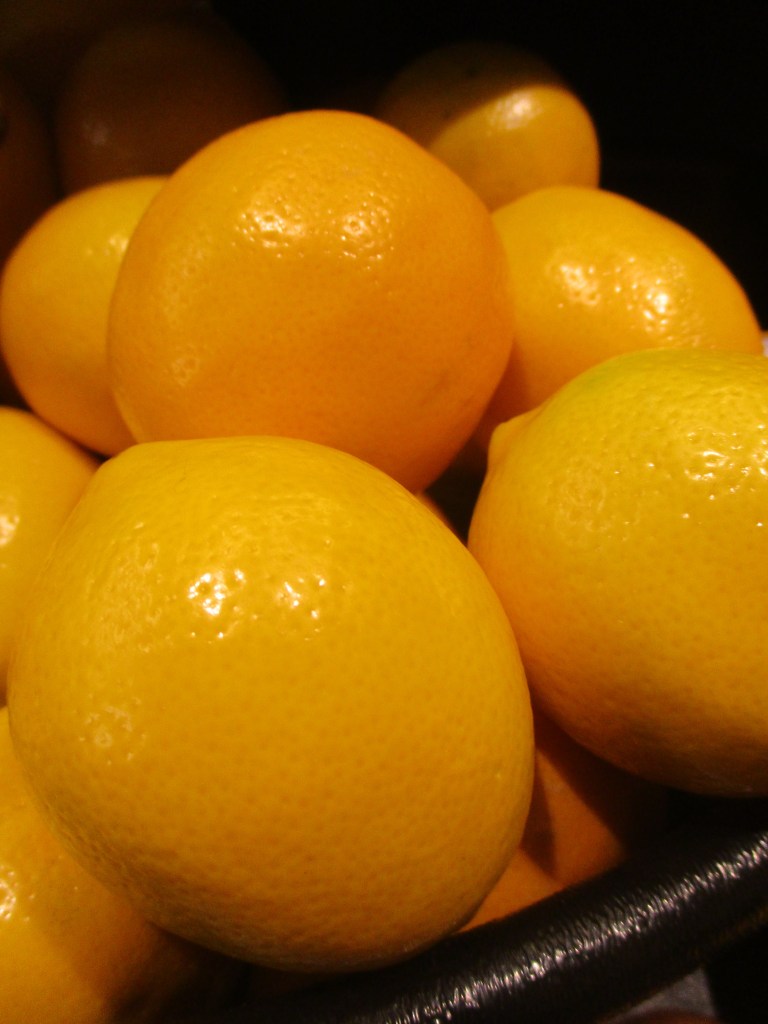
Citrus trees are as variable as the citrus fruit that they provide. Almost all are dwarf trees, which stay more compact than standard orchard trees. However, ‘Eureka’ lemon, ‘Marsh’ grapefruit and ‘Sanguinelli’ blood orange can eventually get as big as small shade trees. ‘Meyer’ lemon, kumquats and most Mandarin oranges remain much lower and shrubbier. Some are thornier than others.

Cherry

Cherries are fruit of early summer.

Cherry, Prunus avium, is one of the more popular fruits of summer. However, winter is the season for planting new trees and pruning mature trees. Pruning is comparable to that of other stone fruits, but to a lesser degree. Their sweet fruits are typically less than an inch and a half wide, so are relatively lightweight. Docile trees may not need annual pruning.

Home garden trees with dwarfing rootstocks should grow no taller than about fifteen feet. Some stay less than ten feet tall. Orchard trees with standard rootstock grow significantly taller. Wild or feral trees can grow forty feet tall, with their fruit beyond reach. Old cultivars mostly require another compatible cultivar for pollination. Some modern cultivars do not.

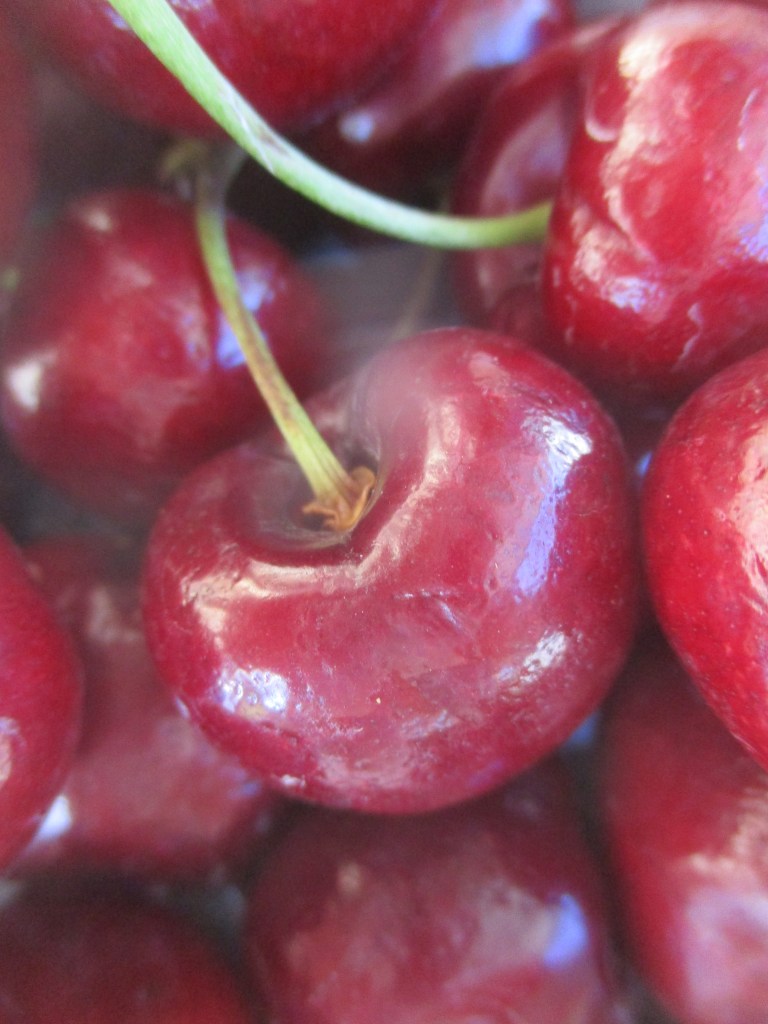
Cherry fruits are mostly rich deep red, but can be dark blackish red or pale orangish pink. Early spring bloom is brief but profuse and splendidly clear white. Three to four inch long leaves that are deep green through summer become bright yellow or golden yellow prior to defoliation during autumn. Even the silvery young bark of some cultivars is appealing.