The Fruits Of Our Labor

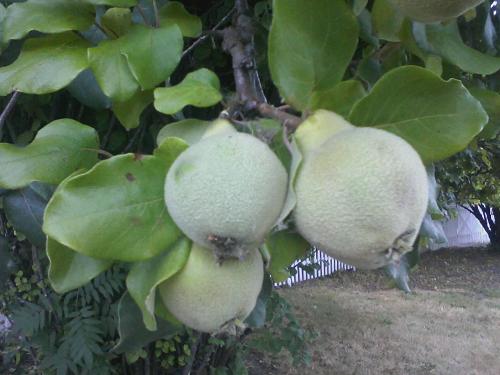
Quince and other fruit used to be much more common in home gardens.

The vast orchards of the Sacramento and San Joaquin Valleys are there for a reason. California is one of the best place in the world to grow fruit trees. However, whether they are in vast orchards or compact urban gardens, even the happiest and healthiest of fruit trees need considerable and specialized attention.

Most of the classic deciduous fruit trees have been bred and selected and bred some more over the past many centuries to produce unnaturally large and abundant fruit. Consequently, most are unable to support the weight of all the fruit that they are capable of producing. This is why it is so important for them to be pruned while dormant through winter.

Pruning improves the structural integrity of fruit trees, and limits the abundance and weight of the fruit produced during the following season. With a bit of planning, pruning can keep much of the fruit within reasonable reach so that those picking it do not need to go dangerously high on ladders. Annual winter pruning also promotes vigorous spring and summer growth that is more resistant to disease.

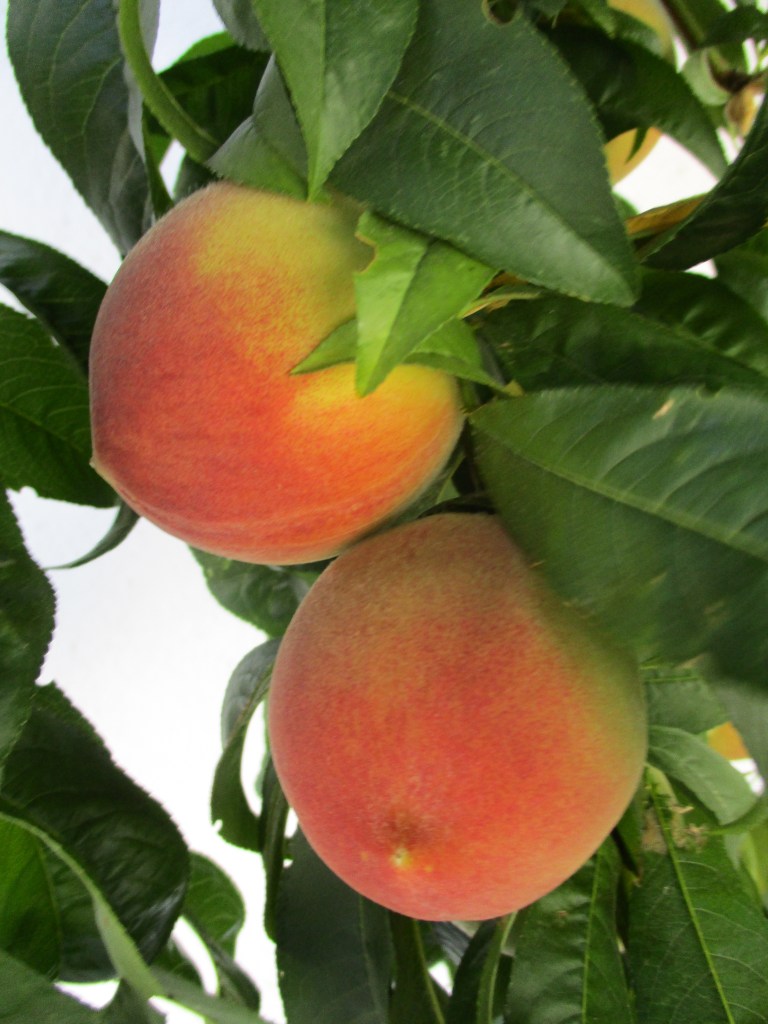
Apricots, plums, prunes, nectarines, peaches and cherries are all related ‘stone’ fruits (of the genus Prunus), so need various degrees of similar pruning. Peaches need more aggressive pruning because the fruit is so heavy. Cherries and almonds need less pruning because the fruit is lighter. (Almonds can grow beyond reach because the nuts get shaken or knocked from the trees instead of picked.) Regardless of the extent of pruning, the ‘four D’s’, which are ‘dead, dying, damaged and diseased’ stems, should be pruned from all deciduous fruit trees.

Vigorous stems that grew last year need to be thinned and cut back but not removed completely since they are the stems that will bloom and develop fruit next year. The stems that grow from them this year will get pruned next winter to produce the following year. Apples, pears and quinces require similar pruning of their vigorous upper growth, but produce much of their fruit on lower ‘spur’ stems that do not elongate much and may never need pruning.

Fig trees are probably the most tolerant of pruning mistakes, since they produce fruit twice each year. Overly aggressive pruning may compromise their first phase of fruiting, but promotes the second phase. Light pruning does the opposite, compromising the second phase by allowing excessive production of the first phase.

Winter pruning of deciduous fruit trees will undoubtedly seem harsh to a beginner. Trees will need more pruning each year as they grow. Fortunately, pruning becomes more familiar with experience, and as the results of pruning can be observed over time. It is among the most important of gardening tasks for those who grow fruit trees, so is really worth studying more thoroughly.
Too Much Of A Good Thing

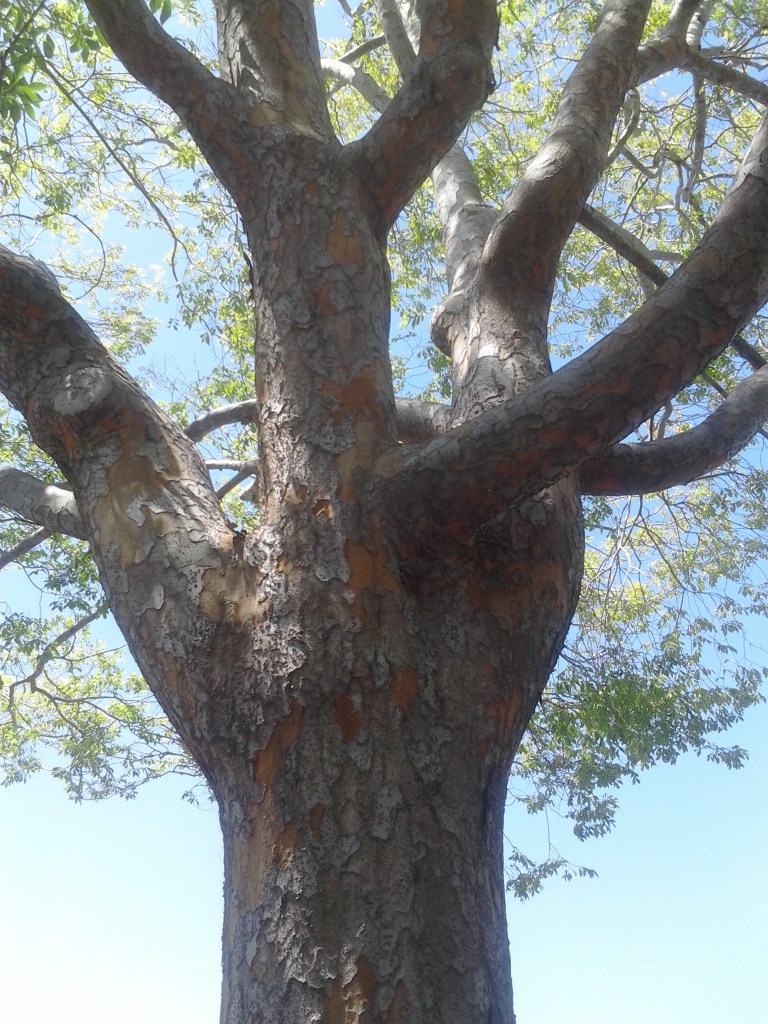
Healthy growth can overburden tree limbs.

It was probably the extra chill this last winter that made some deciduous fruit trees bloom more profusely early in spring than they typically do. Unusually busy bees in some regions improved pollination and subsequent fruit set, although some was dislodged by late rain. The sudden warmth this last spring not only improved the flavor of fruit, but also made some grow larger than typical.

More and better fruit is usually what those who grow fruit strive for. The problem with some trees now is excess. After pruning our fruit trees every winter for a few years, we get to know how much to prune them to maximize productions without overloading the trees. When the trees produce more than expected, they may not be able to support the weight of their own fruit.

Many plum and peach trees have already dropped limbs that were overburdened with the weight of fruit. Nectarine, apricot, pluot (and aprium, plumcot and all those weird hybrids), and prune trees can potentially drop limbs as well. Even without breaking, heavy limbs can get disfigured simply by sagging downward. Broken or sagging limbs expose inner bark to sun scald.

Broken limbs obviously can not be salvaged, so can only be removed. They should be cut cleanly away without leaving stubs. Sagging limbs can be propped with notched stakes tucked under side branches that will keep them from sliding upward. The notches keep such stakes from sliding off to either side. Much of the excessive fruit can be removed from severely sagging limbs. However, if the fruit is so ripe that it will not be getting any heavier, there is no advantage to removal.

Formerly shaded bark that suddenly becomes exposed to direct sunlight should be shaded. If partly shaded though much of the day, it should be safe. If expected to be shaded next year by new growth, bark can be protected temporarily with duct tape or stapled cardboard, or even foliated bits of the limb that broke, tied over the bark. Light colored paint is unsightly, but can be applied to reflect sunlight from bark that is expected to remain exposed permanently.

Excessive weight is not only a problem for fruit trees. Some sweetgum, fruitless mulberry and old fashioned Chinese elm trees can produce so much healthy foliage that limbs hang lower than they should. Some shade trees can even drop limbs ‘very’ unexpectedly, when the weather is warm and humid, but without wind.

Cold Winters Have Certain Advantages

Winter frost can improve spring bloom.

Even in May, damage from the frosts of last winter is still evident among some of the more sensitive plants. Lemon trees and bougainvilleas that have not yet been pruned may still display bare stems protruding above fresher new growth. Some bougainvilleas did not survive. Those that are recovering will bloom later because replacement of foliage is their priority for now.

However, peonies, although rare, are blooming better than they have since 1991, right after one of the worst frosts in recorded history. Earlier, some lilacs, forsythias and wisterias likewise bloomed unusually well. While so many plants were succumbing to cold weather, many others were enjoying it.

The reason that peonies typically do not seem as happy locally as they are in severe climates is that they really prefer more cold weather while they are dormant through winter. Without it, they may not go completely dormant, or may not stay dormant long enough to get the rest that they need; and then wake up tired in spring. Cold winter weather promotes more adequate dormancy, which stimulates healthier growth and bloom this time of year. It all makes sense considering that peonies are naturally endemic to colder climates.

A preference for cooler winter weather is also why so many varieties of apples and pears that are grown in other regions do not perform well here. The good news is that as the fruit of local apple and pear trees matures through spring and summer, it may be of better quality that it has been for many years. Trees that typically produce sparsely may produce more abundantly this year. The weather that damaged tropical and subtropical plants was an advantage to others.

Nothing can restore cherries, apricots, peaches and any other early blooming fruit that was dislodged by late rain, but any fruit that survived may be just as unusually good as apples and pears. Not only is the best place for gardening, but minor weather problems can have certain advantages.

Grapefruit

Grapefruit originated as an unlikely hybrid.

Citrus have been in cultivation for centuries. Most breeding and selection was intentional. Even the strange breeding of orange and lemon for the familiar ‘Meyer’ lemon was deliberate. Grapefruit, Citrus X paradisi, is a peculiar one though. Its parents were unknown when it mysteriously appeared in Barbados in about 1750. It is now known to be a hybrid of orange and pomelo, both exotic.

The original grapefruits were ‘white’ grapefruits, with tart and pale yellowish flesh. ‘Pink’ grapefruits, with milder flavor, and blushed flesh, appeared a century and a half later, in about 1906. Those with rich pink flesh are known as ‘red’ grapefruits. Some mildly flavored modern white grapefruits are hybrids of grapefruit and pomelo. Such breeding makes them 75% pomelo and 25% orange.

Both modern and traditional white grapefruit trees are more vigorous than pink and red grapefruit trees. Dwarf white grapefruit trees grow slowly, but might eventually get more than fifteen feet tall. Standard trees can get as big as shade trees. They are too productive for home gardens. Pink and red grapefruit trees rarely get taller than eight feet. Grapefruit foliage is evergreen and lustrous.

Citrus Fruits Ripen Through Winter

Mandarin oranges are at their best.

Winter seems like an odd time for fruit to ripen. Winter weather is cool enough to inhibit vascular activity in plants. That is why most plants are dormant to some extent through winter. Most familiar fruit trees are deciduous, so defoliate in winter chill. Stone fruits ripened through early summer. Pome fruits ripened through late summer and autumn. Nonetheless, citrus fruits are now in season.

The various citrus fruits and their cultivars ripen at various times through their season. Like stone fruits and pome fruits, they are on distinct schedules. Furthermore, climate affects ripening. Citrus fruits that ripen earlier than other cultivars in a particular climate may ripen after the same other cultivars in another climate. A few cultivars produce sporadically, or notably later than citrus season.

Such cultivars are justifiably popular. For example, ‘Eureka’ lemon is a mutant of ‘Lisbon’ lemon. ‘Lisbon’ lemon works well for orchards because all the fruit ripens within a limited season. ‘Eureka’ is more practical for home gardens because it instead produces sporadically throughout the year. A few fresh lemons are always available. The winter crop is abundant, but not too overwhelming.

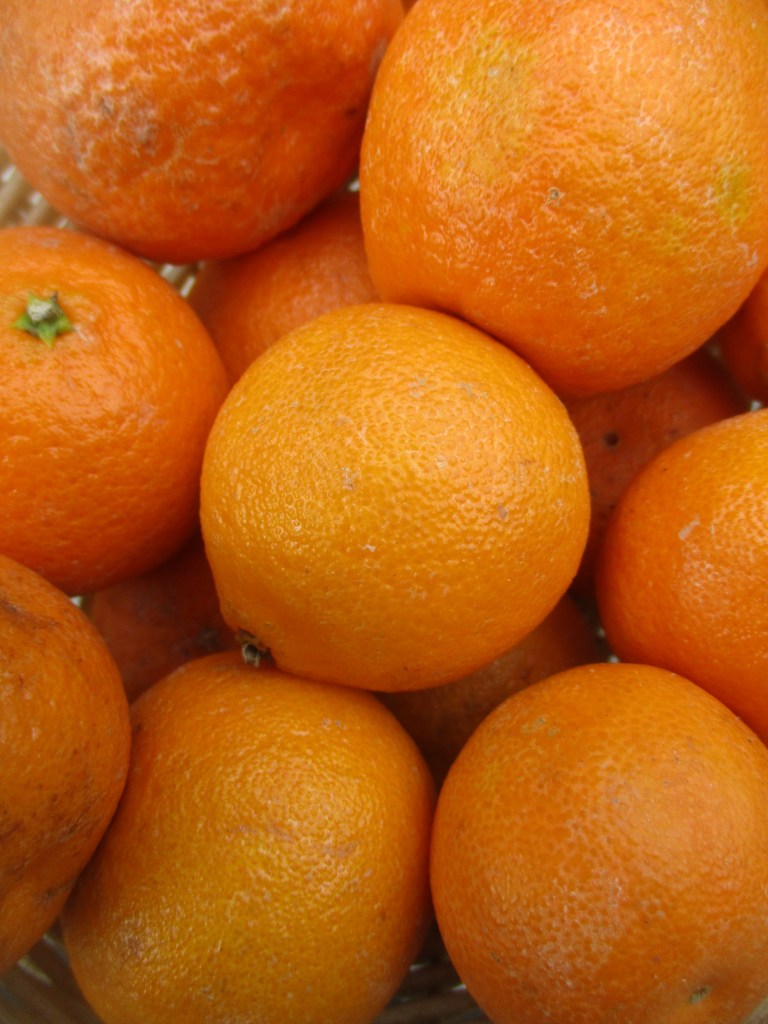
Mandarin oranges are the first citrus fruits to harvest, even if they are not the first to completely ripen. Because their rinds fit so loosely, they are the most perishable of citrus fruits. They will oxidize and dehydrate before they rot. Tangerines are the same, since they are merely American descendants of Mandarin oranges. ‘Rangpur’ lime is not a lime at all, but a sour Mandarin orange hybrid.

Oranges, lemons and grapefruits, although ripening now, can remain on their trees for quite a while. The tartness of grapefruits mellows with age, and might be preferable after a few months. The same applies to the acidity of lemons. However, too many lingering citrus fruits can inhibit bloom. Some limes are supposedly best before totally ripe. All citrus fruits stop ripening when harvested. Juice of the various citrus fruits can be frozen for storage if necessary.

Apricot

Apricot trees get planted in winter.

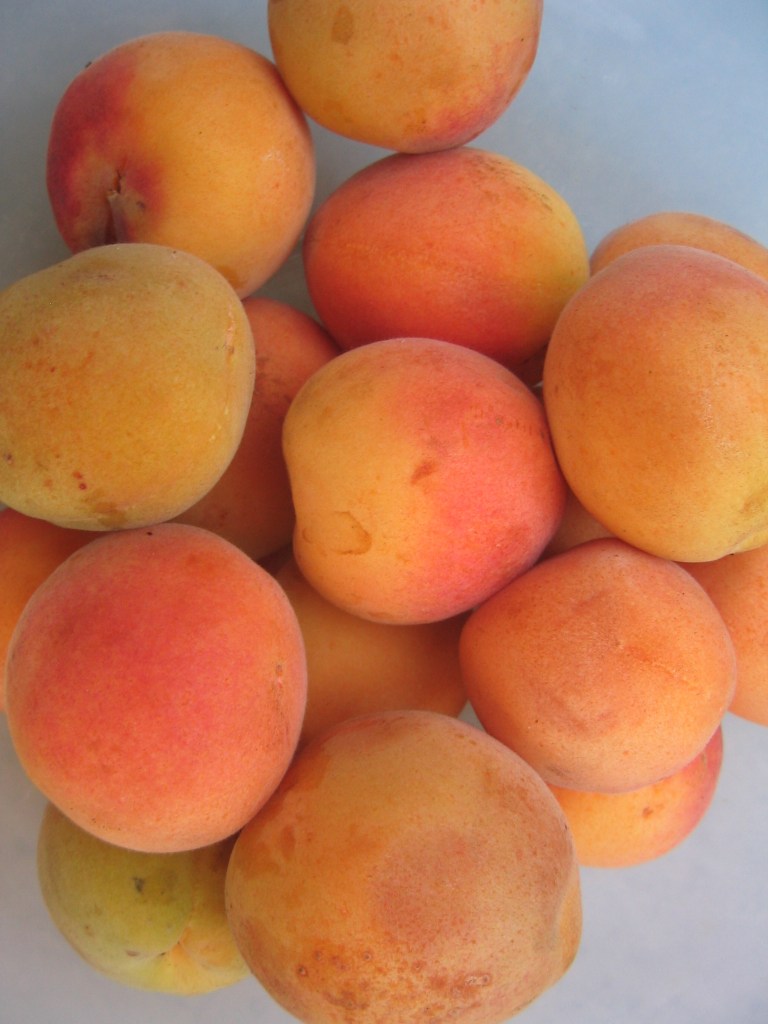
Apricot has major history in California. For a very long time, it was the main agricultural commodity is several regions, particularly the Santa Clara Valley. It remains a significant commodity within portions of the San Joaquin Valley. Urban sprawl replaced orchards in other regions. However, apricot trees now inhabit some urban gardens. The climate here is as ideal for them as it ever was.

Garden variety apricot trees are not quite like orchard trees. Dwarfing rootstock keeps them somewhat more compact. They might otherwise grow taller that twenty feet. Production is best during the first three decades or so, before they begin to slowly deteriorate. Orchard trees are already due for replacement by then. Many more cultivars are practical for home gardens than for orchards.

Apricot trees, which are mostly of the species Prunus armeniaca, are certainly not ‘low maintenance’. They require specialized pruning annually, while dormant for winter. Otherwise, they produce more fruit than they can support. New trees are unlikely to produce any fruit during their first season. The deciduous foliage falls neatly in autumn. White or slightly blushed spring bloom is striking.

Plum

Plums are better fresh than dried.

Only recently, and only to be more marketable, dried prunes attained the status of dried plums. Prunes and plums are actually two different types of fruit. Prunes are European fruits that dry nicely, but are not popular as fresh fruits. Plums are Japanese fruits that are best while fresh, but do not dry well at all. Because plums have less of a sugar content, they are likely to mold before they dry.

Plum is of the genus Prunus, just like prune and the other stone fruits. Stone fruits all contain large seeds, which are known as stones. Plums are ‘clingstone’, because the flesh of the fruit clings to the stones within. Prunes are ‘freestone’. Their stones separate easily from the flesh. The most popular plums are purplish or burgundy red. Others are blueish purple, red, orange, yellow or green.

Plum trees grow fast while young, and require aggressive pruning while dormant through winter. Otherwise, they get overwhelmed with fruit, and too tall to facilitate harvest. Even semi-dwarf trees can get almost twenty feet tall. They are spectacular in prolific white bloom. Small bare root trees that are now becoming available adapt to a new garden more efficiently than larger canned trees.

Deciduous Fruit Trees Need Pruning

Prune now for better peaches later.

Many plants should get most of the pruning they need while they are dormant in winter. Such pruning is less stressful because it happens while plants are naturally sedated. Some plants that need aggressive pruning during their winter dormancy may need no other pruning until the following winter. Most deciduous fruit trees conform to this category. Their pruning is rigorous and specialized.

The innately aggressive pruning that deciduous fruit trees require may seem to be brutally unnatural, but is very justifiable. It is necessary to compensate for unnatural production. After centuries of selective breeding, most deciduous fruit trees produce more fruit than they can support. Their fruit is unnaturally abundant, unnaturally bulky, or both. Such improvement has distinct consequences.

Unlike their wild ancestry, many modern deciduous fruit trees would not thrive for long without intervention. The weight of their fruit eventually breaks and disfigures limbs. Such breakage exposes sensitive bark to sun scald, and leaves wounds open to decay. Insect and disease pathogens proliferate in deteriorating growth. Furthermore, messy excess and unreachable fruit attracts vermin.

Pruning improves the structural integrity of deciduous fruit trees so that they can support their fruit. It also concentrates resources into fewer fruits of superior quality, rather than allowing production of inferior surplus. Invigorated vegetative growth is more resilient to pathogens. Proper pruning removes dead, dying, damaged and diseased growth, the ‘four Ds’, as well as unreachable growth.

The main categories of deciduous fruit trees are stone fruits and pomme fruits. Stone fruits are of the genus Prunus. They include peach, nectarine, apricot, plum, prune, cherry, their hybrids, and almond. (Almonds are the ‘stones’ of their fruits.) Pomme fruits are apple, pear and quince. Peaches need more aggressive pruning than cherries, simply because their fruits are so much bigger.

Pomegranate, persimmon and fig also need specialized pruning while dormant through winter.

Holy Guacamole!

This old article does not conform to the ‘Horridculture’ meme for Wednesday like ‘Anti-Community Garden’ would have; but I already reblogged that article, so can not do so again. (It can be found at https://tonytomeo.com/2017/12/09/hate-destroys/ .) At least this article is more amusing.

tonytomeo's avatarTony Tomeo

P71202.jpgHorticulturists have a way of making all those long Latin names sound easy to pronounce. Lyanothamnus floribundus ‘Asplenifolius’ – Syzigium paniculatum – Metasequoia glyptostroboides. I do not know why proper pronunciation of their names is so important. They have no ears. They can not hear if we simply call them ‘Earl’. Even if they could hear, they would not respond.
Communication with other people is probably more important. Yet, we are so often unable to spell something as seemingly simple as the sound of a palm frond falling to the ground. Does it sound like “whoosh”, or “splat”, or some combination of both? What do the Santa Anna Winds sound like as they blow through a grove of Aleppo pines? What does a red flowering gum full of bees sound like?

Heck, Brent could not even tell me what an incident that he heard in his own backyard sounded like…

View original post 399 more words

Pomes Produce Better Than Palms

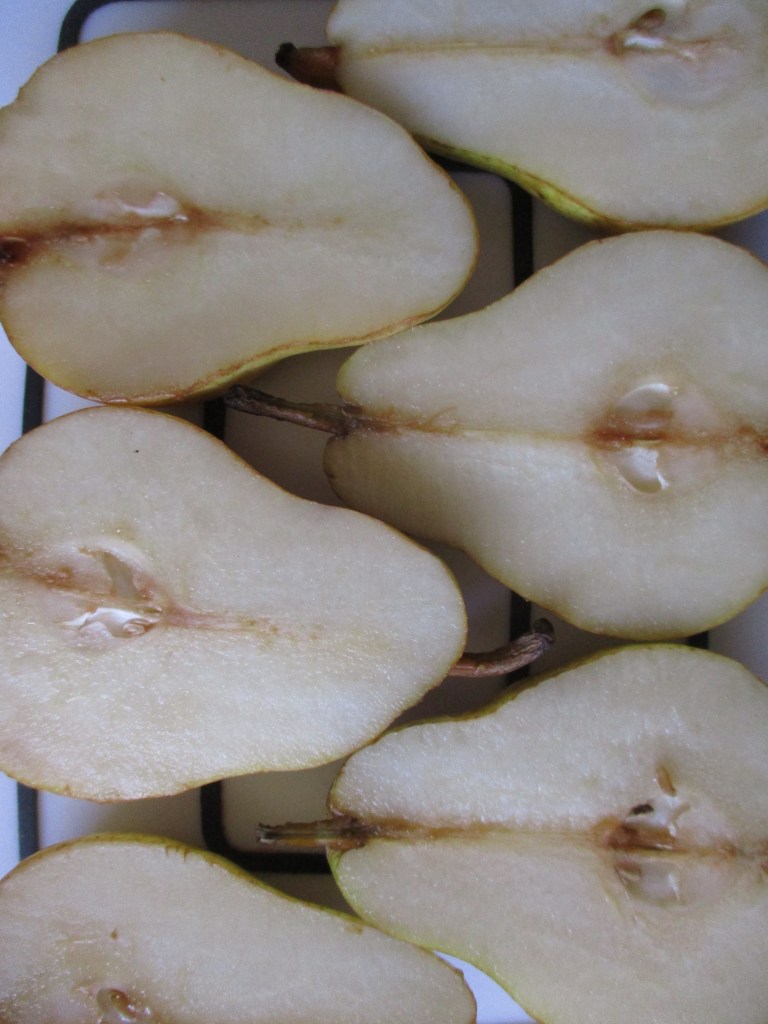
Pear season continues late into October.

Dates, coconuts, acai berries and palm oil grow on palm trees. All are rare in local home gardens. The palms that are popular in much of California are almost exclusively ornamental. Very few of them produce useful fruits. Despite the similar pronunciation, such palms are not at all related to pomes. Some of the more familiar fruits happen to be pomes, which are also known as pommes.

Apples and pears are the most popular examples of pomes. Quinces, which were very popular decades ago, are now rare. Quinces are so closely related to pears that they work well as dwarfing understock for home garden pear trees. (Orchard pear trees use other understocks that are not dwarfing.) Actually, most quince trees grew secondarily from roots of dead or removed pear trees.

Saskatoons (serviceberries), chokeberries (aronias) and medlars are locally rare pome fruits that are slowly gaining popularity. Productively fruiting cultivars of loquat are now more available than those that were primarily ornamental. Some flowering quinces may produce a few small fruits. Mayhaws and mountain ashes (rowans) are berry-like pomes that are more familiar in other regions.

The earliest cultivars of apple might be in season by late July, before stone fruit season finishes. (Some peaches, the largest of the stone fruits, ripen in September!) The latest will be ready in late November, at least a month into citrus season. Pear season extends from August into October. So, this is the middle of apple and pear season. Most but not all other pomes are already finished.

Like stone fruit trees, the trees and shrubs that produce pomes need very specialized pruning while dormant through winter. Without annual pruning to enhance structural integrity and concentrate resources, apple and pear trees are unable to support all of their fruit. Shrubby quince trees become thickets without pruning for grooming and confinement, although they may not need it annually.