Sunday Best – Perfect Mushroom

Mycology was a topic that we horticulture students did not study much in school. We learned about some of the more important fungal diseases of vegetation, but that was about all. We could not take the time to study it any more extensively than mycologists could take the time to study horticulture or even botany.
Yet, horticulturists are often expected to know more about mycology than we should be expected to know. Perhaps it is because fungal organisms seem to grow sort of like botanical organisms grow. In ancient history, mycology actually was more closely related to botany, but needed to become a separate discipline as more was learned about each of the two. Perhaps that was at a time when entomology still included arachnids, myriapods and crustaceans. Heck, there was a time when earth, air, water and fire were considered to be the only four primary elements.
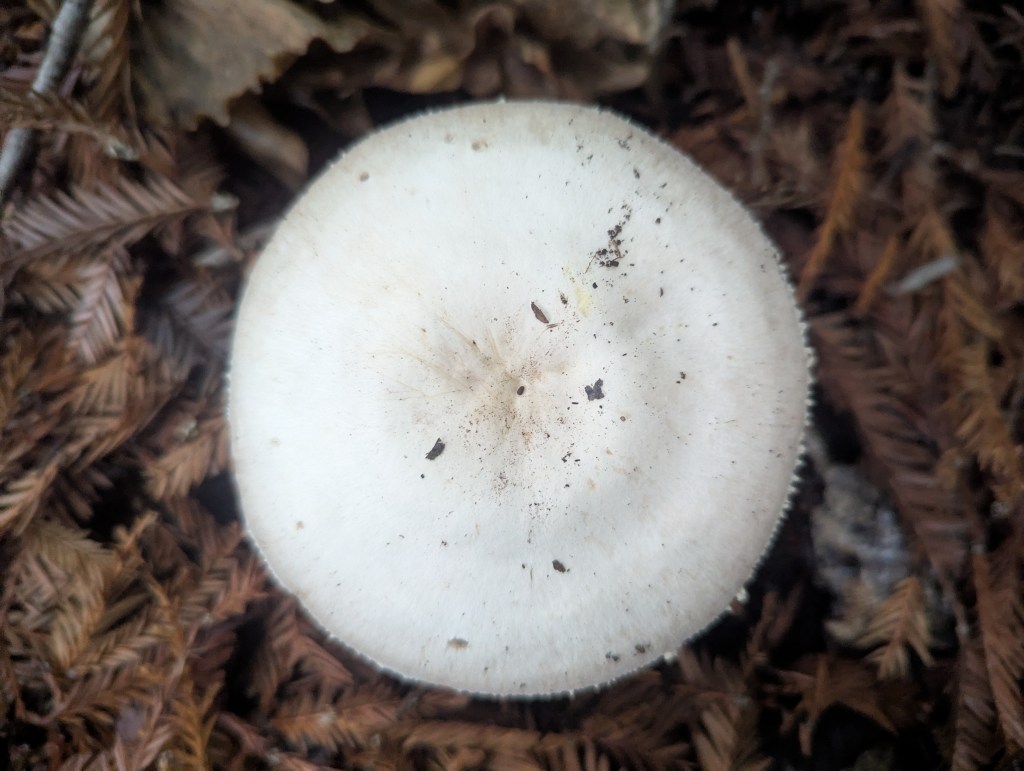
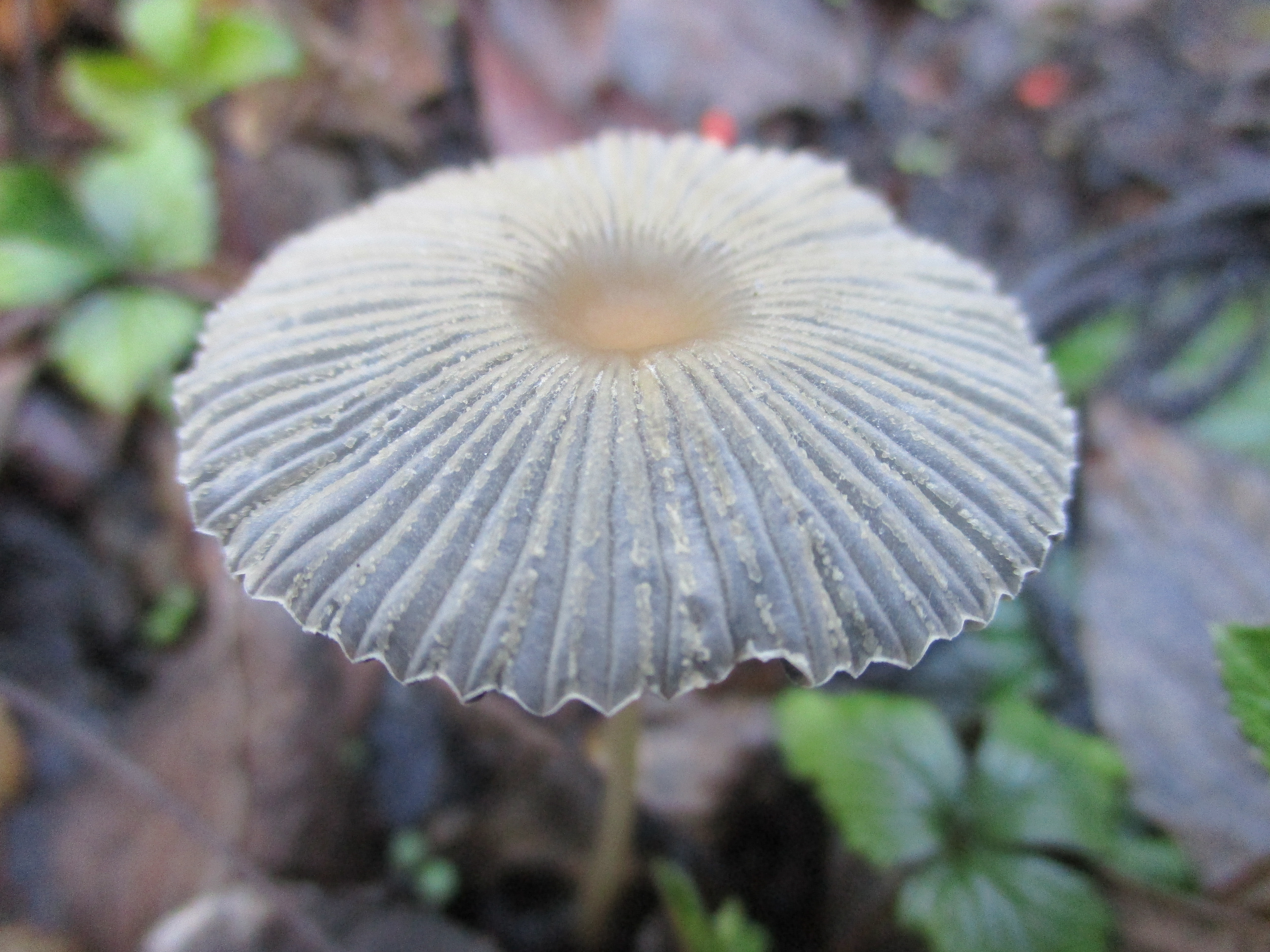
I have no idea what this mushroom is. It got my attention because it is so weird. It is such a weird mix of pastel purple, gray and white, with such a distinctly flat top. It was solitary. Not only did I see no others like it, but I noticed no other terrestrial mushrooms of any sort nearby. It appeared amongst blackberry bramble and naturalized English ivy, on the bank of a creek, under bay trees, with bigleaf maples, white alders, red alders and a deceased Douglas fir nearby. The area was quite damp from all the rainy weather this winter. Large and likely old rusty ruddy brown basidiocarps extend from the rotting bases of some of the bay trees. Smaller and likely younger brown and white basidiocarps extend from the rotting trunk of the deceased Douglas fir. All of this is irrelevant, since I still have no idea what this is.
 Pesticides are a topic that I do not talk much about. There really is not much to say about them. Only a few are used at the farm, and only while certain destructive insects or perhaps mites are active. Even less pesticides are used in the landscape. It is not that I have serious issue with them. They are just not as useful for controlling pests as proper horticultural techniques are.
Plants that we would expect to require pesticides simply are not welcome in our landscapes. We know that snapdragons and hollyhocks are very likely to be detrimentally infested with rust. Therefore, we grow neither.
Roses live in some of the landscapes only because we do what we must to help them avoid infestation by the various pathogens that they are susceptible to. They get pruned aggressively in winter so that their new growth grows faster than aphid and mildew that try to infest them in spring. Their fallen foliar debris that fungal pathogens overwinter in gets raked away cleanly.
On rare occasion, we find weeds that we would like to kill with herbicide; but we can’t because they are too close to riparian environments. With two creeks and two streams flowing through here, many of the landscapes are too close to water. We must instead pull the weeds that we can, and hope that more aggressive cover crops overwhelm what remains before they recover.
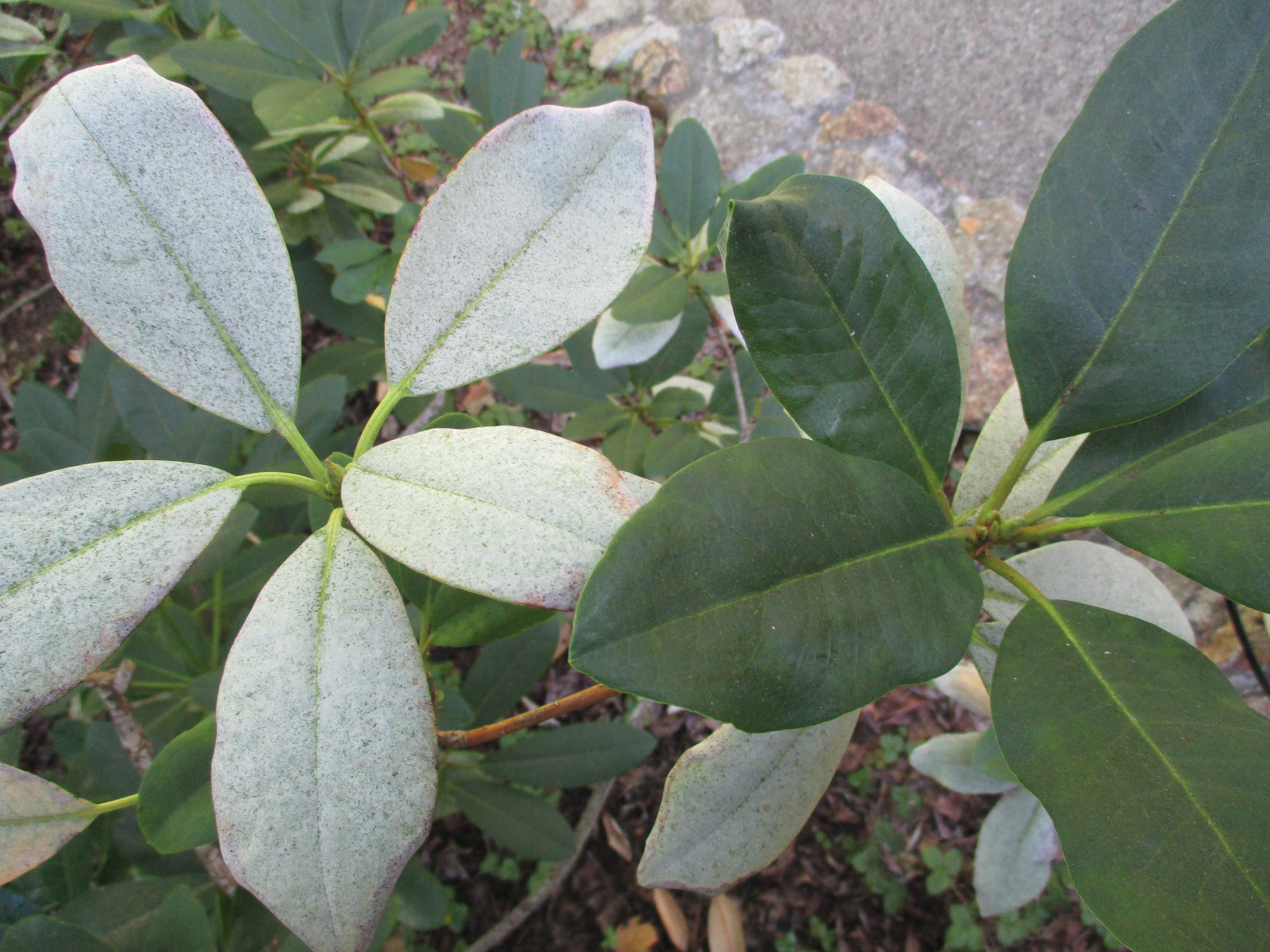
One of the few insect problems that we sometimes notice is the thrip on the rhododendrons. They are sort of always there, but had been tolerable. Aggressive pruning to stimulate vigorous new growth, and also improve air circulation, should have inhibited the thrip. Instead, the damage has been worse than it has been in a very long time. It was necessary to spray insecticide. The pictures above and below show the worst of the damage caused by thrip. The picture below compares damaged foliage on the left to undamaged foliage on the right. Thrip rasp the foliar surfaces so that they can lap up the juices within. The process causes silvery discoloration, and ruins the foliage. Young damaged foliage is likely to get crispy around the edges, or get shed.
 For this sort of damage, I do not mind using insecticide. However, I have doubts about this particular insecticide, or whatever it is. It is supposed to be three in one; insecticide, fungicide and miticide. How is that even possible? Insects, mites and fungi are physiologically completely different. Anything that kills all three must be very nasty stuff! Yet, it is somehow safe for bees?!
There are several active ingredients, but I do not recognize many of them. I suppose that some could be insecticidal, some could be fungicidal, and some could be miticidal. The label does not explain the functions of the various components. None are hazardous enough to warrant a use permit like we need for agricultural pesticides. This product is available at the hardware store.
I do not doubt that this nonselective ‘pesticide’ is safe for bees, even though it is supposedly formulated to kill just about anything that might bother the rhododendrons. However, since it will not kill bees, and bees are insects, I do sort of doubt that this product will kill many other insects, including thrip.
Incidentally, I am sorry for the delay of posting my weekly ‘Horridculture’ rant, which should have posted yesterday. It normally posts on Wednesdays. The article that posted yesterday really should have posted today instead.

If mushrooms could fly, they might look like this. Doesn’t it look like it is ready for take off? Maybe it looks like it is dressed up as a ghost for Halloween. I thought it looks something like the flying nun. Regardless of what it looks like, it was so weird that I took its picture.
I can not explain why it is in this weird position. It appeared just as the weather was warming up, and most of the earlier mushrooms were already gone or deteriorating. Perhaps the upper surface dried out a bit in the sunlight, and tightened up on the lower surface that remained more hydrated. Since I did not go back after getting this picture, I do not know what it did afterward, or how long it lasted. Perhaps it really did fly away!
This mushroom was just a few yards from where I got the picture of those associated with oak root rot fungus, Armillaria mellea,which many of us know as honey fungus. https://tonytomeo.com/2018/12/02/the-humongous-fungus-among-us/ Those mushrooms grew and deteriorated back in December. The other five types of mushrooms that I got pictures of to post along with a later picture of the oak root rot fungus mushrooms for a ‘Six on Saturday’ post were found just a few more yards away in another direction. https://tonytomeo.com/2018/12/29/six-on-saturday-shrooms/ They did their thing later in December, but still a few months ago.
There are always some sort of mushrooms out and about in riparian environments closer to the creeks and streams. They are just not as abundant now as they were during the rainy weather late in winter. Those out in drier and warmer spots that do not get watered regularly do not often develop so late into spring. They seem to know how to exploit the favorable weather.
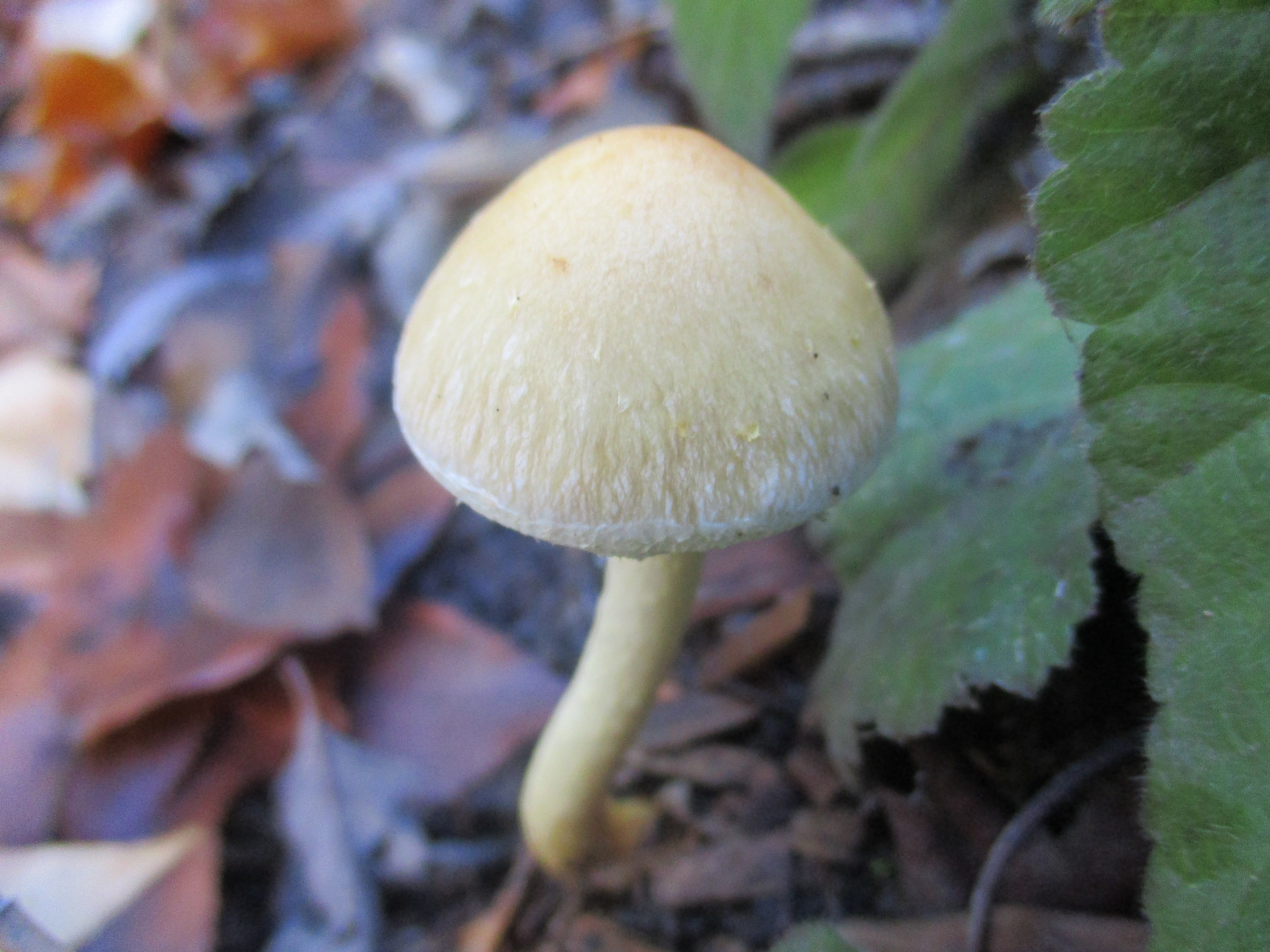
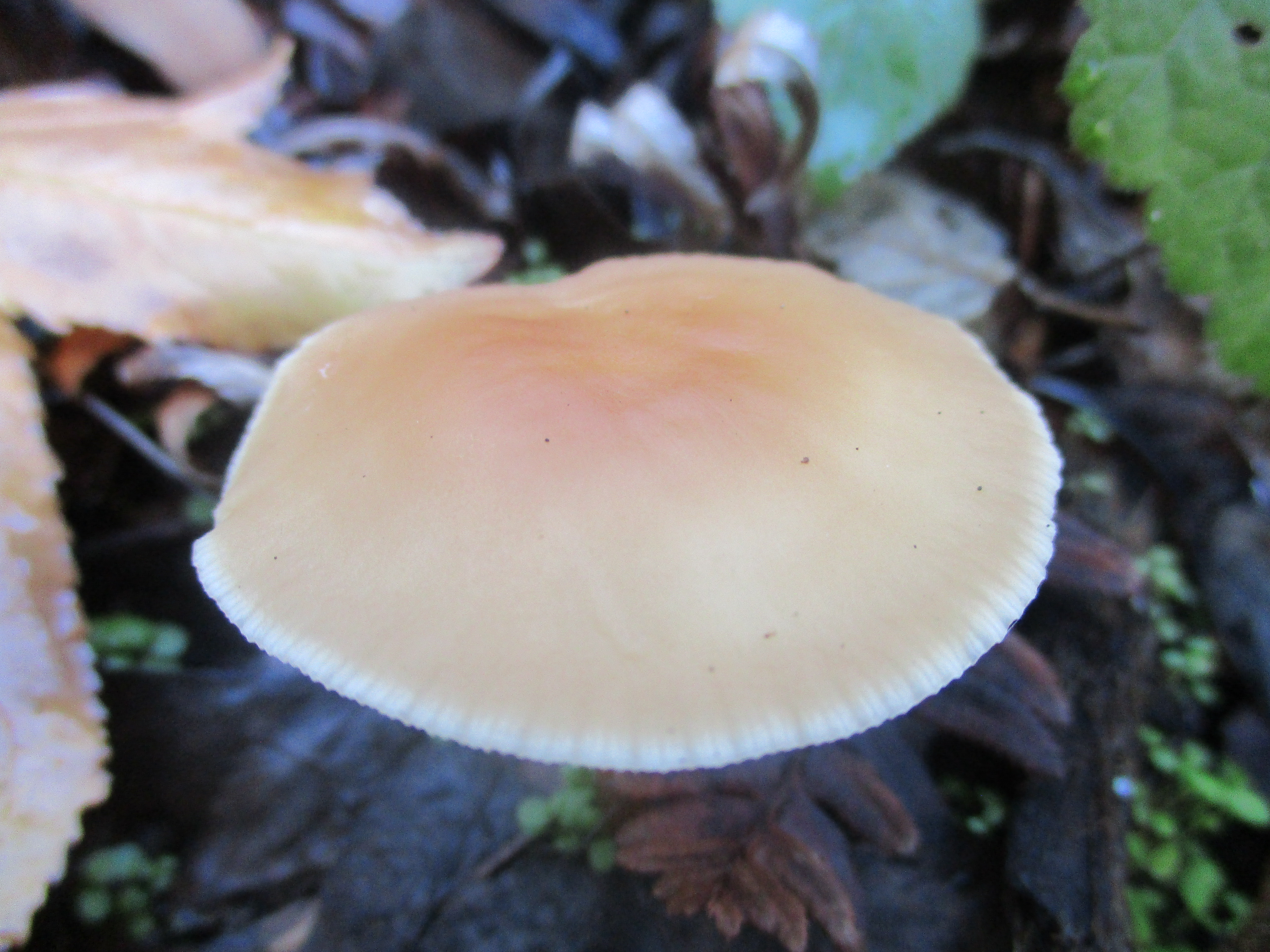
It is unlikely than any of these are related to ‘shrooms’ or ‘magic mushrooms’, the psychedelic mushrooms Psilocybe cubensis; but this is Santa Cruz County. I would not know one if I saw one. I think that #4 looks like pancake; and #6 looks like a strawberry. All except #1 were found within only a few feet of each other. They showed up immediately after the rain, in spot that had been dry all summer.
If #1 looks familiar, it is because it is the dreaded oak root rot fungus, Armillaria mellea. It was was at an adjacent building where another less developed colony of the same was featured in ‘The Humungous Fungus Among Us’, https://tonytomeo.com/2018/12/02/the-humongous-fungus-among-us/ . The colony that was featured earlier developed into mushrooms just like those shown here, but by the time these pictures were taken, had deteriorated into a sloppy puddle of chunky goo from a bad 1980s horror movie. It looked like someone ate a bucket of chocolate covered olives, and threw up. To make matters worse, the whole mess was shimmering with the squirming of maggots, and exuded an aroma that was appropriate to visual aspects of the situation. Wow! I am grossing myself out, and I experienced it already.
When I compare picture #1 of the more developed colony of oak root rot to the earlier picture of the less developed colony. I sort of wonder if some of these other pictures are redundant to each other. Could #4 be a more developed form of #3? Could #5 be the deteriorating phase of #2? Well, I don’t know. I am just a horticulturist, not a mycologist.
1.
2.
3.
4.
5.
6.
This is the link for Six on Saturday, for anyone else who would like to participate:
https://thepropagatorblog.wordpress.com/2017/09/18/six-on-saturday-a-participant-guide/
 Tony Tomeo