Swiss Chard

Chard is both edible and ornamental.

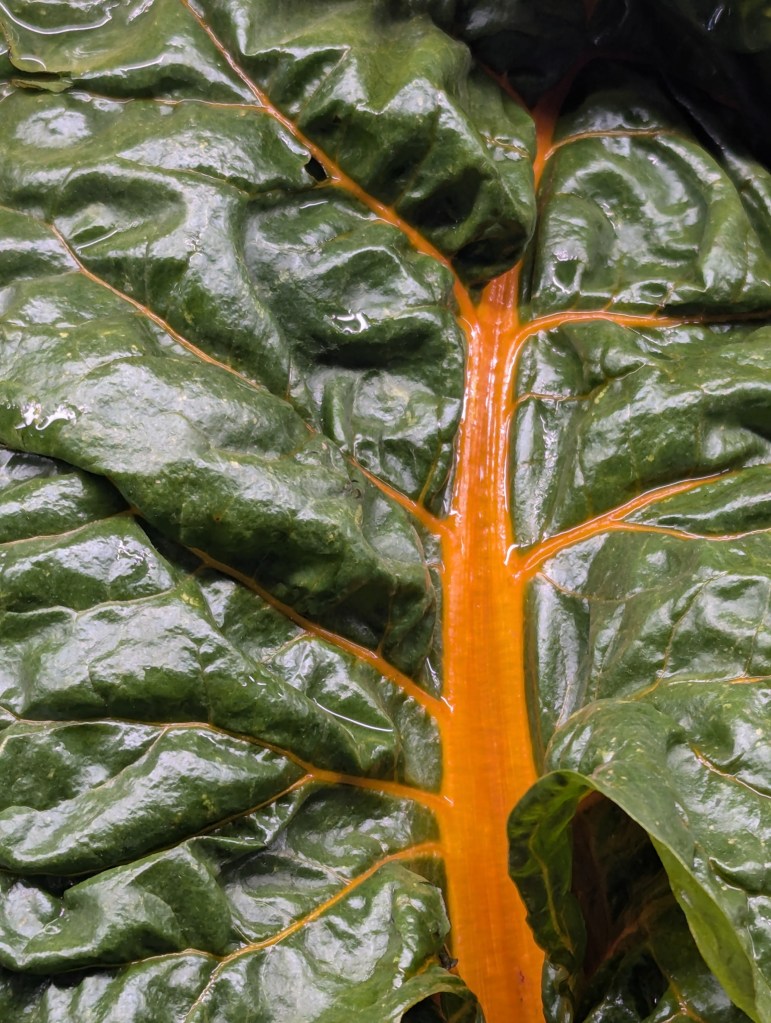
Among the cool season vegetables that are now seasonable, this one is too cool. Swiss chard, Beta vulgaris subsp. vulgaris var. flavescens is as ornamental as edible. Its richly deep or bronzy green foliage is a splendid backdrop for cool season annuals. The same foliage is edible, either fresh or cooked. Yet, even as a vegetable, it is nicely ornamental.

The wide petioles and leaf veins can be white, yellow, orange, pink or maroon. Although varieties with simple green petioles are more productive, they are less popular. ‘Rhubarb Chard’ and ‘Ruby Chard’ develop deep red petioles and veins. ‘Rainbow Chard’ is a mix of varieties with petioles and veins of various colors. Some have darkly bronzed foliage.

Although a cool season vegetable, Swiss card performs very well for spring and autumn. It only succumbs to summer warmth. In cooler climates, it might succumb to severe frost. Since only external leaves are harvested, it retains its ornamental quality for a long time. Swiss chard like sunny exposure and rich soil. It wants water when winter rain is sparse.

Mustard

Mustard can be a weed also.

Mustard is not easy to classify. It is a cool season vegetable here, although it grows until summer gets too hot. In cooler climates, it is a warm season vegetable. Whether warm or cool season, it provides more than greens. For agricultural applications, it is also a cover crop and livestock fodder. Its seed and seed oil have culinary and medicinal application.

Also, some consider mustard to be a wildflower, and some consider it to be a weed. Most but not all species that naturalized here are of the genus Brassica. None are native. Wild turnip and wild radish are similar and are also naturalized, but not as aggressively. Their bloom may be pink or creamy white. Most mustard varieties display bright yellow bloom.

Garden varieties of mustard have milder flavor and finer texture than wild sorts. They are sometimes available as cell pack seedlings, but grow like weeds from seed. Varieties for mustard seed might only be available online or from mail order catalogs. Mustard greens develop bitter flavor with age or bloom. Bigger lower leaves can develop coarser texture.

Lettuce

Lettuce prefers spring and autumn weather.

Warm season vegetables are replacing cool season vegetables about now. Technically, lettuce, Lactuca sativa, is a cool season vegetable. It grows through spring and autumn though. The last of it can continue almost until May. Within the mildest coastal climates, it can continue later. By the time it finishes there, it is almost time to plant more for autumn.

After thousands of years of cultivation and breeding, lettuce is now remarkably diverse. Most popular varieties are leaf, head or romaine types. Leaf lettuce is mostly green, but can be bronze, reddish or irregularly blotched. Most varieties develop loosely ruffly foliar texture. Romaine and head lettuce is denser but larger. Some grow a foot high and wide.

One commonality among lettuce varieties is that they tolerate neither frost nor arid heat. Some are a bit more tolerant of one or the other, which can prolong their season. Some of the larger romaine and head types need nearly four months to mature, though. Only a single phase matures within each season. Smaller types might mature in about a month.

Frisee

Frisee is a type of endive.

Many popular salad greens are somewhat discriminating about the seasons here. Some dislike even a minor chill during winter. Several more dislike arid warmth during summer. Frisee is a sub variety of curly endive, Cichorium endivia var. crispum, that dislikes both. It prefers weather from late summer through autumn, and from late winter through spring.

Frisee is related to chicory, which includes radicchio, puntarelle and Belgian endive. It is less closely related to dandelion. Because it is relatively unfamiliar locally, some know it as chicory or curly endive. It is typically a component of fresh green salads. Alternatively, it sautees nicely, or mixes with other cooked greens. Frisee is apparently quite versatile.

Frisee may be unavailable as seedlings in cell packs from nurseries. Because individual plants are small, it is most practical to grow them from seed anyway. Seed germinates in about a week. Seedlings mature in about a month and a half. Mature frisee is only a foot wide. It requires full sun exposure with frequent watering. Phasing prolongs productivity.

Mustard

‘Wild mustard’ includes a few species.

A few species of mustard came to naturalize in California, and for a few distinct reasons. Some likely grew first as greens in the gardens of the original Spanish Missions. At least one species also provided culinary and medicinal mustard seed. The more prolific types became cover crops and fodder for livestock. Later in history, mustard seed provided oil.

According to legend, Spanish Missionaries established the route of El Camino Real with mustard. After sporadically dropping seed as they traveled between Missions, they could follow the bright yellow bloom by the next winter, and find greens to eat. El Camino Real became worn enough to navigate before the mustard dispersed too extensively to assist. 

Most but not all species of mustard that are naturalized locally are of the genus Brassica. Wild turnip and wild radish provide similar greens, but are generally more likely to bloom pale pink or pale white, rather than bright yellow. Garden varieties of mustard, which are available as seed or in cell packs, provide delightfully tender new leaves with mild flavor.

Six on Saturday: Greens


There are no vegetables in the garden yet. It is so shameful. Work had been so overwhelming that I am only now renovating a small vacant space into a new vegetable garden, and only because I am unable to go to work at my most time consuming job. I needed to remove our berry canes to do it!

Until the garden becomes productive, and perhaps to avoid the supermarket, I have been getting much of my produce from the surrounding forest and landscapes.

1. mustard greens – are the most abundant of the greens growing wild around the perimeter of the abandoned baseball field. Similar wild radish and turnip greens are even better, but not abundant.P00328-1

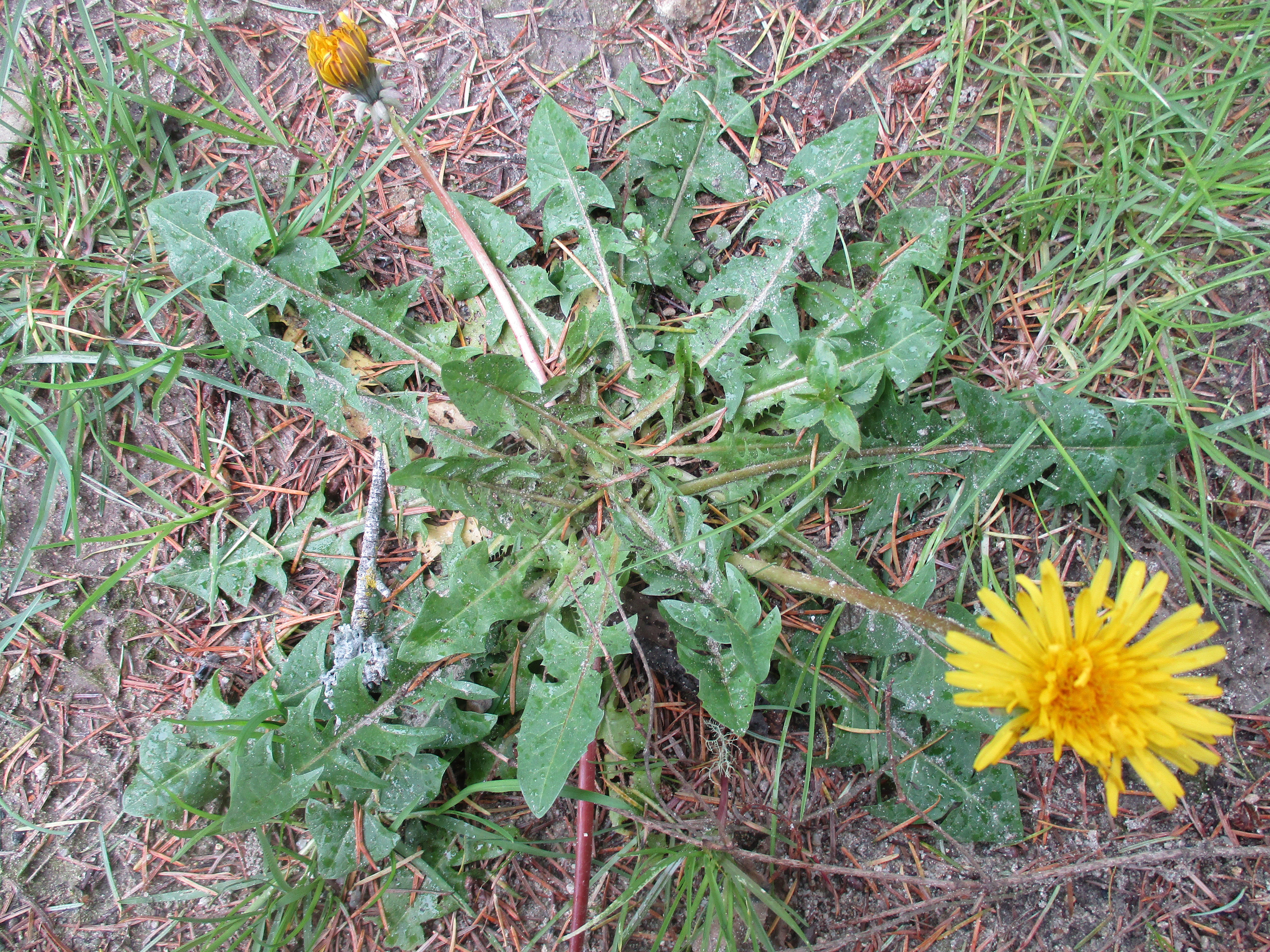
2. dandelion – grows in the outfield of the same abandoned baseball field, mostly past third base. They are not my favorite, but are an alternative to the other greens. These are dirty from heavy rain.P00328-2

3. dock – is more randomly sporadic. It grows amongst the other greens and elsewhere, although not in significant colonies. The tough midribs are supposed to be removed. I just chop them up fine.P00328-3

4. miners’ lettuce – is the only native of these greens. Most leaves are circular with tiny white flowers in the center. These vegetative leaves are supposedly better. Like lettuce, they do not get cooked.P00328-4

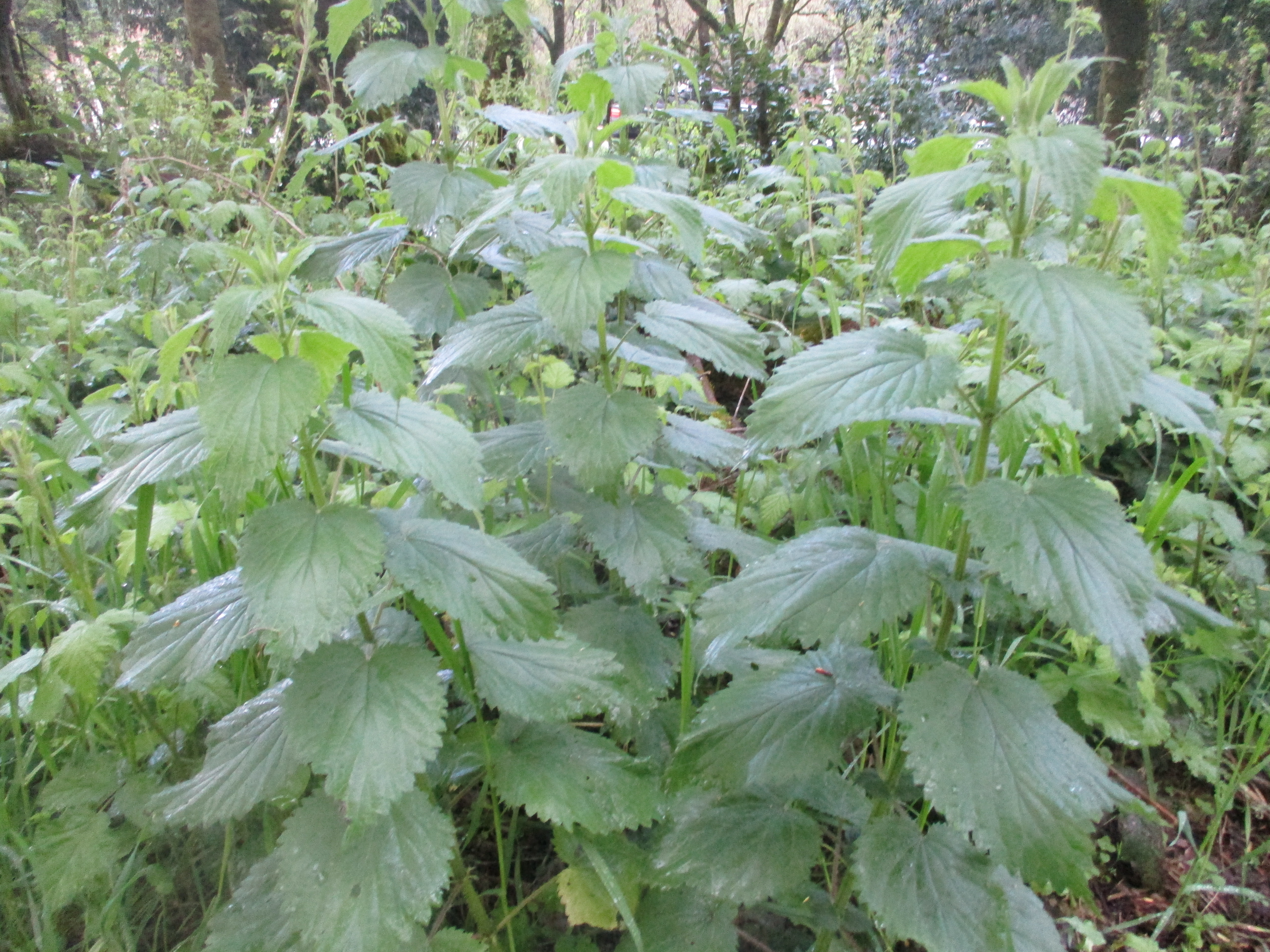
5. stinging nettle – must be cooked to stop stinging. This is my favorite of the greens. It is like spinach that I do not need to tend to. I get it from along the trails where it should be eradicated anyway.P00328-5

6. Rhody – is not even remotely relevant to greens; but everyone wants to see him. Someone suggested that I write exclusively about Rhody, as if my horticultural topics are insufficiently interesting.P00328-6

This is the link for Six on Saturday, for anyone else who would like to participate:

https://thepropagatorblog.wordpress.com/2017/09/18/six-on-saturday-a-participant-guide/