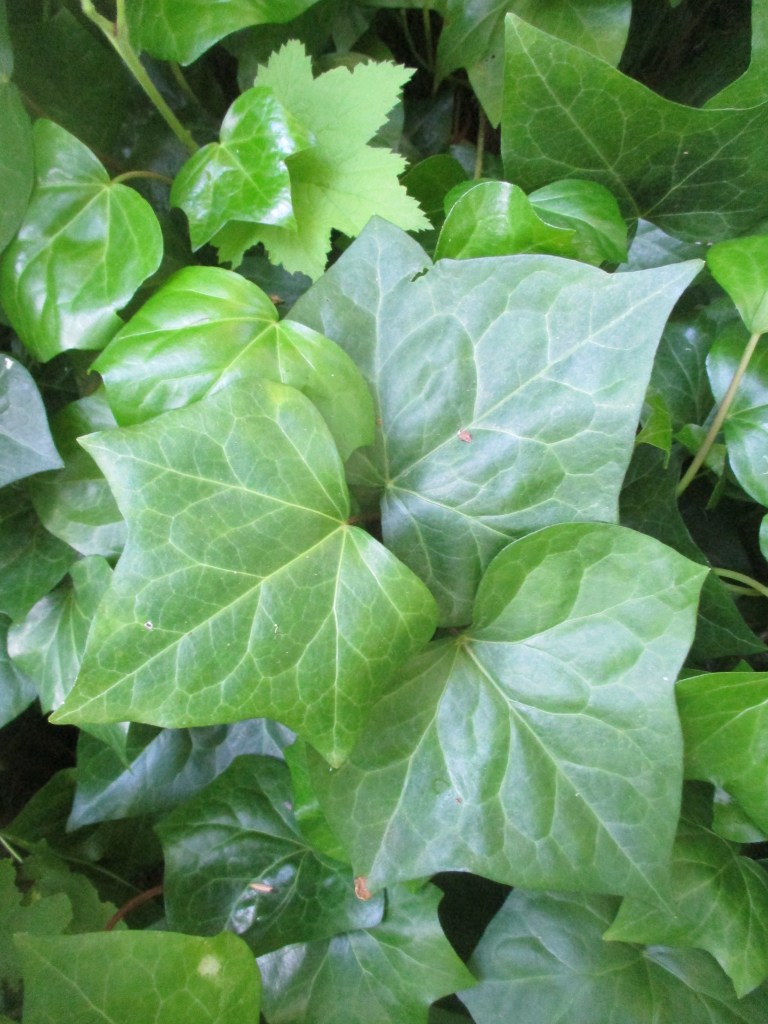
Like so many fad plants that were formerly too popular, Algerian ivy, Hedera canariensis, now has a bad reputation. Ironically though, it earned its reputation for doing what it does best. It covers ground rapidly and efficiently. The problem is that it never seems to stop. It creeps anywhere it can, and climbs trees, fences and anything else that it can grab onto.
Aerial roots of climbing vines ruin paint and stucco, and accelerate rot of wooden fences and walls. Vines that get between planks or into cracks between bricks cause significant damage as they expand. Shrubby adult growth that blooms and produces seed develops where climbing vines reach the top of their support, or spontaneously in sunny locations.
Nonetheless, with diligent edging for strict confinement and to prevent climbing, Algerian ivy works well as a resilient evergreen ground cover for large areas. Once established, it excludes weeds, and tolerates quite a bit of shade. Shrubby adult growth is uncommon if vines can not climb. Climbing vines may be harmless on bare reinforced concrete walls.
Algerian ivy is neither as finely textured nor as shallow as English ivy. Its broader leaves are about six inches wide, with blunter lobes. They stand higher on longer and distinctly blushed petioles. Algerian ivy is rare in nurseries now, but inhabits old landscapes, from which it sneaks into adjacent landscapes. Variegated cultivars are slightly more passive.
 Bright pink bloom that can be profuse enough to obscure the succulent foliage below is nothing new for iceplant. Some bloom bright purplish pink. Others are reddish pink. A few are softer pink or white. What is unexpected is iceplant that blooms bright yellow, orange or gold, like Lampranthus aureus does. (Freeway or beach iceplant that blooms soft yellow or pink is not a true iceplant.)
 Why would anyone want to grow annual gazania when perennial gazania that is popularly grown as ground cover lasts for several years? Well, as long as the weather stays warm, annual gazania blooms with an impressive abundance of bigger and more brightly colored flowers. Perennial gazania blooms less profusely and only in midsummer, with simpler and somewhat smaller flowers.
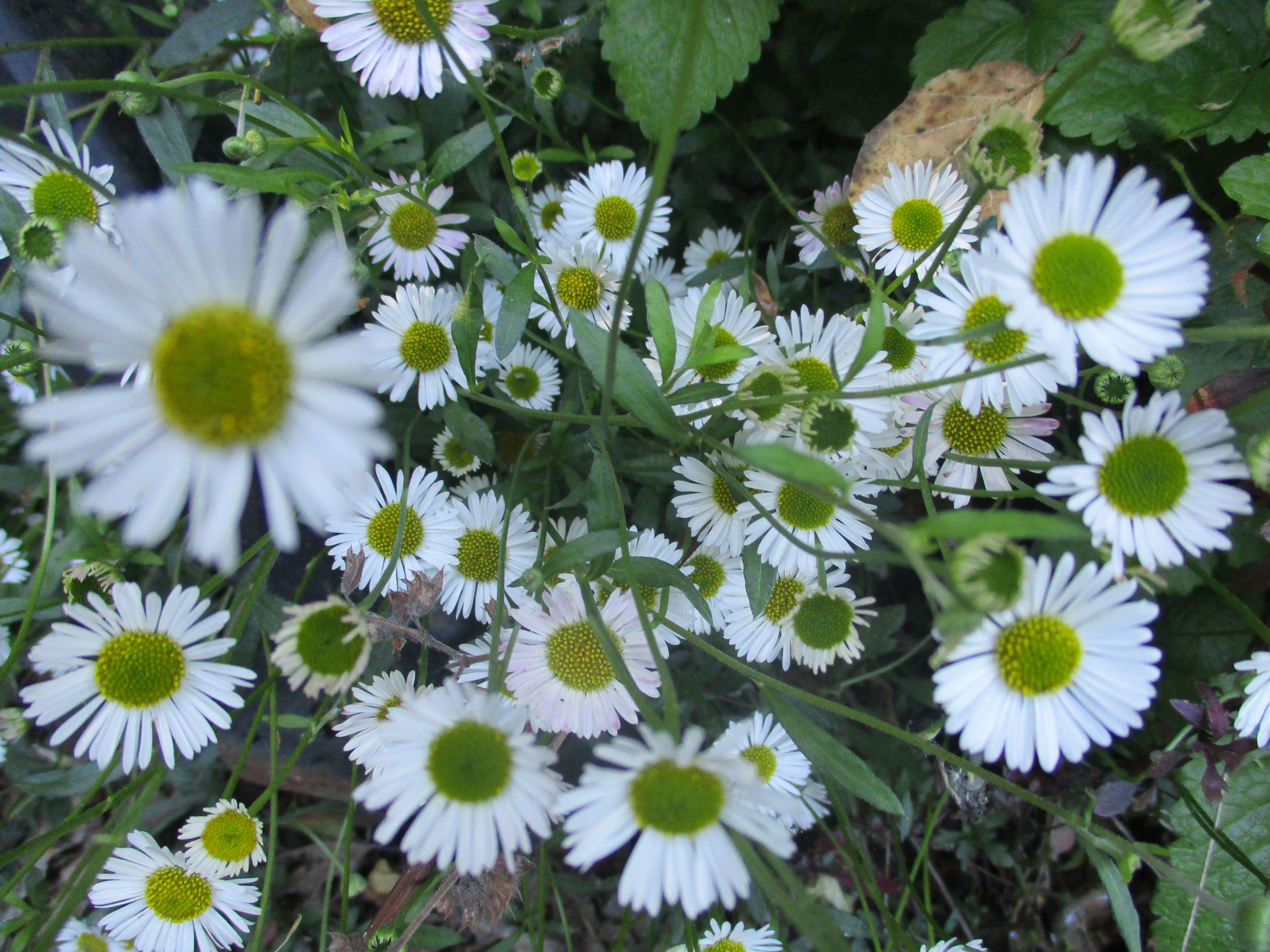 Erigeron karvinskianus
 This is one of those plants that many of us have strong feelings about. Many of us who remember it from when it was more popular in the 1970s might consider Algerian ivy, Hedera canariensis, to be an aggressively invasive weed. Those of us who are less familiar with it might appreciate it as a vigorous and resilient groundcover that gets dense enough to exclude most other weeds.
 Tony Tomeo