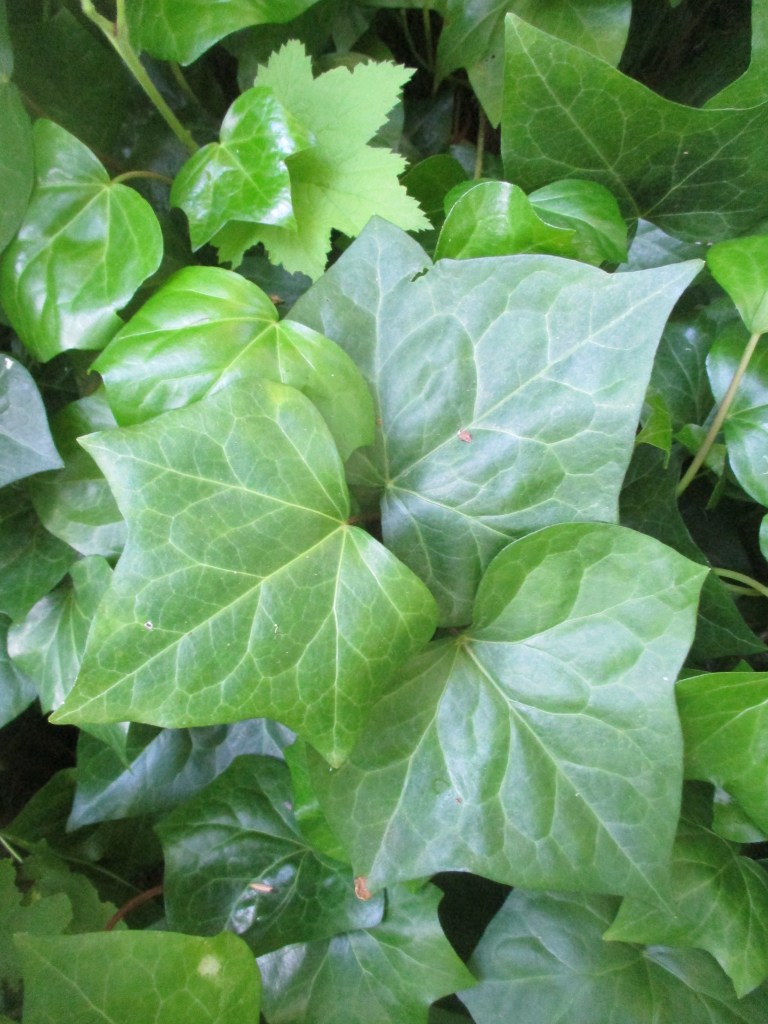
Like so many fad plants that were formerly too popular, Algerian ivy, Hedera canariensis, now has a bad reputation. Ironically though, it earned its reputation for doing what it does best. It covers ground rapidly and efficiently. The problem is that it never seems to stop. It creeps anywhere it can, and climbs trees, fences and anything else that it can grab onto.
Aerial roots of climbing vines ruin paint and stucco, and accelerate rot of wooden fences and walls. Vines that get between planks or into cracks between bricks cause significant damage as they expand. Shrubby adult growth that blooms and produces seed develops where climbing vines reach the top of their support, or spontaneously in sunny locations.
Nonetheless, with diligent edging for strict confinement and to prevent climbing, Algerian ivy works well as a resilient evergreen ground cover for large areas. Once established, it excludes weeds, and tolerates quite a bit of shade. Shrubby adult growth is uncommon if vines can not climb. Climbing vines may be harmless on bare reinforced concrete walls.
Algerian ivy is neither as finely textured nor as shallow as English ivy. Its broader leaves are about six inches wide, with blunter lobes. They stand higher on longer and distinctly blushed petioles. Algerian ivy is rare in nurseries now, but inhabits old landscapes, from which it sneaks into adjacent landscapes. Variegated cultivars are slightly more passive.
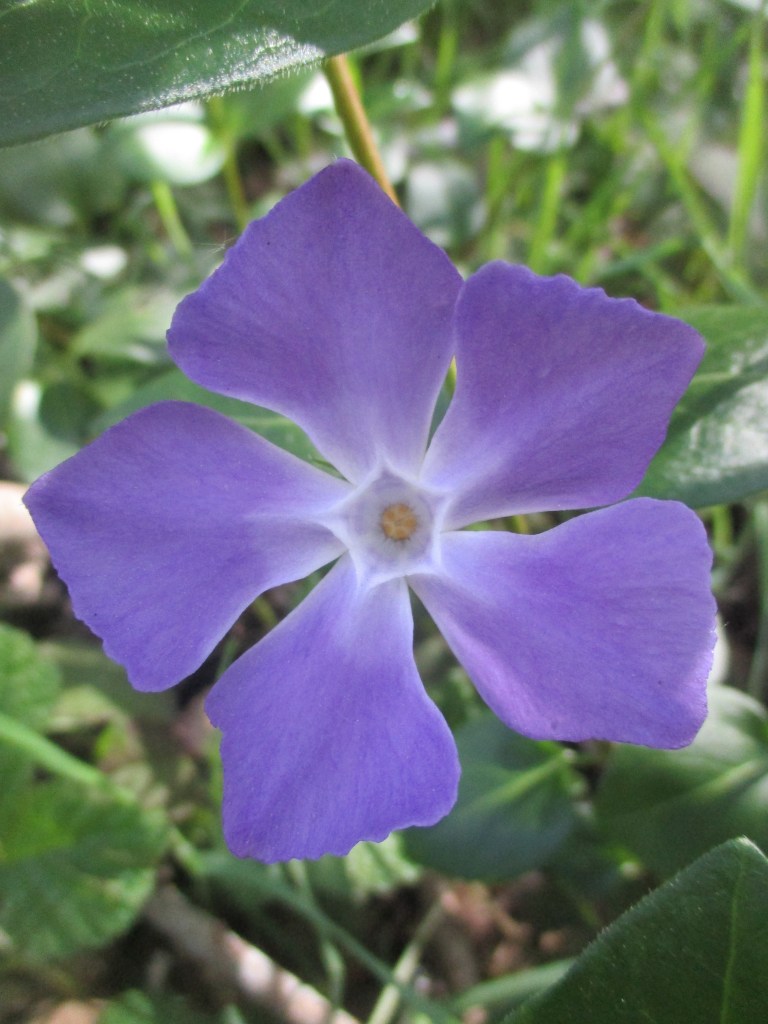


 Only a few flowers are true blue. A few more are nearly blue, but slightly blushed with lavender. Of the latter group, fan flower, Scaevola albida, which is usually more lavender than blue, can be quite convincingly blue if conditions are just so. The semi-circular flowers (which are actually wide bilateral flowers) are most abundant in spring and summer, but can bloom sporadically all year.
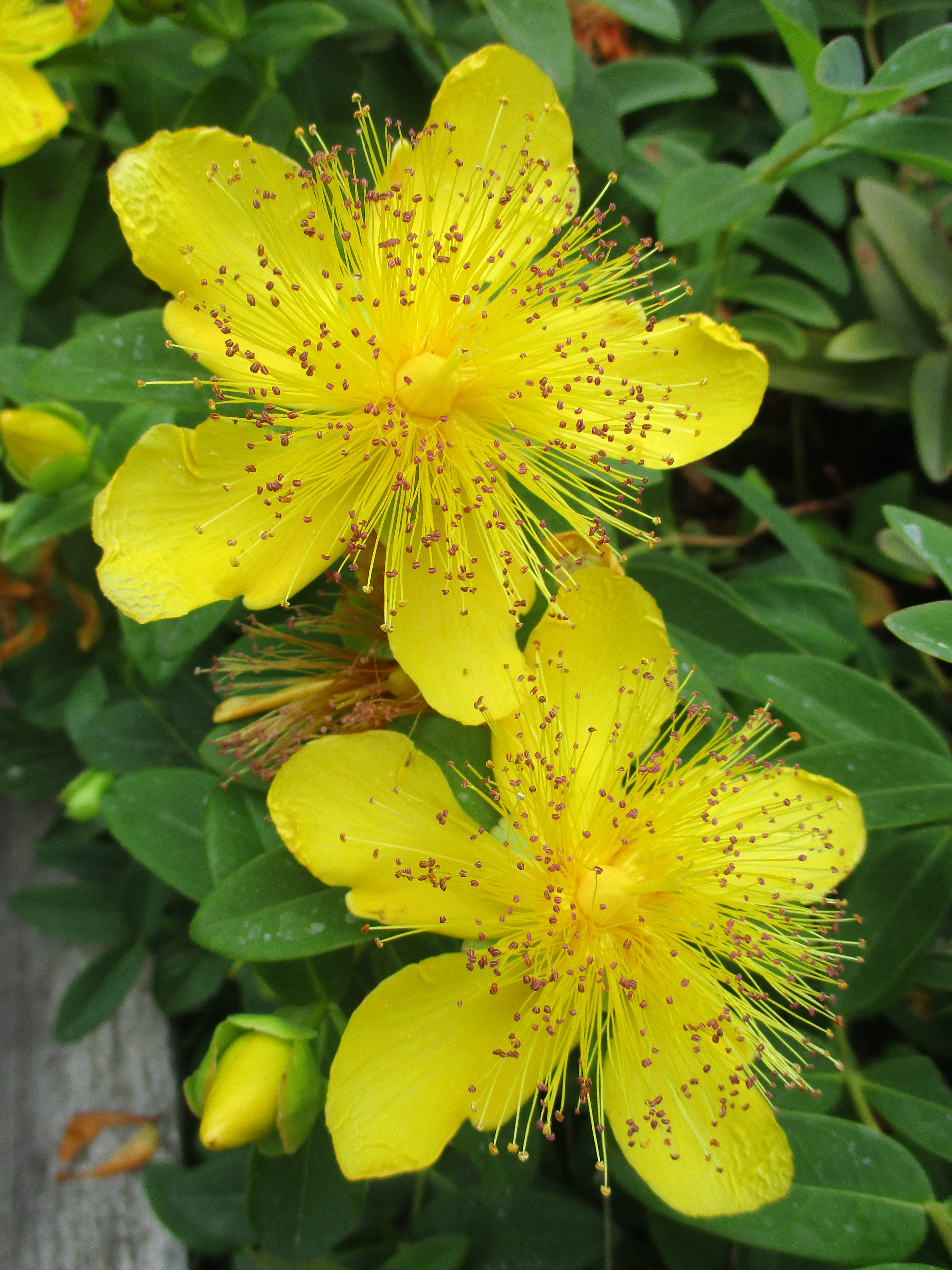 This is not the dreaded aggressively invasive Saint John’s wort that has naturalized in other regions. Nonetheless, creeping Saint John’s wort, Hypericum calycinum, does precisely as the name implies. It creeps, and has naturalized to a less aggressive degree in many spots near the coast. Its vigor is an advantage to many landscapes, but might eventually displease adjacent neighbors.
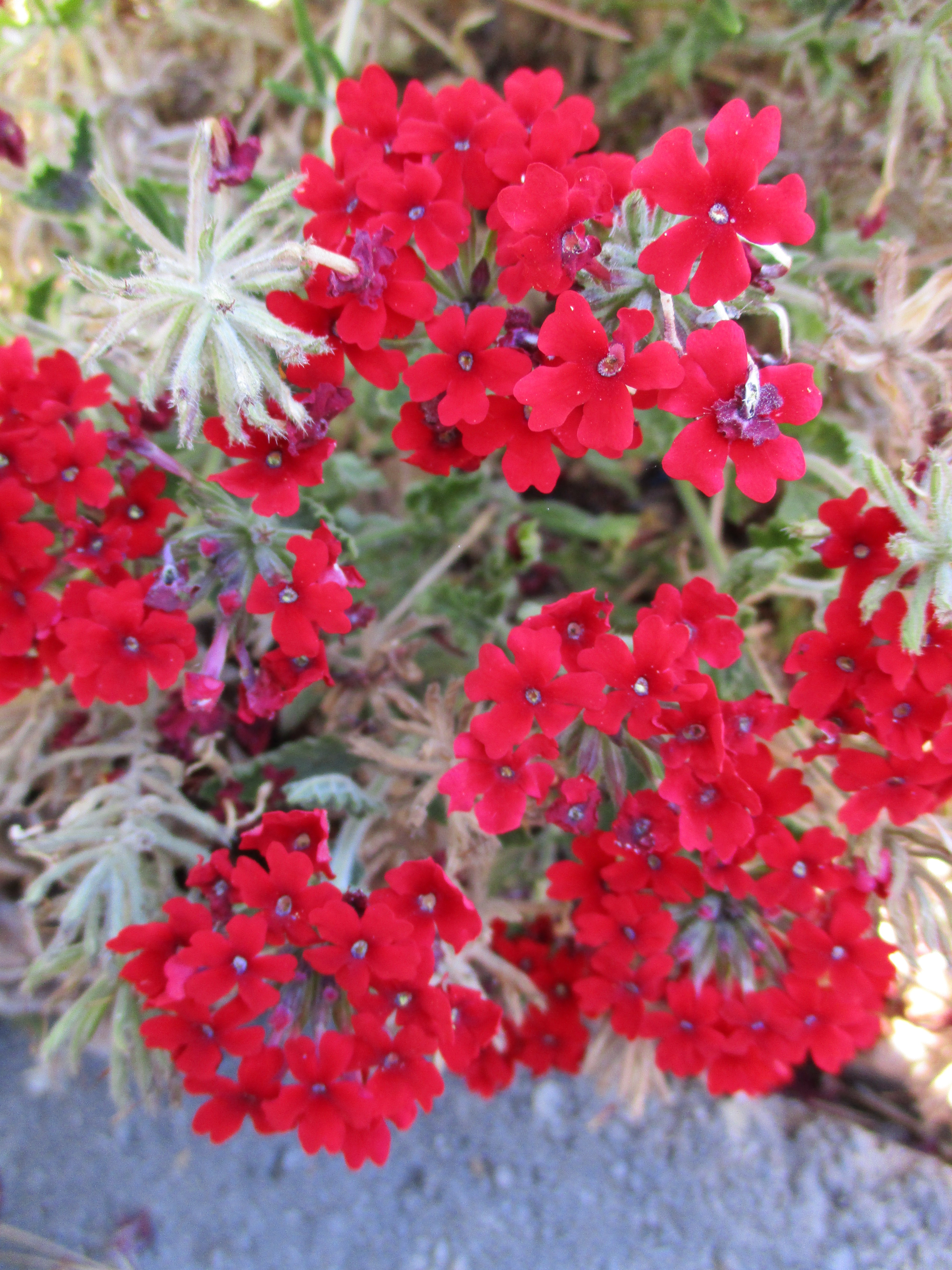 It is fair to say that garden verbena, Verbena X hybrida, is a reliable warm season annual. It gets planted in spring to spread out and bloom through summer with bright pink, red, purple or almost blue, or softer pastel pink or pale white. It is commonly replaced with cool season annuals by late autumn. However, garden verbena is actually a short term perennial that can survive winter to bloom for a few years.
 Tony Tomeo