Late Summer Heat Confuses Some Vegetation

(This article is recycled from several years ago, so some of its information is irrelevant to current conditions. Also, it posted more than half a day late.)
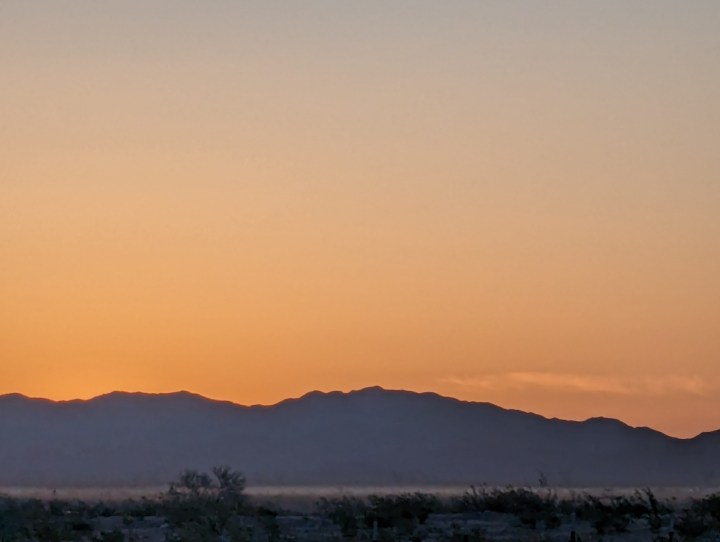
Weather should but does not always get cooler at this time of year.

After the coolest July in a century, and one of the mildest summers in memory, the recent warm weather at the end of August seemed unseasonable, even though it is actually not unusual for this time of year. Predictions of an Indian summer for this year were made shortly after predictions for this past El Nino winter materialized. The ash blasted into the atmosphere by a volcano in Iceland may have changed all that. No one really knows. The weather continues to change like the weather.

For right now though, the damage caused by the sudden warmth is becoming evident. Fortunately, most of the damage is harmless and should be gone by winter. Some is a bit unsightly. The desiccation of small or potted plants may unfortunately be as serious as it looks. The most severely damaged plants may not recover.

The yellowing inner foliage that eventually turns reddish brown in redwood trees is actually a normal response to foliar desiccation that results from warm or dry weather. As long as the outer foliage remains healthy, this discoloration is harmless. Inner foliage that is more expendable is merely being shed to conserve moisture for the more important outer foliage. This shedding foliage will deteriorate and get cleaned out by wind and rain in autumn.

This older foliage typically sheds naturally throughout summer. However, because the summer was so mild, much of the foliage that should have been shed was not shed. As the weather only recently but suddenly became warm, all the foliage that should have been shed earlier became discolored and began to shed at the same time, which is why it is now so much more noticeable.

A few other trees are also shedding some of their foliage. Trees in areas that are not landscaped or watered may drop dried leaves in even slight breezes. Leaves of deciduous trees that would be colorful and pliable if they fell on schedule in autumn are instead crispy and brown. Maple, oak, ash, sycamore (including plane), willow, poplar, eucalyptus and madrone are among the most affected. Fortunately, this is a harmless response to the warm weather after such a mild summer.

Some Japanese maples are damaged more significantly, but should recover. Because they are naturally understory trees (which prefer to grow in the partial shade and ambient humidity of larger trees), they are not well adapted to warm and dry weather, particularly if it becomes warm as suddenly as it recently did. Some got roasted so quickly that the foliage stays attached to the stems as it shrivels and dries. Foliage that is still partially viable (and hopefully functional) should fall in autumn and winter. Foliage that is necrotic (dead) may linger until it is forced to fall by new foliage that emerges next spring.

Potted plants that were desiccated by the heat may not be so fortunate. Even though they can be unsightly, roasted plants that may be rooted into the ground through their drainage holes should not be moved right away, since the roots that are in the ground are the least damaged and the best hope for recovery. Similarly, roasted plants that hang over the edges of their pots should not be pruned back too severely until later, since exposing the pots to more sunlight will cause more heat to be absorbed if the weather gets warm again.

The Hedge on the Ledge

Perhaps no one will notice.

I can explain. Firstly, I should mention that this is an industrial building at work, not a home garden; so no one else cares what it looks like. Secondly, although this building is outfitted with an abundance of external electrical lighting, it lacks external electrical outlets. Thirdly, I brought a ‘Double Mahoi’ banana tree back from the Los Angeles region less than a month ago, so divided its pups at the most inconvenient time, as autumn weather was getting cooler. Fourthly, I should stop numbering all these individual statements, and get on with a simple explanation of this visually unappealing contraption.

The banana tree went to its permanent home already, where it can hibernate through winter. However, its pups languished and immediately began to deteriorate here. Because they will not grow much until warmer weather after winter, their rudimentary corms can rot faster than they can recover from their division. Therefore, I purchased an electrical heating mat to warm their media from below, and accelerate root and corm growth. It was not a pleasant purchase, since I object to reliance on such technology, but that is another topic for later.

I did not want to extend an extension cord too extensively from a window to the nursery benches on the deck to the lower right in the illustration above. I thought that this shelf would be less obtrusive. Perhaps I should have thought a bit more about it. I successfully extended and obscured an extension cord for the fountain on the mountain, but again, that is another topic for later.

Now that it is installed directly outside the window, without the need for an extension cord, the shelf fits the heating pad reasonably well, and suspends eight #1 cans with three 4″ pots nestled in between.

By the time this explanation posts at midnight next Sunday morning, the largest of the four ‘Double Mahoi’ banana pups, which incidentally is already in the process of generating another rudimentary pup, might be exhibiting a slight bit of accelerated growth. The two smallest of these four pups were cut back to their corms, and the third will likely get cut back also, so will take a bit longer to exhibit growth. All four are arranged in the front row at the bottom of the illustration below.

The three 4″ pots that are nestled in between the #1 cans contain tissue cultured plugs of ‘Gran(d) Nain’, ‘Cavendish’ and ‘Orinoco’ banana. With all seven pups and plugs of banana neatly arranged on the heating mat, remaining space accommodated a few cuttings that should also benefit from the warmth of the heating mat.

The four #1 cans in the rear row at the top of the illustration below contain cuttings of passion flower vine and cup of gold vine. The passion flower vine to the right of center is unidentified, but ‘Constance Elliot’ is to the left of center, with a single cutting of ‘Frederick’. Almost predictably again, that is another topic for later. Nine cuttings of unvariegated cup of gold vine to the far right are shabby because they were superficially damaged by minor frost earlier. Six cuttings of variegated cup of gold vine are to the far left.

Although shabby, they do not look so silly from inside.

Dog Days Of Summer Warmth

Every lawn has its dog days.

Summer began more than a week ago. Subsequently, the dog days of summer continue from the third of July to the eleventh of August. These forty dog days are the twenty days prior to and after the twenty-third of July. That is when the Sun aligns with Sirius, the Dog Star of the constellation of Canis Major, or ‘the Great Dog’. Dogs are actually uninvolved.

Nonetheless, dog days actually are a time for dogs to languish through much of the most unpleasantly warm weather of summer. Although local climates are generally mild, warm weather is not rare. It merely seems to be less oppressive than in other climates because of less humidity, and perhaps more of a breeze. Coastal influence is a major advantage.

Dogs drink more water during the dog days of summer because they lose moisture, with warmth, while panting. Vegetation also needs more than typical quantities of moisture to compensate for increasing evaporation from foliar surfaces. Aridity and any wind, both of which render warmth more comfortable for dogs and people, increase such evaporation.

Also, for most exotic (nonnative) vegetation, regular watering helps to sustain growth that warmth stimulates. Lily of the Nile can likely get enough moisture through the local rainy season to survive through the dry season. However, it is healthier and more appealing if occasionally watered to sustain its most vigorous growth during the dog days of summer.

Many plants are native to climates that supply rain in conjunction with warmth. They rely on moisture for normal growth. Various bananas, canna, angel’s trumpet and giant bird of Paradise grow very vigorously with sufficient moisture. Unfortunately though, insufficient moisture is very distressing to them. Drought tolerant species have a distinct advantage.

Turf, bedding plants and vegetable gardens need abundant water during the dog days of summer. Although some can survive with less than others, none are exempt. Most potted plants, especially those in hanging pots, are likewise dependent on systematic watering. Even if the weather is too warm to enjoy other gardening, watering can not be neglected.

Humidity And Wind Affect Heat

Heat is more than mere temperature.

Gardening is not so much fun when the weather gets as warm as it has been recently. It is more comfortable to stay inside with air conditioning, or at least where it is shadier. The plants out in the garden are on their own. Except only for those that are potted, they do not have the option of coming in out of the heat.

Most plants actually do not mind the sort of heat that is uncomfortable for us. Some actually enjoy it. The problem is that heat often occurs in conjunction with other weather conditions that can collectively become really unpleasant for plants.

Minimal humidity makes otherwise unpleasantly warm weather more comfortable for us, but can desiccate foliage that prefers more humidity. Japanese aralia, fuchsia, rhododendron, split-leaf philodendron and many other plants that should not mind warmth can get roasted if warm weather is also too dry. Because sunlight enhances the process, exposed foliage is much more susceptible to damage. To make matters worse, sunlight is more penetrating through clear dry air.

Wind that makes us feel a bit cooler in warm temperatures can likewise cause desiccation as it draws more moisture from foliage. Finely textured plants like Japanese maple, many ferns and some grasses, are particularly susceptible. Offshore wind, like the famous Santa Anna Winds of Southern California, are the worst, because they come in both hot and dry from more arid inland areas, combining all three factors of minimal humidity, heat and wind.

Many of the plants that are susceptible to damage from heat happen to be tropical or subtropical plants that typically enjoy heat as long as the air is humid and still. Others are ‘understory’ plants that naturally live in the shelter of higher trees, so do not like direct sun exposure or wind. Yet, even substantial trees, like fern pine (Podocarpus spp.) and even redwood, can get a bit roasted if the weather gets hot, dry and windy enough.

Conservation of water makes warm weather even more uncomfortable for sensitive plants. They really want more water to keep their foliage and stems well hydrated. Hosing ferns and grasses when things get really hot helps to cool the foliage, and briefly increase the ambient humidity. Because thin young bark is more susceptible to sun-scald in hot weather, pruning that would expose more bark should be delayed until the weather turns cool again.

Humidity Is The Other Weather

Some delicate foliage prefers more humidity.

It is difficult to always ignore the weather. Regardless of how pleasant it typically is here, it sometimes gets warm or cool. It occasionally gets hot or cold. Rain is wet and perhaps messy. A breeze is comforting while the weather is warm. Strong wind can be damaging. However, humidity is one major component of local weather that gets little consideration. 

Humidity gets more consideration in climates that are either uncomfortably humid or arid. Some parts of Florida get famously humid and hot simultaneously during summer. Some flora and insects enjoy such weather. Unfortunately for the rest of us, humidity enhances the already unpleasant heat. Locally, hot or warm weather is rarely bothersomely humid.

Similarly, local weather is rarely unpleasantly arid (lacking humidity). This is a chaparral climate, which is ‘semiarid’. Relatively minimal humidity makes heat a bit more tolerable than it would be with more humidity. Yet, humidity is generally sufficient to sustain foliage that would desiccate in a more arid desert situation. Actually, this is an excellent climate.

Although, it is not perfect. Flora and fauna have different standards for exemplary climate and weather. The relatively minimal humidity that makes uncomfortably warm weather a bit more tolerable for people and animals is much less appealing to some plants. Except for those that are native to desert or chaparral climates, most plants prefer more humidity.  

Many popular plants are understory plants, that naturally live in the partial shade of taller vegetation. With shelter from desiccating arid wind and harsh sunlight (to enhance heat), most do not mind heat. Otherwise, foliage might roast. Those with finely textured foliage, such as astilbe, ferns, grasses and some Japanese maples, are particularly susceptible.

Some tropical and subtropical plants, such as split leaf philodendron and fuchsia, prefer to be understory plants here, even if they would prefer more exposure within their natural ecosystems. The shelter provided by more resilient vegetation compensates for deficient humidity. Furthermore, adequate irrigation promotes healthy hydration of delicate foliage. 

Summer Turns Up The Heat

90626thumbDoes the heat seem to have come on suddenly this year? There was all that rain through winter, then a quick but delightful spring, and now it is suddenly over a hundred degrees in some places! What happened?! There is certainly nothing abnormal about such warmth in the middle of June. It just comes as a surprise when it arrives so suddenly after such pleasantly mild spring weather.

At least warm weather here is not as dreadful as it is in other climates. It cools down a bit overnight. Humidity is typically (although not always) low. There is typically at least a bit of breeze by late afternoon, just after the worst of the warmth. We need not contend with the sort of dankly humid heat, that lasts all day and into the night without even a slight breeze, that so much of America gets.

Of course, that is no consolation now. By our standards, it is hot. Gardening is no fun, and some of it gets neglected. We become more aware of where shade trees should have been planted. We might also notice wilted or pallid plants that are not getting enough water. Pruning that was delayed while new spring growth matured may need to be delayed a bit longer, until the weather cools.

Unfortunately, the minimal humidity and occasional breezes that make the weather more comfortable for us make it more uncomfortable for the plants in the garden. Plants can realistically tolerate more heat than we can, but prefer it to be in conjunction with humidity. Otherwise, they can lose too much moisture to evapotransipiration (evaporation from foliar surfaces), and wilt or desiccate.

Automated irrigation obviously needs to be adjusted accordingly. Potted plants need more of an increase than those in the ground. Those that are overgrown, in hanging pots, or exposed to the typical evening breezes will be the most consumptive. It is not always easy to know how much they need, but one can be certain that if they are wilting, they need more than they have been getting.

Pots exposed to sunlight can get uncomfortably warm. If cascading or bushy growth does not shade the south sides, smaller potted plants can.

Six on Saturday: New Landscape


Yes, we have another new landscape. It is not much bigger than the last one, and is not very far away. In fact, although it is associated with two different buildings, it is located adjacent to the opposite corner of the same building that the last landscape was constructed for. https://tonytomeo.wordpress.com/2018/04/07/six-on-saturday-rock-concert/

These six pictures were taken prior to the installation of wood chip mulch, so ground cloth is visible below. It was quite dry and dusty at the time. All of these six plants were newly installed after being procured from nurseries, so none were relocated from other landscapes, or from our storage nursery. They were blooming nicely when installed, but are actually not blooming so nicely now, and some were damaged by the sudden warmth immediately after installation. They would have been fine if only the warmth did not arrive so suddenly, or if it had arrived a few days later. Well, we can not control the weather.

Large stones and bare soil prior to the installation of the landscape were shown in this previous Six on Saturday post, https://tonytomeo.wordpress.com/2018/06/16/six-on-saturday-rock-on/

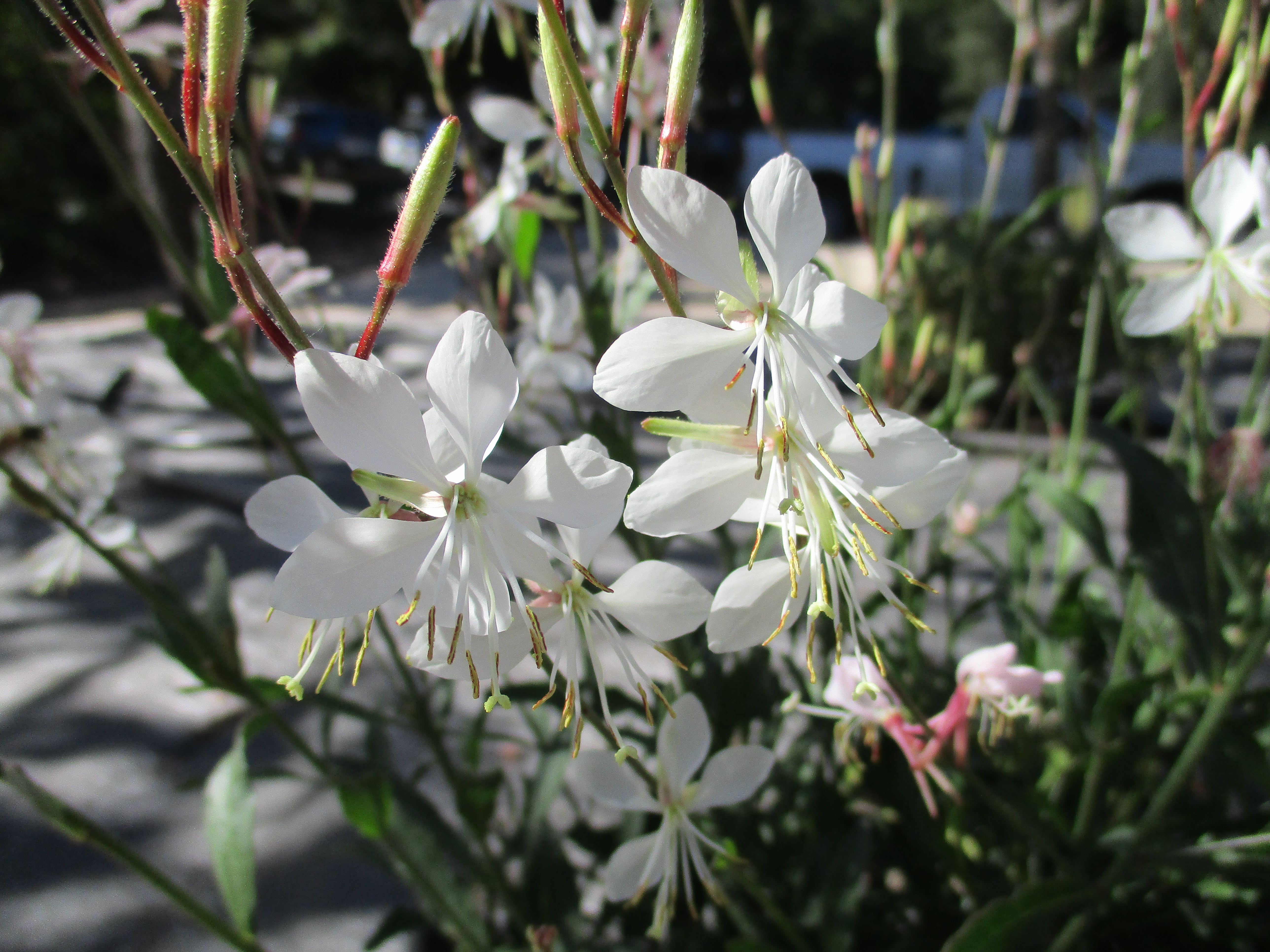
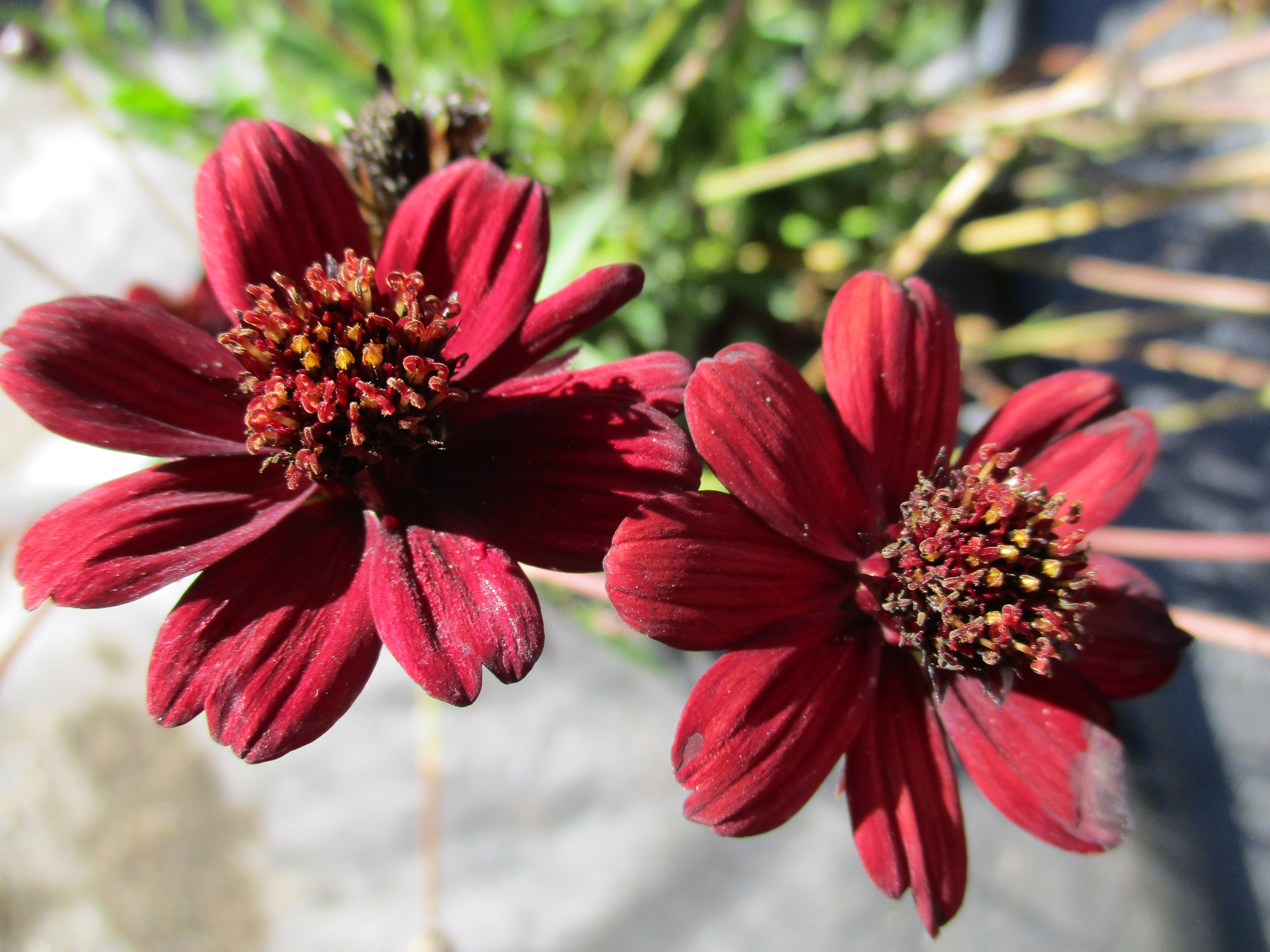
1. fernleaf yarrow, Achillea filipendulina, Most of these are white. A few are rusty red. A few are yellow like this one, which might be ‘Moonshine’. These did not show symptoms of heat stress right away, but have since gotten rather crispy. I could not find a picture like this one now. Fernleaf yarrow has been popular here for as long as I can remember because it supposedly does not need much water, although most get watered regularly.P805212. Russian sage, Perovskia atriplicifolia, That sounds like ‘piroshki’. These and the rockrose #4 were 5 gallon plants, so are somewhat bigger than most other plants in the new landscape. They were not bothered by the change of the weather. Their faded denim blue flowers continue to bloom nicely. This is a plant that has been popular for a while, but that I have never grown. I tend to avoid trendy plants. However, my colleagues do not.P80521+3. gaura, Gaura lindheimeri, The common name is ‘white gaura’, but some are pink and some are darker pink that is almost red. I do not know if they are merely cultivars of ‘white’ gaura, or different specie. It seemed appropriate to omit ‘white’ from the name. Besides, that is how I learned it. This one can self sow enough to be an annoyance. Individual plants do not live very long, so a few feral seedlings can be selected to replace them.P80521++4. rockrose, Cistus cretisus, When I learned about rockrose back in the 1980s, we learned only two specie. One was white rockrose. The other was pink rockrose; and the pink rockrose did not look like this one. Now, there are too many to remember. Most do not have species name, but merely cultivar names. I really do not know if this really is Cistus cretisus. It just happens to look like it. I suppose I should have looked at the label.P80521+++5. chocolate coreopsis, Coreopsis ‘Chocolate’, As I implied for #4, nomenclature is not what it used to be. It was standardized to simplify things, but is difficult to keep track of now with all the breeding and hybridizing, and botanists wanting to make a name for themselves by changing a name to something supposedly more accurate. I really do not know the species name of the chocolate coreopsis. It is known merely by the cultivar name.P80521++++6. milkweed, Asclepias tuberosa, This one wilted rather badly in the warmth, but did not get roasted too much. The shriveled flowers in this picture are the worst of the damage. It is blooming more profusely now, and is developing strange seed pods. Milkweed is another trendy plant that caters to the butterfly gardening fad. I am not certain if I like the idea of planting something that is expected to get munched. It sure is colorful for now.P80521+++++This is the link for Six on Saturday, for anyone else who would like to participate:
https://thepropagatorblog.wordpress.com/2017/09/18/six-on-saturday-a-participant-guide/


Krispy Kritter

P80715KThis really is the best climate here. Winters are just cool enough for many plants that require a bit of a chill, but not unpleasantly cold. Summers are just warm enough for most plants that need warmth, but the weather does not stay too unpleasantly hot for too long. Warm weather here typically lasts no more than a week, and is accompanied by light evening breezes and cooler nights. Minimal humidity typically makes the worst of the heat a bit more tolerable.
While much of North America and parts of Europe were experiencing abnormally and uncomfortably warm weather earlier in summer, our weather somehow stayed relatively mild. For a while, it was significantly warmer in Portland than here. It certainly was nothing to complain about. Vegetable plants that crave warmth were not too inhibited by the mild weather. Flowers that typically deteriorate in warm and arid summer weather lasted a bit longer than expected.
Then the weather changed. It did not get too unseasonable warm. In fact, the weather merely did what is typical for this time of year. The problem was that it happened so suddenly. The weather went from pleasantly mild and somewhat humid, to more seasonably warm and arid overnight. Flowers faded and warm season annuals wanted for more water.
The worst of it was that exposed foliage of some plants got roasted. English laurel and rhododendron were particularly susceptible Because we had no way of anticipating the sudden change of weather, we had just shorn a large hedge of English laurel, just in time for the warm weather to cook the freshly exposed inner foliage.
At about the same time, new plants were being installed into a small newly landscaped area. The transition from the cool and comfortable nursery on the coast to the warm and arid landscape where they were surrounded by black groundcloth (prior to the installation of chips) was too much of a shock for some of them. We could not water them enough to prevent some of the foliage from desiccating.
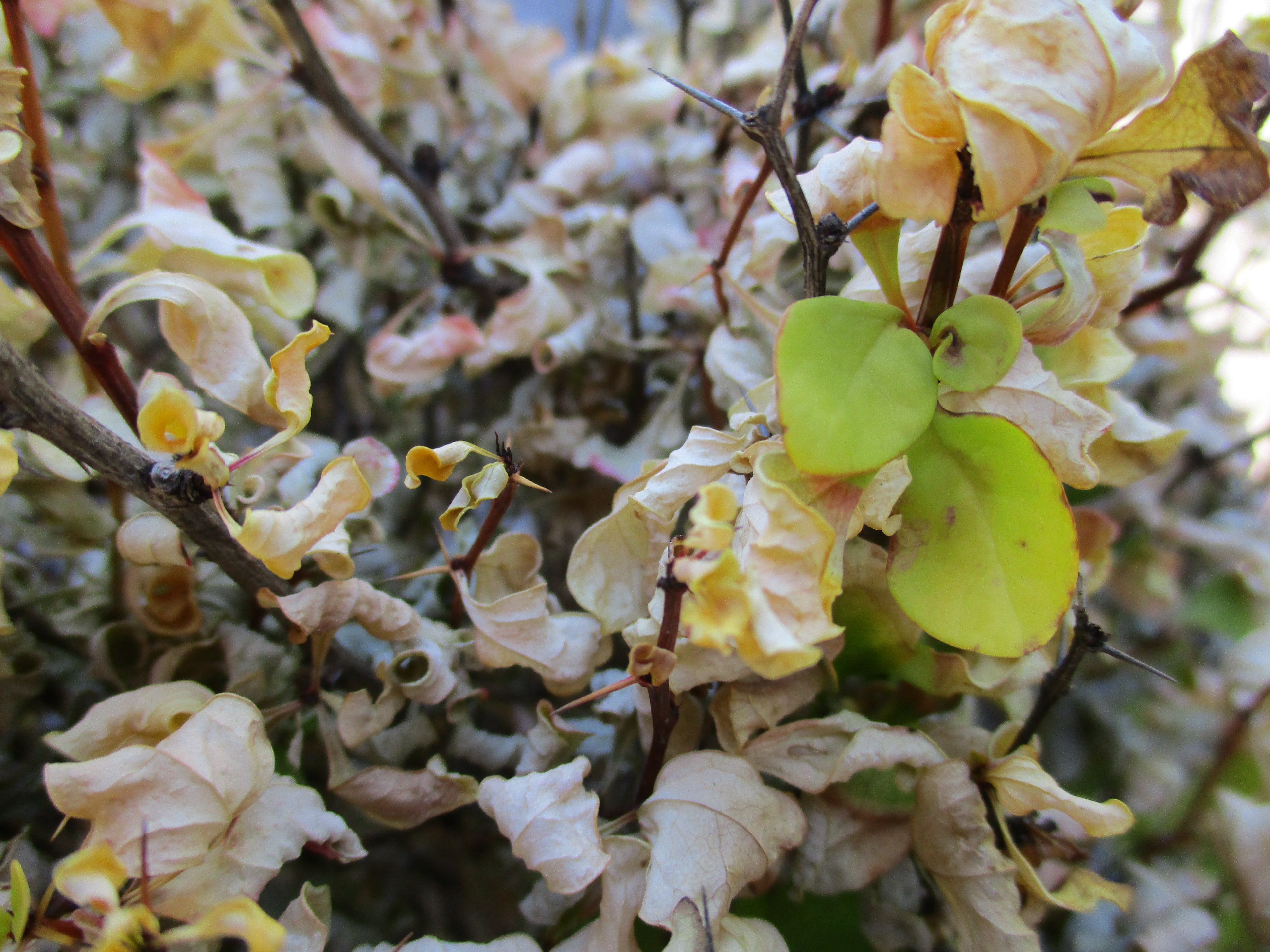
This crispy barberry is fortunately not as dead as it seems to be. Only the outer foliage is roasted. The stems and buds do not seem to be damaged. It will probably foliate again before defoliating in autumn. Even if it induces premature dormancy, it should recover as next winter ends.
Nonetheless, such damage on new plants is disconcerting.


Things Heat Up In Summer

70705thumbThis does not seem like such a mild climate when it is difficult to distinguish between the time and the temperature on a local bank clock tower. You know; when punctuation is the only difference between four minutes past one, and one hundred four degrees. Fortunately, like mild frost in winter, hot weather does not happen too often, which is why this climate really is milder than most.

Most of us know what to do for the garden when the weather gets warmer. Obviously, many plants want more water. What we do not often consider is that there a few things that we should ‘not’ do. Unlike us, the plants in the garden can not find shade when the weather gets warm. Those that are exposed find creative ways to provide their own shade. We really do not want to mess with that.

By this time of year, outer foliage of exposed plants is mature enough to tolerate heat. Only foliage of plants that prefer to be partly shaded is likely to be damaged. However, inner foliage of even the toughest plants is not as resilient as outer foliage is. Simply shearing a hedge exposes inner foliage that can be scorched by overexposure. Sunlight enhances the effects of heat and aridity.

If possible, it is best to delay such pruning and shearing until after unusually hot weather. No one wants to be out working in the garden on a hot day anyway. More typical seasonable weather may not seem to be much cooler, but a few degrees can be a big difference to plants. Once exposed, inner foliage should adapt, and hopefully be resilient to heat before the weather gets hot again.

While young and thin, formerly shaded bark that suddenly becomes exposed can be damaged by sun scald. (Deciduous trees do not get scalded while defoliated in winter because the intensity of sunlight is diminished at that time of year.) Sun scald of bark is much more serious than foliar scorch because it kills bark, leaving open wounds on main limbs and trunks. Decay within these wounds compromises structural integrity, and can ruin otherwise healthy trees.

Although rare, spontaneous limb failure can occur in some trees during warm weather, particularly if humidity increases and breezes remain minimal. It sounds silly, but warmth accelerates vascular activity, possibly until foliage becomes too heavy for the limbs that support it. If limbs break, they can cause major disfigurement, and detrimentally expose bark of inner limbs and trunks.

Plants Are Particular About Exposure

1212121032One of the most important differences between plants and animals is that animals are ‘animated’, and plants are not. Aquatic plants might float about, and might even drift into more favorable situations. Vines and plants with creeping rhizomes can likewise relocate. Otherwise, most plants are confined to the same locations where they grew naturally, or where they were planted. They need to get it right from the beginning.

Most landscape plants that are commonly available in local nurseries are fortunately suited to local climates. A few tropical plants that prefer milder climates, as well as a few plants that prefer cooler winters, can be found; but most plants that prefer other climates are simply unavailable here. Yet, even within their preferred climates, the many diverse plants in our gardens are affected by many other environmental factors.

Exposure is nearly as important as climate is. Some plants need to be completely exposed, while some prefer shelter from heat, cold, wind or sunlight. It all depends on how they live in their natural environments. Some naturally live out in the open. Others live in dense forests, where they need to compete with other plants for sunlight. Even if we do not know where our plants come from, we should know what they require.

Japanese maples are understory trees that naturally grow in the partial shade of larger trees in mixed forests. Some types can do well in full sun exposure, but are likely get roasted by reflected glare, or dry wind. Lace-leaf Japanese maples are more sensitive to exposure, so prefer partial shade in the afternoon, and shelter from wind. However, too much shade compromises foliar color of the red and bronze leafed types.

Most cacti and some types of yucca are just the opposite. They naturally live out in deserts, without any significant competition. In home gardens, they will lean away from shade. Knowing what plants want helps to find the best exposures for them.