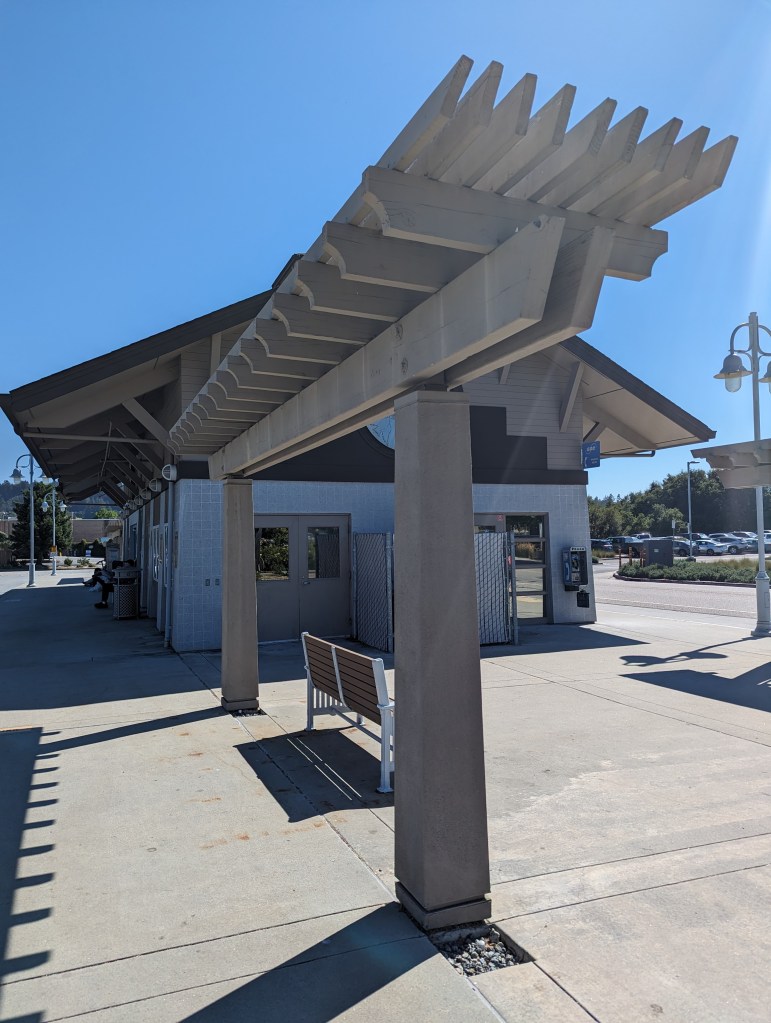
Horridculture – Nice Trellis

Heard but not seen it through the grapevine.

This is such a visually appealing trellis at the Cavallaro Transit Center in Scotts Valley. It is so very visually appealing that no one wanted to obscure its visual appeal with the two vines that it was intended to support. It is very well designed also. Neat holes were left in the concrete pavement for the two vines that were not planted. Capped terminuses of the irrigation system that was intended to provide the absent vines with water are ready for installation of emitters. The otherwise exposed ground was covered neatly with gravel. It is all well executed.

All that is missing is the vines.

Realistically though, who notices? It really is a visually appealing trellis. Vines would be visually appealing also, but would also clutter the landscape more. Besides, they would require more maintenance, and the surrounding landscape already lacks adequate maintenance. The empty trellis actually seems to be an asset to the otherwise bland landscape. I only notice the absence of vines because I am a horticulturist.

I will say that I am not so keen on such structures in other landscapes. Most are overbuilt. Many such as this are within situations that trees would be more practical.

I have encountered several similar structures, but with single pillars, in downtown Livermore. Grapevines climbed them to form inadequately and improperly pruned grape trees to flank the main streets. Honeylocusts that flanked the same streets would have been more than adequate alone. The grapevines were intended to commemorate the formerly vast regional vineyard that were replaced by equally vast tracts of home, but their shabbiness was too insulting.

Landscape designers and architects should realize that vines require significant specialized maintenance. Architects rely on landscape designers to select vines for their trellises. Landscape designers rely on gardeners to maintain their vines.

What a splendid hole in the concrete!

Horridculture – Deadhead (from last Wednesday)

At least the new growth is healthy.

Property management pays landscape service companies to maintain their landscapes for them. It is expensive. It is certainly fiscally adequate to justify the expectation that this sort of damage would not occur within the landscapes that property management pays landscape service companies to maintain. Now that it did occur, it should be remedied as efficiently as possible by the landscape service company that is justifiably expected to both prevent such damage, and remedy such damage if it occurs. This should not be a complicated concept.

Realistically, this is likely not as egregious as it seems to be. Automated irrigation was likely disabled through the rainy season last winter. It might have been enabled a bit too late into the dry season that began last spring. Hey, it happens. The upper stems of the subject succumbed to desiccation, likely as a result of warm and arid weather. Now that the automated irrigation has been restored, the subject is now attempting to recover from the damage by generating healthy and vigorous new growth relatively low within its canopy. Upper necrosis might remain only because the gardeners are prohibited by their insurance to perform any tasks above a particular height, even with a pole pruner instead of a ladder, and the necrosis is simply too high for them to engage. That task must instead, and perhaps more appropriately, be performed by an arborist. However, the arborist who typically maintains the trees at this particular property would need to charge an expensive minimal fee for this relatively minimal task. It would be more feasible to postpone the task until there is a need for more substantial arboricultural work. The arborist could remove necrosis from this subject within a few minutes, and without charging extra, while at the site to maintain many other larger trees.

No More Reblogs

My blogging discontinued quite a while ago. Articles from my gardening column still post in two parts on Mondays and Tuesdays, with the primary topics on Mondays, and the featured species on Tuesdays. Older articles still post in the same format on Thursdays and Fridays. These articles are not actually blog posts though. They are gardening column articles.

Originally, my only blogging had been on Saturdays, Sundays and Wednesdays. ‘Horridculture’ topics posted on Wednesdays. ‘Six on Saturday’ contributions posted on Saturday mornings. Random topics posted at noon on Saturdays and on Sunday mornings. Then, with the exception of ‘Six on Saturday’ contributions, all of these blog posts were recycled from earlier posts, so no longer qualified as actual blogging.

Now, as was inevitable, there are no more blog posts to recycle. Articles from my gardening column will continue to post on Mondays and Tuesdays. Older articles from the same column will continue to post on Thursdays and Fridays. I will likely continue to participate in the ‘Six on Saturday’ tradition on Saturday mornings. Otherwise, except for occasional random posts, regularly scheduled but recycled posts for Saturday afternoons, Sundays and Wednesdays will not continue.

In the future, recycled gardening articles may also be omitted, and new gardening articles may not be divided into two sections. If so, intact articles from my gardening column may post only weekly here. After all, the original purpose of this blog was to be another minor venue for the gardening column, . . . and obviously, pictures of Rhody.

Horridculture – “Help! I’ve fallen and I can’t get up!”

The landscape maintenance industry attracts apathetic idiots. There is no nice way of saying it. Those who have flunked out of everything else and simply do not care can push a mower. I can not imagine how infuriating this must be for gardeners who take their work seriously. It must be more difficult for them to observe than it is for me.

More to the point, the jacaranda tree in the median pictured above fell down and stayed that way long enough for the canopy to try to grow into a normal tree. It likely got run over by a car. No one bothered to try to stand it up and stake it, or more simply remove it, and maybe replace it. It just stayed there, for YEARS. So-called maintenance ‘gardeners’ just mow around it, and weed whack the grass that they can not mow below the horizontal trunk. Arborists might eventually groom the canopy. Apparently, they all find this to be acceptable horticultural procedure.

The Brazilian pepper tree pictured below is almost as weird. It is slightly more tolerable only because it has not been in this position as long. Perhaps SOMEONE or ANYONE will realize how inappropriate its horizontal orientation is for the parking lot that it inhabits, and remove it. It had been falling over slowly, which is why the exposed roots are already weathered. No one bothered to prune it for weight reduction or to improve the clearance on the side that it was falling toward. Otherwise, it might have been able to support itself, even with a bit an irregular but tolerable lean. Now that it is on the ground, some so-called ‘gardener’ pruned it around the parking spaces that it fell between. Seriously! The bumper of the pickup is against a now hedged portion of the canopy of the fallen tree. The branches to the left in the picture were pruned between adjacent parking spaces so that they can actually accommodate parked cars as they were intended to. Seriously, rather than simply cut the tree ‘down’ and remove it, someone devoted that much effort into something as crazily dysfunctional as this. IT WOULD HAVE BEEN MUCH EASIER TO DO THIS PROPERLY!

Horridculture – Reading Palms

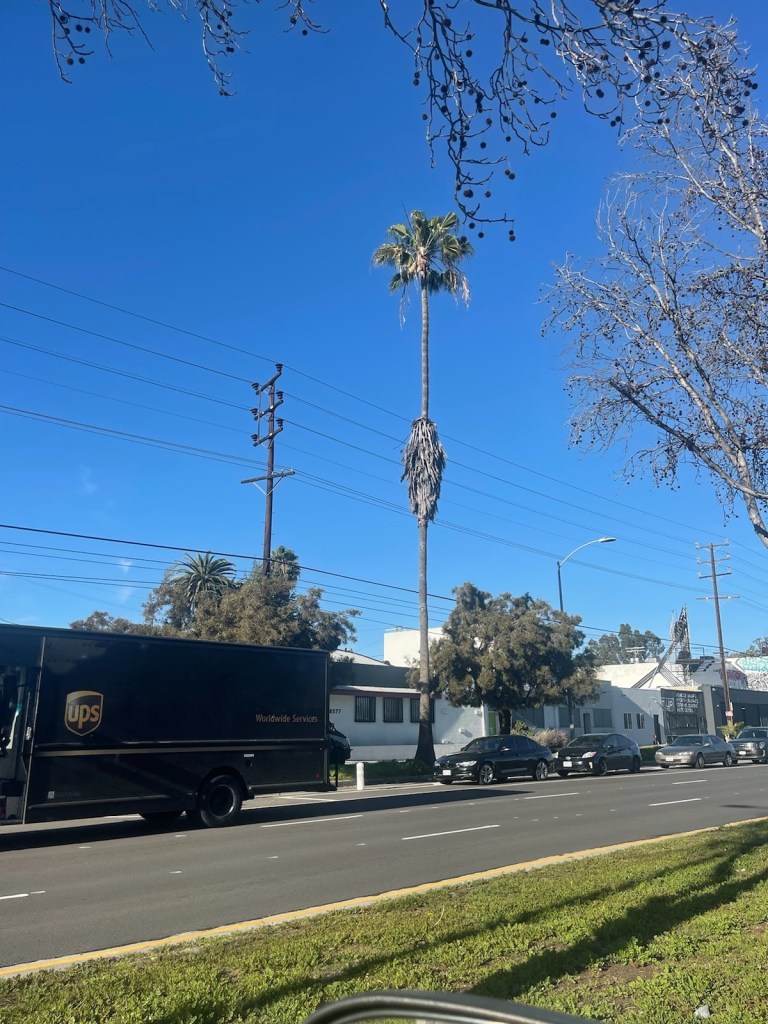
Few arborists read palms like they should. Most simply do not care like those I worked for so many years ago. Some of their butchery is deplorable, and some even kill the palms that they are paid to maintain.

Fortunately, the first example here might be explainable.

It is not uncommon for palms to wear beards of old fronds. Some beards extend all the way to the ground from the viable tops of the associated canopies.

This beard is very different. The canopy is neatly trimmed, without a bead directly below. However, a portion of beard remains on the middle of the trunk. Why would an arborist leave such an impassable obstacle between the ground and the canopy that will likely need grooming again?

I suspect that the tree had been neatly groomed until it got dangerously close to the high voltage cables. Arborists who are not certified for ‘line clearance’ are not allowed to work so close to cables, so were unable to groom the trunk any higher.

However, with boom lifts to avoid climbing, arborists who are certified for such clearance pruning removed the portion of the beard above so that dead fronds do not fall onto the high voltage cables. Such arborists who perform minimal utility clearance pruning are not allowed to do any more than necessary, so can not remove the portion of the beard that is not a threat to the cables, although it is out of reach for other arborists. Therefore, as silly as this looks, this may not be as egregious as it seems to be.

The second example can not be explained so easily. These three Mexican fan palms are very dead. They have been dead for so long that they are now decaying too severely for arborists to climb them safely for removal. Their death was certainly not natural. They were decapitated. Someone climbed to the tops of each of these three palms and cut their single terminal buds off, but left the trunks to die.

Did someone think that they would regenerate new terminal buds or branches like yuccas? If so, why were the trunks left so high? This really defies explanation.

These dead trunks can not be left here. They are so tall that if one falls, it could damage the apartment building across the street, and anything else that happens to be in between. They could kill someone! There are three of them! They are unsafe to climb, so must be removed by crane, which is very expensive.

Horridculture – Bend The Truth

This bender board does nothing that the curb should not do.

The truth of this bender board is that it is not necessary. Seriously, what it is supposed to accomplish there that the curb should not already be doing? That stake wedged between the curb and the bender board to the upper left makes it seem even sillier than it already is. I realize that bender board is designed to bend, but this just draws attention to bad design. Perhaps this is one of those rare situations in which the stake should be on the inside, with the bender board screwed onto it, like might have been the intention for the unattached stake to the lower right. Heck, the curb does almost all of the work of holding the bender board in place anyway.

The dyed chipped wood to the upper right of the bender board seems to rely on the bender board for containment. That would be a realistic application for bender board in a situation that lacks a curb. For this situation, the curb should be adequate. If the soil below the chips is too high, it should have been excavated to a lower level prior to the installation of the chips. As one can see in this picture, such excavation would have been minimal.

Bender board certainly has practical application, such as separating chips like these from turf grass or ground cover. It might contain or provide a neat edge for vigorous ground cover. However, it does nothing that a curb does not already do. In some landscapes it merely adds another component to an innate tripping hazard. It gets dislodged or damaged if vehicles drive over it, or if enough people trip over it.

Unfortunately, for so-called ‘landscape professionals’ it is too easy to install; and such installation is too lucrative. Simplicity is much less lucrative.

Horridculture – Horrid Weather

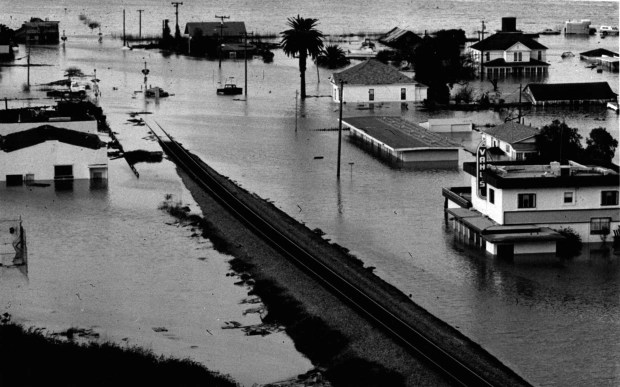
Alviso in 1983

This is no horticultural gripe, as is traditional here on Wednesday. Actually, it is not much of a gripe at all. It is merely a brief description of the unpleasantries of the current situation here.

Rain is predicted to resume prior to two this morning, and continue almost until tomorrow evening. It is expected to be remarkably voluminous. Strong wind that begins about eleven is expected to continue for a bit more than a day, until about two tomorrow. The ground is already saturated from the major storm on New Year’s Eve, and minor rain afterward. Rain may pause only for Friday, but may then resume for the foreseeable forecast.

This weather could be the worst since the winter of 1982 and 1983. If so, the results would be worse now than they were then. So many more people live here and nearby now. Flooding, mudslides and everything that stormy weather causes will affect many more people than ever before.

The area across the road from here is to be completely evacuated in the morning because of expected flooding. It already flooded on New Year’s Day. A parking lot nearby is already full of cars from that neighborhood.

The burn scar from the CZU Fire two years ago has not yet recovered, so is unusually susceptible to erosion and mudslides.

This sort of weather may be no more than what is normal in ‘average’ climates. It is just more than we are accustomed to in the mild climate here. As I schedule this to post at midnight in about a quarter of an hour, the weather is still pleasant, without indication of what is predicted.

I should get some sleep now. The crew and I will likely be very busy in the morning, and exhausted, cold and wet by noon.

Six on Saturday: Oops!


These Six for this Saturday are a minor collection of embarrassing but otherwise useless images that are perhaps too amusing to merely delete. Some had been accumulating for quite a while. The first may not seem like the worst, but is associated with a more embarrassing picture from another ‘Six on Saturday’ of last April. That entire procedure was just too dysfunctional to write about. The fifth picture was actually planned, and should actually work, regardless of how silly it looks here now.

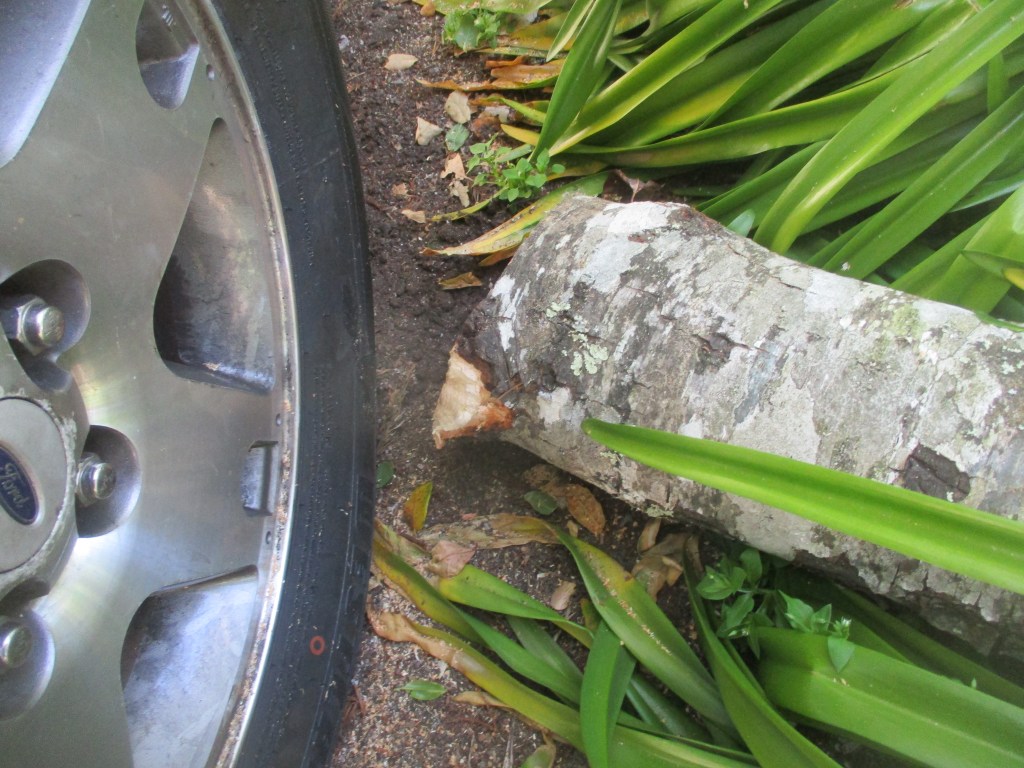
1. Black cherry is so rare here that I met only one in my entire career; and sadly, it needed to be removed. What I did not show at the time was how close this bit got to an adjacent parked car.

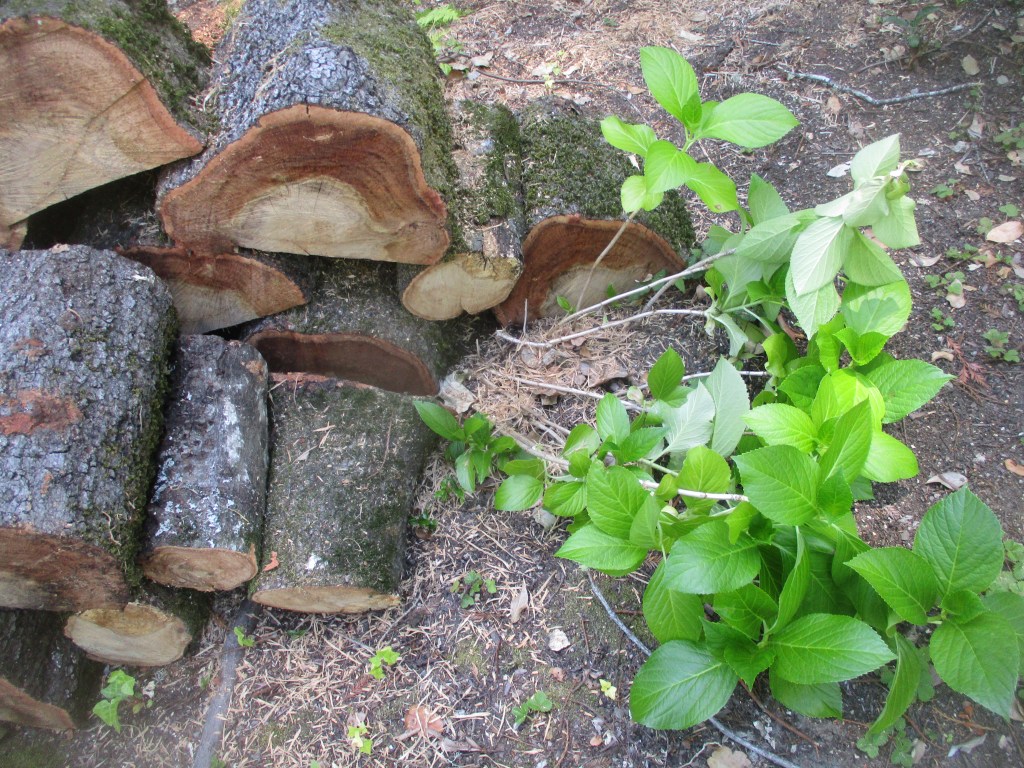
2. Arborists who cut down bigger trees for us are remarkably proficient. However, after removing this canyon live oak without any damage, they piled the firewood onto one of my hydrangeas.

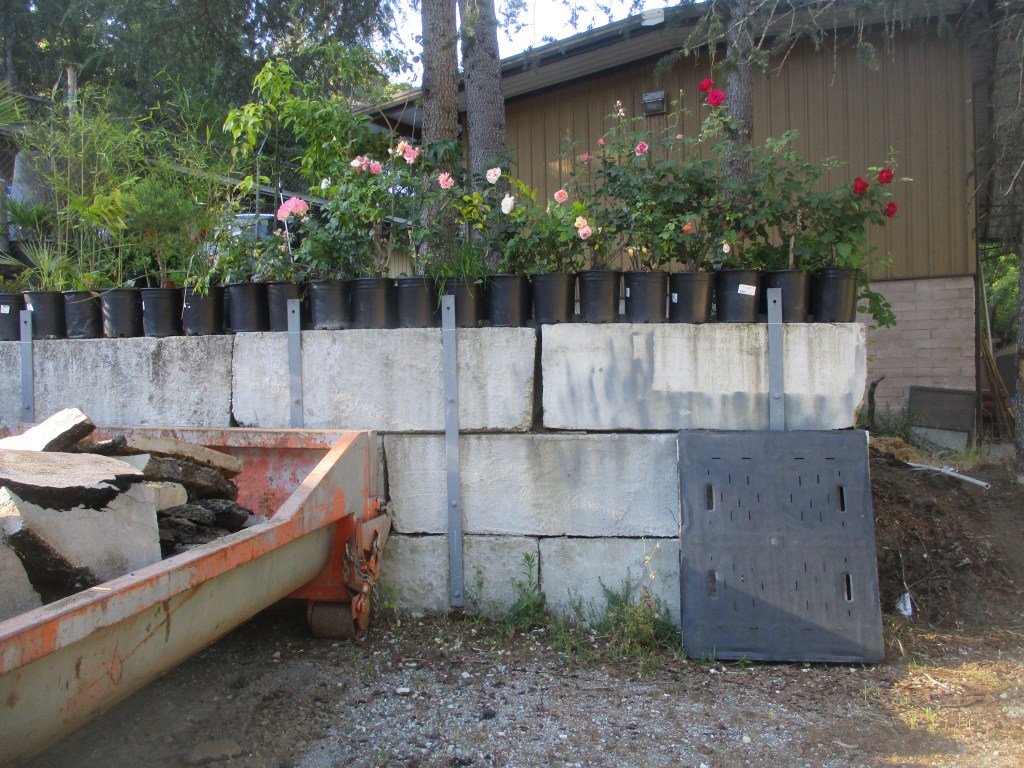
3. It made sense at the time. There are two rows of canned plants on top of this retaining wall. Roses are in the sunnier outer row. Now, they need to be deadheaded; but I can not reach them.

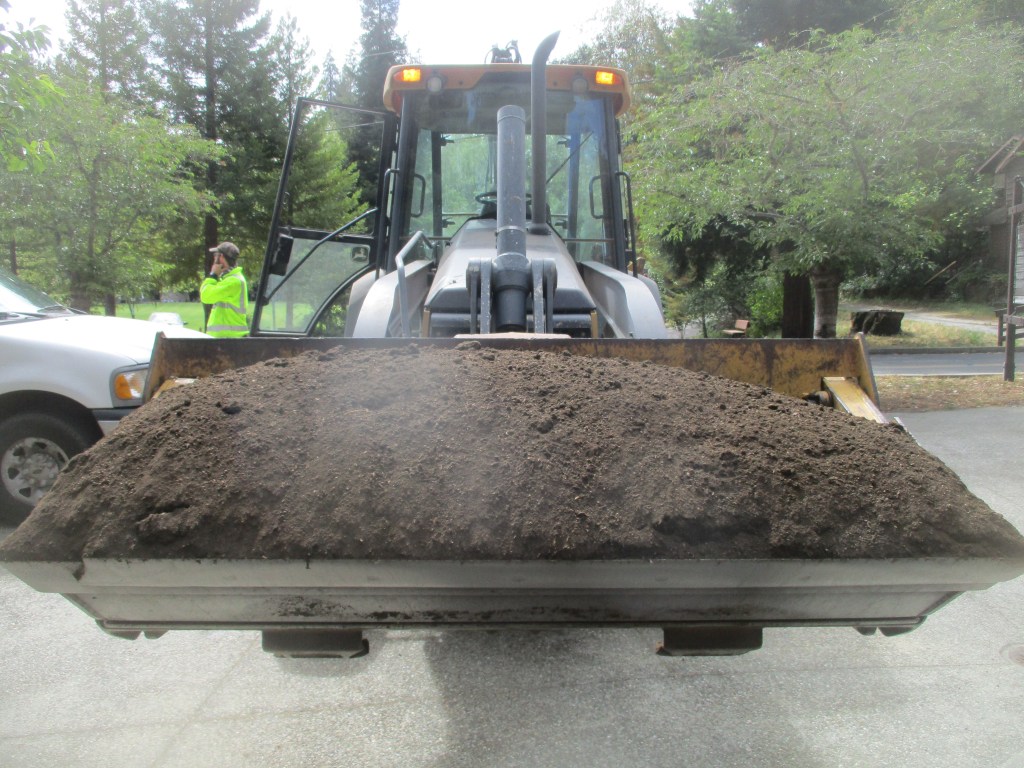
4. Land is famously expensive here. Nonetheless, we get it delivered for free whenever we want it. The quality is good, and on rare occasion, it comes with surprises such as callas or narcissus.

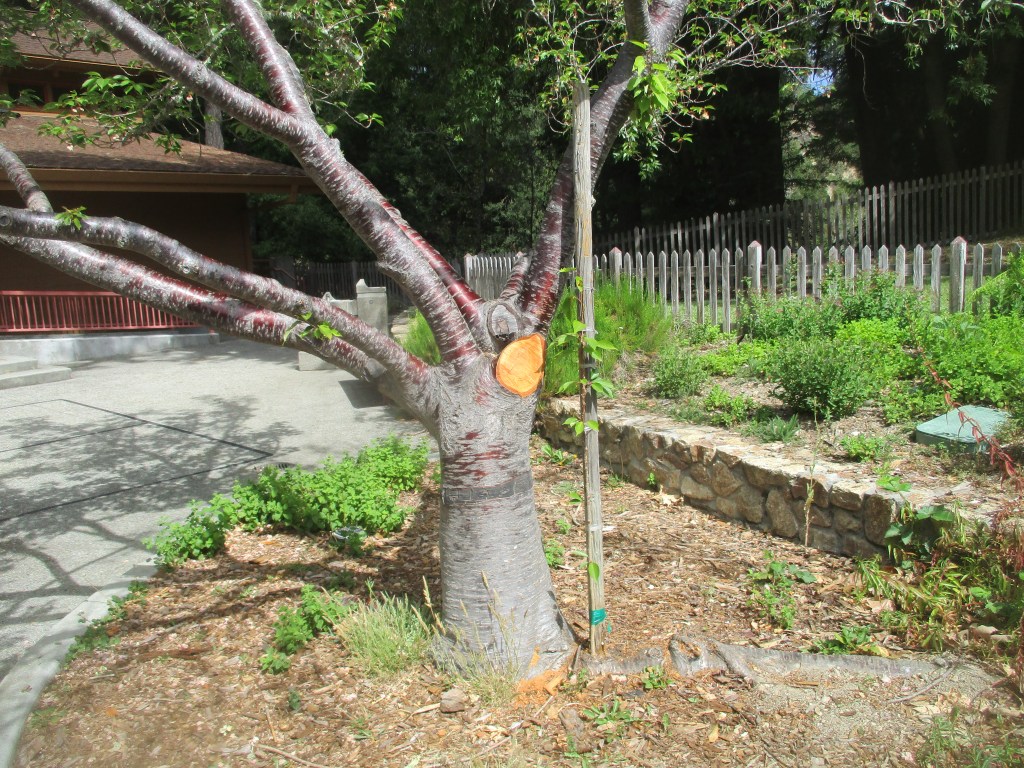
5. This ungrafted flowering cherry tree would not stop suckering. Now that it is succumbing to scald, one of its own suckers is groomed and staked to replace it. This stake is nailed to the tree.

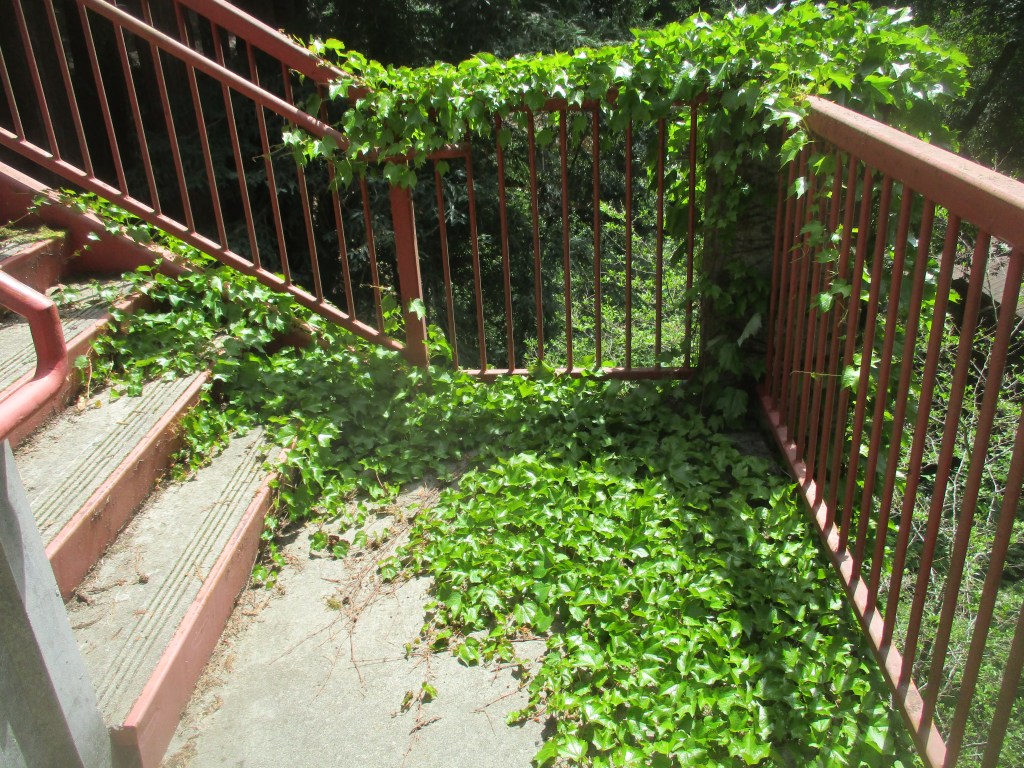
6. While unused during the past year, the buildings at work were neglected more than the landscapes were. No one was here to tell us what this Boston ivy was doing on this exterior stairwell.

This is the link for Six on Saturday, for anyone else who would like to participate:

https://thepropagatorblog.wordpress.com/2017/09/18/six-on-saturday-a-participant-guide/