 Everyone is from somewhere. Not everyone is fortunate enough to be from California. Most of the various plants in our gardens, even if grown locally, are descendants of plants that were collected from all over the world. Most houseplants are from tropical regions. They perform well as houseplants primarily because they tolerate the sort of partial shade that they would get as understory plants in dense tropical forests.
Along with this advantage of tolerance to shade, tropical houseplants come with other disadvantages, such as an intolerance to frost. So, they are able to live inside the home, but are unable to live very long outside where winters are cool. Even areas of Southern California that do not get frosty can get cool enough to make many tropical houseplants uncomfortable. Consequently, they are confined to their homes.
That might seem to be acceptable to those who not think like plants do. Really, do houseplants even want to go outside? Maybe not. However, shelter from frost and cool weather also shelters them from other weather, such as wind and rain. Without wind and rain, any dust that collects on the foliage stays there. Mealybug and scale insects can proliferate and produce sticky honeydew, which also will not rinse away.
This is why some of us like to occasionally put our houseplants in a cool shower to rinse them off. It eliminates much of the dust, and clears out the stomata (respiratory pores). It does not kill mealybug or scale, but sets them back a bit, and rinses off the honeydew. Showering is also a good way to soak and rinse toxins from the soil. Only African violets, gloxinias and a few plants with fuzzy foliage should not be showered.
The only thing that works better than showering is rain. (Remember that wet stuff that starts to fall from the sky this time of year?) Rain is gentler, lasts longer than a shower, and is located outside where the mess of wet houseplants is not so bothersome. The only disadvantages of rain are that it can be cold, and is often accompanied by wind. A slight breeze would help agitate dirty foliage and dislodge dust, but strong gusts can knock houseplants over, and damage large leaves that are not adapted to any wind. Plants should be sheltered from both wind and direct sun exposure that might happen if the plants are not brought in before clouds clear after the rain.
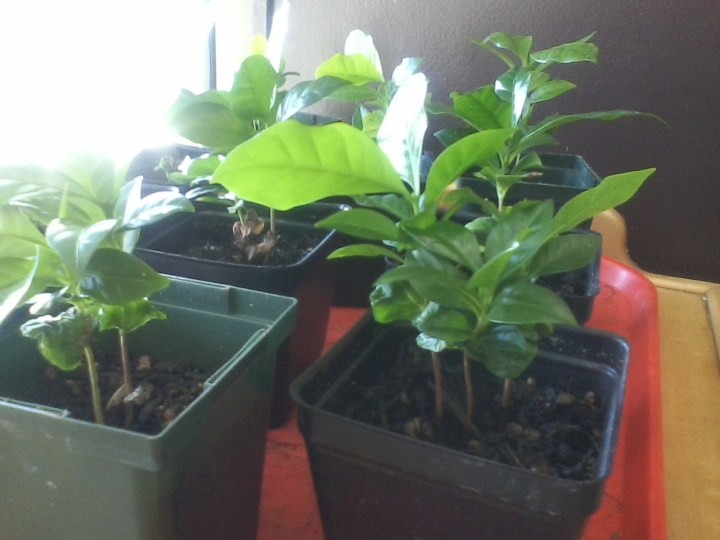 There are certain things that we expect to find in a coffee shoppe. Mainly, we expect to find . . . coffee. Yes, coffee, . . . duh. We can get all sorts of coffee beverages; hot, chilled, steamed, infused with things that have no business going into coffee. They have all sorts of cool sounding but strangely irrelevant Italian names that white people enjoy telling people of Italian descent how to pronounce. Yes, my name is Tony Tomeo; and I don’t want twenty cups of coffee with bread. Well, besides the coffee beverages, there are plenty of coffee beans; all sorts of roasts. I do not know of any coffee shoppe that grows any of the beans that it sells, but there is nice coffee shoppe in Felton, The Mountain Roasting Company, that grows coffee trees.
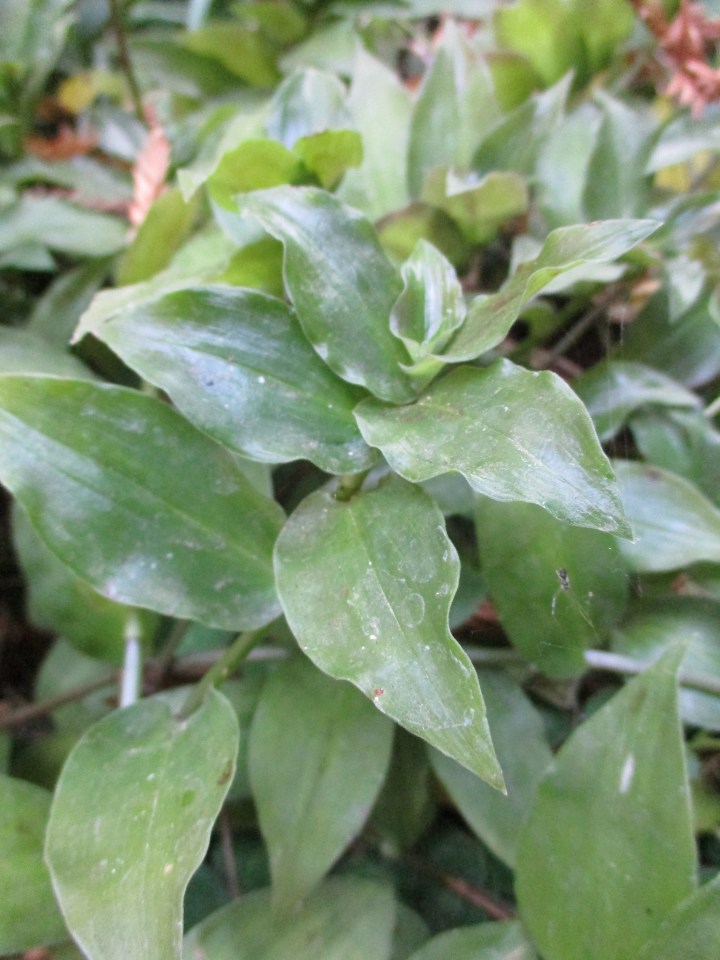 It could not have survived out in the desert for forty years. Wandering Jew, Tradescantia fluminensis, would have desiccated before its first summer. Well watered gardens are a completely different situation. Wandering Jew can become invasive and mix with other more desirable ground covers, only to die back and turn dark brown through winter. It starts over the following spring.
 Philodendrons, dracaenas, ferns, palms or any sort of tropical foliage inside our homes only create an illusion of closeness to nature. Naturally, these plants live in very different climates, mostly thousands of miles away. Not only do they have no business in our homes; they have no business on the North American Continent. Some can live in the garden, but only with unnatural watering.
