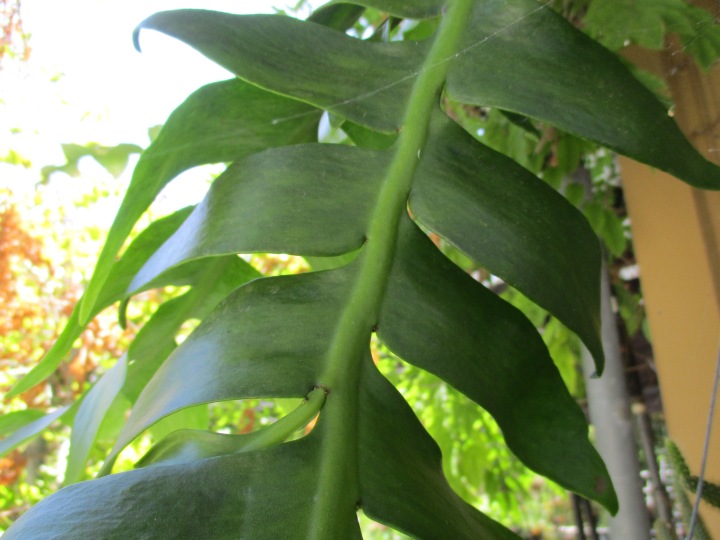
 Plants can inhabit nearly every climate on Earth. They live in hot and dry deserts, cold arctic regions, rainforests and just about everywhere in between. Plants seem to have it all figured out. Some even know how to live in our homes as houseplants, although they probably did not plan it that way. Most houseplants are tropical plants that are naturally endemic to tropical ecosystems.
It is actually their tropical heritage that makes them more comfortable in our homes. Tropical climates tend to be conducive to proliferation of all kinds of plants. Those that want to live there must be competitive. Trees compete by growing faster and taller than other trees. Vines compete by climbing the trees. Understory plants that live under taller plants compete by needing less sunlight.
It is these understory plants that do not mind the shade of our homes. Even those that like bright ambient light might never expect to get direct sun exposure. The various ficus trees that might naturally grow tall enough to reach the top of a forest canopy in the wild are still understory plants while young. Because they know how to use resources efficiently, tropical plants do well in pots.
However, these advantages are not so useful out in the garden. Tolerance to partial shade also means that some tropical understory plants need to be sheltered. If too exposed, foliage can get roasted by sunlight or arid wind. (Most tropical climates are more humid than local climates are.) Complaisant roots do not disperse well enough to sustain lush foliage without regular watering.
Ironically, roots of the various ficus trees are very aggressive because they to not disperse deeply, but instead spread out at the surface of the soil where they grow into exposed root buttresses.
The most familiar weakness of tropical plants is their susceptibility to frost. Even though it does not get very cold here, it gets cool enough in winter to offend plants that would never experience cool weather in the wild. Actual frost can severely damage foliage, and can even kill some tropical plants.
 Pavement serves a purpose in a landscape. So does decking. They are the flooring of the outdoor spaces that are used for outdoor living. Patios and decks are where we barbecue and dine. Walkways and porches are how we get around the exteriors of our homes. Driveways are where we park cars. For what they get used for, they are better than turf grass, ground cover or bare soil.
 The softest and laciest of the asparagus is the asparagus fern, Asparagus setaceus. The extremely small ‘leaves’ (or ‘cladodes’) are less than a quarter of an inch long. The tiny and mostly unnoticed pale white flowers that bloom sporadically in warm weather make it obvious that asparagus fern is not really a fern. (Ferns do not bloom.) If any green berries develop, they are toxic.
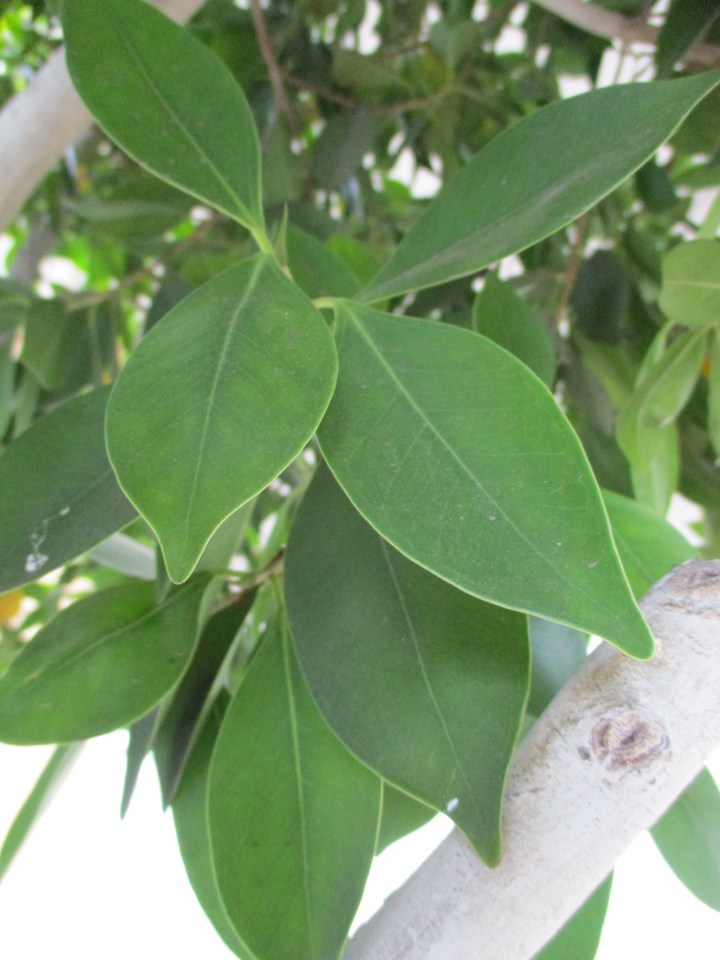 It is hard to believe that such a delightfully robust and luxuriant tree like the Indian laurel,
  Staghorn ferns are epiphytes. They cling to tree trunks, rocks or whatever they happen to grab onto. They can root into decayed wood if it is porous enough, but they are satisfied to just cling to the exterior. They do not need soil. They sort of make their own soil by collecting debris that falls from the canopies of trees above. In the jungles where they live, they get all the water they need from rain. They often live in the crotches of branches because that is where they happen to land. (The epiphyte I wrote about earlier was just a palm that landed in the wrong place, but is not really an epiphyte.
  They were not always houseplants. They came from somewhere else. Most came from shady tropical forests, which is why they have such big dark green leaves, and are so tolerant of shady home interiors. They are pretty good sports about tolerating the domestic lifestyles that we subject them to, but they would really prefer to be thousands of miles away, growing wild back home.
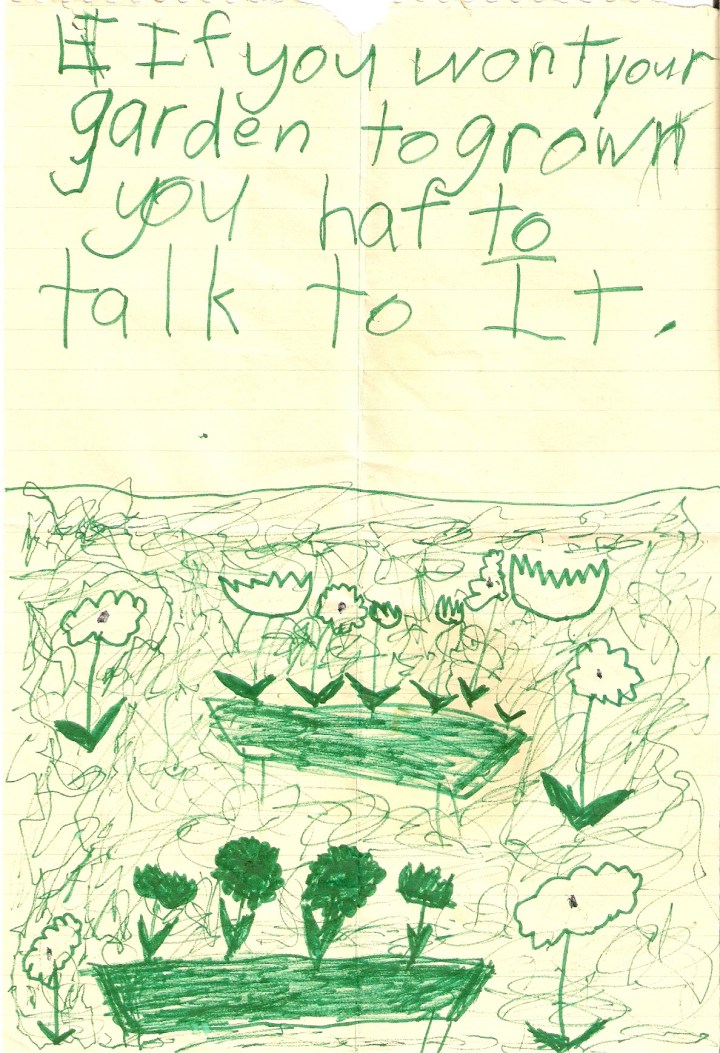 So the spelling is a bit . . . off. Ignore the ‘E’ before ‘If’ and the ‘n’ after ‘grow’. They are crossed out . . . sort of. ‘wont’ means ‘want’. ‘haf’ means ‘have’, as in ‘have to’ or ‘need to’. It made sense at the time, more than four decades ago. Perhaps I should rephrase it.
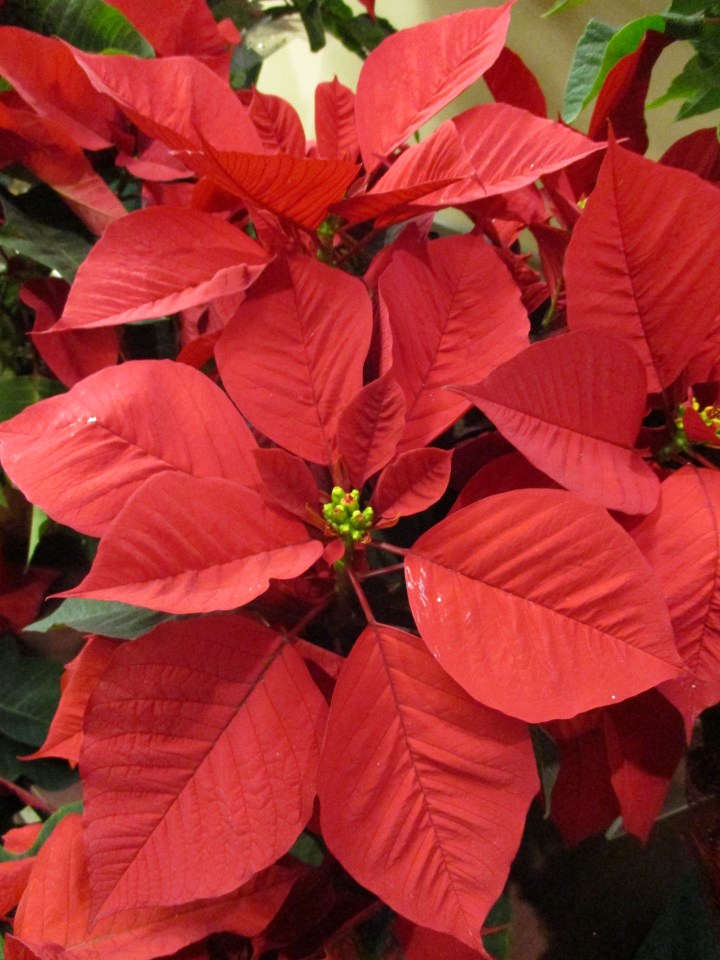 After all the Christmas decorations get put away for next year, and the Christmas tree eventually gets undressed from all its ornaments, and retired to the compost pile or greenwaste, all the pretty seasonal potted plants remain. Some will bloom, or at least maintain their current bloom, for months. Some might eventually get planted out in the garden. Others might stay potted in the home.
 The Latin name is easy to confuse with the sacred flowers of an aquatic perennial from tropical regions of Asia, or a funny looking British sport coupe. Lotus berthelotii is a diminutive terrestrial perennial known as parrot’s beak. It gets only about a foot high, and spreads to only two or three feet wide. It cascades nicely from hanging pots, and is actually rarely planted out in the garden.
 What an unflattering name for such striking tropical foliage! The pointed and strap-shaped evergreen leaves of mother-in-law’s tongue, Sansevieria trifasciata, stand vertically, about two or three feet tall. They are rather rigid, and seem to be plastic with a glossy finish. Almost all modern varieties are variegated with silvery gray, white, cream or yellow stripes or banding. Dwarf varieties stay shorter, with flared foliage.
