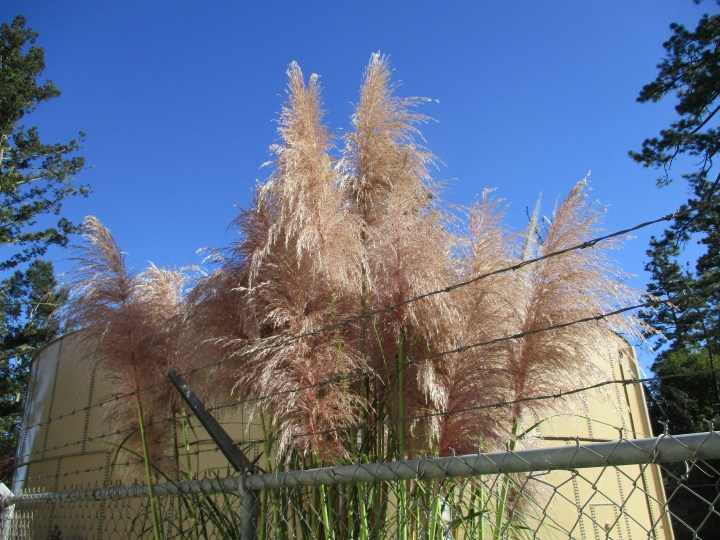
 Just about everything in this picture is icky! This species of pampas grass, Cortaderia jubata, is one of the most aggressive and noxious of the invasive exotic specie that have naturalized here. It seems to be incarcerated behind the weathered cyclone fence with barbed wire on top. The big water tank is is a harshly stark background. The tired old Douglas firs and ponderosa pines to the left and right seem to be unhappy here. The small coast live oak that is at least trying to make a more cheerful appearance is only oppressed by the surroundings. Only the clear blue sky above lacks the ick factor.
What is not visible in the picture is that there is no other flora in the area. Most of the area is covered with a thick layer of gravel to prevent vegetation from getting established close to the water tank. Weeds that manage to grow get cut down regularly. Only the pampas grass survives the ravages of the weed eater. It has been allowed to stay only because it has not yet been perceived to be a problem. It will probably be removed eventually as well. It would have been much easier to remove before it got so big. Now that it is blooming, it is likely to sow seed for more of the same.
Whomever gets the grim task of removing the pampas grass must contend with the nasty ‘razor grass’ foliage. The very sharp and very finely serrated edges of each leaf cause the worst sort of paper cuts! Even if handled very carefully, the long strap leaves have a way of getting everywhere. Someone tugging the base of the foliage with gloves and long sleeves can lose an ear to just one of the many long leaves that whip around so aimlessly.
However, someone who is unfamiliar with the serious nastiness of pampas grass might see this picture very differently. The firs, pines and oaks are not so bad. The water tank is a neutral background to the subject matter. The weathered cyclone fence with barbed wire on top, . . . well, let’s just say, . . . it’s ‘abstract’. Anyway, to someone who does not know better, the fluffy floral plumes of pampas grass that toss so many seed that have the potential to grow into an indefinite supply of the same nastiness are actually quite pretty.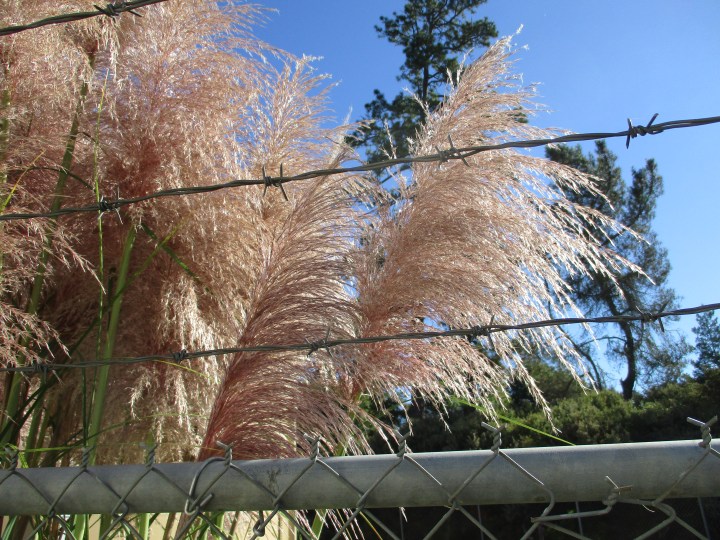
 It is pretty but pervasive. Actually, I do not really find scarlet pimpernel to be all that appealing, but this is how someone who reads my gardening column in the Santa Ynes Valley News describes it. Embarrassingly, she requested that I discuss scarlet pimpernel while it was more of a problem back on June 7, but I only recently read the message. By now, it is already dying back for autumn, and is completely deteriorated in dry and hot exposed areas. It will be back next spring, and will bloom with tiny peachy orange flowers so that it can throw tiny but ridiculously abundant seed by summer before anyone notices. Flowers can be other colors in other regions. The sprawling stems can spread more than a foot wide, and can get up to about ten inches high if sprawling over other weeds. The tiny and soft leaves are arranged in opposing pairs. Scarlet pimpernel may not seem like much of a threat now that it is deteriorating, but new seedlings will be profuse early next spring, and can compete with seedlings of more desirable plants.

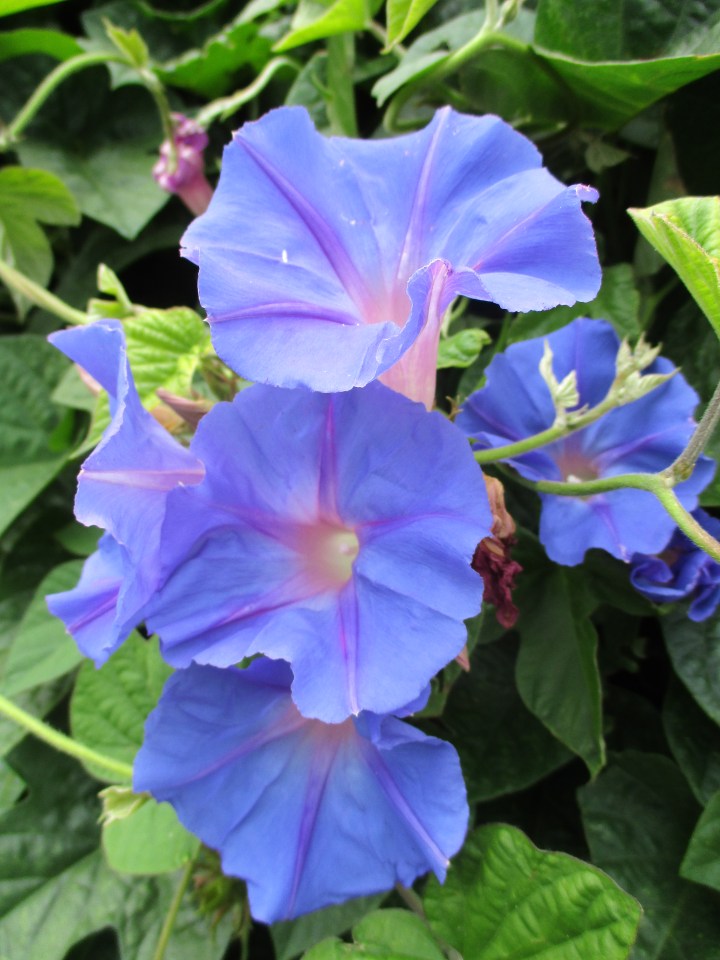 Even within its native range, blue dawn flower, Ipomoea indica, can be a problem. There are not many other plants in some coastal regions of Peru that can avoid getting overwhelmed by the aggressive wiry vines. These vines grow roots where they touch soil, so can spread indefinitely over the ground. Vines that succumb to frost over winter regenerate as if nothing ever happened.
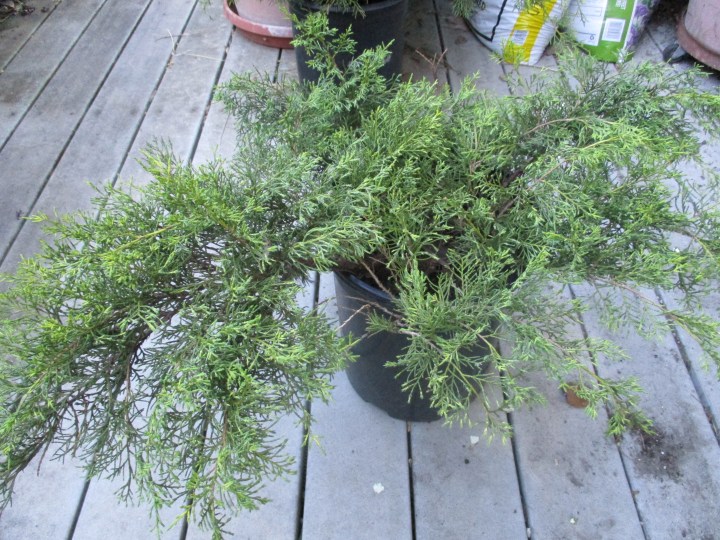 Oh, the stigma of juniper never gets old! No matter how many cool new cultivars get introduced, and how many specie get rediscovered, they are still though of as those nastily prickly ‘tams’ that were too common in the 1950s. Even some of us who really like junipers dislike tams, not only because they share their stigma with all other members of the genus, but also because they really are nasty and prickly, and not as useful as their overuse would suggest. Are they deep ground cover or shallow shrubbery? They might work for a few years, or maybe many years, but they eventually crash into each other or other plants and pile up into a dense thicket that can not be pruned without being deprived of all dignity.
 The popular wisterias that bloom so profusely before their new foliage appears in spring are Chinese wisteria, Wisteria sinensis. Others specie are rare. The impressively longer floral trusses of Japanese wisteria are not as abundant, and bloom late amongst developing foliage. American and Kentucky wisteria are more docile small vines, but their floral trusses are both short and late.
 Weeds always seem to have unfair advantages. While we pamper so many of our desirable plants to get them to grow and perform, weeds proliferate without help. They survive harsh conditions, inferior soil and some of the techniques we try to kill them with. They do not need much, if any water. They broadcast inordinate volumes of seed. They grow fast enough to overwhelm other plants.
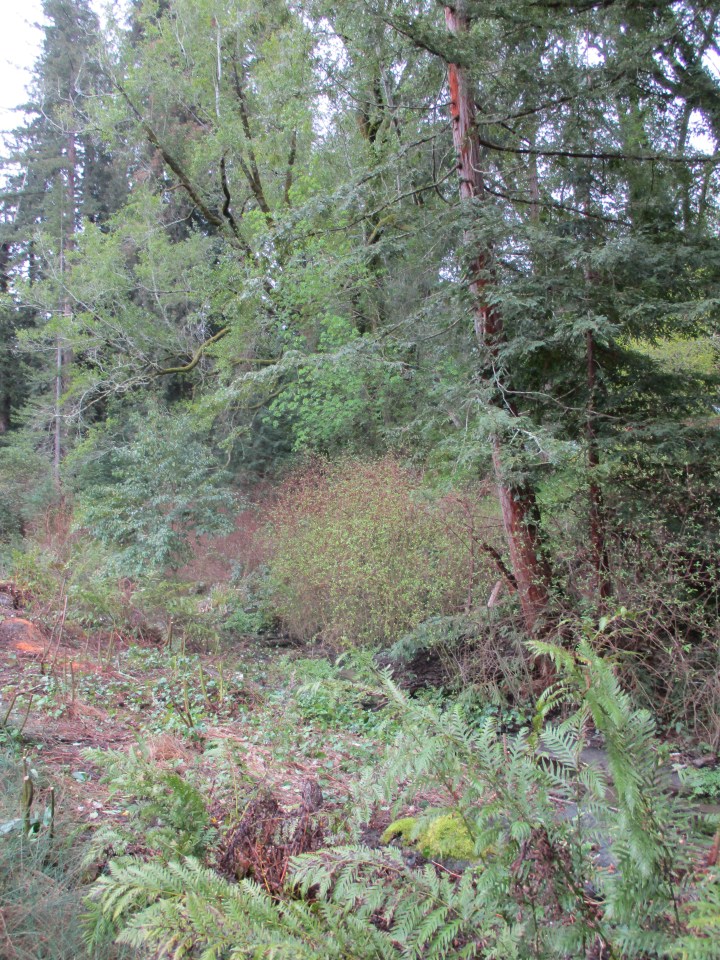


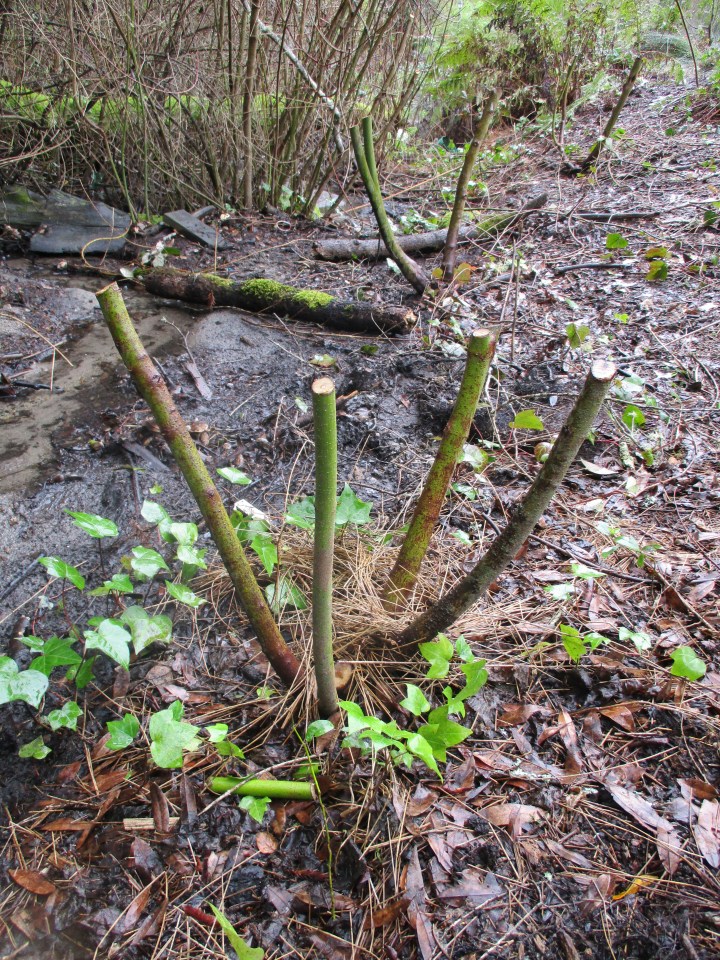
 They are weeds for a reason. They grow like . . . well, weeds! By definition, they are unwanted. Yet, they typically proliferate and grow faster than desirable plants. They aggressively compete for space, sunlight and resources. Many weeds start to grow through winter, and get established while other seedlings are just beginning to germinate, or other plants are just waking from dormancy.


 Tony Tomeo