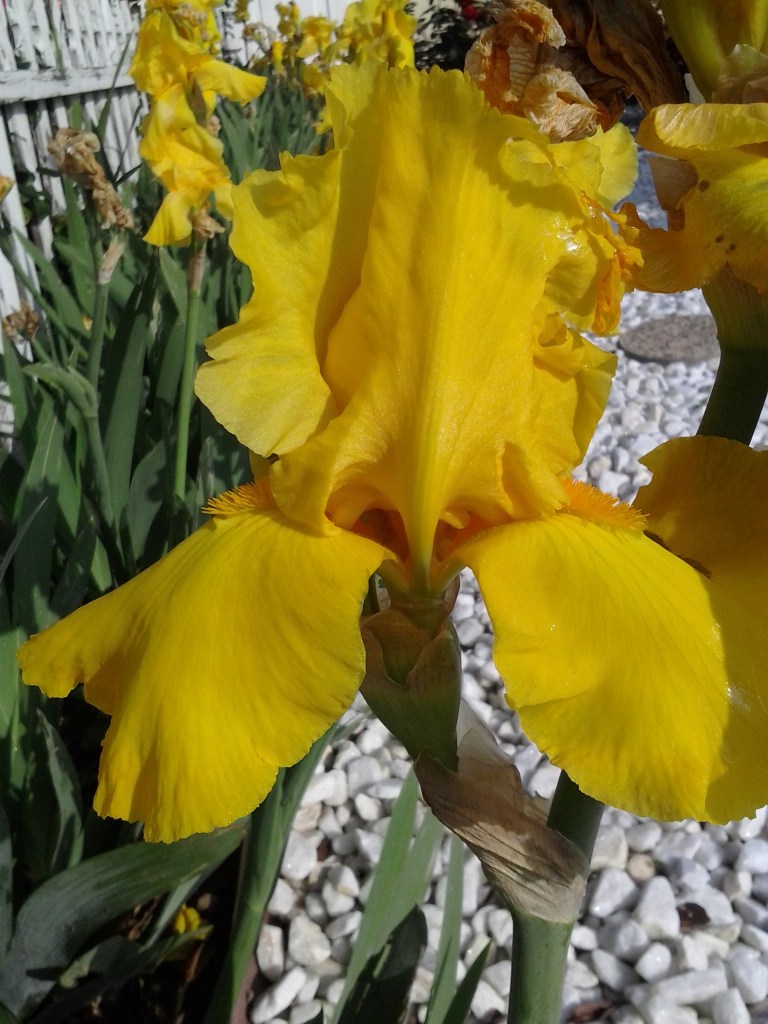
Iris got its name from the Greek word for rainbow, because all the colors are included. There are thousands of varieties of bearded iris alone, to display every color except only true red, true black, and perhaps true green. (However, some are convincingly red, black or green.) Then there are as many as three hundred other specie of iris to provide whatever colors that bearded iris lack.
Bearded iris are still the most popular for home gardening because they are so reliably and impressively colorful, and because they are so easy to grow and propagate by division of their spreading rhizomes. Siberian, Japanese and xiphium iris are less common types that spread slower with similar rhizomes. Japanese iris wants quite a bit of water, and is sometimes grown in garden ponds. The others, like most other rhizomatous iris, do not need much water once established. Dutch iris grows from bulbs that do not multiply, and may not even bloom after the first year.
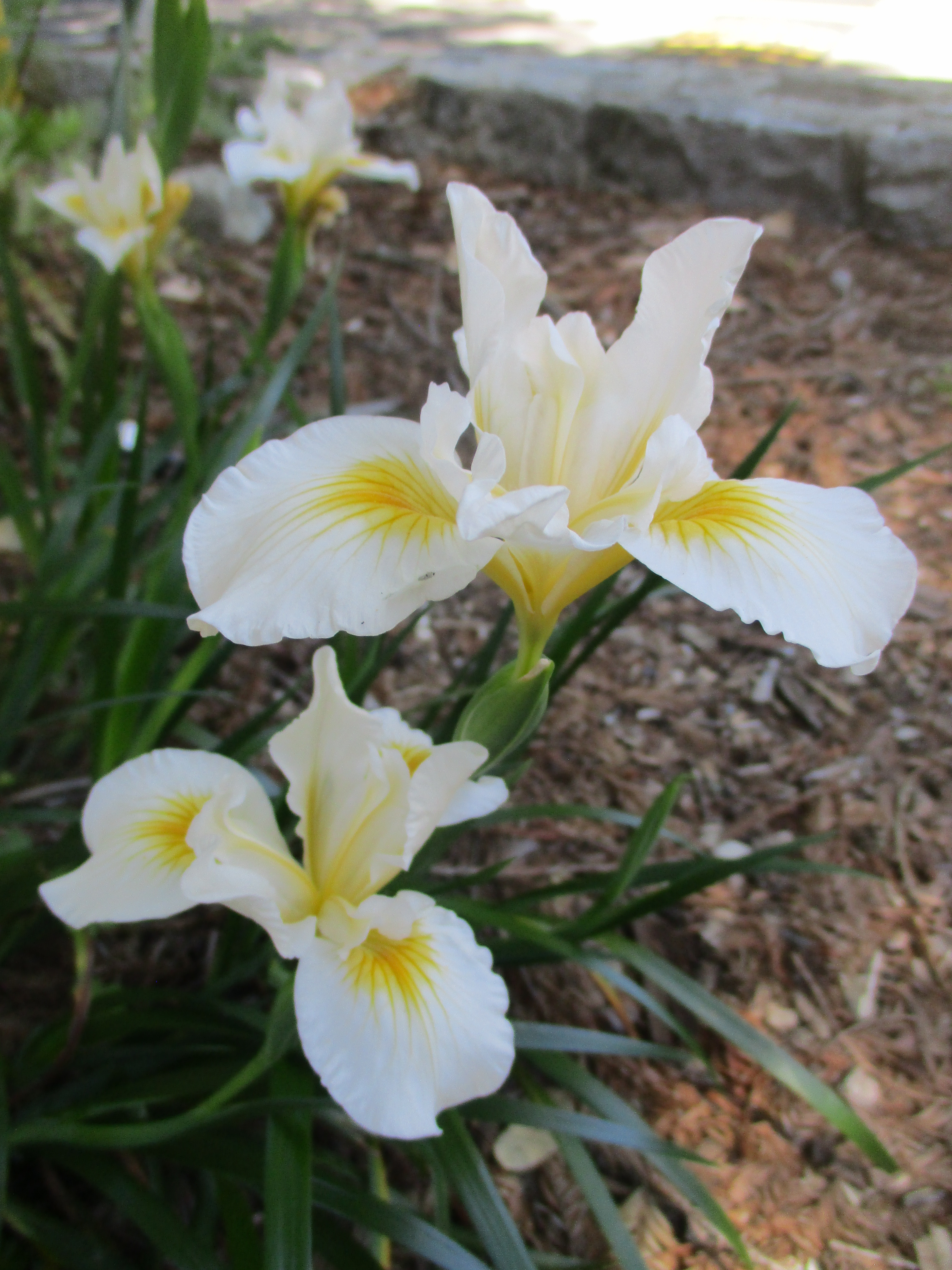
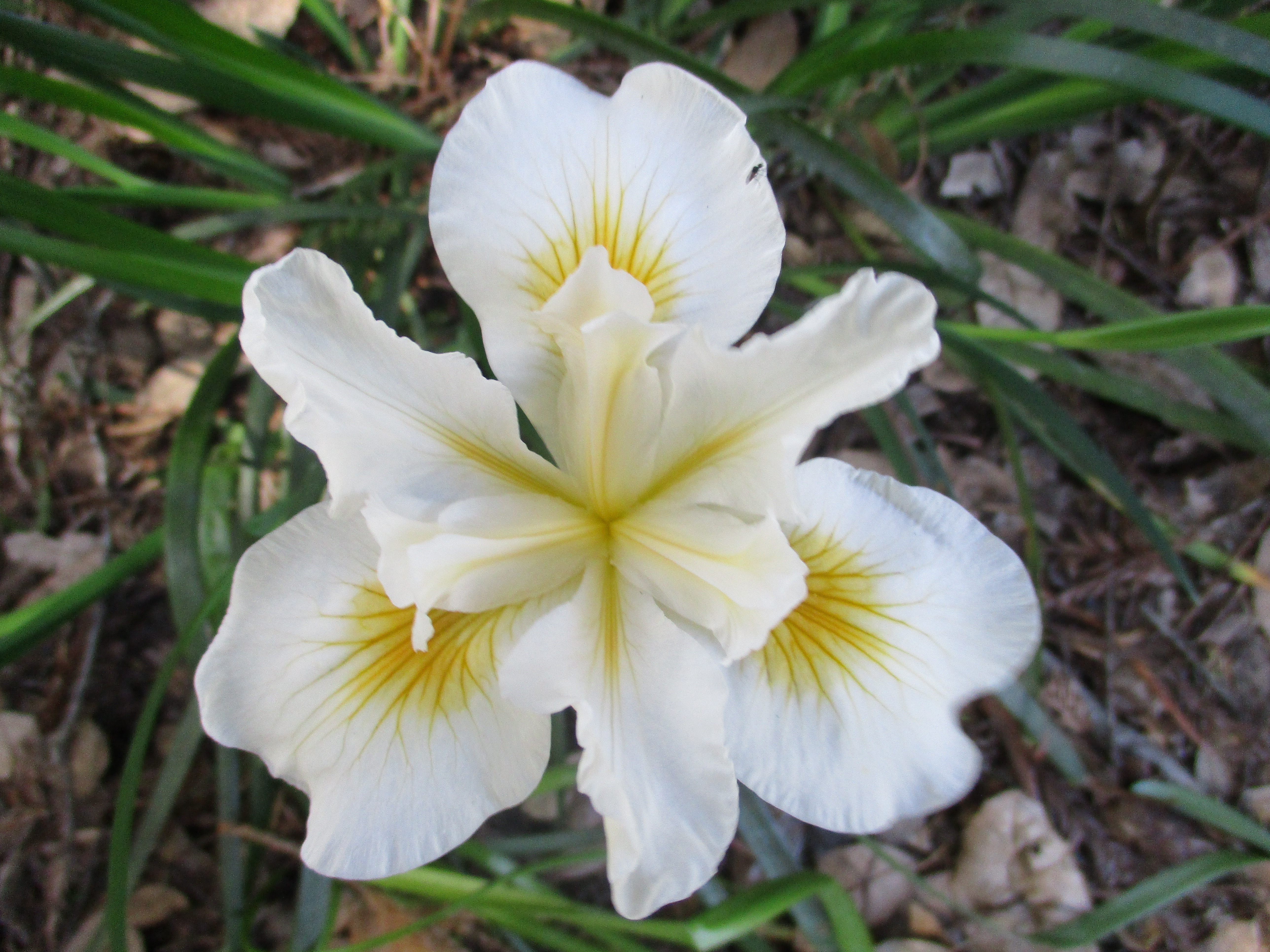
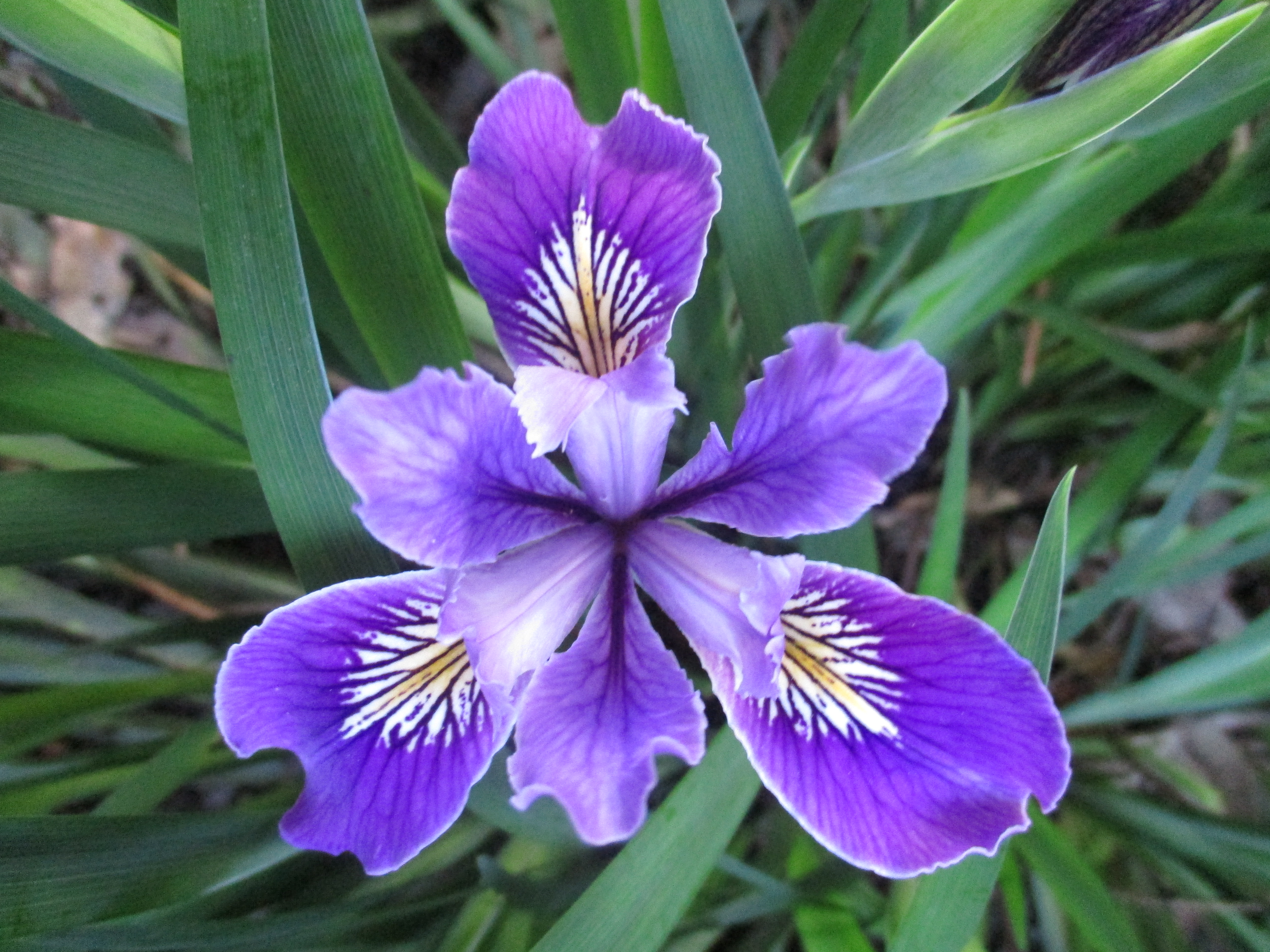
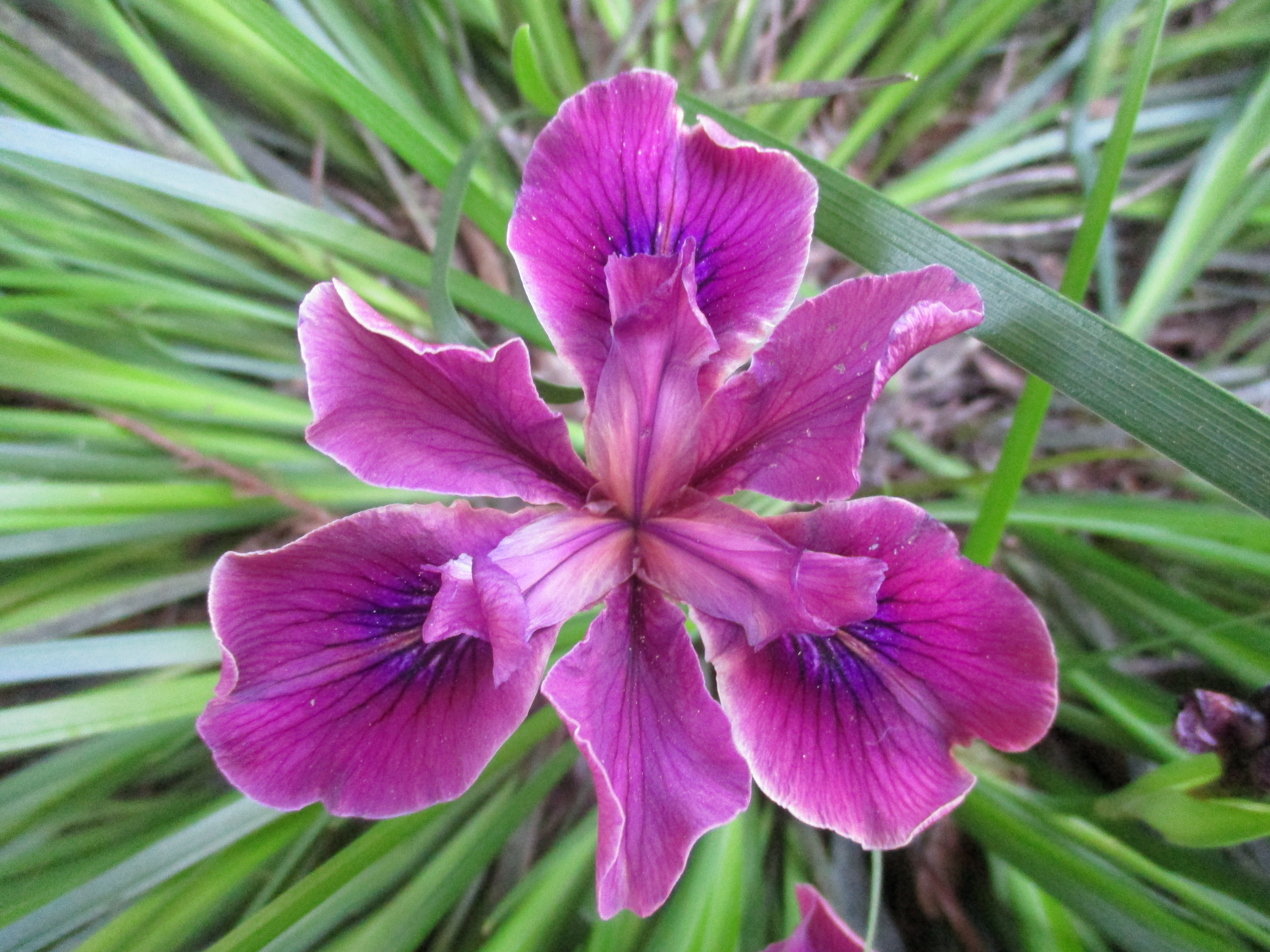
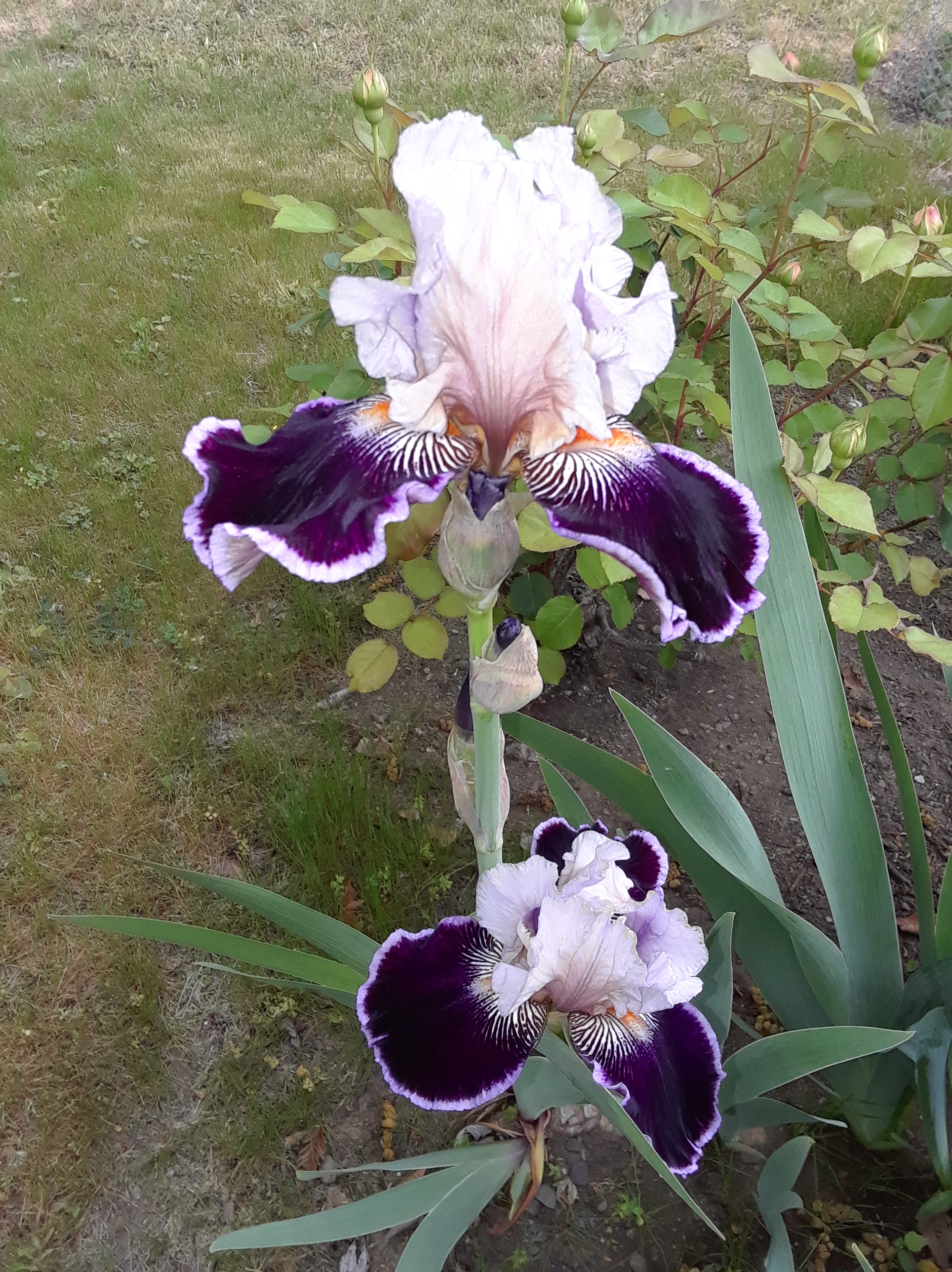
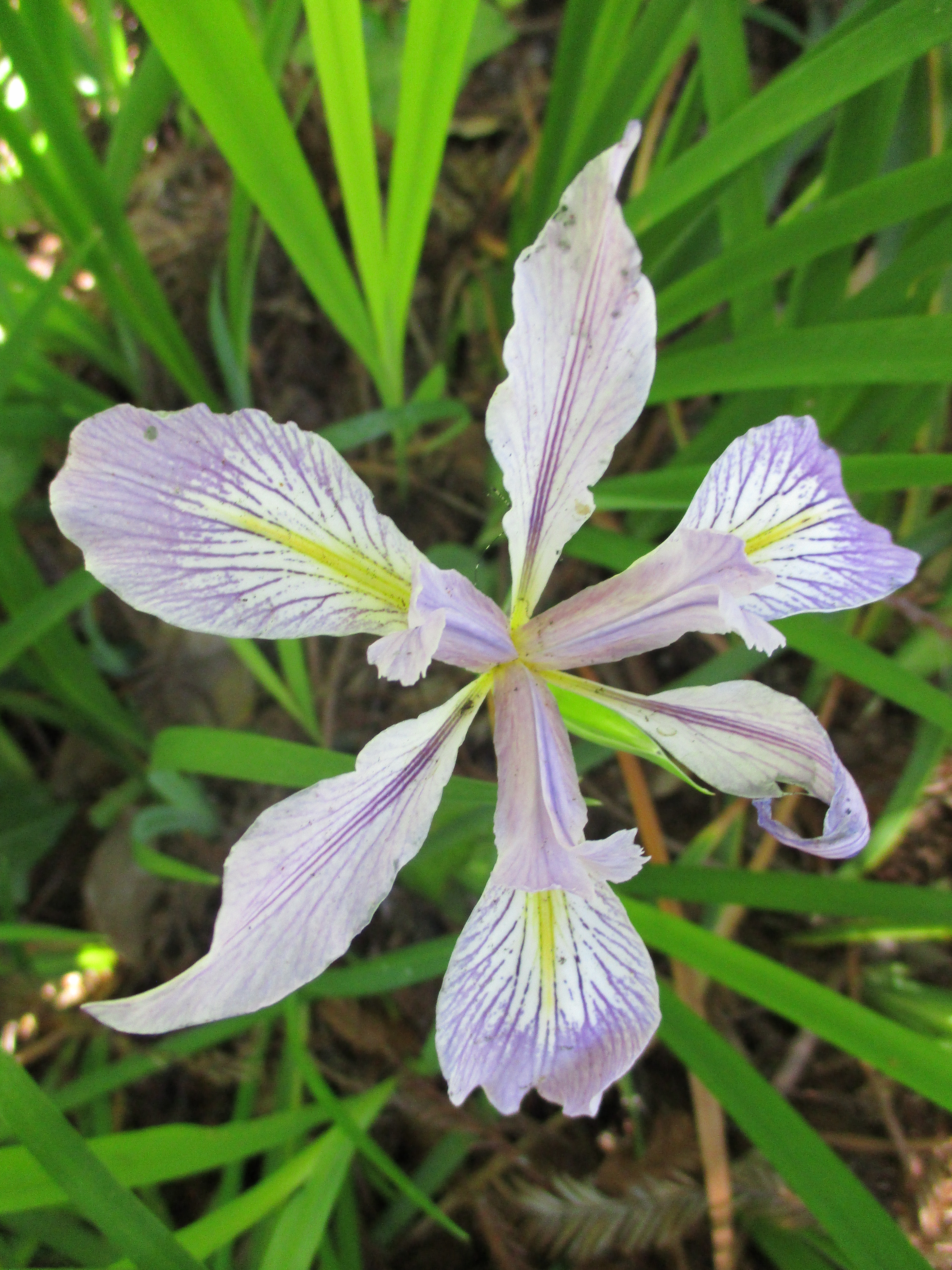
Iris flowers are so distinctive because of their unique symmetry of six paired and fused ‘halves’ that form a triad of ‘falls’ and ‘standards’. The ‘falls’ are the parts that hang downward. The ‘standards’ that stand upright above are the true flower petals. As if the range of colors were not enough, the falls and standards are very often colored very differently from each other, and adorned with stripes, margins, spots or blotches. Many specie have fragrant flowers. Each flower stalk supports multiple flowers. Some carry quite a few flowers!
Some types of iris are so resilient to neglect that they naturalize and grow wild in abandoned gardens. Bearded iris are more appealing and bloom better with somewhat regular watering, but can survive with only very minimal watering once established. Some iris multiply so freely that they get divided after bloom, and shared with any of the neighbors who will take them. Newly divided rhizomes should be planted laying flat, with the upper surfaces at the surface of the soil.
 Nurseries are full of plants for sale. That is their business. They sell plants, and whatever plants need. With a bit of money, it is easy to purchase plants to compose an exquisite landscape. That is important to landscape professionals who make a business of composing landscapes to beautify the environments in which they work.
 It is not as if the previous article about it was inadequate.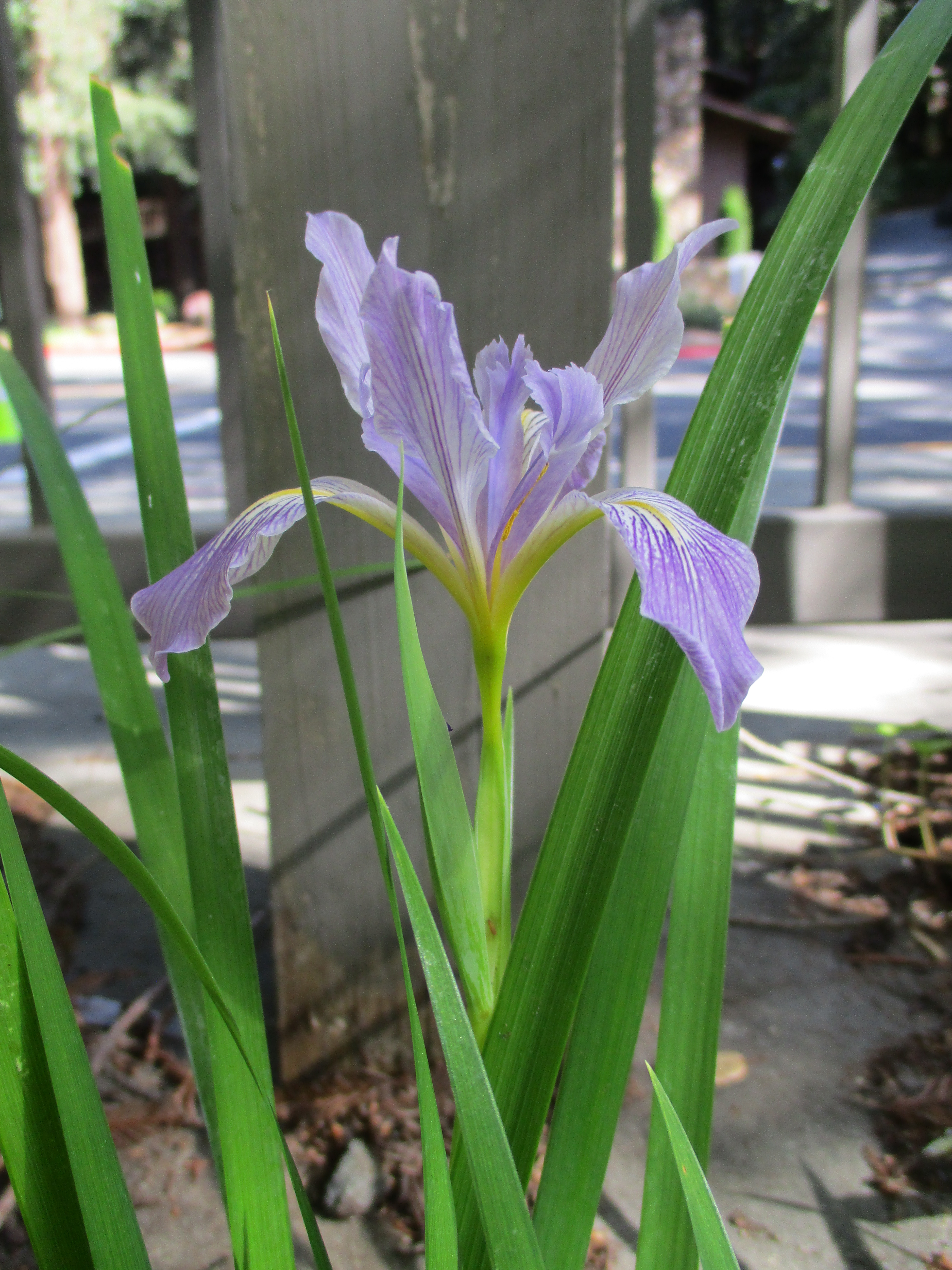
 The statute of limitations allows me to discuss this now. It happened thirty years ago, in the spring of 1987. The famous landscape designer, Brent Green, was my roommate in the dorms at Cal Poly, San Luis Obispo. As the bearded iris started to bloom, Brent immediately noticed a bed of uniformly pink bearded iris off the edge of a lawn in the inner campus. He watched it bloom from beginning to end, and occasionally updated me on the progress. During the process, he convinced me that these iris were very rare. Neither of us had ever seen pink bearded iris before. We had no idea that they could easily be purchased from mail order catalogs or nurseries.
 Tony Tomeo