
Junipers have a bad reputation. They earned it at a time when they were too common. Too many were installed into situations that they were not appropriate for. As they grew, they were unpleasant to handle. If not handled enough, they became overgrown and shabby. Once that happened, there were nearly impossible to prune back into confinement without being ruined.
I was never one to completely subscribe to that bad reputation. There were just too many junipers that I really liked, particularly the Hollywood juniper and the Hetz blue juniper. There were a few that I disliked, and I still loath the common tam juniper, but they were in the minority, and happen to be the same sort that are becoming more scarce.
For landscape situations that they happen to conform to, there really is no reason for junipers to be any less appropriate than any other genus is. They are happy with local climates and soil types. Once established, they do not need much water at all, and many need no supplemental irrigation. They last for a very long time. Best of all, they need only minimal maintenance.
However, even some of the best junipers are not perfect. I know. I just needed to work with some that were installed in 1980, and, except for getting pruned back around the edges, were completely ignored. After days of trying to tame them, I can not longer deny that some of what I have not wanted to believe about them is very true.
Besides all the trash and road debris that had been dumped into them during the past four decades, they were thickly infested with Himalayan blackberry. Removing the bramble was not only wickedly unpleasant, but it exposed bare spots where juniper foliage had been shaded out. Removal of a few junipers that had been overwhelmed and died left even more bare spots.
Well, I could not just leave all the dead twiggy growth under the bars spots, so tried to remove some of that too. That only exposed more of what what under and behind it, and caused the well foliated stems above to sag into the whole mess. In the end, the junipers are an unsightly mess, and I know that they will stay that way for a very long time.

 Ah, something vintage! Remember Hollywood juniper, Juniperus chinensis ‘Kaizuka’ (or ‘Torulosa’) flanking big two-car garage doors of mid century modern homes? Those that are still around after half a century are big and strikingly sculptural, like miniature Monterey cypress for home gardens. They get about fifteen feet tall and ten feet wide, but have potential to get significantly larger.
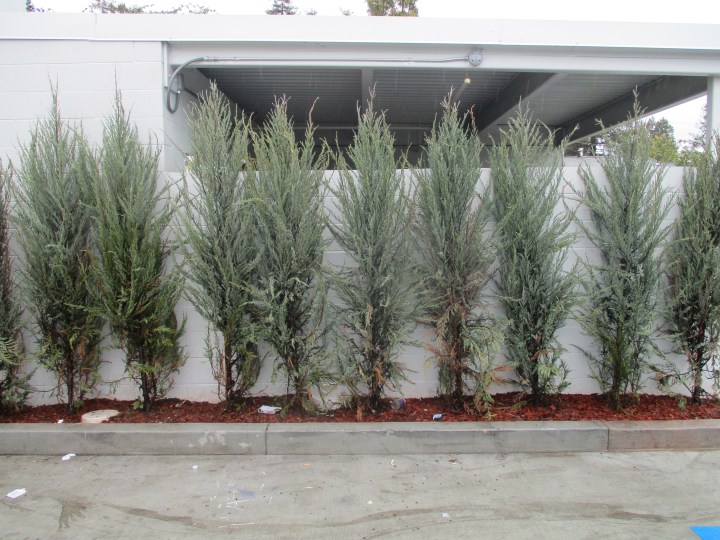 Back when horticulture was still respected, a very long time ago, dense shrubbery with finely textured foliage, such as Japanese boxwood, could be purchased already shorn into cubes that only needed to be installed in a closely set row to become an ‘instant hedge’. For some small hedges composed of small plants that recovered efficiently from transplant, it actually worked reasonably well, even if they did not look so great at first. It also worked for a few larger shrubs that happened to transplant very easily, such as glossy privet. Tall arborvitaes happen to work exceptionally well as instant hedges, although the best spacing for them leaves temporary gaps in between.
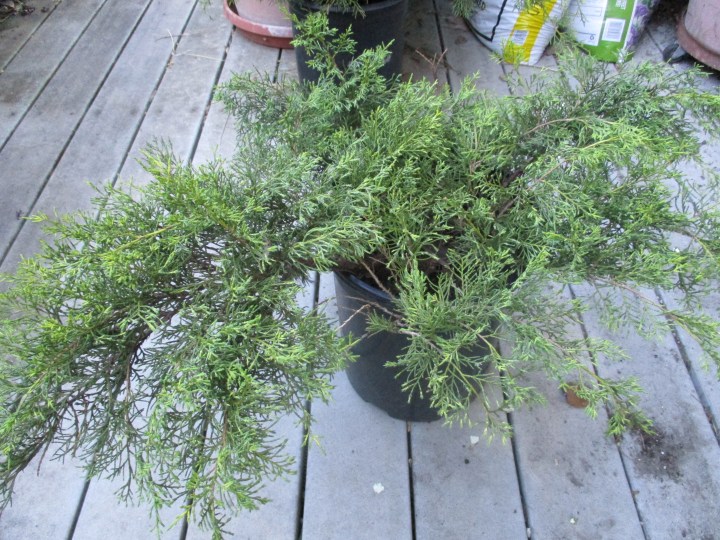 Oh, the stigma of juniper never gets old! No matter how many cool new cultivars get introduced, and how many specie get rediscovered, they are still though of as those nastily prickly ‘tams’ that were too common in the 1950s. Even some of us who really like junipers dislike tams, not only because they share their stigma with all other members of the genus, but also because they really are nasty and prickly, and not as useful as their overuse would suggest. Are they deep ground cover or shallow shrubbery? They might work for a few years, or maybe many years, but they eventually crash into each other or other plants and pile up into a dense thicket that can not be pruned without being deprived of all dignity.
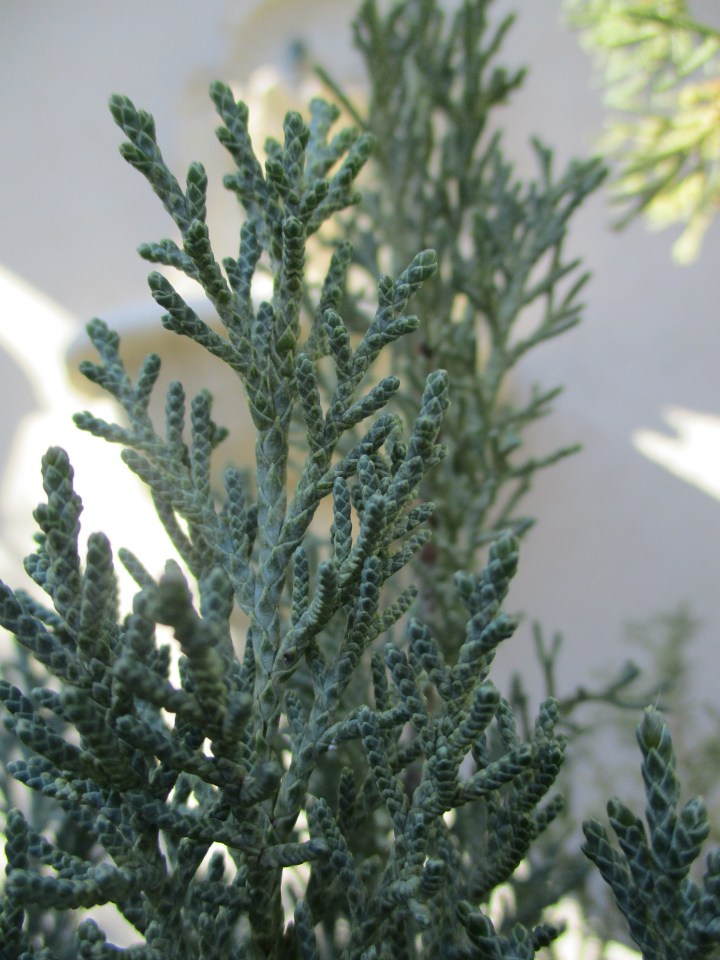 It is no coincidence that many plants with gray foliage are from mountains or deserts. Gray foliage is ‘glaucous’, which, like glaucoma, diffuses light. This helps to protect it from desiccation and scald when sunny weather is also hot, windy or arid. The glaucous foliage of Rocky Mountain juniper, Juniperus scopulorum, is what distinguishes it most from related North American junipers.
 Tony Tomeo